

This comprehensive guide explores the modern evolution of food chatbots, their real-world applications, advanced AI-driven capabilities, and their growing role in transforming the global culinary, restaurant, and digital food-service landscape. Designed using professional content-development principles and aligned with search quality guidelines, this article provides deep insights, strategic frameworks, and future-forward ideas for businesses that want to improve customer experience, ordering accuracy, operational efficiency, and brand growth through the power of conversational food technology.
Introduction to AI-Enhanced Food Chatbots and Their Role in Modern Food Businesses
Food chatbots have evolved from simple automated responders into intelligent culinary assistants capable of understanding human intention, predicting customer needs, and guiding users through personalized food journeys. They no longer operate as basic menu-navigation systems; instead, they integrate AI-powered recommendation engines, sentiment analysis, real-time data processing, and behavioral understanding to create memorable and satisfying digital dining experiences. Whether used by restaurants, cloud kitchens, food delivery platforms, recipe publications, or consumer apps, today’s food chatbots are sophisticated enough to replicate human-level assistance while maintaining the scalability and speed required in the food service industry. Within this shifting landscape, businesses such as Engagerbot increasingly explore how conversational automation can strengthen engagement, simplify workflows, and elevate customer satisfaction. As digital interfaces become more prevalent, the role of a food chatbot is not just about answering questions but guiding the user toward the right meal, the right decision, and the right action at the right time. Users expect convenience, personalization, and real-time solutions, and food chatbots deliver this by combining culinary intelligence with automated precision. This introduction sets the foundation for a deeper exploration into how food chatbots work, the technology behind them, and how they redefine the modern food ecosystem.
Understanding the Core Purpose of Food Chatbots in the Digital Age
Food chatbots exist to help people accomplish food-related tasks with greater ease, accuracy, and enjoyment. In the early years of digital ordering, users navigated static menus that lacked customization or human-like assistance. Today, food chatbots provide dynamic, conversational, and intuitive pathways that guide customers through complex food choices, dietary restrictions, ingredient preferences, and personalized suggestions. Their primary purpose is to simplify user journeys while enhancing the overall food-service experience. This means that a chatbot can greet a customer, help them find the perfect meal, answer nutritional questions, track orders, manage complaints, and even recommend new dishes based on previous behavior. The chatbot’s purpose extends beyond simple support; it becomes a digital partner in the user’s culinary decision-making process. This aligns with modern expectations, where consumers demand speed, accuracy, and intelligence in every digital interaction. Furthermore, food chatbots hold significant value for businesses because they reduce operational workload and create more efficient ways of handling customer queries. They also allow for consistent, high-quality service delivery regardless of customer volume. Understanding the purpose of these systems is essential for creating engaging and reliable chatbot experiences that reflect genuine human intention and culinary expertise. In the context of the digital age, the true objective of a food chatbot is to maintain a seamless balance between technological efficiency and human-like warmth, ensuring customers feel understood, guided, and supported throughout their food experience.
How Food Chatbots Transform Customer Experience in Restaurants and Food Delivery
Food chatbots are revolutionizing the way restaurants, delivery brands, and food-service companies serve their customers. They create a consistent and frictionless experience by providing instant responses, personalized recommendations, and interactive support that resembles real-time human communication. Customers no longer need to wait for human staff to become available or navigate through confusing menus. Instead, they engage with a chatbot that adapts to their needs, recognizes their preferences, and presents them with the most relevant food options. This level of attentiveness significantly improves customer satisfaction and reduces frustration during busy hours or high-demand seasons. Restaurants benefit because food chatbots streamline workflows by reducing manual calls, minimizing mistakes, and ensuring order accuracy. The chatbot can guide customers to select specific ingredients, choose portion sizes, or modify recipes based on lifestyle requirements. Food delivery platforms use chatbots to provide real-time tracking updates, estimated delivery times, and notifications about shortages or delays. In all these contexts, chatbots also help collect customer feedback directly within the conversation flow, giving businesses actionable insights without additional steps from the customer. The end result is a smoother, faster, and more intelligently guided customer experience. As chatbots grow more sophisticated, they will continue redefining the relationship between food businesses and consumers by nurturing trust, reducing effort, and enhancing convenience at every interaction point.
Technology Behind Food Chatbots: AI, NLP, and Predictive Algorithms
Food chatbots rely on sophisticated technologies that process language, interpret user preferences, and make intelligent decisions in real time. At the center of these systems is Natural Language Processing, which helps machines understand human communication patterns, including slang, spelling variations, tone, and intent. NLP allows chatbots to interpret conversational queries like “something spicy,” “less oily,” or “a gluten-free dessert,” which previously required human understanding. AI machine-learning models analyze historical data to identify patterns in ordering habits, taste preferences, and dietary behaviors. These algorithms can predict what a customer might want before they explicitly ask for it, improving personalization. Recommendation engines, often based on collaborative filtering or neural ranking systems, compare user behavior with similar customer profiles to deliver accurate meal suggestions. Many food chatbots also integrate with backend systems, point-of-sale software, delivery APIs, nutritional databases, and inventory platforms. This allows them to present updated information—such as ingredient availability or preparation time—in real time. Sentiment analysis models monitor customer tone during conversations to adjust responses appropriately, ensuring a more natural and empathetic experience. Advanced food chatbots create adaptive experiences that evolve with each interaction, making them smarter over time. As technology continues advancing, future food chatbots will predictively adjust menus, anticipate cravings, and seamlessly connect with multiple digital channels, forming the backbone of intelligent food-service automation.
Role of Food Chatbots in Increasing Restaurant Sales and Conversions
Food chatbots play a strategic role in enhancing sales performance because they encourage customers to explore more menu items, complete orders faster, and make confident decisions. A chatbot can identify user hesitation, answer questions instantly, and offer alternatives that reduce drop-offs during checkout. By analyzing behavioral data, the chatbot can suggest add-ons, upgrades, and complementary items that align with the customer’s flavor preferences. Restaurants benefit from increased average order value when chatbots highlight trending dishes, chef recommendations, or seasonal specials. Unlike human staff, chatbots never forget to upsell or cross-sell, ensuring consistent revenue opportunities across every interaction. They can also convert abandoned carts by sending reminders, offering limited-time offers, or guiding the user through completion. Chatbots enhance conversion by removing friction from the ordering process, creating a fast and structured pathway to completing transactions. Additionally, multilingual capabilities help restaurants serve customers across diverse regions, expanding their market reach. Because chatbots are always available, customers can place orders anytime without waiting for staff availability, which results in higher overall sales, especially during peak hours. Over time, chatbots become a powerful sales engine capable of identifying purchasing patterns and adjusting strategies accordingly. Their ability to connect behavior, context, and personalization makes them one of the most profitable tools for modern food businesses.
Food Chatbots and the Future of Personalized Meal Recommendations
Personalized meal recommendations are at the heart of the evolving food chatbot ecosystem. People increasingly seek meals that match their unique lifestyle preferences, health goals, cultural choices, and emotional states. Food chatbots use AI-driven personalization engines to understand these subtle differences and deliver curated meal suggestions. This empowers users to discover new dishes that align with their taste profiles. Using customer data such as previous orders, ingredient preferences, spice levels, and dietary restrictions, the chatbot creates tailored food solutions. Instead of browsing menus manually, customers receive direct suggestions that match their nutritional needs. This improves satisfaction and encourages long-term engagement because users feel understood and valued. Advanced chatbots consider contextual factors such as time of day, weather, and customer mood to enhance their predictions. Meal personalization becomes an ongoing journey where the chatbot learns more with every interaction. This creates a truly intelligent food-discovery experience that reduces decision fatigue and inspires culinary exploration. As AI technology advances, food chatbots will incorporate emotional AI, sensory prediction, and flavor-mapping systems to create even deeper personalization. In the future, personalized meal recommendations will become the foundation of modern food-service innovation, enabling businesses to create tailored dining experiences at scale.
Enhancing Restaurant Efficiency Through Food Chatbot Automation
Food chatbots significantly improve operational efficiency by automating common tasks that traditionally consumed staff time and resources. When a restaurant handles large order volumes, manual processes can lead to errors, delays, and inconsistencies. Food chatbots streamline these workflows by managing customer inquiries, menu navigation, ingredient questions, and order processing automatically. This frees up human staff to focus on preparation, quality control, and in-person customer interactions. Automation ensures that customers receive instant replies regardless of staff availability or rush-hour pressures. Chatbots can also monitor inventory levels, display updated availability, and prevent customers from ordering items that are out of stock. This reduces dissatisfaction and operational waste. Additionally, chatbots centralize customer communication across multiple digital channels such as websites, apps, social media platforms, and messaging systems. They act as a unified digital assistant that manages everything from delivery updates to complaint resolutions. Restaurants benefit from lower workload, reduced operational costs, and improved consistency across their service spectrum. Over time, chatbots identify operational bottlenecks and provide insights that help businesses refine their workflows. Chatbot automation becomes a critical part of restaurant success, ensuring smoother, faster, and more reliable operations.
Food Chatbots and Dietary Restrictions: How AI Ensures Safe Food Choices
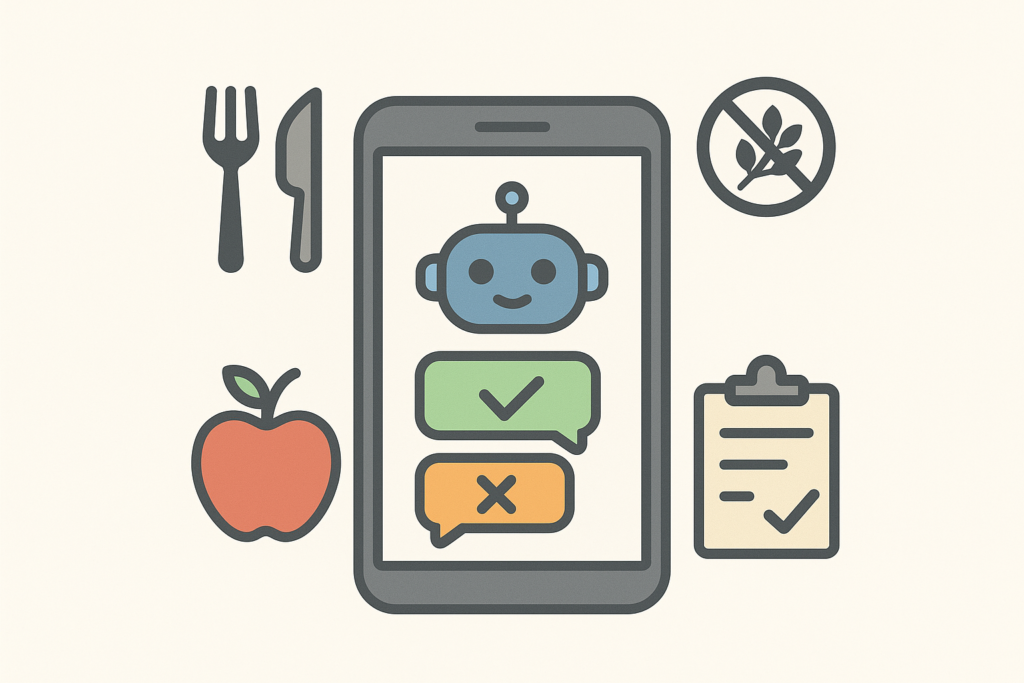
Food chatbots play an essential role in helping customers navigate dietary restrictions safely. In today’s diverse food landscape, people follow various dietary patterns such as vegan, gluten-free, low-carb, keto, halal, or allergen-free preferences. Navigating these complexities manually can lead to misunderstandings or inaccurate interpretations that affect customer health. Food chatbots use structured nutritional databases, allergen maps, and ingredient-level filtering to ensure customers make safe and informed choices. When a user specifies a dietary need, the chatbot cross-references the menu, identifies suitable dishes, and highlights potential risks. In cases where ingredients may trigger allergies or intolerances, chatbots provide clear and contextual explanations to protect customers from consuming unsafe meals. AI personalization systems further enhance safety by remembering dietary preferences and preventing future mistakes. Food chatbots also educate users by offering nutritional guidance, ingredient substitutions, and suggestions for modifying dishes to align with dietary needs. As food safety regulations tighten worldwide, chatbots become indispensable partners in ensuring compliance and reducing liability. The integration of AI ensures accuracy, consistency, and reliable decision-making, empowering customers to enjoy their meals with full confidence in the food they are choosing.
Food Chatbots in Online Food Delivery Platforms
Online food delivery platforms rely heavily on food chatbots to maintain smooth workflows and ensure accurate order fulfillment. These chatbots act as digital intermediaries between restaurants, delivery personnel, and customers. They help users browse menus, track delivery progress, estimate arrival times, and resolve common concerns. When issues arise, such as delayed drivers or unavailable items, chatbots offer real-time updates to maintain transparency. Delivery platforms benefit from reduced support-ticket volume, as chatbots handle the majority of routine queries. Chatbots also guide new users through onboarding, helping them understand how to place orders, apply discounts, or follow delivery policies. Their ability to manage large volumes of customers simultaneously ensures that no user experiences excessive wait times. Additionally, chatbots gather feedback on delivery performance and restaurant quality, which helps platforms optimize their partnerships and improve service reliability. As the delivery industry grows more competitive, food chatbots play a central role in strengthening customer loyalty, reducing delays, and enhancing trust across the entire delivery ecosystem.
Food Chatbots in Grocery and Meal-Kit Services
Grocery stores and meal-kit services use food chatbots to simplify product discovery, offer customized basket recommendations, and help users plan meals more efficiently. Grocery-shopper chatbots guide customers through product categories, substitutions, and nutrition details, providing clear assistance that resembles in-store support. In meal-kit platforms, chatbots help users explore weekly menus, choose suitable plans, and manage their subscription preferences. They can recommend meals based on dietary goals such as high-protein, low-calorie, vegetarian, or family-friendly options. Chatbots also help reduce food waste by suggesting meal plans that use overlapping ingredients. For grocery retailers, food chatbots streamline customer service by answering queries about return policies, product quality, and ingredient sourcing. Their role extends to inventory visibility, ensuring customers access accurate and updated stock information. As meal-kit and grocery delivery services expand globally, chatbots will become increasingly central in managing customer expectations and improving shopping convenience. These services rely on chatbots to build trust, maintain transparency, and deliver personalized shopping experiences that match the evolving expectations of modern consumers.
Building Trust: E-E-A-T in Food Chatbots and Content Accuracy
Trust plays a fundamental role in food-related digital interactions, especially when customers rely on chatbots for nutritional guidance, allergen safety, or health-related dietary decisions. Implementing strong principles of Experience, Expertise, Authoritativeness, and Trust is vital for ensuring accuracy and reliability. Food chatbots must provide information grounded in verified nutritional data and clear sources. The language used in responses should reflect authority while maintaining empathy and clarity. Businesses must ensure that the data powering their chatbot is reviewed by culinary experts, nutritionists, or regulated food professionals. This improves trustworthiness and reduces the risk of misinformation. Experience is demonstrated when chatbots tailor solutions based on real user behavior, offering insights grounded in past interactions. Expertise is showcased through accurate nutritional facts, ingredient details, and preparation guidance. Authoritativeness emerges when the chatbot references credible internal data or expert-reviewed menu insights. Trust is built through transparency, consistent accuracy, and user-centered conversational design. For food brands, integrating E-E-A-T principles strengthens brand credibility and ensures users feel safe, informed, and supported while interacting with AI-driven systems.
Common Mistakes Businesses Make When Using Food Chatbots
Businesses often misunderstand the purpose and capabilities of food chatbots, leading to ineffective or frustrating user experiences. One frequent mistake is relying on generic scripted responses that fail to address user needs or adapt to conversational flow. When chatbots cannot interpret intent accurately, users quickly abandon the interaction. Another common issue is neglecting to update menus, pricing, and ingredient availability, which results in inaccurate recommendations and customer dissatisfaction. Businesses sometimes overlook training datasets, causing the chatbot to misunderstand food-related terminology, slang, or cultural variations. Another mistake involves over-automation without adequate human fallback options, leaving customers helpless in complex scenarios. Poor integration with backend systems leads to delays, inconsistent order data, and communication errors. Additionally, some businesses underestimate the importance of personality and conversational tone, which results in robotic and disengaging interactions. Finally, ignoring customer feedback prevents continuous improvement. Avoiding these pitfalls allows businesses to create reliable and satisfying chatbot experiences that align with customer needs, operational realities, and brand identity.
Best Practices for Building High-Performance Food Chatbots
Creating an effective food chatbot requires strategic planning, data accuracy, user-centric design, and precise integration. The foundation of a successful chatbot starts with a clear understanding of user intent. Developers must anticipate the types of questions customers will ask, including dietary needs, ingredient substitutions, preparation times, and delivery concerns. This allows the AI model to interpret queries naturally and deliver context-aware responses. Quality food data is essential; restaurants should maintain up-to-date databases containing nutritional facts, allergen information, and detailed menu descriptions. Consistent refinement of the chatbot’s language model improves its ability to understand evolving food terminology and customer expectations. Businesses should ensure seamless integration with ordering systems, inventory tools, and delivery logistics to maintain real-time accuracy. Personality and empathy are critical components of a high-performing chatbot, as customers often respond positively to warm, engaging interaction styles. Testing is essential to identify gaps, unexpected user behaviors, or inconsistent responses. Continuous monitoring and training ensure that the chatbot grows more intelligent, reliable, and responsive over time. When executed effectively, these best practices result in food chatbots that deliver exceptional customer value, operational efficiency, and enhanced brand reputation.
Future Trends: What Food Chatbots Will Look Like in 2030
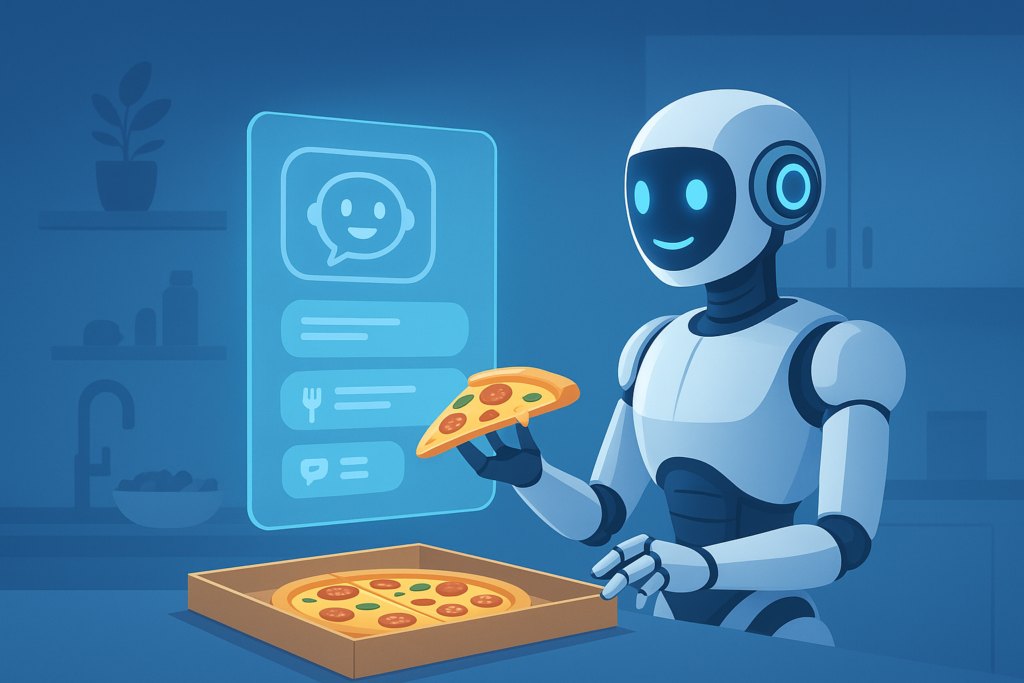
By 2030, food chatbots will evolve into fully immersive culinary assistants capable of predicting cravings, analyzing biometric data, and offering highly personalized meal plans. They will integrate with wearable health devices to monitor hydration, calorie intake, and nutritional needs in real time. Emotional AI will allow chatbots to identify user mood and recommend meals that enhance emotional well-being. Voice-enabled food chatbots will dominate household appliances, assisting with cooking instructions, ingredient measurements, and recipe adjustments. Augmented reality menus will become common, and chatbots will guide users visually through interactive food experiences. In restaurants, autonomous ordering systems driven by AI chatbots will eliminate wait times and streamline the entire dining journey. Food safety systems will improve as chatbots detect trends in contamination or allergen risks. Hyper-personalized recommendation engines will become more precise, predicting the exact flavor a customer craves based on historical behavior and contextual factors. The future of food chatbots is a blend of culinary creativity, technological innovation, and emotional intelligence.
FAQs About Food Chatbots
What is a food chatbot?
A food chatbot is an AI-powered assistant that helps users navigate menus, discover meals, place orders, manage dietary preferences, and interact with restaurants or food-service platforms through conversational interfaces.
How do food chatbots improve the ordering experience?
They simplify navigation, reduce mistakes, provide instant answers, personalize recommendations, and streamline the path to completing orders.
Are food chatbots safe for people with allergies?
Yes, advanced chatbots use nutritional and allergen databases to prevent unsafe recommendations and offer precise ingredient information.
Why should restaurants use food chatbots?
They reduce workload, increase sales, optimize operations, and deliver consistent customer service day and night.
What is the future of food chatbots?
The future includes emotional AI, voice integration, real-time health tracking, hyper-personalized meal suggestions, and immersive digital food experiences.
Conclusion: The Transformative Power of Modern Food Chatbots
Food chatbots represent one of the most influential advancements in the culinary and digital service industries. They combine AI-driven intelligence, natural language capabilities, and predictive personalization to transform how customers order food, discover meals, manage dietary restrictions, and interact with their favorite restaurants or delivery platforms. As customer expectations evolve, businesses must embrace tools that provide speed, precision, and convenience. Food chatbots enable restaurants, meal-kit providers, grocery services, and digital food brands to deliver exceptional experiences while optimizing operational efficiency. The future of food technology will rely heavily on the deep integration of conversational AI into everyday dining experiences. Businesses such as Engagerbot can harness this transformative potential to lead the next generation of personalized food engagement and digital culinary innovation.