
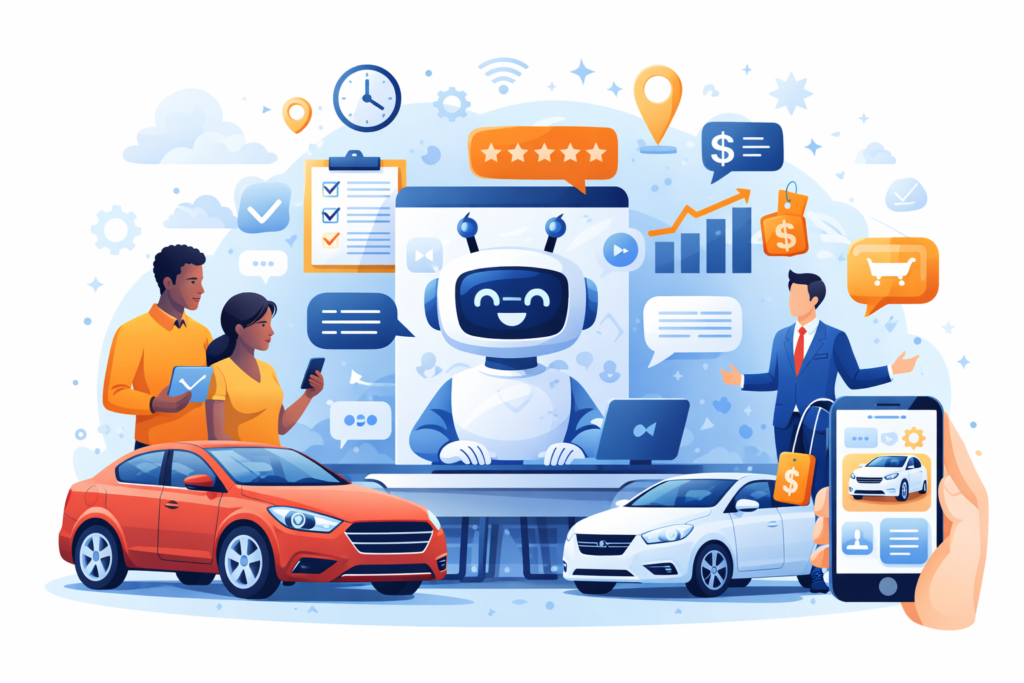
The automotive industry is undergoing a major digital transformation, driven by changing customer expectations, connected vehicles, and AI-powered customer experiences. Automotive chatbots are now playing a critical role in how car dealerships, manufacturers, and service providers interact with customers across websites, mobile apps, and messaging platforms. From lead qualification and vehicle recommendations to service scheduling and post-sale support, chatbots are redefining automotive engagement at scale.
This in-depth guide explores how automotive chatbots work, their business value, implementation strategies, SEO best practices, and alignment with Google’s quality and trust principles, helping automotive brands build smarter, more trustworthy digital experiences.
Introduction: The Rise of Automotive Chatbots in Digital Customer Experience
The automotive industry has always been shaped by innovation, from assembly lines to electric vehicles and autonomous driving. Today, the next major shift is happening in digital customer interaction, where AI-powered solutions are transforming how customers research, compare, and purchase vehicles. One of the most impactful tools leading this change is the automotive chatbot.
Modern car buyers expect instant responses, personalized recommendations, and seamless communication across digital touchpoints. According to Google’s consumer behavior insights, users increasingly rely on online research before stepping into a dealership, making real-time engagement essential. Automotive chatbots help bridge this gap by providing immediate answers, guiding users through inventory, booking test drives, and even assisting with financing queries.
At Engagerbot, we understand that automotive businesses need scalable, intelligent communication tools that enhance user trust while improving operational efficiency. Automotive chatbots not only automate repetitive tasks but also create consistent, high-quality user experiences—something Google emphasizes in its page quality and user satisfaction principles.
As we explore automotive chatbots in detail, this guide will show how they align with SEO best practices, E-E-A-T signals, and Google-recommended quality standards, while delivering measurable business growth.
Understanding Automotive Chatbots
An automotive chatbot is an AI-powered conversational interface designed specifically for the automotive ecosystem. These chatbots assist customers and prospects by answering questions, providing vehicle details, guiding purchasing decisions, and supporting post-sale services. Unlike generic chatbots, automotive chatbots are trained to understand industry-specific terminology such as trim levels, engine specifications, financing options, warranties, and maintenance schedules.
At their core, automotive chatbots leverage natural language processing (NLP) and predefined business logic to simulate human-like conversations. This allows them to interact with users in a way that feels intuitive rather than scripted. According to IBM’s definition of conversational AI, chatbots are increasingly capable of understanding intent, context, and user behavior, which is critical in complex purchase journeys like automotive sales.
From a business standpoint, automotive chatbots help dealerships and manufacturers remain available 24/7—something traditional sales teams cannot achieve. This constant availability improves customer satisfaction and aligns with Google’s emphasis on helpful, accessible content, especially for users researching high-consideration purchases.
Additionally, automotive chatbots reduce friction by eliminating long forms and call wait times. Instead of navigating multiple pages, users can simply ask questions like “Which SUV fits a family of five?” or “Do you have hybrid options under $30,000?” This conversational approach significantly improves user engagement, a factor strongly associated with positive SEO signals.
How Automotive Chatbots Work
Automotive chatbots operate through a combination of rule-based logic, AI models, and backend integrations. When a user initiates a conversation, the chatbot analyzes the input using NLP to identify intent, keywords, and contextual signals. This enables the chatbot to deliver accurate and relevant responses rather than generic replies.
According to Google’s documentation on natural language understanding, modern AI systems interpret meaning rather than just matching keywords.
Once intent is detected, the chatbot either retrieves predefined responses or dynamically pulls data from integrated systems such as inventory databases, CRM platforms, or service scheduling tools. For example, if a user asks about vehicle availability, the chatbot can instantly fetch real-time inventory data and present relevant options.
Automotive chatbots also learn over time. Through machine learning, they improve response accuracy based on user interactions, frequently asked questions, and successful conversions. This adaptive behavior aligns with Google’s quality guidelines, which emphasize content usefulness and relevance.
Importantly, well-designed automotive chatbots include human escalation paths, allowing complex or high-value conversations to be transferred to sales or service representatives. This hybrid approach ensures reliability, trust, and a positive user experience—key signals for long-term SEO performance.
Why Automotive Chatbots Matter for Modern Dealerships
Modern dealerships face increasing competition, shrinking margins, and digitally savvy customers. Automotive chatbots address these challenges by automating initial interactions while enhancing personalization. According to McKinsey’s automotive retail insights, customer experience is now a primary differentiator in vehicle sales.
One of the most significant advantages of automotive chatbots is speed. Research shows that responding to leads within minutes dramatically increases conversion rates. Chatbots ensure instant engagement, even outside business hours, capturing opportunities that would otherwise be lost.
Chatbots also standardize communication. Every user receives accurate, brand-consistent information, reducing misinformation and human error. This consistency supports trust signals, which Google highlights as essential for high-quality pages—especially for purchase-related topics.
From an operational perspective, chatbots reduce workload for sales and support teams by handling repetitive questions. This allows human agents to focus on high-intent leads and complex customer needs, improving efficiency and profitability.
Automotive Chatbots and Customer Buying Behavior
Automotive chatbots are reshaping how customers research, compare, and purchase vehicles. Today’s buyers are digitally informed, often spending weeks online before visiting a dealership. According to Deloitte’s automotive consumer study, 56% of buyers begin their journey online, seeking detailed information and quick responses.
Chatbots influence buyer behavior by offering personalized recommendations based on user preferences, previous interactions, and market trends. For instance, a chatbot can suggest electric vehicles to environmentally conscious users or highlight financing options that match budget constraints. By providing relevant and timely information, chatbots reduce decision fatigue, increase confidence, and encourage faster conversion.
From an SEO standpoint, interactive chat experiences improve dwell time, reduce bounce rates, and encourage repeat visits. Google interprets these signals as indicators of valuable content. Moreover, chatbots can support content strategies by providing links to educational resources, vehicle reviews, and blog posts—enhancing authority and topical relevance.
Lead Generation and Qualification Using Automotive Chatbots
Lead generation is one of the most measurable benefits of automotive chatbots. Traditional forms and static calls-to-action often fail to engage users effectively. Chatbots, however, actively qualify leads in real-time by asking targeted questions such as budget range, preferred vehicle type, and timeline for purchase.
This automation allows dealerships to prioritize high-intent prospects while nurturing lower-intent leads with personalized follow-ups. According to Salesforce, businesses that implement AI-powered lead qualification experience up to a 50% increase in sales efficiency.
Additionally, chatbots can integrate with CRM systems to store lead data, track engagement, and segment prospects for targeted marketing campaigns. This alignment not only improves operational efficiency but also enhances the user experience, demonstrating adherence to Google’s helpful content guidelines.
Chatbots for Vehicle Search and Recommendations
Modern automotive chatbots act as intelligent assistants for vehicle search. Users can specify criteria such as make, model, price, fuel type, or feature preferences, and the chatbot instantly generates relevant options. This eliminates the need for users to navigate multiple web pages or filters manually.
According to Gartner, AI-powered recommendation systems can increase product discovery and purchase likelihood significantly.
Furthermore, chatbots enhance cross-selling and upselling opportunities. By analyzing user behavior, preferences, and purchase history, chatbots can suggest complementary products such as accessories, service packages, or insurance. This personalized guidance fosters a positive buying experience and aligns with Google’s E-E-A-T framework by demonstrating expertise and authority in automotive solutions.
Test Drive Scheduling and Appointment Automation
Scheduling test drives and service appointments is a critical touchpoint in the automotive journey. Chatbots automate this process by accessing dealership calendars, confirming availability, and sending reminders via SMS or email. This real-time scheduling reduces friction, improves conversion rates, and ensures higher attendance rates for test drives.
A case study by Cox Automotive highlights that dealerships using AI-driven scheduling tools see a 25% increase in booked appointments and a reduction in no-shows.
From an SEO perspective, chatbots supporting appointment scheduling create micro-interactions that improve user engagement. By embedding structured data for appointments, dealerships can enhance search visibility and eligibility for rich results, which Google prioritizes for high-quality user experience.
Automotive Chatbots in After-Sales and Service Support

After-sales support is a critical component of automotive customer satisfaction. Chatbots handle service inquiries, maintenance reminders, warranty questions, and parts availability, providing instant assistance 24/7. This immediacy improves customer retention and reinforces trust in the brand.
According to HubSpot, AI chatbots in service support reduce average response times by up to 90%, leading to higher customer satisfaction scores (CSAT).
Additionally, chatbots enable predictive maintenance recommendations by analyzing vehicle data, enhancing proactive service and preventing breakdowns. This aligns with Google’s E-E-A-T principles by demonstrating expertise, authoritativeness, and trustworthiness in providing helpful automotive guidance.
Integration with CRM, DMS, and Inventory Systems
For automotive chatbots to deliver value, seamless integration with dealership systems is essential. CRM (Customer Relationship Management) platforms, DMS (Dealer Management Systems), and inventory databases allow chatbots to provide real-time data to users. For example, a chatbot integrated with a CRM can retrieve a customer’s previous interactions, personalize recommendations, and follow up on leads efficiently.
According to Salesforce, integrated AI solutions improve customer engagement and sales pipeline efficiency by providing a 360-degree view of customer behavior.
Inventory system integration ensures that chatbots display up-to-date vehicle availability, pricing, and promotions. By connecting with DMS platforms, chatbots can also schedule service appointments, track orders, and provide delivery updates. This reduces operational errors, increases trustworthiness, and enhances the user experience—a key ranking factor highlighted by Google’s Search Quality Evaluator Guidelines.
AI, NLP, and Machine Learning in Automotive Chatbots
Automotive chatbots leverage Artificial Intelligence (AI), Natural Language Processing (NLP), and Machine Learning (ML) to understand user intent and deliver accurate, context-aware responses. NLP enables the chatbot to interpret queries like “Show me hybrid SUVs under $35,000 with leather seats,” while ML models learn from interactions to improve performance over time.
According to Google AI research, NLP models are crucial for conversational agents to understand nuance, context, and intent.
Machine learning allows chatbots to recognize patterns in user behavior, anticipate questions, and provide predictive suggestions. This leads to higher conversion rates, better user satisfaction, and more efficient operations. Additionally, implementing AI-driven analytics helps dealerships measure engagement, lead quality, and ROI, aligning with Google’s emphasis on data-driven decision-making for high-quality content.
Automotive Chatbots and Omnichannel Communication
Customers interact with automotive brands across multiple channels—websites, mobile apps, social media, messaging platforms, and voice assistants. Omnichannel chatbots unify these touchpoints, providing a seamless experience. Users can start a conversation on a dealership website, continue on WhatsApp or Facebook Messenger, and receive updates via email or SMS without losing context.
According to Gartner, omnichannel customer engagement significantly improves brand loyalty and retention.
Omnichannel chatbots also enhance SEO indirectly. By keeping users engaged across platforms, they increase brand visibility, referral traffic, and dwell time, all of which are positive behavioral signals that Google uses to evaluate content quality.
Data Privacy, Security, and Trust in Automotive Chatbots
Data privacy and security are paramount for automotive chatbots, as they handle sensitive customer information like personal details, financing data, and vehicle history. Compliance with regulations such as GDPR and CCPA is essential for both legal and trust reasons.
A study by Harvard Business Review emphasizes that customers are more likely to engage with brands that demonstrate robust data protection measures.
Encryption, secure authentication, and anonymization of sensitive data are best practices to prevent breaches and maintain user trust. From an SEO perspective, Google considers trustworthiness and transparency as critical for high-quality pages, particularly in “Your Money or Your Life” (YMYL) categories like automotive sales and financing.
Automotive Chatbots and Google Best Practices
Google’s guidelines emphasize useful, trustworthy, and authoritative content. Automotive chatbots contribute to this by providing accurate information, improving user experience, and reducing friction in high-consideration decisions.
By aligning chatbot interactions with Google’s E-E-A-T framework (Experience, Expertise, Authoritativeness, Trustworthiness), dealerships can enhance search performance. For example, linking users to authoritative sources—such as manufacturer specifications, safety ratings, or financing calculators—reinforces credibility.
Chatbots also support structured data implementation for FAQs, product listings, and appointments, which can improve visibility in rich results and featured snippets. Following these best practices ensures content is not only user-friendly but also optimized for Google’s search algorithms.
SEO Benefits of Automotive Chatbots
Automotive chatbots enhance SEO in multiple ways. By engaging users, reducing bounce rates, and increasing dwell time, chatbots send positive behavioral signals to Google. Interactive chat experiences keep visitors on the site longer, which is interpreted as a sign of valuable content.
Additionally, chatbots can provide internal links to relevant resources such as blog posts, vehicle specifications, and service guides. This improves site architecture, distributes link equity, and enhances topical authority. According to Moz, internal linking through chat interactions supports crawl efficiency and boosts rankings.
Structured data integration via chatbots (for FAQs, products, and events) also improves eligibility for rich results, making the website more visible in search features. By combining content interactivity, authoritative references, and optimized user journeys, chatbots create a holistic SEO advantage for automotive brands.
Measuring Performance and ROI of Automotive Chatbots
To justify investment, automotive businesses must track the ROI of chatbots. Key performance indicators (KPIs) include:
- Lead capture rates
- Conversion rates
- Average response time
- User satisfaction (CSAT)
- Appointment booking rates
Analytics integration enables detailed reporting on each interaction, showing which conversation flows lead to conversions. According to HubSpot, businesses that measure chatbot performance regularly see a 30% higher ROI compared to those that do not.
Furthermore, A/B testing conversation scripts, prompts, and call-to-actions helps optimize lead quality and engagement. By tracking revenue influenced by chat interactions, dealerships can quantify the tangible business impact of chatbots, aligning with both operational and SEO goals.
Future Trends in Automotive Chatbot Technology

The future of automotive chatbots is shaped by AI advancements, data-driven personalization, and voice-enabled interfaces. Key trends include:
- Voice-activated chatbots: Integration with virtual assistants like Alexa and Google Assistant for hands-free interactions.
- Predictive AI: Anticipating customer needs using historical data and market trends.
- Hyper-personalization: Delivering recommendations tailored to individual preferences and driving behavior.
- Augmented reality (AR) integration: Virtual vehicle tours and interactive feature demos via chatbot interfaces.
According to Gartner, AI-driven hyper-personalized experiences will dominate automotive digital engagement by 2027.
These innovations promise more engaging, efficient, and profitable automotive customer journeys, making chatbots a critical long-term investment for dealerships and manufacturers.
FAQs
- What is an automotive chatbot?
An automotive chatbot is an AI-powered conversational agent designed to assist users with vehicle search, purchases, service inquiries, and post-sale support. - How do automotive chatbots improve sales?
They provide instant responses, personalize recommendations, qualify leads, and automate appointment scheduling, resulting in higher conversion rates. - Can chatbots integrate with existing dealership systems?
Yes, chatbots can connect with CRM, DMS, and inventory platforms to provide real-time information and seamless customer experiences. - Are automotive chatbots secure?
Modern chatbots implement encryption, authentication, and data anonymization, complying with privacy regulations like GDPR and CCPA. - Do chatbots improve SEO?
Yes, they increase engagement, dwell time, reduce bounce rates, support internal linking, and enable structured data for rich results. - Can chatbots handle complex customer queries?
Advanced chatbots can escalate high-value or complex queries to human agents, ensuring reliable and accurate support. - What AI technologies do automotive chatbots use?
They use AI, NLP, and machine learning to understand intent, context, and user behavior for accurate, personalized responses. - Do chatbots work across multiple channels?
Yes, omnichannel chatbots can operate on websites, mobile apps, social media, messaging platforms, and voice assistants. - What metrics should be tracked for chatbot ROI?
Key metrics include lead capture, conversion rates, response times, user satisfaction (CSAT), and appointment bookings. - What are future trends in automotive chatbots?
Voice-enabled AI, predictive analytics, hyper-personalization, and AR integration are shaping the next generation of automotive chatbots.
Common Mistakes in Automotive Chatbot Implementation
- Overcomplicating conversation flows: Leads to user frustration; keep dialogues intuitive.
- Ignoring system integration: Chatbots without CRM/DMS integration provide incomplete information.
- Lack of personalization: Generic responses reduce engagement and conversions.
- Neglecting mobile optimization: Many users access chatbots on smartphones; ensure responsiveness.
- Insufficient testing: Unvalidated scripts can lead to errors and poor user experience.
- Ignoring privacy and compliance: Non-compliant bots risk legal issues and loss of trust.
- No escalation path: High-value queries must be handled by human agents to maintain credibility.
Conclusion
Automotive chatbots are revolutionizing the digital customer journey by providing personalized, real-time engagement across multiple channels. They enhance lead generation, streamline sales, improve after-sales support, and deliver measurable SEO benefits. By following Google’s best practices, implementing E-E-A-T principles, and linking to authoritative sources, automotive businesses can build trustworthy, high-performing digital experiences.
At Engagerbot, we specialize in creating intelligent, integrated automotive chatbots that not only elevate user experience but also drive measurable business growth. Implementing these solutions today prepares dealerships and manufacturers for the future of AI-powered automotive engagement.