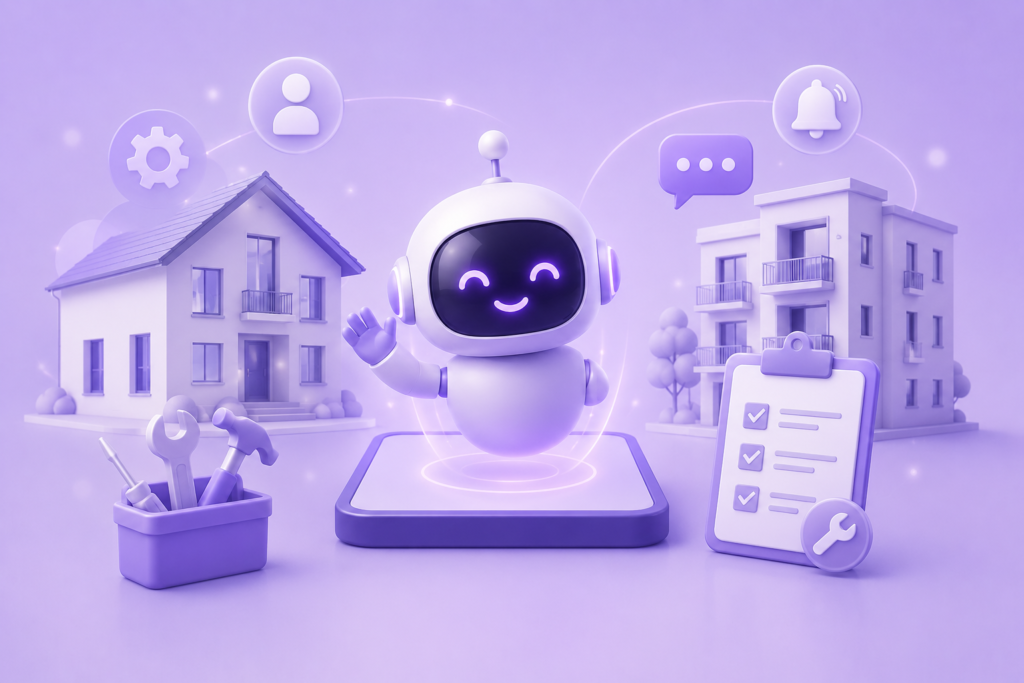
Discover how a Property Maintenance Chatbot improves tenant communication, automates maintenance requests, reduces operational costs, enhances property management efficiency, and delivers faster issue resolution through AI-powered automation.
Introduction
Managing residential and commercial properties has become increasingly complex in the modern digital era. Property managers must handle tenant complaints, maintenance scheduling, emergency repair coordination, vendor communication, inspection tracking, and service follow-ups while maintaining excellent customer satisfaction. A Property Maintenance Chatbot helps simplify these responsibilities by automating communication, streamlining workflows, and improving response times across the entire maintenance ecosystem.
As artificial intelligence continues to transform industries, chatbots are becoming an essential tool for property owners, facility managers, real estate companies, and maintenance teams. These AI-driven systems can instantly respond to tenant requests, collect repair information, assign service tickets, and provide updates without requiring constant manual intervention. Businesses that adopt intelligent maintenance automation often experience improved operational efficiency and better tenant retention.
At EngagerBot, businesses are increasingly exploring AI-powered solutions that reduce repetitive administrative tasks while improving user experiences. A modern property maintenance chatbot can operate 24/7, helping organizations deliver faster support and more reliable maintenance coordination without increasing staffing costs.
What Is a Property Maintenance Chatbot?
A Property Maintenance Chatbot is an AI-powered virtual assistant designed to automate maintenance-related communication between tenants, property managers, maintenance staff, and service vendors. These chatbots can operate through websites, mobile applications, messaging platforms, and customer portals to provide instant assistance for maintenance requests and property-related inquiries.
The chatbot acts as a digital support system capable of understanding user queries through natural language processing. Instead of calling property offices or sending multiple emails, tenants can simply interact with the chatbot to report issues such as plumbing leaks, electrical failures, broken appliances, HVAC problems, or security concerns. The chatbot then categorizes the issue, gathers essential information, and routes the request to the appropriate maintenance personnel.
Modern AI chatbots are far more advanced than basic automated response systems. They can analyze urgency levels, prioritize emergency repairs, provide estimated service timelines, send automated reminders, and track the entire maintenance lifecycle. Integration with property management software also allows chatbots to access tenant records, maintenance histories, and vendor databases for faster issue resolution.
These systems improve communication consistency while reducing the burden on property management teams. Since maintenance requests often occur outside business hours, a chatbot ensures tenants always have access to immediate support. This constant availability helps build trust and improves tenant satisfaction significantly.
Property maintenance chatbots are commonly used in apartment complexes, commercial office buildings, hotels, student housing facilities, industrial properties, and large residential communities. Their flexibility allows organizations of all sizes to improve maintenance coordination while minimizing manual administrative work.
Why Property Management Companies Need AI Chatbots
Property management companies face continuous pressure to improve service quality while controlling operational expenses. Maintenance coordination remains one of the most time-consuming aspects of property management because it involves multiple stakeholders, unpredictable repair situations, and urgent tenant expectations. AI-powered chatbots provide a scalable solution to these operational challenges.
One major issue in traditional property management is delayed communication. Tenants often become frustrated when maintenance requests go unanswered or updates are unclear. A chatbot eliminates communication delays by instantly acknowledging requests, collecting repair details, and providing real-time responses. This automation improves tenant confidence and reduces complaints significantly.
Another challenge is the high volume of repetitive inquiries. Property managers frequently answer similar questions about repair status, service schedules, maintenance policies, and vendor appointments. Chatbots automate these repetitive conversations, allowing property staff to focus on complex tasks that require human expertise. This leads to improved workforce productivity and lower administrative overhead.
AI chatbots also help standardize maintenance processes. Human agents may accidentally overlook details or inconsistently categorize service requests. Automated systems ensure every maintenance ticket follows a structured workflow, improving accountability and reducing operational errors. This consistency becomes particularly important for companies managing multiple properties or large tenant populations.
Data collection is another valuable advantage. Chatbots can gather insights into common maintenance issues, repair frequency, response times, and tenant satisfaction trends. Property managers can use this information to improve preventive maintenance strategies and optimize operational planning. Data-driven maintenance management helps reduce long-term repair costs while improving asset performance.
According to Google Search Central best practices, businesses that improve user experience, accessibility, and customer engagement often build stronger digital trust signals. AI-powered maintenance support contributes directly to these objectives by delivering faster, more efficient service experiences.
How Property Maintenance Chatbots Work
A property maintenance chatbot operates through a combination of artificial intelligence, machine learning, workflow automation, and system integrations. The primary goal is to simplify maintenance communication and automate issue management from start to finish.
The process usually begins when a tenant reports an issue through a website chat window, mobile app, SMS platform, or messaging service. The chatbot asks structured questions to collect necessary information, including the type of issue, location, urgency level, and supporting details. Some advanced systems even allow tenants to upload photos or videos for faster diagnostics.
After gathering information, the chatbot categorizes the maintenance request using AI-based intent recognition. For example, plumbing leaks may be marked as high priority, while cosmetic repairs may receive standard scheduling status. Emergency issues can automatically trigger alerts for on-call technicians or property managers.
The chatbot then integrates with property management platforms, ticketing systems, or maintenance scheduling software to create service requests. Automated workflows ensure tasks are assigned to the appropriate maintenance staff or external vendors based on expertise, availability, and location. This reduces manual coordination and speeds up repair scheduling.
Throughout the repair process, the chatbot continues communicating with tenants. Users receive automated notifications about appointment times, technician arrivals, repair updates, and completion confirmations. This transparency reduces tenant frustration and minimizes unnecessary follow-up calls.
Machine learning capabilities allow chatbots to improve over time. By analyzing previous conversations and maintenance outcomes, the system becomes more accurate in predicting issues, understanding user intent, and optimizing workflows. Some advanced AI systems even recommend preventive maintenance strategies based on historical data patterns.
Security and compliance are also important components. Reliable chatbot platforms follow data protection standards and secure communication practices. Businesses should reference guidance from Google Cloud Security Best Practices when implementing cloud-based AI systems for property management operations.
Key Features of an Advanced Property Maintenance Chatbot
An effective property maintenance chatbot must provide more than simple automated responses. Modern AI-driven systems include advanced capabilities that improve communication, automation, operational efficiency, and tenant satisfaction.
One essential feature is 24/7 automated support. Maintenance emergencies can happen at any time, including nights, weekends, and holidays. A chatbot ensures tenants always have access to immediate assistance, even when property offices are closed. This constant availability helps organizations provide better customer service while reducing after-hours staffing requirements.
Another critical capability is smart ticket management. The chatbot should automatically generate maintenance tickets, assign priority levels, categorize issues, and route requests to the correct maintenance teams. Intelligent ticket automation prevents delays and improves workflow organization.
Natural language processing (NLP) enables chatbots to understand conversational language rather than relying only on fixed commands. Tenants can describe issues naturally, making interactions smoother and more user-friendly. Advanced NLP models improve communication accuracy and reduce misunderstandings.
Integration functionality is equally important. A maintenance chatbot should integrate seamlessly with property management software, CRM systems, scheduling platforms, accounting tools, and vendor databases. Integration reduces duplicate data entry and creates a centralized operational workflow.
Photo and document uploads enhance maintenance diagnostics. Tenants can share images of damaged appliances, water leaks, electrical faults, or structural issues. Visual information helps maintenance teams prepare more effectively before arriving onsite, improving repair efficiency.
Multilingual support can also improve accessibility for diverse tenant communities. AI chatbots capable of supporting multiple languages help businesses communicate effectively with broader audiences while improving inclusivity.
Analytics dashboards provide valuable operational insights. Property managers can track maintenance trends, response times, issue categories, tenant satisfaction rates, and vendor performance metrics. These insights support better decision-making and preventive maintenance planning.
Automation features such as reminders, appointment confirmations, escalation workflows, and feedback collection further enhance efficiency. According to Google Page Experience Guidelines, businesses that improve usability and communication often create stronger customer experiences and digital credibility.
Benefits of Using a Property Maintenance Chatbot
The adoption of AI-powered maintenance chatbots provides significant advantages for property managers, maintenance teams, tenants, and business owners. These systems improve operational efficiency while enhancing service quality and communication transparency.
One major benefit is faster response times. Traditional maintenance systems often rely on manual phone calls, emails, or office visits, which can create delays. Chatbots instantly acknowledge requests and begin processing issues immediately. Faster communication improves tenant satisfaction and helps prevent small issues from escalating into costly repairs.
Cost reduction is another important advantage. Automating repetitive administrative tasks reduces the need for excessive support staffing. Property management teams spend less time answering basic questions, scheduling appointments, and manually tracking maintenance requests. This operational efficiency lowers labor costs while improving productivity.
Improved tenant satisfaction directly impacts retention rates. Tenants appreciate quick responses, transparent updates, and reliable maintenance coordination. Positive maintenance experiences often influence lease renewals and online reviews, which are critical for property reputation management.
AI chatbots also improve workflow organization. Automated ticketing systems reduce human error and ensure maintenance requests follow consistent processes. Priority-based routing ensures emergency issues receive immediate attention while standard repairs remain organized within the scheduling system.
Another valuable benefit is data-driven maintenance planning. Chatbots collect detailed maintenance data that can reveal recurring issues, vendor performance trends, seasonal repair patterns, and preventive maintenance opportunities. Property managers can use these insights to reduce long-term maintenance costs and improve property performance.
Scalability makes chatbots especially valuable for growing property management companies. As organizations manage more properties and tenants, chatbot automation supports increased workloads without requiring proportional staffing increases. This scalability helps businesses maintain service quality during expansion.
Enhanced communication between tenants, vendors, and property managers also reduces misunderstandings and service delays. Automated updates keep all parties informed throughout the maintenance lifecycle, improving accountability and operational transparency.
Common Maintenance Tasks Automated by Chatbots
Property maintenance chatbots can automate a wide range of tasks that traditionally consume significant administrative time. Automation improves consistency while allowing property management teams to focus on strategic operations rather than repetitive manual coordination.
One of the most common automated tasks is maintenance request intake. Tenants can report plumbing problems, HVAC failures, electrical issues, appliance malfunctions, pest control concerns, and structural damage through conversational chatbot interfaces. The chatbot gathers all required information automatically and creates service tickets instantly.
Appointment scheduling is another highly valuable automation feature. Chatbots can coordinate available maintenance windows, confirm appointments, send reminders, and notify tenants when technicians are en route. Automated scheduling reduces missed appointments and minimizes scheduling conflicts.
Repair status tracking improves communication transparency. Instead of repeatedly contacting property offices for updates, tenants can ask the chatbot about repair progress at any time. Automated updates reduce frustration and lower support call volumes.
Vendor coordination can also be streamlined through chatbot automation. External contractors may receive automated work orders, scheduling details, and repair instructions directly through integrated systems. This reduces communication delays and improves service coordination efficiency.
Preventive maintenance reminders help property managers reduce long-term repair costs. Chatbots can send automated reminders for HVAC inspections, fire alarm testing, plumbing maintenance, elevator servicing, and seasonal property inspections. Preventive maintenance improves asset longevity and reduces emergency repair incidents.
Move-in and move-out maintenance inspections are another important automation opportunity. Chatbots can guide tenants through inspection checklists, collect documentation, and generate maintenance reports automatically. This improves recordkeeping and reduces administrative complexity.
Emergency maintenance escalation is particularly valuable for large residential communities and commercial facilities. AI systems can identify urgent situations such as flooding, electrical hazards, or gas leaks and immediately alert emergency response teams. Rapid escalation helps protect property assets and tenant safety.
Enhancing Tenant Experience Through AI Automation
Tenant experience plays a critical role in property management success. Satisfied tenants are more likely to renew leases, provide positive reviews, and recommend properties to others. A property maintenance chatbot significantly improves tenant experiences by delivering faster communication, better accessibility, and more transparent maintenance support.
One major frustration tenants face is delayed responses to maintenance concerns. Waiting for callbacks or office hours can create negative experiences, especially during urgent situations. AI chatbots eliminate these delays by providing immediate acknowledgment and assistance 24 hours a day.
Convenience is another important factor. Modern tenants expect digital self-service options similar to those provided by banks, retail brands, and online service platforms. Chatbots allow tenants to submit maintenance requests, track repairs, schedule appointments, and receive updates directly from their smartphones or computers without lengthy phone calls.
Transparent communication also improves trust. Maintenance uncertainty often causes tenant dissatisfaction because residents may not know when repairs will occur or who is handling the issue. Chatbots provide real-time updates and automated notifications that keep tenants informed throughout the repair process.
Personalization enhances user engagement further. AI systems can recognize returning tenants, reference previous maintenance history, and provide customized responses based on user profiles. Personalized interactions create smoother communication experiences and improve overall service satisfaction.
Multichannel accessibility is another valuable benefit. Tenants can interact with maintenance chatbots through websites, mobile applications, messaging apps, or social platforms. Flexible communication channels increase accessibility and user convenience across diverse demographics.
AI-powered maintenance support also contributes to accessibility inclusion. Some chatbot platforms support voice interactions, multilingual communication, and simplified interfaces for users with different accessibility needs. Inclusive communication improves service quality for broader tenant communities.
Tenant feedback collection becomes easier through automated chatbot surveys. After maintenance completion, chatbots can gather satisfaction ratings and improvement suggestions. Continuous feedback helps property managers refine operations and improve service standards over time.
The Role of AI and Machine Learning in Property Maintenance
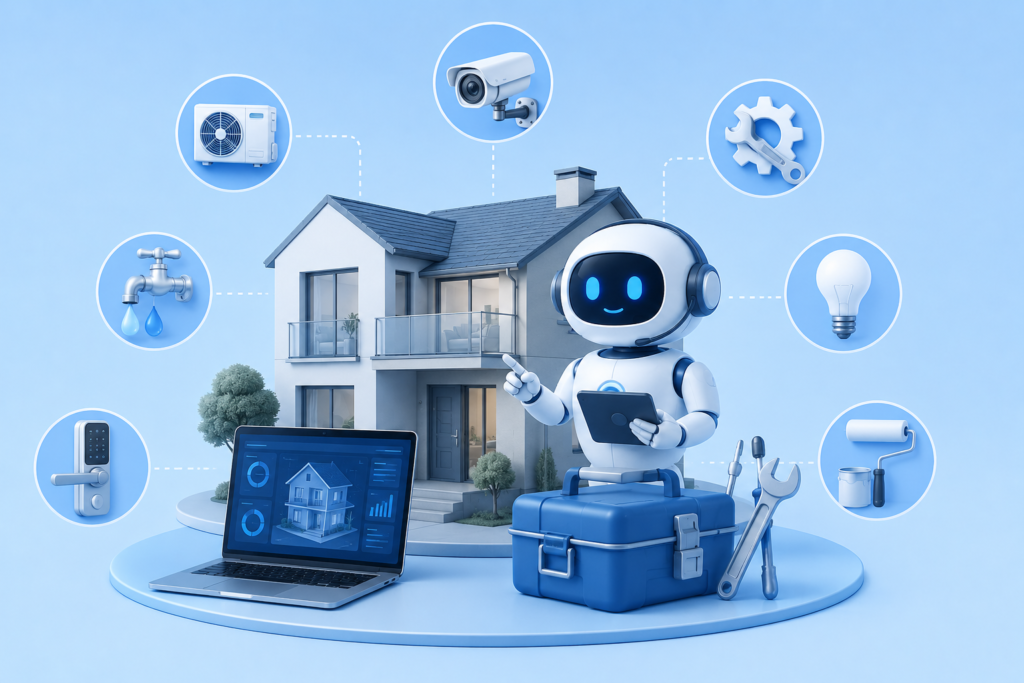
Artificial intelligence and machine learning are the driving forces behind modern property maintenance chatbots. These technologies enable systems to understand user intent, automate workflows, predict maintenance issues, and continuously improve performance through data analysis.
Machine learning allows chatbots to become smarter over time. Instead of relying only on pre-programmed scripts, AI systems analyze previous conversations, repair outcomes, and operational patterns to improve future interactions. This learning capability enhances accuracy, efficiency, and user satisfaction.
Natural language processing is one of the most important AI technologies in maintenance chatbots. NLP enables systems to interpret human language naturally, even when tenants describe problems differently. For example, a chatbot can understand that “water dripping from ceiling” and “roof leak” may refer to similar maintenance issues.
Predictive maintenance is another major innovation powered by machine learning. AI systems can analyze historical repair data, equipment performance records, and environmental conditions to identify patterns associated with future failures. Predictive insights help property managers schedule preventive maintenance before costly breakdowns occur.
AI-driven automation also improves operational prioritization. Emergency maintenance situations require immediate attention, while minor cosmetic issues may be scheduled later. Machine learning algorithms help determine urgency levels based on issue descriptions, historical outcomes, and risk assessments.
Advanced analytics provide valuable business intelligence. AI systems can generate reports on repair frequency, maintenance costs, vendor performance, seasonal issue trends, and tenant satisfaction metrics. These insights support data-driven decision-making and operational optimization.
Security monitoring capabilities are also evolving. Some AI-powered property systems integrate maintenance chatbots with IoT sensors, smart building devices, and monitoring platforms. Automated alerts can identify leaks, HVAC failures, or security issues before tenants even report them.
Organizations implementing AI systems should follow trusted technical standards such as Google AI Principles and modern cybersecurity recommendations to ensure responsible and secure automation practices.
Integrating Property Maintenance Chatbots With Property Management Software
Integration is one of the most important elements of a successful property maintenance chatbot strategy. A chatbot that operates independently without connecting to existing management systems may create fragmented workflows and duplicate administrative tasks. Proper integration transforms the chatbot into a centralized operational assistant capable of streamlining maintenance coordination across multiple platforms.
Modern property management companies often use software solutions for tenant records, accounting, maintenance scheduling, lease management, inspections, vendor coordination, and communication tracking. Integrating a chatbot with these systems allows maintenance requests to flow automatically into existing workflows without requiring manual data entry. This synchronization improves operational efficiency while reducing administrative errors.
For example, when a tenant submits a repair request through the chatbot, the system can instantly create a maintenance ticket inside the property management platform. Relevant tenant information, unit details, repair history, and urgency classifications are transferred automatically. Maintenance teams receive immediate access to accurate information, which speeds up response times and improves service quality.
Integration also improves reporting and analytics capabilities. Property managers can track chatbot interactions, maintenance performance metrics, repair completion times, and tenant satisfaction within a unified dashboard. Consolidated reporting helps organizations identify operational bottlenecks, optimize vendor performance, and improve preventive maintenance strategies.
Cloud-based integration further enhances scalability and remote accessibility. Teams managing multiple properties across different locations can monitor maintenance activities from centralized platforms. Cloud infrastructure also improves collaboration between internal staff, external vendors, and property owners.
When implementing integrations, businesses should prioritize API compatibility, data synchronization reliability, and cybersecurity protections. Following standards from Google Cloud Architecture Framework can help organizations design scalable and secure system integrations that support long-term operational growth.
Property Maintenance Chatbots for Residential Properties
Residential property management involves continuous communication with tenants regarding repairs, maintenance schedules, inspections, and emergency services. A property maintenance chatbot helps residential property managers automate these interactions while improving tenant convenience and operational responsiveness.
Apartment complexes, condominiums, gated communities, and student housing facilities often receive large volumes of maintenance requests daily. Common issues include plumbing leaks, appliance failures, electrical problems, air conditioning malfunctions, pest control concerns, and security-related maintenance. Managing these requests manually can quickly overwhelm property management staff.
AI-powered chatbots simplify the process by collecting repair details instantly and routing requests to the appropriate maintenance personnel. Tenants no longer need to wait for office hours or make multiple phone calls to report issues. Instead, they can interact with the chatbot anytime through websites, mobile apps, or messaging platforms.
Residential properties benefit significantly from automated communication updates. Tenants receive appointment confirmations, repair progress notifications, technician arrival alerts, and maintenance completion confirmations automatically. This transparency reduces uncertainty and improves overall resident satisfaction.
Emergency maintenance handling is especially important in residential environments. Water leaks, electrical hazards, broken heating systems, or security issues require immediate attention. Chatbots can prioritize urgent repairs automatically and notify emergency response teams instantly, helping property managers protect tenant safety and minimize property damage.
Residential communities with multilingual tenant populations may also benefit from AI translation capabilities. Multilingual support improves accessibility and communication quality for diverse residents while reducing misunderstandings during maintenance coordination.
Tenant retention is another major advantage. Residents who experience responsive maintenance support are more likely to renew leases and leave positive online reviews. Since online reputation heavily influences property occupancy rates, chatbot-driven service improvements can directly impact long-term business growth.
Commercial Property Maintenance Chatbot Solutions
Commercial property maintenance presents unique operational challenges compared to residential management. Office buildings, retail centers, industrial facilities, hotels, and mixed-use developments require coordinated maintenance systems capable of handling complex service environments. AI-powered chatbots provide scalable solutions for these demanding operational structures.
Commercial tenants often expect rapid maintenance response times because property issues can directly impact business operations, employee productivity, customer experiences, and regulatory compliance. Delayed repairs in commercial environments may result in financial losses or safety risks. A property maintenance chatbot helps organizations respond more efficiently and maintain professional service standards.
In commercial settings, maintenance requests may involve HVAC systems, elevators, lighting infrastructure, parking facilities, access control systems, sanitation concerns, or specialized equipment repairs. Chatbots streamline issue reporting by collecting detailed information and assigning requests to specialized technicians or vendors automatically.
Large commercial properties also benefit from centralized communication management. Multiple tenants, facility managers, contractors, and maintenance teams often need access to repair updates simultaneously. Chatbots provide real-time notifications and status tracking that improve coordination across all stakeholders.
Service-level agreement monitoring becomes easier through automation. Many commercial properties operate under contractual maintenance timelines that require specific response and resolution periods. AI systems can monitor deadlines, send escalation alerts, and ensure compliance with maintenance performance standards.
Commercial property owners also gain valuable operational insights from chatbot analytics. Data regarding repair frequency, equipment failures, maintenance costs, and vendor performance supports more strategic asset management decisions. Predictive analytics can further reduce downtime by identifying potential failures before they disrupt operations.
Integration with smart building technologies creates additional efficiency opportunities. AI chatbots connected to IoT sensors can receive automated alerts regarding temperature anomalies, water leaks, energy inefficiencies, or equipment malfunctions. Proactive maintenance reduces operational disruptions while improving facility performance.
Common Mistakes Businesses Make When Implementing Maintenance Chatbots
While property maintenance chatbots provide significant benefits, many businesses make implementation mistakes that reduce effectiveness and negatively impact user experiences. Understanding these common errors helps organizations build more successful AI automation strategies.
One of the biggest mistakes is deploying overly simplistic chatbot systems. Basic rule-based bots with limited conversational capabilities often frustrate users because they cannot understand natural language or handle complex maintenance situations. Businesses should prioritize AI-driven systems with strong natural language processing capabilities for more effective communication.
Another common issue is poor workflow integration. Some organizations implement chatbots without connecting them to property management software, ticketing systems, or maintenance scheduling platforms. This creates disconnected workflows that still require manual coordination. Proper integration is essential for achieving true operational efficiency.
Ignoring user experience design is another major problem. Chatbots should provide intuitive, conversational interactions that are easy for tenants to navigate. Complicated interfaces, unclear instructions, or excessive questioning can discourage user engagement and reduce adoption rates.
Many companies also fail to define escalation procedures for emergencies or complex issues. Not every maintenance situation can be resolved entirely through automation. Businesses must establish clear workflows for transferring conversations to human agents when necessary. Hybrid support models provide better customer experiences while maintaining operational efficiency.
Lack of ongoing optimization is another critical mistake. AI chatbots require continuous improvement based on conversation analysis, user feedback, and operational data. Organizations that fail to monitor chatbot performance may experience declining accuracy and reduced user satisfaction over time.
Security oversight can create serious risks as well. Maintenance chatbots often handle tenant information, property data, and operational records. Businesses should implement strong cybersecurity protections, secure authentication methods, and encrypted communication channels to protect sensitive information.
Finally, unrealistic expectations can undermine implementation success. Chatbots are powerful automation tools, but they are not complete replacements for human expertise. Organizations should position AI systems as operational support tools that enhance human workflows rather than eliminate human involvement entirely.
Best Practices for Building a High-Performance Property Maintenance Chatbot
Creating an effective property maintenance chatbot requires careful planning, user-focused design, operational integration, and continuous optimization. Following proven best practices helps businesses maximize chatbot performance and long-term operational value.
The first best practice is defining clear objectives before implementation begins. Organizations should identify specific goals such as reducing response times, improving tenant satisfaction, lowering support costs, or increasing maintenance efficiency. Clear objectives guide chatbot design decisions and performance measurement strategies.
User experience should remain a top priority throughout development. The chatbot interface must be simple, conversational, and intuitive for tenants of all technical skill levels. Clear prompts, natural language understanding, and streamlined workflows improve engagement and reduce user frustration.
Businesses should also prioritize omnichannel accessibility. Tenants increasingly expect support through websites, mobile apps, SMS, and messaging platforms. Providing multiple communication channels improves convenience and increases chatbot adoption rates.
Strong integration capabilities are essential for operational success. Maintenance chatbots should connect seamlessly with property management systems, scheduling tools, CRM platforms, and vendor databases. Integrated workflows reduce administrative duplication and improve maintenance coordination accuracy.
Another important best practice is implementing intelligent escalation systems. AI chatbots should recognize situations that require human intervention and transfer conversations appropriately. Emergency maintenance requests, complex disputes, or sensitive situations often benefit from direct human involvement.
Continuous training and optimization improve chatbot effectiveness over time. Organizations should regularly analyze conversation logs, user feedback, failed interactions, and operational performance metrics. Machine learning systems become more accurate when continuously refined using real-world data.
Cybersecurity should remain a core implementation priority. Businesses must protect tenant information and operational data using secure authentication, encrypted communication, role-based access controls, and regular security audits. Guidance from Google Security Center can help organizations strengthen digital protection strategies.
Finally, businesses should measure performance using clear KPIs such as response times, ticket resolution rates, tenant satisfaction scores, cost savings, and chatbot engagement levels. Data-driven optimization ensures long-term improvement and sustainable operational benefits.
The Future of Property Maintenance Chatbots
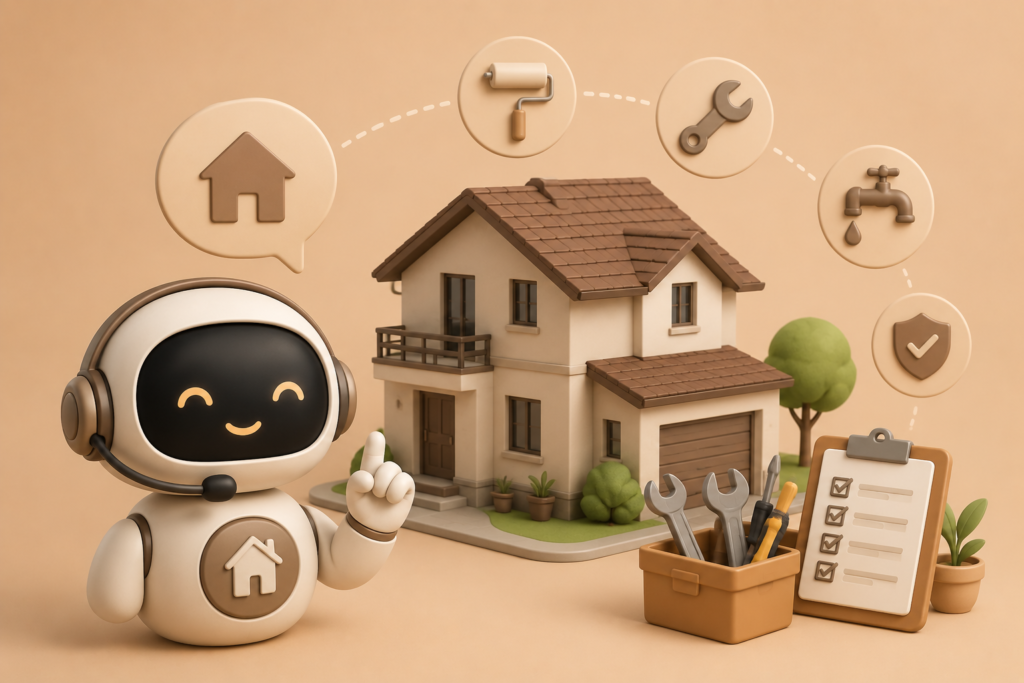
The future of property maintenance chatbots is closely connected to advancements in artificial intelligence, predictive analytics, smart building technologies, and automation ecosystems. As AI capabilities continue evolving, maintenance chatbots will become increasingly intelligent, proactive, and integrated into broader property management infrastructures.
One major future trend is predictive maintenance automation. Instead of simply reacting to tenant-reported issues, AI systems will increasingly identify maintenance risks before failures occur. Smart sensors, IoT devices, and machine learning algorithms will detect abnormal equipment behavior and automatically generate maintenance alerts.
Voice-enabled maintenance support is also expected to grow rapidly. Tenants and facility managers may interact with AI systems using voice assistants integrated into mobile devices, smart home systems, or building management platforms. Voice-driven automation improves accessibility and creates more seamless user experiences.
Advanced personalization will further improve tenant engagement. Future AI chatbots may analyze communication preferences, historical interactions, maintenance patterns, and behavioral trends to provide highly customized support experiences. Personalized automation enhances convenience while strengthening tenant relationships.
Integration with smart buildings will become increasingly sophisticated. AI systems connected to HVAC controls, lighting systems, water sensors, elevators, and security infrastructure will enable automated diagnostics and real-time maintenance coordination. This interconnected ecosystem will improve operational efficiency while reducing downtime.
Generative AI technologies may also enhance chatbot conversational abilities. Future systems could provide more human-like communication, advanced troubleshooting assistance, and intelligent repair recommendations based on contextual analysis. Enhanced conversational AI improves user trust and communication quality.
Sustainability optimization is another emerging opportunity. AI-powered maintenance systems may help property managers reduce energy consumption, optimize resource utilization, and improve environmental efficiency through predictive operational insights.
As automation expands, regulatory compliance and ethical AI governance will become increasingly important. Businesses implementing advanced AI systems should follow evolving digital responsibility frameworks such as Google Responsible AI Practices to ensure transparent, ethical, and secure technology adoption.
FAQs
1. What is a property maintenance chatbot?
A property maintenance chatbot is an AI-powered virtual assistant designed to automate maintenance communication between tenants, property managers, maintenance teams, and vendors. It helps manage repair requests, scheduling, updates, and support interactions efficiently.
2. How does a maintenance chatbot improve tenant satisfaction?
Maintenance chatbots provide instant responses, faster repair coordination, transparent communication, and 24/7 support accessibility. These improvements reduce tenant frustration and create more reliable service experiences.
3. Can property maintenance chatbots handle emergency requests?
Yes. Advanced AI chatbots can identify emergency maintenance situations such as flooding, electrical hazards, or security issues and escalate them immediately to emergency response personnel or on-call technicians.
4. Are maintenance chatbots suitable for small property management companies?
Absolutely. Small property management businesses can benefit significantly from automation because chatbots reduce administrative workloads, improve efficiency, and support business scalability without requiring large support teams.
5. Can chatbots integrate with property management software?
Yes. Modern maintenance chatbots can integrate with CRM systems, maintenance scheduling platforms, ticketing software, accounting systems, and property management tools to streamline workflows and improve operational coordination.
6. Do maintenance chatbots support multiple languages?
Many AI-powered chatbot platforms provide multilingual support, allowing businesses to communicate effectively with diverse tenant communities and improve accessibility for broader user groups.
7. Are property maintenance chatbots secure?
Reliable chatbot platforms implement encryption, secure authentication, and cybersecurity protections to safeguard tenant data and operational information. Businesses should follow modern security best practices when implementing AI systems.
8. Can AI chatbots reduce property management costs?
Yes. By automating repetitive administrative tasks, reducing manual coordination, improving workflow efficiency, and minimizing communication delays, maintenance chatbots can significantly lower operational costs over time.
Best Practices Summary
Implementing a successful property maintenance chatbot strategy requires a balanced approach focused on user experience, operational efficiency, integration quality, and long-term optimization. Businesses that carefully plan chatbot deployment often achieve stronger results and higher tenant satisfaction levels.
The most effective chatbot systems prioritize fast communication, intelligent automation, seamless software integration, and reliable escalation processes. AI technology should support human teams rather than completely replace them. Combining automation with human expertise creates the most effective maintenance management environment.
Continuous improvement remains essential. Organizations should regularly monitor chatbot analytics, user feedback, maintenance outcomes, and operational KPIs to refine system performance. AI systems become more valuable over time when supported by ongoing optimization and data-driven decision-making.
Cybersecurity and transparency must also remain core priorities. Protecting tenant data, maintaining secure communication channels, and following ethical AI practices help organizations build long-term trust while minimizing operational risks.
Businesses that invest in modern maintenance automation technologies are positioning themselves for a more scalable, efficient, and customer-focused future. As AI capabilities continue evolving, property maintenance chatbots will become increasingly important for delivering competitive property management experiences.
In conclusion, companies seeking advanced automation solutions can explore innovative AI technologies through EngagerBot to improve maintenance communication, operational efficiency, and tenant satisfaction across residential and commercial property environments.
Want to Implement This Easily?
Prompt Text:
You are an expert consultant. Based on the blog post titled “Property Maintenance Chatbot”, provide a step-by-step, practical implementation guide. Include tools, best practices, common mistakes to avoid, and advanced tips. Assume the reader wants to implement everything discussed in this article effectively.
Call to Action:
Want our help implementing this? Just reach out to us via our website contact form: Contact Us