In today’s evolving digital era, the demand for renewable energy solutions has skyrocketed as businesses, communities, and individuals strive to transition into a more sustainable future. With advancements in artificial intelligence and conversational technologies, the intersection of clean energy and automation is becoming a groundbreaking reality. One of the most innovative tools transforming the energy sector is the renewable energy chatbot, a smart assistant capable of providing insights, guidance, and solutions tailored to both consumers and enterprises. This blog explores in detail how renewable energy chatbots are revolutionizing the clean energy industry, reshaping customer experiences, and driving efficiency in a sector where innovation is vital for global sustainability.
Introduction: Renewable Energy Meets AI Chatbot Innovation
The world is steadily moving towards a sustainable future where renewable energy is no longer an option but a necessity. As the shift towards solar, wind, hydro, and other eco-friendly energy sources accelerates, businesses and individuals face the challenge of accessing reliable guidance, personalized support, and real-time solutions. This is where the renewable energy chatbot comes into play. By combining artificial intelligence with conversational design, renewable energy chatbots provide a seamless way to educate users, streamline processes, and enhance decision-making in energy consumption and sustainability projects. Platforms like Engagerbot showcase how AI-driven solutions can empower industries to not only automate interactions but also align with global green energy goals.
Understanding Renewable Energy Chatbots
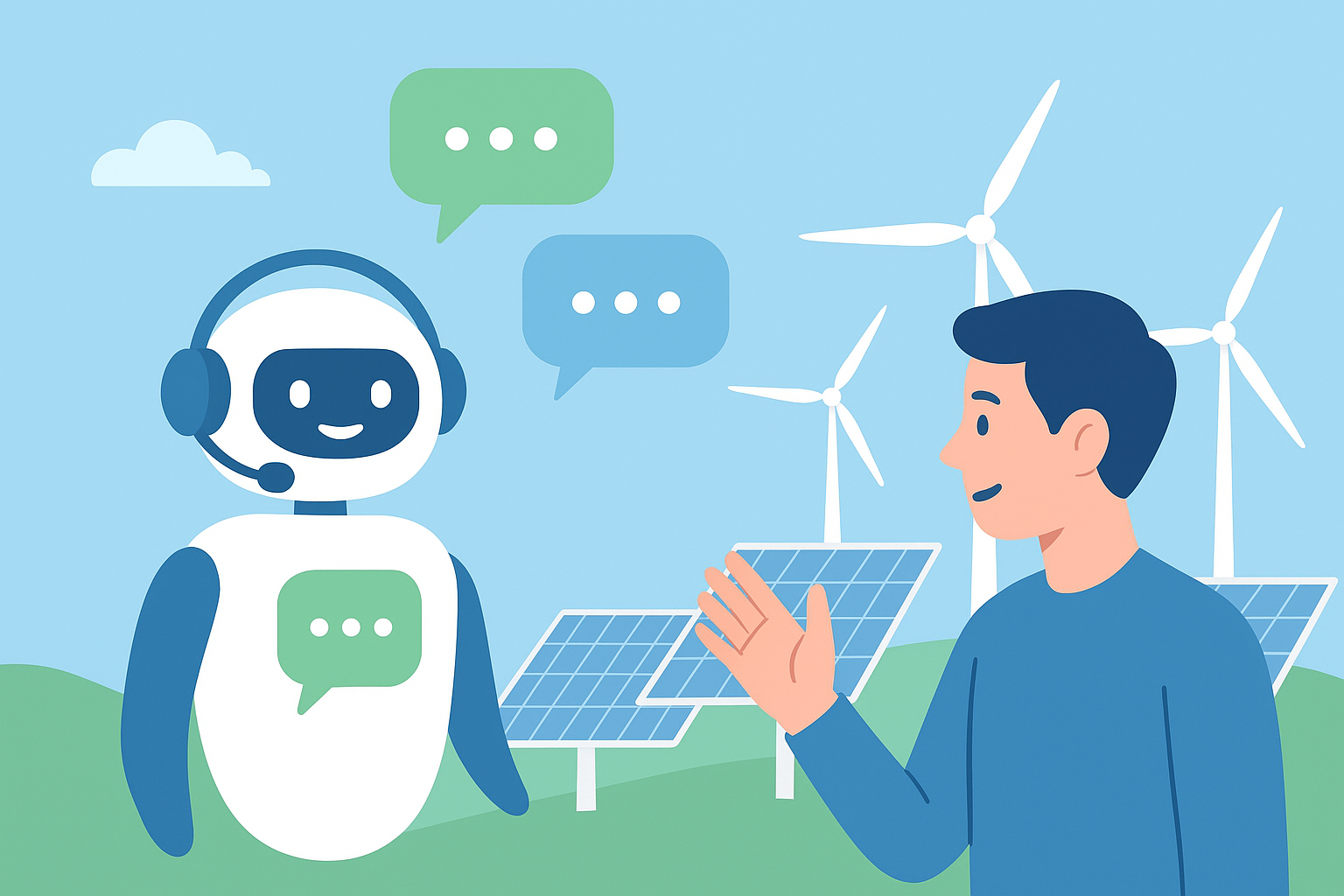
Renewable energy chatbots are specialized conversational AI systems designed to interact with users and provide support related to sustainable energy. Unlike traditional chatbots that focus solely on customer service or general queries, renewable energy chatbots have a very specific role in bridging the gap between users and the complex world of clean energy. They serve as digital assistants capable of explaining solar panel benefits, wind energy projects, hydropower efficiency, and other green solutions in a language that is simple, clear, and interactive.
The importance of renewable energy chatbots lies in their ability to simplify technical concepts. Many individuals and businesses want to adopt renewable energy but often find the information overwhelming. By offering direct responses, comparisons, and detailed explanations, these AI-powered assistants eliminate confusion and promote informed decision-making.
Furthermore, renewable energy chatbots integrate seamlessly into websites, apps, and customer service platforms, enabling energy companies, eco-organizations, and governments to provide users with real-time updates about new policies, subsidies, or technological advancements. This accessibility ensures that sustainable energy knowledge is not limited to experts but available to the public at large.
In essence, renewable energy chatbots act as the gateway to a smarter, cleaner future where technology and sustainability work hand in hand.
Why Renewable Energy Needs Conversational AI
The renewable energy industry is expanding rapidly, but with growth comes complexity. Consumers are overwhelmed with endless options, including solar, wind, geothermal, tidal, and hybrid systems. Each solution has its advantages, installation costs, and technical considerations. Without the right guidance, people often delay or abandon their clean energy journey altogether. This is where conversational AI becomes invaluable.
Chatbots powered by artificial intelligence bring simplicity into this complicated process. They provide instant answers to questions, generate personalized recommendations, and even calculate savings or return on investment for adopting renewable solutions. By using natural language processing, these bots create a human-like interaction, making conversations about energy engaging instead of intimidating.
For businesses in the renewable energy sector, chatbots reduce workload by automating repetitive tasks, such as answering FAQs, booking consultations, and explaining pricing models. This allows human agents to focus on more complex tasks while still maintaining high levels of customer satisfaction.
Additionally, conversational AI helps tackle the problem of awareness and education. Many people are unaware of the long-term financial and environmental benefits of renewable energy. A chatbot can fill this gap by delivering interactive lessons, quizzes, or calculators that demonstrate how sustainable energy saves money and protects the planet.
By blending technology and green innovation, conversational AI ensures that renewable energy adoption is not only possible but also more attractive and achievable.
The Role of AI in Sustainable Energy Awareness
One of the greatest challenges in renewable energy adoption is lack of awareness. While governments and organizations push for clean energy, many individuals still do not fully understand its significance or how to transition. This is where AI-driven chatbots take on the role of educators.
Artificial intelligence allows chatbots to adapt conversations based on user behavior and interests. For example, if a user expresses concern about high electricity bills, the chatbot can guide them toward solar panel options and provide real-time comparisons of energy costs with and without renewable alternatives. If another user asks about environmental impact, the chatbot can explain the reduction in carbon footprint.
AI-powered personalization makes every interaction meaningful. Instead of offering generic responses, renewable energy chatbots provide tailored insights that build trust and encourage people to act. Moreover, they work across languages and time zones, ensuring that knowledge about renewable energy spreads globally.
AI also helps combat misinformation. Many myths surround clean energy, such as claims that solar panels are ineffective on cloudy days or that wind turbines are too costly. Through conversational AI, these misconceptions can be addressed immediately with factual data, helping people make well-informed decisions.
In short, artificial intelligence strengthens renewable energy adoption by raising awareness, breaking down barriers, and creating an informed community committed to sustainable living.
How Chatbots Empower Solar Energy Adoption
Solar energy is one of the most popular and accessible forms of renewable energy, yet many consumers hesitate to invest because of installation costs, technical jargon, and lack of knowledge about government incentives. Renewable energy chatbots make this journey easier by providing step-by-step guidance.
These AI assistants can answer key questions like:
- How much does a solar system cost for a home of a certain size?
- What are the expected savings on electricity bills over five or ten years?
- Are there any subsidies, tax benefits, or local grants available?
By simplifying the solar adoption process, chatbots act as financial advisors, technical guides, and personal consultants all at once. They can even use interactive calculators to show users how many panels they would need based on energy consumption and location.
For solar energy companies, chatbots improve lead generation by engaging website visitors instantly and collecting data for sales teams. This reduces the chances of losing potential customers due to long response times.
Ultimately, renewable energy chatbots make solar power adoption less intimidating and more appealing, ensuring that more households and businesses embrace clean energy solutions.
Wind Power and Chatbot-Driven Education
Wind energy is one of the fastest-growing renewable sectors, but for many consumers, it remains misunderstood. While people often see large wind turbines on hilltops or offshore farms, they rarely understand how these systems work, what benefits they bring, or how they can be implemented on a smaller scale. This lack of knowledge can discourage adoption. Here is where renewable energy chatbots play a transformative role.
Through interactive and conversational AI, chatbots can explain the basics of wind power in easy-to-understand terms. They provide insights into how turbines generate electricity, the efficiency of small-scale wind installations, and the financial savings that businesses or communities can achieve by harnessing wind energy.
Educational capabilities of chatbots go beyond text-based conversations. They can integrate visuals, animations, and voice-enabled interactions to make learning engaging and accessible. Imagine a chatbot showing an animated breakdown of how kinetic wind energy is converted into electrical power, or providing a calculator that estimates how much wind energy a property could generate based on location.
For governments and organizations promoting renewable energy, chatbots act as digital ambassadors. They spread accurate information, dispel myths (such as claims that wind turbines are noisy or harmful to wildlife), and encourage communities to consider wind power as a viable option. In regions with high wind potential, these bots can even provide tailored recommendations, guiding users to nearby service providers or explaining available incentives.
In essence, chatbots simplify the complexities of wind energy, making it approachable for everyday users while inspiring wider adoption of one of the cleanest energy sources available.
Hydropower Solutions through Conversational Guidance
Hydropower has been a cornerstone of renewable energy for decades, yet many people still overlook its relevance in today’s green transition. The idea of dams and water turbines can seem distant, large-scale, and inaccessible to individuals. However, renewable energy chatbots help bridge this gap by offering guidance on both community-level and micro-hydro solutions.
Chatbots explain the science of hydropower in an engaging way. They describe how flowing or falling water generates electricity, outline the environmental impacts, and highlight the benefits of consistent and reliable energy production. More importantly, they can explain how small-scale hydropower systems can serve rural areas, farms, and even businesses located near water sources.
Another significant advantage is the role of chatbots in financing and policy education. Hydropower often requires substantial investment, but many users are unaware of available subsidies, grants, or low-interest loans. Chatbots can act as personal advisors, breaking down financial models and connecting users with relevant institutions.
Hydropower also plays a critical role in sustainability discussions because it offers stable power compared to intermittent solar or wind energy. Chatbots can help users understand how combining multiple renewable sources creates balanced energy systems.
By transforming hydropower knowledge into digestible conversations, chatbots encourage communities and organizations to embrace this long-standing yet continuously evolving renewable option.
Chatbots for Energy Consumption Tracking
One of the greatest challenges in the energy sector is helping users understand and manage their consumption. Consumers often receive electricity bills without any breakdown of their energy habits, making it difficult to pinpoint waste or optimize efficiency. This is where renewable energy chatbots offer an invaluable solution.
By integrating with smart meters, IoT devices, and energy management platforms, chatbots can provide real-time consumption data. A user can simply ask, “How much energy did I use today?” and the chatbot can generate a clear response along with visual graphs or suggestions for reducing unnecessary usage.
This type of interaction not only increases awareness but also promotes sustainable living. When people see the direct connection between their behavior and energy costs, they become more motivated to change. For instance, a chatbot might suggest unplugging idle devices, adjusting thermostat settings, or shifting appliance use to off-peak hours to reduce costs and emissions.
For businesses, energy consumption tracking via chatbots translates into substantial savings. Companies can identify inefficiencies in operations, reduce overhead expenses, and ensure compliance with sustainability standards. Chatbots can also prepare detailed reports that managers can review without needing specialized technical knowledge.
In summary, chatbots turn energy data into actionable insights. They transform abstract numbers into meaningful advice, empowering both individuals and organizations to take control of their energy usage.
Enhancing Customer Service in Green Energy Companies
Customer service has always been a challenge in industries with technical products, and renewable energy is no exception. Consumers often have numerous questions about installation, maintenance, warranties, and costs. Without quick responses, they may lose interest or switch to competitors. This is why chatbots are a game-changer for green energy companies.
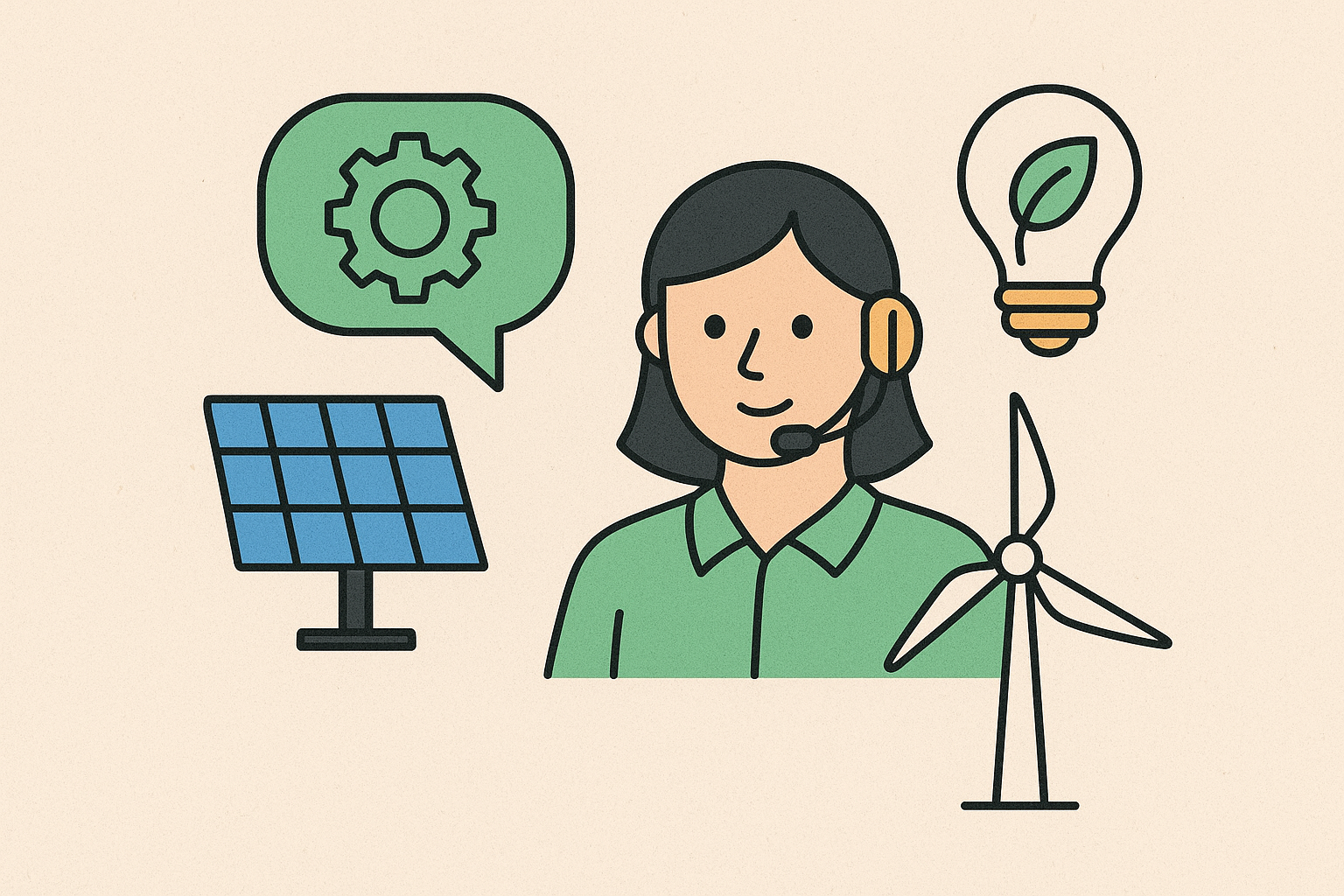
AI-driven chatbots provide instant 24/7 support to customers. Whether someone is inquiring about solar panel installation, wind turbine performance, or battery storage solutions, chatbots can deliver consistent and accurate responses at any hour. This reduces waiting times and boosts customer satisfaction.
Moreover, chatbots do not just answer queries—they build relationships. They remember user interactions, preferences, and purchase history, creating a personalized service experience. For example, if a customer previously asked about solar systems for a small home, the chatbot can follow up with updates on promotions or government incentives relevant to their situation.
For companies, this automation reduces the workload of human agents, allowing staff to focus on complex or high-value issues. It also lowers operational costs while ensuring a higher volume of inquiries is handled efficiently.
In addition, chatbots help companies stay competitive in a crowded renewable energy market. By providing seamless support, they create trust and loyalty, turning casual inquirers into committed customers.
Thus, renewable energy chatbots are not just tools—they are vital partners in delivering exceptional customer experiences.
Renewable Energy Financing and Chatbot Support
The financial aspect of renewable energy is one of the biggest barriers for individuals and businesses. Solar panels, wind turbines, and hydropower systems require initial investments that many people perceive as too costly. However, with financing options, subsidies, and tax incentives, renewable energy can be far more affordable than expected. Chatbots are instrumental in explaining these financial opportunities.
Through conversational AI, chatbots act as virtual financial advisors. They can provide breakdowns of installation costs, available grants, and monthly repayment plans for loans. For example, a chatbot could calculate the payback period of a solar installation by comparing monthly electricity savings against loan installments.
Transparency is key in financial decisions, and chatbots excel in delivering clear, unbiased explanations. They can guide users step-by-step through application processes, ensuring they do not miss out on valuable funding opportunities. This reduces confusion and builds confidence in adopting renewable energy.
For energy companies and financial institutions, chatbots streamline the customer journey. They handle initial queries, pre-qualify applicants, and gather essential information before passing leads to human agents. This improves efficiency while ensuring customers feel supported throughout the financing process.
Ultimately, renewable energy financing chatbots make green investments more accessible, helping to remove one of the greatest obstacles to widespread adoption.
Smart Grids and AI Chatbot Integration
The rise of smart grids marks a revolutionary shift in how electricity is generated, distributed, and consumed. Unlike traditional grids, smart grids rely on digital communication and automation to balance supply and demand in real time. However, their complexity can overwhelm both consumers and businesses. This is where AI-powered chatbots serve as essential guides.
Smart grid chatbots simplify technical data by turning it into actionable insights. For example, users can ask about peak hours, renewable energy availability, or their household’s contribution to grid stability. Instead of sifting through confusing reports, they receive clear, conversational explanations.
One of the most powerful aspects of chatbot integration is demand-side management. Chatbots can notify users when energy prices are high and suggest shifting usage to off-peak times. This not only reduces costs but also optimizes grid performance. Businesses benefit greatly, as automated chatbot notifications can coordinate energy-intensive operations with renewable availability, ensuring both sustainability and efficiency.
Moreover, chatbots enhance transparency between grid operators and customers. They can provide updates about outages, renewable energy contributions, and government regulations, creating trust and improving user experience.
Ultimately, the partnership between smart grids and renewable energy chatbots makes modern electricity systems more understandable and more user-friendly, encouraging wider participation in energy efficiency programs.
Chatbots in Electric Vehicle Charging Infrastructure
The rapid growth of electric vehicles (EVs) has created both opportunities and challenges for renewable energy adoption. While EVs are eco-friendly, their charging infrastructure requires massive expansion and user-friendly support. Chatbots play a vital role in bridging this gap.
EV charging chatbots assist drivers in finding nearby charging stations, checking availability, and even reserving slots in advance. By integrating with GPS and charging networks, they provide real-time directions and updates, reducing the frustration of searching for chargers.
Chatbots also simplify payment and subscription processes. Instead of navigating multiple apps or websites, users can ask a chatbot about pricing, available discounts, or membership benefits. For renewable energy-focused EV stations, chatbots can further highlight how much of the electricity supplied comes from solar, wind, or hydro sources, boosting consumer confidence in sustainability.
Another advantage lies in predictive support. Chatbots can remind EV owners about optimal charging times when renewable energy supply is high or when grid demand is low. This ensures cost savings while encouraging greener energy use.
In addition, EV manufacturers and service providers benefit from chatbots by offering instant after-sales support, answering technical questions, and resolving issues without long waiting times.
Thus, renewable energy chatbots make EV adoption smoother, ensuring that electric mobility aligns seamlessly with the broader clean energy movement.
Personalized Recommendations for Sustainable Living
Sustainable living is more than just using renewable energy; it involves everyday choices that minimize environmental impact. However, most people are unsure where to begin or how to measure progress. Chatbots fill this gap by offering personalized sustainability guidance.
Through data collection and AI-driven insights, chatbots create tailored plans for each user. For example, a chatbot might recommend switching to LED lighting, reducing water heating energy, or adopting solar-powered appliances based on the user’s household energy profile.
Personalization builds motivation and accountability. Instead of receiving generic advice, users feel guided by a digital assistant that understands their unique lifestyle. A chatbot can track progress over weeks or months, celebrating milestones such as reduced electricity bills or a smaller carbon footprint.
Businesses can also use sustainability chatbots to engage employees. Companies striving for greener operations can deploy chatbots to suggest workplace improvements, such as adopting renewable energy suppliers or optimizing office energy usage.
Moreover, these bots encourage broader behavioral change by gamifying sustainability. They can create challenges, scorecards, and rewards, making eco-friendly habits both fun and achievable.
By providing clear, step-by-step recommendations, renewable energy chatbots transform sustainability from an abstract concept into a practical daily routine, helping individuals and organizations make real, lasting impact.
Overcoming Myths about Renewable Energy with AI
One of the greatest barriers to renewable energy adoption is the persistence of myths and misinformation. Common misconceptions—such as solar panels not working on cloudy days, wind turbines being excessively noisy, or renewable energy being too expensive—prevent people from embracing sustainable options. Chatbots powered by AI are effective tools in countering these myths.
Unlike static websites or brochures, chatbots engage users in real-time conversations, addressing concerns immediately. When someone questions the reliability of solar energy, the chatbot can provide data showing that panels generate electricity even under cloudy conditions. Similarly, if a user worries about wind turbines harming wildlife, the chatbot can explain modern safety designs.
AI-driven chatbots are constantly updated with the latest information and research. This ensures that they deliver accurate, evidence-based responses rather than outdated facts. They can also share links to credible studies, government resources, or case studies, strengthening trust.
Additionally, chatbots adapt to user skepticism by tailoring responses. If a person expresses doubt about costs, the chatbot can calculate payback periods and showcase real examples of households saving money with renewable installations.
By dispelling myths and misconceptions, renewable energy chatbots remove psychological barriers, empowering individuals to make informed and confident decisions about adopting green energy.
Chatbots as Educational Tools in Schools and Universities
The next generation will play a crucial role in advancing renewable energy adoption, and education is the foundation of this transformation. Schools and universities are increasingly incorporating sustainability into their curricula, but students often need interactive tools to truly grasp complex topics. Chatbots serve as excellent educational companions.
Educational chatbots can explain renewable energy concepts in engaging and student-friendly ways. For example, they can simulate how solar panels work, provide quizzes on wind energy, or create virtual experiments for hydropower. This makes learning dynamic and interactive compared to traditional textbooks.
Moreover, chatbots bridge the gap between theory and practice. Students can use them to explore real-world applications, such as calculating how much renewable energy their school could generate if panels were installed on rooftops. Universities can deploy chatbots to guide students through sustainability initiatives, events, or research projects.
Teachers and professors also benefit from chatbots by using them as teaching assistants. Instead of answering repetitive questions, educators can rely on chatbots to handle basic inquiries while focusing on deeper learning.
In the long run, these AI-powered tools instill awareness, curiosity, and responsibility in young minds. By making renewable energy education accessible and engaging, chatbots inspire students to become advocates and innovators in the green energy movement.
Future of Renewable Energy Marketplaces with AI Support
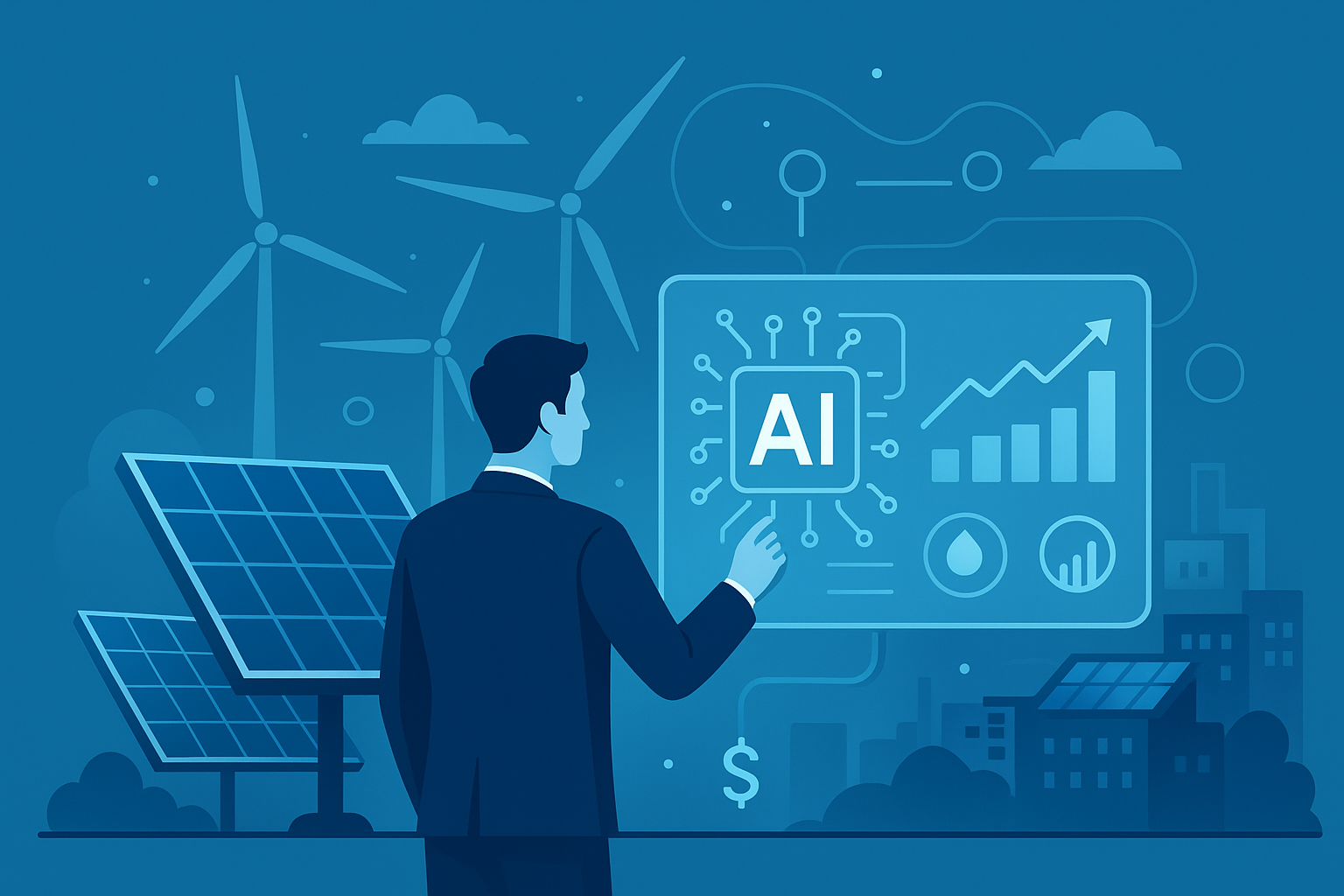
The renewable energy industry is evolving into a global marketplace where consumers, businesses, and governments connect to trade green energy solutions. From solar panel kits to large-scale wind turbines, the demand for clean technologies is rising. However, these marketplaces can be overwhelming for users who are unsure about pricing, installation, or compatibility. Chatbots powered by AI provide essential support in navigating renewable energy marketplaces.
Marketplace chatbots act as digital guides that simplify the buying journey. They answer questions about product features, warranties, and financing options while offering side-by-side comparisons of renewable energy solutions. For instance, a chatbot can help a homeowner choose between different solar packages by explaining the advantages of each option in plain language.
The role of chatbots goes beyond simple customer service. They can collect user preferences, recommend products based on energy goals, and even predict future needs using AI-driven data analysis. This creates a highly personalized shopping experience, increasing user confidence in making investments.
For vendors and energy companies, chatbots streamline lead generation, automate support, and boost conversion rates. They also ensure buyers receive accurate, transparent information, building trust in the renewable energy marketplace.
As clean energy markets expand, chatbots will become indispensable in helping users make smarter, faster, and more sustainable purchasing decisions.
Challenges in Implementing Renewable Energy Chatbots
While renewable energy chatbots offer countless benefits, their adoption comes with certain challenges that must be addressed for long-term success. The first challenge is data accuracy. Chatbots depend on reliable, updated information to deliver value. Inaccurate or outdated data could mislead users and harm credibility.
Another challenge lies in user trust and acceptance. Not all individuals are comfortable relying on AI-driven assistants, especially when making financial or technical decisions. Building confidence requires transparency, clear explanations, and the option for human support when needed.
Technical integration is also a major obstacle. Renewable energy companies often use diverse platforms for billing, monitoring, and support. Ensuring that chatbots integrate seamlessly across these systems can be complex and resource-intensive.
Additionally, language diversity and accessibility remain hurdles. Renewable energy is a global issue, and chatbots must cater to users from different regions, languages, and educational backgrounds. Creating inclusive, multilingual chatbot systems requires significant investment.
Finally, cybersecurity is a pressing concern. Chatbots often handle sensitive data, such as personal consumption habits or financial information. Ensuring that this data is protected with strong encryption and compliance measures is vital.
Despite these challenges, ongoing advancements in AI, cloud computing, and natural language processing are steadily reducing barriers, paving the way for more effective renewable energy chatbot adoption worldwide.
The Future of Clean Energy and AI Collaboration
The partnership between renewable energy and artificial intelligence is only beginning to reveal its full potential. As technology advances, chatbots will evolve into even more powerful tools for clean energy adoption and awareness.
In the near future, renewable energy chatbots may integrate with augmented reality (AR) and virtual reality (VR). Imagine a chatbot walking users through a virtual solar installation on their home or showing how a wind farm operates in 3D. These immersive experiences will enhance understanding and encourage faster decision-making.
Predictive analytics will also become a cornerstone feature. Chatbots will be able to forecast energy costs, savings, and carbon reduction over time, helping individuals and businesses plan long-term strategies. They will also play a role in demand forecasting for smart grids, ensuring smoother operations.
Moreover, as the Internet of Things (IoT) expands, chatbots will connect with smart devices to create automated energy ecosystems. A chatbot might adjust home energy use automatically, schedule EV charging during renewable peaks, or recommend system upgrades based on real-time data.
In the bigger picture, the collaboration of AI and renewable energy will accelerate the global transition toward sustainability. Chatbots will not only assist but actively drive the shift to greener lifestyles, becoming key players in building a clean energy future.
Conclusion: Renewable Energy Chatbots Shaping a Greener Tomorrow
In conclusion, renewable energy chatbots represent a powerful fusion of artificial intelligence and sustainability, offering users an interactive gateway into the world of clean energy. From simplifying complex information about solar, wind, and hydropower to assisting with financing, smart grid management, and electric vehicle integration, these chatbots provide clarity, convenience, and empowerment. They bridge the gap between consumers and businesses, making renewable energy adoption less intimidating and more accessible.
The true value of renewable energy chatbots lies not only in efficiency but also in education. By dispelling myths, promoting awareness, and encouraging sustainable living, they create a more informed global community ready to embrace the green transition. Their role in schools, universities, and marketplaces ensures that future generations grow up with a strong understanding of renewable energy and its importance.
As we move into a future shaped by technological innovation and environmental responsibility, chatbots will become indispensable allies. They will guide, educate, and inspire individuals and organizations to adopt clean energy solutions that benefit both the planet and the economy.
Platforms like Engagerbot highlight how AI-driven technologies can align with global sustainability goals, transforming the renewable energy landscape into a conversational, accessible, and innovative space. With chatbots at the forefront, the path to a greener tomorrow is not only possible but already underway.