

A modern travel business cannot grow without smart automation, instant customer support, and a smooth booking experience. Today’s travelers expect responses within seconds, personalized trip suggestions, real-time support, automated itinerary management, and transparent booking processes. Traditional customer service methods are slow, costly, and unable to meet the expectations of global, mobile-first customers. This is why AI-powered Booking & Travel Chatbots have become the new backbone of travel agencies, airlines, hotels, rental services, tour operators, and vacation planning platforms. This blog explores the full landscape of travel chatbot technology with a structured, guideline-style format to help you understand how today’s intelligent bots transform travel operations, boost conversions, and improve customer satisfaction.
Introduction
The travel industry has evolved into a fast-paced digital environment where customers demand instant answers, seamless booking options, and personalized guidance at every step of their journey. In such a landscape, Booking & Travel Chatbots have emerged as powerful tools that automate customer interactions, simplify booking processes, and deliver real-time travel assistance across multiple channels. For modern travel agencies and hospitality brands, a chatbot is no longer an optional feature — it is a core technology that enhances user experience, reduces operational costs, and keeps businesses competitive. Companies using AI chatbots achieve higher booking conversions, better customer retention, and smoother post-booking support compared to those relying solely on human agents.
In today’s global travel market, the challenges of managing large customer volumes, handling complex itinerary requests, answering repetitive inquiries, and providing assistance across time zones have made AI chatbots essential. A powerful travel chatbot is capable of understanding natural language, recommending travel destinations, checking availability, comparing prices, managing bookings, and even assisting with cancellations or modifications — all within seconds. Additionally, travel chatbots are designed to offer multilingual support, making them ideal for international travelers seeking clarity and convenience during their booking experience.
This blog post provides a deeply structured, comprehensive, and SEO-optimized guide to help readers understand the mechanics, benefits, use cases, and implementation details of Booking & Travel Chatbots. Every section follows a document-style structure inspired by professional guideline documents to ensure clarity, depth, and authority. Whether you are a startup, established travel business, or digital agency, this guide will help you understand how integrating a chatbot system from Engagerbot can elevate your operations and customer experience.
The Evolution of AI in Travel Technology
Travel technology has undergone a massive transformation driven by automation, artificial intelligence, and consumer demand for instant solutions. The shift from traditional travel agencies to digital platforms began more than a decade ago, but real automation started shaping the industry with the rise of AI-powered systems. Earlier, travel businesses relied heavily on human staff to manage bookings, inquiries, and support. But these manual processes were slow, expensive, and prone to errors. With the introduction of AI chatbots, the industry unlocked new levels of efficiency by enabling automated responses, instant itinerary creation, and personalized recommendations. AI fundamentally improved how businesses interact with their customers and manage backend operations.
The evolution of travel technology accelerated when machine learning models started understanding user intent, preferences, and behavior. Rather than functioning as basic automated scripts, chatbots began delivering intelligent responses based on real-time data and past interactions. This improved customer confidence and reduced friction in the booking process. The combination of NLP (Natural Language Processing), predictive analytics, and dynamic pricing engines gave chatbots the ability to support multi-step conversations and guide users toward optimal travel decisions. Today, modern travel chatbots operate across websites, apps, WhatsApp, Messenger, and even voice-enabled assistants, making the travel ecosystem more accessible.
AI continues to reshape the travel landscape with emerging technologies like generative AI, recommendation engines, sentiment analysis, and autonomous itinerary builders. These advancements allow chatbots to act as virtual travel managers capable of handling entire journeys — from destination discovery to post-trip support. As global travel demand increases, AI-driven tools will continue to play a major role in shaping customer expectations and business strategies. For travel companies seeking scalability, efficiency, and competitive advantage, integrating a Booking & Travel Chatbot is no longer an option but a necessity for sustainable growth.
Understanding What a Booking & Travel Chatbot Really Is
A Booking & Travel Chatbot is an AI-powered software system designed to automate customer interactions related to travel planning, hotel reservations, flight bookings, vehicle rentals, tour packages, and real-time support. Unlike traditional customer support agents, chatbots operate 24/7, respond instantly, and handle large volumes of requests without fatigue. They are trained to understand natural language, interpret user questions, and deliver accurate and relevant answers. These bots can offer destination recommendations, check availability, compare pricing options, process secure bookings, and modify travel plans based on user preferences. Their functionality is enhanced further when integrated with CRM, inventory management systems, airline APIs, and hotel management software.
At its core, a travel chatbot functions as a digital concierge capable of assisting travelers at various stages of their journey. Whether a customer wants to find the cheapest flight, explore top destinations, check hotel availability, request a refund, or manage loyalty points, the chatbot is designed to provide end-to-end support. These chatbots are also capable of validating user details, verifying travel documents, sending reminders, and offering real-time updates about delays, cancellations, or schedule changes. Such capabilities help reduce the workload on human agents and ensure customers receive immediate solutions without unnecessary delays.
Modern Booking & Travel Chatbots are built with advanced machine learning algorithms, ensuring continuous learning and conversation improvement. As chatbots interact with more users, they develop a deeper understanding of common questions, user preferences, and behavioral patterns. This allows them to deliver more accurate, personalized, and context-aware responses over time. The integration of multilingual support ensures that global travelers feel comfortable communicating in their native language, improving accessibility and customer experience. Collectively, these functionalities make travel chatbots indispensable tools for businesses that aim to provide seamless booking experiences and efficient after-sales support.
Why Travel Businesses Need AI Chatbots Today
The modern travel ecosystem demands speed, accuracy, and personalization — three elements that human teams alone cannot consistently deliver at scale. Travelers expect instant answers, especially when researching destinations, comparing flight options, or resolving travel issues. AI chatbots bridge this gap by offering automated yet highly personalized interactions. They help businesses handle thousands of requests simultaneously without compromising quality or response times. This drastically reduces operational costs while increasing customer satisfaction and revenue potential. With chatbot automation in place, businesses no longer need to rely solely on large customer service teams to manage repetitive inquiries like pricing, availability, check-in times, or itinerary changes.
Another major reason travel businesses require chatbots is the need for continuous, round-the-clock support. Customers interact with travel websites and apps from different time zones, making 24/7 availability essential. A chatbot operates without interruptions, assisting customers even during holidays or peak travel seasons. This ensures that no potential booking opportunity is missed and customers always receive immediate guidance. Chatbots also reduce stress on human teams during peak travel periods, allowing staff to focus on complex tasks requiring human judgment instead of repetitive, routine questions.
AI chatbots also significantly improve the booking experience by eliminating friction from the decision-making process. They offer dynamic recommendations based on user behavior, previous trips, and ongoing promotions. By guiding customers toward the best travel deals and options, chatbots boost conversions and increase customer trust. Strong personalization features encourage repeat bookings, helping travel businesses build long-term customer relationships. In an era where competition in the travel industry is fierce, having a smart AI chatbot is a critical factor in delivering superior service, optimizing workflows, and accelerating business growth.
The Role of NLP in Travel Chatbot Accuracy
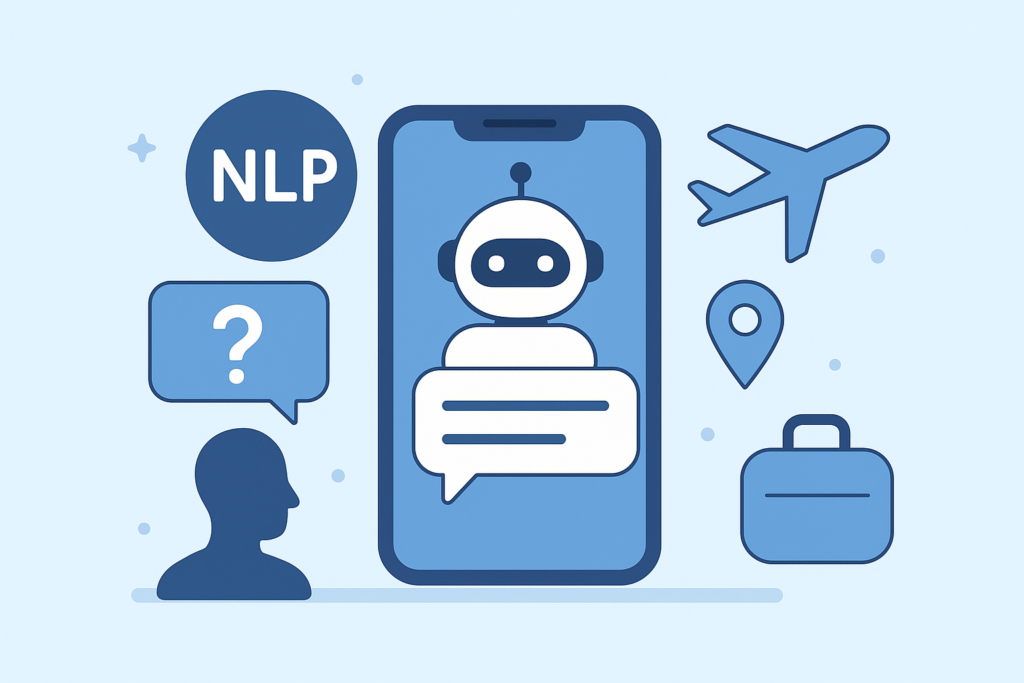
Natural Language Processing (NLP) is the core technology that enables Booking & Travel Chatbots to understand user queries, respond accurately, and carry out complex booking operations. Without NLP, chatbots would behave like rigid scripts unable to interpret real human conversations. NLP allows the chatbot to process varying sentence structures, slang, spelling errors, and multilingual input. This ensures the bot can understand user intent even when the phrasing is unclear or incomplete. For travel businesses, this is extremely important because customers often ask long, detailed questions such as, “Can you find me a flight to Dubai for next Friday under $400?” NLP lets the chatbot break down the question and extract essential information like destination, budget, and date.
The accuracy of a travel chatbot relies heavily on its ability to identify user intent and respond with contextually relevant information. NLP models analyze patterns in conversations, classify the type of inquiry, and determine the most appropriate response. For example, if a user asks about “best beaches in Thailand,” the chatbot identifies it as a destination recommendation query. If the user asks, “Can you book a room for two adults in Phuket?” the chatbot treats it as a booking request. This understanding ensures a smooth, seamless conversation where users receive accurate responses without confusion or delays.
Advanced NLP models allow travel chatbots to understand sentiment, user tone, and emotional context. This helps them tailor responses depending on whether the user is confused, frustrated, excited, or simply browsing. Sentiment detection enables the chatbot to escalate issues to human agents when necessary, ensuring customer concerns are handled with care. Over time, NLP-powered chatbots continuously learn from new conversations, improving their accuracy, adaptability, and customer satisfaction. As NLP technology grows more advanced, the future of travel chatbots will include even more human-like, empathetic, and conversational interactions.
How Travel Chatbots Personalize the Customer Journey
Personalization is the heart of successful travel experiences, and modern AI chatbots play an essential role in crafting journeys tailored to individual needs. The travel industry thrives on delivering memorable experiences that resonate with customers. Travel chatbots have transformed personalization by analyzing customer behavior, past purchases, browsing patterns, preferred destinations, and interaction history. This allows them to recommend deals, destinations, accommodations, and travel packages aligned with user interests. A chatbot’s capability to recall previous interactions enhances continuity, making users feel understood and valued during their travel planning experience.
A travel chatbot also personalizes conversations in real time by dynamically adapting to the user’s preferences and context. For example, if a user frequently searches for luxury hotels, the chatbot prioritizes upscale accommodations in future interactions. If someone is budget-conscious, the chatbot automatically displays affordable flight and hotel options. This level of immediate personalization reduces decision fatigue by presenting relevant and meaningful choices. Additionally, chatbots use contextual reasoning to anticipate customer needs, such as proposing travel insurance, local transportation options, or visa information when a user books an international trip. This proactive support significantly improves customer satisfaction.
The deep personalization features of modern travel chatbots enhance engagement, increase conversions, and build loyalty. When users feel that recommendations are tailored specifically for them, they develop a natural trust in the platform. This trust results in repeat bookings and long-term business relationships. In today’s competitive landscape, personalization is not merely a luxury; it is a powerful growth strategy that differentiates successful travel businesses from the rest. AI-powered travel chatbots ensure every interaction feels curated, relevant, and meaningful, turning ordinary browsing into deeply personalized travel planning experiences.
Real-Time Booking and Reservation Management with AI
One of the most valuable capabilities of travel chatbots is their ability to handle real-time bookings, check availability, and automate reservation processes instantly. The traditional booking process requires users to navigate multiple pages, enter details repeatedly, and wait for confirmation emails. Travel chatbots eliminate these hurdles by providing an all-in-one conversational interface where users can complete their bookings within seconds. By connecting directly to booking engines, airline APIs, hotel management systems, and reservation databases, chatbots ensure accurate, up-to-date availability and pricing information. This real-time access enhances user trust and drastically reduces drop-off rates.
A significant advantage of AI-based booking management is its ability to streamline modifications and cancellations. Travelers often need to adjust their plans due to emergencies, schedule changes, or newfound preferences. Chatbots can instantly retrieve booking details, check alternative options, and process modifications without requiring human intervention. The bot can also guide users in understanding refund policies, fare differences, and availability constraints. This automation reduces friction, saves time, and ensures a smooth customer experience across all stages of the booking lifecycle.
Real-time booking management through chatbots increases efficiency, boosts customer satisfaction, and enhances conversion rates. When users are not forced to browse complex websites or wait on hold for support agents, they are more willing to complete their bookings. The immediacy provided by chatbots builds confidence and encourages customers to finalize reservations quickly. Travel businesses benefit from higher booking volumes, reduced operational costs, and improved workflow automation. As AI technology becomes more advanced, the future will see chatbots handling even more complex reservation processes, multi-city itineraries, dynamic pricing structures, and personalized booking flows.
Automated Travel Assistance Before, During, and After the Trip
Travelers require guidance at every step of their journey — starting from destination planning to navigating airports and receiving post-trip support. Travel chatbots excel in providing round-the-clock assistance that enhances convenience, safety, and user satisfaction. Before the journey begins, chatbots assist travelers with researching destinations, understanding visa requirements, estimating budgets, and finding the best travel packages. This initial guidance helps users make informed decisions. The chatbot can also send reminders about check-in times, vaccination rules, travel insurance, and essential documents, making pre-trip preparation effortless.
During the journey, the chatbot becomes a powerful real-time companion capable of delivering live travel updates. Whether it is flight delays, gate changes, weather warnings, or traffic conditions, chatbots ensure travelers stay informed. Many advanced travel chatbots provide airport navigation assistance, hotel check-in guidance, and local recommendations such as restaurants, tourist attractions, transportation options, and emergency contacts. By enabling instant communication, chatbots eliminate stress often associated with traveling in unfamiliar locations. They act as personal digital guides available at all times without requiring mobile apps or human assistance.
Post-trip, travel chatbots continue to provide valuable services that enhance customer loyalty and encourage repeat bookings. They send personalized follow-up messages asking for feedback, offering loyalty discounts, and recommending future travel opportunities based on the traveler’s recent trip. The bot can help with refund processing, lost baggage claims, travel insurance verification, and receipt generation. This ensures the customer journey does not end after the trip but evolves into an ongoing relationship with the travel brand. Automated after-sales support significantly improves brand perception and reassures customers that the company truly values their experience.
How Travel Chatbots Reduce Operational Costs
Operational efficiency is a major challenge for travel businesses, especially during peak seasons when customer inquiries skyrocket. Travel chatbots reduce operational expenses by handling thousands of customer queries simultaneously without requiring additional staff. This minimizes the need to hire large customer service teams, reducing recruitment, training, and salary costs. Chatbots efficiently manage repetitive inquiries like pricing, availability, booking steps, cancellation policies, baggage limits, and travel document requirements. This automation ensures employees focus on high-value tasks rather than routine questions.
Chatbots significantly lower the cost of customer support infrastructure by reducing the need for call centers and live agents. With fewer calls to manage, travel companies can cut down on overhead expenses associated with office space, phone systems, and support software. AI-powered chatbots also operate at a fraction of the cost of human staff, making them efficient long-term investments. Unlike human employees, chatbots do not require breaks, shifts, or overtime pay, meaning businesses can provide continuous availability without extra expenditure. This cost-efficient scalability is particularly beneficial for small and medium-sized travel companies aiming to grow without heavy financial burdens.
The automation provided by AI chatbots also reduces errors and improves accuracy, thus preventing financial losses caused by incorrect bookings or misinformation. Human mistakes such as miscommunication, wrong dates, or missed information can lead to costly refunds, penalties, or customer dissatisfaction. Chatbots eliminate these risks by ensuring consistent and precise information delivery. The combination of cost reduction, increased efficiency, and improved customer satisfaction makes travel chatbots a transformative solution for businesses seeking sustainable growth in a competitive environment.
Multilingual Capabilities and Global Traveler Support
The travel industry serves customers from diverse linguistic backgrounds, making multilingual support critical for success. Travel chatbots provide multilingual communication that ensures clarity, accessibility, and comfort for international travelers. By supporting multiple languages, chatbots eliminate communication barriers that often lead to misunderstandings or booking errors. Users feel more confident and satisfied when interacting in their native language, which improves trust and increases the likelihood of completing bookings. This global accessibility expands the reach of travel businesses and boosts international engagement.
Multilingual chatbots also enhance the quality of customer interactions by understanding cultural nuances, local terminologies, and different sentence structures. This enables chatbots to deliver more accurate and personalized responses. They can interpret accents, spelling variations, and regional travel terms, ensuring smooth communication. Additionally, a multilingual chatbot reduces the need to hire multilingual agents or rely on third-party translation services, providing a cost-effective solution for global operations. It becomes easier for businesses to serve users across different continents, time zones, and travel markets.
By offering language diversity, travel chatbots strengthen customer relationships and improve user experiences for international travelers. Travelers often feel anxious when planning trips to foreign destinations where they may not understand the local language. A multilingual chatbot acts as a reliable assistant throughout the journey, offering support, guidance, and important updates in a familiar language. This builds trust, loyalty, and satisfaction. The ability to serve global customers seamlessly positions travel businesses for long-term success in a competitive and borderless digital marketplace.
Integrating Travel Chatbots into Websites, Apps, and Messaging Platforms
Successful travel chatbot implementation requires seamless integration across multiple platforms, including websites, mobile apps, and social messaging channels. The modern traveler interacts across various digital touchpoints, and businesses must ensure that their chatbot is accessible wherever customers prefer to communicate. The first step is integrating the chatbot into the website, where most users begin their travel research and bookings. On websites, chatbots act as virtual assistants guiding visitors from the moment they arrive. They help users explore destinations, compare packages, and initiate bookings quickly. This boosts engagement and reduces bounce rates.
Mobile app integration is equally important because travelers frequently use apps to manage bookings and check updates. In-app chatbots streamline the user experience by enabling quick access to itineraries, boarding passes, check-in instructions, and real-time travel alerts. They also encourage repeat usage by offering personalized recommendations and loyalty program updates. The convenience of having a chatbot within the app enhances user satisfaction and ensures travelers receive assistance anytime during their journey.
Social media and messaging platform integration further extends the reach of travel businesses by enabling instant communication across channels like WhatsApp, Messenger, Instagram, and Telegram. Users can ask questions, book trips, receive reminders, and track updates directly within their preferred chat apps. This reduces friction in the communication process and increases booking opportunities. Integrating chatbots across multiple platforms creates a unified customer experience that is consistent, efficient, and accessible, allowing travel companies to meet users wherever they are and deliver exceptional service.
Security, Privacy, and Data Protection in Travel Chatbots
Security and privacy are crucial components of any travel chatbot system due to the sensitive nature of customer data. Travel bookings require users to share personal details such as names, passport information, payment data, and travel itineraries. A secure chatbot must utilize strong encryption protocols and data protection frameworks to safeguard user information. Ensuring compliance with international data protection regulations like GDPR and CCPA is essential for maintaining trust. Businesses must implement secure authentication protocols, tokenization for payment details, and encrypted communication channels to prevent unauthorized access.
A key aspect of secure travel chatbot design is its ability to manage customer data responsibly. Chatbots must only collect necessary information and avoid storing sensitive data longer than required. This prevents risks associated with data breaches and unauthorized access. Furthermore, user consent must be clearly obtained before processing personal data, ensuring transparency. Businesses should also provide users with easy access to data control options, allowing them to modify, delete, or retrieve their information whenever needed. Strong data governance policies improve customer confidence.
Travel businesses using AI chatbots must remain vigilant by continuously monitoring system vulnerabilities, updating security measures, and employing advanced threat detection tools. As cyber threats become more sophisticated, proactive monitoring is essential to prevent hacking attempts and safeguard user data. Chatbots should also be designed with fail-safes that escalate sensitive cases to human agents when necessary. A secure and privacy-compliant chatbot strengthens brand reputation and ensures that customers feel safe while sharing information and booking travel services online.
AI Chatbots and Travel Industry Revenue Optimization
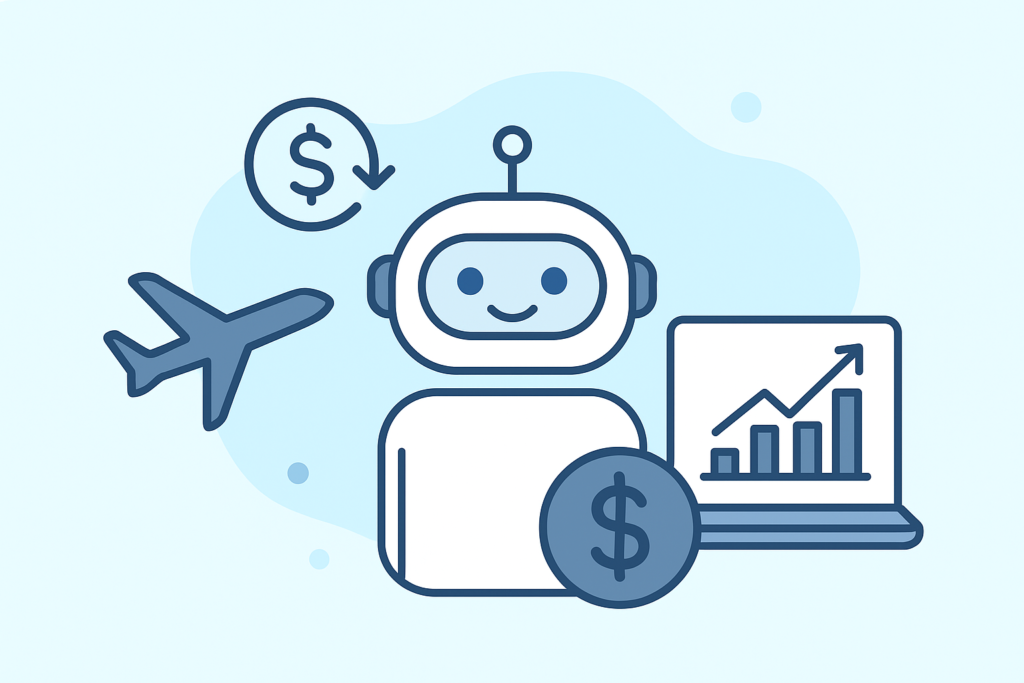
AI chatbots have become powerful tools for boosting revenue in the travel industry by enhancing user experience, increasing conversions, and promoting upselling opportunities. By analyzing user behavior and travel patterns, chatbots recommend upgrades such as premium seating, room upgrades, insurance packages, or exclusive add-ons. These personalized recommendations increase the average transaction value and generate additional revenue. Furthermore, chatbots simplify the booking process, reducing abandonment rates and encouraging customers to complete reservations quickly.
Another significant revenue benefit lies in the ability of chatbots to identify high-intent customers and guide them through purchase decisions. When users express interest in a particular destination or travel package, the chatbot recognizes this intent and responds with detailed information, special offers, and time-sensitive deals. This targeted engagement helps convert browsing customers into confirmed bookings. Additionally, chatbots maintain long-term engagement through personalized follow-ups, loyalty rewards, and notifications about future promotions. This sustained communication encourages repeat purchases and fosters customer loyalty.
AI chatbots also enable businesses to forecast demand trends and adjust pricing strategies accordingly. By collecting and analyzing real-time data, chatbots help businesses understand peak travel seasons, popular destinations, and booking patterns. This information allows companies to refine their pricing models, launch targeted marketing campaigns, and optimize resource allocation. Travel businesses employing AI-driven chatbots benefit from increased efficiency, higher conversion rates, and maximized revenue potential across all customer touchpoints.
The Role of Chatbots in Travel Crisis Management
Crisis management is a critical aspect of travel operations, and AI chatbots play an essential role in handling emergencies, cancellations, and unpredictable events. During crises such as pandemics, flight disruptions, natural disasters, or political unrest, travelers require immediate information and assistance. Chatbots deliver real-time updates, alternative travel arrangements, and safety guidelines, helping users make informed decisions quickly. Their ability to handle large volumes of requests ensures that customers receive timely support even when human teams are overwhelmed.
Travel chatbots also reduce panic during emergencies by providing accurate and verified information. Misinformation spreads quickly during crises, and travelers often become anxious or confused. Chatbots act as reliable communication channels that provide official updates from airlines, government authorities, and travel advisories. They guide users through steps such as rebooking flights, applying for refunds, and understanding policy changes. This consistent communication builds trust and reduces stress for travelers facing uncertain situations.
After the crisis, chatbots continue to provide valuable support by managing refunds, rebooking, compensation requests, and post-crisis travel planning. They help businesses recover by maintaining customer relationships, offering future travel incentives, and assisting travelers with new bookings. Chatbots also provide valuable data insights that help companies analyze crisis patterns, improve operational response, and strengthen future preparedness. Their role in crisis communication, customer assurance, and recovery planning makes them indispensable tools for the travel industry.
The Future of AI-Powered Booking & Travel Automation
The future of travel automation is being shaped by advanced AI technologies that aim to create fully autonomous travel experiences. Emerging tools like generative AI, predictive analysis, and intelligent recommendation engines will enable chatbots to function as virtual travel managers capable of handling entire trips from start to finish. These advancements will eliminate the need for multiple apps or human assistance, creating seamless and streamlined travel journeys. Chatbots will possess deeper conversational intelligence, allowing them to understand complex queries, emotions, and preferences with greater accuracy.
The integration of IoT devices will further enhance the capabilities of travel chatbots. Travelers will receive personalized guidance through smart airport systems, hotel automation devices, and connected travel accessories. Chatbots will also play a major role in sustainability initiatives by suggesting eco-friendly travel options, tracking carbon footprints, and encouraging responsible tourism. Additionally, biometrics and digital identity verification will enable frictionless check-ins and border crossing experiences. This level of automation will redefine how travelers interact with global travel ecosystems.
As AI continues to evolve, travel chatbots will become central to delivering tailored, intuitive, and predictive travel experiences. Businesses that adopt these technologies early will gain significant competitive advantages. The future will witness chatbots offering deep customization, hyper-personal recommendations, and voice-based travel assistance. These innovations will transform how travelers plan, book, and experience their journeys. The future of travel is intelligent, automated, and deeply personalized — powered by advanced AI chatbots.
Common Mistakes Travel Businesses Make When Using Chatbots
Travel businesses often make mistakes during chatbot implementation that limit performance, reduce satisfaction, and prevent optimal results. One common mistake is deploying basic or poorly designed chatbots that lack natural language understanding. Such bots fail to interpret user intent, leading to frustration and abandoned conversations. Businesses also frequently ignore the importance of integrating chatbots with booking engines, CRMs, and external travel APIs, resulting in incomplete or inaccurate responses. Without proper integration, chatbots cannot deliver real-time data, which diminishes customer trust.
Another major mistake is not training the chatbot regularly or updating it with fresh content. Travel information changes constantly, including visas, flight rules, hotel availability, and weather conditions. When businesses fail to update chatbot knowledge bases, users receive outdated or incorrect information. This damages brand credibility and may lead to booking complications. Additionally, some businesses overlook user experience design, making chatbots difficult to navigate. A chatbot that feels robotic, slow, or confusing discourages users from engaging with the platform.
Businesses also make the mistake of neglecting human escalation pathways, assuming the chatbot can handle everything. While chatbots are powerful, certain situations require human judgment. If users cannot quickly reach a human agent when needed, their frustration increases. Proper balance between automation and human involvement is essential. Travel businesses must ensure their AI systems are well-designed, fully integrated, consistently updated, and supported by human teams. Avoiding these common mistakes helps businesses deliver outstanding chatbot experiences that enhance satisfaction and loyalty.
Choosing the Right Chatbot for Your Travel Business
Selecting the right chatbot platform is crucial for maximizing efficiency, improving customer satisfaction, and achieving long-term business growth. A high-quality travel chatbot must offer advanced natural language understanding, robust integration capabilities, and real-time data handling. Businesses should evaluate whether the chatbot can connect with booking engines, airline APIs, hotel PMS systems, and CRM platforms. These integrations ensure accurate availability, pricing, and booking confirmation processes. Additionally, a good chatbot should support multiple languages to cater to global travelers.
Businesses must also consider customization options when choosing a chatbot solution. Travel companies require chatbots that align with their branding, tone, and operational workflows. A chatbot with customizable conversation flows, automated triggers, and personalization features ensures a seamless user experience. The platform should also offer detailed analytics that help businesses monitor performance, track conversion rates, and analyze customer behavior. These insights allow travel companies to refine strategies and improve service quality over time.
Long-term scalability is another essential factor in selecting the right chatbot platform. As business operations expand, the chatbot should be capable of handling increased traffic, advanced features, and more complex workflows. A reliable chatbot must also offer strong security, regular updates, and dedicated support to ensure consistent performance. By choosing a well-built and intelligent chatbot system, travel businesses can deliver exceptional customer experiences, reduce operational workload, and achieve sustainable growth.
FAQs
Q1: What is a Booking & Travel Chatbot?
A Booking & Travel Chatbot is an AI-based system that automates travel planning, booking, customer support, and real-time updates while improving user experience.
Q2: Can a chatbot handle flight and hotel bookings automatically?
Yes, modern AI chatbots can check availability, compare prices, process bookings, modify reservations, and provide confirmation instantly.
Q3: Are travel chatbots secure for sharing personal information?
Yes, secure travel chatbots use encryption, compliance frameworks, and privacy standards like GDPR to protect user data.
Q4: Do travel chatbots increase booking conversions?
Yes, they reduce friction, provide instant answers, personalize recommendations, and simplify booking steps, resulting in higher conversion rates.
Q5: Can chatbots support travelers during emergencies?
Yes, chatbots provide real-time updates, alternative travel options, and crisis communication during emergencies.
Conclusion
In the rapidly evolving travel landscape, AI-powered Booking & Travel Chatbots have emerged as essential tools for businesses aiming to deliver superior customer experiences, operational efficiency, and long-term growth. These intelligent systems simplify travel planning, enhance personalization, ensure real-time support, and optimize revenue through effective automation. For modern travel brands, offering 24/7 assistance, accurate information, and seamless booking processes is no longer optional — it is a competitive necessity. With scalable AI technology, businesses can unlock new levels of convenience, trust, and satisfaction for global travelers. As the future of travel becomes more automated and data-driven, adopting a powerful chatbot solution like Engagerbot helps companies stay ahead, build loyalty, and deliver the intelligent travel experiences customers increasingly expect.