
Discover how a Music Chatbot transforms the music industry by automating fan engagement, music recommendations, event bookings, customer support, and marketing. Learn best practices, AI features, implementation strategies, and future trends to create exceptional music experiences.
Introduction
The music industry has evolved dramatically over the past decade. Streaming platforms, digital concerts, social media communities, and independent artists have transformed how people discover, enjoy, and interact with music. While these innovations have created countless opportunities, they have also increased audience expectations. Fans now expect instant responses, personalized recommendations, seamless ticket booking, and continuous engagement across multiple digital platforms. Businesses and artists that cannot meet these expectations risk losing valuable connections with their audiences.
A Music Chatbot is changing this landscape by providing intelligent, AI-powered conversations that help artists, music labels, streaming platforms, event organizers, and entertainment businesses deliver fast, personalized, and engaging experiences around the clock. Rather than relying solely on customer service teams, music organizations can automate routine interactions while maintaining a friendly, human-like experience. From recommending songs and albums to answering concert questions and helping fans discover new artists, chatbots are becoming an essential part of modern music experiences.
At EngagerBot, organizations recognize that conversational AI is no longer just a customer support tool—it has become an important part of audience engagement, digital marketing, and business growth. This guide explores everything you need to know about Music Chatbots, including their benefits, applications, implementation strategies, best practices, and future potential while following Google’s Experience, Expertise, Authoritativeness, and Trustworthiness (E-E-A-T) principles.
What Is a Music Chatbot?
A Music Chatbot is an artificial intelligence-powered virtual assistant designed specifically for the music industry. Unlike traditional chatbots that simply answer frequently asked questions, modern music chatbots understand user preferences, analyze conversations, provide personalized recommendations, automate support, and improve fan engagement across websites, messaging applications, streaming platforms, and mobile applications.
The primary purpose of a Music Chatbot is to simplify communication between music businesses and their audiences. Whether someone wants to discover new songs, purchase concert tickets, learn about upcoming album releases, explore artist biographies, or receive personalized playlists, the chatbot delivers immediate assistance without requiring human intervention. This continuous availability creates better customer experiences while allowing businesses to scale their services efficiently.
Artificial intelligence has significantly improved chatbot capabilities through technologies such as Natural Language Processing (NLP), machine learning, and contextual understanding. These technologies enable chatbots to recognize conversational intent instead of relying on simple keyword matching. For example, if a fan says they enjoy relaxing acoustic music similar to a favorite artist, an AI-powered chatbot can understand the request, analyze listening preferences, and suggest relevant songs rather than returning generic search results.
Beyond customer support, Music Chatbots also contribute to marketing campaigns, community building, merchandise sales, fan loyalty programs, podcast discovery, event promotion, and subscription management. They can proactively engage visitors by recommending trending playlists, announcing upcoming tours, sharing exclusive content, collecting customer feedback, and encouraging newsletter subscriptions. This combination of automation and personalization creates meaningful interactions that strengthen relationships between artists, brands, and fans.
As conversational AI continues to evolve, Music Chatbots are becoming more intelligent, adaptive, and capable of delivering highly customized experiences that meet the expectations of today’s digitally connected audiences.
Why Music Chatbots Are Transforming the Music Industry
The music industry generates millions of daily interactions across websites, streaming services, social media channels, ticketing platforms, and online communities. Managing these conversations manually is expensive, time-consuming, and often impossible during peak activity periods. Music Chatbots address these challenges by automating repetitive tasks while maintaining engaging and personalized communication with audiences.
One of the biggest advantages is availability. Fans interact with music content at all hours, regardless of geographical location or time zone. Human support teams cannot realistically provide continuous service twenty-four hours a day. Chatbots eliminate this limitation by delivering instant responses around the clock. Whether someone wants concert information late at night or needs assistance purchasing merchandise during the weekend, support remains consistently available.
Another significant benefit involves personalization. Powered by artificial intelligence, modern Music Chatbots analyze user behavior, listening history, and preferences to deliver highly relevant recommendations and smarter customer interactions. Modern audiences expect digital experiences tailored to their preferences. AI-powered Music Chatbots analyze listening history, favorite genres, artist preferences, browsing behavior, and previous conversations to recommend relevant albums, playlists, podcasts, concerts, and exclusive content. Personalized recommendations increase engagement because users spend more time interacting with content that genuinely matches their interests.
Automation also improves operational efficiency. Customer service teams often receive repetitive questions about ticket availability, event schedules, refund policies, subscription plans, streaming issues, merchandise shipping, and artist information. Chatbots can instantly answer these routine inquiries, allowing human representatives to focus on complex requests requiring empathy, creativity, or specialized expertise.
Marketing teams benefit as well. Music Chatbots automatically promote upcoming releases, notify fans about exclusive events, distribute promotional campaigns, encourage social media participation, and collect valuable customer insights. This automation reduces marketing costs while improving campaign performance through personalized messaging.
The increasing adoption of conversational AI demonstrates that Music Chatbots are no longer optional innovations. They have become strategic tools for improving customer experiences, strengthening fan relationships, increasing operational efficiency, and supporting sustainable growth throughout the music ecosystem.
Essential Features Every Modern Music Chatbot Should Include
An effective Music Chatbot combines artificial intelligence with user-focused design to create seamless digital experiences. While chatbot capabilities vary across platforms, several core features consistently deliver value for music businesses, streaming services, artists, event organizers, and entertainment brands.
One of the most important capabilities is intelligent music recommendation. AI algorithms analyze user preferences, favorite artists, listening habits, moods, genres, and historical interactions to recommend highly relevant songs, albums, podcasts, and playlists. Instead of presenting generic suggestions, advanced chatbots continuously improve recommendations based on user feedback and changing preferences.
Another essential feature is conversational search. Traditional website search functions often struggle to understand natural language queries. Music Chatbots allow users to ask questions conversationally, such as requesting energetic workout playlists, relaxing jazz recommendations, newly released albums, or similar artists. The chatbot interprets user intent and delivers personalized responses that feel natural rather than mechanical.
Ticket booking assistance significantly enhances customer experiences. Fans frequently have questions regarding event schedules, venue information, seating availability, pricing, accessibility, and payment options. Chatbots simplify the purchasing journey by guiding users through each step, reducing confusion and increasing ticket conversions.
Integration capabilities also play a critical role. Modern Music Chatbots should connect with customer relationship management systems, streaming platforms, marketing automation software, analytics tools, event management platforms, payment gateways, and customer databases. These integrations ensure conversations remain consistent across multiple digital channels while improving operational efficiency.
Additional valuable features include multilingual communication, voice interaction, sentiment analysis, merchandise recommendations, loyalty program management, event reminders, push notifications, personalized promotional campaigns, feedback collection, and live-agent escalation. Together, these capabilities transform chatbots from simple support tools into comprehensive digital assistants that improve customer satisfaction while supporting long-term business objectives.
How Artificial Intelligence Powers Smarter Music Conversations
Artificial intelligence is the foundation of every advanced Music Chatbot. Without AI, chatbots can only follow predefined rules and respond to limited keyword-based commands. AI enables chatbots to understand language, recognize context, learn from interactions, and provide increasingly accurate responses over time.
One of the most influential technologies behind Music Chatbots is Natural Language Processing (NLP). NLP enables computers to understand human language in a conversational manner rather than processing isolated keywords. Instead of requiring users to type exact commands, AI-powered chatbots interpret intent from naturally written questions. For example, someone asking for relaxing evening music receives thoughtful recommendations even if they never mention a specific genre.
Machine learning further enhances chatbot intelligence by analyzing user behavior over time. Every conversation provides valuable data regarding preferences, interests, frequently asked questions, purchasing patterns, and engagement levels. The chatbot continuously refines its recommendations and responses using these insights, making future interactions increasingly relevant.
Sentiment analysis adds another layer of intelligence by identifying emotional cues within conversations. If a customer expresses frustration regarding ticket purchases or streaming issues, the chatbot can adjust its tone accordingly or escalate the conversation to a human representative when necessary. This improves customer satisfaction while preventing negative experiences from escalating.
Context awareness represents another important advancement. Rather than treating every question independently, AI remembers previous interactions within the conversation. If someone first asks about an artist’s concert and later asks about nearby hotels, the chatbot understands the relationship between these requests and responds accordingly.
Predictive analytics also contributes to better engagement. By analyzing historical data, AI can anticipate user interests, recommend upcoming events before customers search for them, identify cross-selling opportunities, and personalize marketing campaigns. These capabilities transform Music Chatbots into proactive assistants that create richer, more engaging customer experiences.
Benefits of Using a Music Chatbot for Artists, Record Labels, and Streaming Platforms
Music Chatbots provide measurable advantages across nearly every segment of the music industry. Whether used by independent artists, international record labels, music festivals, online radio stations, streaming services, or entertainment agencies, conversational AI improves both customer satisfaction and operational performance.
Independent artists often have limited resources for managing fan interactions. Responding manually to thousands of social media messages, concert questions, merchandise inquiries, and promotional requests quickly becomes overwhelming. A Music Chatbot automates these conversations while maintaining consistent communication. Fans receive immediate assistance without waiting for manual responses, strengthening relationships and increasing engagement.
Record labels benefit from centralized communication across multiple artists and campaigns. Chatbots can promote album launches, announce tours, distribute exclusive content, collect fan feedback, and guide users toward streaming platforms or merchandise stores. Automated campaigns also allow marketing teams to reach larger audiences while reducing repetitive administrative work.
Streaming platforms use chatbots to improve user retention through personalized recommendations and conversational discovery. Instead of requiring users to browse endless catalogs, AI assistants recommend relevant songs, artists, podcasts, and playlists based on listening habits. This personalized approach encourages longer listening sessions and improves customer loyalty.
Event organizers and concert promoters also experience significant advantages. Chatbots answer frequently asked questions regarding venue policies, ticket availability, event schedules, accessibility information, transportation options, and weather updates. Faster communication reduces customer frustration while improving event attendance.
Businesses additionally benefit from valuable analytics collected through chatbot interactions. Conversation data reveals audience interests, purchasing behavior, frequently requested content, customer satisfaction trends, and campaign performance. These insights support better strategic decisions while improving future marketing initiatives.
Ultimately, Music Chatbots help organizations reduce costs, improve operational efficiency, strengthen customer relationships, increase engagement, and generate sustainable long-term growth.
Improving Fan Engagement Through Personalized Conversations
Modern music fans expect more than simply listening to songs. They seek interactive experiences, exclusive content, direct communication with artists, personalized recommendations, community participation, and memorable digital interactions. Music Chatbots enable organizations to meet these expectations by creating highly personalized conversations that strengthen audience relationships.
Personalization begins with understanding user preferences. AI analyzes listening history, favorite genres, preferred artists, previous conversations, event attendance, and browsing behavior to tailor recommendations specifically for each individual. Rather than receiving identical promotional messages, users experience customized interactions that reflect their unique interests.
Music Chatbots also enhance engagement by delivering proactive communication. Instead of waiting for users to ask questions, chatbots notify fans about upcoming concerts, newly released albums, exclusive interviews, merchandise discounts, livestream events, and VIP opportunities. These timely notifications encourage continuous interaction while increasing participation in marketing campaigns.
Interactive quizzes, music trivia, playlist creation, artist recommendations, and fan challenges further strengthen engagement by transforming conversations into enjoyable experiences rather than simple customer support sessions. Gamification techniques encourage users to return regularly while building stronger emotional connections with artists and brands.
Community building represents another significant advantage. Chatbots can invite users to online fan communities, encourage social media participation, gather feedback through conversational surveys, and recommend discussion groups based on musical interests. These activities create stronger communities that support long-term audience loyalty.
As artificial intelligence continues advancing, personalized engagement will become even more sophisticated through predictive recommendations, voice interactions, emotion recognition, and real-time behavioral analysis. Organizations that invest in conversational AI today position themselves to build stronger, more meaningful relationships with music audiences in an increasingly competitive digital marketplace.
Integrating Music Chatbots Across Digital Platforms
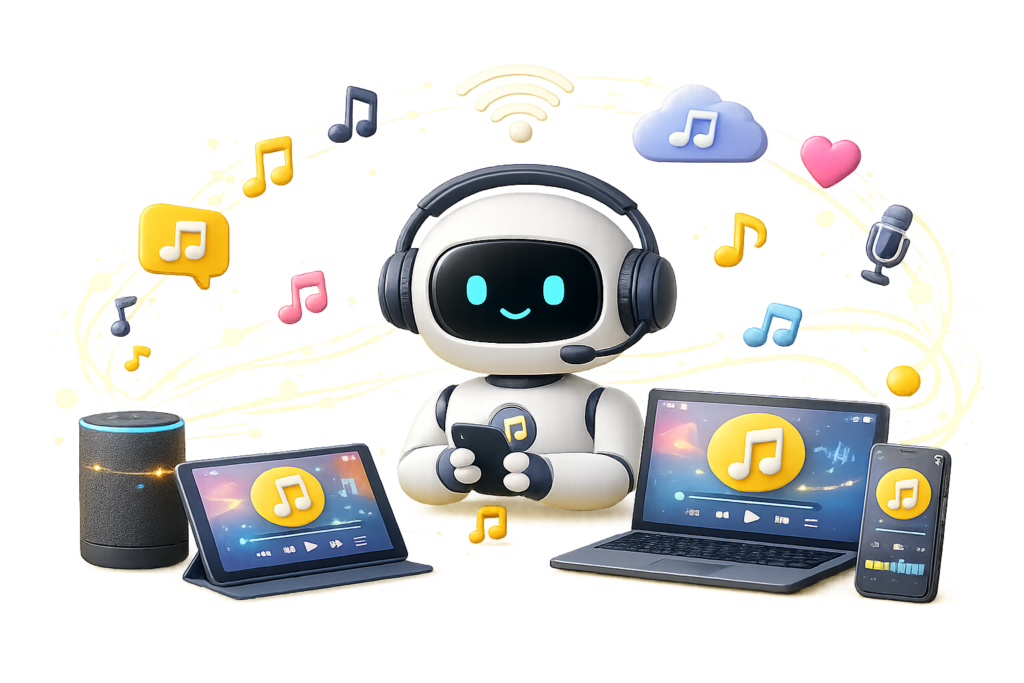
A Music Chatbot delivers the greatest value when it is available wherever audiences already spend their time. Modern fans interact with artists, labels, streaming services, and event organizers through websites, mobile applications, messaging platforms, social media channels, and digital communities. Integrating chatbot technology across these touchpoints creates a seamless and consistent experience that strengthens engagement while reducing communication barriers.
Website integration is often the starting point because it allows visitors to receive immediate assistance without searching through multiple pages. A chatbot can recommend music, answer frequently asked questions, assist with merchandise purchases, provide concert information, or guide visitors toward relevant content. This instant support reduces bounce rates and helps users quickly find the information they need.
Social media platforms further expand chatbot accessibility. Many fans prefer communicating through familiar messaging applications rather than traditional contact forms or email. By integrating with platforms such as Facebook Messenger, Instagram messaging, and other conversational channels, organizations can continue personalized conversations where audiences already engage daily. This improves response times while creating more natural communication experiences.
Mobile applications and streaming platforms also benefit from chatbot integration. Users can discover new playlists, receive listening recommendations, manage subscriptions, report technical issues, and explore exclusive content directly within the application. Because conversations remain contextual, the overall user experience becomes more intuitive and engaging.
Successful integrations ensure customer data remains synchronized across every digital touchpoint. Whether someone begins a conversation on a website and continues through a mobile application, the chatbot remembers previous interactions, preferences, and recommendations. This consistency creates a smoother customer journey while reinforcing trust in the brand.
Using Music Chatbots for Concerts, Festivals, and Live Events
Live events represent one of the most exciting opportunities for a Music Chatbot. Concerts, music festivals, club performances, and exclusive fan experiences generate thousands of customer inquiries before, during, and after each event. Managing these interactions manually can overwhelm support teams, especially during ticket launches or major festivals. An AI-powered chatbot streamlines communication by providing instant, accurate, and personalized assistance at every stage of the customer journey.
Before an event, fans typically have questions about ticket availability, seating arrangements, venue locations, parking, accessibility services, event schedules, age restrictions, and refund policies. Rather than searching through lengthy FAQ pages, visitors can simply ask the chatbot naturally and receive immediate responses. The chatbot can also recommend VIP packages, merchandise bundles, early-access tickets, or nearby accommodation options based on user preferences. By reducing friction during the purchasing process, event organizers increase ticket conversions while improving customer satisfaction.
During live events, Music Chatbots continue delivering value by acting as digital event assistants. Attendees can ask for stage schedules, food locations, restroom directions, emergency procedures, transportation updates, lost-and-found information, or merchandise booth locations. AI can even send proactive notifications about artist performances, weather changes, schedule adjustments, or exclusive backstage content. After the event concludes, chatbots gather attendee feedback, encourage social media sharing, recommend future concerts, and promote upcoming tours, creating an ongoing relationship that extends far beyond a single performance.
Music Chatbots for Music Marketing and Fan Acquisition
Modern music marketing depends on personalization, speed, and continuous engagement. Traditional email campaigns and generic advertising often struggle to capture attention in today’s competitive digital landscape. A Music Chatbot provides a more interactive marketing channel by delivering personalized recommendations, answering questions instantly, and guiding users toward meaningful actions.
One of the strongest marketing capabilities of AI chatbots is audience segmentation. Instead of sending identical promotional messages to every subscriber, the chatbot can categorize users based on musical interests, favorite artists, listening history, purchase behavior, geographic location, and engagement patterns. Fans interested in jazz receive different recommendations than listeners who primarily enjoy electronic dance music or classical performances. This level of personalization significantly improves campaign performance while strengthening audience relationships.
Chatbots also support album launches and promotional campaigns through conversational experiences. Instead of simply announcing a new release, AI can introduce the album, explain its inspiration, recommend tracks based on user preferences, share behind-the-scenes stories, and encourage playlist additions. These richer conversations create stronger emotional connections compared to traditional advertising methods.
Another major advantage involves lead generation. Visitors exploring a website or social media page can subscribe to newsletters, join loyalty programs, receive exclusive content, or register for upcoming concerts through conversational interactions rather than lengthy forms. This simplified process increases conversion rates while collecting valuable customer insights for future campaigns. Combined with AI-powered analytics, businesses can continually optimize marketing strategies using real conversation data rather than assumptions.
Improving Customer Support with AI-Powered Music Chatbots
Customer support remains one of the most practical applications for Music Chatbots. Whether serving independent artists, streaming platforms, music schools, online stores, or concert organizers, AI dramatically improves response speed while reducing operational costs. Customers increasingly expect immediate assistance, and long waiting times often lead to frustration and lost business opportunities.
Many support inquiries involve repetitive questions. Users frequently ask about subscription plans, payment issues, streaming quality, ticket availability, merchandise orders, account management, password recovery, refunds, event schedules, or artist information. These routine conversations consume valuable staff resources despite requiring relatively simple answers. AI-powered chatbots handle these requests instantly, allowing human support teams to focus on complex situations requiring empathy, negotiation, or specialized expertise.
Advanced Music Chatbots go beyond answering predefined questions. By using machine learning and Natural Language Processing, they understand conversational intent, identify customer emotions, and provide contextual assistance. If a listener reports difficulty accessing premium content, the chatbot can troubleshoot the issue step by step, verify account information, and escalate the conversation to a human representative only when necessary. This intelligent workflow improves resolution speed while reducing unnecessary support tickets.
Customer satisfaction also benefits from consistency. Human representatives may unintentionally provide varying responses depending on experience or workload. AI ensures accurate, standardized information is delivered every time while maintaining a friendly conversational tone. Additionally, chatbot analytics reveal recurring customer concerns, helping organizations improve products, services, and documentation over time. Continuous learning makes AI support increasingly valuable as businesses grow and customer expectations evolve.
Data Analytics and Business Insights Generated by Music Chatbots
Every conversation with a Music Chatbot generates valuable business intelligence. Beyond answering customer questions, AI continuously collects data that helps organizations understand audience behavior, improve marketing campaigns, optimize services, and make informed strategic decisions. These insights transform chatbots into powerful business intelligence tools rather than simple customer support solutions.
Conversation analytics reveal the most frequently asked questions, popular music genres, preferred artists, trending playlists, purchasing behavior, subscription interests, and customer pain points. Marketing teams can identify which promotional campaigns generate the highest engagement, while product managers discover areas requiring improvement. Rather than relying solely on surveys, organizations gain real-time behavioral insights directly from everyday customer interactions.
Predictive analytics further enhances decision-making by identifying emerging trends before they become obvious. For example, increasing conversations about a particular artist or genre may indicate growing popularity, allowing streaming platforms or record labels to adjust promotional strategies accordingly. Similarly, ticket inquiries can help event organizers anticipate demand and optimize pricing or venue capacity before sales peak.
Analytics also contribute to operational efficiency. Businesses can measure chatbot response accuracy, customer satisfaction, escalation rates, average conversation duration, conversion performance, and user retention. Continuous monitoring allows AI models to improve over time while identifying opportunities for further automation. When combined with broader customer relationship management systems, chatbot analytics provide a comprehensive view of audience engagement that supports smarter business planning and sustainable long-term growth.
Future Trends Shaping Music Chatbots
Artificial intelligence is evolving rapidly, and Music Chatbots are becoming far more sophisticated than simple question-and-answer systems. Future chatbots will act as intelligent music companions capable of understanding emotions, predicting user preferences, and creating deeply personalized experiences. As AI models continue to improve, conversations will become increasingly natural, making it difficult for users to distinguish between automated assistance and human interaction.
One major trend is emotion-aware AI. Future Music Chatbots will analyze conversation patterns, user preferences, listening history, and even voice tone (where voice interactions are enabled) to recommend music that matches a listener’s mood. Someone feeling stressed may receive calming instrumental playlists, while a user preparing for exercise could be offered energetic workout tracks. This emotional intelligence creates more meaningful experiences while strengthening audience engagement.
Another emerging trend is voice-first interaction. Smart speakers, connected vehicles, wearable devices, and mobile assistants continue to grow in popularity. Music Chatbots will increasingly support natural voice conversations, allowing users to request songs, create playlists, purchase concert tickets, or discover new artists without typing. Voice-enabled AI will make music discovery faster, safer, and more convenient across multiple devices.
Generative AI will also transform fan engagement. Instead of delivering static responses, future chatbots will generate personalized concert itineraries, customized newsletters, interactive artist stories, music trivia, fan quizzes, educational content, and promotional campaigns tailored to individual users. Combined with predictive analytics and real-time personalization, these capabilities will help music businesses create richer digital experiences that strengthen customer loyalty and encourage long-term engagement.
How to Successfully Implement a Music Chatbot
Implementing a Music Chatbot requires more than simply installing AI software. Successful deployment begins with clearly defining business objectives. Organizations should identify whether the chatbot will primarily support customer service, music recommendations, ticket sales, marketing automation, community engagement, merchandise sales, or a combination of these goals. Clear objectives ensure the chatbot delivers measurable business value rather than becoming an isolated technology project.
The next step involves understanding the target audience. Different user groups have different expectations. Streaming platform subscribers may prioritize personalized recommendations, while concert attendees require event information and ticket support. Independent artists often focus on fan engagement, whereas music schools may emphasize educational resources and enrollment assistance. Designing chatbot conversations around genuine user needs creates significantly better experiences.
Selecting the right AI platform is equally important. The chatbot should integrate seamlessly with existing customer relationship management systems, analytics platforms, streaming services, payment gateways, marketing automation tools, and content management systems. These integrations enable consistent conversations across websites, mobile applications, and messaging platforms while ensuring customer information remains synchronized.
Organizations should also invest in continuous optimization. Launching the chatbot is only the beginning. Regularly reviewing conversation analytics, customer feedback, unanswered questions, conversion rates, and engagement metrics helps identify opportunities for improvement. Updating AI knowledge, expanding conversation flows, and refining recommendations ensure the chatbot becomes more valuable over time. Businesses that continuously optimize conversational AI generally achieve higher customer satisfaction, stronger engagement, and better long-term returns on investment.
Why Music Chatbots Are the Future of Digital Music Experiences
Digital transformation continues reshaping every aspect of the music industry, from content discovery and streaming to live events and artist engagement. Consumers increasingly expect personalized, immediate, and convenient experiences across every digital interaction. Music Chatbots address these expectations by combining artificial intelligence, automation, personalization, and conversational interfaces into one powerful solution.
Unlike traditional customer support channels, chatbots provide instant assistance twenty-four hours a day while handling thousands of simultaneous conversations. They reduce operational costs, improve customer satisfaction, increase marketing effectiveness, and create stronger relationships between artists, businesses, and fans. More importantly, AI continuously learns from user interactions, making future conversations increasingly intelligent and personalized.
The future of music engagement extends beyond answering customer questions. AI assistants will become trusted digital companions capable of recommending music based on emotions, planning entertainment experiences, introducing emerging artists, managing subscriptions, facilitating purchases, supporting communities, and providing educational insights. As conversational AI evolves alongside machine learning and predictive analytics, chatbots will become central to every stage of the customer journey.
Organizations that embrace Music Chatbots today position themselves for long-term success in an increasingly competitive digital marketplace. By combining innovative technology with human-centered design, businesses can create engaging experiences that satisfy modern customer expectations while supporting sustainable growth. Rather than replacing human creativity, AI enhances it by automating repetitive work and allowing artists, marketers, and support teams to focus on building authentic relationships with audiences.
Common Mistakes Businesses Make When Implementing a Music Chatbot
Implementing a Music Chatbot can significantly improve customer engagement, fan satisfaction, and operational efficiency. However, many organizations fail to achieve the expected results because they focus solely on the technology instead of the overall customer experience. A chatbot should enhance the user journey rather than create additional frustration. Understanding the most common implementation mistakes helps businesses maximize the value of conversational AI.
One of the biggest mistakes is deploying a chatbot without clearly defined objectives. Some organizations launch AI simply because it is a popular trend, without identifying whether the chatbot should focus on customer support, music recommendations, ticket sales, merchandise, marketing automation, or fan engagement. Without measurable goals and key performance indicators (KPIs), it becomes difficult to evaluate success or improve performance over time.
Another frequent mistake is providing generic responses. Modern users expect personalized conversations based on their interests, listening habits, previous interactions, and preferences. A chatbot that delivers identical responses to every visitor quickly feels robotic and unhelpful. Businesses should leverage AI, customer data, and behavioral analytics to provide meaningful recommendations and contextual assistance.
Many organizations also overlook regular maintenance. A chatbot should continuously learn from customer interactions, new music releases, changing event schedules, updated FAQs, and evolving audience interests. Failing to update knowledge bases leads to outdated information, incorrect answers, and declining customer trust.
Poor integration is another common issue. If the chatbot cannot connect with customer relationship management (CRM) platforms, ticketing systems, streaming services, payment gateways, or marketing tools, users experience disconnected conversations and inconsistent support. Seamless integration ensures accurate information and a smooth customer journey across every digital touchpoint.
Finally, businesses sometimes neglect human escalation. Artificial intelligence handles routine conversations exceptionally well, but complex billing disputes, sensitive complaints, or technical problems may require human expertise. Providing an easy transition from chatbot to live support improves customer confidence while maintaining high service quality.
Best Practices Summary
Organizations that successfully implement Music Chatbots typically follow a set of proven best practices that improve customer experiences while maximizing return on investment. These principles ensure conversational AI remains valuable as customer expectations and technology continue evolving.
Begin by understanding your audience. Analyze customer behavior, listening preferences, purchasing patterns, and frequently asked questions before designing chatbot conversations. The more relevant the interactions, the greater the engagement and customer satisfaction.
Prioritize personalization wherever possible. Use artificial intelligence to recommend music, playlists, concerts, podcasts, artists, and merchandise based on individual user preferences rather than generic promotional campaigns. Personalized conversations encourage repeat engagement and strengthen customer loyalty.
Keep conversations natural and simple. Users should be able to ask questions using everyday language instead of memorizing commands or navigating complicated menus. AI-powered Natural Language Processing helps create smooth, human-like interactions that reduce customer frustration.
Integrate the chatbot with essential business systems including CRM software, ticketing platforms, analytics tools, marketing automation, streaming services, payment gateways, and content management systems. Connected systems deliver more accurate responses while supporting seamless customer journeys.
Continuously monitor performance using analytics. Measure conversation quality, customer satisfaction, conversion rates, engagement, response accuracy, escalation frequency, and retention. Regular optimization ensures the chatbot improves over time rather than remaining static.
Finally, maintain transparency and trust. Clearly communicate when customers are interacting with AI, protect personal information, comply with privacy regulations, and provide convenient access to human assistance whenever necessary. Organizations that combine intelligent automation with ethical AI practices build stronger long-term relationships with their audiences.
Frequently Asked Questions
1. What is a Music Chatbot?
A Music Chatbot is an AI-powered virtual assistant that helps users discover music, receive personalized recommendations, purchase tickets, find artist information, manage subscriptions, and obtain customer support through natural conversations.
2. Who can benefit from a Music Chatbot?
Independent musicians, record labels, streaming platforms, concert organizers, music festivals, online music stores, entertainment agencies, radio stations, music schools, and podcast platforms can all benefit from improved customer engagement and automated support.
3. Can a Music Chatbot recommend songs based on user preferences?
Yes. Modern AI chatbots analyze listening history, favorite genres, artists, moods, and previous interactions to provide highly personalized recommendations that improve music discovery and user satisfaction.
4. Can Music Chatbots help increase ticket sales?
Absolutely. Chatbots guide users through ticket purchasing, answer event-related questions, recommend VIP packages, send reminders, and reduce friction throughout the buying process, leading to higher conversion rates.
5. Are Music Chatbots available 24/7?
Yes. AI-powered chatbots operate continuously, allowing fans to receive assistance anytime regardless of location or time zone, improving customer satisfaction while reducing support workload.
6. Can a Music Chatbot integrate with existing business systems?
Most modern chatbot platforms integrate with CRM systems, marketing automation tools, payment gateways, streaming platforms, analytics software, event management systems, and content management platforms to provide consistent customer experiences.
7. Is artificial intelligence replacing human customer support?
No. Music Chatbots automate repetitive conversations and routine requests, while human representatives continue handling complex situations, sensitive issues, and personalized customer interactions requiring empathy and expertise.
8. How can businesses measure chatbot success?
Key performance indicators include customer satisfaction scores, response accuracy, conversation completion rates, ticket sales, merchandise conversions, engagement metrics, lead generation, customer retention, and overall return on investment.
Conclusion
The music industry continues to evolve as artificial intelligence, automation, and personalized digital experiences reshape how audiences discover, enjoy, and interact with music. A Music Chatbot has become much more than a customer support solution—it is a strategic business asset that improves fan engagement, simplifies customer service, enhances marketing campaigns, increases ticket and merchandise sales, and delivers valuable business insights through intelligent conversations.
Organizations that implement AI-powered chatbots can provide instant assistance, personalized music recommendations, seamless event support, and consistent communication across websites, mobile applications, and messaging platforms. By combining conversational AI with data analytics and automation, businesses can reduce operational costs while creating memorable experiences that strengthen long-term customer relationships.
As conversational AI continues to advance, Music Chatbots will become even more intelligent through predictive recommendations, emotion-aware interactions, voice assistants, and deeper personalization. Businesses that invest in these technologies today will be better positioned to meet changing customer expectations and remain competitive in the digital entertainment landscape.
At EngagerBot, we help organizations leverage intelligent conversational AI to create engaging, scalable, and customer-focused chatbot solutions tailored to their business goals. Whether you are an independent artist, music streaming platform, record label, event organizer, or entertainment company, implementing the right AI strategy today can create lasting value for your audience and your business.
Want to Implement This Easily?
Prompt
You are an expert consultant. Based on the blog post titled “Music Chatbot”, provide a step-by-step, practical implementation guide. Include tools, best practices, common mistakes to avoid, and advanced tips. Assume the reader wants to implement everything discussed in this article effectively.
Call to Action
Want our help implementing this? Just reach out to us via our website contact form: https://www.engagerbot.com/contact-us/