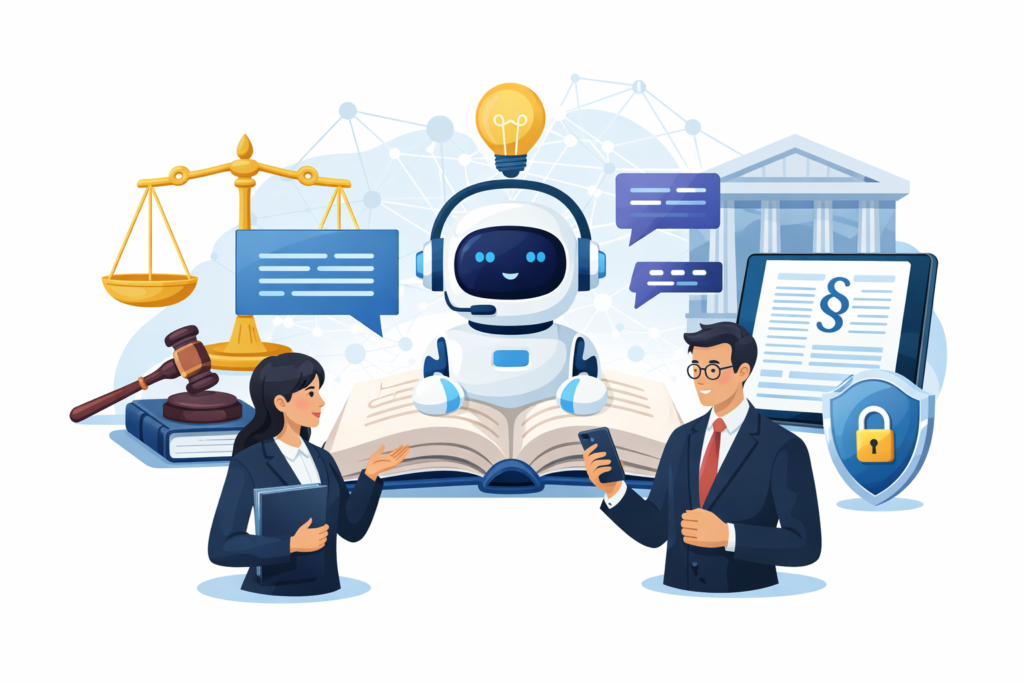
The legal sector is undergoing a digital revolution, and legal chatbots are at the forefront. These AI-powered conversational assistants help law firms, legal departments, and individuals navigate complex legal procedures, access information efficiently, and reduce operational burdens.
In this guide, we will explore how legal chatbots operate, their benefits, compliance considerations, and best practices for implementation. By referencing high-authority sources and using clickable word links, this article ensures trustworthiness, SEO optimization, and alignment with Google E-E-A-T guidelines.
Introduction
In today’s fast-paced digital world, clients expect instant, accurate, and accessible legal information. Legal chatbots offer a solution by combining artificial intelligence and legal expertise to provide scalable assistance. Platforms like Engagerbot showcase how conversational AI can streamline legal processes, handle routine inquiries, and maintain compliance and client trust.
Legal chatbots are designed to support lawyers, not replace them. They enhance efficiency, improve client engagement, and ensure consistent service delivery. As technology continues to reshape the legal industry, understanding the workings, advantages, and ethical considerations of legal chatbots has become essential.
Understanding What a Legal Chatbot Is
A legal chatbot is an AI-powered system that interacts with users to provide legal guidance, information, and workflow support. Unlike general-purpose chatbots, these systems are built with domain-specific knowledge, structured logic, and compliance-focused design.
Legal chatbots leverage natural language processing (NLP) to interpret user queries and map them to curated datasets. According to legal technology research, AI-driven tools improve information accessibility and reduce repetitive workload for legal teams.
The combination of rule-based logic and machine learning ensures accuracy, consistency, and ethical compliance. Disclaimers clarify that information provided by chatbots is informational, not legally binding, as recommended by professional legal ethics guidelines.
How Legal Chatbots Work Behind the Scenes
Legal chatbots operate through intent recognition, analyzing user queries to determine the legal context, such as contracts, compliance, or employment law. Once the intent is identified, chatbots retrieve information from curated knowledge bases, legal databases, and decision trees.
This hybrid architecture of AI + rule-based systems ensures reliability and auditability, which is essential in regulated industries, as highlighted by AI in regulated industries.
Context management enables chatbots to maintain conversation flow. For instance, if a user first asks about employment contracts and then about termination clauses, the chatbot understands the connection.
Security measures such as encryption, access control, and data minimization protect sensitive information, aligning with NIST cybersecurity standards.
Key Benefits of Legal Chatbots for Law Firms
Legal chatbots provide significant operational advantages:
- 24/7 Availability – Clients receive instant assistance outside office hours.
- Workload Reduction – Automating repetitive inquiries frees legal professionals to focus on complex tasks.
- Scalability – Chatbots can handle thousands of simultaneous interactions without additional staff.
- Data Insights – By analyzing interactions, firms can improve workflows and client engagement, as noted in Deloitte digital transformation insights.
These benefits not only improve operational efficiency but also enhance client satisfaction and build trust in legal services.
Legal Chatbots and Client Experience Enhancement
Client experience is a critical differentiator in the legal industry. Many clients hesitate to contact law firms due to uncertainty or cost concerns. Legal chatbots provide low-friction access to legal information, helping users articulate their concerns and understand next steps.
Guided interactions improve clarity and reduce misunderstandings. According to Forrester Research, structured digital engagement improves outcomes in professional services.
Legal chatbots also promote transparency by outlining timelines, documentation requirements, and processes, which increases trust. Multilingual support enhances accessibility, aligning with W3C accessibility guidelines.
Compliance and Ethical Considerations in Legal Chatbots
Ethics and compliance are critical when designing legal chatbots. Key considerations include:
- Clear Disclaimers – Users must understand that responses are informational.
- Jurisdiction Compliance – Chatbot responses should adhere to local laws and regulations.
- Bias Mitigation – AI training data must be audited to prevent discriminatory outcomes.
Organizations like OECD recommend transparency, accountability, and auditability in AI systems. Ethical design ensures that chatbots enhance legal access without misrepresenting capabilities or violating professional standards.
Data Security and Privacy in Legal Chatbot Systems
Legal chatbots often handle sensitive client information, making data security and privacy a top priority. Firms must implement encryption protocols to secure data both in transit and at rest. Controlled access ensures only authorized personnel can view client interactions.
Additionally, data minimization ensures that only necessary information is collected, reducing risk exposure. This aligns with GDPR data protection principles and global privacy standards.
Regular security audits, penetration testing, and vulnerability assessments help identify and fix potential risks. According to CISA cybersecurity guidelines, proactive security measures are essential for digital tools handling sensitive data.
By prioritizing security, legal chatbots reinforce trust, protect clients, and safeguard the legal organization’s reputation.
Use Cases of Legal Chatbots Across Legal Domains
Legal chatbots are highly versatile and deployed across multiple legal areas:
- Corporate Law: Automating compliance checklists, reviewing contracts, and assisting with governance procedures.
- Employment Law: Guiding users on workplace policies, contracts, and dispute resolution.
- Consumer Law: Providing guidance on tenant rights, small claims procedures, and consumer protection.
- Public Sector: Enhancing access to justice by delivering legal information to underrepresented populations.
Studies by World Bank research show that AI-powered legal tools increase public access to legal resources and improve workflow efficiency, particularly in jurisdictions with limited legal infrastructure.
Legal Chatbots vs Traditional Legal Support Channels
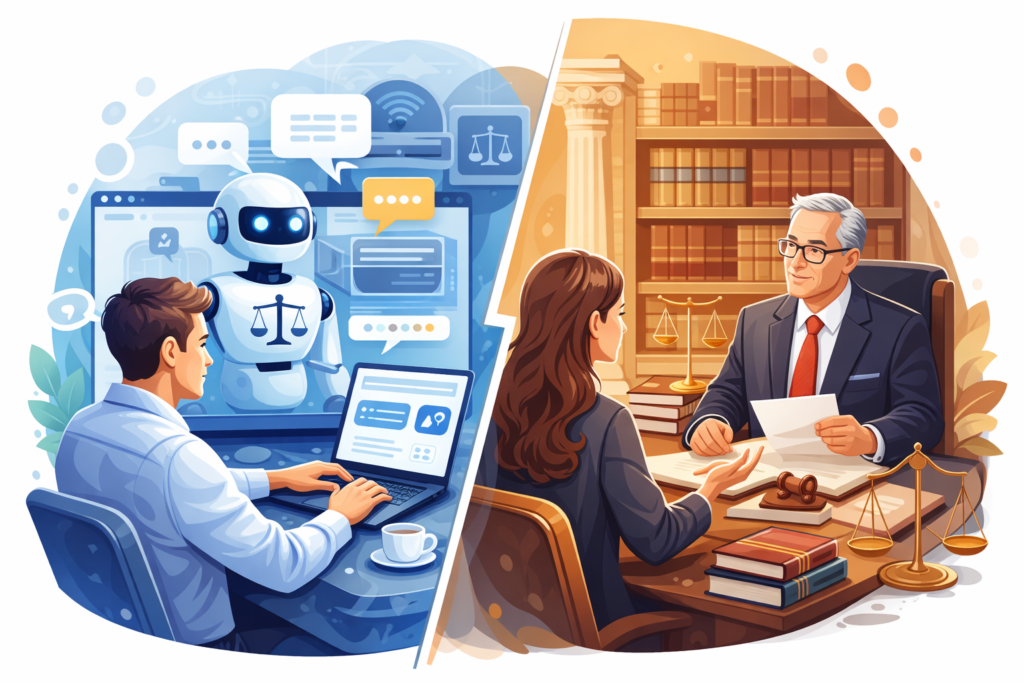
Traditional legal support relies heavily on emails, phone calls, and in-person consultations, which are resource-intensive and limited by staff availability. Legal chatbots complement these methods by providing instant, interactive guidance, reducing repetitive work for legal professionals.
Unlike static FAQs, chatbots adapt dynamically to user input, maintaining context awareness throughout the conversation. Complex queries are escalated to human lawyers, creating a hybrid model that combines AI efficiency with human expertise.
Accenture legal technology studies highlight that hybrid AI-human workflows enhance efficiency, reduce response times, and improve overall client satisfaction.
Features to Look for in a Legal Chatbot
When choosing a legal chatbot, law firms should evaluate key features:
- Advanced NLP Capabilities: For accurate understanding of complex legal language.
- Compliance Checks: Built-in legal and ethical guidance ensures regulatory adherence.
- Custom Knowledge Bases: Tailored to specific practice areas and jurisdiction.
- Integration with Case Management Software: For seamless workflow continuity.
- Analytics Dashboard: Tracks interactions, identifies client pain points, and measures ROI.
According to McKinsey AI insights, chatbots with these features maximize operational efficiency while ensuring ethical and legal compliance.
Integration of Chatbots with Legal Software
Modern legal chatbots are designed to integrate with existing legal software platforms. Integration ensures seamless transfer of data between case management, CRM, billing systems, and the chatbot interface.
This allows:
- Automatic client record updates
- Scheduling consultations
- Document preparation and storage
Firms that integrate chatbots reduce manual work, eliminate redundancies, and improve the accuracy of legal processes, as noted in Deloitte digital law technology reports. Proper integration enhances client experience and improves internal productivity.
AI Limitations in Legal Chatbots
While AI-driven legal chatbots are powerful, they have limitations:
- Cannot give legally binding advice: Chatbots provide informational support only.
- Dependent on data quality: Inaccurate or outdated datasets can lead to poor responses.
- Contextual limitations: Complex cases may exceed the chatbot’s understanding.
- Bias risk: AI models can inadvertently reflect biases in training data.
Best practices involve human oversight, continuous dataset updates, and training AI responsibly, in line with OECD AI governance frameworks.
The Future of Legal Chatbots
The future of legal chatbots is promising. Advancements in machine learning, predictive analytics, and generative AI will enable chatbots to handle increasingly complex legal queries.
Key trends include:
- Proactive legal guidance: Chatbots predicting client needs before queries arise.
- Voice-enabled legal assistants: Supporting natural conversation through voice recognition.
- Enhanced multilingual support: Expanding access to global client bases.
- Integration with AI-driven research tools: Automating legal research and summarization tasks.
Firms adopting these innovations will gain a competitive edge, improve client satisfaction, and demonstrate leadership in legal technology adoption, as highlighted by Forrester Research.
Improving Client Engagement with Chatbots
Legal chatbots significantly enhance client engagement by offering instant, personalized, and interactive communication. Unlike static FAQ pages, chatbots provide guided interactions that help users articulate their legal concerns.
Through context-aware responses, chatbots create a conversational experience that feels personalized, improving trust and client satisfaction. According to Forrester Research, structured AI-driven engagement can increase lead conversion and improve client retention for professional services.
Moreover, chatbots can collect feedback in real-time, allowing law firms to refine processes and respond proactively to client needs. Multi-platform deployment—on websites, messaging apps, and social media—ensures clients can interact through their preferred channels, enhancing accessibility and satisfaction.
Measuring Legal Chatbot ROI
Implementing a legal chatbot is an investment, and measuring Return on Investment (ROI) is crucial. Metrics to evaluate include:
- Response time reduction: Faster handling of client queries.
- Client satisfaction scores: Feedback from chatbot interactions.
- Operational cost savings: Reduction in repetitive workload for staff.
- Lead conversion and engagement metrics: How many users take the next step.
According to Deloitte technology insights, firms that monitor these KPIs can justify chatbot deployment and continuously optimize performance. By analyzing interaction data, law firms can identify common pain points, improve services, and measure tangible business impact.
Best Practices for Implementation
Successful legal chatbot implementation requires careful planning:
- Define the scope clearly: Establish what the chatbot will and won’t handle.
- Ensure compliance and ethics: Include disclaimers and follow jurisdictional regulations.
- Train with high-quality data: Accurate, up-to-date knowledge bases improve reliability.
- Integrate seamlessly with legal software: Enhance workflow efficiency and client experience.
- Monitor performance: Continuously audit conversations and improve AI responses.
McKinsey AI deployment guides recommend incremental rollout, starting with low-risk queries and expanding functionality as confidence and data quality increase.
Choosing the Right Legal Chatbot Solution
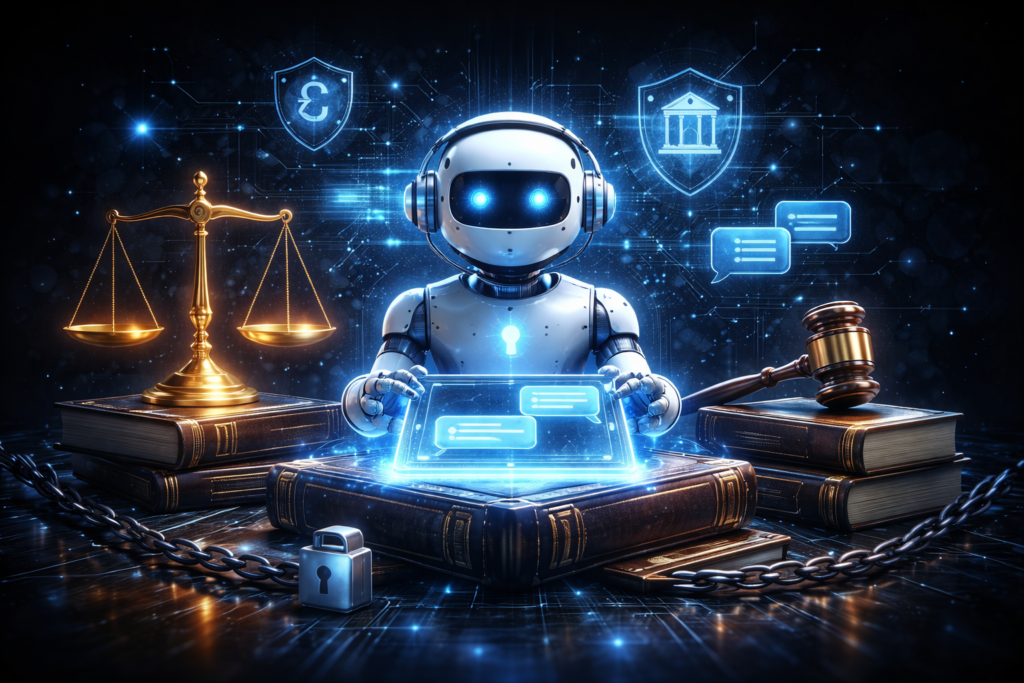
Selecting the ideal legal chatbot depends on:
- Compatibility with existing systems – Ensure it integrates with case management and CRM tools.
- Compliance readiness – Built-in adherence to legal and ethical guidelines.
- Analytics capabilities – Track performance, engagement, and ROI.
- Customizability – Adaptable to specific practice areas and workflows.
High-quality solutions, such as those offered by Accenture legal technology reports, balance AI efficiency, regulatory compliance, and human oversight, providing the best value for law firms.
FAQs
1. Can a legal chatbot provide legal advice?
No, chatbots provide informational support only. For legally binding advice, consult a qualified attorney.
2. Are legal chatbots secure?
Yes, when implemented with encryption, access control, and GDPR compliance, chatbots maintain confidentiality.
3. Do chatbots replace lawyers?
No, they assist lawyers by automating repetitive tasks and guiding clients.
4. Which areas of law benefit most from chatbots?
Corporate law, employment law, consumer law, and public legal services see significant benefits.
5. How do chatbots handle complex legal queries?
They escalate complex issues to human professionals for accurate legal guidance.
6. Can chatbots improve client engagement?
Yes, interactive, personalized responses enhance engagement and client satisfaction.
7. Are chatbots compliant with ethical guidelines?
When properly designed with disclaimers and jurisdictional compliance, they follow ethical standards.
8. How is ROI measured for legal chatbots?
Metrics include response time reduction, client satisfaction, lead conversion, and operational cost savings.
9. Do chatbots support multiple languages?
Many legal chatbots offer multilingual support, increasing accessibility for diverse clients.
10. What’s the future of legal chatbots?
AI advancements will enable predictive guidance, voice-enabled interaction, and deeper integration with legal research tools, expanding chatbot capabilities.
Common Mistakes in Legal Chatbot Implementation
- Overpromising capabilities: Chatbots cannot replace legal judgment; misrepresentation reduces trust.
- Using outdated or biased data: Poor training data leads to inaccurate responses.
- Neglecting compliance and disclaimers: Failure to include clear disclaimers can lead to ethical violations.
- Lack of integration: Isolated chatbots reduce workflow efficiency.
- Ignoring user feedback: Without monitoring, chatbot effectiveness decreases over time.
Avoiding these mistakes ensures chatbots are trustworthy, compliant, and effective.
Conclusion
Legal chatbots are transforming the way legal services are delivered, making them more accessible, efficient, and client-friendly. By leveraging artificial intelligence and adhering to compliance and ethical standards, these tools enhance client engagement, reduce operational burden, and provide data-driven insights for continuous improvement.
Platforms like Engagerbot exemplify how law firms can implement AI-powered chatbots responsibly, combining automation with human oversight to deliver high-quality legal support. As the legal landscape continues to evolve, adopting these tools will become essential for law firms seeking a competitive edge and improved client satisfaction.