
Introduction
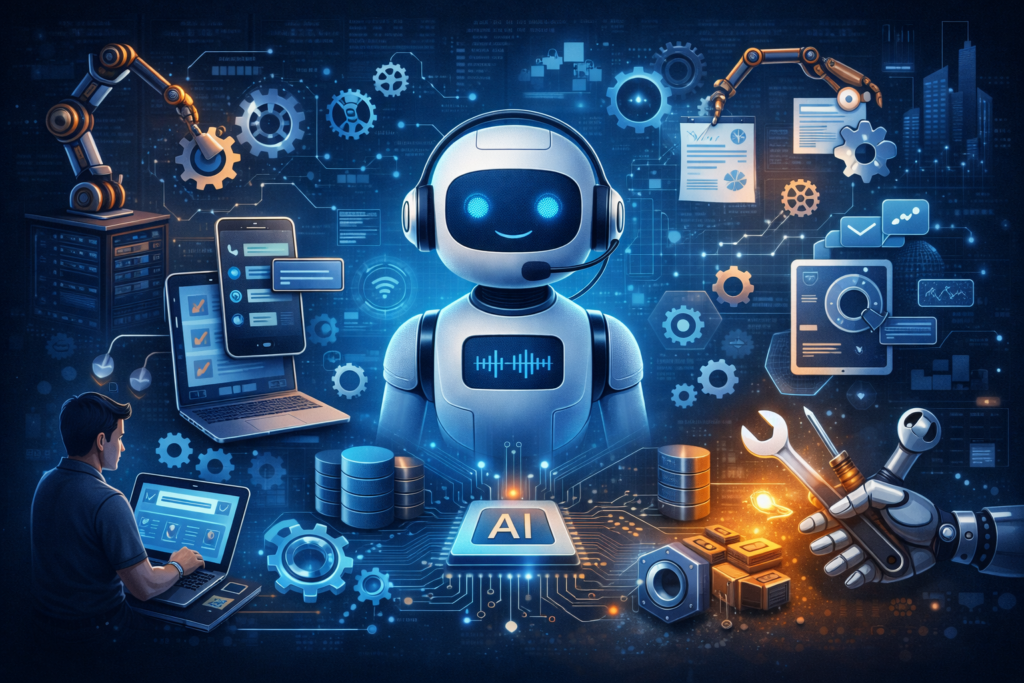
Modern IT environments are becoming increasingly complex, with distributed infrastructures, cloud platforms, cybersecurity threats, and real-time operational demands. In this landscape, IT & Computing chatbots have emerged as intelligent digital assistants capable of transforming how organizations manage technical support, automate workflows, and deliver instant system intelligence. These AI-driven tools are no longer experimental—they are now core components of enterprise IT strategies.
Unlike traditional ticket-based support systems, IT chatbots leverage natural language processing (NLP), machine learning, and contextual automation to resolve technical issues instantly. From resetting passwords and monitoring servers to detecting anomalies and assisting developers, computing chatbots dramatically reduce response times while improving operational efficiency. According to research published by Google Cloud AI, intelligent automation significantly lowers system downtime and improves service reliability across enterprise environments.
For organizations aiming to modernize their digital infrastructure, platforms like Engagerbot demonstrate how intelligent chatbot frameworks can centralize IT assistance, automate repetitive tasks, and enhance user experience without increasing operational costs. As we explore this guide, you’ll gain a complete understanding of how IT chatbots function, where they deliver the most value, and how businesses can implement them responsibly following Google’s quality and trust guidelines.
What Is an IT & Computing Chatbot?
An IT & Computing chatbot is an AI-powered virtual assistant designed to handle technical tasks, system inquiries, and IT support interactions through conversational interfaces. These chatbots integrate with enterprise systems to provide real-time assistance, automate workflows, and reduce the dependency on human IT staff for repetitive issues. Unlike simple scripted bots, modern IT chatbots utilize machine learning and contextual understanding to deliver accurate, adaptive responses.
At their core, IT chatbots act as an intelligent intermediary between users and complex computing environments. They can interpret user queries related to software issues, network connectivity, hardware diagnostics, and cloud infrastructure. According to IBM’s AI research division, advanced chatbots significantly improve IT service management (ITSM) by resolving common incidents without escalating tickets.
These chatbots integrate seamlessly with platforms such as ServiceNow, Jira, Slack, and Microsoft Teams, enabling organizations to embed technical support directly into existing workflows. This integration ensures faster issue resolution and reduces friction between users and IT departments. Additionally, computing chatbots can log incidents, create reports, and track performance metrics automatically.
By eliminating repetitive manual tasks, IT chatbots allow technical teams to focus on high-impact initiatives such as system optimization, cybersecurity defense, and infrastructure scaling. As computing environments grow more distributed, chatbot-driven automation becomes not just beneficial—but essential.
How IT Chatbots Work in Computing Environments
IT & Computing chatbots operate through a layered architecture that combines NLP engines, intent recognition, knowledge bases, and backend system integrations. When a user submits a query, the chatbot first interprets the intent using linguistic models trained on technical datasets. This allows the bot to understand both simple commands and complex troubleshooting requests.
Once intent is identified, the chatbot accesses structured knowledge repositories, including IT documentation, system logs, and configuration databases. Platforms supported by Microsoft Azure AI Services demonstrate how chatbots can securely retrieve system data while maintaining compliance and access controls. This ensures accurate responses without exposing sensitive infrastructure details.
Modern computing chatbots also integrate automation scripts and API connections. For example, when a user requests a password reset or server status check, the chatbot can execute predefined scripts rather than escalating the request. This reduces response times from hours to seconds while maintaining consistency and auditability.
Importantly, IT chatbots continuously learn from interactions. Machine learning models analyze resolved tickets and feedback to improve future responses. Over time, this creates a self-optimizing support system that adapts to evolving IT environments and user behavior.
Key Benefits of IT & Computing Chatbots for Enterprises
One of the most significant advantages of IT chatbots is operational efficiency. By automating repetitive tasks such as password resets, system diagnostics, and access requests, organizations reduce IT workload and support costs. Research from Amazon Web Services (AWS) highlights how AI automation improves infrastructure scalability while maintaining performance stability.
Another major benefit is 24/7 availability. IT issues don’t follow business hours, and downtime can be costly. Chatbots provide instant support regardless of time zone, ensuring continuous assistance for global teams. This capability significantly improves user satisfaction and productivity.
IT chatbots also enhance security posture by enforcing standardized processes. Automated workflows reduce human error, ensure consistent access control enforcement, and enable faster detection of suspicious activity. When integrated with monitoring tools, chatbots can alert teams to anomalies before they escalate into critical incidents.
Finally, chatbots generate valuable analytics. By tracking interaction data, organizations gain insights into recurring issues, system weaknesses, and user behavior. These insights enable proactive improvements and smarter IT planning across the enterprise.
Use Cases of IT & Computing Chatbots
IT chatbots are deployed across a wide range of enterprise scenarios. One of the most common use cases is IT helpdesk automation, where chatbots handle first-level support tasks such as troubleshooting connectivity issues, software installation guidance, and ticket creation. This significantly reduces backlog and accelerates resolution times.
Another powerful application is system monitoring and alerts. Chatbots can connect with infrastructure monitoring tools to notify teams of performance issues, outages, or security threats in real time. According to CISA cybersecurity resources, real-time alerting and automated response are critical for minimizing operational risk.
Chatbots are also used in DevOps environments, assisting developers with deployment status checks, CI/CD pipeline monitoring, and configuration validation. By providing instant access to system data, chatbots streamline development workflows and reduce deployment errors.
Additional use cases include onboarding automation, asset management, compliance reporting, and cloud cost optimization. As organizations scale, these chatbot-driven capabilities become foundational components of modern IT ecosystems.
Core Technologies Powering IT & Computing Chatbots
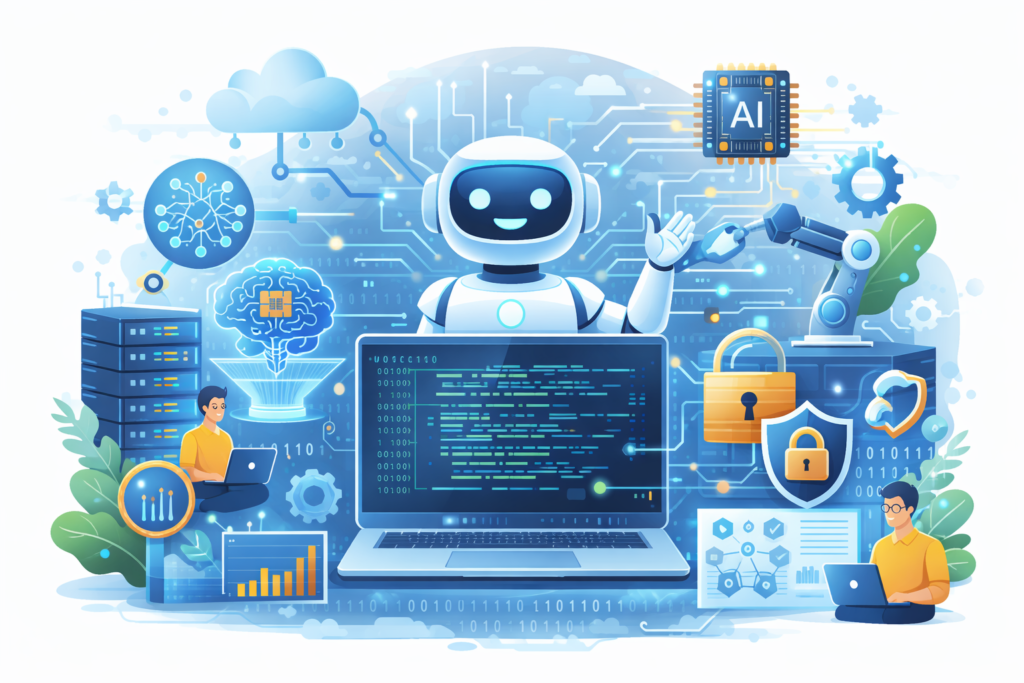
IT & Computing chatbots rely on a combination of advanced technologies that work together to deliver accurate, scalable, and secure technical assistance. At the foundation is Natural Language Processing (NLP), which allows chatbots to understand human language, interpret intent, and respond in a contextual manner. Modern NLP engines use deep learning models trained on vast technical datasets to handle complex IT terminology and system-related queries.
Another critical component is Machine Learning (ML). ML enables chatbots to continuously improve by learning from historical interactions, resolved tickets, and user feedback. Over time, this allows the chatbot to predict issues, recommend solutions, and reduce repetitive escalations. According to IBM Artificial Intelligence research, machine learning-driven automation significantly improves IT service accuracy and efficiency.
APIs and system integrations play a major role as well. IT chatbots must securely connect with operating systems, databases, cloud platforms, and monitoring tools to fetch real-time data. These integrations allow bots to perform actions such as restarting services, checking server health, or provisioning user access without manual intervention.
Finally, knowledge graphs and IT documentation repositories enable chatbots to retrieve structured information quickly. When combined with automation engines, these technologies transform chatbots into intelligent digital operators capable of managing modern computing environments at scale.
Role of IT Chatbots in IT Service Management (ITSM)
IT & Computing chatbots have become a critical component of modern IT Service Management (ITSM) frameworks. Traditional ITSM models rely heavily on human-operated service desks, which often struggle with high ticket volumes and delayed response times. Chatbots address this challenge by acting as the first line of support, resolving common issues instantly and escalating only complex cases.
One of the primary ITSM benefits is incident management automation. Chatbots can diagnose issues, suggest fixes, and even apply resolutions without human involvement. According to ServiceNow ITSM insights, automated incident handling significantly reduces downtime and improves service availability.
Chatbots also enhance request fulfillment, handling tasks such as software access approvals, hardware requests, and account provisioning. By following predefined workflows, chatbots ensure consistency and compliance with organizational policies. This reduces errors while improving turnaround times.
Another important function is knowledge management. Chatbots continuously update IT knowledge bases by learning from resolved tickets and system changes. This ensures that users receive accurate, up-to-date solutions without searching through extensive documentation.
By integrating with ITSM platforms, computing chatbots transform reactive support models into proactive, intelligent service ecosystems that scale with organizational growth.
Security and Compliance in IT & Computing Chatbots
Security is a critical consideration when deploying IT & Computing chatbots, as they interact with sensitive systems, user credentials, and infrastructure data. Properly designed chatbots follow strict authentication, authorization, and encryption protocols to prevent unauthorized access. Identity verification mechanisms ensure that users can only perform actions aligned with their permissions.
One essential security feature is role-based access control (RBAC). This ensures that chatbot commands are limited based on user roles, reducing the risk of misuse. Industry guidance from NIST Cybersecurity Framework emphasizes least-privilege access as a best practice for automated systems.
Data protection is another major concern. Chatbots must encrypt data in transit and at rest while complying with global regulations such as GDPR and ISO standards. Logging and audit trails are also critical, allowing organizations to track chatbot activity and investigate anomalies.
Additionally, secure IT chatbots help improve cybersecurity response times. By integrating with monitoring tools, chatbots can detect suspicious behavior, notify administrators, and initiate predefined security responses. When implemented correctly, chatbots enhance security rather than introduce risk.
Cloud Computing and IT Chatbot Integration
Cloud computing has significantly accelerated the adoption of IT & Computing chatbots by providing scalable infrastructure and AI services. Cloud-based chatbots can process large volumes of requests simultaneously while maintaining high availability and performance. Platforms such as Google Cloud AI solutions demonstrate how cloud-native AI enables rapid chatbot deployment.
One major advantage of cloud integration is elastic scalability. As demand increases, chatbot resources automatically scale without manual intervention. This is particularly valuable for global enterprises with distributed teams operating across different time zones.
Cloud-based chatbots also integrate seamlessly with DevOps pipelines, cloud monitoring tools, and containerized environments. This allows chatbots to assist with deployment status checks, performance metrics, and system alerts. By centralizing cloud insights through conversational interfaces, organizations reduce complexity and improve visibility.
Furthermore, cloud platforms provide built-in security, compliance, and redundancy, reducing the operational burden on internal IT teams. As cloud adoption grows, IT chatbots become essential interfaces for managing dynamic, distributed computing environments efficiently.
AI Models and Automation in Computing Chatbots
Advanced AI models are the intelligence layer behind modern IT & Computing chatbots. These models use deep neural networks, transformers, and reinforcement learning to process complex technical queries accurately. Unlike rule-based systems, AI-driven chatbots adapt dynamically to new scenarios without requiring constant reprogramming.
Automation engines allow chatbots to execute tasks across systems, such as restarting servers, applying patches, or updating configurations. According to AWS Machine Learning services, AI-powered automation significantly reduces operational overhead while improving reliability.
Predictive analytics is another powerful capability. By analyzing historical system data, chatbots can anticipate failures and recommend preventive actions. This proactive approach reduces downtime and improves system resilience.
AI-driven chatbots also support continuous improvement. Feedback loops help refine responses, expand knowledge bases, and optimize workflows. Over time, this creates a highly efficient, self-learning IT support system that evolves alongside organizational infrastructure.
IT Chatbots in DevOps and CI/CD Pipelines
IT & Computing chatbots are increasingly integrated into DevOps workflows, enhancing continuous integration and continuous delivery (CI/CD) processes. By providing real-time insights and automated interactions, chatbots reduce human errors, accelerate deployments, and streamline collaboration between development and operations teams.
For example, chatbots can monitor build statuses, trigger automated testing, and notify teams of deployment issues via platforms like Jenkins CircleCI. This reduces bottlenecks and allows developers to focus on code quality rather than repetitive operational tasks.
Additionally, chatbots can enforce compliance checks in CI/CD pipelines, ensuring that code deployments adhere to internal security and operational policies. They can automatically validate configurations, scan for vulnerabilities, and even rollback failed deployments, reducing downtime and improving release reliability.
According to AWS DevOps guidance, automation with AI-driven chatbots not only accelerates the release cycle but also provides traceable audit logs, which are essential for enterprise compliance and post-mortem analysis.
Overall, IT chatbots act as intelligent facilitators within DevOps, transforming reactive monitoring into proactive and automated operational excellence.
Network Management and Monitoring Chatbots
Modern enterprise networks are complex, spanning multiple sites, cloud environments, and hybrid infrastructures. IT chatbots simplify network management by providing instant diagnostics, configuration assistance, and performance monitoring through conversational interfaces.
These chatbots integrate with network monitoring tools such as Cisco Meraki Dashboard and Palo Alto Networks to provide real-time network status, detect anomalies, and generate actionable alerts. This allows IT teams to respond faster to potential outages or security incidents.
AI-driven chatbots also help automate routine network tasks such as IP management, firmware updates, and access control adjustments. By combining real-time analytics with automated remediation scripts, chatbots reduce operational overhead and increase network reliability.
Furthermore, predictive network maintenance is possible as chatbots analyze historical data to forecast potential failures, bandwidth bottlenecks, or security threats, improving overall network performance and uptime.
Data Center Management and Automation
IT & Computing chatbots are transforming data center operations by automating routine management tasks, improving uptime, and reducing human intervention. Modern data centers require constant monitoring of servers, storage arrays, and network devices. Chatbots can interface with management platforms like VMware vRealize and Red Hat Ansible to automate provisioning, performance checks, and fault remediation.
For example, when a server experiences abnormal load, a chatbot can automatically notify administrators, trigger load balancing scripts, or spin up additional virtual instances. This proactive management reduces downtime and enhances system reliability.
Additionally, chatbots can track energy usage, optimize cooling systems, and report on compliance metrics. By integrating with analytics dashboards, IT teams can make informed decisions faster, while repetitive manual tasks are handled autonomously. According to Data Center Dynamics, AI-driven automation improves operational efficiency by up to 30% in modern enterprise environments.
Enhancing Enterprise Productivity with IT Chatbots
IT chatbots contribute directly to enterprise productivity by minimizing delays in support, reducing repetitive manual tasks, and streamlining information access. Employees can resolve common IT issues instantly via chat, from password resets to application troubleshooting, without waiting for human intervention.
Integration with communication platforms like Slack and Microsoft Teams allows chatbots to deliver contextual IT guidance within the flow of work. This reduces cognitive load, improves focus, and accelerates decision-making.
Furthermore, chatbots support collaborative IT environments by providing real-time system status updates, performance metrics, and actionable recommendations. Analytics derived from chatbot interactions help identify recurring bottlenecks, enabling IT managers to optimize workflows and resource allocation efficiently.
Scaling IT Support with Multi-Channel Chatbots
Modern enterprises require IT support across multiple channels—web portals, mobile apps, messaging platforms, and voice assistants. Multi-channel chatbots provide consistent IT assistance across these touchpoints, ensuring seamless user experiences.
These chatbots can route requests intelligently, escalate complex issues to human agents when needed, and maintain conversation context across platforms. According to Gartner research on digital assistants, multi-channel support enhances user satisfaction and reduces overall ticket resolution times.
By scaling support without expanding headcount, multi-channel chatbots allow enterprises to handle higher volumes of requests efficiently, ensuring global teams receive reliable assistance anytime, anywhere.
Future Trends in IT & Computing Chatbots
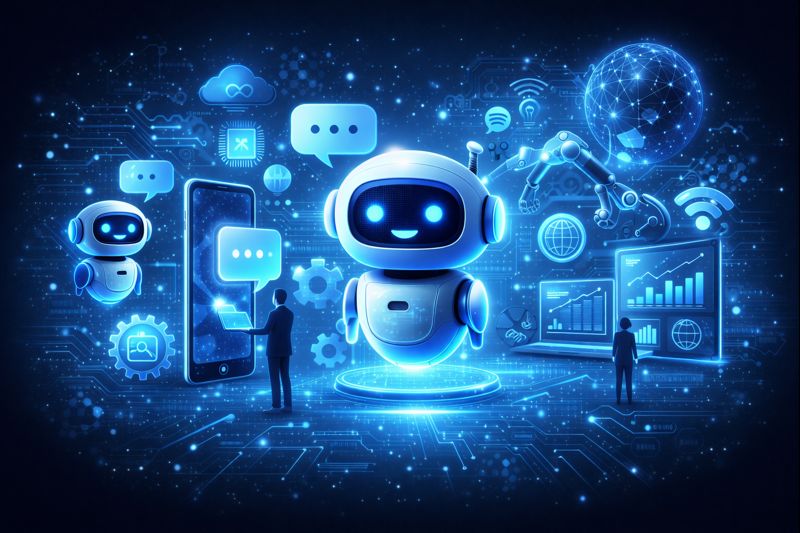
The next generation of IT chatbots will leverage generative AI, contextual reasoning, and predictive analytics to deliver even more sophisticated support. Chatbots are expected to autonomously handle complex troubleshooting, security remediation, and IT governance tasks with minimal human intervention.
Integration with edge computing, IoT networks, and hybrid cloud environments will expand chatbot capabilities, enabling real-time monitoring and instant decision-making across distributed infrastructures. Platforms like Google Vertex AI demonstrate how AI models can be deployed at scale for enterprise-grade support.
Moreover, chatbots will increasingly focus on personalized IT experiences, adapting guidance and automation to individual user behavior and enterprise-specific workflows. Continuous learning, combined with ethical AI practices, will ensure secure, efficient, and responsible automation.
Measuring ROI and Success of IT Chatbots
Evaluating IT chatbot effectiveness involves analyzing key metrics such as ticket resolution time, first-contact resolution rate, user satisfaction scores, and cost savings. According to ServiceNow ROI studies, organizations using AI-driven chatbots reduce IT support costs by up to 30% while improving response times significantly.
Other success indicators include adoption rates, automation coverage, and incident prevention rates. By integrating analytics dashboards, IT managers can continuously refine chatbot workflows, identify knowledge gaps, and measure long-term performance improvements.
Common Mistakes When Deploying IT Chatbots
- Ignoring user intent complexity – Overly simplistic scripts fail to handle nuanced IT queries.
- Lack of integration – Chatbots that don’t connect to critical IT systems limit automation benefits.
- Weak security controls – Inadequate authentication or RBAC can expose sensitive systems.
- Neglecting analytics – Without monitoring performance and interactions, chatbots cannot self-optimize.
- Over-reliance on AI – Chatbots should complement, not completely replace, skilled IT staff.
FAQs
Q1: Can IT chatbots handle critical security incidents?
A1: Yes, when properly integrated with monitoring and incident response tools, chatbots can alert admins, execute predefined remediation steps, and escalate as needed.
Q2: Are IT chatbots suitable for small businesses?
A2: Absolutely. Even small IT teams benefit from automation of repetitive tasks, instant support, and improved productivity.
Q3: How do chatbots learn over time?
A3: Through machine learning and feedback loops, chatbots analyze resolved tickets and user interactions to improve future responses.
Q4: Do IT chatbots require cloud infrastructure?
A4: Not necessarily, but cloud integration enhances scalability, high availability, and AI model deployment for enterprise-grade performance.
Conclusion
IT & Computing chatbots are revolutionizing enterprise IT operations by automating support, improving efficiency, enhancing security, and delivering consistent user experiences. By integrating AI-driven chatbots into DevOps, network management, data centers, and multi-channel support, organizations can scale IT assistance intelligently while reducing operational costs.
Platforms like Engagerbot demonstrate how modern enterprises can implement chatbots responsibly, leveraging advanced AI models, secure automation, and real-time analytics to achieve measurable ROI. As technology evolves, IT chatbots will become an indispensable component of digital transformation strategies, ensuring enterprises remain agile, productive, and secure.