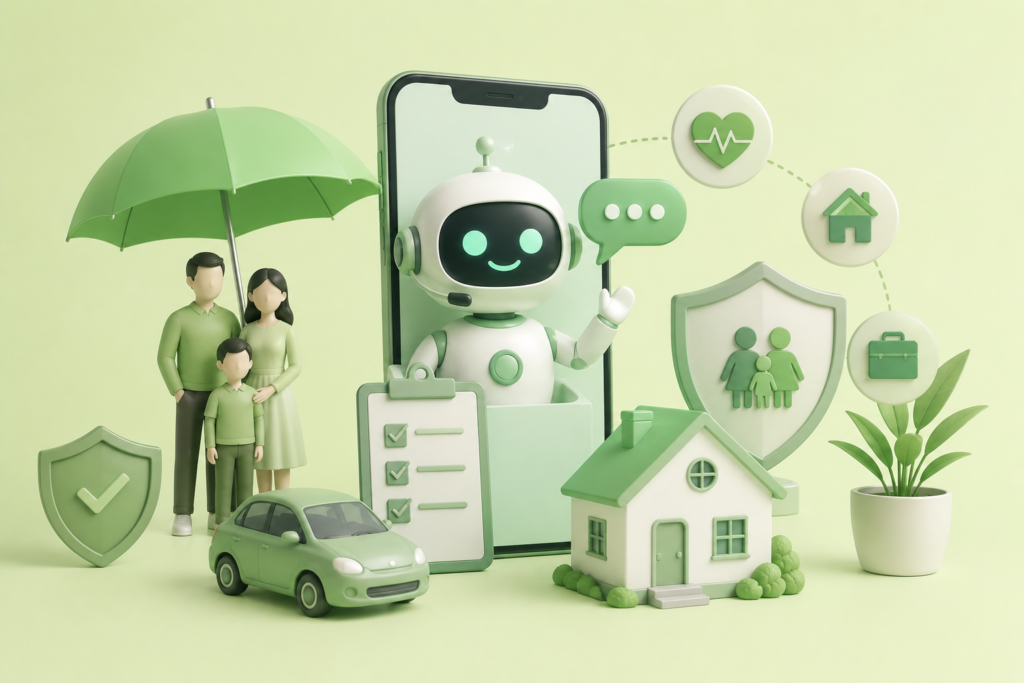
Discover how an Insurance Chatbot helps insurance companies automate customer support, streamline claims processing, improve policy management, increase lead generation, and deliver exceptional customer experiences using artificial intelligence. Learn the benefits, features, implementation strategies, best practices, and future trends of AI-powered insurance chatbots.
Introduction
The insurance industry has experienced a significant digital transformation over the past decade. Customers now expect instant responses, personalized recommendations, and seamless digital experiences regardless of the time of day. Traditional communication channels such as phone calls and email often struggle to meet these growing expectations, creating delays that negatively impact customer satisfaction. An Insurance Chatbot addresses these challenges by providing intelligent, automated conversations that help customers receive immediate assistance while reducing operational workloads for insurance providers.
Organizations are increasingly adopting AI-powered conversational solutions to improve policy servicing, claims processing, customer support, quote generation, and lead qualification. Modern chatbots leverage artificial intelligence, natural language processing, and machine learning to understand customer intent, answer complex questions, and guide users through insurance-related processes with remarkable efficiency. These capabilities help businesses improve response times while maintaining consistent service quality across multiple communication channels.
At Engagerbot, businesses can implement intelligent chatbot solutions that improve customer engagement while simplifying insurance operations. Throughout this guide, you’ll learn how insurance chatbots work, their business benefits, essential features, implementation strategies, industry use cases, optimization techniques, and best practices for maximizing long-term success.
What Is an Insurance Chatbot?
An Insurance Chatbot is an AI-powered virtual assistant specifically designed to automate conversations between insurance companies and their customers. Unlike traditional scripted chat systems, modern insurance chatbots use artificial intelligence and natural language processing (NLP) to understand customer questions, interpret intent, and provide accurate responses in real time. Whether customers need assistance purchasing a new insurance policy, checking claim status, updating personal information, or understanding policy coverage, an intelligent chatbot can deliver immediate support without requiring human intervention for every request.
Insurance companies manage thousands of customer interactions daily across health, life, travel, vehicle, home, and business insurance products. Handling every inquiry manually can overwhelm support teams, increase operational costs, and lead to long wait times. Chatbots reduce this burden by automating repetitive tasks while allowing human agents to focus on complex customer situations. This balance between automation and human expertise improves operational efficiency without sacrificing customer satisfaction. AI-powered chatbots also continuously learn from previous conversations, enabling them to improve response accuracy over time.
Modern insurance chatbots are available across websites, mobile applications, messaging platforms, customer portals, and social media channels. They can guide users through policy comparisons, explain insurance terminology, calculate premium estimates, collect claim information, verify customer identity, and schedule appointments with insurance advisors. Their ability to operate 24/7 ensures customers receive assistance whenever they need it, making them an essential component of digital insurance transformation.
Why the Insurance Industry Is Embracing AI Chatbots
Customer expectations have fundamentally changed. People expect the same speed and convenience from insurance providers that they receive from online retailers, banks, and digital service providers. Waiting several days for policy information or claim updates is no longer considered acceptable. AI-powered insurance chatbots bridge this gap by delivering instant support around the clock. They reduce waiting times, improve communication consistency, and create smoother customer experiences throughout the insurance lifecycle.
Operational efficiency is another major reason insurers are investing in conversational AI. Customer service departments often spend considerable time answering repetitive questions about premium payments, policy renewals, deductible information, document requirements, and claim procedures. Automating these interactions allows customer service representatives to dedicate more attention to high-value consultations requiring empathy, critical thinking, and personalized financial guidance. As a result, businesses improve productivity while reducing support costs.
Insurance chatbots also contribute to stronger customer relationships through personalization. By integrating with customer relationship management systems and policy databases, chatbots can recognize returning customers, retrieve policy details securely, and provide recommendations tailored to individual needs. Artificial intelligence enables proactive engagement through renewal reminders, payment notifications, policy upgrade suggestions, and risk prevention advice. This personalized approach increases customer satisfaction while strengthening long-term loyalty and retention.
Key Features of a Modern Insurance Chatbot
A modern insurance chatbot goes far beyond answering frequently asked questions. It functions as an intelligent digital assistant capable of managing multiple customer journeys simultaneously. One of its most valuable features is natural language understanding, which enables the chatbot to interpret customer intent even when questions are phrased differently. This allows conversations to feel more natural and human-like while reducing customer frustration caused by rigid keyword-based systems.
Another essential feature is automated claims assistance. Customers can initiate claims, upload supporting documents, submit photos, provide incident details, and receive claim reference numbers directly through the chatbot interface. Integration with insurance management systems allows the chatbot to retrieve real-time claim updates, reducing the need for customers to contact support repeatedly. Automated identity verification further enhances security while accelerating claims processing workflows.
Additional capabilities include policy management, premium calculators, appointment scheduling, multilingual support, secure payment assistance, personalized policy recommendations, document collection, customer authentication, proactive notifications, renewal reminders, lead qualification, customer feedback collection, and analytics dashboards. Businesses can also integrate chatbots with CRM software, knowledge bases, payment gateways, communication platforms, and backend insurance systems to create a seamless customer experience across every touchpoint.
Benefits of Insurance Chatbots for Insurance Companies
Insurance companies benefit significantly from chatbot automation because it improves operational efficiency while enhancing customer experiences. One of the most immediate advantages is reduced customer support costs. By automating thousands of repetitive inquiries, businesses decrease the volume of calls and emails handled by customer service teams. This allows organizations to optimize staffing levels while maintaining high-quality support around the clock.
Improved response speed directly contributes to higher customer satisfaction. Customers appreciate receiving immediate answers regarding policy details, payment schedules, renewal dates, claim requirements, and coverage information without waiting in phone queues. Faster communication also reduces customer frustration during stressful situations such as accidents or medical emergencies when immediate guidance is essential. Consistent responses improve trust because customers receive accurate information regardless of when they contact the organization.
Insurance chatbots also improve sales and lead generation. Prospective customers visiting an insurance website often have questions before purchasing coverage. Chatbots can answer product-related questions, compare insurance options, collect lead information, recommend suitable policies, calculate preliminary premium estimates, and schedule consultations with licensed insurance advisors. These capabilities increase conversion rates while ensuring sales teams spend more time engaging with qualified prospects rather than responding to repetitive preliminary inquiries.
How Insurance Chatbots Improve Customer Experience
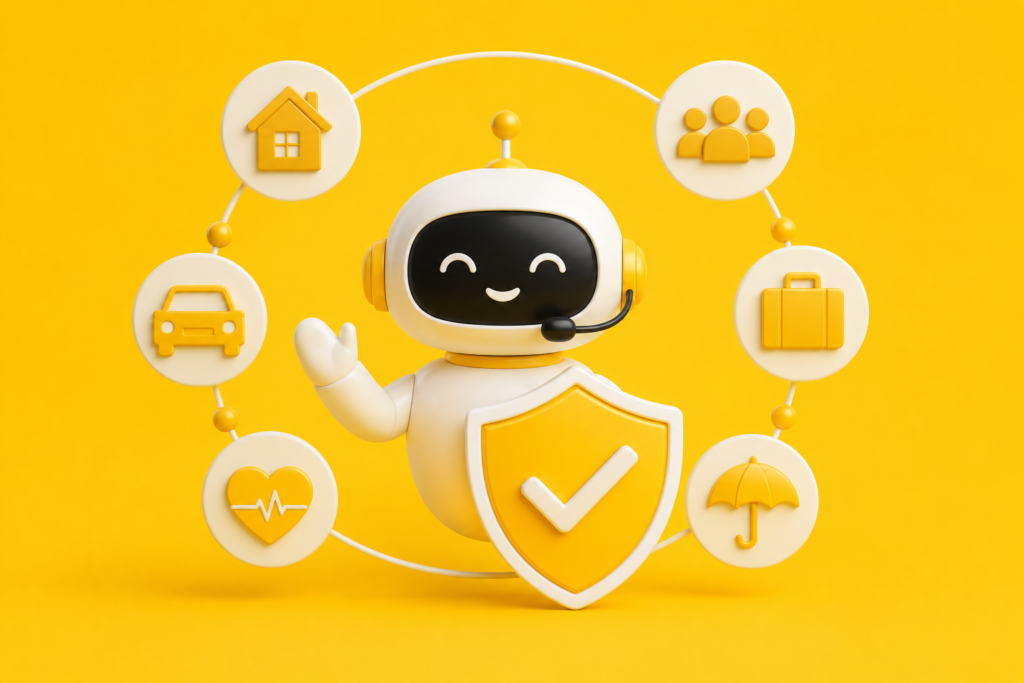
Customer experience has become one of the most important competitive factors in the insurance industry. Today’s customers expect fast, personalized, and convenient service across every interaction, from obtaining a quote to filing a claim. An insurance chatbot helps meet these expectations by providing instant, intelligent assistance 24 hours a day, seven days a week. Unlike traditional customer service channels that depend on business hours and agent availability, chatbots are always accessible. This continuous availability enables customers to receive immediate answers to questions about policies, premiums, deductibles, coverage limits, claim status, and renewal dates without long waiting periods. Faster responses reduce frustration and increase confidence in the insurer’s ability to provide dependable service.
Another major advantage is personalized customer engagement. By securely integrating with customer databases and CRM platforms, chatbots can recognize returning users after authentication and deliver information tailored to their individual policies and preferences. Instead of presenting generic responses, the chatbot can remind customers about upcoming premium payments, policy renewal deadlines, outstanding documentation, or available coverage enhancements that match their needs. Personalized conversations help customers feel valued while simplifying complex insurance processes. Intelligent recommendations can also educate policyholders about optional riders, additional coverage, or risk management practices that improve financial protection.
Insurance chatbots also create consistent experiences across multiple digital channels. Whether customers interact through a company website, mobile application, or messaging platform, they receive the same accurate information and professional assistance. This consistency strengthens trust while reducing communication errors that sometimes occur when different departments provide conflicting answers. Features such as multilingual support, guided forms, secure document uploads, appointment scheduling, and proactive notifications further improve convenience. By combining speed, personalization, accessibility, and consistency, insurance chatbots significantly enhance customer satisfaction and encourage long-term loyalty.
Role of AI, NLP, and Machine Learning in Insurance Chatbots
Artificial intelligence serves as the foundation of modern insurance chatbots, enabling them to deliver far more sophisticated interactions than traditional rule-based systems. Rather than relying solely on predefined responses, AI-powered chatbots analyze user intent, understand conversation context, and provide relevant answers based on customer needs. This intelligent decision-making allows conversations to feel natural while improving the chatbot’s ability to resolve inquiries independently. As customer expectations continue to evolve, AI enables insurance providers to deliver scalable, efficient, and personalized support without compromising service quality.
Natural Language Processing (NLP) plays a critical role in helping chatbots understand human language. Customers rarely ask questions using identical wording, making NLP essential for interpreting different sentence structures, synonyms, abbreviations, and conversational expressions. For example, one customer may ask, “How much is my deductible?” while another asks, “What do I need to pay before insurance covers my claim?” Although phrased differently, NLP recognizes that both questions relate to deductibles and provides accurate answers. This capability reduces misunderstandings and allows conversations to flow naturally, creating a better user experience.
Machine learning further enhances chatbot performance by enabling continuous improvement. Every interaction provides valuable data that helps the chatbot identify patterns, improve intent recognition, and optimize future responses. Over time, the chatbot becomes more accurate at handling frequently asked questions, identifying customer preferences, and recommending relevant insurance products. Predictive analytics powered by machine learning can also identify customers who may benefit from policy upgrades, renewal reminders, or proactive risk management advice. By combining AI, NLP, and machine learning, insurance companies create intelligent digital assistants capable of delivering increasingly effective customer experiences while supporting long-term business growth.
Insurance Chatbot Use Cases Across Different Insurance Types
Insurance chatbots provide value across virtually every insurance segment because they automate repetitive tasks while improving customer engagement throughout the policy lifecycle. In health insurance, chatbots assist customers by explaining policy coverage, verifying hospital network availability, checking claim eligibility, providing pre-authorization guidance, and answering questions about deductibles and co-payments. They can also remind policyholders about preventive health benefits, renewal deadlines, and required documentation. By simplifying complex healthcare insurance processes, chatbots reduce confusion while improving customer satisfaction during critical moments.
For life insurance, chatbots help prospective customers understand different policy options, estimate coverage needs, compare plans, and calculate preliminary premium estimates. Existing policyholders can update beneficiary information, access policy documents, review payment schedules, and receive renewal notifications. In auto insurance, chatbots support accident reporting, roadside assistance requests, vehicle policy inquiries, premium payments, and claim status tracking. Customers involved in accidents can quickly upload photographs, describe incidents, and receive immediate guidance regarding the next steps in the claims process. Faster communication improves customer confidence while accelerating claim initiation.
Home, travel, business, and specialty insurance providers also benefit from chatbot automation. Home insurance chatbots answer questions about property coverage, natural disaster protection, theft claims, and maintenance recommendations. Travel insurance chatbots provide assistance with trip cancellations, medical emergencies, lost baggage claims, and travel documentation. Business insurance providers use chatbots to educate organizations about liability coverage, cyber insurance, professional indemnity policies, and commercial property protection. Regardless of the insurance category, chatbots streamline communication, reduce administrative workloads, improve policyholder engagement, and support faster decision-making throughout every customer interaction.
How Chatbots Streamline Insurance Claims Processing
Claims processing represents one of the most critical customer touchpoints in the insurance industry. Delays, unclear communication, and complicated documentation requirements often create frustration during an already stressful situation. Insurance chatbots simplify this process by providing immediate guidance from the moment a customer decides to file a claim. Instead of waiting to speak with an agent, policyholders can begin the claims process instantly by answering guided questions, uploading supporting documents, sharing photographs, and providing incident details directly through the chatbot interface. This structured approach reduces errors while ensuring claims contain the necessary information for efficient processing.
Automation significantly accelerates internal workflows by validating submitted information before it reaches claims adjusters. Chatbots can verify policy numbers, confirm customer identity through secure authentication methods, check policy eligibility, and ensure required documentation has been submitted. If important information is missing, the chatbot immediately notifies the customer and requests additional details, preventing unnecessary processing delays. Integration with claims management systems enables real-time updates, allowing customers to check claim progress whenever they choose instead of repeatedly contacting customer service representatives.
Insurance chatbots also improve transparency throughout the claims journey. Customers receive automated notifications whenever their claim status changes, additional documents are required, inspections are scheduled, or claim decisions are finalized. Continuous communication reduces uncertainty while building trust between insurers and policyholders. Advanced AI capabilities can prioritize urgent claims, identify potential fraud indicators for further review, and route complex cases to specialized human agents when necessary. By combining automation with intelligent decision support, insurance chatbots make claims processing faster, more accurate, and significantly more customer-friendly while improving operational efficiency for insurance providers.
Essential Features Every Insurance Chatbot Should Have
An effective insurance chatbot should provide much more than automated replies. It must function as a secure, intelligent digital assistant capable of supporting customers throughout the entire insurance journey. One of the most important features is Natural Language Understanding (NLU), which enables the chatbot to understand customer intent instead of relying solely on exact keywords. Whether a customer asks about policy coverage, premium payments, deductibles, claim eligibility, or renewal dates, the chatbot should accurately interpret the question and deliver relevant information in a conversational manner. Intelligent conversation flows help customers find answers quickly while reducing frustration caused by repetitive menus or rigid scripted interactions.
Security is equally important because insurance providers manage highly sensitive customer information. A modern insurance chatbot should support secure authentication methods such as one-time passwords (OTP), email verification, multi-factor authentication, or customer portal login integration before providing access to personal policy details. Additional capabilities should include encrypted communication, secure document uploads, automated identity verification, and compliance with applicable privacy and data protection regulations. Customers should also be able to upload claim documents, photographs, invoices, and supporting files directly through the chatbot interface, allowing insurers to begin processing requests without unnecessary delays.
Other essential features include policy management, premium calculators, automated quote generation, appointment scheduling, multilingual support, proactive notifications, renewal reminders, payment assistance, customer feedback collection, analytics dashboards, and seamless escalation to human agents whenever complex situations arise. Integration with CRM platforms, policy administration systems, claims management software, payment gateways, and knowledge bases creates a unified customer experience across every touchpoint. Together, these capabilities transform the chatbot into a valuable business asset that improves operational efficiency, increases customer satisfaction, and supports long-term digital transformation initiatives.
How to Successfully Implement an Insurance Chatbot
Implementing an insurance chatbot requires careful planning to ensure it aligns with business objectives and customer expectations. The first step is identifying the primary use cases that will deliver the greatest value. Some organizations prioritize customer support automation, while others focus on lead generation, claims assistance, policy servicing, or premium payment reminders. Clearly defining business goals helps determine chatbot functionality, integration requirements, success metrics, and implementation priorities. Organizations should also analyze frequently asked customer questions to identify repetitive interactions that are ideal candidates for automation.
Once objectives have been established, businesses should design conversational workflows that are simple, intuitive, and customer-focused. Each conversation should guide users through tasks using clear language while minimizing unnecessary steps. Frequently used insurance processes such as requesting quotes, filing claims, updating personal information, checking claim status, renewing policies, and downloading policy documents should be optimized for speed and convenience. It is equally important to provide seamless transitions to human agents whenever the chatbot encounters complex situations requiring personalized advice or regulatory expertise. This hybrid approach ensures customers receive efficient service without sacrificing the human support needed for sensitive financial decisions.
Continuous monitoring and optimization are essential after deployment. Businesses should regularly review chatbot analytics to measure response accuracy, conversation completion rates, customer satisfaction scores, and escalation frequency. Customer feedback can reveal opportunities to improve conversation flows, expand knowledge bases, and introduce new automation capabilities. Artificial intelligence models should also be updated regularly using real customer interactions to improve intent recognition and response quality. Organizations that treat chatbot implementation as an ongoing improvement process rather than a one-time project typically achieve higher adoption rates, stronger customer engagement, and greater long-term return on investment.
Insurance Chatbot Integration with CRM, Policy Management, and Payment Systems
The true power of an insurance chatbot emerges when it is integrated with existing business systems. Standalone chatbots can answer general questions, but integrated chatbots provide personalized, real-time assistance based on actual customer information. By connecting with a Customer Relationship Management (CRM) system, the chatbot can securely retrieve customer profiles, policy history, communication preferences, and previous interactions after proper authentication. This enables personalized conversations that reduce repetitive questions and improve overall customer satisfaction. Service representatives also benefit because chatbot conversations are automatically recorded within the CRM, providing valuable context before human intervention becomes necessary.
Integration with policy administration systems allows customers to access policy-specific information without contacting customer support. After identity verification, users can view active coverage, policy documents, premium schedules, renewal dates, deductible information, beneficiaries, endorsements, and policy updates directly through the chatbot. Customers can also request policy modifications, update contact information, submit supporting documentation, or initiate policy renewals through guided workflows. Automating these administrative processes reduces manual workloads while improving operational efficiency across insurance departments.
Payment gateway integration further enhances customer convenience by allowing secure premium payments through the chatbot interface. Customers can receive payment reminders, review outstanding balances, select payment methods, complete transactions, and download digital receipts without leaving the conversation. Automated notifications confirm successful payments while reducing missed renewal deadlines. Additional integrations with claims management systems, document management platforms, analytics tools, fraud detection software, and communication platforms create a unified digital ecosystem that supports both customers and internal teams. Well-integrated insurance chatbots deliver faster service, greater accuracy, and more personalized customer experiences while maximizing operational efficiency.
Future Trends Shaping AI-Powered Insurance Chatbots
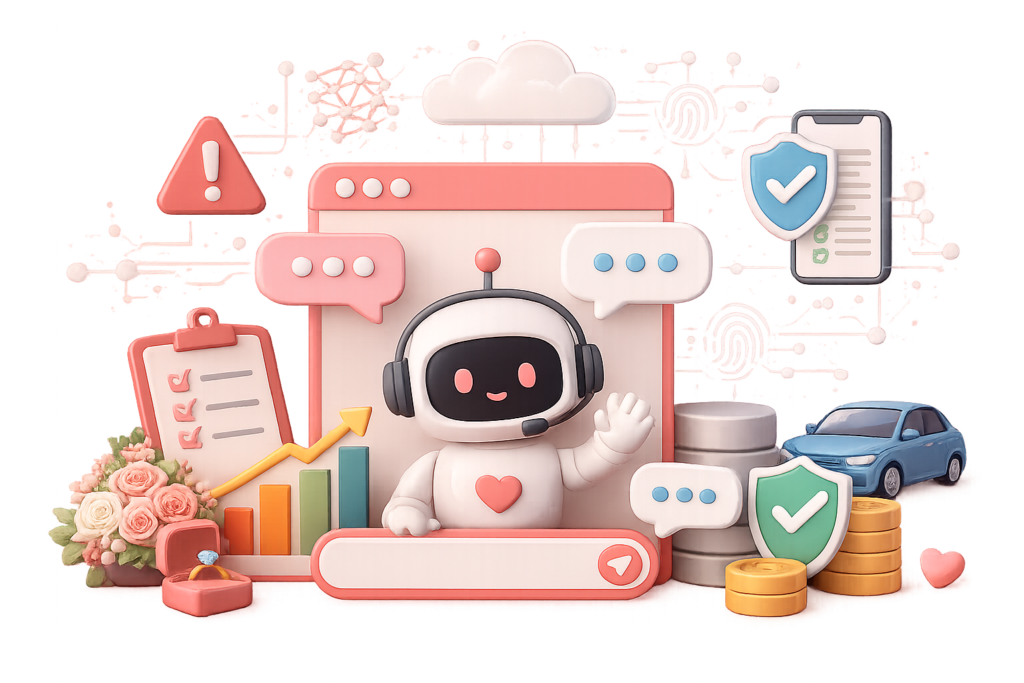
The future of insurance chatbots is being driven by rapid advancements in artificial intelligence, automation, and customer experience technologies. Generative AI is expected to significantly improve chatbot capabilities by enabling more natural, context-aware conversations that closely resemble interactions with experienced insurance professionals. Instead of providing short predefined responses, future chatbots will explain policy terms in greater detail, summarize complex coverage documents, compare insurance options, and generate personalized recommendations based on customer goals and risk profiles. These improvements will make insurance information more accessible and easier for customers to understand.
Predictive analytics will also play an increasingly important role in conversational insurance. AI systems will analyze customer behavior, policy history, claims patterns, and engagement data to anticipate customer needs before they initiate conversations. For example, chatbots may proactively remind customers about policy renewals, recommend additional coverage after major life events, notify homeowners about severe weather risks, or suggest preventive measures that reduce insurance claims. This proactive approach transforms chatbots from reactive support tools into valuable digital advisors that strengthen long-term customer relationships.
Emerging technologies such as voice assistants, omnichannel communication, biometric authentication, intelligent document processing, and advanced fraud detection will further expand chatbot capabilities. Customers will be able to interact naturally through voice, upload documents that are automatically analyzed using AI, and receive personalized assistance across websites, mobile applications, and messaging platforms without losing conversation context. As conversational AI continues to evolve, insurance chatbots will become an essential component of digital transformation strategies, helping insurers improve operational efficiency, reduce costs, enhance customer experiences, and remain competitive in an increasingly technology-driven marketplace.
Common Mistakes When Implementing an Insurance Chatbot
Many insurance companies assume that deploying a chatbot alone will immediately improve customer service. In reality, success depends on careful planning, continuous optimization, and seamless integration with existing business systems. One common mistake is relying on a rule-based chatbot that cannot understand natural language, resulting in repetitive or inaccurate responses. Another frequent issue is failing to integrate the chatbot with CRM, policy management, claims, and payment systems, preventing it from delivering personalized assistance. Businesses also overlook the importance of data security, customer authentication, and regulatory compliance when handling sensitive policyholder information.
Poor conversation design is another challenge. Long, confusing dialogue flows, excessive questions, and the absence of a clear path to a human agent can frustrate users. Organizations should regularly review chatbot performance, analyze customer feedback, update the knowledge base, and refine AI models to improve response accuracy. Continuous monitoring ensures the chatbot remains relevant as products, policies, and customer expectations evolve.
Best Practices Summary
Successful insurance chatbots combine artificial intelligence with excellent customer experience design. Define clear business goals before implementation, automate repetitive tasks while maintaining human support for complex cases, integrate the chatbot with CRM and policy management systems, and prioritize security and privacy throughout every interaction.
Regularly analyze chatbot analytics, customer satisfaction scores, and conversation completion rates to identify opportunities for improvement. Keep the knowledge base updated, expand chatbot capabilities gradually, and train AI models using real customer interactions. Personalize conversations whenever possible, provide multilingual support, and ensure the chatbot works consistently across websites, mobile applications, and messaging platforms. Following these best practices helps insurers improve efficiency, strengthen customer trust, and maximize long-term return on investment.
Frequently Asked Questions
1. What is an Insurance Chatbot?
An Insurance Chatbot is an AI-powered virtual assistant that helps customers with insurance-related tasks such as obtaining quotes, managing policies, filing claims, making premium payments, and answering frequently asked questions through automated conversations.
2. How do insurance chatbots improve customer service?
They provide 24/7 support, reduce response times, automate repetitive inquiries, personalize customer interactions, and offer instant access to policy information, improving both customer satisfaction and operational efficiency.
3. Can an insurance chatbot process insurance claims?
Yes. Modern chatbots guide customers through claim submission, collect required information, upload supporting documents, verify customer details, and provide real-time claim status updates by integrating with claims management systems.
4. Are insurance chatbots secure?
When properly implemented, insurance chatbots use secure authentication, encrypted communications, and compliance with applicable data protection regulations to protect sensitive customer information.
5. Which insurance sectors benefit from chatbots?
Health, life, auto, travel, home, commercial, property, and specialty insurance providers all benefit from chatbot automation for customer support, policy servicing, claims assistance, and lead generation.
6. Can insurance chatbots increase sales?
Yes. Chatbots engage website visitors, answer product questions, recommend suitable policies, qualify leads, generate quotes, and schedule appointments with insurance advisors, improving conversion rates.
7. Do insurance chatbots replace human agents?
No. They automate routine interactions while transferring complex or sensitive conversations to qualified human representatives, creating a hybrid customer service model.
8. What features should businesses prioritize?
Natural language processing, AI-powered conversations, secure authentication, CRM integration, policy management, claims support, payment processing, multilingual capabilities, analytics, and seamless human handoff are among the most valuable features.
Conclusion
Artificial intelligence is transforming the insurance industry by making customer service faster, more personalized, and significantly more efficient. An Insurance Chatbot enables insurers to automate routine inquiries, simplify policy management, accelerate claims processing, improve lead generation, and provide continuous support across multiple digital channels. By combining AI, Natural Language Processing, and machine learning with secure integrations, businesses can deliver exceptional customer experiences while reducing operational costs and improving productivity.
As customer expectations continue to evolve, conversational AI will become an increasingly important component of digital insurance strategies. Organizations that invest in intelligent chatbot solutions today will be better positioned to improve customer loyalty, strengthen operational efficiency, and remain competitive in a rapidly changing marketplace. Engagerbot provides intelligent chatbot solutions designed to help insurance businesses deliver seamless customer experiences while embracing the future of AI-powered customer engagement.
Want to Implement This Easily?
Prompt:
You are an expert consultant. Based on the blog post titled “Insurance Chatbot”, provide a step-by-step, practical implementation guide. Include tools, best practices, common mistakes to avoid, and advanced tips. Assume the reader wants to implement everything discussed in this article effectively.
Call to Action:
Want our help implementing this? Just reach out to us via our website contact form: