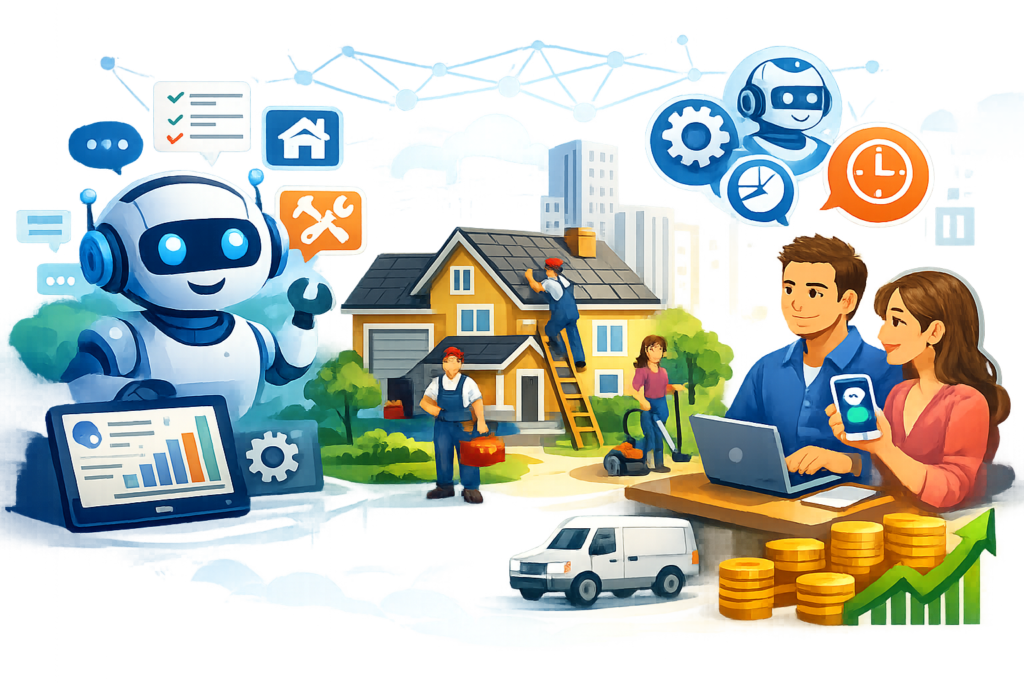
Discover how a Home Service Chatbot helps home service businesses automate bookings, answer customer inquiries 24/7, generate qualified leads, and improve customer satisfaction. Learn implementation strategies, benefits, best practices, and future trends in this comprehensive guide.
Introduction
Today’s customers expect instant responses, convenient scheduling, and personalized support whenever they need home services. Whether someone is searching for a plumber to fix an emergency leak, an electrician for urgent repairs, or a cleaning company for regular maintenance, delays in communication often result in lost business opportunities. Traditional customer service methods cannot always keep pace with these expectations, making intelligent automation an essential investment for modern service providers.
A Home Service Chatbot bridges this communication gap by providing immediate assistance across websites, social media platforms, and messaging applications. Instead of waiting for business hours, customers can ask questions, request quotes, schedule appointments, and receive helpful recommendations at any time. This significantly enhances customer satisfaction while reducing the workload on customer support teams.
At EngagerBot, we believe conversational AI is reshaping the future of customer engagement across every service industry. This comprehensive guide explains everything businesses need to know about implementing a Home Service Chatbot—from its core functionality and business benefits to implementation strategies, optimization techniques, security considerations, and best practices that help maximize long-term success.
What Is a Home Service Chatbot?
A Home Service Chatbot is an AI-powered virtual assistant specifically designed to automate conversations between customers and home service providers. It uses Natural Language Processing (NLP), artificial intelligence, and workflow automation to understand customer questions, provide relevant answers, schedule appointments, collect lead information, recommend services, and guide visitors through the customer journey without requiring continuous human intervention.
Unlike traditional live chat systems that depend on human operators, modern chatbots function around the clock. Customers receive instant assistance regardless of business hours, weekends, or holidays. Whether someone needs HVAC maintenance, pest control, landscaping, roofing, plumbing, appliance repair, painting, locksmith services, or home cleaning, the chatbot can respond immediately with accurate information based on predefined business rules and AI-driven understanding.
Modern Home Service Chatbots also integrate seamlessly with Customer Relationship Management (CRM) systems, scheduling software, payment gateways, marketing automation tools, and customer databases. These integrations enable businesses to automate repetitive administrative tasks while maintaining consistent communication across every customer touchpoint. As conversational AI technology continues to evolve, chatbots are becoming valuable digital assistants capable of supporting both customer acquisition and long-term customer retention.
Why Home Service Businesses Need AI-Powered Chatbots
The home services industry is becoming increasingly competitive, and customers now compare businesses based not only on pricing but also on responsiveness, convenience, and overall customer experience. A missed phone call or delayed email response often means a potential customer chooses a competitor instead. AI-powered chatbots eliminate this problem by ensuring every inquiry receives immediate attention.
Customers frequently search for service providers outside normal business hours. Emergencies such as burst pipes, electrical failures, heating breakdowns, or broken air conditioners rarely happen during office hours. An intelligent chatbot captures these inquiries instantly, collects essential customer information, and either schedules appointments automatically or forwards urgent requests to on-call staff. This capability significantly improves lead conversion while strengthening customer trust.
Beyond customer communication, automation increases operational efficiency. Administrative tasks like appointment confirmations, service reminders, quote requests, FAQs, technician availability checks, and customer follow-ups consume valuable employee time. By automating these repetitive processes, businesses allow their teams to focus on delivering exceptional service rather than managing routine communication. This leads to lower operating costs, higher productivity, and improved overall profitability.
Key Features of an Effective Home Service Chatbot
An effective Home Service Chatbot does much more than answer basic questions. It functions as a digital assistant capable of supporting customers throughout their entire journey, from initial inquiry to post-service follow-up. The most successful chatbot implementations combine artificial intelligence with practical automation features that simplify business operations while improving customer experiences.
One of the most valuable capabilities is intelligent appointment scheduling. Instead of requiring customers to call during business hours, the chatbot checks available time slots, gathers service details, confirms appointments, and sends automated reminders. This reduces scheduling conflicts while minimizing no-shows. Service request categorization further improves efficiency by directing plumbing, HVAC, electrical, landscaping, or cleaning requests to the appropriate teams.
Additional features include automated quotation requests, service recommendations, multilingual communication, payment assistance, customer feedback collection, technician tracking, maintenance reminders, emergency service routing, lead qualification, and CRM synchronization. Advanced AI chatbots can also recognize customer intent, personalize responses based on previous interactions, and continuously improve through machine learning, making every conversation more accurate and helpful over time.
Benefits of Using a Home Service Chatbot
Implementing a Home Service Chatbot provides measurable advantages for businesses seeking sustainable growth and improved customer satisfaction. One of the most immediate benefits is 24/7 customer availability. Instead of losing potential clients after office hours, businesses remain accessible around the clock, ensuring every inquiry is captured and addressed promptly. This constant availability significantly increases lead generation and conversion opportunities.
Another major benefit is operational efficiency. Customer service representatives often spend considerable time answering repetitive questions about pricing, availability, service areas, and appointment scheduling. By automating these interactions, chatbots reduce administrative workload, allowing employees to focus on higher-value tasks such as resolving complex customer issues or improving service quality. Businesses also experience reduced response times, improved workflow consistency, and lower support costs.
Home Service Chatbots additionally enhance customer satisfaction by providing personalized interactions based on customer preferences, previous bookings, and service history. Automated maintenance reminders encourage repeat business, while post-service feedback requests help identify opportunities for continuous improvement. Businesses can also gather valuable analytics, including customer behavior, popular services, booking trends, and frequently asked questions, enabling smarter decision-making and more effective marketing strategies.
How Home Service Chatbots Improve Customer Experience
Customer experience has become one of the most important competitive advantages in the home service industry. Homeowners no longer judge a business solely by pricing or the quality of completed work. They also evaluate how quickly the company responds, how easy it is to schedule appointments, and how efficiently communication is handled before, during, and after the service visit. A Home Service Chatbot helps businesses exceed these expectations by delivering immediate, personalized, and consistent support across every stage of the customer journey. Instead of waiting for office hours or remaining on hold during busy periods, customers receive instant answers to their questions through an AI-powered assistant that is available 24 hours a day, seven days a week. Modern chatbots built with Artificial Intelligence and Natural Language Processing can understand conversational language, identify customer intent, and provide accurate responses that improve overall engagement.
One of the greatest improvements chatbots bring to customer experience is convenience. Homeowners can request a service, check appointment availability, ask about pricing, confirm service areas, or receive maintenance advice without speaking to a representative. Whether someone needs emergency plumbing, HVAC maintenance, electrical repairs, carpet cleaning, pest control, roofing, landscaping, appliance repair, or locksmith services, the chatbot can guide them through the booking process within minutes. Automated appointment scheduling reduces friction by allowing customers to choose available time slots that fit their schedules while automatically sending confirmations and reminders. If a customer needs to reschedule, the chatbot can update the booking instantly, reducing unnecessary phone calls and administrative work. These streamlined interactions save valuable time for both customers and businesses while minimizing scheduling errors.
Personalization is another major contributor to an outstanding customer experience. AI-powered chatbots can recognize returning customers, access previous service history through integrated CRM platforms, and recommend relevant maintenance services based on past appointments. For example, if a homeowner recently installed a new HVAC system, the chatbot can proactively remind them about seasonal inspections or filter replacements. Similarly, customers who previously booked pest control services may receive automated reminders for follow-up treatments. These personalized interactions demonstrate attentiveness and encourage long-term customer relationships. Businesses can further improve satisfaction by collecting customer feedback immediately after each completed service, identifying areas for improvement, and responding quickly to any concerns. By combining intelligent automation, fast communication, personalized recommendations, and continuous availability, Home Service Chatbots significantly enhance customer satisfaction while helping businesses build stronger reputations and increase customer loyalty.
Essential Integrations for Maximum Efficiency
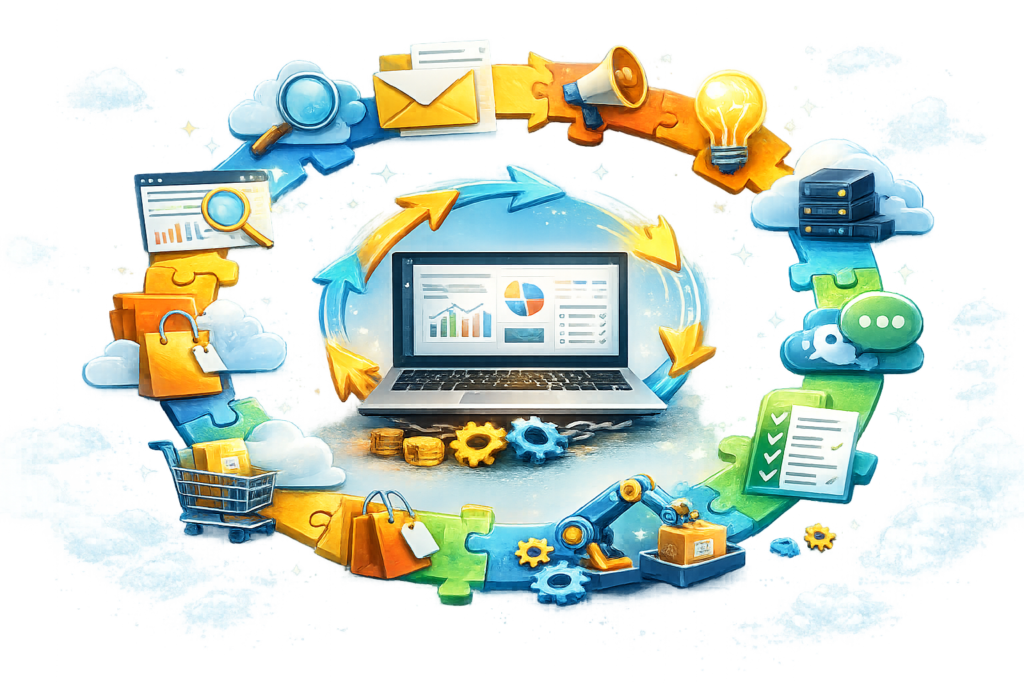
A Home Service Chatbot delivers the greatest value when it is connected with the business tools your company already uses. Instead of operating as a standalone communication channel, an integrated chatbot becomes a central hub that automates customer interactions, appointment scheduling, lead management, invoicing, and follow-up communication. These integrations eliminate repetitive manual work, reduce human error, and create a seamless customer experience from the first inquiry to post-service support. Businesses that invest in chatbot integrations often experience faster response times, improved operational efficiency, and higher customer satisfaction because information flows automatically between systems without requiring employees to enter the same data multiple times.
One of the most important integrations is with a Customer Relationship Management (CRM) platform. When a customer submits a service request through the chatbot, their contact details, conversation history, and requested services can automatically be stored in the CRM. This allows sales representatives and technicians to access customer information before appointments, resulting in more personalized service. Integration with scheduling software is equally valuable because customers can book appointments based on real-time technician availability. Automated reminders sent through email or SMS help reduce missed appointments while improving scheduling efficiency. Payment gateway integration enables customers to pay deposits or invoices securely during or after the booking process, creating a smoother customer journey. Businesses can also connect their chatbot with marketing automation platforms to send maintenance reminders, seasonal promotions, and customer satisfaction surveys based on previous interactions.
Analytics and reporting integrations provide another significant advantage. Connecting the chatbot with Google Analytics helps businesses monitor visitor behavior, conversion paths, and engagement metrics, while Google Tag Manager simplifies event tracking and marketing measurement. Local businesses can also strengthen their online visibility by maintaining an optimized Google Business Profile that works alongside chatbot-powered customer engagement. Structured data implemented using Schema.org improves search engine understanding of business information, potentially increasing visibility in search results. By integrating customer support systems, CRM software, marketing platforms, scheduling applications, payment solutions, and analytics tools, Home Service Chatbots become comprehensive business automation platforms that improve productivity, customer experience, and long-term growth.
AI Technologies Powering Modern Home Service Chatbots
The effectiveness of today’s Home Service Chatbots is driven by rapid advancements in artificial intelligence and conversational technologies. Unlike traditional rule-based chat systems that rely on simple keyword matching, modern AI-powered chatbots understand context, recognize customer intent, and deliver highly relevant responses. These intelligent systems continuously improve through learning algorithms, enabling them to handle increasingly complex conversations while providing a more natural user experience. As customer expectations continue to evolve, businesses that leverage advanced AI technologies gain a competitive advantage by delivering faster, smarter, and more personalized customer support.
One of the core technologies behind these systems is Artificial Intelligence, which enables chatbots to analyze user input and make intelligent decisions based on conversation context. Natural Language Processing (NLP) allows chatbots to interpret everyday language rather than requiring customers to use predefined commands. Machine Learning further enhances chatbot performance by analyzing previous interactions and continuously improving response accuracy over time. Sentiment analysis helps identify frustrated or dissatisfied customers, enabling businesses to prioritize urgent conversations and transfer them to human representatives when necessary. Predictive analytics can even anticipate customer needs based on historical service patterns, allowing businesses to recommend preventive maintenance or seasonal services before customers request them.
Voice recognition, multilingual communication, image recognition, and generative AI are also expanding chatbot capabilities. Customers increasingly prefer voice-based interactions through smartphones and smart home devices, making voice-enabled chatbots an important feature for future-ready businesses. Image recognition allows customers to upload photos of damaged appliances or plumbing issues so chatbots can gather useful diagnostic information before dispatching technicians. Generative AI enhances conversational quality by creating more natural responses while maintaining business-specific accuracy. Combined with secure cloud infrastructure and intelligent workflow automation, these technologies transform Home Service Chatbots into highly capable virtual assistants that improve efficiency, increase customer satisfaction, and support scalable business growth across multiple service industries.
How Home Service Chatbots Increase Lead Generation and Sales
Generating high-quality leads is essential for every home service business, but capturing and converting those leads quickly often determines whether a company wins or loses new customers. A Home Service Chatbot acts as a proactive sales assistant by engaging website visitors immediately after they arrive, answering questions in real time, and guiding them toward scheduling a consultation or requesting a quote. Instead of allowing potential customers to leave the website without taking action, the chatbot encourages meaningful engagement that increases conversion rates and reduces lost business opportunities. This immediate response is particularly valuable because many customers contact multiple service providers before making a final decision.
Lead qualification is another area where chatbots deliver significant value. Rather than collecting only a name and phone number, the chatbot asks intelligent questions about the customer’s service requirements, property type, location, preferred appointment time, and urgency. This information allows businesses to prioritize high-value leads while routing specialized requests to the appropriate departments. Automated follow-up messages help nurture prospects who are not yet ready to book a service by providing helpful maintenance tips, seasonal offers, or reminders to complete unfinished bookings. Businesses can also use chatbot conversations to recommend complementary services such as duct cleaning after HVAC maintenance or gutter cleaning alongside roofing inspections, increasing average order value and cross-selling opportunities.
Data collected through chatbot interactions also supports more effective marketing strategies. Businesses can identify frequently requested services, common customer concerns, and seasonal demand trends to optimize advertising campaigns and website content. Monitoring chatbot conversions through Google Analytics helps measure return on investment while improving customer acquisition strategies. Following guidance from Google Search Central ensures businesses maintain a high-quality website experience that complements chatbot interactions and supports long-term search visibility. When combined with personalized customer communication, automated lead nurturing, and data-driven marketing, Home Service Chatbots become powerful sales tools that consistently generate qualified leads, increase revenue, and strengthen customer relationships.
Best Practices for Implementing a Home Service Chatbot
A successful Home Service Chatbot should be easy to use, mobile-friendly, and available 24/7. Design natural conversations, provide quick answers, and always include an option to connect with a live agent for complex issues. Integrate the chatbot with your CRM, scheduling software, and payment systems to automate workflows. Regularly test conversations, monitor performance, and update responses based on customer feedback. Follow Google Search Central best practices and improve website performance using Core Web Vitals. Continuous optimization ensures higher engagement, better customer satisfaction, and improved business efficiency.
Common Mistakes to Avoid When Using Home Service Chatbots
Many businesses make the mistake of creating overly complex chatbot conversations that frustrate users. Avoid generic responses, poor navigation, missing human support, outdated information, and lack of CRM integration. Failing to test chatbot workflows or monitor customer feedback can reduce conversion rates. Businesses should also avoid ignoring mobile users and neglecting regular chatbot updates. Keeping conversations simple, relevant, and customer-focused while continuously improving AI performance helps maximize customer satisfaction and long-term success.
Security, Privacy, and Customer Data Protection
Customer trust depends on strong security and responsible data handling. Home Service Chatbots should use encrypted communication, secure authentication, and privacy-compliant data storage to protect customer information. Businesses should clearly explain how customer data is collected and used while limiting access to authorized staff only. Regular security audits and software updates help prevent vulnerabilities. Following industry standards and implementing secure integrations protect sensitive customer information while building long-term trust and credibility.
Measuring Chatbot Performance and Business Success
Measuring chatbot performance helps businesses identify strengths and improvement opportunities. Important metrics include response time, customer satisfaction, lead conversion rate, appointment bookings, conversation completion rate, retention rate, and return on investment (ROI). Analytics tools such as Google Analytics provide valuable insights into customer behavior and chatbot effectiveness. Regular performance reviews allow businesses to optimize conversations, improve automation, and increase customer engagement over time.
Future Trends in Home Service Chatbots
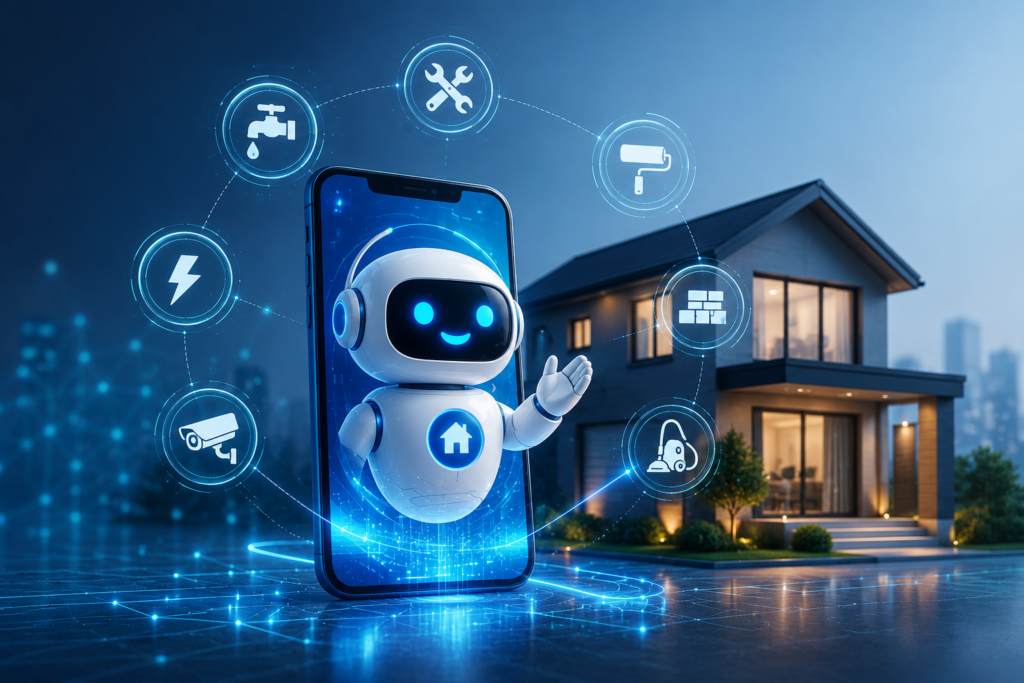
Home Service Chatbots continue to evolve with advances in Artificial Intelligence, generative AI, voice assistants, predictive maintenance, multilingual communication, and smart home integration. Future chatbots will deliver more personalized recommendations, automate complex workflows, and provide proactive customer support before issues occur. Businesses adopting these innovations early will improve operational efficiency, customer loyalty, and competitive advantage while meeting the growing expectations of modern homeowners.
Frequently Asked Questions
1. What is a Home Service Chatbot?
It is an AI-powered virtual assistant that automates customer support, appointment scheduling, and service inquiries.
2. Can a chatbot book appointments?
Yes, it can schedule, modify, and confirm appointments automatically.
3. Is a chatbot available 24/7?
Yes, customers receive support anytime, including evenings, weekends, and holidays.
4. Can it integrate with CRM software?
Yes, modern chatbots integrate with CRM, booking systems, payment gateways, and marketing platforms.
5. Is customer information secure?
Yes, when implemented with encryption, secure authentication, and privacy best practices.
6. Does a chatbot replace employees?
No. It automates repetitive tasks while allowing staff to focus on complex customer requests.
7. Which businesses benefit most?
Plumbing, HVAC, electrical, roofing, landscaping, cleaning, pest control, appliance repair, locksmith, painting, and other home service companies.
8. How does a chatbot increase sales?
By capturing leads instantly, qualifying prospects, automating follow-ups, and improving customer response times.
Best Practices Summary
Implement a user-friendly chatbot with intelligent automation, CRM integration, secure data handling, and continuous optimization. Regularly review analytics, update chatbot knowledge, personalize customer interactions, and provide smooth human handoff when needed. These best practices improve customer satisfaction, increase operational efficiency, generate more qualified leads, and support long-term business growth.
Conclusion
A Home Service Chatbot helps businesses deliver faster customer support, automate appointment scheduling, improve lead generation, and enhance customer satisfaction while reducing operational costs. As AI technology continues to advance, chatbots will become an essential part of every successful home service business. EngagerBot provides intelligent chatbot solutions that help businesses automate customer engagement, streamline operations, and drive sustainable growth through powerful conversational AI.
Want to Implement This Easily?
Prompt
You are an expert consultant. Based on the blog post titled “Home Service Chatbot”, provide a step-by-step, practical implementation guide. Include tools, best practices, common mistakes to avoid, and advanced tips. Assume the reader wants to implement everything discussed in this article effectively.
Call to Action
Want our help implementing this? Just reach out to us via our website contact form: https://www.engagerbot.com/contact-us/