
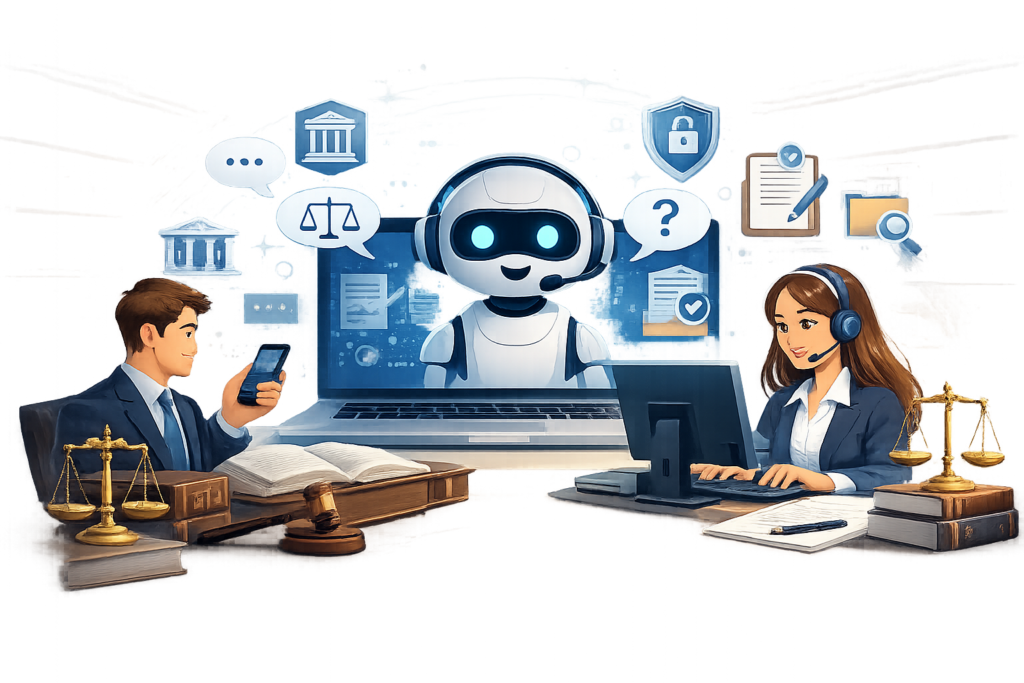
Discover how a Legal Chatbot is transforming the legal industry by automating client communication, improving case intake, streamlining legal support, and enhancing client satisfaction. Learn benefits, features, implementation strategies, security considerations, and future trends while following industry best practices.
Introduction
The legal industry is experiencing one of the most significant technological transformations in its history. Artificial intelligence has evolved from being a futuristic concept into a practical business tool that helps legal professionals improve efficiency, reduce administrative burdens, and provide faster support to clients. Among the most impactful innovations is the Legal Chatbot, an AI-powered virtual assistant capable of answering legal questions, collecting client information, scheduling consultations, and supporting law firms around the clock. These intelligent assistants help bridge the communication gap between legal professionals and potential clients while ensuring inquiries are handled quickly and consistently.
Businesses and law firms are increasingly adopting AI-driven conversational technology because modern clients expect immediate responses. Waiting hours—or even days—for answers can result in lost opportunities and reduced client satisfaction. A Legal Chatbot enables firms to deliver instant engagement, qualify leads automatically, provide general legal information, and guide users toward appropriate legal services without replacing professional legal advice. This combination of automation and human expertise creates a more efficient client experience while allowing attorneys to focus on high-value legal work.
At EngagerBot, businesses recognize that modern legal practices require intelligent automation that improves communication without compromising professionalism. Throughout this guide, you’ll learn how Legal Chatbots work, their key benefits, essential features, implementation strategies, best practices, security considerations, common mistakes, and future developments. Whether you’re a solo attorney, a growing law firm, or a large legal organization, this guide provides actionable insights to help you understand and leverage AI-powered legal assistance effectively.
What Is a Legal Chatbot?
A Legal Chatbot is an artificial intelligence-powered virtual assistant designed to communicate with clients, answer frequently asked legal questions, collect case information, schedule appointments, qualify potential clients, and automate routine interactions. Unlike traditional website chat widgets that rely solely on human operators, Legal Chatbots use Natural Language Processing (NLP), machine learning, and conversational AI to understand user questions and generate intelligent responses. They can operate continuously, ensuring prospective clients receive immediate assistance regardless of business hours.
Modern legal chatbots perform far more than answering simple FAQs. They assist with client intake forms, appointment scheduling, document collection, conflict checks, payment guidance, legal process explanations, and referral recommendations. Many firms also integrate chatbots with customer relationship management systems, case management platforms, calendars, email automation, and communication tools. This creates a seamless workflow where information gathered by the chatbot is automatically transferred into existing legal systems, reducing manual administrative work and minimizing errors.
Another defining characteristic of Legal Chatbots is their ability to distinguish between providing general legal information and offering legal advice. Ethical implementation ensures chatbots explain legal procedures, terminology, documentation requirements, and firm services without attempting to replace licensed attorneys. Instead, they serve as intelligent assistants that improve accessibility, accelerate communication, and enhance operational efficiency while directing complex matters to qualified legal professionals. This balance makes Legal Chatbots valuable tools for improving client experience while maintaining professional responsibility.
Why Law Firms Are Adopting AI-Powered Legal Chatbots
The legal industry has traditionally relied on manual communication methods such as phone calls, emails, and in-person consultations. While effective, these methods often consume valuable attorney time and delay responses to prospective clients. AI-powered Legal Chatbots solve this challenge by automating repetitive communication tasks, enabling firms to provide immediate assistance while allowing legal professionals to concentrate on strategic legal work. Faster response times often translate into improved client satisfaction and increased consultation bookings.
One major reason law firms implement Legal Chatbots is lead qualification. Every inquiry received through a website may not become a client, yet each requires attention. Chatbots can ask structured questions regarding legal issues, jurisdiction, urgency, preferred consultation times, and contact details. Based on predefined workflows, qualified leads are automatically forwarded to attorneys, while individuals outside the firm’s practice areas can receive appropriate guidance or referrals. This efficient filtering process reduces administrative overhead and ensures legal teams spend more time assisting suitable clients.
Client expectations have also evolved significantly in recent years. Today’s users expect immediate digital interactions similar to those offered by banking, healthcare, and e-commerce platforms. A law firm’s ability to respond instantly reflects professionalism and responsiveness. Legal Chatbots deliver consistent communication 24 hours a day, helping firms capture inquiries outside office hours, reduce missed opportunities, and provide multilingual support where appropriate. Rather than replacing attorneys, these AI assistants enhance accessibility and create a more responsive legal service environment that aligns with modern client expectations.
How Legal Chatbots Work: Understanding the Technology
Behind every effective Legal Chatbot is a combination of artificial intelligence technologies that enable natural, meaningful conversations. The foundation is Natural Language Processing (NLP), which allows the chatbot to interpret user questions, identify intent, recognize legal terminology, and generate relevant responses. NLP enables the chatbot to understand different ways clients ask similar questions, improving conversational accuracy and reducing frustration during interactions.
Machine learning further enhances chatbot performance by allowing the system to improve through continuous interactions. As more conversations occur, AI models identify common questions, optimize response accuracy, and recognize emerging trends in client inquiries. Some advanced Legal Chatbots also incorporate contextual memory, enabling conversations to continue naturally without repeatedly asking for previously provided information. Integration with legal knowledge bases, FAQs, document repositories, and workflow automation tools further expands chatbot capabilities beyond simple question-and-answer interactions.
Modern Legal Chatbots frequently integrate with scheduling software, CRM platforms, document management systems, secure messaging solutions, payment gateways, and case management applications. This integration transforms the chatbot into a comprehensive digital assistant capable of initiating consultations, collecting documentation, notifying attorneys, updating client records, and supporting administrative workflows. When combined with strong security practices, encrypted communication, and human oversight, AI-powered Legal Chatbots become reliable tools that improve operational efficiency while maintaining the professionalism expected within the legal industry.
Key Benefits of Implementing a Legal Chatbot
Implementing a Legal Chatbot delivers advantages for both legal professionals and clients by improving communication, operational efficiency, and overall service quality. One of the most significant benefits is continuous availability. Unlike traditional office hours, a chatbot remains active around the clock, answering questions, collecting client information, and scheduling appointments whenever users visit the firm’s website. This ensures potential clients receive immediate attention even during evenings, weekends, and holidays, reducing the likelihood of missed business opportunities.
Administrative efficiency is another major advantage. Legal teams often spend considerable time answering repetitive questions regarding consultation fees, required documents, office locations, appointment availability, and legal processes. A Legal Chatbot automates these repetitive interactions, allowing reception staff and attorneys to focus on higher-value tasks such as legal research, client representation, negotiations, and courtroom preparation. Automated client intake also reduces manual data entry, minimizes errors, and accelerates case initiation.
From the client’s perspective, Legal Chatbots improve accessibility and convenience. Prospective clients can ask questions privately, receive immediate responses, complete intake forms at their own pace, and schedule consultations without waiting on hold or exchanging multiple emails. Businesses also benefit from improved lead conversion, better data collection, enhanced client engagement, and valuable analytics that reveal common client concerns and service demand. Collectively, these advantages make Legal Chatbots an increasingly valuable investment for modern legal practices.
Essential Features Every Legal Chatbot Should Include
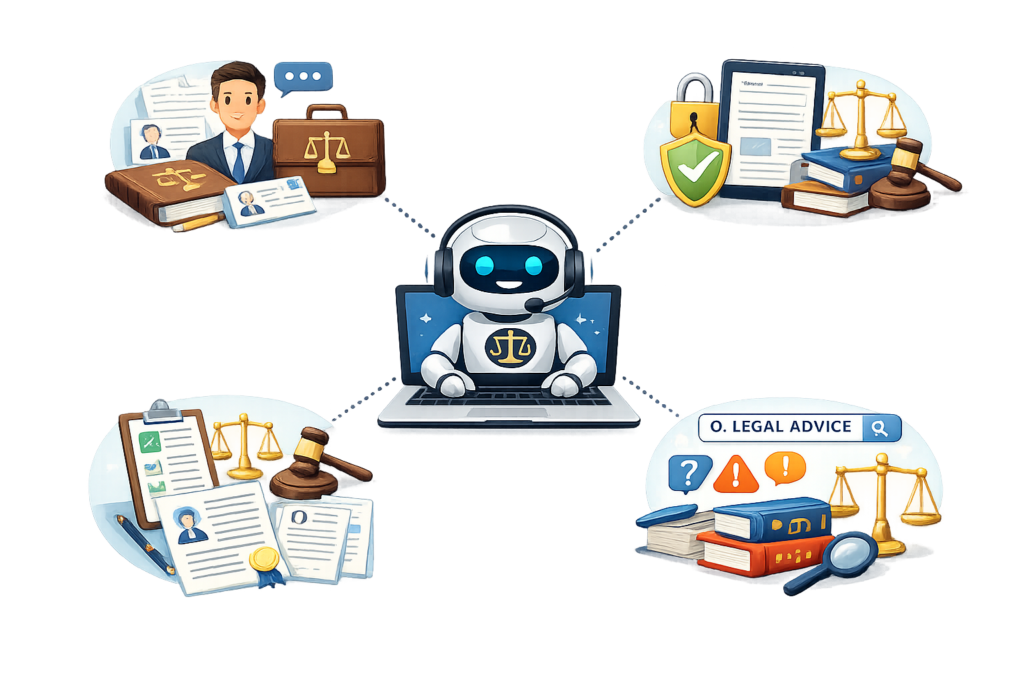
A successful Legal Chatbot should offer far more than basic messaging. Essential features include AI-powered conversations, automated client intake, appointment scheduling, document upload support, multilingual communication, and seamless integration with legal practice management software. These capabilities reduce administrative workloads while ensuring clients receive timely assistance.
Security is equally important. Since legal conversations often involve confidential information, chatbots should use encrypted communication, secure authentication, and role-based access controls. They should also provide clear privacy notices explaining how client information is collected, stored, and processed. Transparency builds trust and helps firms maintain professional and regulatory standards.
Advanced features such as intelligent lead qualification, conversation history, CRM integration, analytics dashboards, automated reminders, and live-agent handoff further improve efficiency. When routine questions exceed the chatbot’s capabilities, clients should be transferred smoothly to a legal professional without losing conversation context. This combination of automation and human expertise creates a seamless client experience.
Legal Chatbot Use Cases Across Different Practice Areas
Legal Chatbots can support a wide variety of legal practices. In family law, they help clients understand divorce procedures, custody consultations, required documentation, and appointment scheduling. Personal injury firms can use chatbots to collect accident details, insurance information, and initial evidence before attorney review.
For immigration law, chatbots can guide users through visa categories, application requirements, document checklists, and consultation booking. Employment law firms may automate inquiries related to workplace disputes, wrongful termination, discrimination, and employee rights. Corporate law practices can streamline client onboarding, contract requests, compliance inquiries, and business consultation scheduling.
Real estate, intellectual property, criminal defense, estate planning, and tax law firms also benefit from chatbot automation by providing instant answers to common questions while directing complex legal matters to qualified attorneys. Instead of replacing legal professionals, these AI assistants improve accessibility, shorten response times, and enhance client engagement throughout the legal journey.
Best Practices for Implementing a Legal Chatbot
Implementing a Legal Chatbot requires careful planning. Firms should first identify repetitive client interactions that can be automated, such as appointment scheduling, FAQs, consultation requests, and client intake. Designing conversation flows around actual client needs ensures the chatbot delivers accurate and helpful responses.
The chatbot should clearly explain that it provides general legal information rather than formal legal advice. Maintaining transparency protects both the firm and its clients while establishing realistic expectations. Regular testing, conversation reviews, and updates help improve response accuracy and keep legal information current as regulations and firm services evolve.
Successful implementation also depends on integration with calendars, CRM platforms, document management systems, and case management software. Staff training is equally important so attorneys and support teams understand when chatbot conversations require human intervention. Continuous monitoring and optimization ensure long-term performance and improved client satisfaction.
Security, Privacy, and Ethical Considerations
Because legal services involve sensitive information, security must remain a top priority when implementing a Legal Chatbot. Client conversations should be protected through encrypted communication, secure data storage, strong authentication methods, and regular security assessments. Firms should also establish clear data retention policies to safeguard confidential information.
Privacy regulations require transparency regarding data collection and processing. Clients should understand what information is collected, why it is needed, and how it will be used. Obtaining appropriate consent and maintaining accurate privacy documentation helps strengthen trust while supporting regulatory compliance.
Ethically, Legal Chatbots should never misrepresent themselves as licensed attorneys or provide personalized legal advice without professional review. Their role is to educate, automate routine interactions, and connect clients with qualified legal professionals. When implemented responsibly, AI enhances legal services while preserving professional integrity, confidentiality, and client confidence.
Integrating a Legal Chatbot with Existing Law Firm Systems
A Legal Chatbot delivers maximum value when integrated with existing legal technology. Connecting the chatbot to CRM software, case management platforms, calendars, document management systems, and email automation allows information collected during conversations to flow directly into daily workflows. This reduces manual data entry, minimizes administrative errors, and speeds up client onboarding.
Integration also enables automated appointment confirmations, reminder notifications, document requests, and follow-up communication. Attorneys receive organized client information before consultations, allowing them to prepare more effectively. By centralizing data across multiple systems, firms improve productivity while maintaining a consistent client experience.
Measuring the Success of a Legal Chatbot
Implementing a chatbot is only the first step. Measuring performance helps law firms understand whether the solution is delivering value. Important metrics include response time, client satisfaction, consultation bookings, qualified leads, conversation completion rates, and chatbot resolution rates.
Analytics can also identify frequently asked questions, common legal concerns, and areas where conversation flows need improvement. Regularly reviewing these insights enables firms to refine chatbot responses and improve client engagement.
Continuous optimization ensures the chatbot remains accurate, relevant, and aligned with changing legal services and client expectations.
Challenges and Limitations of Legal Chatbots
Although Legal Chatbots provide numerous advantages, they also have limitations. Complex legal matters often require human judgment, strategic thinking, and professional interpretation that AI cannot replicate. Chatbots should support legal professionals rather than replace them.
Another challenge is maintaining updated legal information. Laws and regulations frequently change, making regular content reviews essential. Firms must also prevent chatbots from providing misleading or overly specific legal guidance.
Technical issues, integration complexity, and user expectations should also be managed carefully. A well-designed escalation process ensures clients are transferred to qualified legal professionals whenever necessary.
Future Trends in AI-Powered Legal Chatbots

Artificial intelligence continues to evolve rapidly, making Legal Chatbots more capable each year. Future systems will offer improved contextual understanding, multilingual conversations, voice interaction, predictive assistance, and deeper integration with legal research tools.
Generative AI will enable more natural conversations while helping firms automate document drafting, client communication, and administrative workflows. Enhanced analytics will provide valuable insights into client behavior and operational efficiency.
As AI technology advances, Legal Chatbots will become increasingly important in delivering faster, smarter, and more personalized legal support while maintaining ethical and professional standards.
Common Mistakes to Avoid
Many law firms make the mistake of expecting a chatbot to replace attorneys completely. AI should enhance legal services—not substitute professional legal expertise.
Other common mistakes include:
- Using outdated legal information.
- Failing to disclose chatbot limitations.
- Ignoring data privacy requirements.
- Not integrating with existing business systems.
- Creating overly complicated conversation flows.
- Neglecting chatbot testing and updates.
- Failing to provide an easy option to contact a human attorney.
Avoiding these issues helps maximize both client satisfaction and operational efficiency.
Best Practices Summary
To achieve the best results with a Legal Chatbot:
- Define clear business objectives.
- Focus on client experience.
- Keep legal information accurate and updated.
- Protect client data with strong security measures.
- Integrate with CRM and case management software.
- Monitor analytics regularly.
- Continuously improve conversation flows.
- Always provide access to qualified legal professionals for complex matters.
- Maintain transparency regarding AI capabilities.
- Review chatbot performance and compliance on an ongoing basis.
Following these best practices helps law firms build trust, improve productivity, and deliver better client experiences.
Frequently Asked Questions
1. What is a Legal Chatbot?
A Legal Chatbot is an AI-powered virtual assistant that helps law firms automate client communication, appointment scheduling, FAQs, and initial client intake.
2. Can a Legal Chatbot provide legal advice?
No. A chatbot should provide general legal information and administrative assistance but should not replace advice from a licensed attorney.
3. Are Legal Chatbots secure?
Yes, when implemented correctly with encryption, secure authentication, and proper privacy controls.
4. Which legal practices benefit most?
Family law, personal injury, immigration, employment law, corporate law, real estate, estate planning, intellectual property, and many others.
5. Can Legal Chatbots work 24/7?
Yes. One of their greatest advantages is providing continuous support outside normal office hours.
6. Do Legal Chatbots replace lawyers?
No. They automate repetitive administrative tasks while allowing lawyers to focus on legal analysis, negotiations, and client representation.
7. How long does implementation take?
Depending on customization and integrations, implementation can range from a few days to several weeks.
8. Can small law firms benefit from Legal Chatbots?
Absolutely. Small firms often gain significant efficiency by automating repetitive client communication while improving responsiveness.
Conclusion
Artificial intelligence is reshaping how legal services are delivered, making communication faster, more efficient, and more accessible. A Legal Chatbot enables law firms to automate routine interactions, improve client engagement, qualify leads, streamline administrative tasks, and support legal professionals without replacing their expertise. When implemented responsibly with strong security, transparency, and continuous optimization, chatbot technology becomes a valuable asset for firms of every size.
At EngagerBot, intelligent AI chatbot solutions help organizations modernize client communication while maintaining professionalism, trust, and operational efficiency. Investing in a Legal Chatbot today positions law firms to meet evolving client expectations and remain competitive in an increasingly digital legal landscape.
Want to Implement This Easily?
Prompt:
You are an expert consultant. Based on the blog post titled “Legal Chatbot”, provide a step-by-step, practical implementation guide. Include tools, best practices, common mistakes to avoid, and advanced tips. Assume the reader wants to implement everything discussed in this article effectively.
Call to Action:
Want our help implementing this? Just reach out to us via our website contact form: