
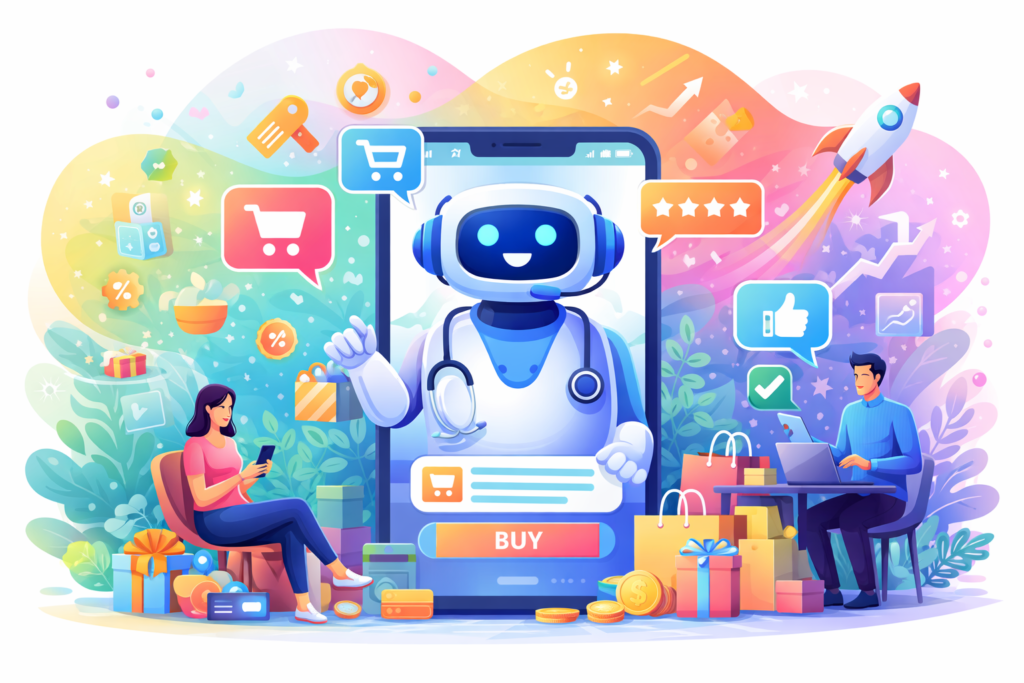
E-Commerce Chatbot solutions are transforming online retail by automating customer support, increasing conversions, and delivering personalized shopping experiences at scale.
Introduction: The Rise of E-Commerce Chatbots in Modern Online Retail
The digital commerce landscape has evolved rapidly over the last decade, and businesses are now expected to provide instant, personalized, and seamless customer experiences. This shift has led to the rapid adoption of E-Commerce Chatbot solutions, which are revolutionizing how brands interact with customers. From answering queries to guiding purchases, chatbots are no longer optional—they are essential tools for competitive online stores.
At Engagerbot, businesses are leveraging advanced chatbot technology to streamline customer journeys and reduce operational inefficiencies. Instead of relying solely on human agents, companies can now automate repetitive tasks while still delivering a highly engaging and human-like interaction experience. This not only reduces response times but also improves customer satisfaction significantly.
In this comprehensive guide, we will explore everything you need to know about E-Commerce Chatbots—from their functionality and benefits to implementation strategies and future trends. Whether you’re a startup or an established online retailer, this guide will help you understand how to effectively integrate chatbot technology into your business model.
What Is an E-Commerce Chatbot?
An E-Commerce Chatbot is an AI-powered virtual assistant designed to interact with customers on online shopping platforms. It uses technologies like Natural Language Processing (NLP) and machine learning to understand user queries and provide relevant responses. These chatbots can operate on websites, mobile apps, and messaging platforms, offering 24/7 support without human intervention.
Unlike traditional customer support systems, e-commerce chatbots are proactive. They don’t just wait for customers to ask questions—they guide users through the buying process, recommend products, and even assist with checkout. This creates a seamless and engaging shopping experience that mirrors in-store assistance.
Modern chatbots are also highly customizable. Businesses can train them based on customer behavior, product catalog, and brand voice. This ensures that every interaction aligns with the company’s identity while delivering accurate and helpful responses. As a result, chatbots become a powerful tool for both customer engagement and sales growth.
Why E-Commerce Chatbots Are Essential for Online Stores
In today’s fast-paced digital environment, customers expect immediate responses. Delayed replies can lead to abandoned carts and lost revenue. E-commerce chatbots solve this problem by providing instant support, ensuring that no customer query goes unanswered.
One of the biggest advantages of chatbots is scalability. Unlike human agents, chatbots can handle multiple conversations simultaneously. This makes them ideal for handling high traffic during peak shopping seasons such as Black Friday or holiday sales. Businesses can maintain consistent service quality without increasing staffing costs.
Additionally, chatbots contribute to improved customer satisfaction. By offering quick solutions, personalized recommendations, and a smooth shopping experience, they enhance the overall user journey. This not only boosts conversions but also encourages repeat purchases, making chatbots a valuable long-term investment.
Key Features of a High-Performing E-Commerce Chatbot
A high-performing E-Commerce Chatbot is more than just a question-answering tool. It comes equipped with advanced features designed to optimize the shopping experience. One of the most important features is AI-driven personalization, which allows the chatbot to recommend products based on user behavior and preferences.
Another critical feature is multi-channel integration. Modern chatbots can operate across websites, social media platforms, and messaging apps like WhatsApp and Messenger. This ensures that customers can interact with the brand on their preferred platform, enhancing accessibility and engagement.
Additionally, chatbots often include analytics and reporting capabilities. These tools provide valuable insights into customer behavior, frequently asked questions, and conversion patterns. Businesses can use this data to refine their strategies and continuously improve the chatbot’s performance.
How E-Commerce Chatbots Improve Customer Experience
Customer experience is a key differentiator in the e-commerce industry, and chatbots play a crucial role in enhancing it. By providing instant responses, chatbots eliminate the frustration of waiting for support, creating a more satisfying user experience.
Chatbots also offer personalized interactions. They can greet returning customers by name, suggest products based on past purchases, and provide tailored recommendations. This level of personalization makes customers feel valued and understood, increasing their likelihood of making a purchase.
Moreover, chatbots simplify the buying process. They can guide users through product selection, answer questions about features, and assist with checkout. This reduces friction in the customer journey, leading to higher conversion rates and improved customer retention.
The Role of AI and NLP in E-Commerce Chatbots
Artificial Intelligence (AI) and Natural Language Processing (NLP) are the backbone of modern E-Commerce Chatbots. These technologies enable chatbots to understand human language, interpret intent, and provide meaningful responses.
NLP allows chatbots to process complex queries and respond in a conversational manner. Instead of relying on predefined scripts, they can adapt to different user inputs, making interactions more natural and engaging. This is particularly important in e-commerce, where customer queries can vary widely.
AI also enables continuous learning. Chatbots can analyze past interactions to improve their accuracy and efficiency over time. This ensures that they become more effective with each interaction, providing better support and driving higher customer satisfaction.
Types of E-Commerce Chatbots
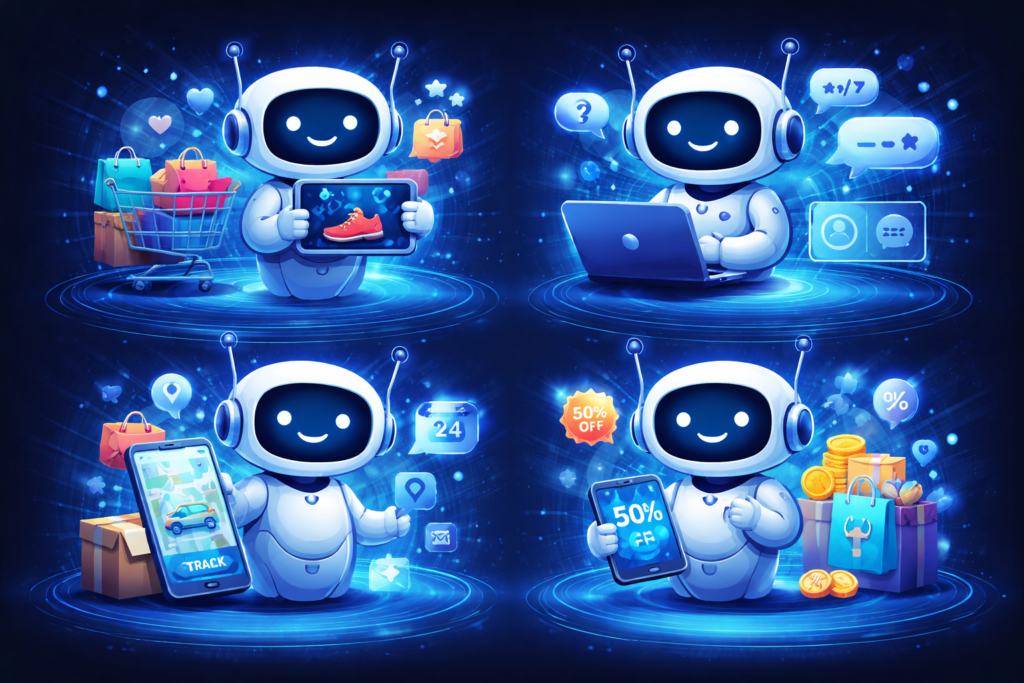
There are several types of E-Commerce Chatbots, each designed to serve specific purposes. Rule-based chatbots follow predefined scripts and are ideal for handling simple queries such as FAQs or order tracking.
On the other hand, AI-powered chatbots use machine learning to understand complex queries and provide dynamic responses. These chatbots are more advanced and can handle a wider range of customer interactions, making them suitable for large-scale e-commerce operations.
Another type is hybrid chatbots, which combine rule-based and AI capabilities. They offer the best of both worlds—structured responses for common queries and intelligent handling of complex interactions. This makes them a popular choice for businesses looking to balance efficiency and flexibility.
Benefits of Implementing an E-Commerce Chatbot
Implementing an E-Commerce Chatbot offers numerous benefits for online businesses. One of the most significant advantages is cost savings. By automating customer support, businesses can reduce the need for large support teams, lowering operational expenses.
Another key benefit is increased sales. Chatbots can recommend products, upsell items, and guide customers through the purchase process. This not only improves conversion rates but also increases the average order value.
Additionally, chatbots provide valuable insights into customer behavior. By analyzing interactions, businesses can identify trends, preferences, and pain points. This data can be used to optimize marketing strategies and improve overall business performance.
How Chatbots Drive Sales and Conversions
E-Commerce Chatbots play a crucial role in driving sales and conversions. By engaging customers in real-time, they can address concerns and remove barriers to purchase, increasing the likelihood of conversion.
Chatbots also enable personalized marketing. They can recommend products based on user behavior, send targeted promotions, and provide exclusive offers. This creates a more engaging shopping experience that encourages customers to make a purchase.
Furthermore, chatbots reduce cart abandonment. By reminding customers about items in their cart and offering assistance during checkout, they help recover lost sales and improve overall revenue.
Integrating E-Commerce Chatbots with Your Online Store
Integrating an E-Commerce Chatbot into your online store requires careful planning and the right technological approach. The first step is selecting a chatbot platform that aligns with your business needs and integrates smoothly with your e-commerce system, whether it’s Shopify, WooCommerce, or a custom-built solution. Seamless integration ensures that the chatbot can access product data, customer information, and order history in real time.
A well-integrated chatbot can automate key processes such as order tracking, inventory checks, and customer inquiries. For example, when a customer asks about product availability, the chatbot can instantly pull data from your inventory system and provide accurate information. This eliminates delays and reduces dependency on manual intervention, improving operational efficiency.
Additionally, businesses must ensure that their chatbot aligns with performance and usability standards. Following best practices outlined in Core Web Vitals helps maintain fast load times and smooth interactions, ensuring that chatbot functionality does not negatively impact the overall website experience. Proper integration ultimately leads to a more cohesive and user-friendly shopping journey.
Personalization and Customer Journey Optimization
Personalization is one of the most powerful capabilities of an E-Commerce Chatbot. By analyzing customer data such as browsing history, purchase behavior, and preferences, chatbots can deliver highly tailored experiences. This level of customization not only enhances engagement but also significantly increases conversion rates.
For instance, a chatbot can greet returning customers with personalized messages and recommend products based on their previous purchases. This creates a sense of familiarity and trust, making customers more likely to continue shopping. Personalized interactions also reduce decision fatigue by presenting relevant options instead of overwhelming users with choices.
Optimizing the customer journey involves mapping out every stage—from awareness to purchase and post-sale support. Chatbots can guide users through each step, ensuring a smooth and consistent experience. By eliminating friction points and providing timely assistance, businesses can create a seamless journey that drives both satisfaction and loyalty.
Chatbot Automation for Customer Support
Customer support is one of the most common use cases for E-Commerce Chatbots. By automating responses to frequently asked questions, chatbots can handle a significant portion of support queries without human intervention. This not only reduces response times but also frees up support teams to focus on more complex issues.
Chatbots can assist with a wide range of support tasks, including order tracking, returns, refunds, and product inquiries. They provide instant responses, ensuring that customers receive the information they need without delay. This level of efficiency is especially valuable during peak shopping periods when support demand is high.
To ensure high-quality support, businesses should align their chatbot systems with Google Search Central guidelines, which emphasize helpful, user-focused content. By prioritizing clarity and accuracy, chatbots can deliver reliable support that builds trust and enhances the overall customer experience.
Security and Data Privacy in E-Commerce Chatbots
Security and data privacy are critical considerations when implementing an E-Commerce Chatbot. Since chatbots handle sensitive customer information such as personal details and payment data, businesses must ensure robust security measures are in place.
One essential step is implementing encryption protocols to protect data during transmission. Secure authentication methods and compliance with data protection regulations are also crucial. Businesses should follow best practices outlined in Google security best practices, ensuring that their chatbot systems are protected against vulnerabilities and cyber threats.
Transparency is another key aspect of data privacy. Customers should be informed about how their data is collected, stored, and used. Providing clear privacy policies and obtaining user consent helps build trust and ensures compliance with global data protection standards.
Measuring the Success of Your Chatbot Strategy
To maximize the effectiveness of an E-Commerce Chatbot, businesses must continuously measure and analyze its performance. Key performance indicators (KPIs) such as response time, customer satisfaction, conversion rates, and engagement levels provide valuable insights into chatbot performance.
Analytics tools integrated with the chatbot can track user interactions and identify patterns. For example, businesses can analyze which queries are most common and how effectively the chatbot resolves them. This data can be used to refine chatbot responses and improve overall functionality.
Continuous optimization is essential for long-term success. By regularly reviewing performance metrics and making data-driven adjustments, businesses can ensure that their chatbot remains effective and aligned with customer needs. This iterative approach helps maintain high levels of performance and customer satisfaction.
Future Trends in E-Commerce Chatbots

The future of E-Commerce Chatbots is shaped by rapid advancements in AI and automation technologies. One emerging trend is the use of voice-enabled chatbots, which allow customers to interact using voice commands. This adds a new level of convenience and accessibility to the shopping experience.
Another trend is the integration of chatbots with augmented reality (AR). Customers can visualize products in real-world settings while interacting with the chatbot, creating a more immersive shopping experience. This is particularly useful for industries such as fashion and home decor.
Additionally, predictive analytics is becoming increasingly important. Chatbots can anticipate customer needs based on past behavior and proactively offer solutions or recommendations. This level of intelligence enhances personalization and sets the stage for more advanced and intuitive chatbot interactions.
Choosing the Right E-Commerce Chatbot for Your Business
Selecting the right E-Commerce Chatbot is crucial for achieving your business goals. Businesses should evaluate chatbot platforms based on features, scalability, integration capabilities, and ease of use. A well-chosen chatbot solution should align with your specific requirements and support your growth objectives.
It’s also important to consider customization options. A chatbot that can be tailored to your brand voice and customer needs will deliver a more consistent and engaging experience. Flexibility in design and functionality ensures that the chatbot can adapt to changing business needs.
Finally, businesses should prioritize reliability and support. Choosing a reputable provider with strong customer support ensures that any issues can be resolved quickly. This helps maintain a seamless chatbot experience and ensures long-term success.
Common Mistakes Businesses Make with E-Commerce Chatbots
One of the most common mistakes is over-automation. While chatbots are powerful tools, relying on them entirely without human support can lead to poor customer experiences. Businesses should always provide an option to connect with a human agent when needed.
Another mistake is poor training. Chatbots that are not properly trained can provide inaccurate or irrelevant responses, frustrating users. Regular updates and continuous learning are essential to maintain chatbot effectiveness.
Additionally, ignoring user feedback can hinder improvement. Businesses should actively collect and analyze feedback to identify areas for improvement. This ensures that the chatbot evolves with customer needs and expectations.
Best Practices for E-Commerce Chatbot Success
To achieve success with an E-Commerce Chatbot, businesses should focus on delivering value to customers. This includes providing accurate information, personalized recommendations, and seamless interactions.
Another best practice is maintaining a conversational tone. Chatbots should mimic human interactions while remaining professional and helpful. This creates a more engaging and enjoyable user experience.
Continuous optimization is also key. Regularly updating the chatbot based on performance data and user feedback ensures that it remains effective and relevant. By following these best practices, businesses can maximize the benefits of chatbot technology.
FAQs
1. What is an E-Commerce Chatbot?
An E-Commerce Chatbot is an AI-powered tool that interacts with customers, answers queries, and assists with online shopping processes.
2. How do chatbots improve sales?
They provide personalized recommendations, reduce cart abandonment, and guide customers through the purchase journey.
3. Are chatbots expensive to implement?
Costs vary depending on features and complexity, but they often reduce long-term operational expenses.
4. Can chatbots replace human support?
No, they complement human support by handling routine queries while humans manage complex issues.
5. Are chatbots secure?
Yes, when implemented with proper security measures and best practices.
6. Do chatbots work on mobile devices?
Yes, they can be integrated into mobile apps and messaging platforms.
7. How long does it take to implement a chatbot?
It depends on complexity, but basic chatbots can be deployed within weeks.
8. Can small businesses benefit from chatbots?
Absolutely, chatbots help small businesses scale support and improve customer engagement.
Conclusion: Transforming E-Commerce with Chatbot Technology
E-Commerce Chatbots are no longer just a trend—they are a necessity for modern online businesses. They enhance customer experience, streamline operations, and drive significant growth in sales and engagement. By leveraging advanced AI technologies, businesses can create personalized and efficient shopping experiences that meet the demands of today’s consumers.
At Engagerbot, the focus is on empowering businesses with intelligent chatbot solutions that deliver real results. By implementing the strategies and best practices outlined in this guide, businesses can unlock the full potential of chatbot technology and stay ahead in the competitive e-commerce landscape.
Want to Implement This Easily?
Prompt:
You are an expert consultant. Based on the blog post titled “(E-Commerce Chatbot)”, provide a step-by-step, practical implementation guide. Include tools, best practices, common mistakes to avoid, and advanced tips. Assume the reader wants to implement everything discussed in this article effectively.
Call to Action:
Want our help implementing this? Just reach out to us via our website contact form:
https://www.engagerbot.com/contact-us/