
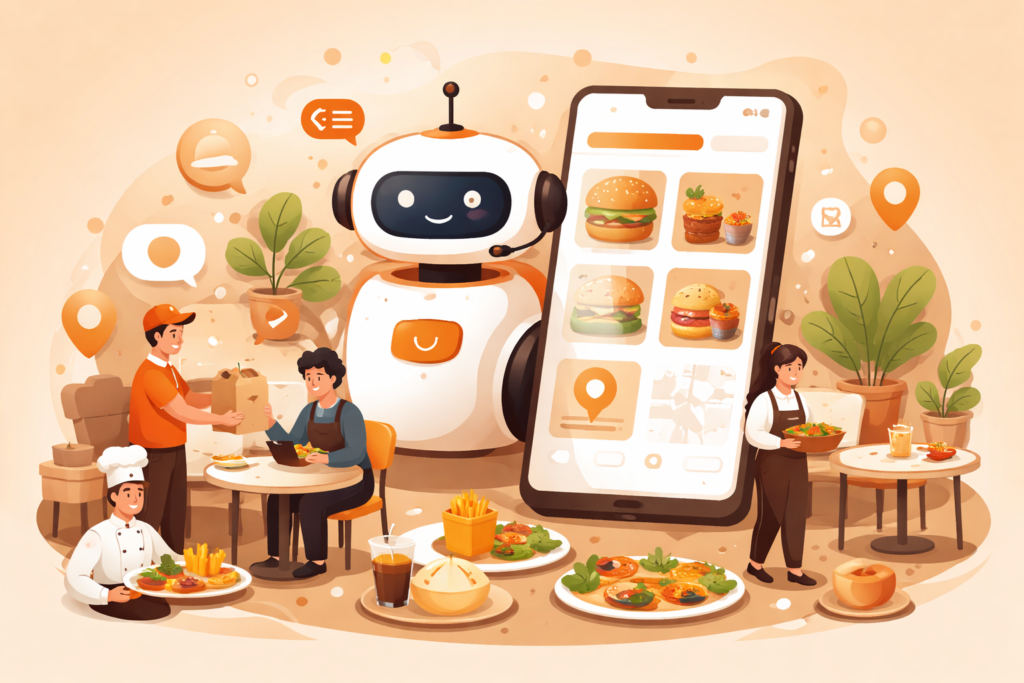
Food Chatbot solutions are transforming restaurants with AI-powered automation, improving customer experience, boosting sales, and streamlining operations efficiently.
Introduction
In today’s fast-paced digital economy, the food industry is evolving rapidly, driven by changing customer expectations and technological advancements. Consumers now demand instant responses, seamless ordering experiences, and personalized recommendations. This is where Food Chatbots are redefining how restaurants, cloud kitchens, and food delivery brands interact with their customers. These AI-powered assistants are not just a trend—they are becoming a necessity for modern food businesses.
Food chatbots are designed to automate communication across platforms such as websites, messaging apps, and mobile applications. From handling reservations and processing orders to providing real-time updates and answering FAQs, these bots significantly reduce human workload while improving efficiency. Businesses leveraging chatbot technology are seeing measurable improvements in customer satisfaction, operational speed, and revenue generation.
At EngagerBot, businesses are embracing this transformation to stay ahead of competitors. By integrating intelligent chatbot systems, food brands can create scalable, 24/7 customer engagement models that drive growth. This guide explores everything you need to know about food chatbots, from benefits and features to implementation strategies and best practices.
What is a Food Chatbot?
A Food Chatbot is an AI-powered virtual assistant specifically designed for the food and restaurant industry. It interacts with customers through conversational interfaces, allowing users to place orders, book tables, track deliveries, and receive recommendations without human intervention. These chatbots leverage technologies such as Natural Language Processing (NLP) and Machine Learning to understand user intent and deliver accurate responses.
Unlike traditional ordering systems, food chatbots provide a conversational experience that mimics human interaction. Customers can simply type or speak their requests, such as “I want a large pepperoni pizza,” and the chatbot processes the request instantly. This reduces friction in the ordering process and enhances the overall user experience. Additionally, chatbots can integrate with POS systems, payment gateways, and delivery platforms, making them a central hub for operations.
From a business perspective, food chatbots are not just tools—they are strategic assets. They help reduce operational costs, minimize errors, and increase order accuracy. With the ability to handle multiple conversations simultaneously, chatbots ensure that no customer is left waiting, even during peak hours. This scalability makes them an essential component for businesses aiming to grow efficiently.
Why Food Chatbots Are Essential in 2026
The food industry in 2026 is highly competitive, and businesses must adopt innovative solutions to survive and thrive. Food chatbots have emerged as a critical technology, enabling restaurants to meet modern customer expectations. Today’s consumers value speed, convenience, and personalization—qualities that chatbots deliver consistently.
One of the primary reasons for the growing importance of food chatbots is the shift toward digital-first interactions. Customers prefer ordering food through messaging apps and websites rather than making phone calls. Chatbots provide an intuitive interface that aligns with these preferences, allowing businesses to capture and retain more customers. Furthermore, chatbots can operate 24/7, ensuring that businesses never miss an opportunity to generate revenue.
Another key factor is cost efficiency. Hiring and training staff for customer support can be expensive, especially for small and medium-sized businesses. Food chatbots significantly reduce these costs by automating repetitive tasks such as answering FAQs, taking orders, and managing reservations. This allows human staff to focus on higher-value activities, improving overall productivity and service quality.
Key Features of an Effective Food Chatbot
An effective food chatbot is more than just a messaging tool—it is a comprehensive system designed to enhance customer interaction and streamline operations. One of the most important features is intelligent order processing, which allows customers to place orders quickly and accurately. The chatbot should be capable of understanding complex requests, handling customizations, and confirming orders in real time.
Another critical feature is multi-platform integration. A robust food chatbot should work seamlessly across websites, mobile apps, and popular messaging platforms like WhatsApp and Facebook Messenger. This ensures that customers can interact with the business through their preferred channels. Additionally, integration with payment gateways enables secure and convenient transactions, enhancing the overall user experience.
Personalization is also a key differentiator. Advanced chatbots use data analytics to understand customer preferences and provide tailored recommendations. For example, if a customer frequently orders vegetarian dishes, the chatbot can suggest similar items or offer exclusive deals. This level of personalization not only improves customer satisfaction but also increases average order value.
How Food Chatbots Improve Customer Experience
Customer experience is the cornerstone of success in the food industry, and food chatbots play a pivotal role in enhancing it. By providing instant responses, chatbots eliminate wait times and ensure that customers receive timely assistance. This is particularly important during peak hours when human staff may struggle to keep up with demand.
Food chatbots also offer a consistent experience across all interactions. Unlike human agents, who may vary in performance, chatbots deliver uniform responses based on predefined rules and AI algorithms. This consistency builds trust and reliability, which are essential for customer retention. Additionally, chatbots can handle multiple queries simultaneously, ensuring that every customer is attended to promptly.
Another significant advantage is accessibility. Chatbots are available 24/7, allowing customers to place orders or make inquiries at any time. Whether it’s late-night cravings or early morning breakfast orders, chatbots ensure that businesses remain accessible. This round-the-clock availability enhances convenience and encourages repeat business.
The Role of AI and NLP in Food Chatbots
Artificial Intelligence (AI) and Natural Language Processing (NLP) are the backbone of modern food chatbots. These technologies enable chatbots to understand and interpret human language, making interactions more natural and intuitive. AI algorithms analyze user input, identify intent, and generate appropriate responses, creating a seamless conversational experience.
NLP plays a crucial role in enabling chatbots to handle complex queries. For instance, a customer might say, “I want a medium pizza with extra cheese and no onions.” The chatbot must accurately interpret this request and process it correctly. Advanced NLP models can handle such nuances, ensuring that orders are processed without errors.
Machine learning further enhances chatbot capabilities by enabling continuous improvement. As the chatbot interacts with more users, it learns from these interactions and becomes more accurate over time. This adaptability ensures that the chatbot remains effective even as customer preferences evolve, making it a long-term investment for businesses.
Food Chatbots and Online Ordering Automation
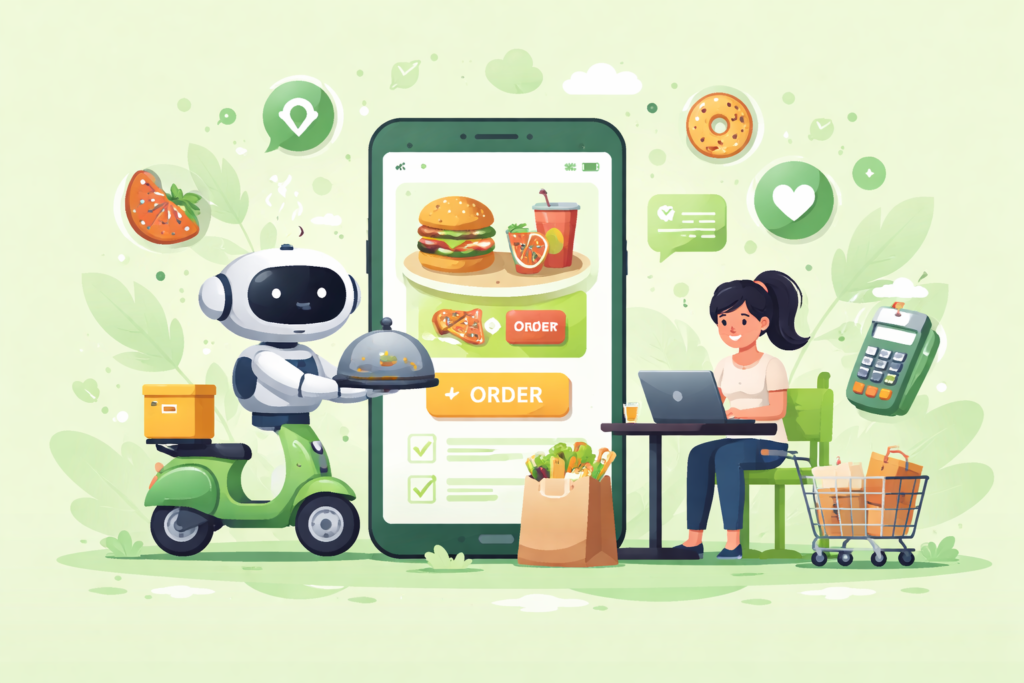
Online ordering has become a dominant trend in the food industry, and chatbots are at the forefront of this transformation. By automating the ordering process, chatbots eliminate the need for manual intervention, reducing errors and improving efficiency. Customers can browse menus, customize orders, and complete transactions within a single conversation.
One of the key benefits of chatbot-driven ordering is speed. Traditional ordering methods often involve multiple steps, which can be time-consuming. Chatbots streamline this process by guiding customers through each step, ensuring a quick and hassle-free experience. This is particularly beneficial for businesses handling high volumes of orders.
Automation also enhances accuracy. Human errors in order-taking can lead to customer dissatisfaction and financial losses. Chatbots minimize these errors by processing orders based on predefined rules and data inputs. This not only improves customer satisfaction but also reduces operational costs associated with order corrections.
Integration with Food Delivery Platforms
Integration with food delivery platforms is a critical aspect of food chatbot functionality. Modern chatbots can connect with popular delivery services, enabling seamless order management and tracking. This integration ensures that customers receive real-time updates on their orders, enhancing transparency and trust.
From a business perspective, integration simplifies operations by consolidating multiple systems into a single interface. Instead of managing orders from different platforms separately, businesses can use chatbots as a centralized system. This improves efficiency and reduces the risk of errors.
Additionally, chatbots can provide proactive notifications, such as order confirmations, estimated delivery times, and status updates. This level of communication keeps customers informed and engaged throughout the ordering process, leading to higher satisfaction and loyalty.
Personalization and Upselling with Food Chatbots
Personalization is a powerful tool for increasing customer engagement and revenue, and food chatbots excel in this area. By analyzing customer data, chatbots can offer tailored recommendations that align with individual preferences. This creates a more engaging and relevant experience for users.
Upselling is another area where chatbots add significant value. For example, when a customer orders a burger, the chatbot can suggest adding fries or a drink as a combo. These subtle prompts encourage customers to spend more without feeling pressured. Over time, this can lead to a substantial increase in average order value.
Chatbots can also leverage past interactions to create personalized offers and promotions. For instance, a chatbot might send a discount coupon for a customer’s favorite dish. This targeted approach not only boosts sales but also strengthens customer relationships, making the brand more memorable.
ROI and Business Growth with Food Chatbots
Investing in a Food Chatbot is not just about automation—it’s about measurable business growth and long-term return on investment (ROI). Restaurants and food businesses that implement chatbot technology often see immediate improvements in efficiency, customer engagement, and revenue. By reducing dependency on manual processes, chatbots help lower operational costs while maintaining high service quality.
One of the most significant drivers of ROI is increased order volume. Chatbots operate 24/7, capturing orders even outside business hours. This extended availability translates into additional revenue opportunities that would otherwise be missed. Moreover, chatbots can handle multiple conversations simultaneously, ensuring that no customer is left waiting during peak times. This scalability directly contributes to higher sales and improved customer retention.
Another important factor is cost savings. Hiring, training, and managing customer service staff can be expensive. Chatbots reduce these costs by automating repetitive tasks such as answering FAQs, processing orders, and managing reservations. Over time, these savings accumulate, making chatbots a highly cost-effective solution for businesses aiming to scale efficiently.
Data Analytics and Insights from Chatbots
Food chatbots are not just communication tools—they are powerful data collection and analytics platforms. Every interaction with a customer generates valuable data, including preferences, order history, and behavioral patterns. Businesses can use this data to make informed decisions and optimize their operations.
For example, chatbots can identify popular menu items, peak ordering times, and customer preferences. This information can be used to refine menus, create targeted marketing campaigns, and improve inventory management. By understanding what customers want, businesses can deliver better experiences and increase customer satisfaction.
Advanced analytics also enable predictive insights. Chatbots can analyze trends and forecast demand, helping businesses prepare for busy periods. This proactive approach reduces waste, improves efficiency, and enhances profitability. Additionally, data-driven decision-making ensures that businesses remain competitive in an ever-evolving market.
Security and Compliance in Food Chatbot Systems
Security and compliance are critical considerations when implementing food chatbots, especially when handling sensitive customer data such as payment information and personal details. Businesses must ensure that their chatbot systems adhere to industry standards and best practices to protect user data and maintain trust.
One essential aspect of security is encryption. Data transmitted between users and chatbots should be encrypted to prevent unauthorized access. Following Google SEO Starter Guide recommendations, secure websites using HTTPS are crucial for protecting user information and improving search rankings. Additionally, implementing authentication mechanisms ensures that only authorized users can access sensitive data.
Compliance with data protection regulations is equally important. Businesses must follow guidelines such as GDPR and other regional data protection laws. Regular security audits and updates help identify vulnerabilities and mitigate risks. By prioritizing security and compliance, businesses can build trust and ensure a safe user experience, which is essential for long-term success.
Multi-Channel Deployment Strategies
In today’s digital landscape, customers interact with brands across multiple platforms, including websites, mobile apps, and messaging services. A successful food chatbot strategy involves deploying the chatbot across all these channels to maximize reach and engagement.
Multi-channel deployment ensures that customers can interact with the chatbot through their preferred platform. Whether it’s WhatsApp, Facebook Messenger, or a website chat widget, businesses must provide a seamless experience across all touchpoints. This consistency enhances user satisfaction and strengthens brand identity.
Another advantage of multi-channel deployment is increased visibility. By being present on multiple platforms, businesses can reach a wider audience and attract new customers. This approach not only improves engagement but also drives higher conversion rates, making it a key strategy for growth.
Future Trends in Food Chatbots
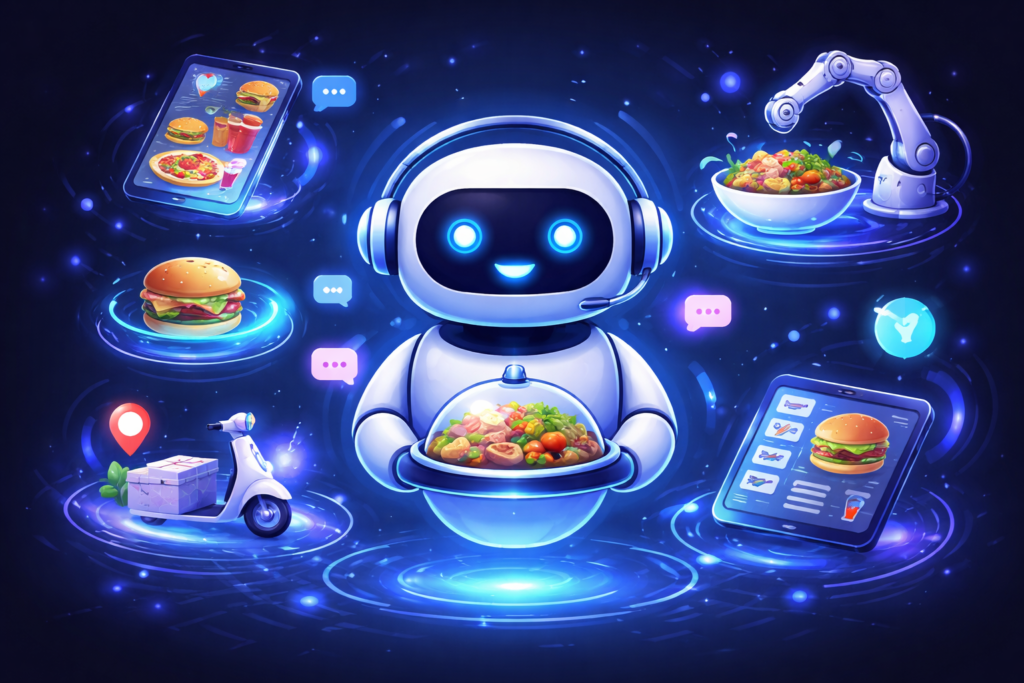
The future of food chatbots is shaped by continuous advancements in AI and technology. One of the most significant trends is the integration of voice-based interactions. Voice-enabled chatbots allow customers to place orders using natural speech, making the process even more convenient and accessible.
Another emerging trend is the use of AI-driven personalization. Chatbots are becoming increasingly sophisticated in understanding customer preferences and delivering tailored experiences. This includes personalized menu recommendations, dynamic pricing, and targeted promotions based on user behavior.
Integration with emerging technologies such as IoT and smart devices is also on the rise. For example, chatbots can connect with smart kitchen systems to optimize order preparation and delivery. These innovations are set to revolutionize the food industry, making chatbots an indispensable tool for future-ready businesses.
Common Mistakes Businesses Make with Food Chatbots
While food chatbots offer numerous benefits, businesses often make mistakes that hinder their effectiveness. One common mistake is poor chatbot design. A chatbot that is difficult to use or lacks clear navigation can frustrate users and lead to lost opportunities.
Another mistake is failing to train the chatbot adequately. Without proper training, chatbots may struggle to understand user queries or provide accurate responses. This can result in a poor user experience and damage the brand’s reputation. Regular updates and continuous learning are essential to ensure optimal performance.
Businesses also often overlook the importance of human support. While chatbots can handle many tasks, there are situations where human intervention is necessary. Providing an option to connect with a human agent ensures that complex issues are resolved effectively, enhancing customer satisfaction and trust.
Best Practices for Implementing Food Chatbots
Implementing a food chatbot successfully requires careful planning and execution. One of the best practices is to define clear objectives. Businesses should identify their goals, such as improving customer service, increasing sales, or reducing operational costs, and design the chatbot accordingly.
Another important practice is focusing on user experience. The chatbot should be intuitive, responsive, and easy to navigate. Regular testing and optimization help identify areas for improvement and ensure a seamless experience for users. Additionally, incorporating feedback from customers can lead to continuous enhancements.
Integration with existing systems is also crucial. The chatbot should work seamlessly with POS systems, payment gateways, and delivery platforms. This ensures smooth operations and maximizes the benefits of automation. By following these best practices, businesses can achieve successful chatbot implementation and long-term growth.
FAQs
1. What is a food chatbot?
A food chatbot is an AI-powered tool that automates customer interactions, including ordering, reservations, and support.
2. How do food chatbots increase sales?
They provide personalized recommendations, enable upselling, and operate 24/7, capturing more orders.
3. Are food chatbots secure?
Yes, when implemented with encryption and compliance standards, they ensure safe transactions and data protection.
4. Can small restaurants use food chatbots?
Absolutely. Chatbots are scalable and cost-effective, making them suitable for businesses of all sizes.
5. Do chatbots replace human staff?
No, they complement human staff by handling repetitive tasks, allowing employees to focus on complex activities.
6. How long does it take to implement a chatbot?
Implementation time varies but typically ranges from a few days to a few weeks, depending on complexity.
7. Can chatbots handle multiple languages?
Yes, advanced chatbots support multiple languages, enabling businesses to serve diverse audiences.
8. What platforms can food chatbots integrate with?
They can integrate with websites, mobile apps, messaging platforms, and delivery services.
Conclusion
Food chatbots are transforming the food industry by enhancing customer experiences, improving operational efficiency, and driving business growth. As technology continues to evolve, chatbots will become even more sophisticated, offering new opportunities for innovation and differentiation.
For businesses looking to stay competitive, adopting chatbot technology is no longer optional—it is essential. By leveraging AI-powered solutions, food brands can meet modern customer expectations and achieve sustainable growth.
At EngagerBot, businesses can unlock the full potential of food chatbots and create exceptional customer experiences that drive long-term success.
Want to Implement This Easily?
Prompt:
You are an expert consultant. Based on the blog post titled “(Food Chatbot)”, provide a step-by-step, practical implementation guide. Include tools, best practices, common mistakes to avoid, and advanced tips. Assume the reader wants to implement everything discussed in this article effectively.
Call to Action:
Want our help implementing this? Just reach out to us via our website contact form: https://www.engagerbot.com/contact-us/