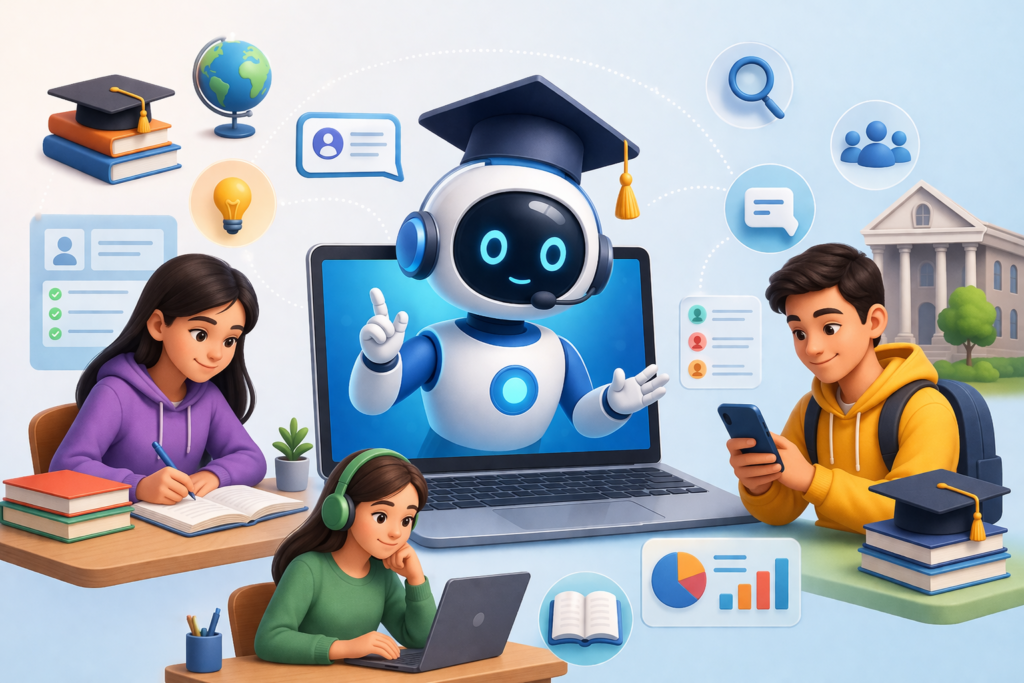
Education Chatbot solutions are transforming digital learning by automating student support, improving engagement, and streamlining academic operations. Discover how intelligent education chatbots enhance learning experiences, reduce administrative workload, and scale educational services efficiently.
Introduction: The Rise of Intelligent Education Chatbot Systems
The modern education landscape is undergoing a massive transformation driven by digital innovation, automation, and artificial intelligence. Among the most influential tools shaping this evolution is the Education Chatbot, a smart conversational system designed to assist students, educators, and administrators in real time. As institutions expand their digital presence, the need for automated communication systems has grown significantly. Platforms like EngagerBot demonstrate how conversational AI can simplify complex educational workflows while improving accessibility for learners worldwide.
Educational institutions today face growing challenges such as increasing student inquiries, limited administrative resources, and the demand for personalized learning experiences. Traditional communication channels like email and phone support often struggle to meet these expectations. An education chatbot solves this challenge by offering instant responses, guiding students through processes, and delivering consistent support 24/7. This ensures that learners receive accurate information without delays, enhancing trust and reliability across educational services.
Furthermore, education chatbots are not limited to answering questions—they are becoming intelligent digital assistants capable of supporting admissions, course selection, academic advising, exam preparation, and student engagement strategies. With the integration of technologies such as Natural Language Processing (NLP) and machine learning, chatbots continuously improve their accuracy and effectiveness. As digital education continues to expand globally, education chatbot systems are quickly becoming essential tools for institutions aiming to stay competitive, scalable, and student-focused.
Understanding What an Education Chatbot Really Is
An Education Chatbot is a specialized conversational AI tool designed to assist students, teachers, and educational administrators through automated interactions. Unlike generic chatbots, education-focused bots are built to handle academic workflows such as enrollment guidance, assignment support, learning resource delivery, and institutional communication. They operate across websites, learning platforms, and messaging applications, ensuring seamless accessibility for users at any time.
These intelligent systems leverage technologies such as Natural Language Processing (NLP), artificial intelligence, and structured databases to understand user queries and provide meaningful responses. Instead of relying on rigid scripts, modern education chatbots learn from user behavior and interactions, allowing them to deliver personalized responses. For example, a student asking about exam schedules can instantly receive accurate information without waiting for administrative confirmation. This reduces operational bottlenecks and ensures consistent service delivery.
The importance of education chatbots lies in their ability to bridge communication gaps in modern learning environments. As online education grows, institutions must provide scalable support systems that handle thousands of simultaneous interactions. Education chatbots enable institutions to maintain service quality while reducing administrative workload. This combination of efficiency, scalability, and personalization makes education chatbots one of the most valuable technological assets in modern education systems.
The Evolution of Digital Learning and Conversational AI
Digital learning has transformed dramatically over the past decade, shifting from static content delivery to interactive, learner-centered experiences. Early e-learning systems relied heavily on text-based content and video lectures, which often lacked real-time engagement. With the emergence of conversational AI technologies, educational platforms gained the ability to interact dynamically with learners. Education chatbots emerged as a natural progression in this digital evolution, providing automated assistance that enhances learning outcomes.
The integration of conversational AI into education aligns closely with modern learning trends such as blended learning, microlearning, and remote education. Students today expect immediate responses and personalized learning pathways, similar to the experiences they receive in customer service environments. Education chatbots fulfill this expectation by offering real-time assistance, adaptive learning suggestions, and structured feedback mechanisms. This shift from reactive support to proactive engagement significantly improves student satisfaction and retention rates.
Another major factor driving chatbot adoption is the increasing reliance on mobile learning platforms. Students frequently access learning materials through smartphones and tablets, making instant communication essential. Education chatbots seamlessly integrate into mobile environments, providing support directly within learning platforms. This accessibility not only enhances convenience but also encourages continuous learning engagement, making education more interactive, accessible, and student-friendly.
Key Technologies Powering Modern Education Chatbots
Modern education chatbots rely on a combination of advanced technologies that enable intelligent communication and automation. At the core of these systems is Natural Language Processing (NLP), which allows chatbots to interpret human language and understand the context of queries. NLP ensures that students can interact with chatbots using natural language rather than rigid command structures, making conversations intuitive and user-friendly.
Another essential technology behind education chatbots is machine learning. Through machine learning algorithms, chatbots continuously improve their responses by analyzing past interactions. This adaptive learning capability enables chatbots to refine their understanding of student behavior and deliver increasingly accurate answers over time. Additionally, machine learning allows chatbots to identify patterns, predict user needs, and provide proactive suggestions that enhance the learning experience.
Cloud computing and API integration also play crucial roles in the effectiveness of education chatbots. Cloud-based systems provide scalable infrastructure that supports thousands of concurrent users without performance degradation. APIs allow chatbots to connect with learning management systems (LMS), student information systems (SIS), and communication tools. These integrations create a unified ecosystem where chatbots function as centralized assistants, simplifying complex educational processes and ensuring seamless communication across digital platforms.
How Education Chatbots Improve Student Engagement
Student engagement is one of the most critical factors influencing academic success. Traditional communication methods often fail to maintain consistent engagement, especially in remote learning environments. Education chatbots address this challenge by providing continuous, interactive support that keeps students actively involved in their learning journey.
One of the most impactful ways chatbots enhance engagement is through personalized communication. By analyzing student data and interaction history, chatbots can deliver tailored learning recommendations, reminders, and motivational messages. For instance, a chatbot can remind students about upcoming assignments or suggest additional study materials based on their performance. This personalized approach ensures that students remain focused and engaged throughout their academic journey.
Education chatbots also support interactive learning experiences through quizzes, feedback loops, and gamification elements. These features encourage students to participate actively rather than passively consuming information. By offering instant feedback and structured guidance, chatbots help students identify areas for improvement and reinforce positive learning habits. This consistent engagement fosters better academic performance, higher satisfaction rates, and improved long-term learning outcomes.
Transforming Admissions and Enrollment Processes
Admissions and enrollment are often among the most complex and time-consuming processes in educational institutions. Prospective students frequently have numerous questions about course offerings, eligibility criteria, tuition fees, and deadlines. Handling these inquiries manually can overwhelm administrative teams and delay responses. Education chatbots streamline this process by providing instant, accurate responses to common admissions-related queries.
Chatbots can guide applicants step-by-step through the enrollment process, ensuring that all required information is submitted correctly. They can provide real-time assistance during application submission, reducing the likelihood of incomplete forms or errors. This automation significantly improves the efficiency of admissions workflows while minimizing the administrative burden on staff members.
Another advantage of chatbot-driven admissions systems is the ability to operate around the clock. Prospective students from different time zones can access information without waiting for office hours. This accessibility enhances the institution’s responsiveness and improves conversion rates. By simplifying the enrollment journey, education chatbots contribute to higher student satisfaction and more streamlined admissions operations.
Enhancing Learning Support Through Automated Assistance
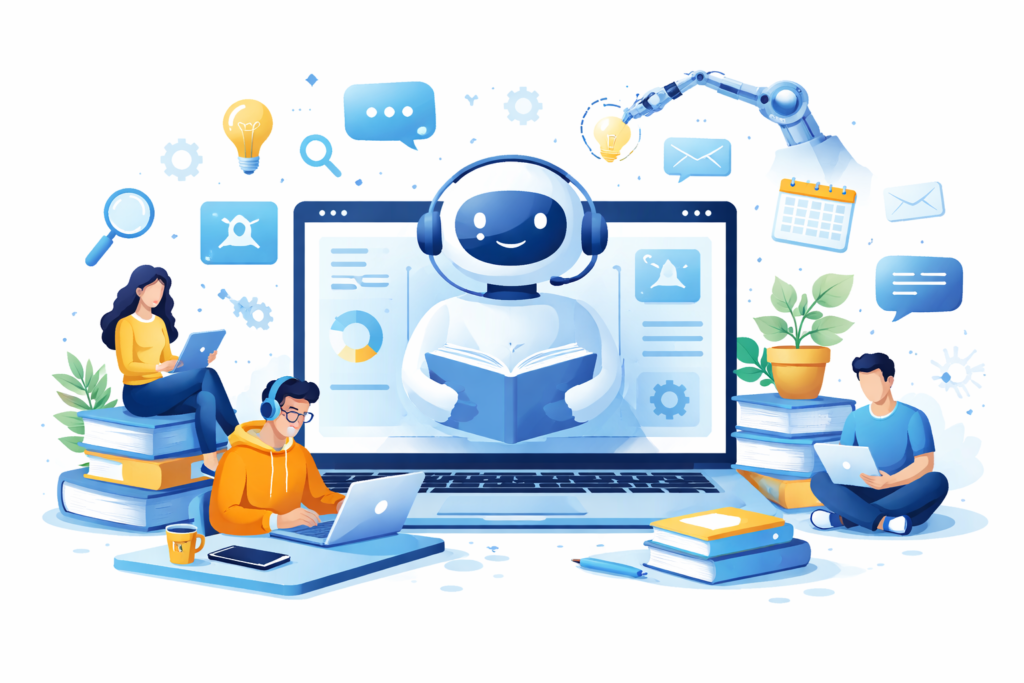
Education chatbots play a crucial role in delivering academic support to students outside traditional classroom hours. Many learners require additional assistance when reviewing complex topics or preparing for exams. Chatbots provide immediate support by answering subject-related questions, explaining concepts, and guiding students through learning materials.
One of the most valuable features of education chatbots is their ability to deliver structured learning resources. Students can request lecture notes, tutorials, or recommended readings directly through chatbot interactions. This eliminates the need to navigate multiple platforms or search through large databases. By simplifying resource access, chatbots enhance learning efficiency and reduce frustration.
Additionally, chatbots can serve as virtual tutors that provide personalized feedback based on student performance. By analyzing responses and identifying areas of weakness, chatbots can recommend targeted practice exercises. This adaptive learning capability ensures that students receive customized support tailored to their individual needs, ultimately improving academic performance and confidence.
Supporting Teachers and Academic Staff Productivity
Education chatbots are not limited to student support—they also significantly enhance productivity for teachers and academic staff. Educators often spend considerable time responding to repetitive inquiries related to assignments, schedules, and course requirements. By automating these routine interactions, chatbots free up valuable time that teachers can dedicate to instructional activities and curriculum development.
Chatbots also assist teachers in managing classroom communications more effectively. They can send automated announcements, reminders, and updates to students, ensuring consistent information delivery. This reduces the likelihood of missed deadlines or miscommunication. Teachers benefit from having a centralized communication tool that simplifies student interaction while maintaining clarity and organization.
Furthermore, education chatbots support data-driven decision-making by providing analytics and insights into student behavior. Teachers can review engagement metrics, participation rates, and performance trends to identify areas requiring improvement. This data-driven approach enhances teaching effectiveness and ensures that educational strategies align with student needs and institutional goals.
Improving Institutional Efficiency and Administrative Workflows
Administrative efficiency is essential for maintaining smooth operations within educational institutions. Tasks such as scheduling, fee inquiries, record management, and event coordination often require significant time and resources. Education chatbots automate many of these administrative processes, enabling institutions to operate more efficiently.
By handling routine administrative tasks, chatbots reduce the workload on support teams and minimize human errors. For example, students can check tuition balances, request transcripts, or confirm class schedules without direct staff involvement. This automation accelerates service delivery and improves overall operational efficiency.
Education chatbots also contribute to better resource allocation within institutions. By analyzing chatbot interactions, administrators can identify frequently asked questions and recurring issues. This insight allows institutions to optimize processes, update policies, and improve communication strategies. The result is a more streamlined administrative environment that supports both academic and operational excellence.
Personalization in Education Through AI-Driven Chatbot Intelligence
Personalization has become one of the most important factors in modern education. Students learn at different speeds, have unique preferences, and respond to different teaching methods. Education chatbots play a powerful role in delivering personalized learning experiences by analyzing individual behaviors and tailoring responses accordingly. Unlike traditional systems that provide uniform content to all users, chatbots dynamically adjust content based on user interaction patterns.
One of the core ways chatbots enable personalization is through intelligent profiling. As students interact with the system, chatbots gather non-sensitive behavioral insights such as preferred subjects, frequently accessed materials, and engagement timing. These insights help the chatbot recommend specific resources, assignments, or tutorials that match the learner’s interests and academic level. For example, a student struggling with mathematics concepts may receive targeted practice exercises and simplified explanations automatically.
Another advantage of personalized chatbot systems is their ability to create adaptive learning paths. Instead of forcing learners into rigid schedules, chatbots guide students step-by-step based on their progress. This adaptive capability increases retention rates and improves student confidence. By delivering tailored guidance, education chatbots ensure that each learner receives a unique and supportive educational experience that aligns with their individual goals.
Integration with Learning Management Systems and Digital Platforms
Seamless integration is essential for maximizing the effectiveness of education chatbot systems. Most educational institutions rely on Learning Management Systems (LMS) to manage courses, assignments, grading, and student interactions. When chatbots integrate with these platforms, they become central communication hubs that simplify navigation and reduce complexity for users.
One major benefit of integration is centralized access to learning resources. Instead of switching between multiple platforms, students can access lecture notes, assignment deadlines, and announcements through chatbot interactions. This reduces confusion and ensures that essential academic information remains easily accessible. APIs and secure data connectors enable chatbots to retrieve real-time information from LMS systems without compromising performance.
Educational institutions implementing chatbot integrations must also follow trusted technical documentation such as API security guidelines available from Google Cloud Documentation.
Following reliable integration practices ensures that chatbot systems remain stable and secure. When implemented correctly, LMS-integrated chatbots enhance usability, improve academic workflows, and reduce support overhead significantly.
Ensuring Data Security and Privacy in Education Chatbot Systems
Data security and privacy are critical considerations when implementing education chatbots. Educational institutions handle sensitive information such as student records, enrollment details, and communication histories. Without proper safeguards, chatbot systems could become vulnerable to cyber threats or unauthorized access.
One of the most important practices in chatbot security is encryption. Secure data transmission ensures that information shared between users and chatbots remains protected from interception. Educational organizations should implement HTTPS encryption standards recommended by Google Security Best Practices.
Access control is another essential component of chatbot security. Administrators should define permission levels that restrict access to sensitive information. Role-based authentication ensures that only authorized personnel can modify student records or administrative workflows. Additionally, regular security audits help identify vulnerabilities before they become critical risks.
Maintaining privacy compliance also builds trust among students and parents. Transparent privacy policies and responsible data management practices demonstrate institutional accountability. By prioritizing security and privacy, education chatbot systems create a reliable environment that protects user information while delivering high-quality digital services.
Measuring Performance and Analytics in Education Chatbot Systems
Measuring performance is essential for understanding the effectiveness of an education chatbot. Without data-driven insights, institutions cannot determine whether chatbot systems are meeting their goals. Analytics tools provide valuable metrics that help administrators evaluate chatbot performance and identify improvement opportunities.
Common performance indicators include response accuracy, user engagement rates, session duration, and query resolution time. Monitoring these metrics helps institutions understand how well the chatbot meets student needs. For example, high engagement rates indicate that students find chatbot interactions useful and accessible. Conversely, repeated unanswered queries may highlight knowledge gaps that require system updates.
Educational institutions should also focus on user satisfaction metrics. Feedback collection mechanisms allow students to rate chatbot responses and provide suggestions. Continuous improvement based on user feedback ensures that chatbot systems evolve over time. By leveraging analytics effectively, institutions can maintain chatbot efficiency while enhancing the overall learning experience.
The Role of Multilingual Support in Expanding Global Education Access
Education is increasingly becoming a global experience, with students accessing courses from diverse geographic and cultural backgrounds. Multilingual chatbot capabilities play a vital role in supporting international learners by removing language barriers and improving accessibility. These features allow chatbots to communicate effectively with users who speak different languages.
One of the key benefits of multilingual chatbots is improved inclusivity. Students who are not fluent in the primary language of instruction can still receive accurate information and guidance. By supporting multiple languages, chatbots enable institutions to reach broader audiences and expand enrollment opportunities. This accessibility contributes to greater educational equality and improved student engagement.
Multilingual functionality also enhances communication clarity. Students can ask questions in their preferred language, reducing misunderstandings and improving comprehension. As global education continues to grow, multilingual chatbot capabilities will become essential tools for institutions seeking to provide inclusive and accessible learning environments.
Future Trends Shaping the Next Generation of Education Chatbots
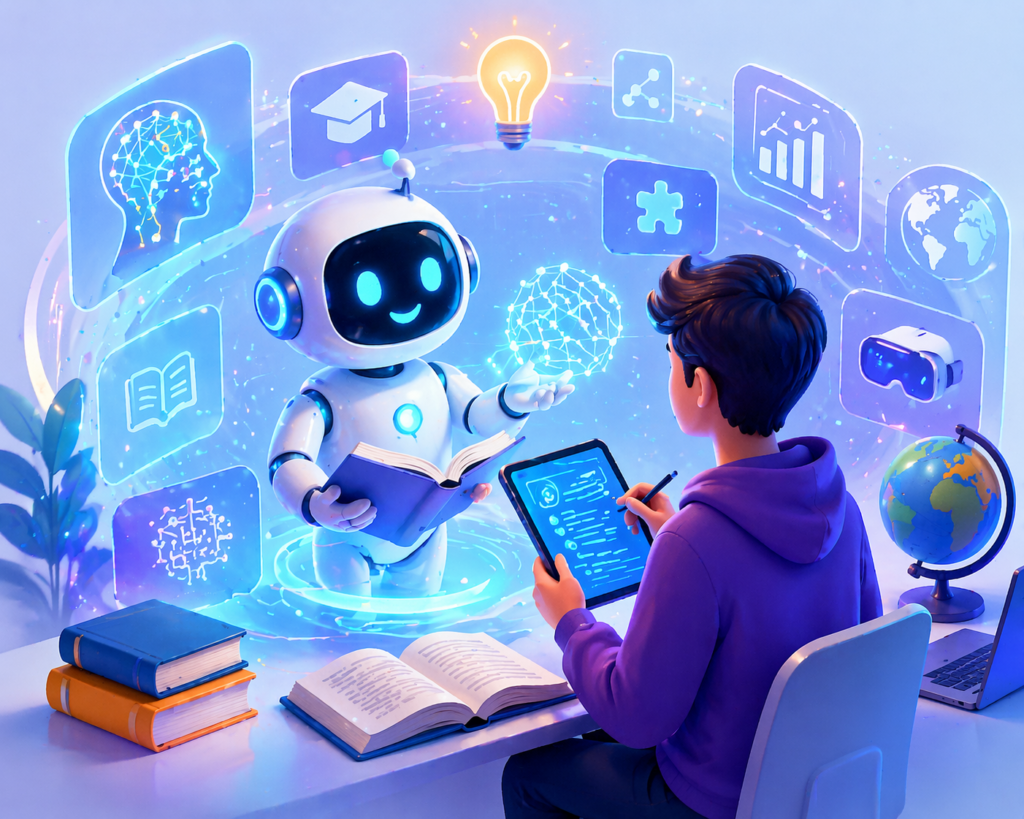
The future of education chatbots is driven by emerging technologies that enhance intelligence, adaptability, and user interaction. One of the most promising developments is the integration of advanced artificial intelligence models capable of understanding complex queries and delivering highly contextual responses. These models will enable chatbots to function as fully interactive digital tutors rather than simple question-response systems.
Voice-enabled chatbot interfaces are another major trend shaping the future of education technology. Students increasingly rely on voice assistants for everyday tasks, and education chatbots are expected to adopt similar functionality. Voice-based interaction allows students to receive support hands-free, making learning more convenient and accessible. This capability is particularly valuable for visually impaired learners or users who prefer auditory communication.
Additionally, predictive analytics will play a significant role in future chatbot systems. By analyzing historical data, chatbots can anticipate student needs and provide proactive guidance. For example, a chatbot might recommend revision materials before exams based on past performance trends. These innovations will continue to transform education chatbots into intelligent systems capable of delivering highly personalized and proactive learning experiences.
Building Trust and Credibility Through Reliable Chatbot Implementation
Trust is one of the most important factors influencing the adoption of education chatbot technology. Students and educators must feel confident that chatbot systems provide accurate information and reliable support. Building trust requires consistent performance, transparent communication, and responsible data handling practices.
Accuracy is a fundamental component of trustworthiness. Chatbots must be trained using verified data sources to ensure reliable responses. Educational institutions should regularly review chatbot content to prevent outdated information from being delivered. Continuous quality assurance helps maintain credibility and ensures that users receive dependable support.
Transparency also plays a critical role in establishing trust. Users should understand how chatbot systems operate and how their data is used. Providing clear explanations about chatbot functionality and privacy policies demonstrates accountability. By maintaining high standards of reliability and transparency, institutions can build strong relationships with students and encourage long-term engagement with chatbot technology.
Common Mistakes When Implementing Education Chatbots
Implementing education chatbots requires careful planning and execution. However, many institutions make avoidable mistakes that reduce system effectiveness and limit potential benefits.
One of the most common mistakes is launching chatbots without clear objectives. Institutions sometimes deploy chatbot systems without defining specific goals such as improving enrollment response time or reducing administrative workload. Without measurable goals, evaluating success becomes difficult. Clear planning ensures that chatbot implementation aligns with institutional priorities.
Another frequent mistake involves insufficient training data. Chatbots require structured knowledge bases to deliver accurate responses. If the training data is incomplete or outdated, chatbot performance suffers. Institutions must regularly update chatbot knowledge sources to maintain relevance and reliability.
Ignoring user feedback is another major issue. Students and educators provide valuable insights that help improve chatbot performance. Institutions that fail to collect and analyze feedback risk maintaining ineffective systems. Continuous optimization based on real user interactions ensures long-term chatbot success.
FAQs
1. What is an education chatbot used for?
An education chatbot is used to automate communication between students, teachers, and administrative staff. It provides instant responses to queries, assists with enrollment, delivers learning materials, and supports academic workflows. These systems improve accessibility and streamline operations within educational institutions.
2. Can education chatbots replace teachers?
No, education chatbots are designed to support teachers rather than replace them. They handle repetitive tasks and provide automated assistance, allowing teachers to focus on instruction and student mentorship. Human educators remain essential for delivering complex teaching and emotional support.
3. Are education chatbots secure?
Yes, education chatbots can be highly secure when implemented using encryption protocols and secure authentication systems. Following recognized security frameworks such as Google security standards helps ensure safe data handling and privacy protection.
4. How do chatbots improve student engagement?
Chatbots improve engagement by delivering personalized reminders, interactive quizzes, and instant feedback. They create continuous communication channels that encourage active participation and improve learning outcomes.
5. Can education chatbots support multiple languages?
Yes, modern chatbot systems support multilingual communication. This feature improves accessibility for international students and ensures that users receive information in their preferred language.
6. What platforms can education chatbots integrate with?
Education chatbots can integrate with learning management systems, messaging applications, websites, and mobile platforms. Integration enables seamless access to educational resources and improves user experience.
7. How long does it take to implement an education chatbot?
Implementation timelines vary depending on system complexity. Basic chatbot deployments may take a few weeks, while advanced integrations with multiple platforms may require several months.
8. Are education chatbots suitable for small institutions?
Yes, education chatbots are scalable solutions suitable for institutions of all sizes. Small organizations benefit from automation that reduces manual workload and improves efficiency.
Best Practices Summary for Education Chatbot Implementation
Implementing education chatbot systems successfully requires adherence to proven best practices. Institutions should begin by identifying clear goals such as improving student engagement or reducing response time. Defining measurable objectives helps ensure that chatbot deployment delivers tangible results.
Another best practice involves maintaining updated knowledge bases. Chatbots rely on accurate data to provide reliable responses. Regular updates ensure that information remains relevant and consistent with institutional policies. Training chatbot models using real-world interactions also improves system accuracy over time.
Finally, institutions should prioritize user experience design. A well-designed chatbot interface enhances usability and encourages adoption. Clear navigation, conversational clarity, and accessibility features contribute to a positive user experience. Following these best practices ensures long-term chatbot success and sustainable operational improvements.
Conclusion: The Transformational Impact of Education Chatbots
Education chatbot technology is reshaping the way institutions communicate, operate, and deliver learning experiences. From admissions and administrative workflows to personalized learning support, chatbots offer scalable solutions that improve efficiency and engagement across educational environments. As digital learning continues to evolve, institutions must adopt intelligent systems that meet modern expectations for speed, accessibility, and convenience.
Platforms like EngagerBot illustrate how advanced chatbot solutions empower educational organizations to manage complex processes while enhancing student satisfaction. By combining automation, personalization, and data-driven insights, education chatbots enable institutions to deliver consistent, reliable, and efficient services. Organizations that embrace chatbot technology today position themselves for long-term success in an increasingly digital educational landscape.
Want to Implement This Easily?
Prompt Text:
You are an expert consultant. Based on the blog post titled “Education Chatbot”, provide a step-by-step, practical implementation guide. Include tools, best practices, common mistakes to avoid, and advanced tips. Assume the reader wants to implement everything discussed in this article effectively.
Call to Action:
Want our help implementing this? Just reach out to us via our website contact form:
https://www.engagerbot.com/contact-us/