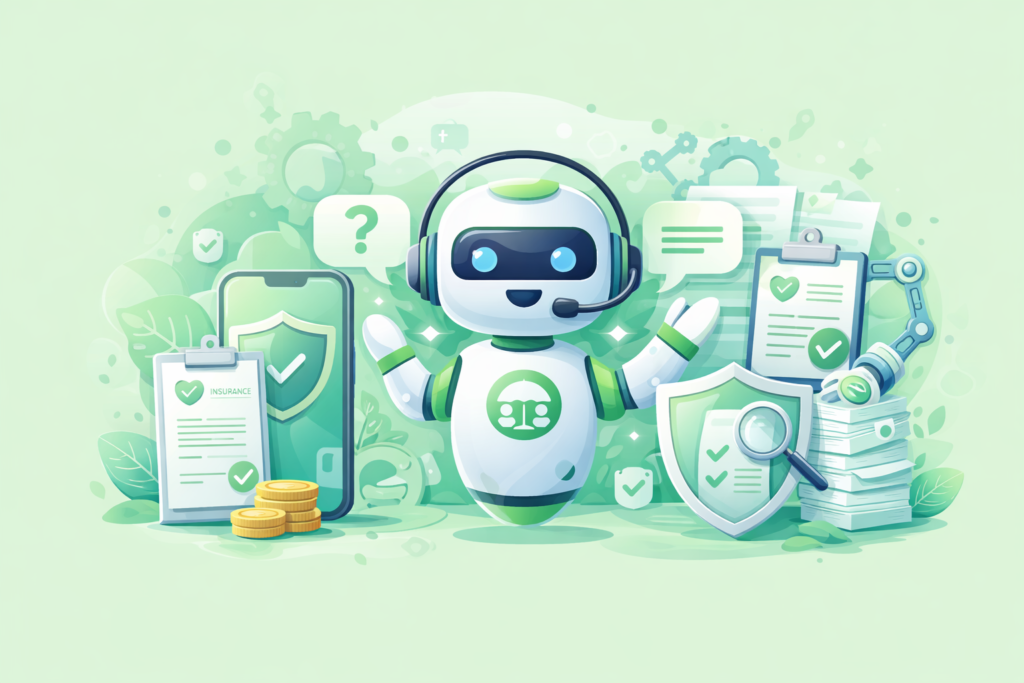
Insurance providers face rising customer expectations, regulatory pressure, and increasing competition in a digital-first environment. AI-powered insurance chatbots are transforming how insurers handle customer inquiries, policy servicing, claims processing, and compliance-driven communications. These chatbots improve operational efficiency while maintaining trust and transparency, helping insurers stay competitive in a market where speed, accuracy, and customer experience are crucial.
Modern chatbots can interpret natural language, automate routine tasks, and deliver instant, accurate responses to policyholders. From policy comparisons to claims tracking, these AI tools bridge gaps in customer support while reducing operational costs. By integrating with core systems like CRM, policy management, and identity verification services, insurers can achieve seamless automation without compromising security or regulatory compliance.
This guide explores the technology, benefits, challenges, and SEO-aligned best practices for insurance chatbots. We’ll cover how AI powers chatbots, why they are critical for insurers, and how they align with Google’s E-E-A-T guidelines. For platforms like Engagerbot, chatbots are not just tools—they are strategic assets that improve customer satisfaction, reduce operational risks, and reinforce trust in digital insurance ecosystems.
Introduction
The insurance industry is undergoing a major digital transformation driven by AI, automation, and customer-centric innovation. At the center of this change is the insurance chatbot, an AI-powered conversational tool that assists customers with policy inquiries, claims management, and compliance-driven communication.
For platforms like Engagerbot, insurance chatbots represent a strategic opportunity to bridge the gap between complex insurance products and modern customer expectations. Policyholders today demand instant responses, accurate information, and seamless digital interactions without compromising security or regulatory compliance.
According to Google’s helpful content system, financial services websites must demonstrate Experience, Expertise, Authoritativeness, and Trustworthiness (E-E-A-T). Insurance chatbots directly support these principles by delivering consistent, policy-accurate responses, backed by verified knowledge sources.
Modern insurance chatbots do far more than answer FAQs. They assist with:
- Policy comparisons
- Claims status tracking
- Renewal reminders
- Risk education
- Regulatory disclosures
When implemented correctly, chatbots reduce operational costs, improve response times, and enhance customer satisfaction, while maintaining alignment with industry regulations and consumer protection standards.
What is an Insurance Chatbot?
An insurance chatbot is an AI-driven conversational interface designed to interact with customers via text or voice across websites, mobile apps, and messaging platforms. Using natural language processing (NLP) and machine learning, chatbots understand user intent, retrieve relevant insurance data, and provide accurate, real-time responses.
Unlike basic rule-based bots, modern insurance chatbots leverage contextual understanding and predictive analytics, enabling them to handle complex conversations such as explaining coverage terms, guiding users through claims submissions, and identifying policy upgrade opportunities.
Common integrations include:
- Policy management systems
- CRM tools
- Claims processing platforms
- Identity verification services
According to IBM conversational AI, AI chatbots in regulated industries must prioritize accuracy, explainability, and secure data handling to maintain trust and compliance.
From an SEO and trust perspective, insurance chatbots improve engagement metrics like time on page and reduce bounce rates, which signals high-quality user experience to Google. Key functions include:
- Instant policy question responses
- Step-by-step claims data collection
- Premium estimates
- Escalation to human agents when needed
By aligning with compliance frameworks and authoritative sources, chatbots become reliable extensions of an insurer’s digital customer service strategy.
How AI Powers Insurance Chatbots
Artificial intelligence is the backbone of modern insurance chatbots. By combining machine learning, natural language understanding, and decision-tree logic, chatbots interpret user queries and deliver accurate responses efficiently.
Natural language processing (NLP) enables chatbots to understand questions even when phrased informally. For instance, “Does my policy cover flood damage?” triggers intent recognition, policy data retrieval, and response generation within seconds.
According to Google AI principles, responsible AI in financial services must be transparent, fair, and accountable. Insurance chatbots adhering to these principles provide:
- Clear explanations of coverage
- Non-misleading responses
- Ethical data usage
Machine learning allows chatbots to continuously improve by analyzing historical interactions, reducing escalations, and enhancing satisfaction. Predictive analytics further enable chatbots to:
- Anticipate policy renewals
- Suggest add-on coverage
- Detect potential fraud indicators
Integrating AI with structured insurance data transforms chatbots from scripted responders into intelligent assistants, benefiting both customers and internal insurance teams.
Why Insurance Chatbots are Critical for Modern Insurers
Insurance is a trust-driven industry where customer experience heavily influences retention and brand perception. Traditional processes, including manual claim handling and call-center support, often suffer from slow response times, inconsistent information, and high operational costs.
According to McKinsey insurance digital transformation research, AI-driven customer engagement can reduce service costs by up to 30% while improving satisfaction.
Insurance chatbots provide:
- 24/7 availability
- Instant policy information
- Faster claims initiation
- Reduced workload for human agents
From a compliance standpoint, chatbots ensure consistent disclosures and policy explanations, aligning with standards set by the National Association of Insurance Commissioners (NAIC).
Additionally, structured conversation data from chatbots allows insurers to:
- Identify customer pain points
- Optimize products and services
- Enhance digital journey mapping
Insurers that fail to adopt conversational AI risk losing customers to responsive, technology-enabled competitors.
Benefits of Insurance Chatbots
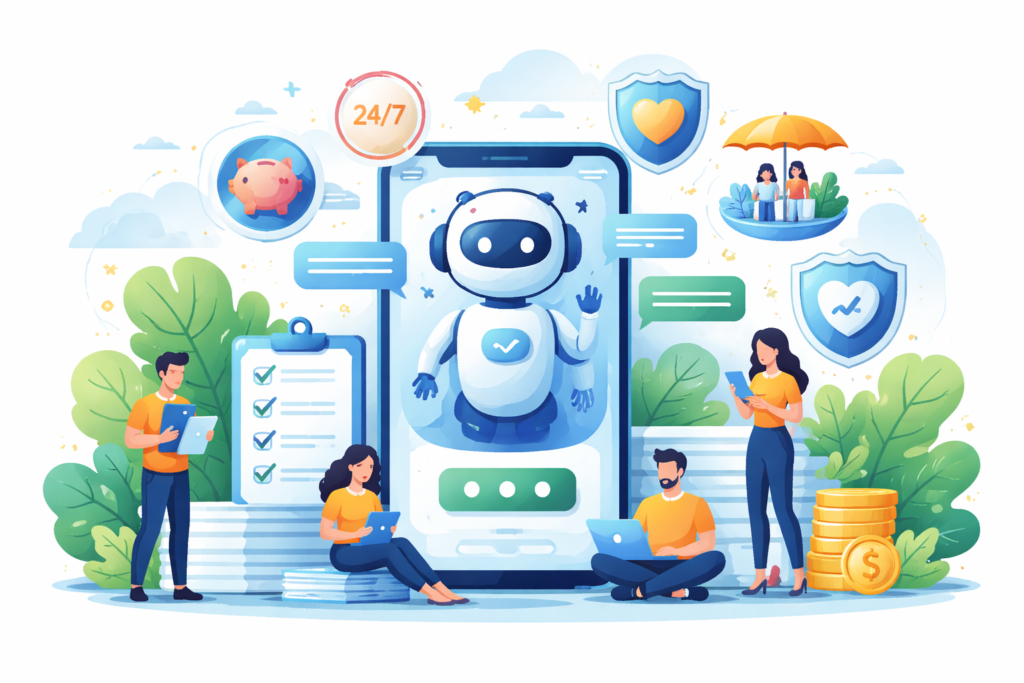
Insurance chatbots deliver measurable operational, financial, and customer experience benefits. They reduce manual intervention, cut service costs, and provide personalized support at scale.
Key benefits include:
- Instant Responses: Policyholders receive immediate answers, improving satisfaction.
- Operational Efficiency: Automating routine tasks frees human agents for high-complexity issues.
- 24/7 Availability: Chatbots provide round-the-clock service, reducing missed inquiries.
- Consistent Accuracy: AI ensures responses align with verified policy documents and regulatory guidelines.
According to Forrester AI in financial services research, insurers leveraging chatbots report significant reductions in average handling time and operational costs.
Chatbots also enhance digital engagement, increasing dwell time and reducing bounce rates—both positive SEO signals. Predictive capabilities allow chatbots to suggest renewals or add-on products, boosting revenue while maintaining compliance.
By integrating AI chatbots into core systems, insurers can monitor performance metrics, optimize digital journeys, and maintain trust through transparent and accurate responses, crucial for E-E-A-T compliance.
Claims Automation Through Chatbots
Insurance chatbots streamline claims by automating data collection, document verification, and updates. Customers can submit claims via web, mobile, or messaging platforms, while chatbots guide them step-by-step.
According to IBM conversational AI, automated claims reduce processing time by up to 50%, while freeing staff to handle complex or high-value cases.
Chatbots provide:
- 24/7 status updates
- Proactive notifications for missing documents
- Fraud detection via predictive analytics
Integration with policy management systems ensures all responses remain policy-compliant and accurate, aligned with NAIC guidelines.
This improves customer trust, speeds claims resolution, and reduces operational costs, making claims handling more efficient and customer-friendly.
Policy Servicing and Renewals
Insurance chatbots simplify policy management by providing instant information on coverage, premiums, and renewal dates. Customers can update details, request quotes, and manage policies without agent assistance.
According to Salesforce insurance research, chatbots that handle policy servicing increase customer satisfaction scores by over 25%. They also automate reminders for:
- Policy renewals
- Premium payments
- Add-on coverage suggestions
By centralizing communication, chatbots reduce errors, ensure compliance, and improve customer engagement metrics—critical for both operational efficiency and SEO performance.
Customer Onboarding via Chatbots
Chatbots streamline onboarding for new policyholders by guiding them through application forms, KYC verification, and initial policy explanations. This reduces manual intervention and enhances the customer experience.
According to Accenture Insurance Technology Outlook, AI-powered onboarding improves completion rates by 30–40%. Chatbots can provide:
- Step-by-step guidance
- Document verification
- Personalized product suggestions
This automated approach reduces onboarding friction, ensures regulatory compliance, and improves trust with policyholders from day one.
Regulatory Compliance Alignment
Insurance chatbots help insurers adhere to strict regulatory standards by delivering consistent, accurate information. Chatbots can be programmed to include:
- Policy disclosures
- Terms and conditions
- Compliance notices
According to NAIC guidance, consistent communication reduces legal risk and ensures consumer protection. Chatbots also maintain conversation logs, providing evidence of compliance in case of audits.
By automating compliance-related tasks, insurers can reduce human errors, save resources, and provide a trustworthy, transparent customer experience.
SEO and Google Best Practices for Insurance Chatbots
Insurance chatbots not only improve customer service but also enhance SEO performance. Google evaluates user engagement, content accuracy, and trustworthiness when ranking YMYL (Your Money, Your Life) sites. Chatbots that deliver instant, accurate, and authoritative responses signal high-quality user experience.
According to Google Search Central, financial websites must prioritize helpful, user-first content. Chatbots support this by:
- Reducing bounce rates through interactive support
- Increasing dwell time with on-demand assistance
- Offering verified, policy-compliant answers
Additionally, structured chatbot data can be integrated with FAQ schema and rich snippets, improving search visibility. Chatbots that link users to authoritative sources, like NAIC or IBM AI research, enhance E-E-A-T signals, reinforcing site credibility.
Optimized chatbots also support long-tail keywords and insurance-specific queries, increasing organic traffic from users actively seeking policy, claims, or coverage information. By aligning AI responses with Google’s helpful content system, insurers can maintain search engine trust while improving customer satisfaction.
Security and Data Privacy
Insurance chatbots handle sensitive personal and financial data, making security and privacy paramount. Modern chatbots comply with data protection regulations, including GDPR, CCPA, and industry-specific requirements.
Key security measures include:
- End-to-end encryption for all chatbot communications
- Secure authentication and identity verification
- Restricted access to policy and claims data
According to IBM security AI, AI-driven systems must be monitored for anomalies, ensuring data integrity and fraud prevention. Insurance chatbots also maintain audit logs, which can be essential for regulatory compliance.
Privacy-focused design improves trust with policyholders. Transparency about data collection and usage aligns with Google’s E-E-A-T principles, while predictive analytics can detect unusual claim patterns without exposing private information.
By integrating security and privacy into the core chatbot workflow, insurers can reduce liability, prevent breaches, and maintain regulatory compliance—essential for protecting both customer data and brand reputation.
Integration with CRM and Core Insurance Systems
Insurance chatbots are most effective when integrated with CRM, policy management, and claims systems. This integration ensures accurate, real-time responses and seamless user journeys.
Benefits of integration include:
- Access to up-to-date policy and claims data
- Personalized customer experiences using CRM insights
- Automation of repetitive tasks, reducing staff workload
According to Salesforce insurance research, chatbot integration with CRM improves customer satisfaction and retention by providing personalized policy recommendations and proactive alerts.
Advanced chatbots can also synchronize with core insurance platforms, enabling:
- Automated renewals
- Policy upgrades suggestions
- Claim updates and notifications
By connecting chatbots to core systems, insurers create a unified, efficient, and compliant digital ecosystem, boosting both operational efficiency and customer trust.
Use Cases by Insurance Type
Insurance chatbots are versatile across life, health, auto, and property insurance:
- Life Insurance: Assists with plan selection, coverage explanations, and premium calculations.
- Health Insurance: Provides claim guidance, eligibility checks, and appointment reminders.
- Auto Insurance: Handles accident reports, quote requests, and roadside assistance information.
- Property Insurance: Guides through policy renewals, damage claims, and risk assessment.
According to Accenture Insurance Technology Outlook, insurers implementing chatbots across multiple product lines see improved operational efficiency, reduced response times, and increased policyholder satisfaction.
AI-powered chatbots also support cross-selling opportunities, identifying relevant products based on user history and needs. By tailoring responses to each insurance type, chatbots provide personalized, compliant, and trustworthy customer support, enhancing both retention and digital reputation.
Common Mistakes in Insurance Chatbot Deployment
While chatbots offer many benefits, insurers often make mistakes that reduce effectiveness:
- Ignoring compliance: Deploying chatbots without regulatory alignment can create legal risks.
- Overcomplicating responses: Long or technical explanations confuse users.
- Neglecting integrations: Chatbots not connected to CRM or policy systems provide outdated information.
- Lack of human fallback: Users may abandon chat if escalation options are unavailable.
- Weak security measures: Poor encryption and authentication can expose sensitive data.
According to NAIC guidelines, insurance providers must ensure accuracy, transparency, and secure handling of customer data. Avoiding these mistakes improves trust, satisfaction, and E-E-A-T compliance.
FAQs
- What is an insurance chatbot?
An AI-powered tool that answers policy questions, assists claims, and provides support 24/7. - Are chatbots secure for personal data?
Yes, when designed with encryption, authentication, and compliance measures. - Can chatbots handle claims?
Yes, they guide users step-by-step and notify human agents when necessary. - Do chatbots work for all insurance types?
Yes, from life and health to auto and property insurance. - How do chatbots improve SEO?
By increasing engagement, dwell time, and linking to authoritative sources. - Do they replace human agents?
No, they assist with routine tasks, allowing humans to focus on complex cases. - Are chatbots compliant with regulations?
Yes, if programmed with NAIC and other regulatory guidelines. - Can chatbots personalize recommendations?
Yes, using CRM data and predictive analytics. - Do chatbots reduce operational costs?
Yes, they automate repetitive tasks and reduce call-center workload. - How do I implement a chatbot?
Integrate with CRM, claims systems, and ensure AI models are trained with verified policy data.
Future Trends in Insurance Chatbots
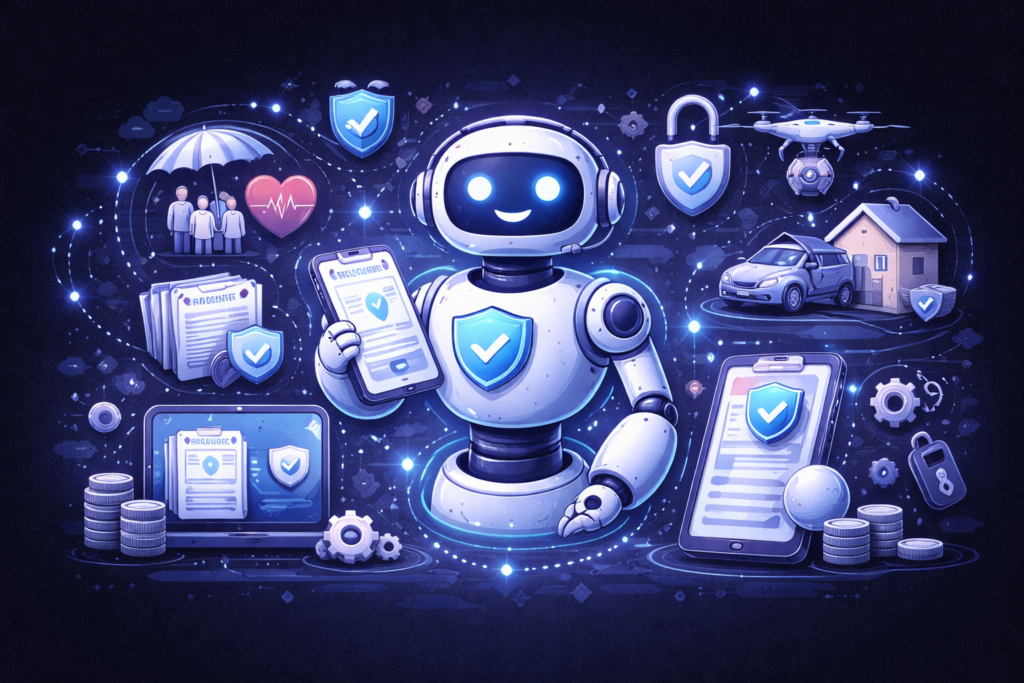
Future developments include:
- Voice-enabled chatbots for hands-free interactions
- Advanced predictive analytics for personalized product suggestions
- Multilingual support to serve diverse policyholders
- Integration with IoT devices for risk monitoring
- AI-driven fraud detection
According to McKinsey insurance digital insights, insurers adopting these trends will improve customer engagement, operational efficiency, and digital competitiveness.
Conclusion
Insurance chatbots are transformative tools for modern insurers, enhancing customer experience, operational efficiency, and compliance. By leveraging AI, predictive analytics, and system integrations, chatbots handle routine inquiries, streamline claims, and support personalized policy servicing.
Platforms like Engagerbot demonstrate that chatbots can align with Google’s E-E-A-T principles, improve engagement metrics, and provide trustworthy, compliant, and transparent support. Insurers that invest in these tools gain a competitive advantage, reduce costs, and build stronger relationships with policyholders.
From claims automation to customer onboarding, insurance chatbots are no longer optional—they are essential for digital-first, customer-centric insurance operations. By avoiding common deployment mistakes, maintaining regulatory compliance, and adopting future trends, insurers can maximize the ROI of chatbot initiatives while securing long-term customer trust.