Discover how a Legal Chatbot can improve legal client communication, automate intake, qualify inquiries, schedule consultations, and support law-firm workflows while maintaining accuracy, privacy, security, and human oversight.
Introduction
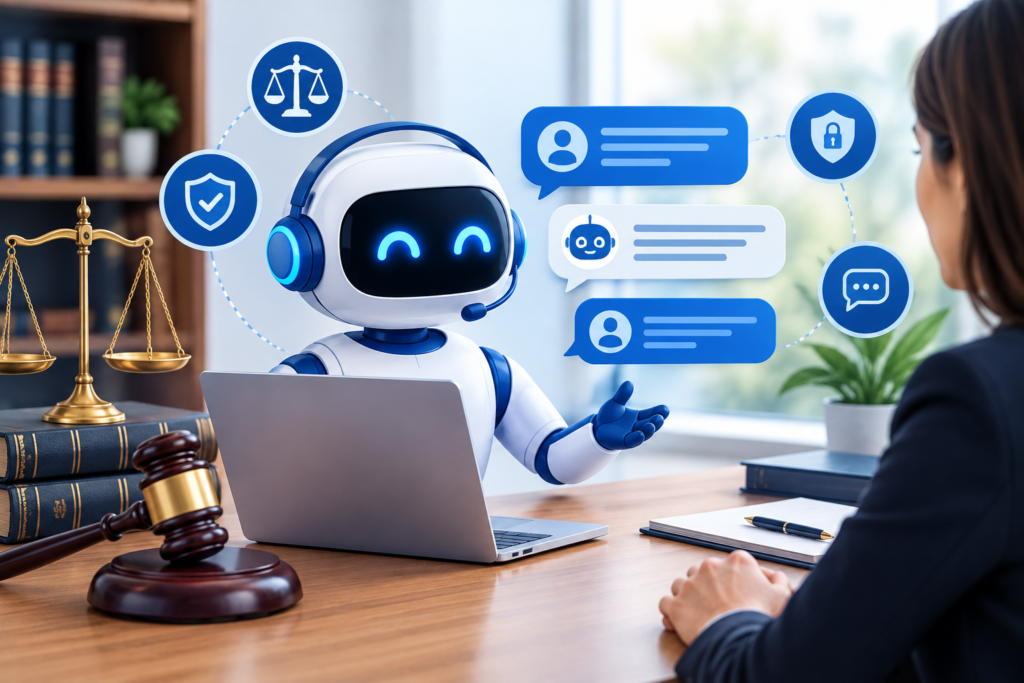
The legal industry depends on communication, trust, accuracy, and timely access to information. People searching for legal assistance may arrive on a law firm’s website with an urgent question, uncertainty about which practice area they need, or a simple request to understand how the consultation process works. Traditional contact forms and phone calls remain useful, but they do not always provide immediate guidance. This is where a Legal Chatbot can create a more accessible digital communication channel.
A legal chatbot is an automated conversational system that can interact with website visitors through questions and answers. Depending on its configuration, it can explain general information, identify the visitor’s area of interest, collect appropriate intake details, answer frequently asked questions, direct people toward relevant resources, and support appointment scheduling. More advanced systems can connect with internal workflows and help route conversations to the appropriate human team.
The important point is that legal chatbot technology should be designed around responsible assistance rather than unrestricted automation. A chatbot should not automatically be presented as a lawyer, and it should not create the impression that every response represents individualized legal advice. Legal matters can depend on jurisdiction, facts, deadlines, evidence, contracts, regulations, and professional judgment. The chatbot therefore needs clear boundaries and reliable escalation procedures.
For organizations adopting AI, these distinctions matter. The ABA Formal Opinion 512 discusses lawyers’ professional responsibilities when using generative artificial intelligence, including competence, confidentiality, communication, supervision, and other ethical considerations. A chatbot implementation should take those responsibilities seriously rather than treating AI as an ordinary website feature.
This guide explains how to plan, design, implement, secure, monitor, and improve a legal chatbot. It focuses on practical applications for legal organizations while emphasizing accuracy, transparency, privacy, security, human oversight, and useful client experiences.
What Is a Legal Chatbot?
A Legal Chatbot is a conversational software application designed to communicate with website visitors, prospective clients, existing clients, or other users through an interactive interface. Instead of requiring visitors to navigate several pages or complete a long form before receiving guidance, the chatbot can ask questions one at a time and provide responses based on approved information, predefined workflows, or carefully controlled AI capabilities.
The simplest legal chatbot may operate as a structured FAQ assistant. A visitor could ask about consultation availability, practice areas, office procedures, required documents, or contact options. A more sophisticated system may support conditional conversations. For example, someone selecting employment law could be presented with questions relevant to employment matters, while someone selecting estate planning could follow an entirely different conversational path. This makes the experience more relevant than presenting every visitor with the same generic form.
A critical distinction is the difference between legal information and legal advice. A chatbot can potentially explain general concepts, provide information published by the organization, describe a firm’s services, guide visitors through administrative procedures, and collect preliminary information. That does not mean it should independently determine the legal rights of an individual, guarantee an outcome, or provide professional conclusions without appropriate human involvement. The exact requirements depend on the jurisdiction, legal organization, use case, and applicable professional rules.
This is why a legal chatbot should generally be viewed as a digital client-communication assistant, not an autonomous lawyer. Its job is to help users find information, understand available next steps, and reach the right human professional when necessary.
Organizations should also make the automated nature of the system clear. Transparency helps users understand the limitations of the conversation and reduces the possibility that someone will incorrectly assume an attorney has personally reviewed the interaction.
When AI is used, responsible deployment requires attention to competence, confidentiality, supervision, and reliability. The ABA’s guidance on generative AI provides an important professional reference for understanding these responsibilities. ABA Formal Opinion 512 is particularly relevant for legal professionals evaluating AI-enabled workflows.
A well-designed chatbot therefore combines automation with clear boundaries. It handles appropriate repetitive communication while recognizing when a question is too sensitive, complex, uncertain, or consequential for automated handling.
Why Law Firms Are Exploring Legal Chatbot Technology
Legal organizations regularly deal with repetitive communication. Potential clients may ask the same basic questions about consultation procedures, areas of practice, office hours, documents, pricing policies, appointment availability, or how to contact the appropriate department. Staff members can spend considerable time answering these requests even though many do not require detailed legal analysis.
A Legal Chatbot can provide an automated first layer of communication. Instead of forcing every visitor to wait for an email response, the chatbot can provide approved information immediately. If the question requires professional judgment, the system can identify that limitation and guide the person toward a human representative.
Another important benefit is 24/7 accessibility. A visitor may need information outside normal business hours. While a chatbot does not replace emergency legal assistance or guarantee immediate attorney availability, it can capture an inquiry and explain what the user should do next. This can make the first stage of communication less dependent on office schedules.
Chatbots can also help organizations improve consistency. A carefully maintained knowledge base can ensure that common operational questions receive standardized answers. This is particularly useful for organizations with multiple departments, offices, or practice areas where inconsistent information can create confusion.
The technology can additionally reveal useful operational patterns. Conversation analytics can show which questions users ask most frequently, where they abandon intake conversations, which practice areas attract the most inquiries, and which website pages may be causing confusion.
However, automation should never be pursued simply because it is fashionable. Google’s creating helpful, reliable, people-first content guidance emphasizes usefulness to people rather than creating content primarily for search-engine manipulation. The same principle can inform chatbot design: build the system around user needs first.
A law firm should therefore ask practical questions before implementation:
- What communication problem are we solving?
- Which questions are repetitive?
- Which workflows are safe to automate?
- Which conversations require human review?
- What information should never be entered?
- How will chatbot accuracy be monitored?
- How quickly can a human take over?
These questions help transform chatbot adoption from a technology experiment into a structured client-service improvement project.
The Most Valuable Legal Chatbot Use Cases
A Legal Chatbot can support multiple stages of the legal client journey. The most appropriate applications are generally those involving structured communication, repetitive questions, administrative processes, and clearly defined information.
One major use case is initial client intake. A chatbot can ask visitors what type of legal matter they are contacting the organization about and collect basic information needed for routing. Instead of sending everyone to one generic form, it can create different paths based on practice area. This can help the intake team receive more organized inquiries.
Another valuable application is appointment scheduling. Once an inquiry has passed through the appropriate preliminary workflow, the chatbot can direct the visitor to a scheduling process. If integrated correctly, the system can reduce unnecessary back-and-forth communication between prospective clients and administrative staff.
FAQ automation is also highly practical. A chatbot can answer questions about office hours, consultation procedures, practice areas, locations, contact methods, document requirements, and other approved information. This allows human employees to spend more time on interactions that require judgment or personal attention.
A legal chatbot can also help users navigate legal resources. For example, the system may direct someone toward an organization’s approved educational content, relevant public resources, or specific pages explaining a general process. It can help visitors locate information without pretending that the information constitutes personalized legal advice.
Lead qualification can be another application. A chatbot can collect basic information about a potential matter and identify whether it appears to fall within the organization’s stated practice areas. Importantly, qualification rules should be designed carefully so that automated screening does not create inappropriate assumptions or unfair exclusions.
Some organizations may also use chatbots for existing-client communication, such as providing general updates about administrative procedures, explaining how to submit documents, or routing requests to the appropriate department.
The strongest use cases have three characteristics: clear objectives, predictable workflows, and defined escalation rules. The goal is not to automate every possible conversation. It is to automate the interactions where automation can provide genuine value without creating unacceptable risk.
How a Legal Chatbot Improves Client Intake
Client intake is often one of the first operational processes where chatbot technology can produce measurable improvements. A traditional contact form may contain many fields that visitors do not understand or may not know how to complete. A conversational approach can break the process into smaller steps.
For example, instead of immediately presenting a large questionnaire, a chatbot could begin by asking what type of assistance the visitor is looking for. Once the user selects an area, the system can ask relevant follow-up questions. A visitor seeking assistance with a business dispute should not necessarily see the same questions as someone asking about family law or estate planning.
This progressive intake approach can make the experience easier to understand. It can also help standardize the information delivered to staff. Rather than receiving a vague message such as “I need help with a legal issue,” the intake team may receive structured information about the selected practice area, the user’s preferred contact method, and other approved preliminary details.
However, legal intake should not become an excuse to collect excessive information. The organization should identify which information is actually necessary for the workflow. If a basic routing decision can be made without collecting sensitive facts, those facts may not need to be entered into the chatbot.
Data handling should be considered before launch. Organizations should know where submitted information is stored, who can access it, how long it is retained, and which external systems process it.
The ABA’s Formal Opinion 512 highlights confidentiality concerns associated with lawyers’ use of generative AI. That makes data governance particularly important when chatbot conversations may contain confidential or sensitive information.
A practical intake workflow might therefore look like this:
Visitor → Practice Area → Basic Qualification → Appropriate Information Collection → Human Review → Consultation or Next Step
The chatbot should clearly explain when the conversation is moving beyond general information and into a process that requires human review.
A well-designed system does not simply collect more data. It collects relevant information in a controlled way, reduces unnecessary friction, and gives the legal team a clearer starting point for the next stage of communication.
Designing Trustworthy Legal Chatbot Conversations
Trust is especially important in legal communication because users may share information about disputes, family circumstances, employment problems, financial concerns, contracts, or other sensitive situations. A chatbot that communicates unclearly can create unrealistic expectations.
The first principle is transparency. Users should understand when they are interacting with an automated system. The chatbot should not suggest that a lawyer has reviewed a conversation unless that review has actually occurred.
The second principle is plain language. Legal terminology can be difficult for people without legal training. A chatbot should explain concepts in understandable language and avoid unnecessary complexity. When a technical term is unavoidable, the system can provide a concise explanation rather than assuming the visitor understands it.
The third principle is controlled uncertainty. A chatbot should be able to say when it does not have enough information. This is much safer than generating a confident answer that may be inaccurate.
Generative AI systems can produce fluent responses that sound authoritative even when the underlying answer is incomplete or incorrect. Legal organizations therefore need more than a good conversational interface. They need approved knowledge sources, testing, guardrails, escalation rules, monitoring, and human review.
NIST’s Artificial Intelligence Risk Management Framework provides a useful foundation for thinking about AI risk management, while its Generative AI Profile addresses risks associated specifically with generative AI systems.
A trustworthy legal conversation should be designed around several principles:
- Transparency: Explain that the user is interacting with an automated system.
- Accuracy: Use reviewed and approved information.
- Clarity: Communicate in plain English.
- Boundaries: Avoid unsupported individualized legal conclusions.
- Escalation: Provide a clear human handoff.
- Privacy: Limit unnecessary collection of sensitive information.
- Consistency: Maintain controlled responses for important workflows.
- Monitoring: Review conversations for recurring problems.
The objective is not to make an AI system appear indistinguishable from a lawyer. The objective is to make it a reliable communication layer that knows its limitations.
That distinction can have a significant impact on user expectations. A chatbot that openly explains its role can build more appropriate trust than one that attempts to sound completely authoritative.
Building a Reliable Legal Knowledge Base
The quality of a legal chatbot depends heavily on the quality of the information it uses. A chatbot connected to outdated, incomplete, contradictory, or poorly organized information can produce unreliable responses regardless of how advanced the underlying AI model is.
A legal knowledge base should contain information that the organization has intentionally approved for chatbot use. This may include practice-area descriptions, consultation procedures, frequently asked questions, office information, document requirements, administrative policies, and selected educational material.
Every important information source should have an owner. Someone should be responsible for determining whether it remains accurate. Legal organizations should not assume that a document remains correct simply because it was accurate when it was uploaded.
This is especially important for time-sensitive information. Laws, regulations, procedures, court rules, government requirements, and organizational policies can change. A chatbot should not be allowed to continue delivering information indefinitely without a review process.
It is useful to separate information into categories such as:
Operational Information: office hours, contact procedures, scheduling information, and organizational policies.
Educational Information: general explanations and approved resources.
Legal Information: jurisdiction-specific information requiring stronger review and controlled publication.
Restricted Information: information that should not be provided through automated conversations.
This classification helps establish appropriate rules.
A knowledge-management workflow can include source approval, version tracking, review dates, content ownership, testing, publication controls, and retirement of outdated material.
Google’s creating helpful, reliable, people-first content guidance emphasizes reliable and useful information created for people. For a legal organization, that principle supports a broader approach to digital trust: information should be accurate, understandable, and genuinely useful rather than produced merely to increase visibility.
The chatbot should also have a mechanism for handling questions that fall outside its knowledge. Instead of guessing, it can explain that the question requires further review.
A reliable legal knowledge base is therefore not a static collection of documents. It is a managed information system with ownership, review, versioning, access controls, and clear boundaries.
Privacy, Confidentiality, and Legal Chatbot Security
Privacy and security should be considered before a legal chatbot goes live, not after a problem occurs. Legal conversations can involve highly sensitive information, and users may not realize how much information they are sharing with an automated system.
The first step is to define what the chatbot should collect. Organizations should consider whether names, phone numbers, email addresses, matter descriptions, documents, or other information are actually necessary for each workflow.
The principle of data minimization can help reduce unnecessary exposure. If a visitor only needs to identify a practice area, the chatbot may not need to request a detailed description of the dispute.
Organizations should also understand the complete data flow. Information may travel from the website to a chatbot platform, through an AI provider, into analytics systems, into a CRM, or into another internal application. Every transfer creates another point that should be evaluated.
Access control matters as well. Employees who do not need access to sensitive conversation records should not automatically receive it. Administrative dashboards, CRM systems, chatbot management panels, and APIs should use appropriate authentication and authorization mechanisms.
Security testing should also account for AI-specific threats. The OWASP Top 10 for Large Language Model Applications identifies risks including prompt injection, sensitive information disclosure, supply-chain vulnerabilities, data poisoning, and improper output handling.
For example, an attacker might attempt to manipulate the chatbot into ignoring its instructions, exposing hidden information, revealing system prompts, or returning information that the user should not receive. Security controls should be designed to prevent these types of attacks from becoming successful.
A responsible legal chatbot security program should consider:
- Encryption during data transmission.
- Appropriate encryption for stored data.
- Strong administrative authentication.
- Role-based access control.
- Secure API design.
- Data-retention policies.
- Conversation logging with appropriate protections.
- Vendor and third-party risk assessment.
- Security testing.
- Incident-response procedures.
- Regular review of permissions.
- Monitoring for abnormal behavior.
Privacy notices should also clearly explain relevant data practices in language users can understand.
Most importantly, organizations should avoid treating chatbot security as merely a technical issue. Privacy, confidentiality, governance, security, and professional responsibility overlap in legal technology.
A chatbot should therefore be deployed only after the organization understands what information it receives, where that information goes, who can access it, how long it remains available, and what happens when something goes wrong.
Legal Chatbot Integrations and Workflow Automation
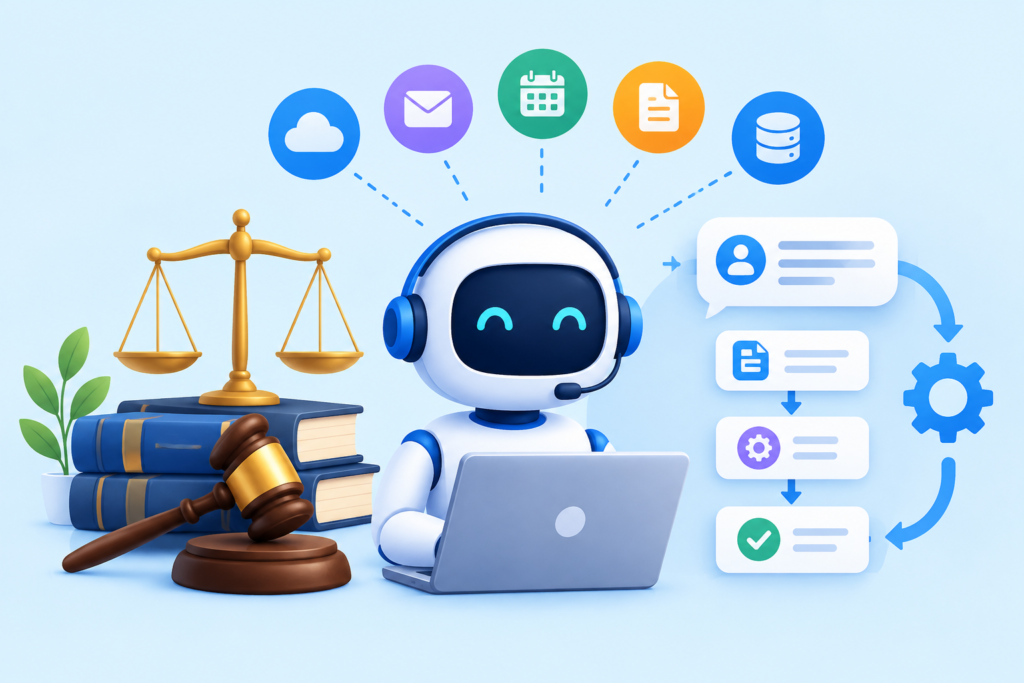
A Legal Chatbot becomes significantly more useful when it is connected to the systems that a legal organization already uses. A standalone chatbot can answer questions, but integrations can help transform conversations into practical workflows. Depending on the organization’s technology environment, a chatbot may connect with a customer relationship management system, appointment scheduling platform, email system, help desk, analytics platform, document-management environment, or internal case-intake workflow.
For example, a visitor could begin a conversation by identifying the type of legal assistance they are seeking. After collecting only the information required for the selected workflow, the chatbot could transfer the appropriate information to an intake system. A staff member could then review the inquiry without manually copying information from a website form into another application. Similarly, an appointment workflow could allow an eligible visitor to move from general questions to scheduling without requiring several separate communication steps.
However, integration should never mean unrestricted access. Each connection should have a clearly defined purpose, permissions, authentication controls, and data boundaries. A chatbot that can access a CRM, document system, email account, or internal database needs stronger controls than a simple FAQ assistant. The organization should determine exactly what the chatbot can read, what it can write, and what actions it is allowed to perform.
Automation should also include human checkpoints. For example, the chatbot may collect an initial inquiry, but a member of the legal team may need to review it before a consultation is confirmed or before sensitive information is entered into another system. This approach creates a practical balance between efficiency and professional oversight.
The NIST AI Risk Management Framework provides a useful framework for thinking about AI risk across design, deployment, use, and evaluation. NIST describes the framework as a voluntary resource intended to help organizations manage AI risks and incorporate trustworthiness considerations into AI systems.
A useful integration architecture can therefore follow this sequence:
Website Visitor → Legal Chatbot → Controlled Intake → Validation → Human Review → Approved System → Follow-Up
This approach reduces unnecessary automation while still allowing repetitive administrative work to become more efficient.
Integration planning should also consider failure scenarios. What happens if the CRM is unavailable? What if the scheduling service fails? What if the chatbot sends incomplete information? What happens if a user requests immediate human assistance?
Every important integration should have a fallback process. A legal chatbot should never leave a visitor without a reasonable next step simply because another system becomes temporarily unavailable.
How to Implement a Legal Chatbot Successfully
Successful Legal Chatbot implementation begins before the chatbot is installed. The first step is to define the exact problem the organization wants to solve. A vague objective such as “use AI to improve the website” is difficult to measure and can encourage unnecessary complexity.
A stronger objective might be to reduce repetitive intake questions, improve after-hours communication, make practice-area navigation easier, or organize prospective-client inquiries. Once the objective is defined, the organization can identify which conversations should be automated and which should remain human-led.
The next stage is workflow mapping. Document the existing client journey from the first website visit through intake, consultation scheduling, human review, and follow-up. Identify points where visitors frequently become confused or staff members repeatedly perform the same task. These are potential chatbot opportunities.
The chatbot should then be designed around a controlled scope. Start with a limited collection of use cases rather than attempting to build an all-purpose legal AI assistant immediately. A focused chatbot is easier to test, monitor, update, and secure.
The knowledge base should be prepared before the conversational experience is finalized. Identify approved information sources, review them for accuracy, remove outdated material, and establish ownership for future updates.
Next, define escalation rules. The system should know when to stop automated interaction and guide the user toward a human. Escalation may be appropriate when a user requests individualized legal advice, reports an emergency, asks about a matter outside the chatbot’s approved knowledge, provides sensitive information, challenges an answer, or requests professional review.
Testing should occur before launch. Test ordinary questions, ambiguous questions, unexpected wording, incomplete information, adversarial prompts, sensitive requests, and attempts to make the chatbot ignore its instructions.
Security should be part of implementation rather than an afterthought. The OWASP Top 10 for LLM Applications provides security guidance addressing risks associated with large language model applications. The 2025 OWASP material covers risks and mitigations relevant to generative AI application development, deployment, and management.
A practical implementation roadmap is:
- Define the business objective.
- Identify target users.
- Map current communication workflows.
- Select safe automation opportunities.
- Prepare the approved knowledge base.
- Establish privacy and security requirements.
- Design escalation rules.
- Configure integrations.
- Test conversations extensively.
- Launch gradually.
- Monitor performance.
- Improve the system continuously.
This staged approach makes implementation easier to manage and provides opportunities to correct problems before the chatbot becomes deeply integrated into everyday operations.
Measuring Legal Chatbot Performance
Launching a chatbot is not the final step. Organizations need measurable indicators to determine whether the system is actually helping users and staff.
One important measurement is conversation completion rate. This can show how many visitors reach the intended end of a workflow. However, completion alone does not prove that the experience was successful. A user might complete a form because the system forced them through it while still having an unresolved question.
For this reason, chatbot analytics should combine quantitative and qualitative measurements. Useful metrics may include conversation completion, human escalation rate, appointment requests, qualified inquiries, frequently asked questions, abandonment points, response accuracy, fallback frequency, and user feedback.
The organization should also examine where conversations fail. If many visitors ask the same question that the chatbot cannot answer, that may indicate a knowledge-base gap. If users repeatedly abandon the conversation at the same step, the workflow may be asking for too much information or using confusing language.
Another valuable metric is human handoff quality. The goal should not necessarily be to minimize the number of human interactions. Some legal matters appropriately require human involvement. Instead, organizations can evaluate whether the chatbot transfers conversations with enough useful context for staff to continue efficiently.
Accuracy should receive special attention. A chatbot that produces a high number of completed conversations but gives unreliable information should not be considered successful.
NIST’s AI risk-management guidance emphasizes trustworthy characteristics such as validity and reliability, safety, security, accountability, transparency, explainability, privacy, and fairness. These principles provide useful categories for evaluating more than just marketing or conversion metrics.
A legal chatbot performance dashboard might therefore track:
| Metric | What It Can Indicate |
|---|---|
| Conversation completion | Whether users reach the end of intended workflows |
| Human escalation | Where professional assistance is needed |
| Abandonment rate | Where users leave the conversation |
| Fallback rate | Where the knowledge base may be insufficient |
| Intake quality | Whether collected information is useful |
| Appointment requests | Whether the chatbot supports scheduling |
| User feedback | Whether visitors find interactions useful |
| Accuracy reviews | Whether answers remain reliable |
| Security events | Whether unusual or unsafe behavior occurs |
| Knowledge-base gaps | Which topics require better coverage |
These measurements should be reviewed regularly rather than only after a major problem.
A useful improvement cycle is simple:
Measure → Review → Identify Problem → Update → Test → Deploy → Measure Again
This creates continuous improvement without assuming that the original chatbot configuration will remain appropriate forever.
Common Mistakes to Avoid When Implementing a Legal Chatbot
One of the most common mistakes is trying to make the chatbot do everything. A legal chatbot does not need to answer every possible legal question to provide value. Excessive scope can make the system difficult to control and increase the number of situations where it may provide unreliable information.
Another mistake is failing to distinguish general information from individualized legal advice. The chatbot should communicate its role clearly and avoid creating an impression that every response represents a professional legal opinion.
Poor knowledge management is another major problem. Organizations sometimes upload large collections of documents and assume the AI will automatically know which information is current, authoritative, and relevant. Without source governance and content review, the system can produce inconsistent results.
A related mistake is neglecting updates. Practice information, office procedures, staff details, links, consultation policies, and other operational information can change. A chatbot that continues using outdated information can quickly lose usefulness.
Collecting too much personal information is another risk. Intake workflows should be designed around necessity. The fact that a chatbot can ask a question does not mean it should ask it.
Security weaknesses can also create serious problems. Developers should consider prompt manipulation, unauthorized access, insecure integrations, excessive permissions, sensitive-information exposure, and unsafe outputs. The OWASP Top 10 for LLM Applications is a useful security reference for identifying common AI application risks.
Additional mistakes include:
- Hiding the fact that the visitor is communicating with AI.
- Providing no clear human escalation option.
- Using overly technical language.
- Making unsupported promises about outcomes.
- Allowing unrestricted access to internal systems.
- Failing to test unusual questions.
- Ignoring accessibility.
- Treating analytics as more important than accuracy.
- Launching without a privacy review.
- Failing to assign responsibility for chatbot updates.
- Assuming fluent responses are automatically correct.
- Keeping outdated knowledge sources active.
- Forgetting to test integrations after system changes.
Another common mistake is measuring the wrong outcome. A high conversation volume may look impressive, but volume alone does not demonstrate value. If users leave confused or staff receive poor-quality inquiries, the chatbot may be creating additional work.
The better approach is to evaluate whether the system makes a specific communication process clearer, safer, faster, and easier to manage.
Best Practices for a High-Quality Legal Chatbot
A high-quality Legal Chatbot should be designed around several principles that work together. The first is purposeful automation. Every automated feature should have a reason to exist and a clearly defined boundary.
The second is authoritative information. The chatbot should rely on sources that the organization has reviewed and approved. When information is uncertain or unavailable, the system should acknowledge the limitation rather than inventing an answer.
The third is human oversight. Legal organizations should identify which conversations require professional review and create a reliable escalation process. Human involvement is not a failure of automation. It is an important part of responsible legal technology.
The fourth is transparency. Visitors should understand that they are interacting with an automated system and should receive clear information about its limitations. The chatbot should not make claims about having performed actions or received human review when that has not occurred.
The fifth is privacy-by-design. Data collection, storage, access, retention, and third-party processing should be evaluated before launch. Sensitive information should not be collected merely because the chatbot has the technical capability to request it.
Security should also be incorporated throughout the lifecycle. CISA and the UK’s National Cyber Security Centre have published Guidelines for Secure AI System Development, emphasizing secure-by-design principles for AI systems.
A strong legal chatbot should also follow a consistent content style. Responses should be concise enough to understand but detailed enough to answer the question. Long paragraphs filled with legal terminology can make conversations harder to use.
Consider using a layered response structure:
Direct Answer → Important Limitation → Suggested Next Step
For example, when answering a general informational question, the chatbot can provide a short explanation, clarify that individual circumstances may differ, and then direct the user toward an appropriate human or approved resource.
Additional best practices include:
- Keep important answers current.
- Use plain English.
- Clearly identify automated interactions.
- Provide human escalation.
- Limit sensitive-data collection.
- Test accuracy regularly.
- Monitor hallucination and fallback patterns.
- Review chatbot logs appropriately.
- Maintain source ownership.
- Document major system changes.
- Test third-party integrations.
- Apply least-privilege access.
- Review security controls periodically.
- Make the experience accessible.
- Give users clear next steps.
These practices help create a system that supports legal communication without pretending that automation eliminates the need for professional judgment.
Future Trends in Legal Chatbot Technology
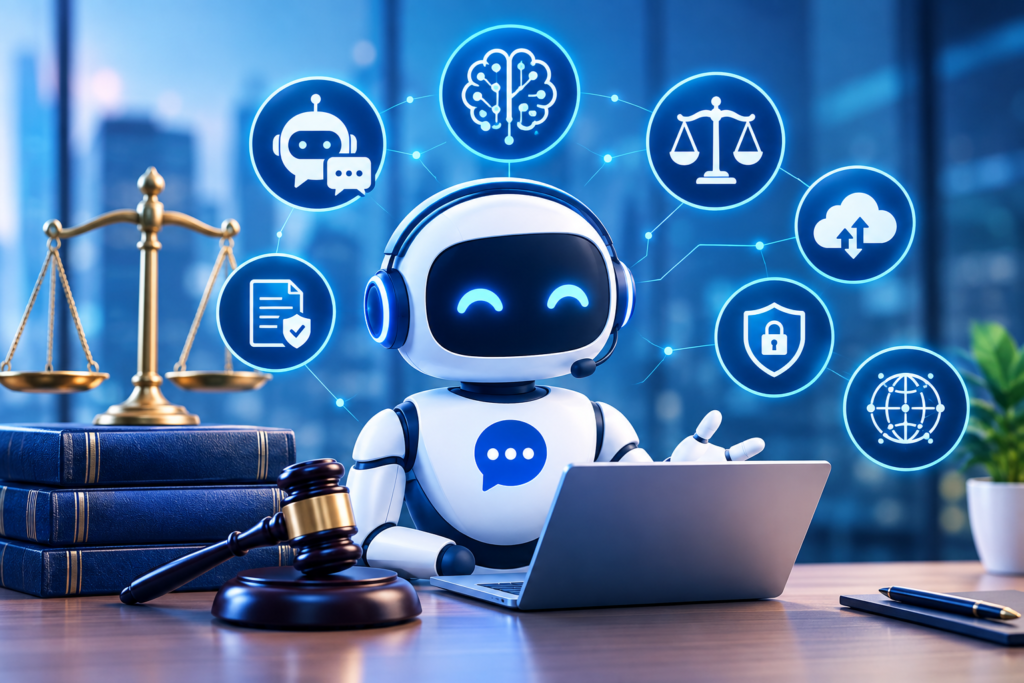
Legal chatbot technology is likely to become increasingly connected with broader AI and legal-technology workflows. Future systems may move beyond simple website conversations and become interfaces that coordinate several stages of digital communication.
One potential direction is more sophisticated multichannel communication. Instead of limiting the chatbot to a website, organizations may connect conversational experiences across approved communication channels while maintaining centralized governance and consistent information.
Another area is improved retrieval-based systems. Instead of generating responses from broad model knowledge, systems can increasingly be designed to retrieve information from controlled sources before responding. This approach can make it easier to establish where important information originates and can reduce dependence on unsupported model-generated claims.
Document interaction is another developing area. AI systems can increasingly assist with document classification, summarization, extraction, and workflow routing. However, legal organizations will still need to consider confidentiality, accuracy, professional responsibilities, and human review before using these capabilities for consequential work.
AI evaluation is also becoming more important. Organizations will need stronger methods for testing chatbot behavior before and after deployment. Testing can include accuracy assessments, adversarial testing, privacy checks, security reviews, and scenario-based evaluations.
NIST’s Generative AI Profile was developed as a companion resource to the AI Risk Management Framework and focuses on risks associated with generative AI.
Another likely development is greater emphasis on governance. As AI systems become more capable, organizations will need clear policies covering approved use cases, data handling, access, monitoring, vendor management, incident response, and human oversight.
The future of legal chatbots should therefore not be viewed simply as a race toward more advanced AI. The more important question is how effectively organizations can combine AI capabilities with reliable information, security controls, professional oversight, and responsible workflows.
Technology may become more conversational, contextual, and integrated, but the fundamental requirements remain the same: users need accurate information, clear boundaries, privacy protections, and appropriate access to human professionals.
Best Practices Summary
Implementing a Legal Chatbot successfully requires more than adding an AI widget to a website. The system should be treated as part of the organization’s communication infrastructure and governed accordingly.
Start with a clearly defined purpose. Decide whether the chatbot is primarily intended for FAQs, client intake, appointment scheduling, practice-area navigation, administrative support, or another specific workflow. Avoid expanding the scope before the original workflow is reliable.
Use a controlled knowledge base. Information should be reviewed, assigned to an owner, versioned where appropriate, and updated when policies or source material change.
Design for human involvement. A chatbot should have clear escalation rules for situations requiring legal judgment, professional review, sensitive handling, or additional information.
Protect information from the beginning. Minimize unnecessary data collection, control access, review third-party providers, secure integrations, and establish appropriate retention procedures.
Test the system continuously. Testing should cover normal conversations as well as ambiguous, unexpected, adversarial, and sensitive requests. AI systems can behave differently depending on phrasing and context, so a single successful test is not enough.
The NIST AI Risk Management Framework organizes AI risk management around the functions Govern, Map, Measure, and Manage, providing a useful structure for organizations developing their own governance processes.
A concise implementation checklist is:
Strategy
- Define the chatbot’s purpose.
- Identify target users.
- Establish measurable objectives.
Content
- Build an approved knowledge base.
- Assign content ownership.
- Schedule regular reviews.
Conversation
- Use plain English.
- Clearly identify automation.
- Provide useful next steps.
- Create human escalation paths.
Privacy
- Minimize sensitive data collection.
- Explain relevant data practices.
- Control access and retention.
Security
- Protect APIs and integrations.
- Apply least-privilege access.
- Test for AI-specific threats.
- Monitor unusual behavior.
Governance
- Define responsibilities.
- Document approved use cases.
- Review vendors and third parties.
- Maintain change records.
Performance
- Track meaningful metrics.
- Review failed conversations.
- Monitor accuracy.
- Improve the knowledge base.
The central principle is simple: automate appropriate communication while keeping accuracy, privacy, security, transparency, and human judgment at the center of the experience.
Frequently Asked Questions
What is a Legal Chatbot used for?
A Legal Chatbot can support general information, website navigation, client intake, appointment requests, practice-area routing, frequently asked questions, administrative communication, and other structured workflows. Its exact capabilities depend on how the organization configures the system.
A chatbot should not automatically be treated as a substitute for a qualified legal professional. Its role should be clearly defined, and users should have a way to reach appropriate human assistance when a question requires professional judgment.
Can a Legal Chatbot provide legal advice?
A chatbot may provide general legal information when appropriately designed, but organizations should carefully distinguish general information from individualized legal advice. Whether a particular activity is permissible can depend on the jurisdiction, professional rules, facts, and implementation.
For legal organizations, the safest design approach is to establish clear boundaries around what the chatbot can and cannot address and create human escalation for matters requiring professional review.
Can a Legal Chatbot collect client information?
Yes, a chatbot can be configured to collect appropriate intake information. However, organizations should determine what information is necessary before asking users to provide it.
Sensitive information should not be collected simply because the system can technically accept it. Data handling, access, retention, security, and third-party processing should be considered before deployment.
How does a Legal Chatbot improve client intake?
A chatbot can turn a long generic intake form into a conversational process. It can ask one question at a time, identify the relevant practice area, collect selected information, and route the inquiry according to predefined rules.
This can make the initial experience easier to navigate and can provide staff with more structured information. Human review should remain available when the matter requires professional judgment.
Is a Legal Chatbot secure?
Security depends on how the chatbot is designed, configured, integrated, and maintained. Important considerations include authentication, authorization, encryption, access controls, API security, vendor risk, data retention, monitoring, and AI-specific threats.
Organizations should conduct security testing and regularly review the system rather than assuming that a chatbot is secure simply because it uses a reputable platform.
Can a Legal Chatbot schedule consultations?
Yes. A chatbot can potentially connect users to an approved scheduling workflow. It may ask preliminary questions before directing an eligible visitor toward appointment scheduling.
The organization should determine when scheduling can occur automatically and when human review is required.
Should a Legal Chatbot replace a law firm’s staff?
A chatbot is generally better positioned as a support tool for repetitive communication and structured workflows than as a replacement for professional legal judgment.
Human staff remain important for complex questions, sensitive matters, professional decisions, exceptions, and situations where the chatbot cannot confidently provide appropriate information.
How often should a Legal Chatbot be updated?
There is no universal update schedule because the appropriate frequency depends on the information being provided. Operational information should be updated whenever it changes, while legal and regulatory information may require more frequent review depending on jurisdiction and subject matter.
A responsible organization should assign content ownership and establish a process for identifying outdated information.
How can a law firm measure chatbot success?
Useful measurements can include conversation completion, qualified inquiries, appointment requests, human escalation, abandonment points, fallback frequency, user feedback, response accuracy, and knowledge-base gaps.
The organization should evaluate whether the chatbot improves the intended workflow rather than relying only on traffic or conversation volume.
What should happen when a chatbot does not know the answer?
The chatbot should not invent an answer. It should clearly acknowledge the limitation and provide an appropriate next step, such as directing the user to an approved resource or connecting them with a human representative.
This ability to recognize uncertainty is an important part of responsible conversational design.
Conclusion
A Legal Chatbot can become a useful part of modern legal communication when it is designed around real user needs rather than automation for its own sake. It can support client intake, answer approved general questions, guide website visitors, organize inquiries, assist with scheduling, and reduce repetitive administrative communication.
The strongest implementations combine technology with careful governance. Reliable knowledge sources, privacy protections, security controls, human oversight, clear escalation rules, transparent communication, and continuous testing should all be considered part of the chatbot strategy.
For organizations evaluating AI, the goal should not simply be to create a chatbot that can produce impressive answers. The goal should be to create a system that provides useful, controlled, understandable, and responsible communication while recognizing where human legal expertise remains essential.
A carefully planned Legal Chatbot can therefore become one component of a broader digital client-experience strategy. Its value comes from solving clearly defined communication problems while maintaining the standards of accuracy, confidentiality, security, transparency, and professional responsibility expected in legal environments.
Want to Implement This Easily?
Prompt Text:
You are an expert consultant. Based on the blog post titled “Legal Chatbot”, provide a step-by-step, practical implementation guide. Include tools, best practices, common mistakes to avoid, and advanced tips. Assume the reader wants to implement everything discussed in this article effectively.
Call to Action:
Want our help implementing this? Just reach out to us via our website contact form: website contact form