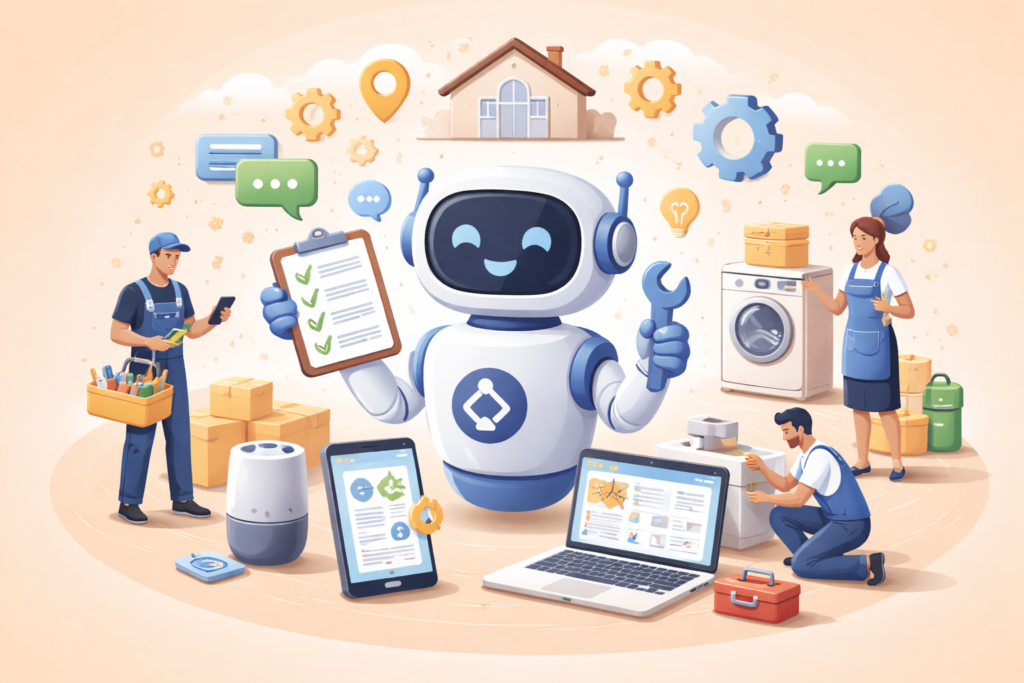
Home Service Chatbot solutions help automate bookings, customer support, technician scheduling, and lead generation for home service businesses. Discover how AI-powered chatbots transform HVAC, plumbing, cleaning, and repair services with improved efficiency and customer satisfaction.
Introduction: The Growing Demand for Home Service Chatbot Solutions
In today’s fast-moving digital landscape, home service businesses face increasing pressure to deliver faster responses, seamless booking experiences, and round-the-clock customer support. Customers now expect instant communication, quick appointment scheduling, and reliable service updates without waiting on hold or sending multiple emails. This shift has made Home Service Chatbot technology an essential tool rather than a luxury. Businesses that fail to adapt to conversational automation risk losing potential leads to competitors who provide faster, more convenient customer interactions.
A Home Service Chatbot is an AI-powered conversational assistant designed to handle customer inquiries, book appointments, dispatch technicians, provide service estimates, and deliver support automatically. From HVAC and plumbing companies to cleaning services and electrical repair providers, chatbots simplify operations while improving customer engagement. When implemented correctly, these intelligent systems not only reduce operational costs but also increase conversion rates by responding instantly to customer requests at any hour of the day.
At EngagerBot, businesses are increasingly adopting conversational AI to streamline operations and enhance service delivery. As customer expectations evolve, integrating automation tools such as chatbots becomes critical for maintaining competitiveness in the home services industry. This guide explores the full potential of Home Service Chatbot solutions, including implementation strategies, real-world use cases, benefits, and best practices for achieving long-term business success.
What Is a Home Service Chatbot and How Does It Work?
A Home Service Chatbot is an intelligent conversational system designed specifically for businesses offering residential services such as plumbing, electrical repair, HVAC maintenance, pest control, landscaping, and cleaning. Unlike generic customer support bots, these specialized chatbots are trained to handle service-specific workflows such as scheduling appointments, gathering service details, and managing customer requests. By leveraging Artificial Intelligence (AI) and Natural Language Processing (NLP) technologies, chatbots interpret user queries and provide accurate responses in real time.
The core functionality of a home service chatbot involves collecting customer information, understanding service requirements, and guiding users through booking or inquiry processes. For example, a customer needing emergency plumbing support can interact with the chatbot to describe the issue, select a preferred time slot, and receive confirmation instantly. These chatbots integrate with scheduling systems, CRM tools, and dispatch platforms, enabling seamless coordination between customers and technicians. This integration ensures that no service requests are missed and reduces dependency on manual communication.
Another important aspect of chatbot functionality is continuous learning and optimization. Modern chatbot platforms use machine learning algorithms to improve response accuracy over time. As more interactions occur, the chatbot becomes smarter, recognizing patterns in customer behavior and improving recommendations. Businesses that implement well-designed chatbots often see measurable improvements in response speed, customer satisfaction, and operational efficiency, making them a valuable asset in competitive service industries.
Why Home Service Businesses Need Chatbots in the Modern Digital Era
Customer expectations have changed dramatically in recent years, especially with the rise of instant messaging platforms and mobile-first interactions. Today’s customers prefer quick responses rather than waiting for email replies or phone callbacks. A Home Service Chatbot bridges this expectation gap by offering instant, automated assistance 24/7. Whether customers want to book a service, check availability, or request pricing, chatbots provide immediate answers without delays, enhancing customer trust and satisfaction.
Another major reason home service businesses adopt chatbots is the increasing demand for operational efficiency. Manual scheduling, customer follow-ups, and support inquiries consume valuable time and resources. Chatbots automate repetitive tasks such as confirming appointments, sending reminders, and collecting feedback. This automation allows business owners and staff to focus on delivering high-quality service instead of managing routine administrative duties. Over time, this leads to reduced labor costs and improved productivity.
Furthermore, the competitive nature of the home service industry makes customer experience a key differentiator. Businesses that respond faster and provide convenient digital interactions stand out in crowded markets. Chatbots ensure that customers receive consistent, accurate information at every stage of their service journey. This consistency improves brand reliability and encourages repeat business, making chatbot technology an essential investment for modern home service providers.
Key Features Every High-Performing Home Service Chatbot Should Include
A successful Home Service Chatbot must include features that address the unique operational needs of service-based businesses. One of the most essential features is automated appointment scheduling. This capability allows customers to select available time slots, book services instantly, and receive confirmation without manual intervention. Scheduling automation reduces booking errors and ensures efficient resource allocation for technicians.
Another critical feature is real-time customer support automation. Home service businesses often receive recurring inquiries such as pricing details, service availability, and warranty information. Chatbots can answer these frequently asked questions instantly, reducing the burden on support teams. Additionally, advanced chatbots can escalate complex inquiries to human agents when necessary, ensuring that customers receive appropriate assistance without delays.
Integration capabilities are also vital for chatbot success. A robust chatbot should connect seamlessly with CRM systems, payment gateways, and service management tools. These integrations enable automated workflows such as generating invoices, sending payment links, and updating service records. By connecting various business tools into one automated ecosystem, chatbots create a streamlined customer experience while minimizing manual work.
How AI and Machine Learning Enhance Home Service Chatbot Performance
Artificial Intelligence plays a central role in transforming simple chatbots into advanced conversational assistants. AI-powered Natural Language Processing (NLP) allows chatbots to understand customer intent even when queries are written in informal language. For example, a customer might type “My AC isn’t cooling properly,” and the chatbot can interpret the issue as an HVAC repair request. This intelligent interpretation improves communication accuracy and ensures relevant responses.
Machine learning further enhances chatbot capabilities by enabling adaptive learning from previous interactions. Each customer conversation contributes valuable data that helps the chatbot refine its responses. Over time, the system becomes more accurate in predicting customer needs, offering personalized recommendations, and identifying common service patterns. This continuous improvement reduces misunderstandings and enhances the overall customer experience.
Another important benefit of AI-driven chatbots is predictive analytics. These tools analyze historical data to anticipate customer behavior and optimize scheduling strategies. For instance, if demand for plumbing services increases during certain seasons, the chatbot can suggest proactive maintenance reminders. This predictive capability helps businesses plan resources effectively and improve service delivery efficiency.
Benefits of Using a Home Service Chatbot for Customer Engagement
Customer engagement is one of the most significant advantages of implementing a Home Service Chatbot. Unlike traditional communication channels that operate within limited hours, chatbots provide continuous interaction availability. Customers can ask questions, book services, or request support at any time, improving convenience and reducing frustration. This availability fosters stronger customer relationships and increases overall satisfaction.
Another major benefit is improved lead conversion rates. When potential customers visit a website, they often leave if they cannot find answers quickly. Chatbots capture these opportunities by initiating conversations, guiding visitors through services, and encouraging bookings. This proactive engagement reduces bounce rates and increases the likelihood of converting visitors into paying customers.
Chatbots also contribute to personalized communication experiences. By analyzing customer data and interaction history, chatbots deliver tailored recommendations based on previous services. For example, a customer who previously scheduled HVAC maintenance might receive reminders for seasonal inspections. Personalized engagement enhances customer loyalty and increases the chances of repeat business, making chatbots a powerful tool for long-term growth.
Automating Appointment Scheduling and Service Booking
Appointment scheduling is one of the most time-consuming tasks in home service operations. A Home Service Chatbot simplifies this process by offering automated booking features that allow customers to schedule services instantly. Instead of calling or emailing, customers can interact with the chatbot to select available time slots that match their preferences. This automation reduces scheduling conflicts and improves workflow efficiency.
Another advantage of automated scheduling is the ability to send real-time notifications and reminders. Once a booking is confirmed, the chatbot can send confirmation messages, reminders before appointments, and updates about technician arrival times. These automated notifications reduce missed appointments and improve customer reliability, which ultimately enhances service efficiency.
Additionally, automated booking systems support integration with calendar and dispatch management tools. This integration ensures that technician schedules are updated automatically whenever a new appointment is created. Businesses can optimize technician routes and allocate resources more effectively, resulting in faster response times and improved customer satisfaction.
Using Chatbots for Lead Generation in Home Service Businesses
Lead generation is a critical aspect of business growth, and Home Service Chatbots play a vital role in capturing new customer inquiries. When visitors land on a website, chatbots initiate conversations by asking relevant questions about service needs. These interactions help businesses identify potential customers and gather essential information such as location, service type, and preferred scheduling times.
Chatbots also qualify leads automatically by analyzing user responses. Instead of manually reviewing inquiries, businesses receive organized lead data that highlights high-priority prospects. This qualification process saves time and ensures that sales teams focus on customers who are more likely to convert into paying clients.
Another powerful feature of chatbot-driven lead generation is the ability to collect customer contact details and follow up automatically. After an interaction, the chatbot can send confirmation messages, promotional offers, or service reminders. These automated follow-ups maintain customer engagement and increase the likelihood of securing bookings, making chatbots an effective tool for expanding customer bases.
Improving Customer Support with 24/7 Home Service Chatbot Assistance
Customer support is a cornerstone of successful home service businesses. A Home Service Chatbot enhances support quality by providing immediate responses to customer inquiries at any time of day. This round-the-clock availability eliminates waiting times and ensures that customers receive timely assistance regardless of business hours.
Chatbots excel at handling frequently asked questions such as service pricing, warranty policies, and service availability. By automating responses to common inquiries, businesses reduce support workload and improve response accuracy. Customers benefit from consistent information delivery, which enhances trust and reduces confusion during the service process.
Another advantage of chatbot-based support is the ability to escalate complex issues to human agents when necessary. While chatbots handle routine tasks efficiently, they can transfer advanced queries to trained professionals for resolution. This hybrid approach combines automation efficiency with human expertise, ensuring high-quality customer service across all interaction scenarios.
Integrating Home Service Chatbots with CRM and Dispatch Systems
Integration is one of the most critical components of a successful Home Service Chatbot implementation. Without proper integration, chatbots function as standalone tools rather than becoming part of a fully automated operational ecosystem. When integrated with Customer Relationship Management (CRM) systems, chatbots automatically capture customer information, service history, and communication records. This centralized data storage enables businesses to maintain consistent communication and deliver personalized experiences across every interaction.
CRM integration also improves lead tracking and customer lifecycle management. Each interaction handled by the chatbot is recorded and categorized, allowing businesses to analyze patterns such as repeat service requests, seasonal demand, and customer preferences. These insights help businesses refine marketing campaigns and create targeted outreach strategies. For example, a plumbing service company can identify customers who frequently require maintenance and proactively send reminders before issues escalate.
Dispatch system integration further enhances operational efficiency by aligning customer requests with technician availability. Once a customer books a service, the chatbot sends real-time updates to dispatch systems, ensuring technicians receive accurate job details instantly. This automated workflow eliminates manual scheduling errors, reduces communication delays, and improves overall service coordination. Businesses that integrate chatbots with CRM and dispatch tools experience smoother operations, faster response times, and improved customer satisfaction.
Enhancing Technician Productivity Through Intelligent Workflow Automation
Technician productivity plays a major role in determining the profitability of home service businesses. A well-configured Home Service Chatbot enhances productivity by automating workflow management tasks that typically consume significant time. These include assigning tasks, providing job details, sending updates, and tracking service progress. By reducing administrative burdens, technicians can focus more on delivering quality services rather than managing paperwork or communication tasks.
Workflow automation also improves technician preparedness. Before arriving at a customer location, technicians receive complete service details collected by the chatbot, including customer concerns, property information, and required equipment. This level of preparedness reduces on-site delays and ensures technicians carry the right tools for the job. As a result, service completion times decrease, allowing businesses to handle more appointments within the same timeframe.
Another significant benefit is performance tracking and accountability. Automated workflows generate detailed reports on technician activities, response times, and service completion rates. These analytics enable managers to identify areas for improvement and provide targeted training where needed. Over time, businesses experience increased operational efficiency, higher service quality, and improved employee satisfaction due to streamlined processes.
Personalization Strategies for Delivering Superior Customer Experiences
Personalization has become a defining factor in modern customer service, and Home Service Chatbots excel at delivering customized interactions. By analyzing historical data, chatbots can tailor responses to match individual customer preferences and service history. For example, if a customer frequently schedules HVAC maintenance during summer, the chatbot can send proactive reminders ahead of peak seasons. This predictive communication builds trust and strengthens customer relationships.
Advanced personalization involves using contextual data such as location, service frequency, and past feedback. When customers interact with the chatbot, the system recognizes returning users and adjusts recommendations accordingly. Instead of repeating generic responses, the chatbot delivers relevant suggestions, such as recommending maintenance packages or upgrades. This approach creates a seamless customer journey and increases customer satisfaction.
Personalization also contributes to higher customer retention rates. Customers appreciate businesses that remember their preferences and anticipate their needs. Automated follow-ups, loyalty rewards, and service reminders delivered through chatbots encourage repeat business and strengthen brand loyalty. Over time, personalized chatbot interactions become a powerful tool for building long-term customer relationships and increasing lifetime customer value.
Ensuring Data Security and Compliance in Home Service Chatbot Systems
Data security is a fundamental requirement for any digital solution, especially those handling customer information. A Home Service Chatbot collects sensitive data such as addresses, contact details, and payment information, making security measures essential. Businesses must implement encryption protocols to protect data during transmission and storage. Encryption ensures that unauthorized parties cannot access customer information, safeguarding both business and customer interests.
Compliance with data protection regulations is another important aspect of chatbot implementation. Businesses must follow regional and international guidelines related to privacy and data handling. This includes obtaining customer consent before collecting data and providing transparency about how information is used. Adhering to recognized standards improves trustworthiness and ensures businesses operate within legal boundaries.
Regular system audits and updates also play a crucial role in maintaining security. Cyber threats evolve constantly, and outdated systems are more vulnerable to attacks. Routine vulnerability assessments and software updates help identify weaknesses and prevent potential breaches. Businesses that prioritize security not only protect customer data but also enhance brand credibility and customer confidence.
Optimizing Chatbot Performance with Analytics and Continuous Improvement
Performance optimization is an ongoing process that ensures a Home Service Chatbot delivers consistent results. Analytics tools provide valuable insights into chatbot performance by tracking metrics such as response times, user engagement, and conversion rates. By analyzing these metrics, businesses can identify areas where improvements are needed and implement necessary adjustments.
Continuous improvement involves refining conversation flows based on real customer interactions. For example, if users frequently abandon booking processes at a specific step, businesses can simplify the workflow to improve completion rates. This iterative process enhances user experience and ensures the chatbot remains efficient and user-friendly.
Another important factor is testing chatbot functionality regularly. A/B testing allows businesses to compare different conversation styles, response formats, and feature implementations. By evaluating which versions perform better, companies can make data-driven decisions that enhance chatbot effectiveness. Continuous optimization ensures long-term performance improvements and maximizes return on investment.
Multi-Channel Deployment for Maximum Customer Reach
Modern customers interact with businesses across multiple platforms, making multi-channel deployment essential for maximizing chatbot effectiveness. A Home Service Chatbot should be available across websites, mobile applications, and messaging platforms. This accessibility ensures customers can interact with the business through their preferred communication channels, improving convenience and engagement.
Multi-channel deployment also improves brand consistency. Customers receive the same level of service regardless of the platform they use. Whether interacting through a website or messaging application, the chatbot provides accurate information and consistent responses. This uniform experience strengthens brand reliability and enhances customer trust.
Another advantage of multi-channel availability is increased lead generation opportunities. Customers who prefer messaging platforms are more likely to engage with businesses offering chatbot support on those channels. By expanding chatbot accessibility, businesses capture a wider audience and improve customer acquisition rates. This strategy supports long-term growth and market competitiveness.
Future Trends Shaping the Evolution of Home Service Chatbots
The future of Home Service Chatbots is driven by advancements in artificial intelligence, automation, and data analytics. One emerging trend is the integration of voice-enabled chatbots that allow customers to interact using voice commands. Voice technology enhances accessibility and simplifies communication, especially for customers who prefer hands-free interactions.
Another trend involves predictive maintenance and automated diagnostics. AI-powered chatbots can analyze historical service data and identify patterns indicating potential equipment failures. By sending proactive alerts and maintenance reminders, businesses can prevent costly breakdowns and improve customer satisfaction. This proactive approach positions chatbots as valuable tools for preventive service management.
Additionally, the integration of Internet of Things (IoT) devices is transforming chatbot capabilities. Smart home devices can communicate directly with chatbots, enabling automated service requests based on device performance data. For example, an HVAC system detecting unusual performance can trigger a maintenance request automatically. These innovations demonstrate how chatbot technology continues to evolve, offering new opportunities for efficiency and customer engagement.
Common Mistakes to Avoid When Implementing a Home Service Chatbot
One of the most common mistakes businesses make is deploying chatbots without clearly defining objectives. Without specific goals, chatbots may fail to deliver meaningful results. Businesses should identify key performance indicators such as lead conversion rates, response times, and customer satisfaction metrics before launching chatbot systems. This clarity ensures that chatbot functionality aligns with business priorities.
Another frequent error is neglecting user experience design. Chatbots with complicated conversation flows or unclear instructions can frustrate users. Businesses should focus on creating intuitive interactions that guide customers smoothly through booking and inquiry processes. Testing chatbot usability before deployment helps identify and resolve potential issues.
Failing to update chatbot content regularly is another major mistake. Customer needs evolve over time, and outdated responses reduce chatbot effectiveness. Businesses must continuously review chatbot scripts, update service information, and refine workflows based on user feedback. Regular maintenance ensures the chatbot remains accurate, reliable, and valuable to customers.
Best Practices Summary for Successful Home Service Chatbot Deployment
Successful deployment begins with selecting a chatbot platform that supports scalability and integration. Businesses should choose solutions that connect seamlessly with existing tools such as CRM systems, scheduling software, and payment gateways. This integration ensures a unified workflow that improves operational efficiency and reduces manual intervention.
Another best practice is designing chatbot conversations that mimic natural human interactions. Instead of relying on rigid scripts, businesses should incorporate conversational language that feels engaging and helpful. Clear prompts, quick response options, and structured workflows improve user experience and encourage customer participation.
Regular performance monitoring and updates are also essential. Businesses should analyze chatbot metrics regularly to identify improvement opportunities. Continuous refinement ensures the chatbot remains aligned with customer expectations and business objectives. By following these best practices, businesses can maximize the value of chatbot technology and achieve sustainable growth.
FAQs
1. What industries benefit most from Home Service Chatbots?
Industries such as plumbing, HVAC, electrical services, cleaning, pest control, landscaping, and appliance repair benefit significantly from chatbot implementation. These businesses rely heavily on customer communication and scheduling, making automation an ideal solution. Chatbots streamline operations by handling repetitive tasks and improving customer interactions.
2. Can a Home Service Chatbot replace human customer support?
Chatbots are designed to assist rather than replace human agents. They handle routine inquiries and automate repetitive tasks, allowing human staff to focus on complex customer issues. This hybrid approach improves efficiency while maintaining personalized customer service.
3. How long does it take to implement a Home Service Chatbot?
Implementation timelines vary depending on business requirements and integration complexity. Basic chatbot setups may take a few weeks, while advanced systems involving multiple integrations may require several months. Proper planning ensures smooth deployment and long-term success.
4. Are chatbots suitable for small home service businesses?
Yes, chatbots are highly beneficial for small businesses. They reduce operational costs, improve customer response times, and enhance lead management capabilities. Even businesses with limited staff can deliver professional customer service using chatbot technology.
5. How do chatbots improve customer satisfaction?
Chatbots provide instant responses, accurate information, and convenient booking options. These features eliminate waiting times and reduce communication barriers, leading to improved customer experiences and higher satisfaction levels.
6. What security measures are required for chatbot systems?
Security measures include encryption protocols, secure authentication methods, and regular system updates. Businesses must also follow data protection guidelines and ensure customer information is stored safely.
7. Can chatbots handle payment processing?
Yes, advanced chatbots integrate with secure payment gateways, allowing customers to complete transactions directly through chat interfaces. This feature simplifies payment processes and improves customer convenience.
8. How can businesses measure chatbot success?
Success metrics include response times, booking rates, customer engagement levels, and conversion rates. Monitoring these metrics helps businesses evaluate chatbot performance and make necessary improvements.
Conclusion: Transforming Home Service Businesses with Smart Chatbot Technology
The adoption of Home Service Chatbot technology represents a significant shift toward smarter, more efficient business operations. By automating customer communication, scheduling, and workflow management, chatbots help businesses deliver faster and more reliable services. These solutions not only reduce operational costs but also improve customer satisfaction by providing consistent, high-quality support across every interaction.
Businesses that invest in chatbot technology position themselves for long-term growth and competitiveness. From personalized communication to predictive service management, chatbots create opportunities for innovation and efficiency. As digital transformation continues to reshape the home services industry, adopting intelligent automation tools becomes essential for staying ahead of market demands.
At EngagerBot, businesses can explore advanced chatbot solutions designed to enhance customer engagement and operational performance. By implementing the strategies outlined in this guide, companies can build scalable, secure, and highly effective chatbot systems that drive measurable results and sustainable success.
Want to Implement This Easily?
Prompt Text:
You are an expert consultant. Based on the blog post titled “Home Service Chatbot”, provide a step-by-step, practical implementation guide. Include tools, best practices, common mistakes to avoid, and advanced tips. Assume the reader wants to implement everything discussed in this article effectively.
Call to Action:
Want our help implementing this? Just reach out to us via our website contact form:
https://www.engagerbot.com/contact-us/