
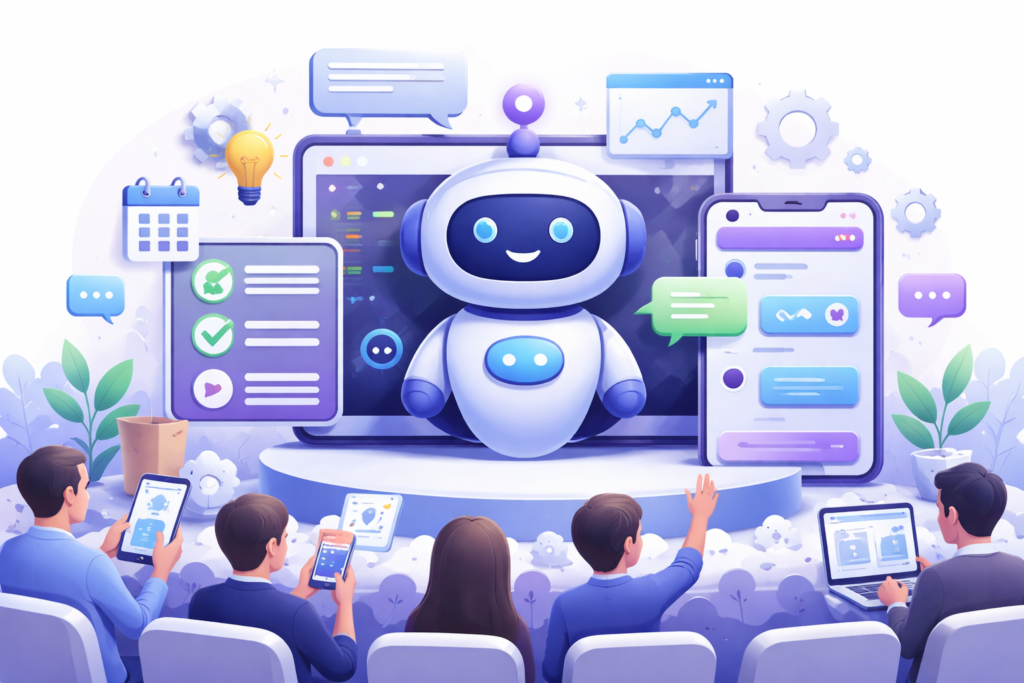
Events & Conferences Chatbots: Discover how AI-powered chatbots transform event management, boost attendee engagement, automate operations, and maximize ROI for conferences and corporate events.
Introduction
The events and conferences industry has undergone a massive transformation in recent years, driven by digital innovation and rising attendee expectations. Whether it’s corporate summits, trade shows, webinars, or hybrid events, organizers are under increasing pressure to deliver seamless, personalized, and engaging experiences. This is where AI-powered chatbots are making a powerful impact.
On platforms like Engagerbot, chatbot technology is being used to streamline event operations, improve communication, and create memorable attendee journeys. From instant responses to attendee queries to real-time schedule updates, chatbots are reshaping how events are planned and executed.
In this comprehensive guide, we’ll explore how chatbots are revolutionizing events and conferences, the benefits they bring, implementation strategies, and how you can leverage them to stay ahead in a competitive landscape.
Understanding Events & Conferences in the Digital Era
The modern events landscape is no longer confined to physical venues. With the rise of virtual and hybrid formats, event organizers now need to manage both in-person and online audiences simultaneously. This shift has introduced new complexities, including managing digital platforms, ensuring engagement, and delivering consistent communication.
Today’s attendees expect more than just information—they demand interactive, personalized, and real-time experiences. They want quick answers, easy navigation, and tailored recommendations. Traditional methods like email support or static FAQs are no longer sufficient to meet these expectations.
AI chatbots have emerged as a solution to these challenges. By providing instant, automated responses and intelligent interactions, chatbots bridge the gap between organizers and attendees. They act as virtual assistants, guiding users throughout their event journey—from registration to post-event follow-ups—ensuring a smooth and engaging experience.
What Are Event Chatbots and How Do They Work?
Event chatbots are AI-driven conversational tools designed specifically to assist attendees, exhibitors, and organizers throughout the lifecycle of an event. They can be integrated into websites, mobile apps, messaging platforms, and even event kiosks.
These chatbots use technologies such as Natural Language Processing (NLP) and machine learning to understand user queries and respond intelligently. They can handle a wide range of tasks, including answering FAQs, providing event schedules, recommending sessions, and sending reminders.
The real power of event chatbots lies in their ability to learn and improve over time. As they interact with more users, they gather data and refine their responses, becoming more accurate and helpful. This continuous learning ensures that attendees receive high-quality support without human intervention.
Why Chatbots Are Essential for Modern Events
The demand for efficiency and personalization has made chatbots an essential tool for event success. Organizers are increasingly relying on automation to reduce workload and enhance attendee satisfaction.
One of the key advantages of chatbots is their 24/7 availability. Unlike human support teams, chatbots can provide instant responses at any time, ensuring that attendees never feel ignored or frustrated. This is particularly important for global events where participants may be in different time zones.
Additionally, chatbots help reduce operational costs by automating repetitive tasks. Instead of hiring large support teams, organizers can use chatbots to handle common queries, freeing up human staff to focus on more complex responsibilities.
Enhancing Attendee Engagement with AI Chatbots
Engagement is the cornerstone of any successful event. Without active participation, even the most well-organized event can fall flat. Chatbots play a crucial role in keeping attendees engaged before, during, and after the event.
Before the event, chatbots can send personalized invitations, reminders, and updates. During the event, they can recommend sessions, provide real-time notifications, and facilitate networking opportunities. After the event, they can collect feedback and share additional resources.
Personalization is key here. Chatbots analyze user behavior and preferences to deliver tailored content, making each attendee feel valued. This level of customization significantly improves the overall event experience and increases attendee satisfaction.
Streamlining Event Registration and Ticketing
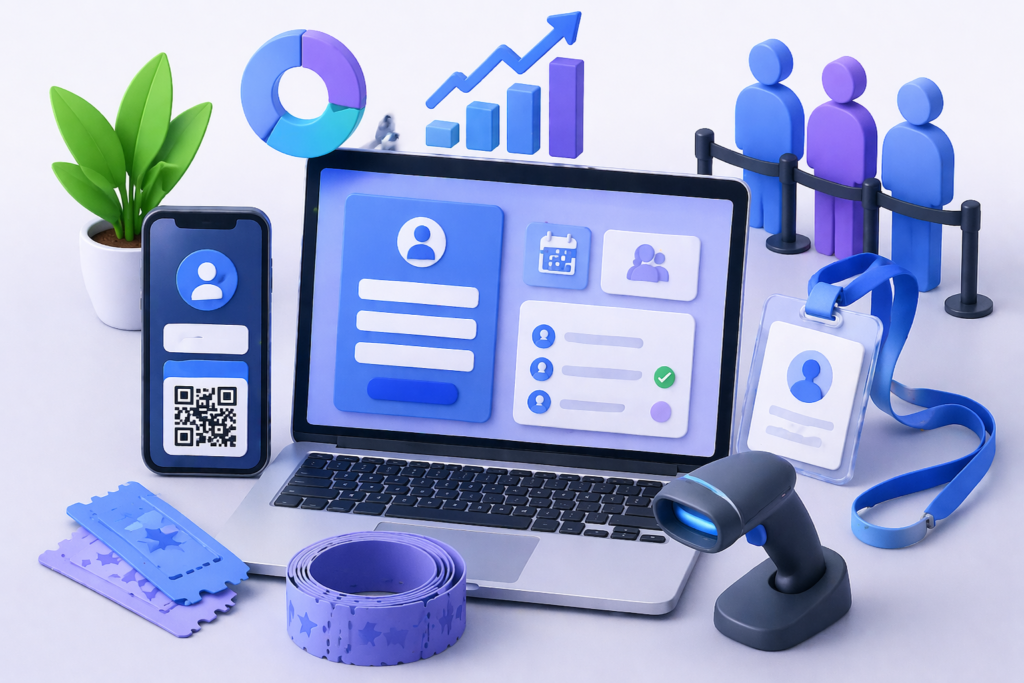
The registration process is often the first interaction attendees have with an event, and it sets the tone for their entire experience. A complicated or time-consuming registration process can lead to drop-offs and lost opportunities.
Chatbots simplify this process by guiding users step-by-step through registration. They can answer questions, provide pricing details, and even assist with payment options. This ensures a smooth and hassle-free experience for attendees.
Moreover, chatbots can handle ticket confirmations, send digital passes, and provide reminders. This reduces the risk of errors and ensures that attendees have all the information they need well in advance.
Real-Time Event Support and Assistance
During an event, attendees often have numerous questions—about schedules, locations, speakers, and more. Providing timely and accurate answers is critical to maintaining a positive experience.
Chatbots act as a centralized support system, offering instant responses to attendee queries. Whether someone needs directions to a session or information about a speaker, the chatbot can provide accurate answers in seconds.
<u>This real-time assistance reduces confusion and enhances the overall event flow.</u> It also minimizes the burden on event staff, allowing them to focus on delivering a high-quality experience rather than answering repetitive questions.
Personalization and Data-Driven Insights
One of the most powerful aspects of chatbots is their ability to collect and analyze data. Every interaction provides valuable insights into attendee behavior, preferences, and interests.
This data can be used to create highly personalized experiences. For example, chatbots can recommend sessions based on an attendee’s interests or suggest networking opportunities with like-minded individuals.
Additionally, organizers can use these insights to improve future events. By understanding what worked and what didn’t, they can make data-driven decisions that enhance overall performance and attendee satisfaction.
Improving Networking Opportunities
Networking is one of the primary reasons people attend events and conferences. However, facilitating meaningful connections can be challenging, especially in large or virtual events.
Chatbots can help by acting as intelligent matchmakers. They can analyze attendee profiles and suggest relevant connections based on shared interests, industries, or goals.
Furthermore, chatbots can schedule meetings, send reminders, and even facilitate introductions. This makes networking more efficient and enjoyable, ensuring that attendees get maximum value from the event.
Boosting Event Marketing and Promotion
Marketing plays a crucial role in the success of any event. Chatbots can significantly enhance marketing efforts by providing personalized and interactive communication.
They can engage potential attendees through websites, social media, and messaging platforms, answering questions and providing information instantly. This helps convert prospects into registered participants.
Chatbots also enable targeted marketing campaigns. By analyzing user data, they can send personalized messages and offers, increasing the likelihood of conversions. This results in higher attendance rates and better ROI for event organizers.
Managing Hybrid and Virtual Events Efficiently
Hybrid and virtual events have become increasingly popular, offering flexibility and accessibility to a global audience. However, managing these events comes with unique challenges.
Chatbots provide a unified solution for both physical and digital attendees. They can assist with platform navigation, provide technical support, and ensure seamless communication across different channels.
<u>This ensures a consistent experience for all participants, regardless of their location.</u> It also helps organizers manage large audiences efficiently, reducing the complexity of hybrid event management.
Enhancing Event Security and Compliance
Security is a critical concern for event organizers, especially when handling sensitive attendee data. Chatbots can play a role in ensuring secure interactions and compliance with data protection regulations.
By integrating with secure systems and following best practices, chatbots can handle user data responsibly. For example, implementing guidelines from Google’s helpful content guidelines ensures that interactions remain user-focused and trustworthy.
Additionally, chatbots can verify attendee identities, manage access control, and provide secure communication channels. This enhances overall event security and builds trust among participants.
Post-Event Engagement and Follow-Ups
The event experience doesn’t end when the event concludes. Post-event engagement is crucial for maintaining relationships and maximizing long-term value.
Chatbots can automate follow-ups, sending thank-you messages, feedback surveys, and additional resources. This helps organizers gather valuable insights and improve future events.
Moreover, chatbots can nurture leads by providing relevant content and offers. This ensures that the connection with attendees continues beyond the event, increasing the chances of repeat participation.
Cost Efficiency and ROI Optimization
One of the biggest advantages of using chatbots is their ability to reduce costs while improving efficiency. By automating repetitive tasks, chatbots minimize the need for large support teams.
This not only reduces operational expenses but also improves response times and accuracy. As a result, organizers can deliver a better experience at a lower cost.
Additionally, chatbots contribute to higher ROI by increasing attendance, improving engagement, and enhancing overall event performance. This makes them a valuable investment for any event strategy.
Challenges and Limitations of Event Chatbots
While chatbots offer numerous benefits, they are not without challenges. One of the main limitations is their ability to handle complex or nuanced queries.
Although AI technology has advanced significantly, there are still situations where human intervention is necessary. It’s important for organizers to strike a balance between automation and human support.
Another challenge is ensuring accurate and up-to-date information. Chatbots rely on data, and any inaccuracies can lead to poor user experiences. Regular updates and monitoring are essential to maintain quality.
The Future of Events & Conferences with AI
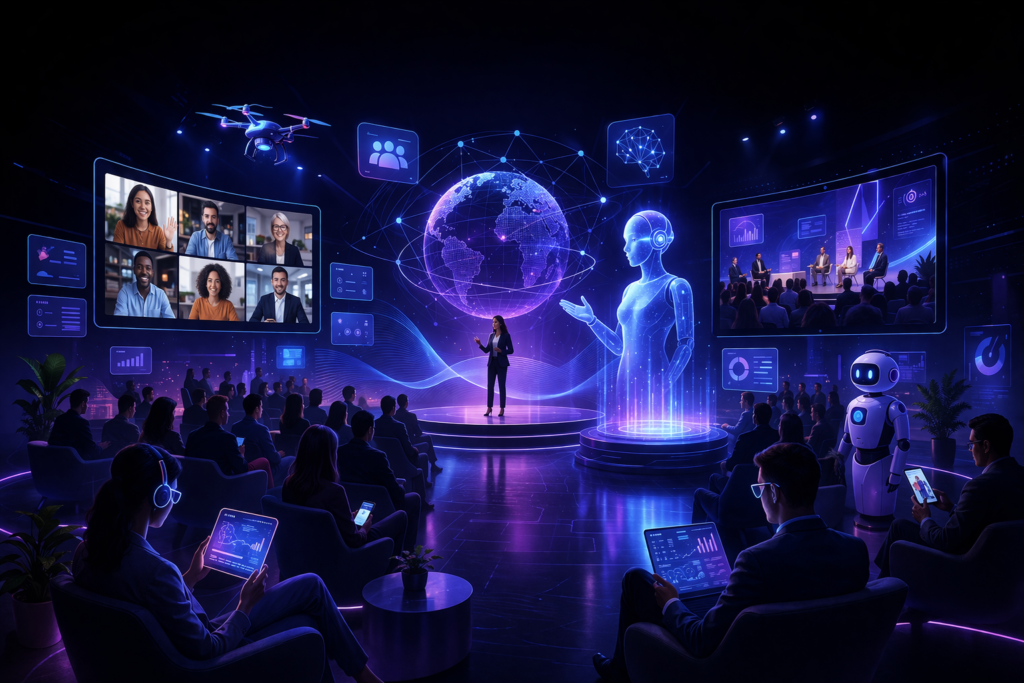
The future of events and conferences is undoubtedly driven by AI and automation. As technology continues to evolve, chatbots will become even more sophisticated and capable.
We can expect advancements in personalization, predictive analytics, and real-time interaction. Chatbots will play an even greater role in shaping attendee experiences and driving event success.
Organizations that embrace this technology early will have a significant competitive advantage. By leveraging AI chatbots, they can deliver innovative, engaging, and efficient events that meet the demands of modern audiences.
Frequently Asked Questions
1. What is an event chatbot and how does it work?
An event chatbot is an AI-powered virtual assistant designed to interact with attendees, exhibitors, and organizers throughout the lifecycle of an event. It uses Natural Language Processing (NLP) to understand user queries and provide accurate, real-time responses.
These chatbots can be integrated into websites, mobile apps, and messaging platforms, making them easily accessible to users. They handle tasks such as answering FAQs, guiding users through event schedules, and assisting with registration and ticketing.
The key advantage is automation combined with intelligence. Over time, chatbots learn from user interactions, improving their responses and becoming more efficient, which significantly enhances the overall event experience.
2. How do chatbots improve attendee engagement at conferences?
Chatbots enhance engagement by providing personalized and interactive experiences. They can send reminders, recommend sessions, and offer real-time updates, ensuring attendees stay informed and involved.
During the event, chatbots can facilitate live polls, Q&A sessions, and networking opportunities. This keeps attendees actively participating rather than passively consuming content.
Personalization plays a crucial role here. By analyzing user preferences and behavior, chatbots tailor their interactions, making attendees feel valued and increasing overall satisfaction.
3. Are chatbots suitable for both virtual and physical events?
Yes, chatbots are highly versatile and can be used for virtual, physical, and hybrid events. They provide consistent support across all formats, ensuring a seamless experience for attendees.
For virtual events, chatbots assist with platform navigation, technical support, and session recommendations. For physical events, they help with directions, schedules, and on-site assistance.
This flexibility makes chatbots an essential tool for modern event management. They bridge the gap between digital and physical experiences, ensuring all attendees receive the same level of support.
4. Can chatbots handle complex attendee queries?
While chatbots are highly capable, they may not always handle complex or highly specific queries perfectly. However, modern AI chatbots are designed to escalate such queries to human agents when necessary.
This hybrid approach ensures that users receive accurate and helpful responses without compromising efficiency. Chatbots handle routine queries, while human support addresses more complex issues.
This balance between automation and human intervention is critical for delivering a high-quality user experience.
5. How secure are event chatbots?
Security is a top priority when implementing chatbots, especially when handling sensitive attendee data. Modern chatbots use encryption and secure APIs to protect user information.
Following industry standards and guidelines, such as structured data best practices, ensures that data is handled responsibly and securely.
Additionally, regular updates and monitoring help maintain security and compliance, building trust among users and stakeholders.
6. What are the costs associated with implementing event chatbots?
The cost of implementing chatbots varies depending on features, complexity, and integration requirements. Basic chatbots are relatively affordable, while advanced AI-driven solutions may require a higher investment.
However, the return on investment (ROI) is significant. Chatbots reduce operational costs, improve efficiency, and enhance attendee engagement, leading to better event outcomes.
In most cases, the long-term benefits outweigh the initial costs. This makes chatbots a cost-effective solution for event organizers.
7. How do chatbots help with event marketing?
Chatbots play a vital role in event marketing by providing personalized and interactive communication. They can engage potential attendees, answer queries, and guide them through the registration process.
They also enable targeted marketing campaigns by analyzing user data and sending personalized messages and offers. This increases conversion rates and boosts event attendance.
The ability to deliver real-time, relevant information makes chatbots a powerful marketing tool.
8. Can chatbots integrate with other event management tools?
Yes, modern chatbots can integrate with a wide range of tools, including CRM systems, ticketing platforms, and analytics software. This allows for seamless data sharing and improved functionality.
Integration ensures that chatbots have access to up-to-date information, enabling them to provide accurate and relevant responses. It also enhances overall event management efficiency.
This interconnected ecosystem is key to maximizing the value of chatbot technology.
Common Mistakes to Avoid When Using Event Chatbots
One of the most common mistakes is treating chatbots as a “set it and forget it” solution. Many organizers implement chatbots without ongoing updates or monitoring, leading to outdated information and poor user experiences. Chatbots require continuous optimization to remain effective and relevant.
Another frequent issue is over-automation. While chatbots are powerful, relying on them entirely without human support can frustrate users when complex queries arise. A lack of escalation options can lead to dissatisfaction and reduced trust in the system.
Poor conversational design is another critical mistake. If a chatbot’s responses are too robotic, unclear, or irrelevant, users may abandon it altogether. Investing in natural, user-friendly conversation flows is essential for success.
Best Practices for Successful Event Chatbot Implementation
To maximize the effectiveness of event chatbots, it’s essential to follow proven best practices. First, clearly define your objectives—whether it’s improving engagement, reducing costs, or enhancing support. Having a clear goal ensures that your chatbot strategy is aligned with your event needs.
Second, focus on user experience. Design conversational flows that are intuitive, natural, and helpful. Regularly test and optimize your chatbot to ensure it meets user expectations and delivers accurate information.
Integration is another key factor. Ensure your chatbot works seamlessly with existing systems such as CRM, ticketing, and analytics tools. This enhances functionality and provides a unified experience for users.
Finally, continuously analyze performance metrics. Use data insights to identify areas for improvement and refine your chatbot strategy. This ongoing optimization is crucial for long-term success.
Conclusion: Elevate Your Events with Smart Chatbot Technology
The events and conferences industry is evolving rapidly, and staying ahead requires embracing innovative technologies. AI-powered chatbots have proven to be a game-changer, offering enhanced engagement, streamlined operations, and improved attendee experiences.
By leveraging chatbot solutions through Engagerbot, event organizers can automate processes, deliver personalized interactions, and maximize ROI. From registration to post-event follow-ups, chatbots provide end-to-end support that transforms the way events are managed.
The future belongs to those who adapt and innovate. By integrating chatbot technology into your event strategy, you can create memorable experiences, build stronger connections, and achieve long-term success.
Want to Implement This Easily?
Prompt:
You are an expert consultant. Based on the blog post titled “Events & Conferences”, provide a step-by-step, practical implementation guide. Include tools, best practices, common mistakes to avoid, and advanced tips. Assume the reader wants to implement everything discussed in this article effectively.
Call to Action:
Want our help implementing this? Just reach out to us via our website contact form: https://www.engagerbot.com/contact-us/