
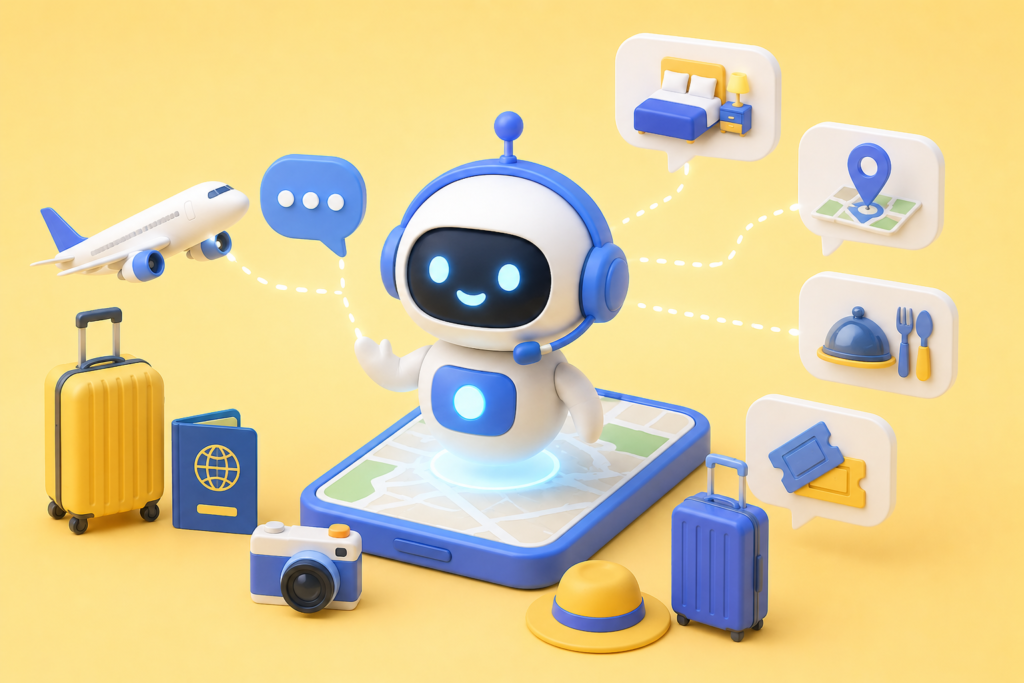
Discover how AI-powered travel chatbots transform customer experiences, boost bookings, and streamline operations with advanced automation, personalization, and real-time support.
Introduction
The travel industry has undergone a massive digital transformation in recent years, driven by changing customer expectations and rapid advancements in artificial intelligence. One of the most impactful innovations reshaping this space is the travel chatbot—an intelligent virtual assistant designed to handle customer interactions, automate bookings, and deliver personalized travel experiences. Today’s travelers expect instant responses, seamless service, and 24/7 availability, making chatbots an essential component of modern travel businesses.
A travel chatbot is not just a customer support tool; it is a strategic asset that enhances operational efficiency and drives revenue growth. From helping users discover destinations to managing bookings and providing real-time updates, these AI-powered systems streamline the entire travel journey. Businesses that leverage chatbot technology can significantly reduce manual workload while improving customer satisfaction and engagement.
At EngagerBot, travel chatbot solutions are designed to meet the evolving needs of travel agencies, airlines, hotels, and tour operators. By integrating advanced AI capabilities, these chatbots ensure faster responses, accurate information delivery, and personalized recommendations, helping businesses stay competitive in an increasingly digital marketplace.
What is a Travel Chatbot?
A travel chatbot is an AI-driven software application that interacts with users through text or voice, simulating human conversation. It is designed specifically for the travel and hospitality industry to assist customers with tasks such as booking flights, reserving hotels, planning itineraries, and answering travel-related queries. These chatbots use technologies like natural language processing (NLP) and machine learning to understand user intent and provide accurate responses.
Unlike traditional customer service systems, travel chatbots operate around the clock, ensuring that customers receive immediate assistance regardless of time zones. This is particularly important in the travel industry, where customers often require urgent support, such as flight updates or last-minute bookings. By automating these interactions, businesses can deliver faster service while reducing operational costs.
Moreover, modern travel chatbots go beyond simple question-and-answer functionality. They can analyze user preferences, browsing behavior, and past bookings to deliver highly personalized recommendations. This level of customization enhances the user experience, increases engagement, and ultimately drives higher conversion rates for travel businesses.
How Travel Chatbots Work
Travel chatbots rely on a combination of advanced technologies to function effectively. At the core of these systems is natural language processing (NLP), which enables the chatbot to understand and interpret user queries in a conversational manner. NLP allows the chatbot to recognize intent, extract relevant information, and generate appropriate responses, making interactions feel natural and intuitive.
Machine learning algorithms further enhance chatbot performance by enabling continuous improvement. As the chatbot interacts with more users, it learns from these interactions and becomes more accurate over time. This adaptive capability ensures that the chatbot remains effective even as customer preferences and behaviors evolve.
Additionally, travel chatbots integrate with various backend systems, such as booking engines, CRM platforms, and payment gateways. This integration allows them to perform complex tasks like processing reservations, updating booking details, and providing real-time travel information. The seamless connection between these systems ensures a smooth and efficient user experience.
Key Benefits of Travel Chatbots for Businesses
Travel chatbots offer a wide range of benefits that make them indispensable for modern travel businesses. One of the most significant advantages is 24/7 customer support, which ensures that users can get assistance at any time. This constant availability not only improves customer satisfaction but also increases the likelihood of conversions, especially for international travelers.
Another major benefit is cost efficiency. By automating routine tasks such as answering FAQs and processing bookings, businesses can reduce the need for large customer support teams. This leads to significant cost savings while maintaining high service quality. Additionally, chatbots can handle multiple queries simultaneously, ensuring faster response times compared to human agents.
Travel chatbots also enhance data collection and analysis. They gather valuable insights into customer preferences, behavior, and feedback, which can be used to improve services and marketing strategies. This data-driven approach enables businesses to make informed decisions and deliver more personalized experiences to their customers.
The Role of AI in Enhancing Travel Chatbots
Artificial intelligence plays a crucial role in making travel chatbots more intelligent and efficient. AI-powered chatbots can understand complex queries, provide context-aware responses, and even predict user needs based on past interactions. This level of sophistication significantly improves the overall user experience.
One of the key AI technologies used in travel chatbots is machine learning, which allows the system to learn from user interactions and improve over time. Another important technology is natural language understanding (NLU), which helps the chatbot interpret user intent more accurately. Together, these technologies enable chatbots to handle a wide range of queries with minimal human intervention.
AI also enables advanced features such as sentiment analysis, which allows the chatbot to detect user emotions and respond accordingly. For example, if a customer expresses frustration, the chatbot can escalate the issue to a human agent or provide a more empathetic response. This capability enhances customer satisfaction and builds trust.
Travel Chatbots vs Traditional Customer Support
Traditional customer support systems often rely on human agents to handle customer queries, which can lead to delays and inconsistencies in service. In contrast, travel chatbots provide instant responses and maintain a consistent level of service across all interactions. This makes them a more efficient and reliable solution for handling customer inquiries.
Another key difference is scalability. Human agents can only handle a limited number of queries at a time, whereas chatbots can manage thousands of interactions simultaneously. This scalability is particularly important during peak travel seasons when customer demand is high.
Furthermore, travel chatbots offer a more personalized experience compared to traditional support systems. By analyzing user data, they can provide tailored recommendations and solutions, enhancing the overall customer experience. This level of personalization is difficult to achieve with human agents alone.
Use Cases of Travel Chatbots in the Industry
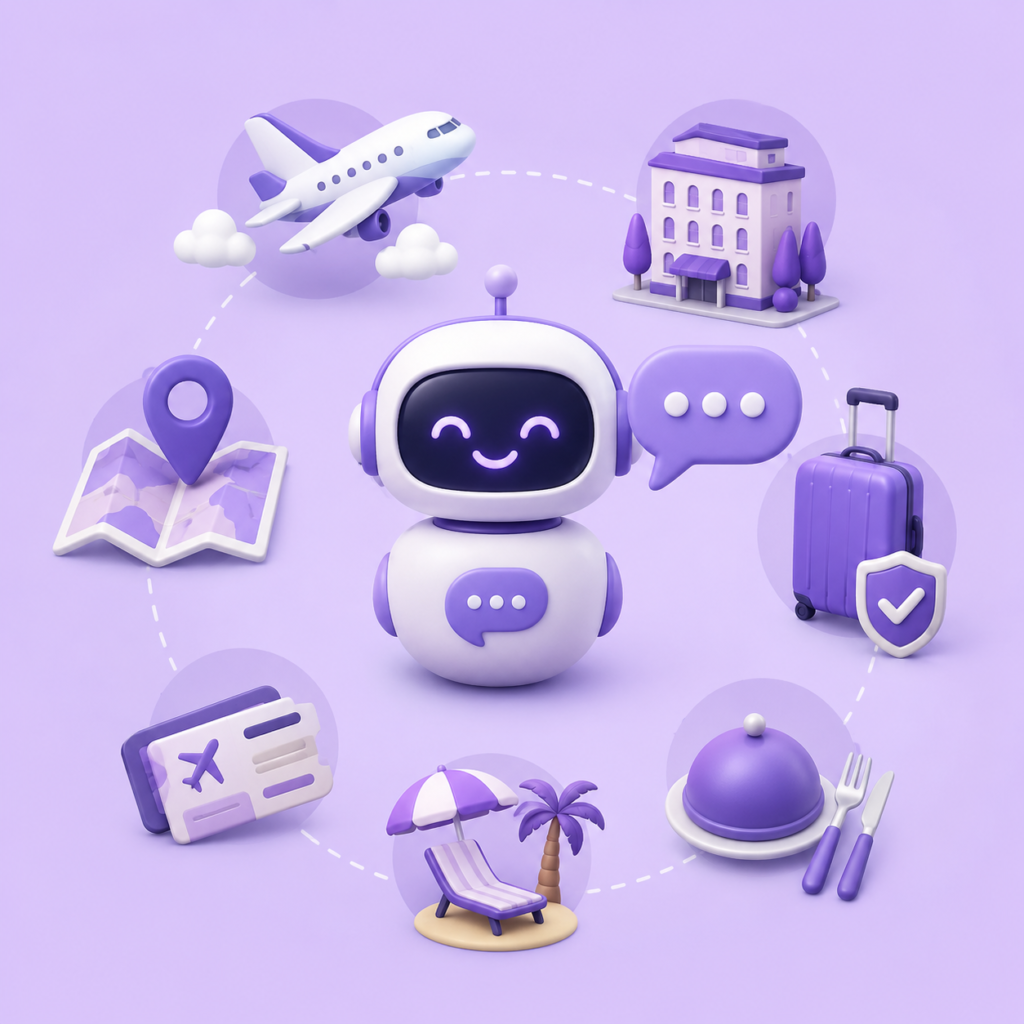
Travel chatbots are used across various sectors within the travel industry, including airlines, hotels, travel agencies, and tour operators. One common use case is booking assistance, where chatbots help users search for flights, compare prices, and complete reservations. This simplifies the booking process and reduces friction for customers.
Another important use case is customer support, where chatbots handle queries related to bookings, cancellations, and travel policies. They can also provide real-time updates on flight statuses, weather conditions, and travel restrictions, ensuring that customers stay informed throughout their journey.
Travel chatbots are also used for marketing and engagement. They can send personalized offers, recommend destinations, and promote travel packages based on user preferences. This targeted approach increases engagement and drives higher conversion rates.
SEO and Digital Marketing Advantages of Travel Chatbots
Travel chatbots play a significant role in enhancing SEO and digital marketing efforts. By improving user engagement and reducing bounce rates, they contribute to better search engine rankings. Chatbots also provide valuable insights into user behavior, which can be used to optimize content and marketing strategies.
From an SEO perspective, chatbots help improve website performance by providing quick answers and guiding users to relevant pages. This aligns with best practices outlined in Google Search Central Guidelines, which emphasize the importance of delivering helpful and user-focused content.
Additionally, chatbots enable businesses to capture leads and nurture them through personalized interactions. This improves conversion rates and maximizes the return on investment for digital marketing campaigns. By integrating chatbots with marketing tools, businesses can create a seamless and effective customer journey.
Advanced Features of Modern Travel Chatbots
Modern travel chatbots have evolved far beyond basic automation and now offer a wide range of advanced features that significantly enhance user experience. One of the most powerful capabilities is context-aware conversation, where the chatbot remembers previous interactions and uses that context to provide more accurate and relevant responses. This ensures that users don’t have to repeat information, making the interaction smoother and more efficient.
Another key feature is multi-language support, which is essential in the global travel industry. Travelers from different countries expect to communicate in their native language, and AI-powered chatbots can instantly translate and respond accordingly. This not only improves accessibility but also builds trust with international customers. Additionally, voice-enabled chatbots are gaining popularity, allowing users to interact using voice commands, similar to virtual assistants.
Integration with third-party systems is another critical feature. Travel chatbots can connect with booking engines, airline databases, hotel management systems, and payment gateways to provide real-time information and complete transactions seamlessly. These integrations enable functionalities like instant booking confirmations, dynamic pricing updates, and personalized travel recommendations, making the chatbot a comprehensive travel assistant.
Personalization and Customer Experience Optimization
Personalization is at the heart of a successful travel chatbot strategy. Today’s travelers expect tailored experiences, and chatbots are uniquely positioned to deliver this by leveraging user data. By analyzing browsing behavior, past bookings, and preferences, chatbots can recommend destinations, hotels, and activities that align with individual interests.
This level of personalization significantly enhances customer satisfaction. For example, a chatbot can suggest family-friendly destinations to users traveling with children or recommend luxury resorts to high-end travelers. These targeted recommendations not only improve the user experience but also increase the likelihood of conversions and repeat bookings.
Moreover, personalized interactions foster stronger customer relationships. When users feel understood and valued, they are more likely to trust the brand and engage with its services. Travel chatbots can also send personalized notifications, such as price alerts or travel reminders, ensuring that customers stay informed and engaged throughout their journey.
Integration with Booking Systems and APIs
A travel chatbot’s effectiveness largely depends on its ability to integrate with various booking systems and APIs. These integrations allow the chatbot to access real-time data, such as flight availability, hotel inventory, and pricing information. As a result, users can search, compare, and book travel services directly within the chat interface.
APIs also enable chatbots to perform complex tasks, such as modifying bookings, processing cancellations, and issuing refunds. This reduces the need for human intervention and ensures a faster resolution for customer queries. Additionally, integration with payment gateways allows users to complete transactions securely without leaving the chat interface.
To ensure seamless integration and performance, developers often follow best practices outlined in Google Page Experience Guidelines. These guidelines emphasize fast loading times, mobile responsiveness, and secure connections, all of which are crucial for delivering a high-quality user experience.
Multichannel Deployment and Omnichannel Strategy
In today’s digital landscape, customers interact with brands across multiple platforms, including websites, mobile apps, social media, and messaging apps. Travel chatbots must be deployed across these channels to provide a consistent and seamless experience. This approach is known as omnichannel strategy.
By integrating chatbots with platforms like WhatsApp, Facebook Messenger, and mobile apps, businesses can reach customers wherever they are. This increases accessibility and ensures that users can interact with the chatbot using their preferred communication channel. A unified experience across all channels also strengthens brand identity and customer trust.
Multichannel deployment also allows businesses to collect data from various touchpoints, providing a comprehensive view of customer behavior. This data can be used to optimize marketing strategies, improve services, and deliver more personalized experiences. Ultimately, an omnichannel approach enhances customer engagement and drives better business outcomes.
Security and Data Privacy Considerations
Security and data privacy are critical aspects of travel chatbot implementation. Since chatbots handle sensitive information such as personal details, payment data, and travel itineraries, businesses must ensure robust security measures are in place. This includes encryption, secure authentication, and compliance with data protection regulations.
One of the key practices is implementing HTTPS protocols to secure data transmission. According to Google HTTPS Guidelines, secure connections are essential for protecting user data and building trust. Additionally, chatbots should comply with global data privacy standards, such as GDPR, to ensure that user information is handled responsibly.
Transparency is also important. Businesses should clearly inform users about how their data is collected, stored, and used. Providing options for users to control their data, such as opting out or deleting information, further enhances trust and credibility. A secure and transparent approach not only protects users but also strengthens the brand’s reputation.
Common Mistakes to Avoid When Implementing Travel Chatbots
Despite their benefits, travel chatbots can fail to deliver results if not implemented correctly. One common mistake is over-automation, where businesses rely too heavily on chatbots without providing an option to connect with a human agent. This can frustrate users, especially when dealing with complex issues that require human intervention.
Another mistake is poor chatbot training. If the chatbot is not properly trained with relevant data, it may provide inaccurate or irrelevant responses. This can lead to a negative user experience and damage the brand’s credibility. Regular updates and continuous learning are essential to maintain chatbot performance.
Lack of personalization is another critical issue. Generic responses can make interactions feel robotic and impersonal. Businesses should leverage user data to deliver tailored experiences that meet individual needs. Additionally, failing to monitor and analyze chatbot performance can result in missed opportunities for improvement. Regular evaluation and optimization are key to success.
Best Practices for Building a High-Performing Travel Chatbot
To build an effective travel chatbot, businesses should follow a set of proven best practices. First, focus on user-centric design. The chatbot should be intuitive, easy to use, and capable of handling a wide range of queries. Clear navigation and quick response times are essential for a positive user experience.
Second, invest in high-quality training data. The chatbot should be trained on relevant and diverse datasets to ensure accurate responses. Continuous learning and regular updates are also important to keep the chatbot aligned with changing user needs and industry trends.
Third, integrate the chatbot with key systems and platforms. This includes booking engines, CRM systems, and marketing tools. Seamless integration ensures that the chatbot can perform complex tasks and deliver a comprehensive user experience. Finally, monitor performance metrics such as response time, user satisfaction, and conversion rates to identify areas for improvement.
Future Trends in Travel Chatbots

The future of travel chatbots is shaped by ongoing advancements in AI and technology. One emerging trend is the use of generative AI, which enables chatbots to create more natural and engaging conversations. This technology allows chatbots to provide detailed and context-rich responses, enhancing the overall user experience.
Another trend is the integration of augmented reality (AR) and virtual reality (VR). These technologies can be used to provide immersive travel experiences, such as virtual tours of destinations and hotels. Chatbots can act as guides, helping users explore these experiences and make informed decisions.
Voice-based interactions are also expected to become more prevalent. As voice recognition technology improves, more users will prefer to interact with chatbots using voice commands. Additionally, predictive analytics will enable chatbots to anticipate user needs and provide proactive recommendations, further enhancing personalization and convenience.
Measuring the Success of a Travel Chatbot
Measuring the success of a travel chatbot is essential to ensure that it delivers value to the business. Key performance indicators (KPIs) include user engagement, response time, conversion rates, and customer satisfaction. These metrics provide insights into how well the chatbot is performing and where improvements are needed.
User feedback is another valuable source of information. By analyzing feedback, businesses can identify common issues and areas for improvement. This helps in refining the chatbot’s functionality and enhancing the user experience.
Additionally, tracking ROI is crucial. Businesses should evaluate the cost savings achieved through automation, as well as the revenue generated from increased bookings and conversions. A well-implemented travel chatbot should deliver a strong return on investment while improving operational efficiency and customer satisfaction.
FAQs
1. What is a travel chatbot?
A travel chatbot is an AI-powered virtual assistant that helps users with travel-related tasks such as booking flights, finding hotels, and answering queries.
2. How do travel chatbots improve customer experience?
They provide instant responses, personalized recommendations, and 24/7 support, ensuring a seamless and efficient user experience.
3. Are travel chatbots secure?
Yes, when implemented with proper security measures such as encryption and HTTPS protocols, they can securely handle user data.
4. Can travel chatbots handle bookings?
Yes, they can integrate with booking systems to search, compare, and complete reservations directly within the chat interface.
5. Do travel chatbots support multiple languages?
Most modern chatbots offer multi-language support, making them suitable for global audiences.
6. How much does it cost to implement a travel chatbot?
The cost varies depending on features, complexity, and integrations, but it is generally more cost-effective than maintaining large support teams.
7. Can chatbots replace human agents?
They can handle routine tasks but should complement human agents for complex queries.
8. How can businesses measure chatbot success?
By tracking KPIs such as engagement, conversion rates, and customer satisfaction.
Best Practices Summary
To maximize the benefits of a travel chatbot, businesses should focus on delivering a seamless, personalized, and secure user experience. This includes leveraging advanced AI technologies, integrating with key systems, and adopting an omnichannel approach. Regular monitoring and optimization are also essential to ensure continuous improvement.
Additionally, businesses should prioritize data privacy and transparency to build trust with users. Following industry best practices and guidelines ensures that the chatbot remains effective and compliant with regulations. By implementing these strategies, businesses can unlock the full potential of travel chatbots and achieve long-term success.
Conclusion
Travel chatbots have become a vital tool for modern travel businesses, enabling them to deliver exceptional customer experiences while improving operational efficiency. By leveraging AI and automation, these chatbots provide instant support, personalized recommendations, and seamless booking experiences.
At EngagerBot, advanced travel chatbot solutions are designed to help businesses stay ahead in a competitive market. By adopting best practices and continuously optimizing performance, businesses can harness the full potential of chatbot technology and drive sustainable growth.
Want to Implement This Easily?
Prompt:
You are an expert consultant. Based on the blog post titled “(Travel Chatbot)”, provide a step-by-step, practical implementation guide. Include tools, best practices, common mistakes to avoid, and advanced tips. Assume the reader wants to implement everything discussed in this article effectively.
Call to Action:
Want our help implementing this? Just reach out to us via our website contact form: https://www.engagerbot.com/contact-us/