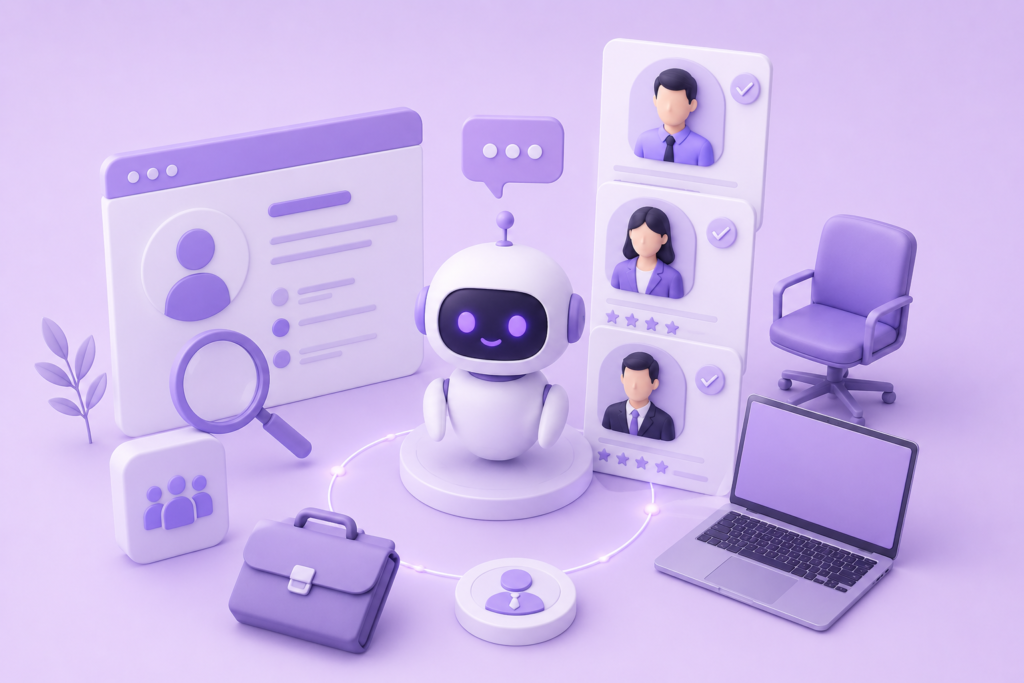
Discover how a Recruitment Agency Chatbot transforms hiring with AI-powered candidate screening, automated interview scheduling, lead qualification, and personalized engagement. Learn best practices, benefits, implementation strategies, and future trends for recruitment success.
Introduction
Modern recruitment has become more competitive than ever. Candidates expect instant responses, personalized communication, and a seamless application experience, while recruitment agencies must manage thousands of applicants, multiple clients, interview schedules, and administrative tasks simultaneously. Traditional recruitment processes often struggle to meet these growing expectations, leading to slower hiring cycles, missed opportunities, and increased operational costs.
A Recruitment Agency Chatbot solves these challenges by automating repetitive recruitment tasks while improving candidate engagement throughout the hiring journey. Powered by artificial intelligence (AI), natural language processing (NLP), and machine learning, these chatbots can answer applicant questions, pre-screen candidates, schedule interviews, collect resumes, qualify leads, and provide real-time updates 24/7. Instead of replacing recruiters, they empower recruitment professionals to focus on strategic hiring decisions and relationship building.
At Engagerbot, we recognize that recruitment agencies require intelligent automation that enhances both recruiter productivity and candidate satisfaction. Throughout this comprehensive guide, you’ll learn how AI-powered recruitment chatbots improve hiring efficiency, reduce recruitment costs, strengthen employer branding, and create exceptional candidate experiences while following industry best practices and Google’s Experience, Expertise, Authoritativeness, and Trustworthiness (E-E-A-T) principles.
Understanding Recruitment Agency Chatbots
Recruitment agencies serve as the bridge between employers seeking qualified talent and professionals searching for career opportunities. Managing this relationship involves numerous repetitive activities, including answering candidate questions, collecting resumes, scheduling interviews, verifying qualifications, updating applicants, and communicating with hiring managers. As agencies grow, handling these tasks manually becomes increasingly difficult. A Recruitment Agency Chatbot automates these routine interactions while ensuring candidates receive fast, consistent, and accurate responses.
Unlike traditional rule-based chat systems, modern recruitment chatbots use artificial intelligence and natural language processing to understand conversational language. They can recognize candidate intent, ask follow-up questions, collect employment history, identify preferred job locations, evaluate basic qualifications, and recommend suitable job openings based on skills and experience. These intelligent capabilities allow recruitment agencies to provide a highly personalized experience while reducing administrative workload.
AI chatbots also improve recruitment accessibility by operating continuously, allowing candidates to apply for positions, upload resumes, and ask questions at any time. Since job seekers often search for opportunities outside standard business hours, round-the-clock availability significantly increases engagement and application completion rates. Industry guidance from Google Search Central emphasizes creating helpful, user-focused digital experiences, while responsible AI development guidance from Google Responsible AI highlights transparency, fairness, and user trust. Recruitment agencies adopting AI-powered chatbots can combine automation with human expertise to create efficient hiring processes that benefit candidates, recruiters, and employers alike.
Why Recruitment Agencies Are Adopting AI Chatbots
Recruitment agencies operate in an increasingly competitive environment where speed often determines hiring success. Employers expect agencies to present qualified candidates quickly, while applicants want immediate communication and transparent hiring updates. Delayed responses can cause talented candidates to accept competing job offers, resulting in lost business opportunities. AI-powered recruitment chatbots address these challenges by significantly accelerating communication without sacrificing personalization.
One major reason agencies implement chatbots is the ability to automate repetitive administrative work. Recruiters spend countless hours responding to common inquiries regarding application status, interview schedules, document requirements, salary expectations, and company information. Chatbots instantly answer these frequently asked questions, freeing recruiters to concentrate on candidate assessment, employer consultations, negotiation, and relationship management. This improved allocation of human expertise enhances overall recruitment quality.
Artificial intelligence also enables data-driven recruitment decisions. Chatbots gather structured candidate information during conversations, making it easier to organize applicant profiles and match qualifications with employer requirements. Combined with human evaluation, AI-assisted workflows improve recruitment accuracy while reducing unconscious bias introduced through inconsistent administrative processes. Organizations following AI governance recommendations from NIST AI Risk Management Framework and cybersecurity guidance from OWASP can implement recruitment automation responsibly while maintaining candidate privacy, security, and regulatory compliance.
Key Features of an AI-Powered Recruitment Agency Chatbot
An effective Recruitment Agency Chatbot combines conversational intelligence with automation to streamline every stage of the hiring lifecycle. Resume collection is one of its core features. Instead of directing candidates through lengthy forms, the chatbot can request resumes, gather personal details, verify contact information, and capture employment preferences in a conversational format that feels faster and more engaging.
Candidate pre-screening is another valuable capability. The chatbot asks structured questions related to education, certifications, years of experience, technical skills, work authorization, language proficiency, salary expectations, and availability. Based on predefined recruitment criteria, it identifies applicants who meet minimum qualifications while allowing recruiters to review borderline cases. This process improves consistency without replacing professional judgment.
Modern recruitment chatbots also integrate with Applicant Tracking Systems (ATS), customer relationship management (CRM) platforms, calendars, communication tools, and video interviewing software. They automatically schedule interviews, send reminders, provide interview preparation instructions, collect employer feedback, and notify candidates of status updates. AI-driven analytics further help agencies identify hiring bottlenecks, optimize recruitment campaigns, and improve candidate conversion rates. Google’s user experience guidance from web.dev encourages building fast, accessible, and user-friendly digital experiences, making seamless chatbot integration an essential component of modern recruitment platforms.
Benefits of Recruitment Agency Chatbots for Recruiters
Recruiters frequently juggle multiple vacancies, employer relationships, candidate pipelines, and administrative tasks simultaneously. AI chatbots significantly reduce this burden by automating repetitive workflows while maintaining high communication standards. Instead of spending valuable time answering routine questions, recruiters receive qualified candidate profiles ready for deeper evaluation and interviews.
Automation also improves recruiter productivity by organizing candidate information consistently. Chatbots collect standardized responses, reducing incomplete applications and minimizing manual data entry errors. Structured candidate records simplify searching, filtering, reporting, and matching applicants with suitable job opportunities. Recruiters gain faster access to relevant information, improving hiring efficiency across multiple client accounts.
Another major benefit involves scalability. During seasonal recruitment campaigns or large hiring projects, agencies often receive thousands of applications within days. Human recruiters alone cannot respond quickly enough to maintain candidate engagement. Recruitment chatbots handle simultaneous conversations without delays, ensuring every applicant receives immediate acknowledgment and guidance. This scalability supports business growth while maintaining service quality and strengthening employer relationships through faster recruitment delivery.
Enhancing Candidate Experience Through Conversational AI
Candidate experience has become a defining factor in successful recruitment. Applicants increasingly evaluate employers and recruitment agencies based on communication quality, transparency, and responsiveness throughout the hiring journey. Long response times or poor communication often discourage qualified professionals from continuing the application process. AI-powered recruitment chatbots create engaging conversations that keep candidates informed from initial inquiry to final hiring decision.
The chatbot serves as a virtual recruitment assistant, greeting applicants immediately, answering questions about job openings, explaining application procedures, and providing company information. Instead of waiting hours or days for recruiter responses, candidates receive instant assistance regardless of time zone or business hours. This accessibility significantly improves satisfaction and increases application completion rates.
Personalization further enhances candidate engagement. Chatbots remember previous interactions, recommend relevant positions based on skills, notify candidates about similar vacancies, and provide customized updates throughout recruitment. By delivering timely information and reducing uncertainty, conversational AI builds trust while encouraging long-term relationships between recruitment agencies and talent communities. Organizations prioritizing helpful user experiences according to Google’s Helpful Content guidance create recruitment journeys that genuinely support applicants rather than simply collecting applications.
Recruitment Automation Across the Hiring Journey
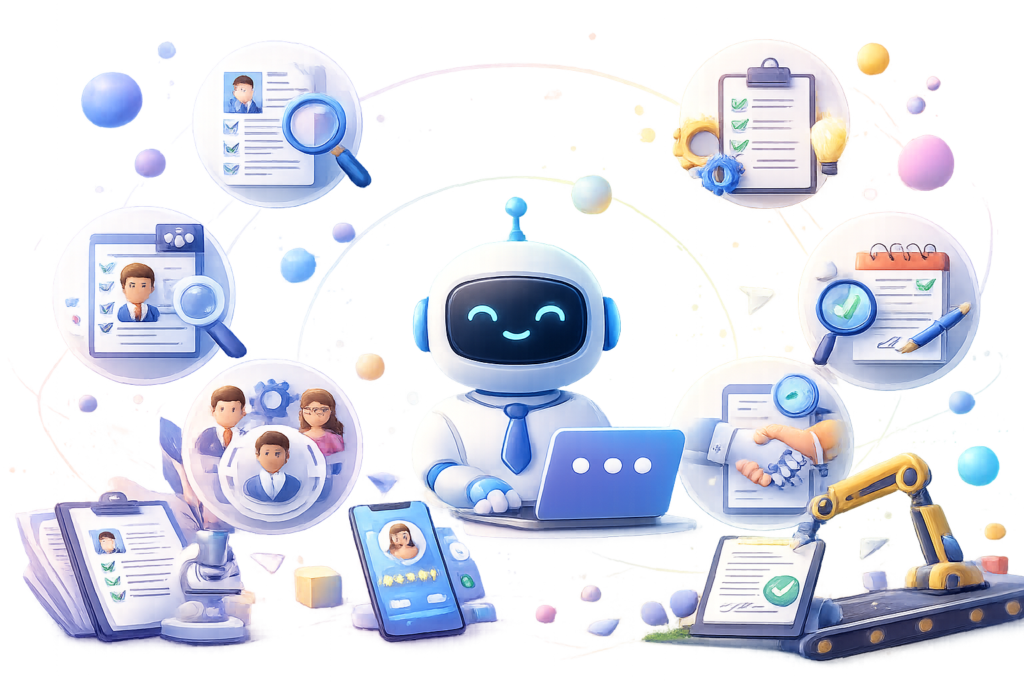
Recruitment is no longer a simple process of collecting resumes and arranging interviews. Today’s hiring journey involves sourcing candidates, engaging prospects, screening applicants, scheduling interviews, coordinating feedback, managing documentation, extending offers, and nurturing talent pipelines for future opportunities. AI-powered recruitment chatbots automate many of these activities while maintaining a personalized candidate experience.
During talent acquisition, chatbots engage website visitors, social media users, and job board applicants by answering questions and encouraging applications. They qualify prospects before recruiters invest time in manual reviews, ensuring hiring teams focus on the most suitable candidates. This automation reduces administrative workload while accelerating recruitment timelines.
As candidates progress through interviews, chatbots continue providing value by sending reminders, sharing interview preparation resources, collecting post-interview feedback, updating application status, and assisting with onboarding documentation after successful hiring. Continuous communication improves transparency while reducing candidate drop-off rates. Recruitment agencies that automate repetitive workflows while preserving meaningful human interactions establish stronger relationships with both employers and job seekers, creating a more efficient and trustworthy hiring ecosystem.
Integrating Recruitment Chatbots with HR Technology
A Recruitment Agency Chatbot delivers maximum value when integrated with existing HR technologies rather than operating independently. Modern recruitment ecosystems include Applicant Tracking Systems (ATS), Customer Relationship Management (CRM) software, Human Resource Information Systems (HRIS), email marketing platforms, calendar applications, communication tools, video interview platforms, and analytics dashboards. Seamless integration allows information to flow automatically between systems, eliminating duplicate data entry and improving operational efficiency.
When a candidate submits information through the chatbot, the details can automatically populate the ATS, notify recruiters, trigger interview scheduling, update CRM records, and initiate follow-up communication workflows. This connected infrastructure minimizes delays while improving data accuracy across recruitment operations. Recruiters spend less time managing administrative systems and more time evaluating candidate quality and strengthening client relationships.
Integrated analytics also provide valuable recruitment insights, including application completion rates, chatbot engagement metrics, interview conversion percentages, recruiter response times, candidate satisfaction, and hiring performance. These measurable outcomes enable agencies to continuously refine recruitment strategies while delivering better experiences for employers and applicants. Secure integrations should always follow cybersecurity best practices, privacy regulations, and responsible AI governance to ensure candidate information remains protected throughout every stage of the hiring lifecycle.
AI and Machine Learning in Recruitment Agency Chatbots
Artificial Intelligence (AI) and Machine Learning (ML) have transformed recruitment chatbots from simple automated responders into intelligent virtual recruitment assistants. Unlike traditional chatbots that rely on predefined scripts, AI-powered recruitment chatbots continuously learn from candidate interactions, improving their ability to understand questions, identify hiring intent, and provide increasingly relevant responses. This intelligence enables recruitment agencies to deliver personalized experiences while significantly reducing manual administrative work.
Machine learning algorithms analyze historical recruitment data, candidate behavior, successful hiring patterns, and recruiter decisions to improve candidate recommendations over time. For example, if candidates with specific certifications, technical skills, or professional backgrounds consistently perform well in certain roles, the chatbot can prioritize similar applicants during preliminary screening. Recruiters remain responsible for final hiring decisions, but AI helps identify promising talent much faster than manual processes alone. Natural Language Processing (NLP) also enables the chatbot to understand conversational language, recognize context, interpret synonyms, and engage applicants naturally instead of relying on keyword matching.
Another significant advantage is predictive recruitment analytics. AI systems can identify potential hiring bottlenecks, forecast recruitment demand, estimate candidate response rates, and recommend workflow improvements based on historical performance. As recruitment agencies continue handling larger applicant volumes, AI-powered automation supports better decision-making while maintaining fairness, transparency, and consistency throughout the recruitment lifecycle. Responsible AI implementation should always prioritize human oversight, candidate privacy, explainability, and ethical hiring practices to ensure technology enhances rather than replaces professional recruitment expertise.
Multilingual Recruitment and Global Talent Acquisition
Today’s recruitment agencies frequently serve international employers searching for global talent. Candidates may come from different countries, cultures, and language backgrounds, making multilingual communication an essential competitive advantage. Recruitment Agency Chatbots equipped with multilingual capabilities remove communication barriers by providing instant assistance in multiple languages while maintaining consistent recruitment standards.
Rather than limiting recruitment to English-speaking applicants, multilingual chatbots automatically detect preferred languages and continue conversations accordingly. They can explain job descriptions, answer frequently asked questions, collect candidate information, and guide applicants through recruitment processes without requiring recruiters to speak every language. This improves accessibility while expanding available talent pools for employers seeking international professionals.
Global recruitment also involves different employment regulations, documentation requirements, visa considerations, and time zones. Intelligent chatbots help manage these complexities by providing relevant information based on candidate location while scheduling interviews across international calendars. Combined with recruiter oversight, multilingual conversational AI creates inclusive hiring experiences that attract diverse talent while strengthening employer branding across international markets. As remote work continues expanding globally, multilingual recruitment automation becomes increasingly valuable for agencies competing in worldwide talent acquisition.
Measuring Recruitment Success and ROI
Implementing a Recruitment Agency Chatbot should deliver measurable business value rather than simply adding another digital tool. Recruitment agencies must establish clear Key Performance Indicators (KPIs) to evaluate chatbot effectiveness and continuously optimize recruitment performance. Measuring success ensures automation investments generate meaningful operational improvements while supporting long-term business growth.
One important metric is candidate response time. AI chatbots respond within seconds, dramatically reducing waiting periods compared to manual communication. Faster responses often increase candidate engagement, application completion rates, and interview attendance. Agencies should also monitor chatbot conversation completion rates, candidate satisfaction scores, recruiter productivity improvements, interview scheduling efficiency, and applicant qualification accuracy to understand how automation impacts the overall hiring journey.
Return on Investment (ROI) extends beyond cost savings. Successful recruitment automation reduces administrative workload, shortens time-to-hire, improves employer satisfaction, increases recruiter capacity, and enhances candidate experiences. Additional metrics such as offer acceptance rates, recruiter utilization, repeat employer business, talent pipeline growth, and reduced candidate drop-off provide valuable insight into chatbot performance. Continuous monitoring allows recruitment agencies to refine conversational flows, improve AI recommendations, and maximize recruitment effectiveness while maintaining exceptional service quality.
Security, Privacy, and Recruitment Compliance
Recruitment agencies manage highly sensitive personal information, including resumes, employment history, identification documents, salary expectations, certifications, contact information, and interview evaluations. Because recruitment chatbots collect and process this information automatically, strong security and privacy protections are essential for maintaining candidate trust and regulatory compliance.
Secure recruitment chatbots should use encrypted communication, role-based access controls, secure authentication, regular security monitoring, and protected cloud infrastructure to prevent unauthorized access. Candidate information should only be accessible to authorized recruitment professionals involved in hiring decisions. Regular security audits, vulnerability assessments, and software updates help reduce cybersecurity risks while protecting confidential recruitment data.
Privacy compliance is equally important. Candidates should understand how their information will be collected, stored, processed, and retained throughout the recruitment process. Recruitment agencies should provide transparent privacy notices, obtain appropriate consent where required, and implement responsible data retention policies. Ethical AI practices also require minimizing bias, ensuring fair candidate evaluation, and allowing human review of automated recommendations. Combining strong cybersecurity with transparent data governance creates trustworthy recruitment experiences that protect both agencies and applicants.
Future Trends Shaping Recruitment Agency Chatbots
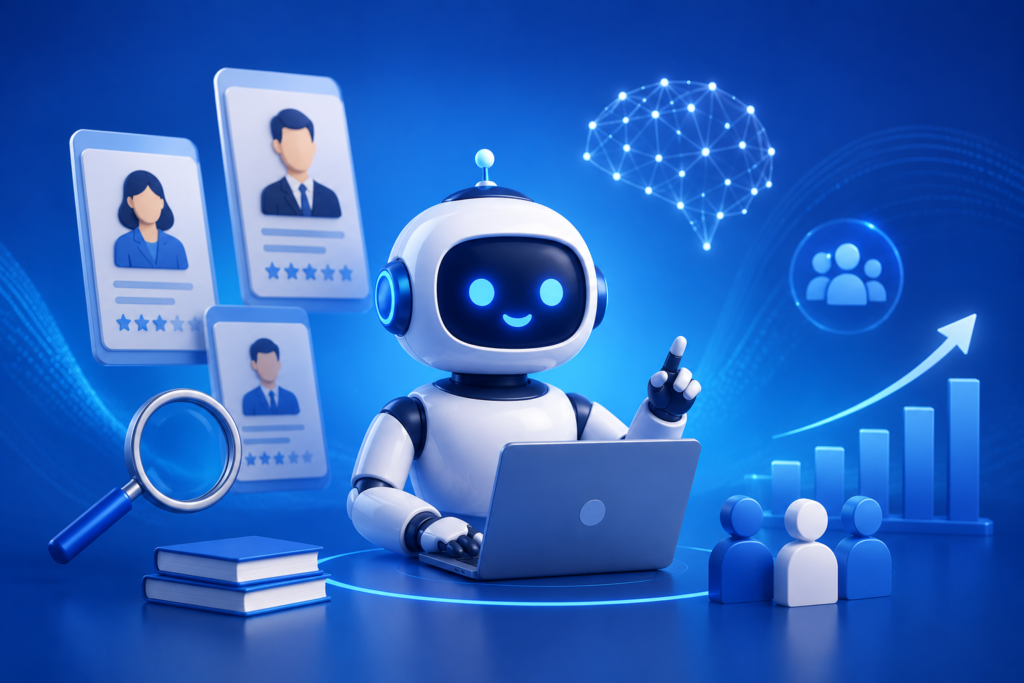
Recruitment technology continues evolving rapidly, with AI becoming increasingly sophisticated in supporting hiring decisions while maintaining human-centered recruitment practices. Future Recruitment Agency Chatbots will offer even greater personalization, predictive intelligence, and seamless integration with broader talent acquisition ecosystems.
Generative AI will enable chatbots to provide more natural conversations, generate personalized interview preparation guidance, summarize recruiter notes, draft candidate communications, and assist recruiters with job description creation. Voice-enabled recruitment assistants may become increasingly common, allowing candidates to interact naturally through spoken conversations instead of traditional text interfaces. These capabilities can further improve accessibility while creating more engaging recruitment experiences.
Predictive analytics will continue advancing, helping agencies forecast hiring demand, identify emerging skill shortages, recommend workforce planning strategies, and proactively build talent pipelines before vacancies arise. Deeper integration with HR platforms, learning management systems, workforce analytics, and onboarding solutions will create connected recruitment ecosystems supporting the complete employee lifecycle. Although AI capabilities will continue expanding, successful recruitment will always depend upon human judgment, relationship building, ethical decision-making, and personalized candidate engagement. Technology will increasingly serve as a powerful assistant that enhances recruiter expertise rather than replacing it.
Common Mistakes Recruitment Agencies Make When Implementing Chatbots
Many recruitment agencies invest in chatbot technology expecting immediate improvements without developing a clear implementation strategy. One common mistake is automating every interaction instead of identifying which recruitment tasks genuinely benefit from automation. Candidates still expect meaningful human conversations during interviews, salary negotiations, career discussions, and complex hiring decisions. Over-automation can create frustration and reduce trust if applicants cannot easily reach a recruiter when needed.
Another frequent mistake involves poor chatbot training. AI systems require accurate recruitment knowledge, well-structured conversation flows, and ongoing optimization. If chatbots provide outdated job information, misunderstand candidate questions, or recommend irrelevant vacancies, applicants may abandon the recruitment process entirely. Regular monitoring, recruiter feedback, and performance analysis are necessary to maintain high conversational quality.
Agencies also underestimate the importance of privacy, accessibility, and integration. Deploying chatbots without secure data handling, Applicant Tracking System integration, or mobile-friendly experiences limits overall effectiveness. Successful recruitment automation requires continuous improvement rather than one-time deployment. Agencies should treat chatbot implementation as an evolving strategy focused on delivering measurable value to candidates, recruiters, and employers alike.
Best Practices Summary
A successful Recruitment Agency Chatbot should always prioritize candidate experience while improving recruiter productivity through intelligent automation. Begin by identifying repetitive recruitment tasks that consume significant administrative time, such as answering frequently asked questions, collecting resumes, scheduling interviews, and providing application updates. Automating these activities allows recruiters to focus on candidate assessment, employer consultation, and relationship building.
The chatbot should integrate seamlessly with existing recruitment systems, including Applicant Tracking Systems, CRM platforms, communication tools, analytics dashboards, and scheduling software. Continuous monitoring of chatbot performance, candidate satisfaction, conversion rates, and recruitment metrics enables ongoing optimization while ensuring conversations remain accurate, helpful, and relevant.
Finally, responsible AI implementation should remain a top priority. Recruitment agencies must protect candidate privacy, maintain cybersecurity best practices, ensure transparent communication, minimize algorithmic bias, and preserve meaningful human involvement throughout hiring decisions. Combining intelligent automation with experienced recruitment professionals creates efficient, trustworthy, and candidate-focused hiring experiences that support sustainable business growth.
Frequently Asked Questions
1. What is a Recruitment Agency Chatbot?
A Recruitment Agency Chatbot is an AI-powered virtual assistant designed to automate communication between recruitment agencies, employers, and job seekers. It can answer candidate questions, collect resumes, pre-screen applicants, recommend suitable job opportunities, schedule interviews, send reminders, and provide application status updates.
Unlike traditional chatbots that follow fixed scripts, modern AI-powered chatbots use Natural Language Processing (NLP) to understand conversational language and deliver more personalized interactions. This allows recruitment agencies to improve efficiency while maintaining a positive candidate experience.
2. How does a Recruitment Agency Chatbot improve hiring efficiency?
Recruitment chatbots eliminate many repetitive administrative tasks that consume recruiters’ time. Instead of manually responding to every inquiry, recruiters can rely on the chatbot to:
- Answer common candidate questions instantly
- Collect applicant information automatically
- Screen candidates based on predefined criteria
- Schedule interviews
- Send reminders and notifications
- Update application statuses
This significantly reduces manual workload, shortens hiring cycles, and enables recruiters to focus on evaluating top candidates and building stronger employer relationships.
3. Can an AI chatbot replace human recruiters?
No. AI chatbots are designed to support recruiters rather than replace them.
While chatbots excel at handling repetitive administrative work and providing instant responses, human recruiters remain essential for:
- Interviewing candidates
- Evaluating soft skills
- Assessing cultural fit
- Salary negotiations
- Relationship building
- Final hiring decisions
- Strategic workforce planning
The most successful recruitment agencies combine AI automation with experienced recruiters to create a faster, more efficient, and highly personalized hiring process.
4. Can Recruitment Agency Chatbots integrate with Applicant Tracking Systems (ATS)?
Yes. Modern recruitment chatbots are designed to integrate seamlessly with Applicant Tracking Systems (ATS), CRM platforms, HR software, email systems, calendars, communication tools, and video interview platforms.
These integrations enable automatic:
- Resume synchronization
- Candidate profile creation
- Interview scheduling
- Status updates
- Recruiter notifications
- Recruitment reporting
- Candidate communication
Integration reduces duplicate data entry while improving workflow efficiency across the entire recruitment process.
5. Are Recruitment Agency Chatbots secure?
Yes, provided they are implemented using appropriate cybersecurity and privacy best practices.
A secure recruitment chatbot should include:
- Data encryption
- Secure authentication
- Role-based access controls
- Regular security updates
- Secure cloud hosting
- Privacy policy compliance
- Continuous monitoring
Recruitment agencies should also follow applicable privacy regulations and ensure candidates understand how their information is collected, stored, and used.
6. What industries benefit from Recruitment Agency Chatbots?
Recruitment chatbots can support virtually every industry, including:
- Information Technology
- Healthcare
- Finance
- Construction
- Manufacturing
- Retail
- Hospitality
- Logistics
- Education
- Government
- Engineering
- Legal Services
- Marketing
- Telecommunications
Any organization or recruitment agency managing high application volumes can benefit from intelligent recruitment automation.
7. How can recruitment agencies measure chatbot success?
Success should be measured using meaningful business metrics rather than conversation volume alone. Common performance indicators include:
- Candidate response time
- Application completion rate
- Interview scheduling efficiency
- Recruiter productivity
- Candidate satisfaction
- Time-to-hire
- Cost-per-hire
- Candidate conversion rate
- Employer satisfaction
- Recruiter workload reduction
Monitoring these metrics helps agencies continuously optimize chatbot performance and recruitment outcomes.
8. What should agencies consider before implementing a Recruitment Agency Chatbot?
Before implementation, agencies should define clear recruitment objectives and identify repetitive tasks suitable for automation. They should also evaluate:
- Integration requirements
- Data security
- Privacy compliance
- AI training quality
- Candidate experience
- Reporting capabilities
- Scalability
- Ongoing maintenance
- Human handoff processes
A well-planned implementation strategy ensures the chatbot delivers long-term value while supporting recruiters instead of creating additional complexity.
Conclusion
Recruitment continues to evolve as organizations compete for highly skilled professionals in an increasingly digital hiring environment. A Recruitment Agency Chatbot enables recruitment agencies to automate repetitive processes, improve communication, accelerate hiring timelines, and deliver exceptional candidate experiences without sacrificing the human expertise that successful recruitment requires.
When implemented thoughtfully, conversational AI enhances recruiter productivity, strengthens employer relationships, improves hiring accuracy, and supports scalable recruitment operations. By combining artificial intelligence with experienced recruitment professionals, agencies can build more efficient, transparent, and candidate-focused hiring journeys that benefit employers and job seekers alike.
At Engagerbot, we believe intelligent recruitment automation should simplify hiring while preserving meaningful human interactions. Organizations that invest in secure, ethical, and well-integrated AI chatbot solutions today will be better positioned to meet the evolving expectations of candidates, employers, and the future workforce.
Want to Implement This Easily?
Prompt Text
You are an expert consultant. Based on the blog post titled “Recruitment Agency Chatbot”, provide a step-by-step, practical implementation guide. Include tools, best practices, common mistakes to avoid, and advanced tips. Assume the reader wants to implement everything discussed in this article effectively.
Call to Action
Want our help implementing this? Just reach out to us via our website contact form: https://www.engagerbot.com/contact-us/