
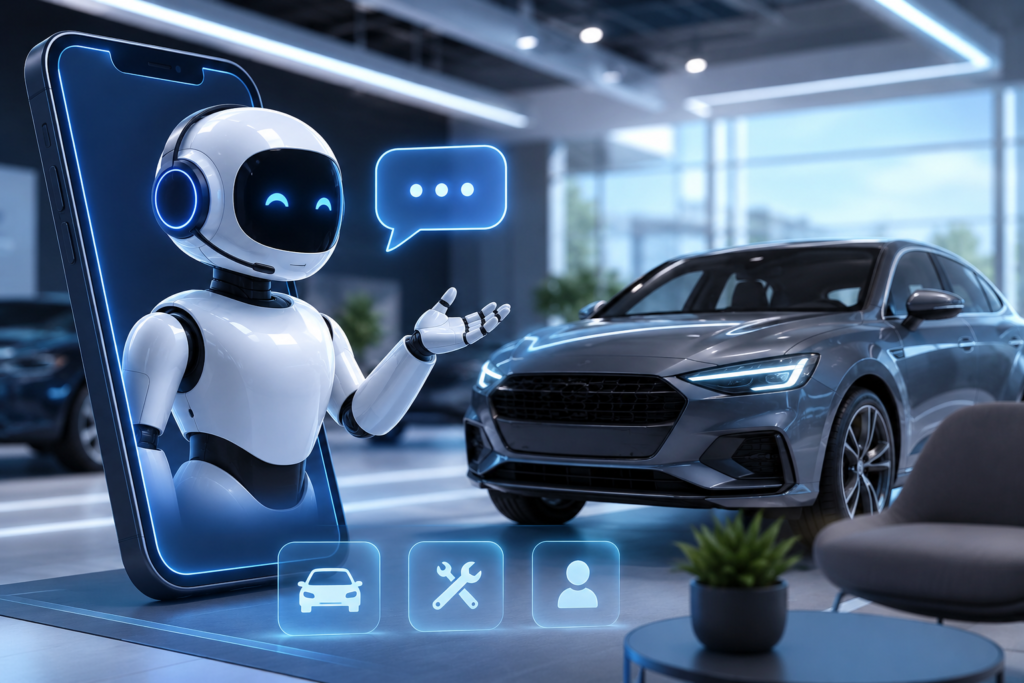
Automotive Chatbot solutions are transforming dealerships, service centers, and automotive businesses by improving customer engagement, automating lead generation, increasing sales, streamlining support, and delivering 24/7 personalized customer experiences.
Introduction
The automotive industry has undergone a significant digital transformation over the past decade. Modern consumers expect instant responses, personalized recommendations, and seamless interactions across multiple communication channels. Traditional customer service methods often struggle to meet these growing expectations, creating opportunities for innovative technologies to bridge the gap between businesses and customers.
An Automotive Chatbot has emerged as one of the most powerful tools for dealerships, automotive service providers, vehicle manufacturers, and parts retailers. By leveraging artificial intelligence, natural language processing, and automation, these intelligent assistants can engage customers around the clock, answer inquiries instantly, qualify leads, schedule appointments, and provide valuable support throughout the customer journey.
At EngagerBot, businesses are increasingly recognizing the value of chatbot technology as a strategic asset rather than simply a customer service tool. Automotive organizations that successfully implement chatbot solutions often experience improved customer satisfaction, higher lead conversion rates, increased operational efficiency, and stronger long-term customer relationships.
What Is an Automotive Chatbot?
An Automotive Chatbot is an AI-powered virtual assistant specifically designed to support automotive businesses through automated customer interactions. These chatbots communicate with website visitors, social media users, and messaging platform customers using conversational interfaces that simulate human interactions.
Unlike generic chat systems, automotive chatbots are trained to understand industry-specific terminology, customer inquiries, vehicle information, maintenance requirements, financing options, inventory details, and appointment scheduling processes. This specialized knowledge enables them to provide accurate and relevant responses that improve the customer experience.
Modern automotive chatbots can perform numerous functions, including vehicle recommendations, lead qualification, service appointment booking, financing pre-screening, inventory searches, warranty information delivery, maintenance reminders, and customer support. As AI technology continues to advance, these capabilities become increasingly sophisticated, allowing businesses to automate more complex customer interactions while maintaining a personalized experience.
Organizations adopting automotive chatbot technology often discover that automation enhances—not replaces—the human element. Sales representatives and service advisors can focus on high-value interactions while chatbots handle repetitive tasks efficiently.
Why the Automotive Industry Needs Chatbot Technology
Customer expectations have evolved dramatically in recent years. Buyers now research vehicles online, compare options across multiple dealerships, and expect immediate responses regardless of business hours. Businesses that fail to provide rapid engagement risk losing potential customers to competitors who respond faster.
Automotive chatbots address these challenges by delivering instant communication capabilities. Whether a customer is searching for a new vehicle, requesting financing information, scheduling maintenance, or checking inventory availability, a chatbot can provide immediate assistance. This responsiveness significantly improves the customer experience while reducing frustration caused by delays.
Another major challenge facing automotive businesses is managing large volumes of inquiries efficiently. Sales teams often spend valuable time answering repetitive questions regarding vehicle specifications, pricing, financing, and service availability. Chatbots automate these interactions, allowing staff members to concentrate on complex customer needs and revenue-generating activities.
Furthermore, chatbot technology helps businesses collect valuable customer data. Every interaction generates insights into customer preferences, buying behaviors, common concerns, and service requirements. These insights can support better decision-making, marketing optimization, and customer relationship management strategies that drive long-term growth.
How Automotive Chatbots Improve Customer Experience
Customer experience has become one of the most important competitive differentiators in the automotive sector. Consumers increasingly value convenience, speed, personalization, and accessibility throughout their buying journey. Automotive chatbots help businesses meet these expectations consistently.
One of the most significant advantages is 24/7 availability. Unlike traditional support teams, chatbots never require breaks, holidays, or sleep. Customers can receive assistance at any time, whether they are browsing inventory late at night or researching financing options during weekends. Continuous availability helps businesses capture opportunities that might otherwise be missed.
Personalization also plays a crucial role. Advanced chatbot systems can analyze customer preferences, browsing history, vehicle interests, and previous interactions to deliver tailored recommendations. Instead of presenting generic information, the chatbot can suggest relevant vehicles, maintenance services, or financing solutions that align with individual needs.
Additionally, automotive chatbots reduce customer effort. Rather than navigating complex websites or waiting on hold for support, customers can simply ask questions in natural language and receive immediate answers. This streamlined experience improves satisfaction while increasing the likelihood of conversions and repeat business.
Lead Generation and Qualification Through Automotive Chatbots
Generating qualified leads remains one of the biggest priorities for automotive businesses. However, capturing and nurturing potential buyers efficiently can be challenging when customer inquiries arrive through multiple channels and at unpredictable times.
Automotive chatbots significantly enhance lead generation by engaging visitors immediately when they arrive on a website or messaging platform. Rather than allowing potential customers to leave without interaction, chatbots initiate conversations, gather information, and guide visitors toward relevant solutions.
Lead qualification is another area where chatbots excel. Through structured conversations, chatbots can collect important information such as vehicle preferences, budget range, financing requirements, trade-in details, and purchase timelines. This data helps identify high-intent prospects who are ready to engage with sales representatives.
The automation of lead qualification offers substantial operational benefits. Sales teams receive more complete and organized lead information, enabling them to prioritize follow-up efforts effectively. Instead of spending time gathering basic details, representatives can focus on building relationships and closing deals. This efficiency often results in higher conversion rates and improved sales performance.
Automotive Chatbots for Vehicle Sales and Inventory Management
Vehicle inventory is one of the most important assets for dealerships, yet customers often struggle to find the exact information they need when browsing online. Automotive chatbots help bridge this gap by providing instant access to inventory data and personalized recommendations.
When customers search for vehicles, chatbots can guide them through the selection process by asking relevant questions about budget, preferred vehicle type, desired features, fuel efficiency requirements, and intended usage. Based on these responses, the chatbot can recommend suitable vehicles from the available inventory.
Inventory-related questions are also handled efficiently. Customers can inquire about vehicle availability, specifications, pricing, promotions, financing options, and trade-in opportunities without waiting for a sales representative. This immediate access to information keeps potential buyers engaged and reduces friction during the purchasing process.
Furthermore, chatbots can proactively notify customers when specific vehicles become available, when pricing changes occur, or when new promotions are introduced. These timely updates help maintain engagement and encourage prospects to take action, ultimately contributing to increased sales opportunities.
Service Appointment Scheduling and Maintenance Automation
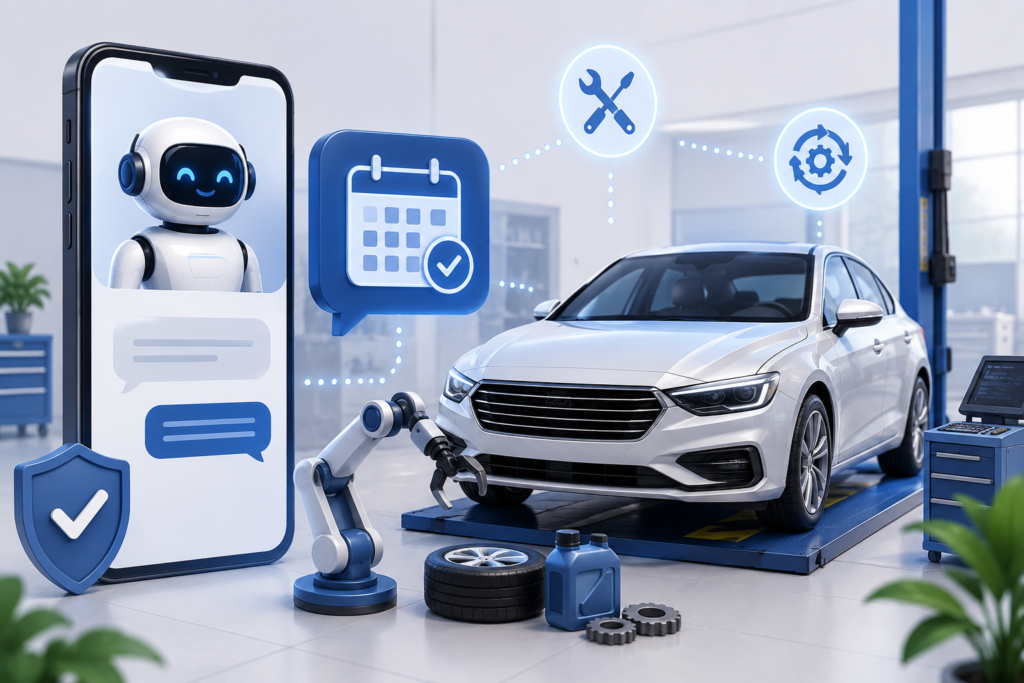
After vehicle purchases are completed, customer relationships continue through maintenance and service interactions. Automotive service departments play a critical role in customer retention and long-term profitability. Chatbots can significantly improve these operations through automation and convenience.
One of the most valuable applications involves appointment scheduling. Customers can book service appointments through chatbot conversations without calling a service center. The chatbot can present available time slots, confirm appointments, and send reminders automatically.
Maintenance reminders represent another important capability. Vehicle owners often forget recommended service intervals, leading to missed maintenance opportunities. Chatbots can send automated notifications based on mileage, service history, or manufacturer recommendations, helping customers maintain their vehicles properly.
Additionally, service-related inquiries can be addressed instantly. Customers frequently ask about service pricing, maintenance requirements, repair timelines, warranty coverage, and appointment availability. By providing immediate answers, chatbots reduce administrative workloads while enhancing customer satisfaction.
AI-Powered Personalization in Automotive Customer Journeys
Personalization has become a cornerstone of successful customer engagement strategies. Consumers increasingly expect businesses to understand their preferences and deliver experiences tailored to their individual needs. Automotive chatbots are uniquely positioned to provide this level of customization.
AI-powered chatbots analyze customer interactions, browsing behaviors, purchase history, service records, and stated preferences to create more relevant conversations. This data-driven approach enables businesses to deliver highly targeted recommendations and support experiences.
For example, a customer who previously purchased an SUV may receive recommendations for accessories, maintenance packages, or future upgrade opportunities related to that vehicle category. Similarly, customers exploring electric vehicles can receive educational content, charging information, and financing options specifically aligned with their interests.
Personalized experiences not only improve customer satisfaction but also increase engagement and conversion rates. When customers feel understood and supported, they are more likely to trust the business, complete purchases, and maintain long-term relationships. Effective personalization transforms chatbot interactions from simple automation into meaningful customer experiences.
Enhancing Automotive Marketing Campaigns With Chatbots
Marketing success depends heavily on engaging prospects at the right time with the right message. Automotive chatbots have become valuable tools for supporting modern marketing strategies by facilitating personalized communication and lead nurturing.
Chatbots can be integrated into digital advertising campaigns, landing pages, email marketing initiatives, and social media platforms. When prospects engage with marketing content, chatbots provide immediate interaction opportunities that help convert interest into actionable leads.
Rather than directing visitors to static forms, businesses can use conversational interfaces to gather information naturally. This approach often increases engagement because customers find interactive experiences more appealing and less intrusive than traditional lead capture methods.
Chatbots also support customer segmentation by collecting detailed information about interests, buying intentions, budget considerations, and vehicle preferences. Marketing teams can use this data to create more targeted campaigns, improve messaging relevance, and enhance overall return on investment. As a result, chatbot-enabled marketing strategies often generate higher-quality leads and stronger campaign performance.
Customer Support Automation in the Automotive Industry
Automotive businesses receive a constant stream of customer inquiries every day. These inquiries range from simple questions about dealership hours and vehicle availability to more complex requests involving financing, warranties, service records, and maintenance schedules. Managing this volume efficiently can be challenging, especially during peak business periods. Automotive chatbots provide a scalable solution that enables businesses to maintain consistent service quality while reducing operational strain.
Support automation helps organizations respond instantly to customer questions without requiring human intervention for every interaction. When customers receive immediate assistance, their satisfaction levels often increase because they no longer need to wait in call queues or for email responses. Fast response times are particularly important in the automotive industry, where customers may be comparing multiple dealerships or service providers simultaneously.
Another important advantage is consistency. Human representatives may vary in knowledge, communication style, or response speed, whereas chatbots provide standardized information based on approved business guidelines. This consistency improves trust, reduces misunderstandings, and helps maintain a professional customer experience. When combined with human escalation capabilities, support automation creates a balanced approach that delivers efficiency without sacrificing personalized service when it is needed most.
Omnichannel Automotive Chatbots and Customer Engagement
Modern customers interact with automotive businesses through a variety of digital channels. They may begin researching vehicles on a website, continue the conversation through social media, ask questions via messaging applications, and eventually schedule an appointment through another platform. Managing these interactions effectively requires a seamless omnichannel communication strategy.
Automotive chatbots can serve as a central engagement layer across multiple channels, ensuring that customers receive consistent information regardless of where the interaction occurs. Whether someone is communicating through a website chat window, mobile application, social media platform, or messaging service, the chatbot can maintain conversation continuity and deliver a unified experience.
Omnichannel engagement also supports customer convenience. Users can communicate through their preferred channels rather than being forced into a single communication method. This flexibility helps increase engagement rates and customer satisfaction because people naturally gravitate toward platforms they already use regularly.
Furthermore, centralized chatbot systems allow businesses to track customer journeys across channels. Understanding how prospects move through different touchpoints provides valuable insights into customer behavior, helping organizations optimize marketing, sales, and support processes. The result is a more connected customer experience that strengthens relationships and encourages long-term loyalty.
Integrating Automotive Chatbots With CRM and Business Systems
The true value of an automotive chatbot often emerges when it is integrated with existing business systems. Standalone chatbots can provide useful automation, but connected systems unlock much greater operational efficiency and customer intelligence.
Customer Relationship Management platforms play a particularly important role in chatbot integration. By connecting chatbot conversations with CRM databases, businesses can automatically capture lead information, update customer records, track interaction histories, and support personalized communication strategies. This integration ensures that valuable customer data is not lost and remains accessible to sales and support teams.
Automotive businesses can also integrate chatbots with inventory management systems, appointment scheduling tools, financing platforms, service management software, and marketing automation solutions. These integrations enable real-time information sharing, allowing customers to receive accurate and current responses without manual intervention.
According to Google Search Central, organizations should prioritize user-focused experiences and reliable information delivery when building digital systems. Relevant guidance can be found through Google Search Essentials.
When business systems work together seamlessly, organizations reduce administrative workloads, improve data accuracy, and create more efficient customer journeys. Integration transforms chatbots from simple communication tools into strategic business assets that contribute directly to growth and customer satisfaction.
Automotive Chatbot Security, Privacy, and Compliance Considerations
As chatbots collect customer information, security and privacy become critical priorities. Automotive businesses often handle sensitive data, including contact details, financing information, vehicle ownership records, and service histories. Protecting this information is essential for maintaining customer trust and regulatory compliance.
A secure chatbot implementation should include encrypted communication channels, secure data storage practices, access controls, and regular security monitoring. These measures help prevent unauthorized access and reduce the risk of data breaches that could damage both customers and business reputation.
Privacy transparency is equally important. Customers should understand what information is being collected, how it will be used, and how it will be protected. Clear privacy policies and consent mechanisms demonstrate accountability and help establish trust throughout the customer relationship.
Organizations should also follow recognized security best practices. Valuable guidance is available through the OWASP Application Security Verification Standard.
By prioritizing security and compliance from the beginning, automotive businesses can confidently leverage chatbot technology while minimizing risks associated with data handling and digital interactions.
Measuring Automotive Chatbot Performance and ROI
Investing in chatbot technology requires measurable business outcomes. Organizations should establish clear performance indicators that demonstrate the effectiveness of chatbot initiatives and support continuous improvement efforts.
One of the most important metrics is lead conversion performance. Businesses should track how many chatbot interactions result in qualified leads, appointments, test drives, financing applications, or completed sales. These metrics directly connect chatbot activity to revenue generation.
Customer satisfaction metrics also provide valuable insights. Feedback surveys, engagement rates, response times, and conversation completion rates help evaluate how customers perceive the chatbot experience. Positive customer sentiment often indicates that the chatbot is successfully meeting user expectations.
Operational efficiency metrics should also be monitored. Reduced support workloads, lower call volumes, faster response times, and improved appointment scheduling efficiency demonstrate how chatbots contribute to cost savings and productivity improvements. By analyzing these performance indicators regularly, businesses can optimize chatbot strategies and maximize return on investment over time.
Common Mistakes Businesses Make When Implementing Automotive Chatbots
Despite the significant benefits of chatbot technology, many organizations fail to achieve optimal results due to avoidable implementation mistakes. Understanding these common challenges can help businesses develop more successful deployment strategies.
One frequent mistake is focusing solely on automation while neglecting customer experience. Some organizations attempt to automate every interaction, creating frustrating experiences when customers require human assistance. Effective chatbot strategies always include clear escalation paths that allow users to connect with qualified representatives when necessary.
Another common error involves insufficient chatbot training. If a chatbot lacks accurate automotive knowledge or cannot understand customer intent effectively, conversations become unproductive and customer satisfaction declines. Continuous testing, optimization, and knowledge-base updates are essential for maintaining chatbot effectiveness.
Businesses also sometimes overlook integration requirements. A chatbot that operates independently from CRM, inventory, and scheduling systems may create information silos and inconsistent customer experiences. Proper integration ensures that chatbot interactions contribute meaningfully to broader business processes and objectives.
Avoiding these mistakes helps organizations maximize the value of chatbot technology while delivering more satisfying customer experiences.
The Future of Automotive Chatbots and Artificial Intelligence
Artificial intelligence continues to evolve rapidly, and automotive chatbots are expected to become increasingly sophisticated in the coming years. Future advancements will likely enhance personalization, predictive capabilities, voice interactions, and customer journey automation.
Predictive AI represents one of the most exciting developments. Rather than simply responding to customer requests, future chatbots may proactively anticipate customer needs based on behavioral patterns, vehicle usage data, service history, and purchase preferences. This capability could create highly personalized experiences that strengthen customer relationships.
Voice-enabled interactions are also expected to play a larger role. As voice technology becomes more accurate and widely adopted, customers may increasingly interact with automotive businesses through conversational voice interfaces rather than text-based systems. This evolution could make digital engagement even more natural and accessible.
Additionally, integration with connected vehicles, smart mobility platforms, and emerging automotive technologies may create entirely new customer engagement opportunities. Businesses that embrace innovation and invest strategically in AI-powered communication tools will likely gain significant competitive advantages as the industry continues its digital transformation.
Best Practices for Automotive Chatbot Success
Successful chatbot implementation requires more than simply deploying technology. Organizations must adopt thoughtful strategies that prioritize customer needs, business goals, and continuous improvement.
The first best practice is defining clear objectives. Businesses should identify whether their primary goals involve lead generation, customer support, appointment scheduling, sales assistance, or a combination of these functions. Clear objectives guide implementation decisions and performance measurement efforts.
Another essential practice involves designing conversations around customer needs rather than internal business processes. User-friendly conversations, intuitive navigation, and natural language interactions create better experiences and encourage engagement. Regular testing with real users helps identify areas for improvement and optimization.
Continuous monitoring and refinement are equally important. Customer expectations evolve, market conditions change, and chatbot technology advances rapidly. Organizations should regularly analyze performance data, review conversation logs, and update chatbot capabilities to ensure ongoing effectiveness.
By following proven best practices, businesses can maximize chatbot value while creating meaningful customer experiences that support long-term growth.
Frequently Asked Questions
1. What is an Automotive Chatbot?
An Automotive Chatbot is an AI-powered virtual assistant designed specifically for automotive businesses. It helps automate customer interactions related to vehicle sales, service appointments, financing inquiries, inventory searches, and customer support.
2. Can Automotive Chatbots Generate Qualified Leads?
Yes. Chatbots can engage website visitors, collect customer information, identify purchase intent, and qualify leads before transferring them to sales representatives. This process improves lead quality and sales efficiency.
3. Are Automotive Chatbots Available 24/7?
Yes. One of the biggest advantages of chatbot technology is continuous availability. Customers can receive assistance anytime, including evenings, weekends, and holidays.
4. Can Chatbots Schedule Service Appointments?
Absolutely. Automotive chatbots can display appointment availability, book service visits, send reminders, and manage scheduling updates automatically.
5. Do Automotive Chatbots Replace Human Employees?
No. Chatbots are designed to complement human teams by automating repetitive tasks and handling routine inquiries. Human staff remain essential for complex consultations, negotiations, and relationship-building activities.
6. Are Automotive Chatbots Secure?
When implemented properly, automotive chatbots can be highly secure. Businesses should use encryption, secure integrations, access controls, and privacy best practices to protect customer information.
7. How Do Chatbots Improve Customer Satisfaction?
Chatbots provide instant responses, personalized recommendations, convenient support, and faster problem resolution. These benefits contribute significantly to improved customer experiences.
8. What Is the ROI of an Automotive Chatbot?
ROI varies depending on implementation quality and business objectives. However, many organizations experience improved lead generation, higher conversion rates, reduced support costs, and increased operational efficiency.
Conclusion
Automotive chatbots have evolved from simple automation tools into powerful business solutions that support sales, service, marketing, customer engagement, and operational efficiency. As customer expectations continue to rise, businesses must deliver fast, personalized, and convenient experiences across every stage of the customer journey.
Organizations that successfully implement chatbot technology can benefit from increased lead generation, stronger customer relationships, improved service delivery, enhanced operational productivity, and valuable customer insights. The combination of artificial intelligence, automation, and personalization creates opportunities for sustainable growth in an increasingly competitive market.
For businesses seeking to modernize customer engagement strategies and remain competitive in the digital age, automotive chatbot technology represents a valuable investment. At EngagerBot, the future of automotive customer interaction is increasingly driven by intelligent conversational experiences that combine efficiency, convenience, and customer-centric innovation.
Want to Implement This Easily?
Prompt Text:
You are an expert consultant. Based on the blog post titled “Automotive Chatbot”, provide a step-by-step, practical implementation guide. Include tools, best practices, common mistakes to avoid, and advanced tips. Assume the reader wants to implement everything discussed in this article effectively.
Call to Action:
Want our help implementing this? Just reach out to us via our website contact form: https://www.engagerbot.com/contact-us/