

Discover how a Bank & Finance Chatbot improves customer service, automates banking processes, enhances security, reduces costs, and delivers personalized financial experiences while supporting digital transformation in modern financial institutions.
Introduction
The banking and financial services industry has experienced a dramatic digital transformation over the last decade. Customers now expect instant access to account information, seamless digital experiences, personalized financial guidance, and support available around the clock. Traditional customer service channels often struggle to meet these growing expectations, creating opportunities for innovative technologies that can bridge the gap between customer demands and operational efficiency.
A Bank & Finance Chatbot has emerged as one of the most effective solutions for addressing these challenges. Powered by artificial intelligence, natural language processing, and machine learning, modern banking chatbots can assist customers with routine inquiries, facilitate transactions, provide financial education, support loan applications, and help financial institutions streamline their operations. These intelligent virtual assistants significantly improve customer satisfaction while reducing operational costs.
At EngagerBot, organizations recognize that customer engagement is becoming increasingly important in financial services. As digital banking continues to evolve, chatbots are helping institutions create faster, safer, and more personalized experiences. This guide explores every aspect of banking chatbots, including benefits, implementation strategies, security considerations, future trends, and best practices for successful deployment.
Understanding Bank & Finance Chatbots
Banking chatbots are AI-powered virtual assistants designed specifically for financial institutions. These chatbots interact with customers through websites, mobile applications, messaging platforms, and digital banking portals. Their primary objective is to provide quick, accurate, and convenient support without requiring human intervention for every customer request.
Modern financial chatbots utilize technologies such as Natural Language Processing (NLP) to understand customer questions and provide meaningful responses. Unlike traditional rule-based systems, advanced AI chatbots continuously learn from interactions, improving their ability to interpret customer intent and deliver accurate assistance over time.
The capabilities of banking chatbots extend far beyond answering simple FAQs. They can assist with account inquiries, transaction histories, payment reminders, loan eligibility assessments, financial planning support, fraud detection notifications, and personalized product recommendations. This makes them valuable tools for banks, credit unions, insurance companies, investment firms, and other financial institutions seeking to improve customer experiences while maintaining operational efficiency.
Why Digital Banking Requires Intelligent Chatbots
Digital banking has fundamentally changed how customers interact with financial institutions. Consumers increasingly prefer mobile and online banking over traditional branch visits. This shift requires financial organizations to provide continuous support while managing growing volumes of customer inquiries efficiently.
One of the primary challenges facing financial institutions is maintaining high-quality customer service at scale. Customers expect immediate responses regardless of the time of day. Long wait times can lead to frustration, reduced customer loyalty, and missed business opportunities. Banking chatbots address this issue by delivering instant assistance 24 hours a day, seven days a week.
Additionally, digital banking environments generate vast amounts of customer interactions and data. AI-powered chatbots can analyze these interactions to identify customer preferences, detect common issues, and uncover opportunities for service improvement. By combining automation with intelligent insights, chatbots enable financial institutions to deliver more responsive and personalized customer experiences while supporting broader digital transformation initiatives.
Key Features of Modern Bank & Finance Chatbots
Modern banking chatbots incorporate a wide range of advanced capabilities designed to support both customers and financial institutions. These features enable chatbots to handle increasingly complex interactions while maintaining high levels of accuracy and security.
A critical feature is conversational AI, which allows chatbots to understand natural language and engage in human-like conversations. This capability makes customer interactions more intuitive and reduces the learning curve associated with digital banking tools. Customers can ask questions in their own words rather than navigating complex menus or forms.
Another important feature is secure account integration. Banking chatbots can connect directly with customer accounts, enabling users to check balances, review transaction histories, monitor spending patterns, and receive personalized financial insights. Additional features often include appointment scheduling, loan application support, investment assistance, payment processing, document collection, fraud alerts, and multilingual communication capabilities that improve accessibility for diverse customer populations.
Improving Customer Service Through Banking Chatbots
Exceptional customer service remains one of the strongest competitive advantages in the financial services industry. Banking chatbots play a crucial role in helping institutions deliver consistent, responsive, and personalized support across multiple channels.
One significant benefit is immediate response availability. Customers no longer need to wait for business hours or remain on hold for extended periods. Whether they need assistance with account balances, transaction details, payment schedules, or loan information, chatbots provide answers instantly. This improves customer satisfaction while reducing the burden on support teams.
Chatbots also help standardize customer service quality. Human agents may vary in expertise, availability, and performance, but AI-powered assistants deliver consistent responses based on predefined policies and continuously updated knowledge bases. When inquiries become too complex, the chatbot can seamlessly transfer the conversation to a qualified human representative, ensuring customers receive appropriate support without unnecessary delays.
Automating Routine Banking Operations
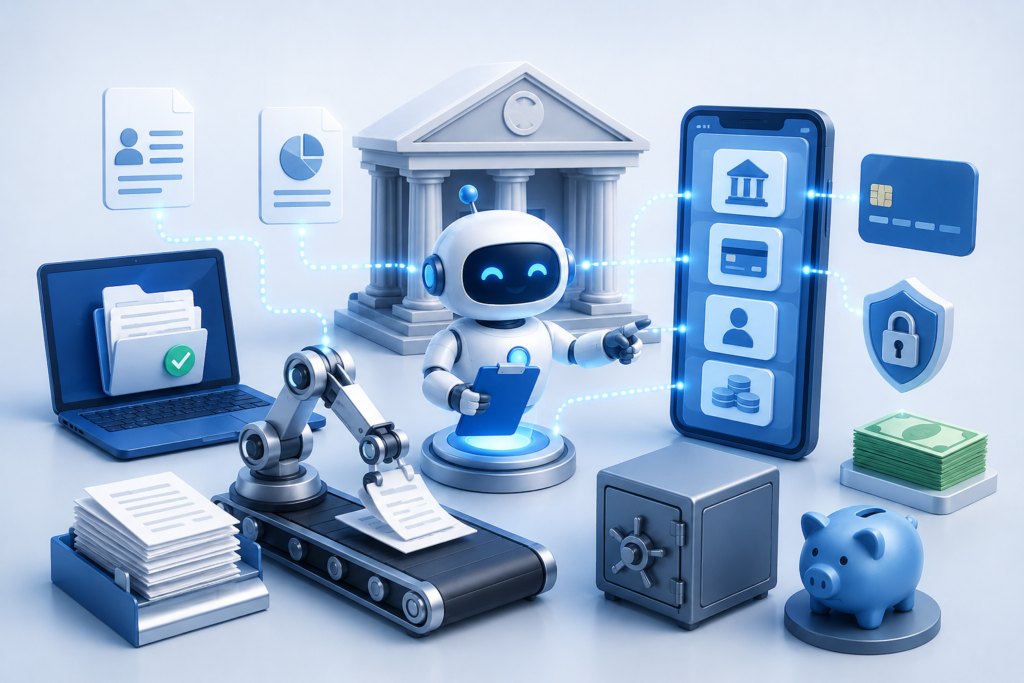
Financial institutions handle millions of routine transactions and inquiries daily. Many of these interactions involve repetitive tasks that consume valuable employee time and resources. Banking chatbots automate these activities, allowing staff members to focus on higher-value responsibilities.
Examples of automation include balance inquiries, account verification, transaction tracking, password resets, payment reminders, card activation requests, and branch location assistance. By automating these common interactions, banks can significantly reduce operational costs while improving service speed and availability.
Automation also enhances scalability. During peak periods such as tax season, promotional campaigns, or economic events, customer inquiry volumes can increase dramatically. Chatbots can manage thousands of simultaneous conversations without compromising response quality. This flexibility helps institutions maintain service excellence regardless of demand fluctuations while optimizing workforce allocation and operational efficiency.
Enhancing Security and Fraud Prevention
Security is one of the most critical concerns in banking and financial services. Customers trust financial institutions with sensitive personal and financial information, making cybersecurity a top priority. Modern banking chatbots contribute to stronger security frameworks while improving customer confidence.
Many banking chatbots incorporate advanced authentication mechanisms such as multi-factor authentication. Guidance from Multi-Factor Authentication best practices helps organizations strengthen identity verification processes and reduce unauthorized account access risks. These security measures help ensure that only authorized users can access sensitive financial information through chatbot interactions.
In addition to authentication, AI-powered chatbots can assist in fraud detection by identifying unusual account activity and immediately notifying customers. Machine learning algorithms can analyze transaction patterns, recognize anomalies, and trigger alerts when suspicious behavior is detected. Early identification of potential fraud enables faster intervention, minimizing financial losses and strengthening customer trust in digital banking services.
Personalization and Customer Engagement in Financial Services
Modern customers expect personalized experiences across all digital interactions, including banking. Generic communication is increasingly ineffective, particularly when customers seek financial guidance tailored to their unique circumstances. Banking chatbots help financial institutions deliver highly personalized engagement at scale.
AI-powered chatbots analyze customer behavior, transaction histories, account preferences, and previous interactions to provide customized recommendations. For example, a chatbot may suggest relevant savings products, investment opportunities, loan options, or budgeting strategies based on individual financial goals and spending patterns.
Personalization also improves customer engagement by making interactions more relevant and meaningful. Customers receive timely reminders, educational content, financial wellness tips, and proactive notifications that align with their needs. This level of individualized service helps strengthen customer relationships, increase loyalty, and encourage long-term engagement with financial products and services.
Supporting Loan Applications and Financial Product Sales
Loan processing and financial product acquisition often involve lengthy procedures that can create friction for customers. Banking chatbots streamline these processes by guiding users through application requirements, collecting preliminary information, and answering questions throughout the customer journey.
Chatbots can assess basic eligibility criteria, explain documentation requirements, provide loan calculators, and help applicants understand available options. This reduces confusion and improves application completion rates. Customers receive immediate assistance without needing to schedule appointments or wait for agent availability.
Beyond loans, chatbots can support the promotion and sale of various financial products, including savings accounts, credit cards, insurance policies, investment services, and retirement planning solutions. By analyzing customer profiles and preferences, chatbots can present relevant recommendations at appropriate moments, increasing conversion opportunities while enhancing the overall customer experience.
Creating Omnichannel Banking Experiences
Modern banking customers interact with financial institutions through multiple channels, including websites, mobile apps, social media platforms, messaging applications, email, and traditional customer support systems. Delivering a consistent experience across all these touchpoints is essential for maintaining customer satisfaction and trust. Banking chatbots play a significant role in creating seamless omnichannel experiences that allow customers to transition smoothly between communication channels without losing context.
An omnichannel banking chatbot maintains conversation history and customer information across platforms. For example, a customer may begin a conversation on a mobile banking application and later continue it through a website or customer support portal. The chatbot can recognize previous interactions and provide continuity, eliminating the need for customers to repeat information. This convenience significantly improves the overall customer experience and strengthens customer relationships.
Furthermore, omnichannel chatbot deployments support greater accessibility and convenience. Customers can choose the communication method they prefer while receiving consistent service quality. Whether they are checking account balances, inquiring about loan options, or resolving transaction concerns, they receive the same accurate information regardless of the channel used. This unified approach supports customer retention and reinforces the institution’s commitment to exceptional digital service delivery.
AI, Machine Learning, and Predictive Analytics in Banking Chatbots
Artificial intelligence is the driving force behind the effectiveness of modern banking chatbots. Advanced AI technologies enable chatbots to understand customer intent, process complex inquiries, and continuously improve their performance through learning and adaptation. As financial institutions accumulate more customer interaction data, AI becomes increasingly valuable in delivering smarter and more personalized experiences.
Machine learning algorithms allow chatbots to analyze historical interactions and identify patterns that improve future responses. Over time, these systems become more accurate in understanding customer requests, reducing misunderstandings and enhancing service quality. This continuous learning capability helps institutions maintain high levels of customer satisfaction while reducing the need for manual intervention.
Predictive analytics further enhances chatbot functionality by enabling proactive customer engagement. By analyzing spending behavior, financial goals, account activity, and transaction patterns, chatbots can anticipate customer needs and provide relevant recommendations. Predictive insights may include savings opportunities, investment suggestions, credit management advice, or alerts about potential financial risks. This proactive approach transforms chatbots from reactive support tools into valuable financial assistants.
Regulatory Compliance and Data Protection
The banking and financial services industry operates within a highly regulated environment. Compliance requirements exist to protect customer information, ensure financial stability, and maintain trust in the financial system. Banking chatbots must be designed and managed carefully to support these regulatory obligations while delivering efficient customer service.
Financial institutions must prioritize data security and privacy throughout chatbot implementation. Following principles outlined in the General Data Protection Regulation (GDPR) and security recommendations from the NIST Cybersecurity Framework helps organizations establish strong data governance practices. These frameworks emphasize transparency, accountability, and secure handling of customer information.
Compliance-focused chatbots can assist institutions by maintaining detailed interaction records, enforcing authentication requirements, and ensuring sensitive information is handled appropriately. Properly designed systems help reduce compliance risks while providing customers with confidence that their financial data remains protected. Regular audits, security assessments, and policy updates are essential for maintaining compliance in an evolving regulatory landscape.
Integrating Chatbots with Core Banking Systems
A banking chatbot delivers the greatest value when it integrates seamlessly with existing financial infrastructure. Integration with core banking systems allows chatbots to access real-time account information, transaction records, customer profiles, and service workflows. This connectivity enables the chatbot to provide accurate, personalized, and actionable assistance.
Successful integration requires careful planning and collaboration between technology teams, security specialists, compliance officers, and business stakeholders. Application Programming Interfaces (APIs) play a crucial role in enabling secure communication between chatbot platforms and banking systems. Financial institutions often implement robust access controls and encryption measures to protect sensitive information during these interactions.
Integrated chatbots can support a wide range of services, including account inquiries, loan status updates, payment processing, customer onboarding, document collection, and financial product recommendations. By connecting multiple systems into a unified customer experience, institutions can improve operational efficiency while delivering more comprehensive and responsive support services.
Measuring ROI and Banking Chatbot Performance
Implementing a banking chatbot represents a strategic investment, making it essential to measure performance and return on investment accurately. Financial institutions should establish clear objectives and key performance indicators before deployment to evaluate the chatbot’s effectiveness and identify opportunities for improvement.
Common performance metrics include response time, customer satisfaction scores, resolution rates, conversation completion rates, customer retention, lead generation, and cost savings. These metrics provide valuable insights into how effectively the chatbot supports customers and contributes to organizational goals. Monitoring performance regularly helps ensure continuous optimization and long-term success.
ROI often extends beyond direct cost reductions. Banking chatbots can improve customer loyalty, increase product adoption, enhance operational efficiency, reduce support workloads, and strengthen digital engagement. When evaluated comprehensively, the financial and strategic benefits of chatbot deployment frequently justify the investment while supporting broader digital transformation initiatives.
Future Trends Shaping Bank & Finance Chatbots
The future of banking chatbots is closely tied to advances in artificial intelligence, automation, and digital banking innovation. As technology continues to evolve, chatbots will become even more capable of delivering intelligent, personalized, and proactive financial services that enhance customer experiences and operational performance.
One emerging trend is the adoption of generative AI technologies that enable more natural and sophisticated conversations. These systems can provide detailed explanations, financial education, and personalized recommendations while maintaining conversational fluidity. Advances in voice banking are also expanding chatbot capabilities, allowing customers to interact with financial services through spoken language interfaces.
Another significant trend involves deeper integration with predictive analytics and financial wellness platforms. Future chatbots may serve as comprehensive financial advisors, helping customers manage budgets, optimize investments, reduce debt, and achieve long-term financial goals. As institutions continue to invest in AI-driven innovation, chatbots will play an increasingly central role in digital banking ecosystems.
Common Mistakes Organizations Make When Implementing Banking Chatbots
Many financial institutions recognize the benefits of chatbot technology but encounter challenges during implementation. Understanding common mistakes can help organizations avoid costly setbacks and maximize the value of their chatbot investments.
One frequent mistake is focusing solely on automation while neglecting customer experience. A chatbot that prioritizes efficiency over usability may frustrate customers and reduce satisfaction. Organizations should design chatbot interactions with customer needs in mind, ensuring conversations are intuitive, helpful, and easy to navigate.
Another common error is inadequate integration with existing systems. Limited access to customer information can restrict chatbot functionality and create inconsistent experiences. Security and compliance oversights also represent significant risks. Financial institutions must ensure robust authentication, data protection, and regulatory compliance throughout the chatbot lifecycle. Continuous monitoring, testing, and optimization are essential for maintaining performance and customer trust.
Best Practices for Banking Chatbot Success
Successful banking chatbot deployments require a strategic approach that balances technology, customer experience, security, and operational objectives. Organizations that follow proven best practices are more likely to achieve meaningful results and long-term value.
Begin by defining clear goals and measurable outcomes. Whether the objective is reducing support costs, improving customer satisfaction, increasing product adoption, or enhancing digital engagement, establishing specific targets helps guide implementation and evaluation efforts. Strong alignment between business objectives and chatbot capabilities is critical for success.
Invest in high-quality conversational design and ongoing training. Chatbots should understand customer intent accurately and provide responses that are relevant, clear, and helpful. Regular updates, performance reviews, and machine learning optimization help maintain effectiveness as customer needs evolve. Security, compliance, and transparency should remain central priorities throughout the deployment process.
Best Practices Summary
- Define clear business objectives before implementation.
- Prioritize customer experience over automation alone.
- Ensure strong security and authentication measures.
- Integrate with core banking and CRM systems.
- Continuously monitor performance metrics.
- Use AI and machine learning for ongoing improvement.
- Maintain regulatory compliance and data protection.
- Provide seamless escalation to human agents.
- Personalize customer interactions whenever possible.
- Regularly update knowledge bases and workflows.
Frequently Asked Questions
1. What is a Bank & Finance Chatbot?
A Bank & Finance Chatbot is an AI-powered virtual assistant that helps customers interact with financial institutions through conversational interfaces. It can answer questions, provide account information, support transactions, assist with loan applications, and deliver personalized financial guidance.
2. Are banking chatbots secure?
Yes, when implemented properly. Modern banking chatbots use encryption, authentication mechanisms, access controls, and fraud detection technologies to protect customer information and maintain secure interactions.
3. Can chatbots replace human banking representatives?
Chatbots are designed to complement human representatives rather than replace them entirely. They handle routine inquiries efficiently while allowing human experts to focus on complex issues that require specialized knowledge and personal attention.
4. How do banking chatbots improve customer service?
Banking chatbots provide instant responses, 24/7 availability, personalized assistance, consistent service quality, and faster issue resolution. These benefits contribute to higher customer satisfaction and stronger customer relationships.
5. Can banking chatbots help prevent fraud?
Yes. AI-powered chatbots can monitor transaction activity, identify suspicious patterns, send real-time alerts, and support fraud prevention efforts through proactive monitoring and customer communication.
6. What financial services can a chatbot support?
Banking chatbots can support account management, transaction inquiries, loan applications, credit card services, investment guidance, insurance information, payment processing, customer onboarding, and financial education.
7. How long does chatbot implementation typically take?
Implementation timelines vary depending on project complexity, integration requirements, security considerations, and customization needs. Simple deployments may take several weeks, while enterprise-level implementations may require several months.
8. How can organizations measure chatbot success?
Success can be measured through customer satisfaction scores, response times, resolution rates, operational cost savings, lead generation, product adoption rates, customer retention, and overall return on investment.
Conclusion
The banking and financial services industry continues to evolve rapidly as customer expectations and digital technologies advance. Bank & Finance Chatbots have become essential tools for delivering exceptional customer experiences, automating routine operations, strengthening security, supporting compliance, and driving digital transformation. Financial institutions that embrace chatbot technology are better positioned to meet modern customer demands while improving operational efficiency and maintaining competitive advantages.
As AI capabilities continue to mature, banking chatbots will become even more intelligent, proactive, and personalized. Organizations seeking to enhance customer engagement, streamline operations, and support long-term growth can benefit significantly from implementing a well-designed chatbot strategy. At EngagerBot, businesses can explore innovative solutions that help transform customer interactions and unlock the full potential of conversational AI in financial services.
Want to Implement This Easily?
Prompt Text:
You are an expert consultant. Based on the blog post titled “Bank & Finance Chatbot”, provide a step-by-step, practical implementation guide. Include tools, best practices, common mistakes to avoid, and advanced tips. Assume the reader wants to implement everything discussed in this article effectively.
Call to Action:
Want our help implementing this? Just reach out to us via our website contact form: https://www.engagerbot.com/contact-us/