
Discover how a Hospitality Chatbot enhances guest experiences, streamlines hotel operations, increases direct bookings, provides 24/7 customer support, and improves business efficiency. Learn the benefits, features, implementation strategies, best practices, and future trends of AI-powered hospitality chatbots.
Introduction
The hospitality industry has always been built on exceptional customer service, personalized experiences, and efficient communication. Today, guests expect instant responses, seamless booking experiences, personalized recommendations, and around-the-clock support across websites, mobile devices, and messaging platforms. Meeting these expectations manually can be challenging, especially for hotels, resorts, vacation rentals, restaurants, and travel businesses that serve guests across different time zones.
A Hospitality Chatbot has emerged as one of the most effective technologies for modern hospitality businesses looking to enhance guest satisfaction while reducing operational workloads. Powered by artificial intelligence (AI) and natural language processing (NLP), hospitality chatbots can answer guest inquiries, manage reservations, provide concierge services, recommend amenities, process common requests, and assist customers throughout every stage of their journey. Rather than replacing human staff, these intelligent virtual assistants complement hospitality teams by handling repetitive tasks, allowing employees to focus on delivering memorable guest experiences.
At EngagerBot, we understand how AI-powered automation is reshaping customer interactions across the hospitality industry. From boutique hotels and luxury resorts to restaurants and travel agencies, businesses are increasingly adopting chatbot technology to improve service quality, increase direct bookings, reduce operational costs, and maintain consistent communication. This comprehensive guide explores everything you need to know about hospitality chatbots, including their benefits, features, implementation strategies, best practices, common mistakes, frequently asked questions, and future opportunities.
What Is a Hospitality Chatbot?
A Hospitality Chatbot is an AI-powered virtual assistant specifically designed to help hotels, resorts, vacation rentals, restaurants, tourism companies, and other hospitality businesses communicate with guests through automated conversations. These chatbots interact through websites, mobile applications, social media platforms, and messaging services, offering immediate assistance whenever customers need information or support. Unlike traditional automated response systems that rely on rigid scripts, modern AI chatbots understand conversational language, interpret customer intent, and provide intelligent, context-aware responses.
Hospitality chatbots can assist guests before, during, and after their stay. Before arrival, they answer questions about room availability, pricing, amenities, check-in times, transportation options, nearby attractions, and booking policies. During a guest’s stay, they help with room service requests, housekeeping schedules, maintenance reports, restaurant reservations, spa appointments, and concierge recommendations. After departure, they collect feedback, encourage online reviews, answer billing questions, and support loyalty programs. This continuous engagement helps businesses create stronger customer relationships while ensuring guests receive timely assistance throughout their journey.
Modern hospitality chatbots also integrate with property management systems (PMS), customer relationship management (CRM) platforms, booking engines, payment gateways, and communication tools to deliver seamless service. They can personalize conversations based on guest preferences, booking history, and previous interactions, creating experiences that feel both efficient and welcoming. By automating repetitive inquiries while providing accurate information around the clock, hospitality chatbots significantly improve operational efficiency, reduce response times, and support staff in delivering exceptional service. As guest expectations continue to evolve, AI-powered chatbots have become an essential component of digital transformation within the hospitality industry.
Why Hospitality Chatbots Are Revolutionizing the Hospitality Industry
The hospitality industry has undergone a remarkable digital transformation over the past decade. Travelers no longer rely solely on phone calls or email to communicate with hotels, resorts, restaurants, or travel providers. Instead, they expect immediate answers, personalized recommendations, and seamless interactions across websites, mobile applications, and messaging platforms. A Hospitality Chatbot addresses these evolving expectations by delivering fast, intelligent, and consistent customer service around the clock. Whether a guest wants to check room availability, confirm reservation details, inquire about amenities, or request late checkout, an AI-powered chatbot provides instant assistance without requiring guests to wait for a staff member. This immediate responsiveness enhances customer satisfaction while creating a smoother and more convenient guest experience.
One of the primary reasons hospitality chatbots are transforming the industry is their ability to automate repetitive yet essential tasks. Hotels and hospitality businesses receive hundreds of similar inquiries every day regarding check-in times, cancellation policies, parking availability, Wi-Fi access, restaurant hours, airport transportation, and local attractions. Handling these questions manually consumes valuable staff time and can lead to delayed responses during busy periods. By automating these interactions, chatbots allow employees to focus on high-value tasks that require empathy, critical thinking, and personalized attention. This balance between automation and human service enables businesses to improve operational efficiency without compromising the quality of guest interactions. Additionally, chatbots can simultaneously manage thousands of conversations, making them particularly valuable during peak travel seasons when customer inquiries increase significantly.
Another major advantage is the ability to deliver highly personalized experiences. Modern AI-powered hospitality chatbots analyze guest preferences, booking history, language preferences, and previous interactions to provide tailored recommendations and proactive assistance. For example, a returning guest may receive personalized room suggestions, dining recommendations based on previous visits, or exclusive loyalty offers. Families can receive recommendations for kid-friendly activities, while business travelers may be offered meeting room reservations and airport transfer services. This level of personalization not only improves customer satisfaction but also encourages repeat bookings and strengthens brand loyalty. Furthermore, hospitality chatbots integrate seamlessly with booking engines, property management systems, customer relationship management platforms, and payment gateways, enabling businesses to provide a unified digital experience from the initial inquiry to post-stay follow-up. As customer expectations continue to rise, hospitality chatbots have become an essential technology that helps businesses remain competitive, improve service quality, increase direct bookings, and build lasting relationships with guests.
Key Features of a Modern Hospitality Chatbot
A modern Hospitality Chatbot offers far more than automated question-and-answer functionality. Today’s AI-powered chatbots serve as intelligent digital assistants capable of managing numerous guest interactions across every stage of the customer journey. One of the most valuable features is 24/7 customer support, ensuring guests receive immediate assistance regardless of time zone or business hours. Whether someone is booking accommodation late at night, requesting airport transportation early in the morning, or seeking emergency assistance during their stay, the chatbot remains available to provide accurate and timely responses. This constant availability significantly improves customer satisfaction while reducing the workload placed on front desk and customer support teams.
Another powerful feature is reservation and booking assistance. Hospitality chatbots can guide guests through room selection, display available packages, explain pricing options, answer questions about promotions, and assist with completing reservations. Many advanced chatbots integrate directly with hotel booking systems, enabling guests to make, modify, or cancel reservations without leaving the conversation. Beyond bookings, chatbots also support digital check-in and check-out processes, provide payment confirmations, send booking reminders, and offer real-time updates about reservation status. Additional features include multilingual communication, allowing hospitality businesses to serve international travelers in their preferred language while maintaining consistent service quality across global audiences.
Modern hospitality chatbots also function as intelligent concierge assistants. They recommend local attractions, restaurants, entertainment venues, transportation services, nearby shopping destinations, and special events based on guest interests. During a guest’s stay, chatbots can handle housekeeping requests, room service orders, maintenance reports, spa reservations, restaurant bookings, wake-up calls, and frequently asked questions about hotel facilities. Integration with customer relationship management systems enables personalized recommendations based on previous stays and loyalty program participation. Advanced analytics further help hospitality managers understand guest behavior, identify frequently asked questions, monitor customer satisfaction, and continuously improve service delivery. By combining automation, personalization, operational efficiency, and data-driven insights, modern hospitality chatbots have become an indispensable technology for hotels, resorts, travel agencies, restaurants, and other hospitality businesses seeking to enhance guest experiences while maximizing operational performance.
Benefits of Hospitality Chatbots for Hotels and Travel Businesses
The adoption of a Hospitality Chatbot offers measurable benefits for hotels, resorts, vacation rentals, restaurants, and travel companies striving to deliver exceptional customer experiences while optimizing daily operations. One of the most significant advantages is the ability to provide instant customer support at any time of the day. Guests no longer have to wait for office hours or remain on hold to receive answers about room availability, reservation changes, amenities, or local attractions. AI-powered chatbots deliver immediate, accurate responses, helping businesses improve customer satisfaction and build trust. This always-available communication channel is particularly valuable for international travelers who may require assistance across different time zones.
Another major benefit is the increase in direct bookings. Many potential guests abandon booking processes because they have unanswered questions about pricing, room types, cancellation policies, or available services. A hospitality chatbot proactively engages visitors, answers their questions in real time, recommends suitable accommodation options, and guides them through the reservation process. This personalized assistance reduces booking abandonment and encourages guests to complete their reservations directly through the business website rather than relying on third-party booking platforms. As a result, hospitality businesses can lower commission costs while improving revenue and maintaining stronger relationships with their customers.
Hospitality chatbots also contribute to operational efficiency and cost savings by automating repetitive administrative tasks. Instead of requiring staff members to answer the same questions repeatedly, chatbots manage routine inquiries, booking confirmations, payment reminders, appointment scheduling, and guest requests automatically. Employees can then dedicate more time to providing personalized service, resolving complex issues, and creating memorable guest experiences. Furthermore, chatbots collect valuable customer insights that help businesses understand guest preferences, identify service trends, measure satisfaction, and refine marketing strategies. Their ability to integrate with booking engines, property management systems, customer relationship management platforms, and payment solutions creates a seamless digital ecosystem that improves both business performance and customer loyalty. For hospitality organizations seeking long-term growth, investing in AI chatbot technology delivers substantial returns through improved efficiency, higher guest satisfaction, and increased profitability.
How Hospitality Chatbots Improve Guest Experience
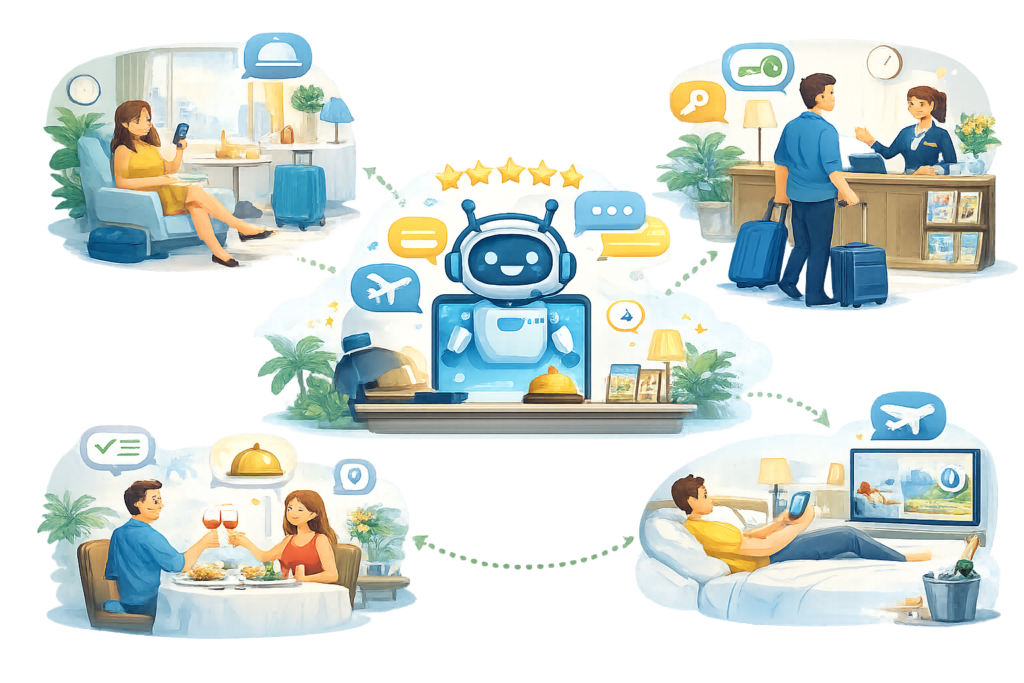
Guest experience is one of the most important factors influencing customer satisfaction, online reviews, repeat bookings, and brand reputation. A Hospitality Chatbot enhances every stage of the guest journey by delivering personalized, efficient, and consistent communication before arrival, throughout the stay, and even after checkout. Before guests make a reservation, chatbots answer questions about room availability, pricing, amenities, promotions, transportation, accessibility, pet policies, and nearby attractions. By providing immediate responses and personalized recommendations, chatbots simplify decision-making and help prospective guests feel confident about booking their stay.
Once a reservation has been confirmed, hospitality chatbots continue supporting guests by sharing confirmation details, check-in instructions, digital registration forms, weather updates, travel information, and reminders about upcoming reservations. During the stay, guests can use the chatbot to request housekeeping services, schedule room cleaning, order room service, book restaurant tables, reserve spa treatments, request maintenance assistance, arrange airport transfers, or ask for recommendations about local entertainment and attractions. Instead of waiting in line at the front desk or making multiple phone calls, guests receive quick assistance through their preferred communication channel, resulting in a smoother and more enjoyable experience.
After checkout, the chatbot remains a valuable communication tool by requesting guest feedback, encouraging online reviews, providing invoices, answering billing questions, and sharing loyalty program offers or future promotions. This post-stay engagement helps hospitality businesses strengthen customer relationships while gathering valuable insights for continuous improvement. AI-powered chatbots also personalize future interactions by remembering guest preferences, previous bookings, dietary requirements, favorite room types, and special requests. Returning customers appreciate this level of recognition because it creates a more welcoming and tailored experience. By combining speed, convenience, personalization, and proactive support, hospitality chatbots help businesses exceed guest expectations while fostering long-term loyalty and positive brand perception. In an increasingly competitive hospitality market, delivering exceptional guest experiences through intelligent automation has become a critical differentiator for businesses aiming to attract and retain modern travelers.
Using Hospitality Chatbots for Hotel Bookings and Reservations
A Hospitality Chatbot has become one of the most effective tools for increasing hotel bookings and simplifying the reservation process. Many travelers visit hotel websites with questions about room types, pricing, availability, amenities, cancellation policies, and special offers. If they cannot find answers quickly, they often leave the website and book elsewhere. An AI-powered chatbot solves this problem by engaging visitors instantly, answering their questions in real time, and guiding them toward completing a reservation. This immediate assistance reduces booking friction and creates a smoother customer journey from the first inquiry to the final confirmation.
Modern hospitality chatbots can integrate directly with booking engines and property management systems, allowing guests to search for available rooms, compare pricing options, select packages, and complete reservations without leaving the chat window. The chatbot can also recommend upgrades, extended stays, spa packages, airport transfers, and dining experiences based on guest preferences. This personalized approach not only improves the booking experience but also increases revenue opportunities through upselling and cross-selling. Businesses looking to strengthen their direct booking strategy can also direct visitors to relevant pages such as https://www.engagerbot.com/ for additional chatbot and automation solutions.
Another important advantage is the ability to recover abandoned bookings. If a visitor starts a reservation but does not complete it, the chatbot can proactively offer assistance, answer remaining questions, or present relevant promotions that encourage the guest to finalize the booking. This real-time engagement helps hospitality businesses capture opportunities that might otherwise be lost. Chatbots also support multilingual conversations, making it easier to serve international travelers who prefer communicating in their native language. By combining instant support, personalized recommendations, seamless booking integration, and proactive engagement, hospitality chatbots significantly improve conversion rates while creating a more convenient and guest-friendly reservation experience.
AI-Powered Concierge Services with Hospitality Chatbots
One of the most exciting applications of a Hospitality Chatbot is its role as an AI-powered digital concierge. Traditional concierge services are highly valued because they help guests discover local attractions, arrange transportation, secure restaurant reservations, and personalize their travel experience. Modern chatbots extend these capabilities by making concierge assistance available 24/7 through websites, mobile apps, and messaging platforms. Guests can instantly ask about nearby attractions, shopping centers, museums, beaches, nightlife, family activities, business services, or transportation options and receive personalized recommendations within seconds.
AI-powered concierge chatbots analyze guest preferences, travel purpose, group size, budget, and previous interactions to provide more relevant suggestions. For example, a family traveling with children may receive recommendations for theme parks and kid-friendly restaurants, while a business traveler may be guided toward meeting facilities, coworking spaces, and airport transportation services. Chatbots can also assist with booking local tours, reserving restaurant tables, scheduling spa appointments, and arranging hotel services such as laundry, wake-up calls, or room service. This level of convenience helps guests enjoy a more personalized and stress-free stay.
Beyond guest convenience, AI concierge services also improve operational efficiency for hospitality businesses. Staff members spend less time answering routine questions and more time handling complex requests that require human attention. Chatbots can even promote on-site amenities and local partnerships, generating additional revenue while enhancing the guest experience. For businesses interested in implementing intelligent guest engagement solutions, resources such as https://www.engagerbot.com/contact-us/ can provide guidance on hospitality chatbot deployment and customization. By delivering instant recommendations, personalized assistance, and seamless service coordination, AI-powered concierge chatbots help hospitality brands create memorable experiences that encourage positive reviews, repeat visits, and stronger customer loyalty.
Integrating Hospitality Chatbots with Hotel Management Systems
A Hospitality Chatbot delivers its greatest value when it is integrated with the technology that powers daily hotel operations. Rather than functioning as a standalone communication tool, an AI chatbot becomes a centralized digital assistant by connecting with property management systems (PMS), customer relationship management (CRM) platforms, booking engines, payment gateways, and marketing automation software. This integration allows the chatbot to access real-time information, provide personalized responses, and automate many guest services without requiring staff intervention. As a result, hotels can improve operational efficiency while delivering a seamless and consistent guest experience.
For example, when connected to a hotel’s booking engine, the chatbot can instantly display room availability, pricing, and special offers. Guests can complete reservations directly within the conversation, reducing friction and increasing direct bookings. Integration with a property management system enables the chatbot to provide check-in instructions, verify reservation details, process room upgrades, manage late check-out requests, and notify guests when rooms are ready. Hotels should follow secure integration practices recommended by Google’s Helpful Content Guidelines to ensure digital experiences remain useful, trustworthy, and customer-focused.
Connecting the chatbot with a CRM platform unlocks even greater personalization. Returning guests can receive customized room recommendations, exclusive loyalty rewards, birthday greetings, and offers based on previous stays. Integration with payment gateways also allows guests to pay deposits, settle invoices, or purchase additional services securely without leaving the conversation. When implementing these integrations, businesses should prioritize strong security practices by following guidance from the OWASP Top 10 and use encrypted connections to protect customer data. By creating a connected technology ecosystem, hospitality businesses can automate repetitive tasks, improve guest satisfaction, and deliver faster, more personalized service at every touchpoint.
Best Practices for Implementing a Hospitality Chatbot
Successfully deploying a Hospitality Chatbot requires more than simply adding a chat widget to a website. Businesses should begin by identifying their primary objectives, whether those goals include increasing direct bookings, improving guest support, reducing operational costs, enhancing customer engagement, or generating more qualified leads. Clearly defined objectives help determine which chatbot features, integrations, and conversational flows will deliver the greatest business value. Hotels should also analyze frequently asked guest questions to ensure the chatbot is prepared to provide accurate, helpful, and relevant responses from day one.
The conversational design of a hospitality chatbot plays a critical role in user satisfaction. Responses should be friendly, professional, and easy to understand while maintaining the brand’s unique tone of voice. Guests should always have the option to connect with a human representative whenever the chatbot cannot resolve a complex issue. Regular testing and performance monitoring are equally important. Hotels should review conversation logs, identify unanswered questions, refine chatbot responses, and update information whenever room rates, amenities, promotions, or policies change. Google also recommends creating helpful, people-first content, which can be explored throughGoogle Search Essentials to improve digital experiences and website quality.
Security and privacy should remain top priorities throughout implementation. Hospitality businesses collect valuable customer information, including names, contact details, reservation data, and payment information. Protecting this data requires secure authentication, encrypted communications, role-based access controls, and compliance with applicable privacy regulations. Continuous staff training is also essential, ensuring employees understand how the chatbot works and when to intervene during guest interactions. Businesses seeking professional chatbot implementation and customization services can learn more through Engagerbot or contact the team via https://www.engagerbot.com/contact-us/ for tailored hospitality automation solutions. By following these best practices, hospitality organizations can maximize chatbot performance, improve guest satisfaction, and achieve long-term operational success.
Future Trends of Hospitality Chatbots
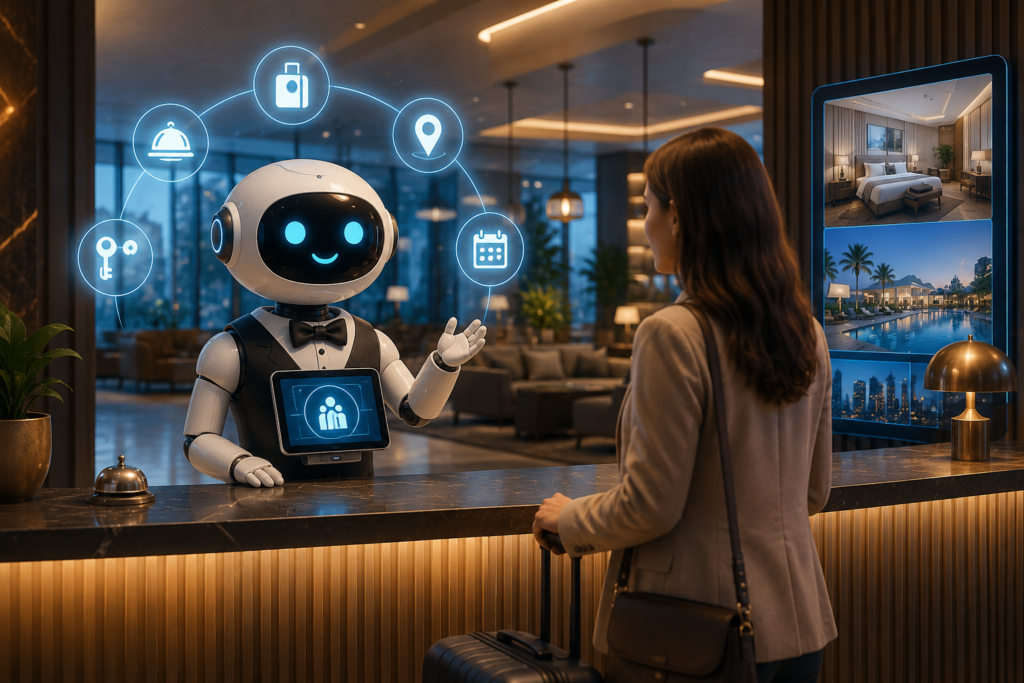
The future of Hospitality Chatbots is driven by advancements in artificial intelligence, machine learning, voice recognition, and predictive analytics. Future chatbots will provide hyper-personalized guest experiences by analyzing previous stays, travel preferences, and real-time behavior. Voice-enabled AI assistants, multilingual conversations, smart room integration, and IoT connectivity will become standard features in modern hotels. Chatbots will also integrate with wearable devices, digital room keys, and smart concierge services. Predictive AI will recommend upgrades, dining experiences, and local attractions before guests even ask. As AI technology continues to evolve, hospitality businesses that invest early will gain a competitive advantage through superior customer experiences, operational efficiency, and increased guest loyalty.
Common Mistakes When Implementing Hospitality Chatbots
Many hospitality businesses fail to maximize chatbot performance because they overlook proper planning and optimization. Common mistakes include using scripted conversations with no AI capabilities, failing to integrate with booking systems, providing outdated information, ignoring chatbot analytics, and not offering human support for complex inquiries. Some businesses also neglect multilingual support, mobile optimization, and regular content updates. Another major mistake is collecting guest data without prioritizing security and privacy. Continuous testing, AI training, and customer feedback analysis are essential for improving chatbot accuracy and user satisfaction. Avoiding these mistakes ensures guests enjoy seamless interactions while businesses maximize return on investment.
Best Practices Summary
Implementing a successful hospitality chatbot requires careful planning, continuous improvement, and customer-focused design. Businesses should define clear objectives, integrate chatbots with booking and property management systems, personalize guest interactions, and provide 24/7 support. Regularly updating chatbot knowledge, monitoring analytics, and allowing seamless human handoff improve customer satisfaction. Security, privacy, and compliance should remain top priorities when handling guest information. Businesses should also optimize chatbot conversations for mobile users and international travelers through multilingual support. Following these best practices enables hospitality organizations to improve operational efficiency, increase direct bookings, strengthen guest relationships, and remain competitive in the rapidly evolving digital hospitality landscape.
Frequently Asked Questions
1. What is a Hospitality Chatbot?
A Hospitality Chatbot is an AI-powered virtual assistant that helps hotels, resorts, restaurants, and travel businesses automate customer communication, reservations, guest support, and concierge services.
2. Can hospitality chatbots increase hotel bookings?
Yes. Chatbots answer booking questions instantly, recommend rooms, guide visitors through reservations, and reduce booking abandonment, leading to higher direct booking conversions.
3. Are hospitality chatbots available 24/7?
Yes. AI-powered chatbots provide round-the-clock assistance, ensuring guests receive immediate support regardless of business hours or time zones.
4. Can chatbots integrate with hotel software?
Absolutely. Modern hospitality chatbots integrate with Property Management Systems (PMS), CRM platforms, booking engines, payment gateways, and marketing automation tools.
5. Do hospitality chatbots support multiple languages?
Yes. Most AI chatbots offer multilingual communication, allowing hospitality businesses to serve international guests more effectively.
6. Will a chatbot replace hotel staff?
No. Hospitality chatbots automate repetitive tasks while allowing employees to focus on personalized guest service and complex requests.
7. Are hospitality chatbots secure?
Yes, when implemented correctly using encrypted communication, secure authentication, and industry best practices for data protection.
8. How can small hotels benefit from hospitality chatbots?
Small hotels can improve customer service, reduce staff workload, increase direct bookings, and compete with larger hotel brands using affordable AI automation.
Conclusion
The hospitality industry is becoming increasingly digital, and guest expectations continue to evolve. A Hospitality Chatbot enables hotels, resorts, restaurants, and travel businesses to provide instant support, personalized recommendations, seamless booking experiences, and efficient guest communication throughout the customer journey. AI-powered chatbots not only improve customer satisfaction but also reduce operational costs, increase direct bookings, and streamline daily workflows.
At EngagerBot, we help hospitality businesses leverage intelligent chatbot solutions that deliver measurable business results while enhancing every guest interaction. Whether your goal is to automate reservations, improve customer support, or create personalized guest experiences, implementing an AI-powered hospitality chatbot is a strategic investment that supports long-term business growth and competitive advantage.
Want to Implement This Easily?
Prompt:
You are an expert consultant. Based on the blog post titled “Hospitality Chatbot”, provide a step-by-step, practical implementation guide. Include recommended tools, implementation phases, integration strategies, best practices, common mistakes to avoid, security considerations, testing procedures, performance optimization techniques, KPIs to measure success, and advanced AI chatbot deployment tips. Assume the reader wants to implement everything discussed in this article effectively for a hospitality business.
Call to Action:
Want our help implementing this? Just reach out to us via our website contact form: