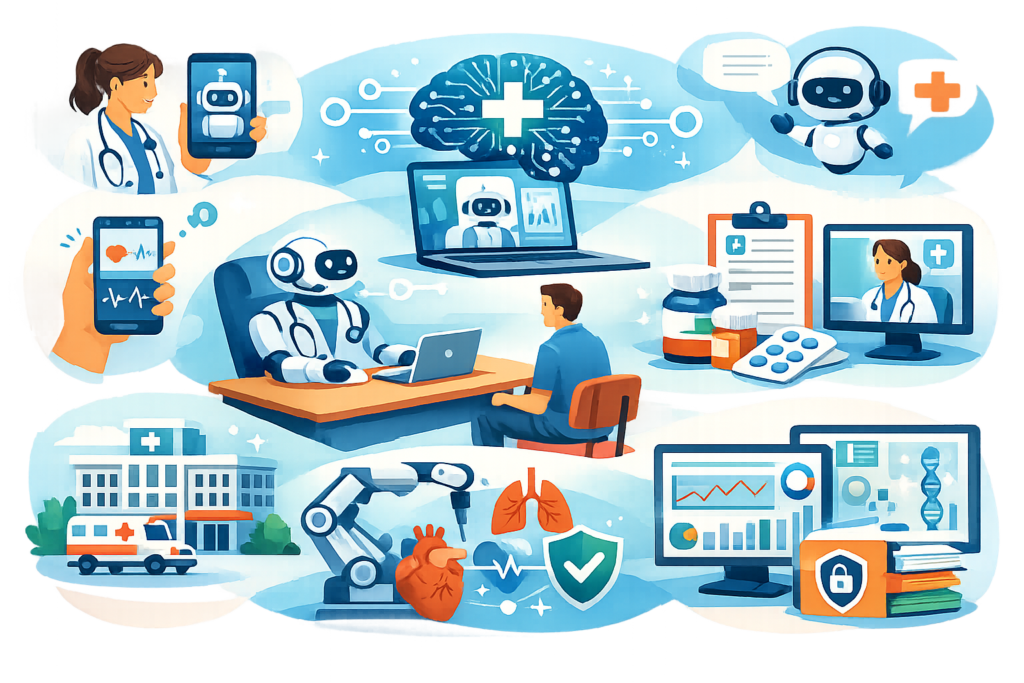
Discover how a Healthcare Chatbot helps hospitals, clinics, and healthcare providers automate patient support, appointment scheduling, symptom guidance, and healthcare communication while improving patient satisfaction, operational efficiency, and business growth.
Introduction
The healthcare industry has experienced significant digital transformation over the last decade. Patients now expect healthcare providers to deliver fast, convenient, and personalized services through websites, mobile applications, and messaging platforms. Traditional communication methods, such as lengthy phone calls and manual appointment scheduling, often create delays, increase administrative workload, and reduce patient satisfaction. This is where a Healthcare Chatbot becomes an essential digital solution.
A Healthcare Chatbot is an AI-powered virtual assistant designed to help patients access healthcare information, schedule appointments, receive reminders, answer common medical questions, and communicate with healthcare providers more efficiently. Instead of waiting for office hours or spending time on hold, patients can receive instant responses 24/7. This not only improves the patient experience but also allows healthcare staff to focus on more complex and high-value responsibilities.
At EngagerBot, intelligent chatbot solutions are designed to enhance patient engagement while helping healthcare organizations automate repetitive tasks, improve operational efficiency, and deliver exceptional digital experiences. Throughout this guide, you will learn how Healthcare Chatbots work, their key features, business benefits, implementation strategies, security considerations, SEO best practices, future trends, and much more.
What Is a Healthcare Chatbot?
A Healthcare Chatbot is an intelligent software application that interacts with patients through conversational interfaces. Powered by Artificial Intelligence (AI), Machine Learning (ML), and Natural Language Processing (NLP), these chatbots understand patient questions and provide relevant responses instantly. They can be integrated into websites, mobile applications, patient portals, and messaging platforms to create a seamless healthcare communication experience.
Unlike traditional automated response systems, modern healthcare chatbots understand conversational language, recognize patient intent, and guide users through personalized healthcare journeys. Whether someone needs to book an appointment, check clinic hours, receive medication reminders, locate nearby healthcare services, or obtain educational information about medical conditions, a chatbot provides immediate assistance without requiring human intervention for every interaction.
Healthcare chatbots can serve hospitals, clinics, diagnostic laboratories, pharmacies, dental practices, mental health providers, physiotherapy centers, telemedicine platforms, and insurance companies. By automating routine communication, healthcare providers reduce operational costs while increasing accessibility for patients across different age groups and locations.
Beyond convenience, Healthcare Chatbots contribute to better patient engagement by delivering consistent communication throughout the patient journey. From the first inquiry to post-treatment follow-ups, chatbots help ensure patients remain informed, connected, and supported. This continuous interaction improves patient trust while strengthening long-term relationships between healthcare providers and their communities.
Why Healthcare Chatbots Are Transforming Modern Healthcare
Healthcare systems around the world face increasing challenges, including rising patient expectations, workforce shortages, administrative overload, and growing operational costs. Digital transformation has become a necessity rather than an option. Healthcare Chatbots address these challenges by automating repetitive communication tasks while ensuring patients receive timely support.
Patients increasingly prefer digital self-service solutions because they offer immediate assistance without waiting for office hours. A Healthcare Chatbot provides instant answers to frequently asked questions, helps patients navigate healthcare services, and simplifies appointment scheduling. This level of accessibility significantly improves patient satisfaction while reducing pressure on front-desk staff.
Healthcare organizations also benefit from improved efficiency. Administrative teams spend less time answering repetitive inquiries, allowing them to focus on patient care and complex cases. Appointment reminders reduce missed visits, automated follow-ups improve treatment adherence, and patient education becomes more consistent. These improvements create measurable operational savings while enhancing overall healthcare quality.
Additionally, healthcare chatbots support scalable communication during periods of increased demand, such as seasonal illnesses, vaccination campaigns, or public health emergencies. Instead of overwhelming call centers, thousands of patients can receive accurate information simultaneously through automated conversations, making healthcare services more resilient and responsive.
How Healthcare Chatbots Work
Healthcare Chatbots combine multiple advanced technologies to deliver intelligent conversations. The process begins when a patient submits a question through a website chat window, mobile application, or messaging platform. The chatbot analyzes the user’s message using Natural Language Processing (NLP) to identify intent, keywords, and contextual meaning before generating an appropriate response.
Artificial Intelligence continuously improves chatbot performance by learning from previous interactions. Machine Learning algorithms recognize common conversation patterns, allowing the chatbot to provide increasingly accurate responses over time. If a patient’s request exceeds the chatbot’s capabilities, the conversation can be seamlessly transferred to a healthcare professional without disrupting the user experience.
Many Healthcare Chatbots also integrate with electronic health record systems, appointment scheduling software, customer relationship management platforms, payment gateways, and telemedicine solutions. These integrations allow patients to book appointments, receive personalized reminders, update personal information, access laboratory results, and communicate with healthcare providers through a single conversational interface.
Modern chatbots also incorporate decision trees, knowledge bases, multilingual support, sentiment analysis, and secure authentication processes. These features enable healthcare providers to deliver personalized, efficient, and secure digital healthcare experiences while maintaining compliance with industry standards and protecting sensitive patient information.
Key Features Every Healthcare Chatbot Should Include
An effective Healthcare Chatbot goes far beyond answering basic questions. It serves as a comprehensive digital assistant that supports patients throughout their healthcare journey. The most successful chatbot implementations combine automation, intelligence, personalization, and security to create meaningful patient interactions.
Appointment scheduling remains one of the most valuable features. Patients can view available time slots, book appointments, receive confirmations, modify existing bookings, and obtain automated reminders. This reduces scheduling conflicts while minimizing no-show rates. Medication reminders, vaccination notifications, and follow-up care reminders further improve patient adherence to treatment plans.
Healthcare Chatbots should also provide symptom guidance, healthcare education, insurance information, clinic locations, physician directories, frequently asked questions, payment assistance, multilingual communication, secure messaging, emergency guidance, and live agent escalation when necessary. These capabilities ensure patients receive comprehensive support regardless of when they seek assistance.
Advanced Healthcare Chatbots may also include voice interaction, AI-powered triage assistance, patient satisfaction surveys, telemedicine integration, prescription refill requests, wellness recommendations, and personalized health education. By continuously expanding chatbot functionality, healthcare providers improve patient engagement while creating a more connected digital healthcare ecosystem.
Benefits of Healthcare Chatbots for Patients
Patients increasingly value convenience, accessibility, and timely communication. Healthcare Chatbots deliver all three by providing immediate assistance whenever patients need support. Unlike traditional communication channels, chatbots operate continuously, ensuring patients receive answers regardless of business hours or geographic location.
One major advantage is reduced waiting time. Patients no longer need to remain on hold or wait for email responses to obtain basic information. Whether checking clinic hours, scheduling appointments, accessing healthcare resources, or receiving medication reminders, chatbot interactions occur instantly. This level of responsiveness significantly improves the overall patient experience.
Healthcare Chatbots also enhance patient education by delivering reliable information in an easy-to-understand conversational format. Patients gain better understanding of preventive care, chronic disease management, wellness recommendations, and treatment preparation. Personalized reminders encourage medication adherence and follow-up appointments, helping improve health outcomes while reducing avoidable complications.
Accessibility also improves for patients with mobility limitations, hearing impairments, language barriers, or those living in remote areas. Digital healthcare assistance becomes available through multiple communication channels, ensuring broader access to healthcare information and services without requiring physical visits for routine administrative tasks.
Benefits of Healthcare Chatbots for Hospitals, Clinics, and Healthcare Providers
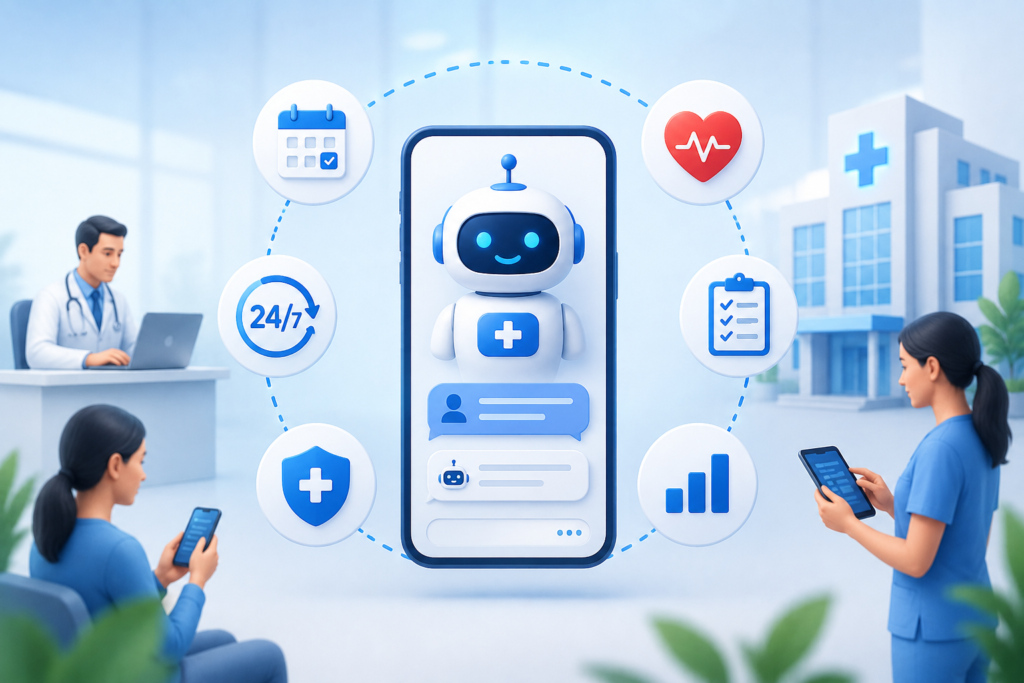
Healthcare organizations face constant pressure to improve patient satisfaction while managing operational costs. Healthcare Chatbots provide a scalable solution by automating repetitive administrative tasks, allowing healthcare professionals to dedicate more time to direct patient care.
Administrative efficiency increases significantly when chatbots handle appointment scheduling, frequently asked questions, insurance inquiries, payment guidance, prescription refill requests, and patient follow-ups. Staff productivity improves because employees spend less time managing routine inquiries and more time addressing complex patient needs.
Healthcare Chatbots also contribute to better revenue generation by reducing missed appointments through automated reminders. Improved scheduling efficiency increases appointment utilization while reducing administrative errors. Enhanced patient engagement encourages stronger long-term relationships, higher patient retention, and improved online reputation through positive healthcare experiences.
Additionally, chatbots generate valuable analytics that help healthcare organizations understand patient behavior, identify frequently asked questions, monitor service demand, and optimize communication strategies. These insights support better business decisions while continuously improving digital healthcare services and patient satisfaction.
Healthcare Chatbot Use Cases Across Different Medical Specialties
Healthcare Chatbots provide value across virtually every medical specialty because patient communication remains a fundamental component of healthcare delivery. Their flexibility allows organizations to customize chatbot conversations according to specific medical services, patient demographics, and operational objectives.
Primary care clinics use Healthcare Chatbots to schedule appointments, answer common healthcare questions, provide preventive care reminders, and educate patients about vaccinations, annual checkups, and chronic disease management. Dental clinics automate appointment scheduling, treatment preparation instructions, oral hygiene education, and follow-up care after procedures. Pharmacies utilize chatbots for prescription refill requests, medication availability inquiries, dosage reminders, and pharmacy location assistance.
Specialized healthcare providers—including dermatology clinics, cardiology centers, orthopedic practices, pediatric hospitals, physiotherapy clinics, mental health services, fertility clinics, and diagnostic laboratories—can tailor chatbot workflows to meet their unique patient needs. Telemedicine providers integrate chatbots to streamline virtual consultations, collect pre-visit information, verify patient details, and assist with post-consultation follow-ups.
Healthcare insurers also benefit from chatbot technology by helping policyholders understand coverage details, verify eligibility, submit claims, locate network providers, and receive updates on claim status. Across every healthcare sector, intelligent automation improves communication efficiency while creating more convenient and patient-centered digital experiences.
How Artificial Intelligence Powers Modern Healthcare Chatbots
Artificial Intelligence (AI) has transformed Healthcare Chatbots from simple automated response systems into intelligent virtual healthcare assistants capable of understanding patient needs and delivering meaningful interactions. Instead of relying solely on predefined scripts, AI-powered chatbots analyze user intent, interpret conversational language, and generate context-aware responses. This allows healthcare organizations to provide patients with faster, more personalized, and more accurate support throughout their healthcare journey.
One of the most important technologies behind modern Healthcare Chatbots is Natural Language Processing (NLP). NLP enables chatbots to understand how people naturally communicate, even when patients use incomplete sentences, informal language, or different ways of describing symptoms or healthcare concerns. Rather than searching only for exact keywords, the chatbot interprets the meaning behind the patient’s message. Healthcare organizations looking to understand how conversational AI works can explore Google’s documentation on Natural Language Processing.
Machine Learning (ML) further enhances chatbot performance by enabling continuous improvement. Every interaction provides valuable insights that help the chatbot recognize common patient questions, improve response accuracy, and optimize conversation flows. Over time, AI models become increasingly effective at handling appointment requests, insurance questions, medication reminders, and healthcare education. When combined with predictive analytics, Healthcare Chatbots can also anticipate patient needs by recommending preventive care, sending timely reminders, and identifying patients who may require additional support.
Artificial Intelligence also supports multilingual communication, allowing healthcare providers to serve diverse patient populations more effectively. Patients can receive healthcare information in their preferred language, improving accessibility and reducing misunderstandings. Sentiment analysis is another valuable AI capability that detects frustration, urgency, or emotional distress during conversations. When necessary, the chatbot can automatically escalate complex situations to qualified healthcare professionals, ensuring patients receive appropriate assistance.
As AI technology continues to evolve, Healthcare Chatbots are becoming more proactive rather than reactive. Instead of waiting for patients to initiate conversations, intelligent systems can send wellness reminders, vaccination notifications, preventive screening recommendations, and personalized health education based on patient preferences and historical interactions. This proactive communication strengthens patient engagement while encouraging healthier lifestyles and improved long-term healthcare outcomes.
Data Security, Privacy, and Compliance in Healthcare Chatbots
Healthcare organizations manage some of the most sensitive personal information available, making data security a top priority when implementing chatbot technology. Patients must trust that their medical information, personal details, appointment history, and communication records remain secure throughout every interaction. A well-designed Healthcare Chatbot incorporates multiple layers of security while complying with applicable healthcare regulations and privacy standards.
Healthcare providers should ensure that chatbot platforms use encrypted communication channels, secure authentication methods, access controls, and regular security monitoring. Encryption protects patient information both during transmission and while stored within healthcare systems. Multi-factor authentication, secure user verification, and role-based access further reduce the risk of unauthorized access to confidential healthcare information. Organizations should also maintain comprehensive audit logs to monitor system activity and identify potential security incidents before they become serious problems.
Healthcare organizations operating in the United States should comply with the Health Insurance Portability and Accountability Act (HIPAA) to safeguard protected health information. Organizations should also follow internationally recognized cybersecurity frameworks such as the National Institute of Standards and Technology (NIST) Cybersecurity Framework and application security recommendations published by OWASP. These resources provide practical guidance for protecting digital healthcare platforms from evolving cybersecurity threats.
Transparency also plays an essential role in building patient trust. Healthcare Chatbots should clearly explain what information is collected, how it will be used, and when conversations may be reviewed by healthcare professionals. Patients should have confidence that their personal information is handled responsibly and only for legitimate healthcare purposes. Clear privacy policies, consent mechanisms, and secure data management practices demonstrate an organization’s commitment to protecting patient confidentiality.
Regular security assessments, software updates, vulnerability testing, and employee cybersecurity training further strengthen chatbot security. As cyber threats continue to evolve, healthcare providers must treat chatbot security as an ongoing responsibility rather than a one-time implementation task. Organizations that prioritize privacy, compliance, and security not only reduce operational risks but also strengthen patient confidence in their digital healthcare services.
Integrating Healthcare Chatbots with Existing Healthcare Systems
Implementing a Healthcare Chatbot is most effective when it integrates seamlessly with the digital tools healthcare organizations already use. Rather than functioning as a standalone communication platform, an integrated chatbot becomes a central hub that connects patients with scheduling systems, electronic health records, telemedicine platforms, billing software, and customer support services. This creates a unified healthcare experience that improves efficiency for both patients and healthcare professionals.
One of the most valuable integrations is with Electronic Health Records (EHR) systems. By securely connecting the chatbot to patient records, authorized users can receive appointment confirmations, review upcoming visits, update demographic information, complete intake forms, and access personalized healthcare instructions. Healthcare providers also benefit because patient information is automatically synchronized across systems, reducing manual data entry and minimizing administrative errors. Organizations interested in healthcare interoperability standards can learn more through HealthIT.gov and HL7 International.
Appointment management platforms are another essential integration. Patients can search for available time slots, schedule appointments, reschedule visits, cancel bookings, and receive automated reminders through a conversational interface. This significantly reduces front-desk workload while helping lower appointment no-show rates. Automated reminders delivered via website chat, SMS, email, or messaging applications encourage patients to attend appointments and complete any required pre-visit documentation.
Healthcare Chatbots also integrate effectively with telemedicine platforms, allowing patients to prepare for virtual consultations. Before the appointment begins, the chatbot can collect symptoms, medical history updates, insurance information, consent forms, and preliminary questionnaires. Healthcare professionals receive organized information before meeting the patient, making virtual consultations more productive and allowing physicians to focus on diagnosis and treatment rather than administrative tasks.
Billing and payment systems also benefit from chatbot integration. Patients can securely review invoices, understand insurance coverage, make online payments, request payment receipts, and receive answers to frequently asked billing questions. Automating these financial interactions improves transparency while reducing the workload placed on administrative staff.
Customer Relationship Management (CRM) platforms further enhance patient engagement by enabling personalized communication. Healthcare providers can send preventive care reminders, wellness campaigns, vaccination notifications, post-treatment follow-ups, and educational resources based on patient preferences and healthcare history. These personalized interactions strengthen long-term relationships while encouraging patients to remain actively involved in managing their health.
Modern Healthcare Chatbots should also integrate with secure communication channels, analytics platforms, and reporting dashboards. Administrators gain valuable insights into patient behavior, conversation trends, appointment demand, frequently asked questions, and service performance. These analytics help healthcare organizations continuously optimize chatbot performance while improving operational efficiency and patient satisfaction.
Successful integration requires careful planning, thorough testing, strong security controls, and collaboration between healthcare professionals, IT teams, and chatbot developers. When implemented correctly, an integrated Healthcare Chatbot becomes a powerful digital assistant that supports every stage of the patient journey while reducing operational complexity.
Step-by-Step Guide to Successfully Implementing a Healthcare Chatbot
Deploying a Healthcare Chatbot involves more than installing software. A successful implementation requires strategic planning, clearly defined objectives, ongoing optimization, and a patient-first approach. Organizations that carefully plan each stage of implementation are far more likely to achieve measurable improvements in patient engagement, operational efficiency, and healthcare service quality.
The first step is identifying the organization’s primary objectives. Some healthcare providers prioritize appointment scheduling, while others focus on patient education, telemedicine support, insurance assistance, prescription management, or reducing administrative workload. Clearly defining measurable goals helps determine which chatbot features should be implemented first and provides benchmarks for evaluating success. Common performance indicators include appointment completion rates, patient satisfaction scores, average response time, chatbot resolution rates, and reductions in call center volume.
The next stage involves mapping the patient journey. Healthcare organizations should analyze how patients currently interact with their services, identify common questions, and determine where automation can provide the greatest value. Designing conversational workflows based on real patient behavior creates more natural interactions while reducing unnecessary complexity. Frequently asked questions, appointment booking, physician search, clinic directions, medication reminders, and follow-up care are often excellent starting points for chatbot automation.
Selecting the appropriate AI platform is another critical decision. Organizations should evaluate chatbot solutions based on scalability, security, multilingual capabilities, integration options, analytics, customization, accessibility, and regulatory compliance. A flexible platform allows healthcare providers to expand chatbot functionality as organizational needs evolve. Choosing a solution that supports future AI advancements helps protect long-term technology investments.
Content development is equally important. Every chatbot response should be reviewed for medical accuracy, clarity, and consistency. Healthcare providers, medical specialists, compliance officers, and communication experts should collaborate to ensure information is reliable and easy for patients to understand. While chatbots can provide educational guidance and administrative assistance, they should clearly distinguish between general health information and personalized medical advice, encouraging patients to consult qualified healthcare professionals whenever appropriate.
Before public deployment, organizations should conduct extensive testing using real-world scenarios. Testing should include appointment scheduling, multilingual conversations, system integrations, accessibility features, error handling, security verification, and escalation procedures. Feedback collected from healthcare staff and selected patient groups helps identify opportunities for improvement before full implementation.
After launch, chatbot performance should be monitored continuously. Analytics dashboards provide valuable information regarding conversation completion rates, unresolved inquiries, patient satisfaction, common search topics, and system performance. Regular reviews enable organizations to update medical information, expand knowledge bases, improve conversation flows, and introduce new features that reflect changing patient needs.
Healthcare Chatbot implementation should be viewed as an ongoing process rather than a one-time project. As Artificial Intelligence technologies continue advancing, organizations that continuously optimize their chatbot solutions will deliver increasingly personalized, efficient, and accessible healthcare experiences. Continuous improvement ensures the chatbot remains aligned with evolving patient expectations, healthcare regulations, and organizational goals.
The Future of Healthcare Chatbots: Emerging Trends Shaping Digital Healthcare
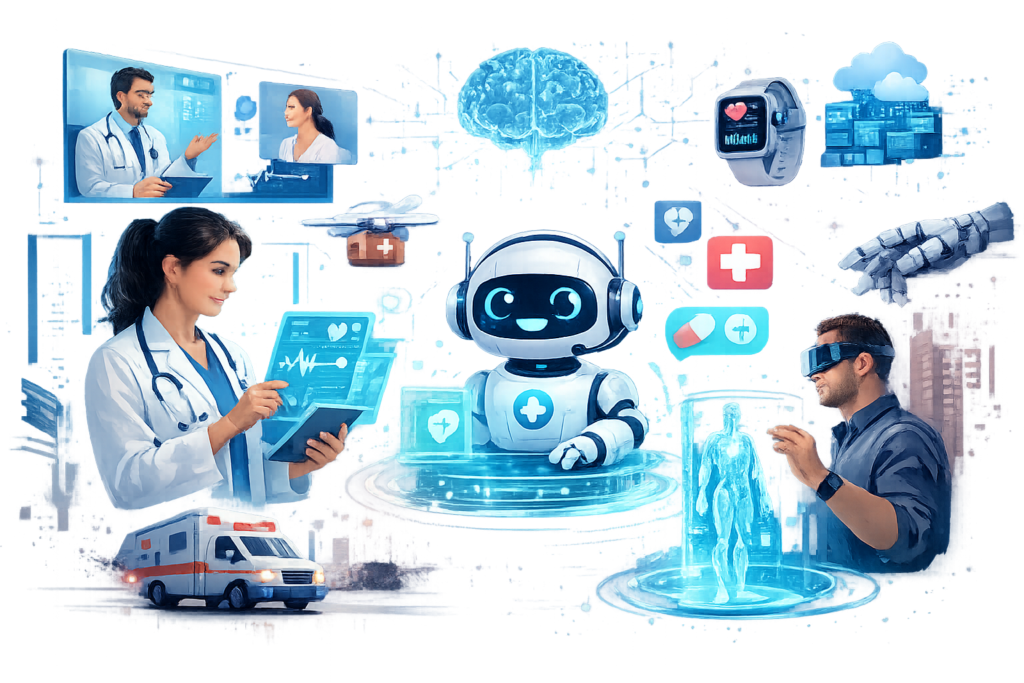
The future of Healthcare Chatbots is closely tied to the rapid advancement of Artificial Intelligence (AI), predictive analytics, cloud computing, and connected healthcare technologies. As patients increasingly expect convenient digital experiences, healthcare organizations are investing in intelligent virtual assistants that deliver personalized, secure, and efficient communication. Rather than replacing healthcare professionals, next-generation chatbots will act as intelligent assistants that streamline routine tasks, enhance patient engagement, and support clinical decision-making.
One of the most significant developments is the adoption of Generative AI, which enables chatbots to produce more natural, context-aware, and conversational responses. Instead of relying on predefined scripts, AI-powered chatbots can understand complex patient questions, summarize healthcare information, and provide personalized guidance while maintaining consistent communication. Healthcare organizations should continue following responsible AI and search best practices outlined by Google Search Central.
Another important trend is predictive healthcare. Future Healthcare Chatbots will analyze patient behavior, appointment history, wearable device data, and healthcare preferences to proactively recommend preventive care. Patients may receive reminders for annual screenings, vaccinations, medication adherence, wellness programs, and follow-up consultations before they even request assistance. This proactive approach supports early intervention and encourages healthier lifestyles.
Voice-enabled healthcare assistants are also becoming increasingly popular. Many patients, particularly older adults and individuals with disabilities, find voice interactions more convenient than typing. Voice-enabled Healthcare Chatbots integrated with smart devices and mobile applications will improve accessibility while making healthcare services available to broader populations.
Integration with wearable health technologies represents another exciting opportunity. Smartwatches, fitness trackers, glucose monitors, blood pressure monitors, and remote patient monitoring devices continuously collect valuable health information. Healthcare Chatbots can securely analyze these data streams, notify patients of unusual trends, encourage healthy habits, and alert healthcare professionals when further evaluation may be required.
Telemedicine will continue expanding alongside chatbot technology. Future chatbots will manage virtual appointment scheduling, collect patient history before consultations, verify insurance information, and summarize conversations after appointments. This integration reduces administrative work while allowing physicians to focus more on diagnosis and treatment.
Healthcare organizations are also adopting multilingual AI capabilities to improve accessibility for diverse communities. Advanced language models enable chatbots to communicate naturally in multiple languages, reducing barriers to healthcare access while improving patient understanding.
Another growing trend is personalized patient engagement. AI systems can tailor healthcare education, wellness recommendations, dietary guidance, rehabilitation exercises, and chronic disease management plans based on individual patient profiles. This personalization creates stronger relationships between healthcare providers and patients while encouraging long-term engagement.
Cybersecurity and ethical AI development will remain major priorities. Healthcare providers must continue investing in secure infrastructure, responsible AI governance, transparent data practices, and continuous monitoring to ensure patient information remains protected. Compliance with recognized standards such as HIPAA, NIST, and OWASP should remain central to every chatbot implementation.
Looking ahead, Healthcare Chatbots will become intelligent digital companions that support patients throughout every stage of their healthcare journey. Organizations that embrace innovation while maintaining strong privacy, security, and patient-centered principles will be best positioned to deliver exceptional healthcare experiences.
Common Healthcare Chatbot Mistakes to Avoid
Although Healthcare Chatbots offer significant advantages, poor implementation can reduce effectiveness, frustrate patients, and damage organizational credibility. Avoiding common mistakes ensures chatbot technology delivers meaningful improvements rather than creating unnecessary complications.
1. Trying to Replace Healthcare Professionals
One of the biggest misconceptions is believing that chatbots should replace doctors, nurses, or medical staff. Healthcare Chatbots are designed to automate administrative tasks and provide general healthcare information—not diagnose medical conditions or replace professional clinical judgment. Patients should always be encouraged to consult qualified healthcare professionals for medical advice, diagnosis, or treatment.
2. Providing Outdated Medical Information
Healthcare information changes continuously as new research, clinical guidelines, and treatment recommendations emerge. Chatbot knowledge bases should be reviewed and updated regularly to ensure patients receive accurate, evidence-based information. Outdated content can lead to confusion, misinformation, and reduced patient trust.
3. Ignoring Data Privacy Requirements
Patient trust depends on strong privacy protections. Organizations that fail to implement secure authentication, encryption, and compliance measures expose themselves to regulatory risks and reputational damage. Every chatbot should follow recognized healthcare privacy and cybersecurity standards while clearly communicating data usage policies.
4. Overcomplicating Conversation Flows
Patients expect fast and intuitive interactions. Complicated menus, excessive questions, and confusing navigation reduce usability. Healthcare Chatbots should use clear language, logical conversation paths, and simple navigation to help patients accomplish their goals efficiently.
5. Failing to Offer Human Escalation
Some healthcare situations require direct assistance from trained professionals. Chatbots should recognize their limitations and transfer conversations smoothly whenever patients require personalized medical guidance, emotional support, or urgent assistance.
6. Neglecting Accessibility
Healthcare services must remain accessible to everyone, including older adults and individuals with disabilities. Chatbots should support screen readers, keyboard navigation, multilingual communication, voice interaction, and mobile-friendly interfaces to maximize accessibility.
7. Launching Without Thorough Testing
Insufficient testing often leads to broken conversation flows, incorrect responses, scheduling errors, and integration failures. Healthcare organizations should conduct extensive technical, usability, security, and performance testing before public deployment.
8. Ignoring Analytics and Continuous Improvement
Healthcare Chatbots generate valuable performance data. Organizations that fail to review analytics miss opportunities to improve conversation quality, expand knowledge bases, optimize workflows, and better understand patient needs.
9. Using Generic Responses
Patients appreciate personalized interactions. Chatbots should provide context-aware responses whenever possible, using available information responsibly to deliver relevant appointment reminders, educational resources, and healthcare recommendations.
10. Setting Unrealistic Expectations
Healthcare Chatbots are powerful digital assistants but not universal solutions. Organizations should clearly communicate chatbot capabilities while ensuring patients understand when human assistance is available.
By avoiding these common mistakes, healthcare providers create chatbot experiences that improve efficiency, strengthen patient relationships, and support higher-quality healthcare delivery.
Best Practices Summary
Successfully implementing a Healthcare Chatbot requires a strategic approach that combines technology, patient-centered design, regulatory compliance, and continuous optimization. The following best practices help healthcare organizations maximize long-term success:
- Define clear objectives before implementation, such as improving appointment scheduling, patient engagement, or administrative efficiency.
- Design conversations around patient needs using natural, easy-to-understand language rather than technical jargon.
- Keep medical content accurate and regularly updated through collaboration with qualified healthcare professionals.
- Prioritize patient privacy and cybersecurity using encryption, secure authentication, and compliance with recognized healthcare standards.
- Integrate the chatbot with existing healthcare systems, including appointment scheduling, Electronic Health Records (EHR), CRM platforms, billing software, and telemedicine services.
- Provide seamless escalation to human healthcare professionals whenever conversations exceed the chatbot’s capabilities.
- Support multilingual communication to improve accessibility for diverse patient populations.
- Optimize for mobile devices since many patients access healthcare information through smartphones and tablets.
- Monitor chatbot analytics regularly to identify conversation trends, patient satisfaction, unanswered questions, and opportunities for improvement.
- Continuously train and improve AI models using patient feedback, updated healthcare guidance, and evolving organizational needs.
- Maintain transparency by informing patients when they are interacting with an AI-powered chatbot and explaining how their information is handled.
- Focus on user experience by keeping conversations simple, intuitive, and goal-oriented.
- Perform regular security assessments to protect sensitive patient information against emerging cyber threats.
- Measure performance using meaningful KPIs, including response times, appointment completion rates, patient satisfaction scores, chatbot resolution rates, and operational cost savings.
- Treat chatbot implementation as an ongoing digital transformation initiative rather than a one-time technology deployment.
Organizations that consistently follow these best practices can create Healthcare Chatbots that improve operational efficiency, enhance patient satisfaction, strengthen digital healthcare services, and support sustainable long-term growth.
Frequently Asked Questions
1. What is a Healthcare Chatbot?
A Healthcare Chatbot is an AI-powered virtual assistant that helps patients and healthcare organizations communicate more efficiently. It can answer common healthcare questions, schedule appointments, send reminders, provide educational resources, assist with insurance inquiries, and guide patients through administrative processes. Modern Healthcare Chatbots use Artificial Intelligence (AI) and Natural Language Processing (NLP) to understand conversational language and provide accurate, personalized responses.
2. Are Healthcare Chatbots safe to use?
Yes, Healthcare Chatbots are safe when they are built using secure technologies and follow healthcare privacy regulations. Organizations should implement encrypted communication, secure authentication, access controls, and regular security monitoring to protect patient information. Following recognized standards such as HIPAA , NIST, and OWASP helps ensure patient data remains secure.
3. Can a Healthcare Chatbot diagnose medical conditions?
No. Healthcare Chatbots should not replace licensed healthcare professionals. They are designed to provide general healthcare information, automate administrative tasks, assist with appointment scheduling, and improve communication. Medical diagnosis, treatment recommendations, and emergency care should always be provided by qualified healthcare professionals.
4. How do Healthcare Chatbots improve patient satisfaction?
Healthcare Chatbots provide immediate assistance 24 hours a day, seven days a week. Patients can schedule appointments, receive reminders, ask common questions, access educational resources, and communicate more conveniently without waiting on hold. Faster response times, personalized interactions, and improved accessibility contribute significantly to higher patient satisfaction.
5. Can Healthcare Chatbots integrate with existing healthcare software?
Yes. Modern Healthcare Chatbots can integrate with Electronic Health Records (EHR), appointment scheduling systems, telemedicine platforms, Customer Relationship Management (CRM) software, billing systems, payment gateways, patient portals, and analytics platforms. These integrations reduce manual work while creating a seamless digital healthcare experience.
6. Which healthcare organizations benefit the most from Healthcare Chatbots?
Healthcare Chatbots provide value for:
- Hospitals
- Medical clinics
- Dental practices
- Pharmacies
- Diagnostic laboratories
- Mental health providers
- Physiotherapy centers
- Telemedicine companies
- Health insurance providers
- Rehabilitation centers
- Wellness clinics
- Specialty healthcare practices
Organizations of every size can improve efficiency and patient engagement through intelligent chatbot automation.
7. What features should every Healthcare Chatbot include?
An effective Healthcare Chatbot should offer:
- Appointment scheduling
- Automated reminders
- Frequently asked questions
- Secure patient communication
- Physician directory
- Clinic location assistance
- Insurance information
- Medication reminders
- Live agent escalation
- Multilingual support
- Mobile optimization
- Analytics and reporting
- Telemedicine integration
- Secure authentication
- Accessibility features
These capabilities help create a comprehensive digital healthcare experience.
8. Is implementing a Healthcare Chatbot a worthwhile investment?
Yes. Healthcare Chatbots improve operational efficiency, reduce administrative workload, increase appointment attendance, enhance patient engagement, and provide continuous support. Over time, organizations often experience lower operating costs, improved patient retention, better service quality, and stronger digital transformation outcomes. When implemented strategically, a Healthcare Chatbot becomes a valuable long-term investment for modern healthcare providers.
Conclusion
Digital healthcare continues to evolve rapidly, and patient expectations continue to grow alongside technological innovation. Healthcare organizations must deliver fast, secure, personalized, and accessible services while maintaining high standards of patient care. A Healthcare Chatbot provides an effective solution by automating routine communication, improving appointment management, enhancing patient education, supporting healthcare professionals, and strengthening overall operational efficiency.
When implemented thoughtfully, Healthcare Chatbots become more than automated assistants—they become trusted digital companions that improve every stage of the patient journey. From initial inquiries and appointment scheduling to follow-up care and long-term engagement, intelligent chatbot technology creates better experiences for patients while allowing healthcare teams to focus on delivering exceptional medical care.
Whether you operate a hospital, private clinic, pharmacy, diagnostic laboratory, or telemedicine platform, adopting AI-powered chatbot technology can significantly improve patient satisfaction, streamline administrative processes, and support sustainable organizational growth.
If you’re ready to transform patient communication with intelligent conversational AI, EngagerBot offers advanced Healthcare Chatbot solutions tailored to the needs of modern healthcare organizations.
Want to Implement This Easily?
Prompt Text
You are an expert consultant. Based on the blog post titled “Healthcare Chatbot”, provide a step-by-step, practical implementation guide. Include tools, best practices, common mistakes to avoid, and advanced tips. Assume the reader wants to implement everything discussed in this article effectively.
Call to Action
Want our help implementing this? Just reach out to us via our website contact form: