
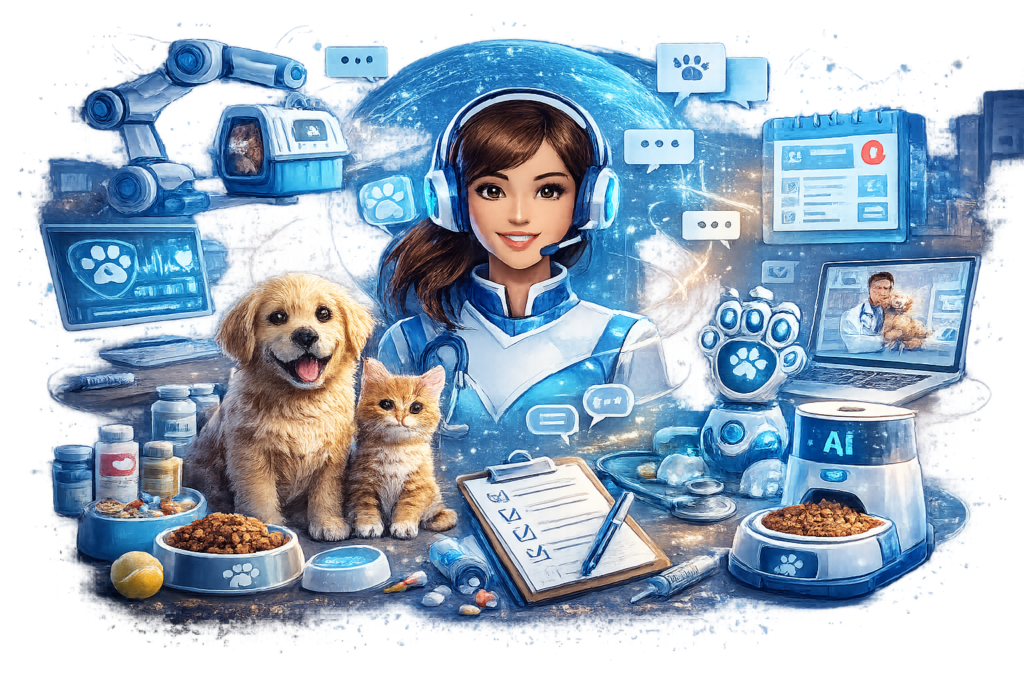
Discover how a Pet Care Chatbot transforms veterinary clinics, pet stores, animal shelters, pet grooming businesses, and pet care providers through AI-powered customer support, appointment scheduling, personalized pet guidance, and automated engagement. Learn best practices, implementation strategies, benefits, common mistakes, and future trends while following Google’s E-E-A-T principles.
Introduction
The pet care industry has experienced remarkable growth as more people consider pets an important part of their families. Whether someone owns a dog, cat, bird, rabbit, reptile, or another companion animal, they expect fast access to trustworthy information and convenient services. Pet owners increasingly seek immediate answers about appointments, vaccinations, grooming, nutrition, pet products, boarding, and general wellness without waiting for business hours. This growing demand has encouraged businesses to adopt intelligent automation that enhances customer experiences while improving operational efficiency.
A Pet Care Chatbot has become one of the most effective digital solutions for veterinary clinics, pet hospitals, grooming salons, pet stores, shelters, breeders, boarding facilities, trainers, and pet insurance providers. Powered by artificial intelligence (AI), machine learning, and natural language processing (NLP), modern chatbots provide instant responses, automate repetitive administrative tasks, guide customers through services, recommend products, schedule appointments, answer frequently asked questions, and collect valuable customer information around the clock.
Businesses also benefit from stronger customer relationships, reduced staff workload, improved appointment management, higher conversion rates, and better customer satisfaction. When implemented correctly, chatbot technology complements human expertise rather than replacing it, ensuring complex medical concerns are always referred to qualified professionals. At EngagerBot, businesses can leverage intelligent chatbot solutions designed to improve customer engagement, automate workflows, and deliver exceptional digital experiences while maintaining trust, transparency, and personalized support.
Why the Pet Care Industry Needs AI Chatbots
The modern pet care industry serves millions of pet owners who expect immediate access to reliable information regardless of the time of day. Whether someone needs emergency veterinary contact details, wants to schedule a grooming appointment, compare pet food products, or ask about vaccination schedules, waiting hours for an email response often results in frustration. Consumer expectations have shifted toward instant communication, making AI-powered chatbots a valuable asset for businesses of every size.
A Pet Care Chatbot addresses these expectations by acting as an intelligent virtual assistant available twenty-four hours a day. Instead of relying solely on receptionists or customer support teams, businesses can automate repetitive conversations while ensuring customers receive accurate and consistent information. For example, a chatbot can answer questions about clinic hours, accepted payment methods, available veterinary services, pet grooming packages, prescription refill procedures, boarding availability, or adoption requirements in just seconds. This level of accessibility improves customer satisfaction while allowing staff members to focus on tasks requiring professional expertise and personal interaction.
The advantages extend beyond customer service. AI chatbots collect valuable customer insights that help businesses understand common concerns, seasonal trends, frequently requested services, and purchasing behavior. These insights enable organizations to improve marketing strategies, optimize staffing, introduce new services, and deliver more personalized experiences. AI continuously learns from interactions, making responses increasingly accurate over time while maintaining consistency across websites, mobile applications, social media platforms, and messaging channels. As customer expectations continue evolving, intelligent automation is becoming an essential competitive advantage rather than an optional technology investment.
How a Pet Care Chatbot Works
A Pet Care Chatbot combines several advanced technologies to understand customer questions and provide relevant responses within seconds. At its core, the chatbot uses Natural Language Processing (NLP), machine learning algorithms, conversational AI, and intelligent workflow automation. NLP enables the chatbot to interpret natural human language instead of relying solely on predefined keywords, allowing conversations to feel more natural and helpful. As users continue interacting with the chatbot, machine learning models improve response quality by recognizing common patterns, frequently asked questions, and customer preferences.
When a visitor starts a conversation, the chatbot analyzes the user’s intent rather than simply matching words. For example, if someone asks, “My puppy needs vaccinations,” “When should my dog receive shots?” or “Can I book vaccination for my puppy?” the AI recognizes that each question relates to vaccination services. It then provides accurate information, offers appointment scheduling, explains preparation requirements, and, when necessary, connects the customer with veterinary staff. This intelligent understanding significantly improves user satisfaction compared to traditional rule-based chat systems.
Modern chatbot platforms also integrate seamlessly with business management software, appointment booking systems, customer relationship management (CRM) platforms, payment gateways, inventory systems, and communication channels. This integration enables automated appointment confirmations, reminders, customer follow-ups, product recommendations, vaccination notifications, loyalty program management, and personalized marketing campaigns. Rather than functioning as a simple FAQ tool, today’s AI chatbot becomes a comprehensive digital assistant that supports customers throughout their entire journey while improving operational efficiency across the organization.
Key Features of an Intelligent Pet Care Chatbot
An advanced Pet Care Chatbot offers much more than automated messaging. It serves as a comprehensive customer engagement platform capable of supporting veterinary clinics, pet stores, shelters, boarding centers, trainers, and grooming businesses through intelligent automation. One of its most valuable capabilities is instant response availability. Customers no longer need to wait until business hours to ask about appointments, vaccination schedules, pet nutrition, parasite prevention, grooming services, medication refills, or emergency contact procedures. Immediate assistance improves trust while encouraging customers to continue their interaction instead of leaving the website.
Appointment scheduling represents another essential feature. Instead of requiring staff members to answer repetitive booking calls throughout the day, the chatbot guides customers through available services, preferred dates, time slots, veterinarian availability, and booking confirmations. Automated reminders reduce missed appointments while rescheduling options improve convenience for both businesses and customers. AI can also collect pet details such as species, breed, age, weight, medical history, and preferred veterinarian before the visit, helping staff prepare more effectively.
Beyond customer service, intelligent chatbots enhance marketing and customer retention. Personalized recommendations based on pet profiles allow businesses to suggest appropriate food products, supplements, grooming services, preventive healthcare, insurance options, and seasonal promotions. Automated follow-up messages after appointments encourage reviews, collect feedback, and remind customers about future vaccinations, wellness checkups, dental care, or recurring grooming sessions. These features create stronger long-term relationships while increasing customer lifetime value through meaningful, personalized engagement instead of generic promotional messaging.
Benefits of Pet Care Chatbots for Veterinary Clinics and Pet Businesses
Artificial intelligence has transformed how veterinary clinics, pet hospitals, grooming salons, pet boarding facilities, animal shelters, pet supply retailers, and pet trainers interact with customers. A Pet Care Chatbot serves as an intelligent digital assistant that improves communication, streamlines operations, and delivers consistent customer experiences throughout every stage of the customer journey. Rather than replacing veterinary professionals or customer service representatives, chatbots handle repetitive inquiries and administrative tasks so staff members can dedicate more time to personalized care and complex cases. This balance between automation and human expertise creates a more efficient, customer-focused business model.
One of the greatest advantages is increased operational efficiency. Businesses often spend countless hours answering repetitive questions regarding clinic hours, appointment availability, vaccination schedules, grooming packages, pet boarding rates, adoption procedures, and payment methods. A chatbot instantly provides accurate answers while reducing telephone congestion and email backlogs. Customers appreciate immediate responses regardless of whether they visit during business hours or late at night. Automated appointment reminders, follow-up messages, vaccination notifications, and service recommendations further reduce manual administrative work while minimizing missed appointments. Businesses also gain valuable insights into customer behavior, enabling them to improve service offerings, marketing campaigns, and customer retention strategies based on real interaction data rather than assumptions.
Revenue growth is another significant benefit. AI-powered chatbots guide visitors through service options, answer purchasing questions, recommend complementary products, and encourage appointment bookings without creating a high-pressure sales experience. Personalized recommendations based on pet type, breed, age, and previous interactions increase customer confidence while improving average order value. Combined with secure integrations and responsible AI implementation following guidance from Google Responsible AI, businesses can build greater customer trust while maintaining transparency, privacy, and ethical use of artificial intelligence.
Improving Customer Experience Through AI Conversations
Modern consumers expect immediate, personalized communication whenever they interact with a business. Pet owners are no exception. Whether they are searching for emergency veterinary information, comparing grooming packages, checking boarding availability, or asking about nutritional recommendations, they prefer receiving answers instantly instead of waiting for office hours. A Pet Care Chatbot satisfies these expectations by delivering intelligent, conversational support twenty-four hours a day while maintaining consistency across every customer interaction.
Unlike traditional automated menus, AI-powered chatbots understand natural language and conversational intent using Natural Language Processing technology. Customers can ask questions in everyday language, and the chatbot identifies what they need without requiring exact keywords. For example, a customer asking, “My puppy needs its first vaccinations,” receives relevant guidance just as someone asking, “When should I vaccinate my new dog?” This conversational flexibility creates a more natural user experience that reduces frustration and encourages continued engagement. When conversations involve emergencies or medical conditions beyond automated guidance, the chatbot appropriately directs users to qualified veterinary professionals instead of attempting to provide medical diagnoses.
Personalization significantly enhances customer satisfaction. Returning visitors can receive tailored recommendations based on their previous appointments, pet profiles, preferred services, or purchasing history. Grooming reminders, wellness checkups, flea prevention schedules, dietary recommendations, and seasonal healthcare advice become more relevant because the chatbot understands customer context. Businesses also maintain consistency by ensuring every visitor receives accurate information based on established policies rather than varying responses from different staff members. Following recommendations published by Google Search Central for creating helpful, people-first content also encourages organizations to provide genuinely useful information instead of generic marketing messages, strengthening long-term customer trust.
AI Chatbots for Veterinary Appointment Scheduling
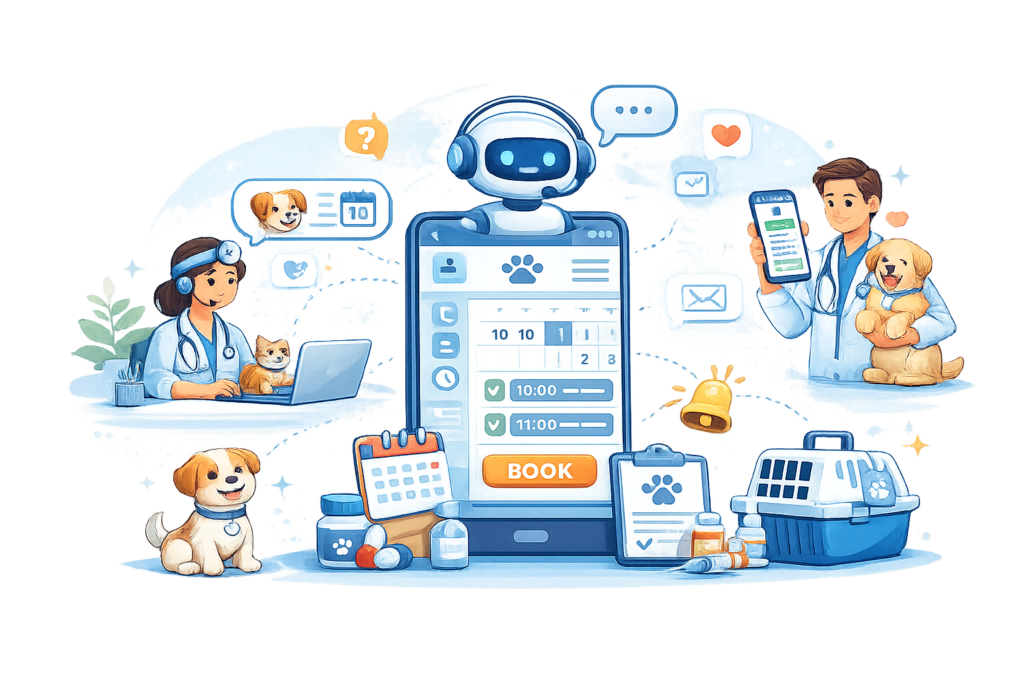
Appointment scheduling is one of the most valuable functions of a modern Pet Care Chatbot because it simplifies an administrative process that traditionally consumes significant staff time. Veterinary reception teams often manage hundreds of phone calls each week involving appointment requests, cancellations, rescheduling, follow-up visits, vaccination bookings, surgical consultations, wellness examinations, and grooming reservations. Automating these routine interactions allows employees to focus on providing exceptional in-person customer service while ensuring pet owners enjoy a faster and more convenient booking experience.
AI chatbots can integrate directly with scheduling software, allowing customers to view available appointment slots in real time without needing to call the clinic. Users simply choose the service they require, select their preferred veterinarian when available, enter their pet’s information, and confirm the booking within minutes. Automated confirmation messages, reminder notifications, cancellation options, and follow-up communications reduce administrative workload while helping decrease missed appointments. Clinics also benefit from improved scheduling efficiency because appointment availability remains continuously updated across multiple communication channels.
Beyond basic booking functionality, intelligent scheduling systems gather valuable information before the appointment even begins. Customers can provide details regarding their pet’s breed, age, symptoms, vaccination history, medications, allergies, or behavioral concerns during the booking process. This information enables veterinary professionals to prepare appropriately before the consultation, reducing delays and improving patient care. Organizations implementing secure online appointment systems should also follow privacy and security best practices recommended by NIST Cybersecurity Framework to help protect customer information while maintaining trust in digital healthcare services.
Pet Health Education and Preventive Care Assistance
Preventive healthcare plays a vital role in helping pets live healthier, longer lives. Unfortunately, many pet owners remain uncertain about vaccination schedules, parasite prevention, dental hygiene, nutrition, exercise requirements, and age-specific healthcare recommendations. A Pet Care Chatbot serves as an accessible educational resource that delivers reliable guidance while encouraging proactive pet wellness. Instead of replacing veterinary expertise, the chatbot reinforces preventive care by providing educational content and reminding owners about routine health milestones.
Through AI-powered conversations, customers can quickly access information about common topics such as flea and tick prevention, heartworm protection, balanced nutrition, weight management, grooming frequency, dental care, seasonal health risks, travel preparation, and senior pet wellness. Educational responses should always encourage consultation with licensed veterinarians whenever personalized diagnosis or treatment decisions are required. This responsible approach supports customer education without creating unrealistic expectations regarding automated healthcare advice. High-quality educational content aligned with Google Search Central guidance also demonstrates expertise and trustworthiness while providing genuine value to readers.
Preventive engagement extends beyond answering questions. Intelligent chatbots automatically remind customers about upcoming vaccinations, annual wellness examinations, booster schedules, medication refills, grooming appointments, nutritional reviews, and routine laboratory testing. Personalized reminders encourage better compliance with preventive healthcare recommendations while strengthening customer relationships over time. Businesses benefit through increased appointment retention, improved customer loyalty, and enhanced long-term engagement because pet owners appreciate proactive support that contributes to their pets’ overall wellbeing rather than simply promoting services.
AI-Powered Customer Support Across Multiple Channels
Today’s pet owners interact with businesses through websites, mobile apps, social media, email, and messaging platforms. They expect a seamless experience regardless of which communication channel they choose. A Pet Care Chatbot enables veterinary clinics, pet grooming salons, boarding facilities, pet stores, and animal shelters to provide consistent customer support across multiple digital touchpoints. Instead of maintaining separate workflows for each platform, businesses can centralize conversations while ensuring customers receive the same accurate information wherever they reach out.
A multi-channel AI chatbot helps businesses respond instantly to common inquiries such as appointment availability, vaccination schedules, service pricing, boarding requirements, grooming packages, adoption procedures, store locations, business hours, and accepted payment methods. Customers no longer need to repeat the same information when switching between communication channels because integrated chatbot platforms maintain conversation history and customer context. This continuity creates a smoother customer journey while reducing frustration and improving satisfaction. Businesses also benefit from reduced response times, improved operational efficiency, and the ability to manage significantly higher inquiry volumes without expanding customer support teams.
Another important advantage is maintaining service quality during peak demand. Seasonal vaccination campaigns, holiday boarding reservations, promotional events, and emergency situations often generate a sudden increase in customer inquiries. AI chatbots manage these high volumes without sacrificing response speed or consistency. Complex questions requiring veterinary expertise or sensitive customer support are automatically transferred to qualified team members, ensuring customers receive appropriate assistance. Organizations implementing conversational AI should also follow the recommendations outlined in Google Cloud AI Architecture to build scalable, secure, and reliable AI-powered customer experiences.
Personalization Through AI and Customer Data
Personalization has become one of the most influential factors in customer satisfaction and long-term loyalty. Pet owners appreciate businesses that remember their pets, understand their preferences, and provide relevant recommendations instead of generic marketing messages. A Pet Care Chatbot uses customer data responsibly to deliver personalized interactions that strengthen relationships while improving service quality. Rather than offering identical responses to every visitor, AI tailors conversations based on previous appointments, pet profiles, purchase history, and customer preferences.
For example, if a customer owns a senior Labrador Retriever, the chatbot may recommend annual wellness examinations, joint health supplements, senior nutrition plans, and mobility support products. A customer with a new kitten may receive reminders regarding vaccination schedules, parasite prevention, nutritional guidance, and early behavioral training resources. These recommendations feel helpful rather than promotional because they are based on genuine customer needs. Businesses also gain opportunities to introduce complementary services such as grooming, dental care, wellness plans, insurance options, or boarding facilities at appropriate stages of the customer journey.
Responsible data handling remains essential for maintaining customer trust. AI systems should collect only necessary information, explain how customer data will be used, and protect personal information using recognized security standards. Businesses should also provide customers with transparency regarding automated decision-making and communication preferences. Following guidance published by Google Business Profile for customer communication and maintaining strong privacy practices helps organizations build credibility while creating personalized experiences that respect customer expectations and applicable data protection regulations.
Pet Product Recommendations Using AI
Pet owners often face overwhelming choices when selecting food, toys, grooming products, nutritional supplements, training accessories, travel equipment, and healthcare items. A Pet Care Chatbot simplifies these purchasing decisions by delivering intelligent product recommendations based on each pet’s unique characteristics rather than presenting a generic product catalog. This personalized shopping experience improves customer confidence while increasing conversion rates and average order values for businesses.
AI-powered recommendation engines evaluate multiple factors including pet species, breed, age, size, dietary requirements, activity level, previous purchases, seasonal needs, and customer preferences. For instance, the chatbot may recommend grain-free food for a dog with dietary sensitivities, specialized grooming products for long-haired breeds, orthopedic bedding for senior pets, or interactive enrichment toys for highly active animals. Instead of relying solely on promotional campaigns, recommendations focus on practical value and customer needs. This consultative approach strengthens trust because customers perceive the chatbot as a knowledgeable assistant rather than a sales tool.
Recommendation systems also support cross-selling and upselling in a natural manner. After scheduling a grooming appointment, the chatbot may suggest coat maintenance products or dental care kits. Following a vaccination appointment, it might recommend flea prevention treatments or wellness packages appropriate for the pet’s age. Businesses should continually evaluate recommendation performance using reliable analytics and user feedback to ensure suggestions remain relevant and beneficial. Applying guidance from Google Analytics enables organizations to measure customer engagement, conversion performance, and purchasing behavior while continuously improving recommendation quality through data-driven insights.
Integrating Pet Care Chatbots with CRM and Business Systems
The true value of a Pet Care Chatbot extends beyond answering customer questions. When integrated with Customer Relationship Management (CRM) platforms, appointment scheduling software, payment systems, inventory management, marketing automation tools, and customer support applications, the chatbot becomes a central component of business operations. Integration eliminates repetitive manual tasks, reduces data entry errors, and ensures customer information remains synchronized across every department.
CRM integration allows businesses to maintain comprehensive customer profiles containing pet information, appointment history, vaccination records, purchase behavior, communication preferences, and support interactions. Whenever a customer starts a new conversation, the chatbot can recognize previous interactions and provide more relevant assistance without requiring the customer to repeat basic information. Veterinary staff, groomers, customer service representatives, and sales teams all benefit from having access to consistent, up-to-date records that improve collaboration and service quality.
Business automation also becomes significantly more efficient through system integration. Appointment confirmations, reminder emails, invoice generation, follow-up surveys, loyalty rewards, abandoned booking reminders, and promotional campaigns can all be triggered automatically based on customer activity. Inventory systems can notify customers when preferred products become available, while marketing platforms can deliver personalized educational content according to each pet’s lifecycle stage. Businesses should ensure these integrations follow secure API development and authentication practices recommended by Google for Developers to maintain system reliability, scalability, and customer data security as operations continue to grow.
Common Mistakes Businesses Make When Implementing a Pet Care Chatbot
Implementing a Pet Care Chatbot can significantly improve customer service, operational efficiency, and customer engagement, but success depends on careful planning and continuous optimization. Many businesses invest in chatbot technology expecting immediate results without developing a long-term conversational strategy. As a result, customers experience confusing interactions, inaccurate responses, or limited functionality that reduces trust instead of improving it. Understanding the most common implementation mistakes helps organizations maximize the value of AI while delivering a customer experience that reflects professionalism and expertise.
One of the most frequent mistakes is treating the chatbot as a replacement for qualified veterinary professionals. While AI excels at answering frequently asked questions, scheduling appointments, providing general educational content, and guiding customers through services, it should never diagnose illnesses or recommend treatments for specific medical conditions. Businesses should clearly communicate that medical emergencies and individualized healthcare concerns require consultation with licensed veterinarians. Another common issue is launching the chatbot with insufficient knowledge. Limited FAQs, outdated business information, missing service descriptions, or inaccurate pricing quickly frustrate customers. Organizations should regularly review chatbot conversations, identify unanswered questions, and continuously improve the knowledge base using customer feedback and analytics.
Poor integration is another challenge that limits chatbot effectiveness. If appointment systems, CRM software, inventory databases, or customer records are disconnected, users may receive inconsistent information across different channels. Businesses should also avoid overly complicated conversation flows that require customers to navigate endless menus before receiving assistance. Instead, conversations should remain natural, intuitive, and capable of transferring users to human support whenever necessary. Regular performance monitoring through Google Analytics and user feedback enables continuous improvements that enhance customer satisfaction and long-term business success.
Best Practices for Building a Successful Pet Care Chatbot
Creating an effective Pet Care Chatbot requires much more than installing AI software. Successful implementations begin with clearly defined business objectives, customer journey mapping, and an understanding of the most common customer questions. Businesses should identify repetitive support tasks, appointment workflows, product inquiries, educational opportunities, and customer engagement goals before designing conversation flows. A chatbot built around real customer needs provides greater value than one designed primarily to automate internal processes.
The chatbot should deliver accurate, concise, and trustworthy information while maintaining a friendly conversational tone. Educational content should be reviewed regularly to ensure it reflects current veterinary guidance and industry best practices. Businesses should also prioritize accessibility by designing conversations that are easy to navigate on desktops, tablets, and mobile devices. Integrating multilingual capabilities may further improve customer experiences for organizations serving diverse communities. AI should also remember customer preferences where appropriate, enabling personalized reminders, product suggestions, and follow-up communications that strengthen long-term relationships without becoming intrusive.
Continuous optimization remains one of the most important best practices. Chatbot performance should be measured using customer satisfaction scores, response accuracy, conversation completion rates, appointment conversions, and support resolution times. Businesses should analyze conversation transcripts to identify knowledge gaps, misunderstood questions, or opportunities for automation improvements. Following the recommendations in Google Search Central ensures educational content remains people-first, helpful, and trustworthy while supporting strong online visibility through high-quality information rather than keyword-focused content alone.
Future Trends Shaping Pet Care Chatbots
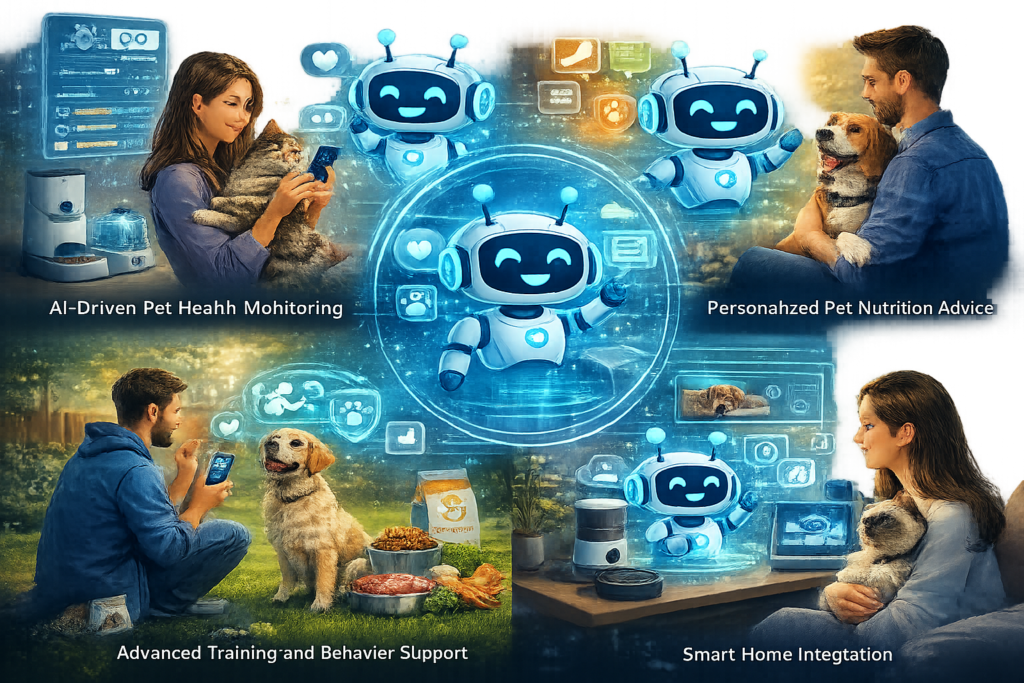
Artificial intelligence continues to evolve rapidly, and the future of Pet Care Chatbots extends far beyond answering frequently asked questions. Emerging technologies will enable increasingly personalized, predictive, and intelligent customer experiences that strengthen relationships between pet owners and service providers. Businesses adopting these innovations responsibly will be better positioned to meet growing customer expectations while improving operational efficiency and long-term competitiveness.
One emerging trend is predictive AI that anticipates customer needs before they ask questions. By analyzing appointment history, pet age, vaccination schedules, purchasing behavior, and seasonal trends, future chatbots will proactively remind customers about wellness visits, preventive treatments, nutritional adjustments, and grooming appointments. Voice-enabled conversational AI is also becoming increasingly important as smart speakers and voice assistants continue gaining popularity. Pet owners may soon schedule appointments, request medication refills, or receive educational guidance simply by speaking naturally with AI assistants integrated across multiple devices.
Another significant development involves deeper integration with wearable pet technology, remote monitoring devices, and digital health platforms. Future chatbots may receive information from activity trackers, smart collars, feeding systems, or health monitoring devices to provide personalized wellness recommendations and encourage timely veterinary consultations when unusual patterns are detected. Advances in generative AI, conversational intelligence, and responsible machine learning will also improve natural conversations while maintaining transparency and ethical AI practices. Businesses implementing these innovations should continue following guidance from Google Responsible AI to ensure artificial intelligence remains trustworthy, secure, and customer-focused.
Frequently Asked Questions
1. What is a Pet Care Chatbot?
A Pet Care Chatbot is an AI-powered virtual assistant that helps pet businesses automate customer communication, answer common questions, schedule appointments, recommend services, and improve customer engagement across digital channels.
2. Can a chatbot diagnose my pet’s illness?
No. A chatbot should never replace a licensed veterinarian. It can provide general educational information and recommend scheduling a veterinary consultation, but diagnosis and treatment decisions must always be made by qualified professionals.
3. Which businesses benefit most from Pet Care Chatbots?
Veterinary clinics, pet hospitals, grooming salons, pet boarding facilities, pet stores, animal shelters, breeders, trainers, pet insurance companies, and pet wellness providers all benefit from AI-powered customer automation.
4. Can a chatbot schedule veterinary appointments?
Yes. Modern AI chatbots integrate with appointment scheduling systems, allowing customers to book, modify, confirm, or cancel appointments while receiving automated reminders.
5. Is customer information secure?
When implemented correctly using secure authentication, encrypted communication, and recognized cybersecurity practices, customer information can be managed responsibly while protecting privacy.
6. Can chatbots recommend pet products?
Yes. AI can recommend food, grooming supplies, wellness products, accessories, and preventive healthcare items based on pet profiles, customer preferences, and purchase history.
7. Does a Pet Care Chatbot improve customer satisfaction?
Yes. Faster response times, personalized assistance, convenient appointment booking, and continuous availability significantly improve customer experiences and increase loyalty.
8. Can AI integrate with existing business software?
Yes. Modern chatbot platforms integrate with CRM systems, appointment software, payment gateways, inventory management tools, marketing platforms, and customer support applications.
Best Practices Summary
- Define clear business goals before implementing AI.
- Keep educational content accurate and regularly updated.
- Use AI to support—not replace—qualified veterinary professionals.
- Integrate the chatbot with CRM, scheduling, and business management systems.
- Personalize conversations using customer and pet profiles responsibly.
- Monitor chatbot performance using analytics and customer feedback.
- Protect customer information through strong cybersecurity practices.
- Continuously improve conversation flows based on real user interactions.
- Follow ethical AI principles and maintain transparency with customers.
- Focus on delivering genuinely helpful, people-first experiences.
Conclusion
A Pet Care Chatbot has become an essential digital solution for veterinary clinics, pet stores, grooming businesses, boarding facilities, shelters, and other pet care providers seeking to improve customer engagement while increasing operational efficiency. From automated appointment scheduling and personalized product recommendations to preventive healthcare reminders and intelligent customer support, AI enables organizations to deliver faster, more consistent, and more convenient services without compromising the importance of human expertise. Businesses that combine conversational AI with responsible implementation, ongoing optimization, and customer-focused communication will be well positioned to meet the evolving expectations of modern pet owners.
By embracing intelligent automation while maintaining transparency, trust, and high-quality customer care, organizations can strengthen long-term relationships, improve customer satisfaction, and create more efficient business operations. EngagerBot provides AI-powered chatbot solutions designed to help pet care businesses automate conversations, improve customer experiences, and support sustainable business growth through intelligent, scalable, and user-friendly conversational technology.
Want to Implement This Easily?
Prompt
You are an expert consultant. Based on the blog post titled “Pet Care Chatbot”, provide a step-by-step, practical implementation guide. Include tools, best practices, common mistakes to avoid, and advanced tips. Assume the reader wants to implement everything discussed in this article effectively.
Call to Action
Want our help implementing this? Just reach out to us via our website contact form: