
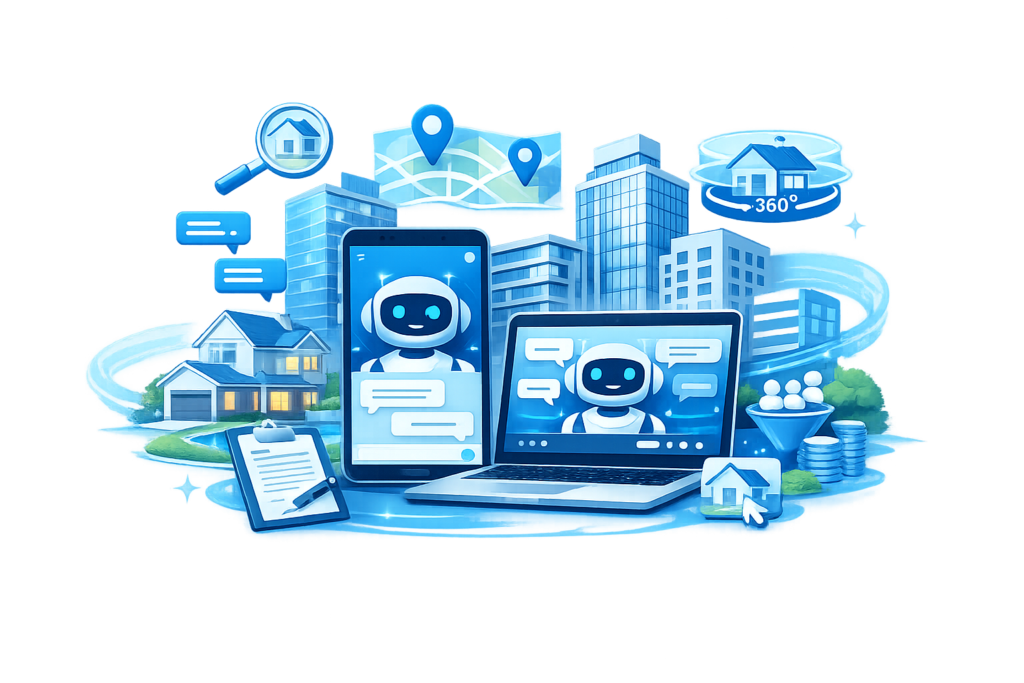
Real Estate Chatbot: Discover how AI-powered real estate chatbots transform lead generation, property inquiries, appointment scheduling, customer engagement, and sales automation. Learn best practices, implementation strategies, and future trends for real estate businesses.
Introduction
The real estate industry has become increasingly digital, with buyers, sellers, investors, landlords, and tenants expecting immediate responses and personalized assistance whenever they search for properties online. Traditional communication methods such as phone calls, emails, and manual inquiry handling often struggle to keep pace with modern customer expectations. As competition continues to grow, businesses that respond faster and deliver better customer experiences gain a significant advantage.
A Real Estate Chatbot helps agencies, brokers, developers, and property management companies automate conversations while providing accurate information around the clock. Powered by artificial intelligence, these virtual assistants answer property-related questions, qualify leads, recommend listings, schedule property viewings, and support customers throughout their buying or renting journey. Rather than replacing real estate professionals, AI chatbots enhance productivity by automating repetitive tasks so agents can focus on negotiations, relationship building, and closing deals.
At EngagerBot, businesses can leverage intelligent chatbot technology to improve customer engagement, capture more qualified leads, automate routine conversations, and create seamless digital experiences across websites and messaging platforms. As AI technology continues to evolve, real estate chatbots are becoming essential tools for agencies seeking higher conversion rates, stronger customer satisfaction, and scalable business growth.
Real Estate Chatbots Are Transforming the Modern Property Industry
The property market has always relied heavily on communication. Buyers ask numerous questions before making one of the biggest financial decisions of their lives, while sellers expect timely updates and professional guidance throughout the transaction. Managing these conversations manually can quickly overwhelm even experienced teams, particularly when inquiries arrive outside business hours. A modern AI-powered chatbot solves this challenge by acting as an intelligent first point of contact that remains available every minute of the day.
Unlike traditional live chat systems that require human operators, AI chatbots understand natural language, recognize user intent, and provide personalized responses based on available property information. They can instantly recommend listings according to budget, preferred location, number of bedrooms, amenities, and other buyer preferences. Prospective tenants can ask about rental availability, while sellers can request property valuation information without waiting for office hours. These capabilities significantly improve customer satisfaction while reducing response delays that often result in lost opportunities.
The growing popularity of digital property marketplaces, virtual tours, and remote consultations has further accelerated chatbot adoption. Today’s consumers expect businesses to provide immediate information regardless of whether they are browsing during lunch breaks or late at night. AI chatbots bridge this communication gap while continuously collecting valuable customer insights that help agencies improve marketing strategies, personalize recommendations, and optimize lead nurturing campaigns over time.
How AI-Powered Real Estate Chatbots Work
Artificial intelligence enables chatbots to move far beyond scripted conversations. Modern real estate chatbots combine Natural Language Processing (NLP), machine learning, automation workflows, and property databases to deliver intelligent interactions that closely resemble conversations with human agents. Instead of presenting fixed responses, these systems analyze customer questions and generate contextually relevant answers.
When a visitor lands on a real estate website, the chatbot immediately begins engaging by asking helpful questions. It may inquire whether the visitor is looking to buy, rent, sell, or invest. Based on the response, it continues gathering information such as preferred city, property type, budget, move-in timeline, financing requirements, and desired amenities. This conversational qualification process helps identify high-quality prospects while reducing unnecessary administrative work for sales teams.
Once customer preferences have been collected, the chatbot can automatically recommend suitable properties, display images, provide pricing information, explain neighborhood features, arrange appointments, and notify agents whenever a highly qualified lead is ready for direct contact. Integration with CRM systems, calendar platforms, email marketing tools, and property listing software creates a seamless workflow that improves operational efficiency while ensuring no valuable inquiry goes unanswered.
Benefits of Using a Real Estate Chatbot
One of the greatest advantages of implementing a real estate chatbot is its ability to provide consistent customer support around the clock. Property searches rarely happen only during business hours. Buyers frequently browse listings during evenings, weekends, and holidays when traditional offices may be closed. Chatbots ensure every visitor receives immediate assistance regardless of the time.
Another significant benefit involves lead qualification. Real estate professionals often spend considerable time responding to inquiries that may never convert into actual clients. AI chatbots automate this process by collecting important qualification data before forwarding leads to sales representatives. Agents receive richer customer profiles that include preferred locations, financing status, budget ranges, property interests, and purchase timelines. This allows teams to prioritize opportunities with the highest conversion potential.
Operational efficiency also improves dramatically through automation. Routine questions regarding pricing, availability, mortgage information, office hours, documentation, booking procedures, and neighborhood details no longer require manual responses. Staff members gain more time to focus on personalized consultations, negotiations, property showings, and closing transactions. The result is a more productive organization capable of serving larger numbers of clients without proportionally increasing operational costs.
Essential Features Every Real Estate Chatbot Should Include
An effective chatbot should provide much more than automated greetings. The most successful implementations focus on delivering practical value throughout the customer’s property journey. Intelligent property search capabilities allow visitors to describe exactly what they need instead of navigating complicated menus or search filters.
Lead qualification forms should collect relevant information naturally during conversations rather than overwhelming users with lengthy questionnaires. Buyers appreciate conversational experiences that feel personalized while gradually narrowing property recommendations according to their needs. Integrated appointment scheduling enables visitors to book consultations or property tours without exchanging multiple emails or phone calls.
Additional features such as multilingual support, mortgage calculators, document sharing, virtual property tours, neighborhood information, financing guidance, CRM synchronization, analytics dashboards, automated follow-up messaging, and personalized property alerts further enhance customer experiences. These capabilities transform chatbots into comprehensive digital assistants that support both customers and internal teams throughout the entire sales process.
Improving Lead Generation with AI Conversations
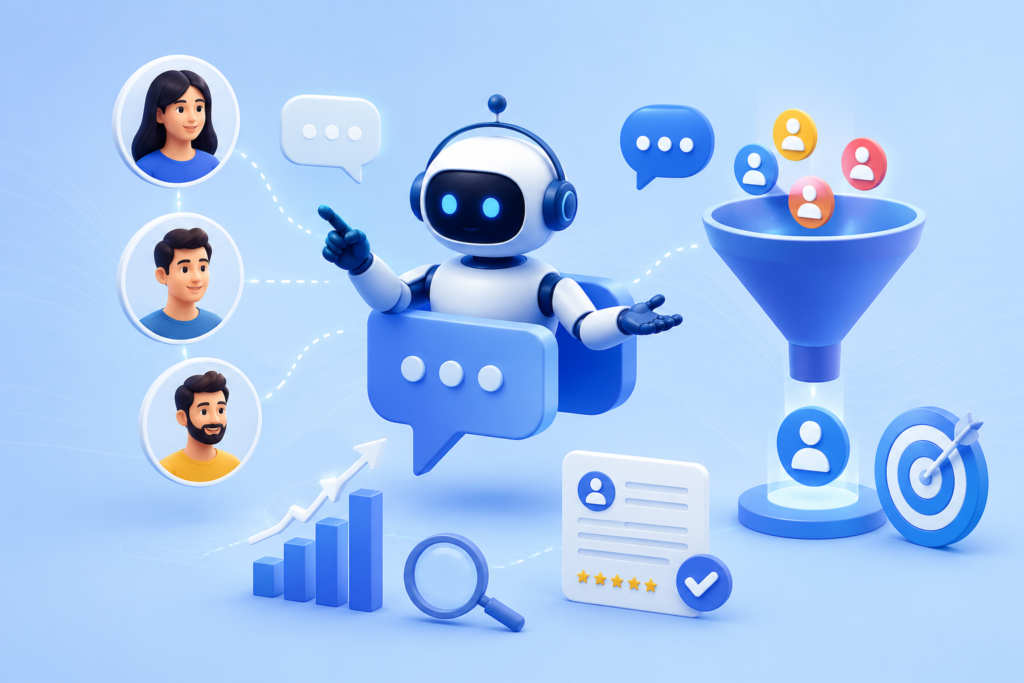
Lead generation remains one of the biggest challenges facing real estate professionals. Website traffic alone does not guarantee business growth because many visitors leave before contacting an agent. AI chatbots significantly improve conversion rates by initiating proactive conversations that encourage engagement before visitors abandon the website.
Instead of waiting for users to locate contact forms, chatbots welcome visitors with relevant questions based on browsing behavior. Someone viewing luxury apartments may receive assistance finding premium listings, while visitors exploring commercial properties receive information tailored to business investments. Personalized engagement creates stronger customer experiences while increasing the likelihood of capturing valuable contact information.
Once a lead has been captured, automated nurturing sequences maintain engagement through personalized follow-up messages, property recommendations, appointment reminders, financing resources, and market updates. Continuous communication keeps prospects engaged throughout lengthy buying journeys that often extend over several weeks or months. Agencies benefit from improved lead retention while customers receive ongoing support without feeling pressured by aggressive sales tactics.
Enhancing Customer Experience Throughout the Buying Journey
Purchasing property involves multiple stages that can easily become confusing for first-time buyers. Customers often have questions regarding financing, legal documentation, inspections, taxes, neighborhoods, schools, transportation, insurance, maintenance costs, and closing procedures. AI chatbots simplify these complex processes by providing timely information whenever customers need assistance.
Rather than overwhelming users with large amounts of information, chatbots guide conversations step by step. They answer individual questions, recommend educational resources, explain terminology, and connect users with human specialists whenever more personalized guidance becomes necessary. This balance between automation and human expertise creates a more comfortable customer experience while reducing frustration.
Customer satisfaction also improves because information remains consistent across every interaction. Unlike human conversations that may vary depending on individual employees, chatbots deliver standardized responses based on verified business knowledge. Combined with rapid response times and continuous availability, this consistency builds trust while encouraging long-term customer relationships that often generate repeat business and referrals.
Integrating Real Estate Chatbots with Business Systems
The true power of AI chatbots becomes apparent when they integrate seamlessly with existing business software. Rather than functioning as isolated communication tools, modern chatbots connect with CRM platforms, property listing databases, email marketing systems, calendar applications, analytics platforms, payment gateways, and customer support software to automate entire business workflows.
When a customer requests a property viewing, the chatbot can instantly check agent availability, schedule appointments, update calendars, create CRM records, send confirmation emails, and trigger reminder notifications automatically. Similar automation applies to rental applications, mortgage consultations, maintenance requests, seller inquiries, and customer follow-up campaigns. These streamlined processes reduce administrative overhead while minimizing the risk of missed opportunities.
Business intelligence also improves through centralized reporting. Integrated analytics help agencies identify frequently asked questions, monitor chatbot performance, analyze customer behavior, evaluate lead quality, and optimize marketing strategies based on real conversation data. Continuous performance measurement allows organizations to refine chatbot responses, improve customer journeys, and maximize return on investment as AI capabilities continue to evolve.
Advanced Use Cases of Real Estate Chatbots
Real estate chatbots have evolved far beyond answering basic property inquiries. Today, AI-powered chatbots serve as intelligent digital assistants capable of supporting buyers, sellers, tenants, investors, landlords, and real estate agents throughout every stage of the property lifecycle. By combining artificial intelligence, automation, and customer data, businesses can create highly personalized experiences that improve engagement while reducing operational workload. Modern chatbots can qualify leads, recommend suitable properties, answer legal and financing questions, schedule appointments, and provide instant support across websites, mobile applications, and messaging platforms.
One of the most valuable use cases is investment property guidance. Investors often evaluate multiple factors before making purchasing decisions, including rental income potential, neighborhood development, market trends, property appreciation, and financing options. AI chatbots can ask intelligent qualifying questions before recommending suitable investment opportunities. Rather than requiring manual consultation for every inquiry, businesses can automate the initial discovery process and ensure only highly qualified investment leads reach sales specialists. Educational resources can also be delivered automatically, helping investors understand market conditions and property performance.
Another growing application involves virtual property tours. Chatbots can guide visitors through interactive galleries, video walkthroughs, and 3D property experiences while answering questions in real time. If a visitor expresses interest in a specific home, apartment, or commercial property, the chatbot can immediately schedule an in-person viewing or online consultation. This seamless experience reduces friction in the customer journey and significantly improves conversion rates. Businesses following recommendations from Google Search Central can also improve content quality, user experience, and discoverability by creating informative property pages that support conversational AI interactions.
AI Personalization Creates Better Property Recommendations
Every property buyer has unique goals, preferences, financial limitations, and lifestyle requirements. Traditional property search filters often fail to capture these individual needs because customers may not know exactly which filters to select. AI-powered chatbots overcome this limitation by engaging users in natural conversations that gradually refine recommendations based on responses rather than static search parameters.
For example, instead of asking visitors to complete lengthy forms, the chatbot might begin by asking whether the user wants to buy, rent, or invest. It can then continue gathering information regarding preferred neighborhoods, budget, family size, commuting preferences, school districts, accessibility requirements, pet policies, or desired amenities. As additional information becomes available, AI continuously refines recommendations while learning customer preferences throughout the conversation.
Predictive personalization also enhances follow-up communication. Rather than sending generic property alerts, chatbots can recommend homes similar to previously viewed listings or notify buyers when prices change in their preferred locations. These personalized experiences increase customer satisfaction because recommendations remain highly relevant throughout the buying journey. Businesses can further improve customer understanding by analyzing website performance through Google Analytics while monitoring technical SEO using Google Search Console. Combining AI personalization with accurate analytics enables continuous optimization of both marketing campaigns and customer engagement strategies.
Using Real Estate Chatbots for Property Management
Property management companies handle thousands of routine interactions every month. Tenants submit maintenance requests, landlords ask for occupancy reports, prospective renters inquire about available units, and vendors coordinate repair schedules. Managing these communications manually requires significant administrative effort and often leads to delays that reduce customer satisfaction. AI chatbots automate many of these repetitive interactions while ensuring every request receives immediate attention.
Maintenance request automation is among the most practical applications. Instead of calling the management office, tenants simply describe the issue through the chatbot. Artificial intelligence collects essential information such as apartment number, maintenance category, urgency level, photos when available, and preferred service times. Once complete, the chatbot automatically creates a maintenance ticket, notifies the appropriate staff, and keeps tenants updated throughout the repair process.
Property managers also benefit from automated rent reminders, lease renewal notifications, document requests, frequently asked questions, visitor registration, parking inquiries, and emergency contact guidance. Because these conversations occur twenty-four hours a day, tenants enjoy better service while property management teams spend more time solving complex issues instead of answering repetitive questions. Organizations handling customer information should also implement security recommendations published by OWASP and follow the NIST Cybersecurity Framework to strengthen data protection and reduce cybersecurity risks.
Security, Privacy, and the Future of Real Estate Chatbots
As artificial intelligence becomes more deeply integrated into real estate operations, protecting customer information becomes increasingly important. Property transactions often involve sensitive personal information, financial documents, identification records, and confidential communications. Businesses implementing chatbot technology must therefore prioritize security, privacy, and regulatory compliance alongside customer convenience.
Secure authentication, encrypted communications, protected databases, and controlled user permissions should form the foundation of every chatbot deployment. Organizations should also implement spam prevention and bot protection technologies such as Google reCAPTCHA to reduce fraudulent submissions and automated abuse. Accessibility is equally important. Designing chatbot interfaces according to recommendations from the W3C Web Accessibility Initiative ensures users with different abilities can comfortably interact with AI-powered services.
Looking ahead, real estate chatbots will become even more intelligent through advancements in generative AI, predictive analytics, voice interaction, multilingual communication, and smart home integration. Future systems may automatically analyze market conditions, estimate property values, recommend investment opportunities, generate personalized buying strategies, and coordinate transactions with minimal human intervention. Businesses adopting these innovations responsibly while maintaining transparency, security, and customer trust will be better positioned to compete in an increasingly digital real estate market.
Future Trends in Real Estate Chatbots
Artificial intelligence will continue transforming the real estate industry through predictive analytics, voice assistants, multilingual conversations, augmented reality property tours, and hyper-personalized recommendations. Future chatbots will analyze customer behavior, predict buying intent, suggest investment opportunities, estimate property values, and integrate with smart home technologies. Businesses adopting responsible AI, automation, and continuous learning will gain a competitive advantage while improving customer satisfaction and operational efficiency. Leveraging innovations from Google AI and implementing structured data using Schema.org will further enhance discoverability and user experiences.
Choosing the Right Real Estate Chatbot
Selecting the right chatbot requires evaluating business goals, scalability, integrations, AI capabilities, security, customization, analytics, multilingual support, CRM compatibility, and ease of management. Businesses should prioritize solutions that integrate seamlessly with websites, calendars, property databases, and marketing platforms while supporting automation and human handoffs when needed. A flexible chatbot capable of evolving with changing customer expectations provides greater long-term value than a basic rule-based solution.
Measuring Success and ROI

Measuring chatbot success requires monitoring metrics such as lead conversion rates, response times, customer satisfaction, appointment bookings, engagement duration, qualified leads, property inquiries, and revenue growth. Analytics help identify conversation improvements, optimize workflows, and enhance customer experiences. Continuous testing, customer feedback, and AI training ensure long-term performance improvements while maximizing return on investment.
Common Mistakes Businesses Make
Many organizations fail to realize the full value of chatbot technology because of avoidable implementation mistakes.
Common mistakes include:
- Launching without clearly defined business objectives.
- Providing outdated or incomplete property information.
- Ignoring chatbot training and ongoing optimization.
- Failing to integrate with CRM and scheduling platforms.
- Offering only scripted conversations without AI understanding.
- Neglecting customer privacy and security.
- Making it difficult to reach a human agent.
- Ignoring chatbot analytics and customer feedback.
- Creating lengthy qualification forms that discourage users.
- Not testing chatbot performance across desktop and mobile devices.
Avoiding these mistakes results in higher engagement, improved trust, better lead quality, and increased sales opportunities.
Best Practices Summary
Successful real estate chatbots combine intelligent automation with exceptional customer experiences.
Best practices include:
- Offer 24/7 customer support.
- Personalize conversations using AI.
- Keep responses clear and conversational.
- Integrate with CRM, calendars, and property listings.
- Regularly update listings and pricing.
- Monitor chatbot analytics.
- Protect customer information using security best practices.
- Make human assistance easily available.
- Continuously improve AI using customer interactions.
- Test conversations regularly to improve conversion rates.
Frequently Asked Questions
1. What is a Real Estate Chatbot?
A Real Estate Chatbot is an AI-powered virtual assistant that automates customer conversations, answers property questions, recommends listings, qualifies leads, and schedules appointments.
2. Can chatbots replace real estate agents?
No. Chatbots automate repetitive communication while real estate professionals continue handling negotiations, relationship building, legal guidance, and complex customer situations.
3. Do chatbots improve lead generation?
Yes. Chatbots engage visitors immediately, qualify prospects, collect contact information, and automate follow-up communication, resulting in higher conversion rates.
4. Can a chatbot schedule property viewings?
Yes. Modern chatbots integrate with calendars and booking systems to arrange property tours, consultations, and virtual meetings automatically.
5. Are AI chatbots secure?
When implemented properly using encryption, secure authentication, and recognized cybersecurity frameworks, AI chatbots can safely handle customer interactions while protecting sensitive information.
6. Can chatbots support multiple languages?
Yes. Many AI-powered chatbots provide multilingual conversations, allowing agencies to serve international buyers, investors, and tenants more effectively.
7. Which businesses benefit from Real Estate Chatbots?
Residential agencies, commercial brokers, property developers, landlords, rental companies, property managers, vacation rental businesses, and real estate investment firms can all benefit from chatbot automation.
8. How long does chatbot implementation take?
Implementation depends on business requirements, integrations, customization, and AI training. Simple deployments may take only a few days, while enterprise solutions typically require several weeks.
Conclusion
Artificial intelligence is reshaping the real estate industry by delivering faster communication, smarter lead qualification, personalized property recommendations, and continuous customer engagement. A well-designed Real Estate Chatbot improves operational efficiency while helping businesses capture more qualified leads, automate repetitive tasks, and provide exceptional customer experiences across every stage of the buying, selling, renting, and property management journey.
EngagerBot empowers real estate businesses with intelligent AI chatbot solutions that enhance customer interactions, increase conversions, and streamline business operations. As customer expectations continue evolving, investing in conversational AI is becoming a strategic advantage rather than an optional technology.
Want to Implement This Easily?
Prompt
You are an expert consultant. Based on the blog post titled “Real Estate Chatbot”, provide a step-by-step, practical implementation guide. Include tools, best practices, common mistakes to avoid, and advanced tips. Assume the reader wants to implement everything discussed in this article effectively.
Call to Action
Want our help implementing this? Just reach out to us via our website contact form: https://www.engagerbot.com/contact-us/