
Discover how a Booking & Travel Chatbot transforms travel businesses through automated bookings, personalized recommendations, 24/7 customer support, itinerary management, and seamless customer experiences that improve conversions and operational efficiency.
Introduction
The travel industry has undergone a significant transformation over the past decade. Modern travelers expect instant responses, personalized recommendations, seamless booking experiences, and real-time assistance throughout their journeys. Traditional customer service channels often struggle to meet these expectations, creating challenges for travel agencies, tour operators, airlines, hotels, and online booking platforms.
A Booking & Travel Chatbot addresses these challenges by providing intelligent, automated interactions that guide customers through every stage of the travel journey. From discovering destinations and comparing travel packages to booking accommodations and receiving post-booking support, chatbots have become an essential component of digital travel experiences.
At EngagerBot, businesses are increasingly adopting AI-powered travel automation solutions to improve customer satisfaction, streamline operations, and generate higher booking conversions. As artificial intelligence continues to evolve, travel chatbots are becoming more sophisticated, delivering personalized experiences that rival human assistance while operating around the clock.
This comprehensive guide explores how booking and travel chatbots work, their benefits, key features, implementation strategies, best practices, and future opportunities for travel businesses seeking a competitive advantage.
What Is a Booking & Travel Chatbot?
A Booking & Travel Chatbot is an AI-powered virtual assistant designed specifically for travel-related interactions. It helps users search destinations, compare travel options, make reservations, modify bookings, receive travel recommendations, and access customer support through natural conversations.
Unlike traditional booking forms that require users to navigate multiple pages and complete lengthy processes, travel chatbots create a conversational experience. Customers simply describe what they want, and the chatbot guides them toward relevant options. This conversational approach reduces friction and improves user engagement.
Modern travel chatbots leverage Natural Language Processing (NLP), machine learning algorithms, and integrations with booking engines, customer relationship management systems, and payment gateways. These technologies allow the chatbot to understand customer intent, provide relevant recommendations, and complete transactions efficiently.
Travel businesses benefit from increased automation while customers enjoy faster service, personalized interactions, and convenient access across websites, mobile apps, and messaging platforms. As customer expectations continue to rise, travel chatbots are becoming a critical component of digital transformation strategies within the tourism and hospitality sectors.
Why the Travel Industry Needs AI-Powered Chatbots
The travel industry faces unique challenges that make automation particularly valuable. Travelers often require immediate information, especially when planning trips, comparing options, or dealing with unexpected travel changes. Delayed responses can result in lost bookings and frustrated customers.
AI-powered travel chatbots provide instant assistance regardless of time zones or business hours. Whether a customer wants to check flight availability at midnight or inquire about hotel amenities during a holiday weekend, the chatbot remains available. This continuous accessibility significantly improves customer satisfaction and engagement.
Travel businesses also manage large volumes of repetitive inquiries. Questions regarding baggage policies, cancellation terms, visa requirements, check-in procedures, destination information, and booking modifications consume substantial support resources. Chatbots automate these routine interactions, allowing human agents to focus on complex customer needs.
Furthermore, travel purchasing decisions often involve extensive research and comparison. AI chatbots help simplify decision-making by presenting relevant recommendations based on user preferences, budget, travel dates, and interests. This personalized guidance enhances the booking experience while increasing the likelihood of conversion.
How Booking & Travel Chatbots Improve Customer Experience
Customer experience is one of the most important factors influencing travel booking decisions. Travelers expect convenience, speed, accuracy, and personalization throughout their journey. A well-designed chatbot addresses these expectations effectively.
One major advantage is immediate assistance. Customers no longer need to wait in phone queues or send emails and wait hours for responses. Instead, they receive real-time answers and recommendations that support their decision-making process. This responsiveness creates a smoother and more satisfying experience.
Personalization is another critical benefit. Travel chatbots analyze user preferences, previous interactions, destination interests, travel history, and budget considerations to provide tailored recommendations. Rather than presenting generic options, the chatbot offers suggestions that align with individual customer needs.
Additionally, chatbots support travelers throughout the entire customer journey. Assistance begins during trip planning and continues through booking, pre-departure preparation, travel execution, and post-trip engagement. This continuity strengthens customer relationships and increases loyalty while creating memorable travel experiences.
Key Features of a Modern Booking & Travel Chatbot
Modern travel chatbots incorporate a variety of advanced features that improve customer interactions and business performance. These features go beyond basic messaging and provide comprehensive travel assistance.
Destination discovery is among the most valuable capabilities. Customers can describe their interests, preferred climates, activities, budgets, and travel goals. The chatbot then recommends destinations that align with these preferences, helping travelers discover options they may not have considered.
Booking assistance represents another essential feature. Chatbots can help customers search flights, hotels, vacation packages, transportation services, cruises, and tours. Through integrations with reservation systems, they can display availability, pricing, and booking details in real time.
Additional capabilities often include itinerary creation, travel reminders, document assistance, multilingual communication, cancellation management, payment processing, loyalty program integration, and customer feedback collection. Together, these features create a highly efficient and user-friendly travel experience that supports both customers and businesses.
Personalized Travel Recommendations Through Artificial Intelligence
Personalization has become a defining characteristic of successful travel experiences. Modern consumers expect businesses to understand their preferences and provide relevant suggestions tailored to their individual needs.
AI-powered travel chatbots analyze various data points to create personalized recommendations. These may include previous bookings, browsing behavior, travel interests, preferred destinations, accommodation preferences, spending habits, and seasonal travel patterns. By analyzing this information, the chatbot can identify travel options that are more likely to appeal to the customer.
For example, a traveler who frequently books luxury beach resorts may receive recommendations for premium coastal destinations, while adventure enthusiasts may be presented with hiking expeditions, wildlife tours, or outdoor experiences. This targeted approach increases customer satisfaction while improving conversion rates.
Personalized recommendations also reduce decision fatigue. Travelers are often overwhelmed by the sheer number of available options. AI helps narrow these choices, making it easier for customers to select destinations, accommodations, and activities that align with their goals. As a result, businesses create more engaging and effective customer journeys.
Streamlining the Booking Process With Conversational AI
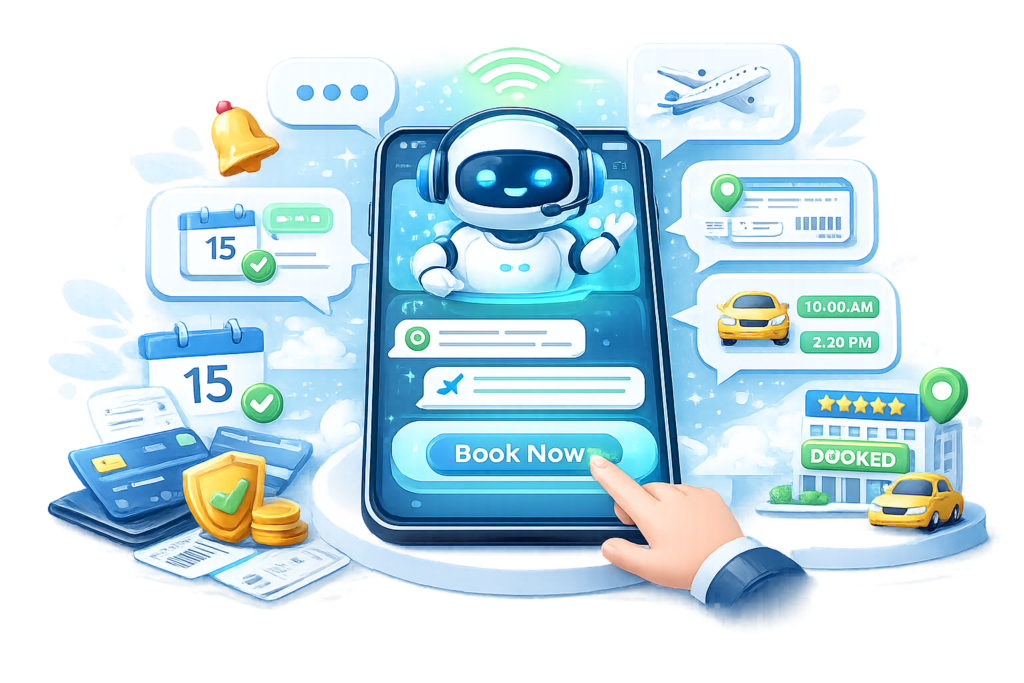
Traditional booking systems often require users to navigate multiple pages, complete lengthy forms, and compare numerous options manually. These complexities can increase abandonment rates and reduce overall conversions.
Conversational AI simplifies the booking journey by guiding users through a natural dialogue. Instead of searching through extensive menus, customers simply communicate their requirements. The chatbot interprets these requests and presents relevant travel options in an organized and intuitive manner.
The conversational process helps eliminate unnecessary steps. Users can quickly refine their search criteria by discussing budget limitations, travel dates, accommodation preferences, transportation needs, and activity interests. This efficient interaction reduces friction and encourages users to complete their bookings.
Moreover, conversational AI provides contextual assistance throughout the booking process. If a traveler has questions about cancellation policies, room features, baggage allowances, or payment methods, the chatbot delivers immediate answers without disrupting the booking flow. This continuous support improves user confidence and increases completed transactions.
24/7 Travel Assistance and Customer Support
Travelers often require support outside traditional business hours. Flight delays, hotel issues, transportation disruptions, and urgent itinerary changes can occur at any time. Providing round-the-clock assistance is essential for maintaining customer satisfaction.
A Booking & Travel Chatbot serves as a continuously available support channel. Customers can access assistance whenever needed, regardless of their location or time zone. This availability is particularly valuable for international travel businesses serving global audiences.
Travel chatbots handle a wide range of support inquiries, including booking confirmations, reservation modifications, cancellation requests, refund policies, baggage information, travel documentation requirements, destination guidance, and emergency contact information. By automating these interactions, businesses provide faster responses and improve service consistency.
In addition to supporting customers during travel disruptions, chatbots proactively communicate important updates. Flight changes, weather alerts, gate modifications, check-in reminders, and itinerary notifications can be delivered automatically. This proactive communication reduces uncertainty and enhances the overall travel experience.
Multilingual Communication for Global Travelers
The travel industry serves customers from diverse linguistic and cultural backgrounds. Language barriers can create confusion, reduce trust, and negatively impact booking decisions. Modern travel chatbots address this challenge through multilingual communication capabilities.
AI-powered language processing enables chatbots to interact with users in multiple languages while maintaining conversational accuracy. Travelers can ask questions, explore destinations, and complete bookings in their preferred language, improving accessibility and user comfort.
Multilingual support also helps travel businesses expand into international markets. Rather than hiring large multilingual support teams, organizations can use chatbot technology to provide consistent service across different regions. This scalability allows businesses to serve global audiences more efficiently.
Furthermore, multilingual travel chatbots contribute to improved customer satisfaction by reducing misunderstandings and enhancing communication clarity. Travelers are more likely to engage with businesses that accommodate their language preferences, leading to stronger relationships and increased booking confidence.
Itinerary Management and Smart Trip Planning
Travel planning can be complex, especially when travelers must coordinate flights, accommodations, transportation, activities, dining reservations, and local experiences. A Booking & Travel Chatbot simplifies this process by acting as a centralized travel assistant that helps users organize and manage every aspect of their journey.
One of the most valuable capabilities of modern travel chatbots is automated itinerary generation. Based on traveler preferences, budget, destination, trip duration, and interests, the chatbot can create customized travel plans that maximize convenience and enjoyment. Instead of spending hours researching and comparing options, travelers receive structured recommendations within minutes. This improves customer satisfaction while reducing planning-related stress.
Beyond initial planning, chatbots continuously support travelers throughout their journey. They can send reminders for flight departures, hotel check-ins, tour reservations, transportation schedules, and local attractions. These proactive notifications help travelers stay organized and avoid missed reservations. As a result, businesses provide greater value while creating more seamless travel experiences.
Additionally, itinerary management becomes significantly easier when changes occur. Travelers frequently need to modify bookings due to weather disruptions, schedule changes, or personal circumstances. A chatbot can instantly assist with itinerary updates, ensuring travelers receive accurate and timely information whenever adjustments are required.
Travel Chatbots for Hotels, Airlines, Tour Operators, and Travel Agencies
The flexibility of AI-powered travel chatbots makes them valuable across multiple segments of the travel industry. Different travel businesses can customize chatbot functionality to address their unique operational needs and customer expectations.
Hotels use travel chatbots to automate room reservations, answer guest questions, facilitate check-in and check-out procedures, recommend amenities, and promote additional services. Guests benefit from immediate assistance while hotels reduce front-desk workload and improve operational efficiency.
Airlines leverage chatbots to provide flight information, booking assistance, baggage policies, boarding details, flight status updates, and customer support. Since travelers often require urgent information, instant chatbot responses improve customer satisfaction and reduce support center congestion.
Travel agencies and tour operators use chatbots to qualify leads, recommend destinations, generate customized travel packages, schedule consultations, and automate follow-up communication. By streamlining these interactions, agencies can focus more attention on complex travel planning while the chatbot manages routine inquiries and customer engagement.
Across all travel sectors, chatbot technology enables businesses to provide consistent service quality while reducing operational costs and increasing customer convenience.
Integration With Booking Engines, CRM Platforms, and Payment Systems
A travel chatbot becomes significantly more powerful when integrated with existing business systems. Rather than functioning as an isolated communication tool, it can connect directly with booking engines, customer relationship management platforms, payment gateways, inventory systems, and marketing automation software.
Integration with booking engines allows customers to view real-time availability and pricing. Whether booking flights, hotels, tours, transportation services, or vacation packages, users receive accurate information directly within the chatbot conversation. This eliminates the need to switch between multiple systems and improves conversion rates.
CRM integration enables personalized customer experiences. The chatbot can access customer profiles, previous bookings, preferences, loyalty status, and interaction history. This information allows the chatbot to deliver more relevant recommendations and personalized communication throughout the customer journey.
Payment gateway integration further enhances convenience by enabling secure transactions directly within the conversation flow. Customers can complete reservations, make deposits, purchase upgrades, and confirm bookings without leaving the chatbot environment. This streamlined experience reduces friction and supports higher booking completion rates.
When multiple systems work together through chatbot automation, travel businesses create a unified customer experience that improves efficiency, accuracy, and satisfaction.
Data Analytics and Customer Insights for Better Decision-Making
Every chatbot interaction generates valuable data that can help travel businesses understand customer behavior, preferences, and purchasing patterns. These insights support more informed business decisions and contribute to continuous improvement.
Travel chatbots collect information about frequently asked questions, popular destinations, customer concerns, booking behaviors, seasonal trends, and user engagement patterns. By analyzing this data, businesses can identify emerging opportunities and optimize their services accordingly.
For example, if a large number of users inquire about a specific destination, businesses may decide to expand related travel packages or promotional campaigns. Similarly, if customers consistently abandon bookings at a particular stage, organizations can investigate potential friction points and improve the user experience.
Analytics also support more effective marketing strategies. Businesses can identify high-converting customer segments, personalize promotional offers, and develop targeted campaigns based on traveler interests and behavior. This data-driven approach improves marketing efficiency and maximizes return on investment.
As travel competition continues to increase, leveraging customer insights through chatbot analytics becomes an essential component of sustainable business growth.
Increasing Revenue Through Automated Travel Sales
Generating revenue is a primary objective for any travel business. Booking & Travel Chatbots contribute directly to revenue growth by improving lead conversion, increasing upselling opportunities, and enhancing customer retention.
One of the most significant advantages is the ability to engage potential customers immediately. Many travel inquiries occur outside normal business hours. Without instant responses, businesses risk losing leads to competitors. Chatbots ensure every inquiry receives prompt attention, increasing the likelihood of conversion.
Upselling and cross-selling opportunities also become more effective through AI-driven recommendations. During the booking process, the chatbot can suggest room upgrades, airport transfers, travel insurance, guided tours, dining experiences, premium seating, and other complementary services. Because these recommendations are personalized, customers are more likely to accept them.
Furthermore, chatbots support long-term customer relationships through automated follow-ups, loyalty program engagement, personalized travel offers, and post-trip communication. Retaining existing customers is often more cost-effective than acquiring new ones, making chatbot-driven customer engagement an important revenue strategy.
When implemented effectively, travel chatbots become powerful sales tools that continuously contribute to business growth and profitability.
Future Trends in Booking and Travel Chatbots
Artificial intelligence continues to evolve rapidly, creating exciting opportunities for the future of travel automation. Travel chatbots are expected to become even more intelligent, personalized, and proactive in the coming years.
One emerging trend is predictive travel assistance. Rather than waiting for customers to ask questions, future chatbots will anticipate traveler needs based on behavioral patterns, travel history, and contextual data. This proactive approach will further improve customer experiences and operational efficiency.
Voice-enabled travel assistants are also gaining popularity. As voice search adoption increases, travelers may interact with chatbots through spoken conversations rather than text-based interfaces. This creates a more natural and convenient user experience, particularly during travel.
Another significant trend involves deeper integration with AI-powered recommendation engines. Future travel chatbots will deliver increasingly accurate destination suggestions, itinerary planning assistance, and personalized travel experiences. Enhanced machine learning capabilities will allow chatbots to continuously improve recommendations based on customer feedback and behavior.
These advancements will help travel businesses remain competitive while meeting growing customer expectations for convenience, personalization, and intelligent assistance.
How to Successfully Implement a Booking & Travel Chatbot
Implementing a travel chatbot requires careful planning and strategic execution. Businesses should begin by identifying their objectives and understanding the specific challenges they want the chatbot to address.
The first step involves defining key use cases. Organizations should determine whether the chatbot will focus on booking assistance, customer support, itinerary management, lead generation, travel recommendations, or a combination of these functions. Clear objectives help guide development and implementation decisions.
The next phase involves selecting the appropriate technology platform and integration strategy. Businesses should ensure the chatbot can connect with booking systems, CRM platforms, payment gateways, and other essential tools. Seamless integration is critical for delivering a smooth customer experience.
Testing and optimization are equally important. Before deployment, businesses should evaluate chatbot performance across multiple scenarios to identify potential issues. Continuous monitoring, customer feedback collection, and performance analysis allow organizations to refine chatbot capabilities and maximize long-term effectiveness.
A well-planned implementation strategy significantly increases the likelihood of successful chatbot adoption and positive business outcomes.
Measuring ROI and Chatbot Success

Investing in chatbot technology requires measurable business results. Travel organizations should establish clear performance metrics to evaluate chatbot effectiveness and return on investment.
One of the most important indicators is conversion rate improvement. Businesses can compare booking conversions before and after chatbot implementation to determine its impact on sales performance. Increased conversions often represent one of the most significant chatbot benefits.
Customer satisfaction metrics also provide valuable insights. Monitoring response times, customer feedback, engagement levels, and support resolution rates helps organizations understand how the chatbot affects the customer experience. Positive improvements indicate successful implementation.
Operational efficiency is another critical measurement area. Businesses can track reductions in support workload, faster response times, lower customer service costs, and increased automation rates. These improvements contribute directly to cost savings and resource optimization.
Ultimately, successful travel chatbot implementations deliver measurable benefits across revenue generation, customer satisfaction, operational efficiency, and business scalability.
Common Mistakes Businesses Make With Travel Chatbots
Many organizations invest in chatbot technology but fail to achieve optimal results due to avoidable implementation mistakes. Understanding these challenges can help businesses maximize chatbot effectiveness.
A common mistake is focusing solely on automation while neglecting user experience. Customers still expect helpful, intuitive interactions. If the chatbot feels confusing or unresponsive, users may abandon the conversation and seek assistance elsewhere.
Another frequent issue involves insufficient personalization. Generic responses often fail to engage travelers effectively. Modern customers expect recommendations tailored to their preferences, budgets, and travel goals. Without personalization, chatbot interactions may appear impersonal and less valuable.
Poor integration represents another major challenge. If booking systems, customer databases, and payment platforms are disconnected from the chatbot, users may encounter incomplete information or frustrating booking experiences. Seamless integration is essential for delivering a smooth customer journey.
Finally, some businesses fail to continuously optimize chatbot performance. Customer expectations evolve over time, making ongoing improvements necessary. Regular analysis, testing, and refinement ensure the chatbot remains effective and competitive.
Best Practices Summary
Successful Booking & Travel Chatbot implementations share several common characteristics that contribute to strong performance and customer satisfaction.
First, prioritize customer needs. Every chatbot interaction should focus on helping travelers achieve their goals quickly and efficiently. Clear communication, intuitive conversation flows, and personalized recommendations enhance the user experience.
Second, integrate the chatbot with essential business systems. Real-time access to booking information, customer data, payment processing, and travel inventory significantly improves chatbot capabilities and customer convenience.
Third, maintain a balance between automation and human support. While chatbots handle routine inquiries effectively, complex situations may require human intervention. Providing a smooth escalation process ensures customers receive appropriate assistance when needed.
Fourth, continuously monitor performance metrics and customer feedback. Ongoing optimization allows businesses to improve chatbot accuracy, enhance engagement, and maximize return on investment.
Following these best practices helps organizations create travel chatbot experiences that deliver meaningful value for both customers and business stakeholders.
Frequently Asked Questions
1. What is a Booking & Travel Chatbot?
A Booking & Travel Chatbot is an AI-powered virtual assistant that helps travelers search destinations, compare travel options, make reservations, manage itineraries, and receive customer support through conversational interactions.
2. How does a travel chatbot increase bookings?
Travel chatbots improve booking conversions by providing instant assistance, personalized recommendations, simplified booking processes, and 24/7 customer engagement.
3. Can travel chatbots handle payments securely?
Yes. Modern travel chatbots integrate with secure payment gateways, allowing customers to complete transactions safely while maintaining industry-standard security protocols.
4. Are travel chatbots suitable for small travel businesses?
Absolutely. Small agencies, tour operators, and hospitality businesses can use chatbots to automate customer service, generate leads, and improve efficiency without hiring large support teams.
5. Can travel chatbots support multiple languages?
Yes. Advanced AI chatbots provide multilingual communication capabilities, enabling businesses to serve international travelers more effectively.
6. What systems can a travel chatbot integrate with?
Travel chatbots commonly integrate with booking engines, CRM platforms, payment gateways, marketing automation tools, inventory management systems, and customer support platforms.
7. How long does chatbot implementation take?
Implementation timelines vary depending on complexity, integrations, and customization requirements. Basic deployments may take a few weeks, while advanced solutions may require several months.
8. How can businesses measure chatbot success?
Success can be measured through booking conversions, customer satisfaction scores, support efficiency improvements, revenue growth, engagement metrics, and operational cost reductions.
Conclusion
The modern travel industry demands speed, personalization, convenience, and continuous customer engagement. A Booking & Travel Chatbot addresses these requirements by automating travel assistance, simplifying booking processes, delivering personalized recommendations, and providing 24/7 customer support.
As artificial intelligence continues to reshape customer expectations, travel businesses that embrace chatbot technology gain significant advantages in operational efficiency, customer satisfaction, and revenue growth. From trip planning and booking assistance to itinerary management and post-travel engagement, chatbots enhance every stage of the customer journey.
For organizations seeking to remain competitive in an increasingly digital marketplace, investing in intelligent travel automation is no longer optional—it is becoming a strategic necessity. At EngagerBot, businesses can leverage advanced chatbot solutions to create exceptional travel experiences while driving measurable business results.
Want to Implement This Easily?
Prompt Text:
You are an expert consultant. Based on the blog post titled “Booking & Travel Chatbot”, provide a step-by-step, practical implementation guide. Include tools, best practices, common mistakes to avoid, and advanced tips. Assume the reader wants to implement everything discussed in this article effectively.
Call to Action:
Want our help implementing this? Just reach out to us via our website contact form: