
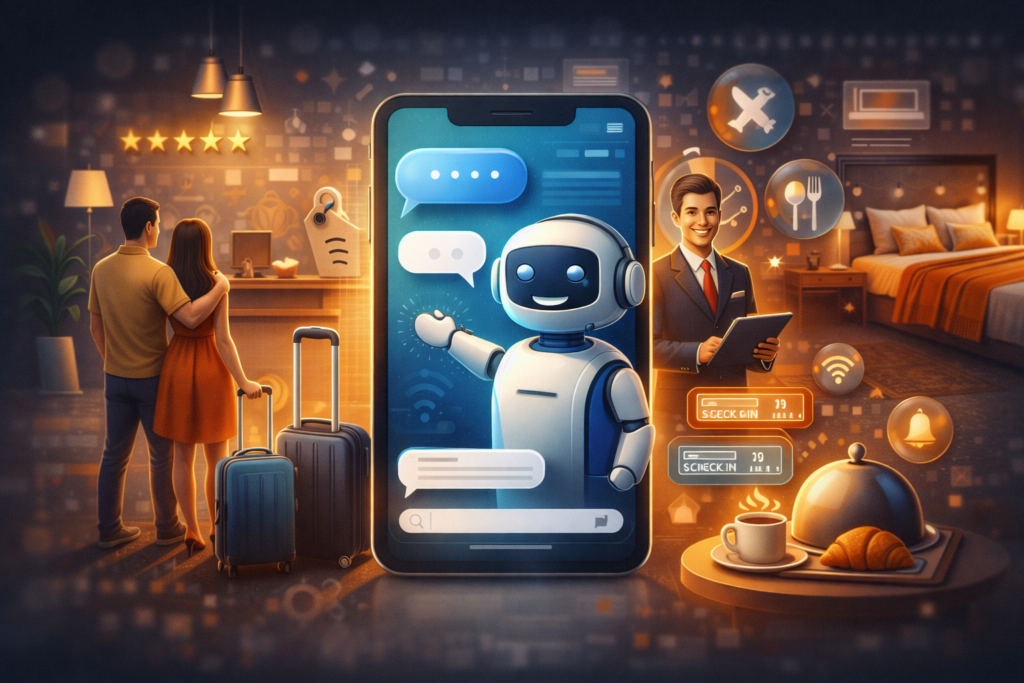
The hospitality industry is evolving rapidly as artificial intelligence reshapes how hotels, resorts, restaurants, and travel brands interact with guests. From instant bookings to personalized guest support, hospitality chatbots are becoming a critical tool for delivering seamless, always-on service while meeting Google’s quality, trust, and user experience standards.
Introduction: The Rise of Hospitality Chatbots in Modern Guest Engagement
The hospitality industry has always been centered on exceptional guest experiences, but in today’s digital-first world, expectations have changed dramatically. Guests now demand instant responses, 24/7 availability, personalized recommendations, and frictionless communication across websites, mobile apps, and messaging platforms. This shift has made hospitality chatbot solutions one of the most powerful technologies driving innovation in hotels, resorts, vacation rentals, and travel businesses.
A hospitality chatbot is an AI-powered conversational system designed to assist guests before, during, and after their stay. These chatbots handle everything from room availability checks and reservations to local recommendations, check-in instructions, and post-stay feedback. By automating repetitive interactions, businesses can focus human staff on high-value, relationship-driven service.
Platforms like Engagerbot demonstrate how conversational AI can be aligned with brand voice, operational efficiency, and guest satisfaction—without sacrificing the human touch that hospitality is known for.
From an SEO and Google best-practice perspective, hospitality chatbots also improve user experience, page engagement, and content satisfaction, which are increasingly important ranking signals. Google’s Search Quality Evaluator Guidelines emphasize helpful content, trust, and real user value—areas where well-implemented chatbots excel.
As global travel rebounds and competition intensifies, hospitality brands that adopt intelligent automation are better positioned to scale, personalize experiences, and meet modern guest expectations. This guide explores how hospitality chatbots work, why they matter, and how businesses can implement them responsibly while aligning with Google’s quality standards.
What Is a Hospitality Chatbot and How Does It Work?
A hospitality chatbot is a conversational AI system designed specifically to support guest interactions within hotels, resorts, restaurants, and travel businesses. Unlike generic chatbots, hospitality chatbots are trained to understand industry-specific language, booking workflows, guest expectations, and service standards.
At its core, a hospitality chatbot operates using a combination of natural language processing (NLP), machine learning, and predefined business rules. When a guest asks a question—such as room availability, pricing, or amenities—the chatbot interprets the intent and delivers a relevant response in real time. More advanced chatbots integrate directly with property management systems (PMS), booking engines, and customer relationship management (CRM) platforms.
This integration allows chatbots to:
- Confirm reservations instantly
- Modify bookings
- Provide check-in and check-out details
- Recommend nearby attractions or dining options
- Escalate complex issues to human staff seamlessly
From a Google best-practice standpoint, this aligns with helpful content principles, where users receive accurate, fast, and relevant information without friction. Google explicitly values systems that improve user satisfaction and task completion efficiency.
Hospitality chatbots also collect valuable, anonymized interaction data. This data helps businesses understand guest intent, common pain points, and service gaps—enabling continuous optimization without compromising privacy.
By delivering consistent, on-brand communication at scale, hospitality chatbots become a foundational layer of modern guest engagement rather than just a support tool.
Why Hospitality Chatbots Are Essential for Guest Experience Excellence
Guest experience is the single most important differentiator in hospitality. A delayed response, unclear information, or missed request can negatively impact reviews, ratings, and brand reputation. Hospitality chatbots directly address these challenges by offering instant, always-available support.
Unlike traditional customer service channels that depend on staff availability, chatbots operate 24/7, ensuring guests receive help at any time—whether they are booking a room at midnight or requesting towels early in the morning. This level of accessibility significantly improves guest satisfaction and reduces friction.
Hospitality chatbots also enable personalized experiences at scale. By analyzing past interactions, preferences, and booking history, chatbots can tailor responses such as room suggestions, upsell offers, and local recommendations. Personalization is a key component of Google’s E-E-A-T framework, which prioritizes content that demonstrates understanding and relevance.
From an operational perspective, chatbots reduce pressure on front-desk staff by handling repetitive queries. This allows human employees to focus on complex, emotional, or high-value interactions—where empathy and judgment matter most.
In Google’s Search Quality Evaluator Guidelines, user satisfaction and task completion are critical signals of quality. Hospitality chatbots contribute directly by shortening response times, reducing bounce rates, and improving on-site engagement—metrics that indirectly support SEO performance.
The Role of AI and Machine Learning in Hospitality Chatbots
Artificial intelligence is the engine behind modern hospitality chatbots. Through machine learning models, chatbots continuously improve their understanding of guest intent, language nuances, and contextual meaning. This allows them to deliver more accurate and natural responses over time.
Machine learning enables chatbots to:
- Learn from past guest interactions
- Improve response accuracy
- Adapt to seasonal trends
- Recognize frequently asked questions
- Handle multilingual conversations
In hospitality, where guests come from diverse cultural and linguistic backgrounds, multilingual AI chatbots play a crucial role in inclusivity and accessibility.
Google emphasizes transparency and trust in AI-generated experiences. Hospitality chatbots must clearly identify themselves, avoid misleading claims, and escalate sensitive requests to human agents. This aligns with Google’s stance on responsible AI usage and trustworthiness.
When implemented correctly, AI chatbots enhance—not replace—human service. They act as intelligent assistants that extend hospitality standards into the digital realm, ensuring guests feel supported at every touchpoint.
Hospitality Chatbots vs Traditional Customer Support Models

Traditional hospitality support models rely heavily on phone calls, emails, and front-desk interactions. While effective, these channels are limited by staffing hours, response delays, and human error. Hospitality chatbots introduce a scalable, consistent alternative without removing human involvement.
One major advantage is response consistency. Chatbots provide standardized, accurate information aligned with brand policies, reducing miscommunication. They also maintain conversation history, ensuring continuity across guest interactions.
From an SEO perspective, faster responses and improved on-site engagement contribute to better user experience signals, which Google values highly. Pages enhanced with helpful interactive elements—like chatbots—often see improved dwell time and reduced abandonment.
Rather than replacing staff, hospitality chatbots act as a first line of support, triaging requests and escalating when necessary. This hybrid approach balances automation with human empathy, aligning perfectly with Google’s quality and trust principles.
How Hospitality Chatbots Streamline Bookings and Reservations
One of the most impactful use cases of hospitality chatbots is booking and reservation automation. In a highly competitive market, guests expect instant answers about room availability, pricing, amenities, and policies. Any delay can lead to abandoned bookings and lost revenue. Hospitality chatbots eliminate this friction by guiding guests through the booking process in real time.
A well-implemented chatbot can answer availability questions, recommend room types based on guest preferences, and even initiate reservations without redirecting users to multiple pages. This reduces cognitive load and improves conversion rates. From a user perspective, the experience feels conversational rather than transactional—an important psychological factor in decision-making.
Chatbots also reduce booking errors by pulling real-time data directly from property management systems (PMS) or booking engines. This ensures guests receive accurate pricing, blackout dates, and cancellation policies, which directly supports trust and transparency.
From Google’s perspective, seamless booking flows contribute to task completion, which is a strong indicator of helpful content. Google’s Search Quality Evaluator Guidelines favor pages that help users accomplish their goals efficiently, especially when financial transactions are involved.
Additionally, hospitality chatbots can handle peak booking times without requiring additional staff, making them highly scalable. This is especially valuable during holidays, promotions, or seasonal surges when human teams are overwhelmed.
By shortening the path from inquiry to confirmation, hospitality chatbots transform booking from a bottleneck into a competitive advantage.
Enhancing On-Site Guest Support Through Conversational AI
Once a guest has booked, their expectations shift from discovery to support and convenience. Hospitality chatbots play a critical role during this phase by acting as a digital concierge available at all times. Guests can ask about check-in times, Wi-Fi details, parking, amenities, or room service without calling the front desk.
Conversational AI allows chatbots to understand intent rather than relying on rigid keywords. For example, “Can I check in early?” and “Is early check-in available?” trigger the same response logic. This natural interaction improves satisfaction and reduces frustration.
Hospitality chatbots also support proactive communication. They can automatically send reminders, updates, or alerts related to check-in, housekeeping schedules, or property events. Proactive engagement aligns with Google’s emphasis on anticipatory user needs and positive experiences.
From an operational standpoint, chatbots reduce the volume of repetitive inquiries handled by staff. This not only lowers costs but also improves service quality by allowing employees to focus on complex or emotionally sensitive guest needs.
Google values experiences that reduce friction and confusion. Pages and platforms that offer immediate, accurate support are more likely to meet High Page Quality standards, especially for service-oriented industries like hospitality.
Personalization and Guest Journey Optimization with Chatbots
Personalization has become a defining factor in modern hospitality. Guests expect brands to remember preferences, anticipate needs, and deliver tailored experiences. Hospitality chatbots enable personalization at scale by leveraging data ethically and responsibly.
By analyzing interaction history, booking details, and behavioral patterns, chatbots can offer personalized room upgrades, dining recommendations, or activity suggestions. This creates a sense of recognition and care, which significantly impacts guest loyalty and repeat bookings.
Personalized chatbot interactions also improve engagement metrics such as time on site and interaction depth—signals that indirectly support SEO performance. Google’s quality framework increasingly rewards experiences that feel relevant and satisfying rather than generic.
However, personalization must be balanced with privacy. Responsible hospitality chatbots clearly communicate data usage, avoid excessive data collection, and comply with regulations such as GDPR. Transparency strengthens trust—one of the core pillars of Google’s E-E-A-T model.
When personalization is implemented thoughtfully, chatbots become more than tools—they become digital hosts that guide guests through a smooth, memorable journey.
Omnichannel Hospitality Chatbots and Cross-Platform Engagement
Today’s guests interact with hospitality brands across multiple touchpoints: websites, mobile apps, WhatsApp, Facebook Messenger, and even SMS. Omnichannel hospitality chatbots ensure consistent communication across all these platforms while maintaining conversation continuity.
An omnichannel chatbot allows a guest to start a conversation on a website and continue it later on a messaging app without repeating information. This continuity significantly enhances convenience and reflects a deep understanding of user expectations.
From Google’s standpoint, omnichannel consistency supports brand reliability and user satisfaction—two indirect but important quality indicators. While Google does not rank chatbots directly, the improved engagement and reduced friction they create positively influence overall site performance.
Omnichannel chatbots also enable faster response times during high-traffic periods and improve accessibility for international guests who prefer different communication platforms.
By meeting guests where they already are, hospitality chatbots extend service beyond the website and into the broader digital ecosystem—without sacrificing quality or control.
Measuring Chatbot Performance and Guest Satisfaction

To maximize the impact of hospitality chatbots, businesses must continuously monitor performance and guest satisfaction metrics. Key indicators include response time, resolution rates, guest engagement, booking conversion rates, and sentiment analysis from interactions. By tracking these KPIs, hotels and resorts can identify areas for improvement and optimize the guest experience.
Modern chatbots integrate analytics dashboards that visualize trends in guest inquiries, common questions, and response accuracy. Machine learning models can then adapt to better anticipate guest needs, improving both efficiency and satisfaction. Continuous optimization aligns with Google’s E-E-A-T guidelines by emphasizing accuracy, usefulness, and user-centric content.
High-performing chatbots also contribute to SEO indirectly. When guests receive immediate, relevant support, dwell time increases, bounce rates decrease, and repeat interactions rise. These behavioral signals are considered by Google when evaluating page quality, particularly for service-oriented industries like hospitality.
By analyzing performance data, hospitality teams can adjust conversational flows, script updates, and escalation protocols. This ensures that chatbots evolve alongside guest expectations, remaining effective as a frontline support tool and enhancing the overall digital experience.
Security, Data Privacy, and Responsible AI in Hospitality Chatbots
As chatbots collect and process guest information, security and privacy become paramount. Guests expect their data to be handled responsibly, especially when sharing booking details, payment information, or personal preferences. Ensuring compliance with data privacy regulations such as GDPR, CCPA, and PCI DSS is essential.
Hospitality chatbots must use encryption, secure authentication, and anonymized data analytics to safeguard guest information. Additionally, transparency in AI usage is critical—chatbots should clearly indicate when users are interacting with AI, explain data usage policies, and provide an easy escalation path to human support.
Responsible AI deployment is also emphasized by Google. Trustworthiness, transparency, and ethical use of AI are part of E-E-A-T, and platforms that meet these standards are more likely to retain user trust. Properly secured and ethically designed chatbots enhance both operational reliability and brand credibility.
By prioritizing security and privacy, hospitality brands can prevent data breaches, reinforce guest trust, and comply with international standards—ensuring chatbots enhance service rather than introduce risk.
Comparing Hospitality Chatbots to Google Best Practices
Google’s quality guidelines, particularly the Search Quality Evaluator Guidelines, highlight principles such as expertise, authority, trustworthiness, and user satisfaction. Hospitality chatbots align naturally with these standards when implemented correctly:
- Expertise: Chatbots provide accurate, real-time information about bookings, amenities, and services.
- Authority: By integrating with PMS and CRM systems, chatbots deliver consistent, official information.
- Trustworthiness: Transparent AI usage, secure data handling, and escalation to human agents reinforce reliability.
- User satisfaction: Immediate, relevant responses reduce friction and improve overall guest experience.
In practice, hospitality chatbots can exceed traditional website standards by providing interactive, task-oriented support. While static pages rely on visitors scanning content for answers, chatbots proactively guide users through tasks such as booking, check-in, or room service requests—demonstrating a high level of helpfulness and relevance.
By benchmarking chatbot interactions against Google best practices, hospitality brands ensure that AI implementations not only improve operations but also support SEO and user engagement goals.
Common Mistakes in Hospitality Chatbot Implementation
Even with advanced AI, common pitfalls can reduce chatbot effectiveness. Understanding these mistakes helps teams deploy more successful solutions:
- Overcomplicating flows: Long, convoluted conversation paths frustrate users. Keep interactions simple and intuitive.
- Neglecting human escalation: Not providing a clear path to human support undermines trust for complex requests.
- Ignoring multilingual support: Guests from diverse backgrounds may disengage if the chatbot does not handle multiple languages.
- Poor integration with PMS/CRM: Inaccurate booking or reservation data erodes reliability and trust.
- Over-automation without personalization: Generic responses reduce engagement and fail to deliver tailored experiences.
- Insufficient performance tracking: Without analytics, teams cannot optimize or improve chatbot effectiveness.
By avoiding these errors, hospitality brands can deploy chatbots that enhance guest satisfaction, maintain trust, and support operational efficiency. Continuous iteration, monitoring, and user feedback loops are essential for long-term success.
FAQs
- What is a hospitality chatbot?
A hospitality chatbot is an AI-powered system that supports guest interactions across bookings, check-ins, service requests, and post-stay follow-ups. - How do chatbots improve guest experience?
By providing instant responses, personalized recommendations, and 24/7 availability, chatbots reduce friction and enhance satisfaction. - Are chatbots secure for handling guest data?
Yes, when encrypted, GDPR-compliant, and integrated responsibly, chatbots protect sensitive guest information. - Can chatbots handle multiple languages?
Advanced chatbots include multilingual support to serve international guests effectively. - Do chatbots replace hotel staff?
No, they handle routine tasks while freeing staff to focus on high-value, human-centric interactions. - How do chatbots integrate with hotel systems?
They connect with PMS, CRM, booking engines, and revenue management systems to provide accurate, real-time information. - What is the role of AI ethics in chatbots?
AI ethics ensures transparency, fairness, inclusivity, and accountability in automated interactions. - Can chatbots assist in upselling services?
Yes, chatbots can recommend upgrades, packages, and experiences tailored to guest preferences. - Do chatbots impact SEO?
Indirectly, yes. By improving user satisfaction, engagement, and task completion, chatbots contribute positively to Google’s quality signals. - What is the future of hospitality chatbots?
Future trends include voice-enabled AI, predictive personalization, sustainability integration, and deeper system connectivity.
Future Trends in Hospitality Chatbots
The hospitality industry continues to evolve alongside emerging technologies. Future trends in chatbots indicate deeper personalization, proactive AI, and even more seamless integration with guest services. AI is expected to move beyond reactive responses, predicting guest needs before they are explicitly stated.
Voice-enabled AI assistants are gaining popularity in hotel rooms, allowing guests to control lighting, request room service, or book spa appointments simply by speaking. This hands-free interaction aligns with accessibility initiatives and enhances the guest experience.
Another trend is hyper-personalized recommendations driven by advanced data analytics and predictive AI. Chatbots will anticipate guest preferences for dining, entertainment, and travel experiences based on past interactions, seasonal trends, and contextual cues.
Additionally, AI-powered chatbots are increasingly supporting sustainability initiatives, such as reducing paper use, streamlining energy management requests, and minimizing food waste through smart ordering suggestions. Integrating sustainability messaging into chatbot interactions can improve brand perception and loyalty.
As AI continues to advance, hospitality chatbots will serve not just as assistants but as digital concierges, seamlessly combining operational efficiency with personalized, proactive engagement—fulfilling Google’s Helpful Content and E-E-A-T principles in the process.
Integrating Chatbots with Hotel Management Systems
Successful chatbot deployment requires deep integration with PMS, CRM, and revenue management systems. Integration ensures that guests receive accurate, real-time information, from room availability to loyalty points. Without this connectivity, chatbots risk providing outdated or inconsistent information, which can negatively impact trust and satisfaction.
Proper integration allows chatbots to automate routine tasks such as check-in, check-out, invoicing, and upselling services like spa packages or room upgrades. This reduces front-desk workload, frees staff for high-value interactions, and improves operational efficiency.
From an SEO and Google perspective, integrated chatbots improve the overall user experience, reducing friction and delivering measurable value to site visitors. Continuous monitoring and performance updates are crucial to maintain alignment with evolving guest expectations.
By combining AI capabilities with system integration, hotels can create seamless, end-to-end guest experiences, reinforcing brand credibility and satisfaction.
AI Ethics and Responsible Automation in Hospitality

As AI chatbots handle more sensitive guest data and complex interactions, ethical considerations become critical. Responsible AI in hospitality involves transparency, fairness, inclusivity, and accountability. Chatbots should clearly indicate when users are interacting with AI, provide unbiased recommendations, and avoid collecting unnecessary personal data.
Inclusive design ensures chatbots are accessible across languages, disabilities, and technology platforms. Ethical deployment also includes escalation protocols for high-stakes scenarios, such as billing disputes, emergencies, or sensitive service requests.
Google evaluates trustworthiness and helpfulness, making responsible AI deployment an SEO-relevant factor. Brands that prioritize ethics and transparency strengthen user trust, improve engagement, and reduce the risk of negative reviews or reputational damage.
Ultimately, hospitality chatbots that balance automation with empathy, privacy, and ethical design provide not just operational benefits but also long-term brand value.
Conclusion: Elevating Hospitality Experiences with Chatbots
Hospitality chatbots are no longer optional—they are a strategic tool that drives guest satisfaction, operational efficiency, and digital engagement. From automating bookings and reservations to delivering personalized, proactive guest support, chatbots enhance every stage of the guest journey while meeting Google’s E-E-A-T and Helpful Content standards.
As AI continues to evolve, future chatbots will integrate voice, predictive analytics, sustainability initiatives, and seamless system connectivity to provide even richer, more anticipatory experiences. Ethical and responsible AI deployment ensures guest trust and long-term brand loyalty.
For hospitality brands seeking to stay competitive in the digital age, adopting intelligent chatbot solutions like Engagerbot is a transformative step. By combining advanced technology, ethical practices, and personalized engagement, hotels and travel brands can create memorable guest experiences while driving measurable operational and SEO benefits.