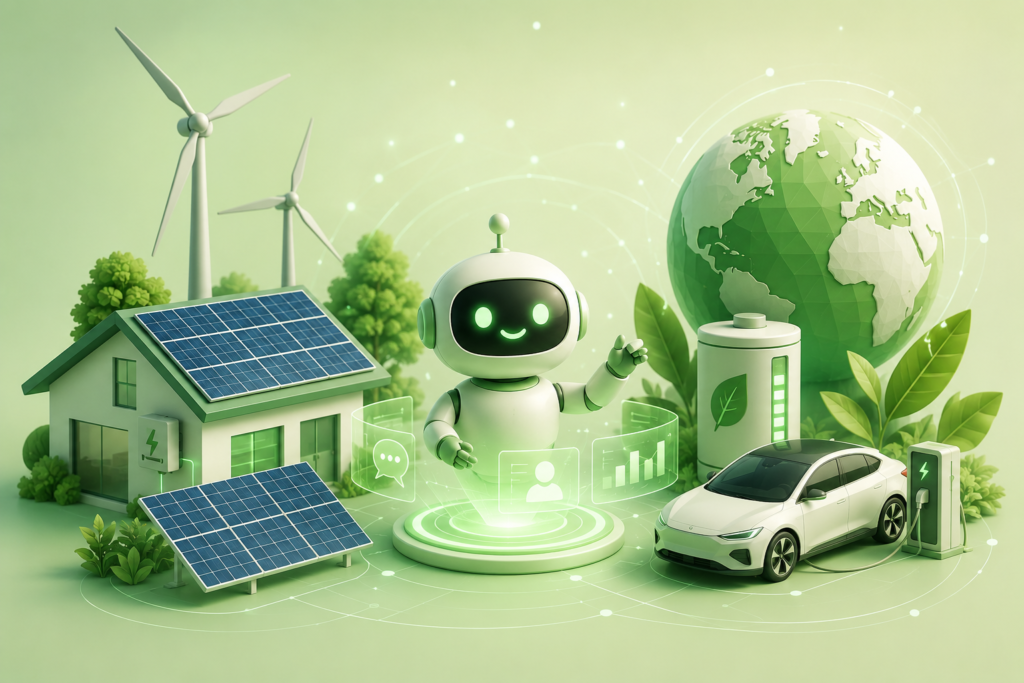
Renewable Energy Chatbot solutions help solar, wind, hydro, and clean energy companies automate customer support, qualify leads, schedule consultations, improve customer engagement, and streamline renewable energy operations with AI-powered conversations.
Introduction
The renewable energy industry is experiencing remarkable growth as businesses, governments, and homeowners increasingly invest in sustainable energy solutions. Whether organizations specialize in solar installations, wind farms, battery storage, electric vehicle charging, or energy consulting, customer expectations have evolved significantly. Modern customers expect immediate answers, personalized recommendations, and seamless digital experiences before making purchasing decisions. A Renewable Energy Chatbot helps businesses meet these expectations while improving efficiency, reducing operational costs, and increasing conversion rates.
As renewable energy technologies become more sophisticated, customer inquiries also become more detailed. Potential buyers often want to understand installation costs, return on investment, financing options, available incentives, maintenance requirements, energy production estimates, and environmental benefits. Handling these conversations manually can overwhelm sales and customer service teams, especially during periods of high demand. Intelligent AI chatbots simplify these interactions by providing accurate information instantly while guiding prospects toward the most appropriate renewable energy solutions.
At EngagerBot, businesses can leverage AI-powered conversational technology to automate repetitive tasks, capture qualified leads, schedule consultations, answer frequently asked questions, and provide continuous customer support across websites and messaging platforms. Instead of replacing human experts, AI chatbots enhance productivity by allowing renewable energy professionals to focus on complex consultations and high-value customer relationships.
Unlike traditional chat systems, modern AI chatbots understand conversational language, recognize user intent, personalize responses, and integrate with CRM platforms, appointment scheduling systems, analytics tools, and marketing automation software. These capabilities create a smooth customer journey that improves satisfaction while increasing operational efficiency.
This comprehensive guide explains how Renewable Energy Chatbots work, their major business benefits, essential features, implementation strategies, common mistakes, best practices, and future trends to help organizations maximize the value of conversational AI.
What Is a Renewable Energy Chatbot?
A Renewable Energy Chatbot is an AI-powered virtual assistant designed specifically for businesses operating in the clean energy sector. It communicates with website visitors, customers, and prospects through natural language conversations, helping users obtain information, compare renewable energy solutions, schedule consultations, request quotations, calculate potential savings, and receive technical assistance without waiting for human intervention.
Unlike generic customer support software, renewable energy chatbots are trained to understand industry-specific terminology, customer concerns, and frequently asked questions. They can explain differences between solar panels, battery storage systems, wind energy solutions, inverters, EV charging stations, and energy efficiency programs in a simple, user-friendly manner. This helps businesses educate customers while improving confidence throughout the buying journey.
Another important capability is lead qualification. Instead of collecting only a name and email address, intelligent chatbots ask meaningful questions regarding property size, current electricity usage, roof type, location, budget, energy goals, and preferred installation timeline. This information allows sales teams to prioritize highly qualified prospects while reducing time spent on unqualified inquiries.
Modern AI chatbots also integrate with CRM systems, appointment booking platforms, email marketing software, payment gateways, customer databases, and analytics dashboards. These integrations create automated workflows that minimize manual data entry, improve response times, and maintain consistent communication across every customer touchpoint. As renewable energy adoption continues to grow globally, AI-powered conversational assistants have become an essential digital asset for organizations seeking scalable customer engagement.
Why Renewable Energy Companies Need AI Chatbots
The renewable energy industry involves lengthy buying cycles, complex decision-making processes, and significant financial investments. Customers rarely purchase solar panels, battery systems, or commercial renewable energy solutions immediately after their first website visit. Instead, they conduct extensive research, compare providers, evaluate pricing, and seek expert guidance before committing. AI chatbots help businesses remain available throughout this entire customer journey.
One of the biggest challenges renewable energy companies face is responding quickly to incoming inquiries. Studies consistently show that faster response times significantly improve conversion rates because interested prospects are more likely to engage while researching solutions. A chatbot ensures every visitor receives immediate assistance regardless of business hours, weekends, or holidays. This continuous availability builds trust while reducing the risk of losing potential customers to competitors.
AI chatbots also improve operational efficiency by automating repetitive conversations. Customer service teams frequently answer identical questions about installation timelines, financing options, warranties, maintenance schedules, government incentives, system performance, and pricing estimates. Automating these interactions allows employees to dedicate more time to technical consultations, customized proposals, and relationship building rather than repetitive administrative work.
Furthermore, renewable energy businesses often serve multiple customer segments including homeowners, commercial organizations, industrial facilities, government agencies, educational institutions, and property developers. Each audience has unique requirements and purchasing motivations. AI-powered chatbots personalize conversations according to customer profiles, helping deliver more relevant recommendations that increase satisfaction, strengthen engagement, and improve conversion rates throughout the sales funnel.
Major Benefits of Renewable Energy Chatbots
Renewable Energy Chatbots deliver measurable benefits across customer service, sales, marketing, operational efficiency, and long-term business growth. Rather than serving as simple automated messaging tools, they function as intelligent digital assistants capable of supporting customers from their first interaction through post-installation support.
One significant advantage is continuous customer availability. Prospective buyers often research renewable energy solutions during evenings or weekends when customer support teams may be unavailable. AI chatbots ensure businesses remain accessible twenty-four hours a day, seven days a week, providing immediate responses whenever customers require assistance. This uninterrupted availability enhances customer experience while increasing opportunities to capture valuable leads.
Another important benefit is improved lead qualification. Instead of generating large volumes of low-quality inquiries, AI chatbots gather meaningful customer information through conversational interactions. They identify budget ranges, installation timelines, energy usage patterns, property ownership status, geographic location, and project objectives before forwarding qualified leads to sales representatives. This enables sales teams to focus on prospects with higher purchase intent, improving conversion rates and reducing acquisition costs.
Renewable Energy Chatbots also support marketing initiatives by recommending educational resources, explaining available products, promoting seasonal offers, encouraging consultation bookings, collecting customer feedback, and nurturing prospects through personalized follow-up sequences. Combined with CRM integrations and marketing automation platforms, these capabilities help businesses build stronger customer relationships while creating a more efficient sales process. Organizations implementing conversational AI frequently experience shorter response times, higher engagement levels, increased appointment bookings, and stronger overall customer satisfaction.
Key Features Every Renewable Energy Chatbot Should Have
A high-performing Renewable Energy Chatbot should do far more than answer basic customer questions. Modern AI-powered chatbots serve as intelligent digital assistants that streamline communication, automate repetitive tasks, and deliver personalized experiences throughout the customer journey. Whether a visitor wants information about residential solar panels, commercial battery storage, wind energy systems, or EV charging solutions, the chatbot should provide accurate, relevant, and timely responses. Businesses that invest in feature-rich chatbot solutions can improve customer satisfaction while increasing operational efficiency and lead conversion rates.
One of the most valuable capabilities is AI-powered natural language processing (NLP), allowing the chatbot to understand customer intent rather than relying on simple keyword matching. This enables more natural conversations where customers can ask questions in their own words. Smart lead qualification is another essential feature. Instead of merely collecting contact details, the chatbot should gather information such as property type, monthly electricity consumption, preferred renewable energy solution, project timeline, location, and budget. These insights help sales representatives prioritize qualified prospects and deliver personalized consultations.
Additional features include appointment scheduling, CRM integration, multilingual support, document sharing, quote request forms, financing information, incentive guidance, maintenance assistance, and real-time notifications. Businesses should also ensure their chatbot integrates with marketing automation platforms, customer support systems, and analytics dashboards for seamless workflow automation. Security features, data privacy compliance, and performance monitoring are equally important to protect customer information and continuously improve chatbot performance. By combining these capabilities, renewable energy businesses can deliver a superior customer experience while maximizing operational productivity.
AI Technologies Powering Renewable Energy Chatbots
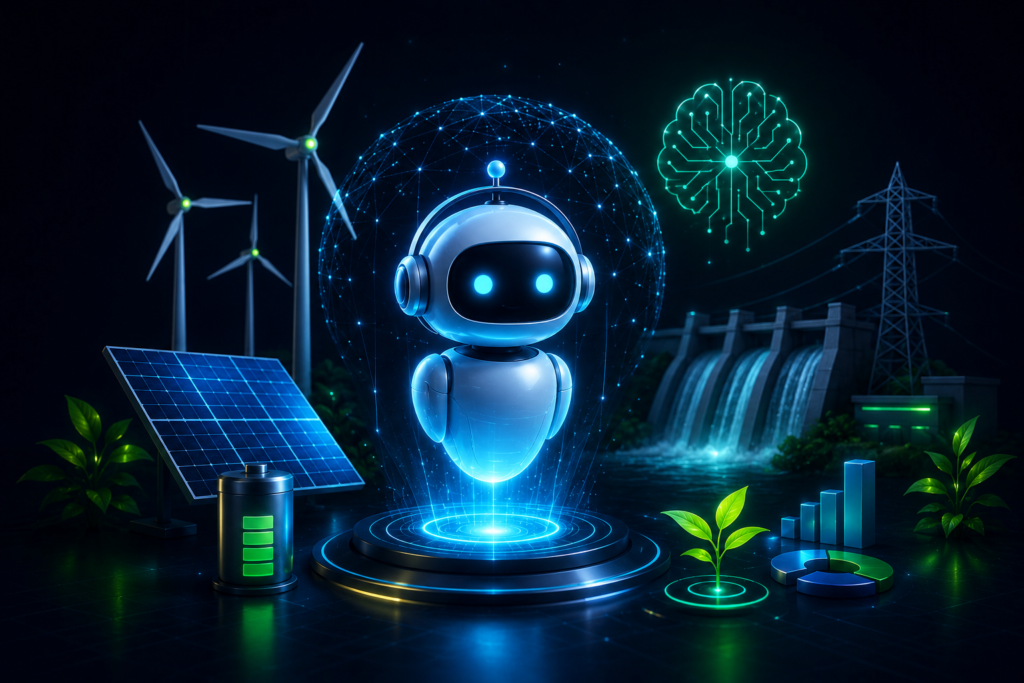
Modern Renewable Energy Chatbots are powered by advanced artificial intelligence technologies that allow them to understand, process, and respond to customer inquiries with remarkable accuracy. Unlike traditional scripted chat systems, AI chatbots continuously learn from conversations, recognize customer intent, and provide increasingly personalized responses over time. This intelligence helps renewable energy companies deliver efficient customer service while supporting complex purchasing decisions.
Natural Language Processing (NLP) enables chatbots to interpret conversational language, identify customer questions, and generate meaningful responses. Machine learning algorithms improve chatbot accuracy by analyzing previous interactions and adapting to changing customer behavior. Predictive analytics helps identify high-value leads based on conversation patterns, while recommendation engines suggest the most suitable renewable energy products according to customer needs. These technologies work together to provide faster, more relevant, and highly personalized conversations that improve customer satisfaction.
Cloud computing further enhances chatbot scalability by allowing businesses to support thousands of simultaneous conversations without compromising performance. Integration with CRM software, ERP platforms, appointment booking systems, payment gateways, and customer databases ensures data flows automatically between systems, reducing manual work and minimizing errors. Businesses can also leverage conversational analytics to identify frequently asked questions, customer pain points, and emerging market trends, enabling continuous improvement of both chatbot performance and overall customer experience.
Renewable Energy Chatbot Use Cases Across the Industry
Renewable Energy Chatbots can be deployed across virtually every segment of the clean energy industry. Residential solar companies use chatbots to educate homeowners about installation options, financing programs, government incentives, and estimated energy savings. Visitors can receive instant answers regarding roof suitability, expected installation timelines, warranty coverage, and maintenance requirements without waiting for a sales representative. This immediate assistance improves customer engagement while accelerating the sales process.
Commercial and industrial renewable energy providers benefit from chatbots by automating initial consultations for larger projects. Business owners can discuss energy consumption, sustainability goals, facility size, and preferred renewable technologies before scheduling meetings with technical consultants. The chatbot can also collect detailed project information, reducing administrative work and enabling engineers to prepare more accurate proposals before the first consultation.
Utility companies, EV charging providers, battery storage manufacturers, wind energy developers, and energy consulting firms also benefit from AI-powered conversational assistants. Chatbots can manage outage notifications, explain renewable energy programs, guide customers through rebate applications, answer technical questions, collect maintenance requests, schedule inspections, and provide post-installation support. Educational institutions and government agencies promoting clean energy initiatives can also use chatbots to distribute educational resources, answer policy questions, and encourage renewable energy adoption among citizens. These diverse use cases demonstrate how conversational AI creates value throughout the renewable energy ecosystem.
How Renewable Energy Chatbots Improve Lead Generation and Sales Conversion
Lead generation remains one of the most significant challenges for renewable energy businesses because customers often spend weeks or months researching available solutions before making purchasing decisions. AI-powered chatbots help organizations capture, nurture, and convert leads by engaging visitors immediately when they arrive on the website. Instead of allowing potential customers to leave without interaction, the chatbot initiates personalized conversations based on visitor behavior, page content, and customer interests.
During these conversations, the chatbot collects valuable information such as property ownership status, electricity bills, energy goals, budget expectations, preferred installation dates, and geographic location. Rather than overwhelming visitors with lengthy forms, the chatbot gathers this information naturally through conversational interactions. This creates a more enjoyable user experience while producing higher-quality lead data for sales teams. Businesses can also use AI to identify purchasing intent, allowing sales representatives to prioritize the most promising opportunities.
Beyond lead capture, chatbots support long-term lead nurturing through personalized follow-up messages, educational content recommendations, financing information, consultation reminders, and promotional campaigns. Automated email and SMS sequences help maintain engagement throughout the customer’s decision-making process. Integration with CRM platforms ensures every interaction is recorded, enabling sales professionals to continue conversations with complete customer context. This coordinated approach increases conversion rates, shortens sales cycles, and improves return on marketing investments by delivering the right information at the right stage of the buyer journey.
Enhancing Customer Support with Renewable Energy Chatbots
Exceptional customer support plays a critical role in the renewable energy industry because customers often require assistance before, during, and long after installation. A Renewable Energy Chatbot provides instant, AI-powered support that improves response times while reducing the workload on customer service teams. Unlike traditional support channels that operate only during business hours, chatbots remain available 24/7, ensuring customers receive immediate assistance whenever questions arise.
Before a purchase, chatbots help visitors understand renewable energy technologies, compare products, explain financing options, discuss installation processes, and estimate potential energy savings. During project implementation, they keep customers informed about installation schedules, required documentation, inspection timelines, and project updates. After installation, chatbots continue supporting customers by answering maintenance questions, providing warranty information, explaining monitoring dashboards, assisting with troubleshooting, and scheduling service appointments. This continuous support creates a seamless customer experience that builds confidence and long-term loyalty.
AI-powered customer support also improves operational efficiency by automatically categorizing inquiries, routing complex issues to the appropriate department, and maintaining detailed conversation histories. Integration with CRM systems ensures support agents have complete visibility into previous interactions, allowing them to provide faster and more personalized assistance. Businesses can further enhance customer satisfaction by using chatbot analytics to identify recurring issues, improve knowledge bases, and optimize service processes over time.
Integrating Renewable Energy Chatbots with Business Systems
The true value of a Renewable Energy Chatbot is realized when it integrates seamlessly with existing business software. Rather than functioning as a standalone communication tool, modern AI chatbots connect with CRM platforms, marketing automation software, appointment scheduling systems, ERP applications, customer support platforms, payment gateways, and analytics dashboards. These integrations eliminate manual data entry while creating a unified customer experience across every touchpoint.
CRM integration enables every chatbot conversation to be automatically recorded within customer profiles. Sales representatives can review previous discussions, understand customer requirements, and continue conversations without asking repetitive questions. Marketing automation platforms use chatbot-collected data to personalize email campaigns, deliver educational resources, and nurture prospects throughout the buying journey. Appointment scheduling integrations allow customers to book consultations instantly based on real-time staff availability, reducing administrative workload while improving convenience.
Businesses also benefit from integrating chatbots with analytics platforms to monitor conversation performance, customer satisfaction, lead quality, and conversion rates. Reporting dashboards help managers identify frequently asked questions, common customer concerns, and opportunities for process improvement. Payment system integrations simplify deposit collection and invoice payments, while document management platforms enable secure sharing of proposals, contracts, warranties, and installation guides. Together, these integrations create an efficient digital ecosystem that supports both customer engagement and operational excellence.
Common Mistakes Businesses Make When Implementing Renewable Energy Chatbots
Although AI chatbots offer significant advantages, many businesses fail to achieve their full potential because of avoidable implementation mistakes. One of the most common errors is deploying a chatbot without clearly defining business objectives. Organizations should first determine whether their primary goal is lead generation, customer support, appointment scheduling, education, or post-installation assistance. Without clear objectives, chatbot conversations often become confusing and ineffective.
Another frequent mistake is relying entirely on automation without providing access to human support. While AI handles routine inquiries efficiently, complex technical discussions, customized system designs, and contract negotiations often require experienced renewable energy professionals. Customers should always have the option to transfer conversations to a qualified representative when necessary. Failing to maintain accurate chatbot knowledge is another challenge. Renewable energy incentives, government regulations, financing programs, and product specifications change regularly, making continuous updates essential.
Businesses also overlook conversation analytics, preventing them from identifying customer pain points and optimization opportunities. Poor chatbot design, lengthy conversation flows, excessive questions, weak integrations, and insufficient testing can negatively impact user experience. Ignoring mobile optimization is another common issue since many customers research renewable energy solutions using smartphones. By avoiding these mistakes and continuously improving chatbot performance, organizations can maximize customer satisfaction, operational efficiency, and return on investment.
Best Practices Summary
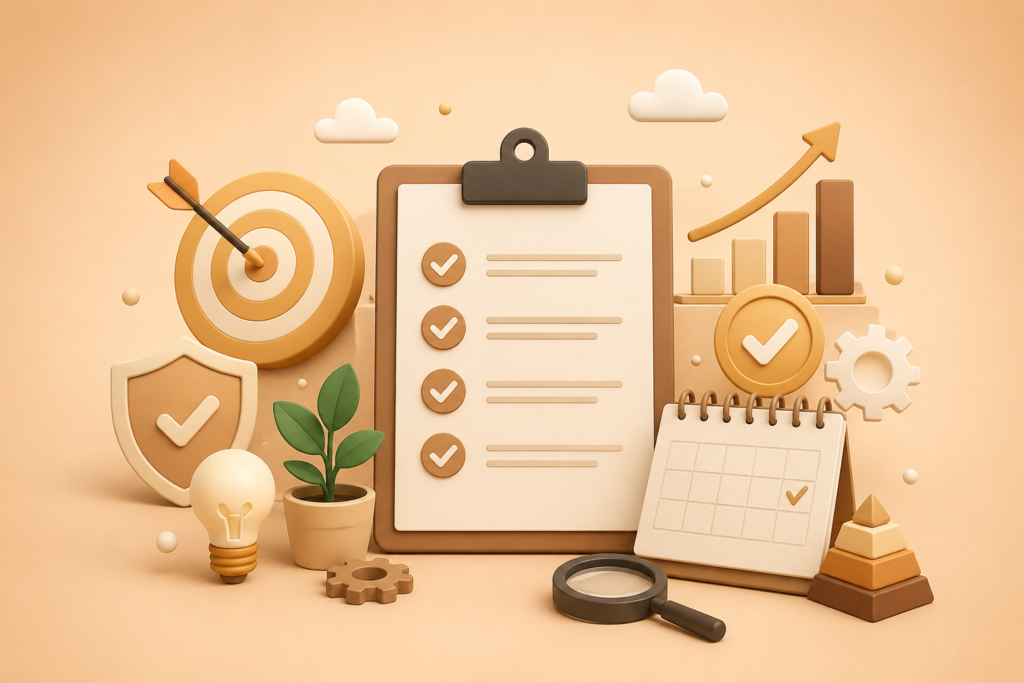
Successful Renewable Energy Chatbot implementation requires careful planning, ongoing optimization, and a customer-first approach. Businesses should begin by identifying their primary objectives and mapping the complete customer journey. Every conversation should provide clear value, answer customer questions efficiently, and guide visitors toward meaningful actions such as requesting a quote, scheduling a consultation, or learning more about renewable energy solutions.
The chatbot should maintain a natural conversational tone while delivering accurate, up-to-date information. Businesses should regularly review chatbot analytics to identify unanswered questions, improve conversation flows, and expand knowledge bases. Integration with CRM, marketing automation, appointment scheduling, and customer support platforms ensures consistent communication while reducing manual administrative work. Human support should always remain available for complex inquiries, creating a balanced combination of AI efficiency and expert guidance.
Continuous training, security updates, performance monitoring, multilingual capabilities, mobile optimization, and compliance with privacy regulations contribute to long-term chatbot success. Organizations should also encourage customer feedback to identify improvement opportunities and ensure the chatbot evolves alongside changing customer expectations. Businesses that consistently follow these best practices position themselves for stronger customer relationships, higher conversion rates, and sustainable growth in the rapidly expanding renewable energy market.
Frequently Asked Questions
1. What is a Renewable Energy Chatbot?
A Renewable Energy Chatbot is an AI-powered virtual assistant that helps renewable energy businesses automate customer support, qualify leads, answer product questions, schedule consultations, and improve customer engagement through natural conversations.
2. Can a chatbot generate qualified renewable energy leads?
Yes. AI chatbots ask relevant qualification questions such as property type, electricity usage, project budget, preferred timeline, and location before forwarding qualified prospects to the sales team.
3. Does a chatbot work outside business hours?
Yes. Modern AI chatbots operate 24 hours a day, seven days a week, ensuring customers always receive immediate assistance regardless of time zone or business hours.
4. Can renewable energy chatbots integrate with CRM software?
Absolutely. Most AI chatbot platforms integrate with CRM systems, marketing automation tools, appointment schedulers, customer support platforms, and analytics software to automate workflows and improve customer management.
5. Are AI chatbots secure?
Professional chatbot platforms use encryption, authentication, access controls, and privacy-compliant data management practices to protect customer information and business data.
6. Can chatbots explain solar incentives and financing?
Yes. They can provide general information about financing options, rebates, incentives, and payment plans while directing customers to human advisors for personalized financial guidance.
7. Will AI replace renewable energy consultants?
No. AI chatbots enhance productivity by handling repetitive conversations while allowing consultants to focus on technical advice, customized system design, and complex customer discussions.
8. How do businesses measure chatbot success?
Key performance indicators include response time, lead conversion rate, appointment bookings, customer satisfaction, engagement levels, support resolution time, and overall return on investment.
Conclusion
The renewable energy industry continues to evolve as organizations embrace digital transformation to improve customer experiences and operational efficiency. AI-powered chatbots have become an essential business tool by providing instant support, qualifying leads, automating repetitive tasks, improving communication, and strengthening customer relationships throughout the entire buying journey.
Businesses that adopt conversational AI today will be better positioned to meet rising customer expectations while reducing costs and increasing productivity. Combined with human expertise, CRM integration, intelligent automation, and continuous optimization, a Renewable Energy Chatbot becomes a valuable asset that supports sustainable business growth.
At EngagerBot, we help organizations implement intelligent AI chatbot solutions designed specifically to improve customer engagement, automate business processes, and generate high-quality leads for long-term success.
Want to Implement This Easily?
Prompt
You are an expert consultant. Based on the blog post titled “Renewable Energy Chatbot”, provide a step-by-step, practical implementation guide. Include tools, best practices, common mistakes to avoid, and advanced tips. Assume the reader wants to implement everything discussed in this article effectively.
Call to Action
Want our help implementing this? Just reach out to us via our website contact form: