

Bank & Finance Chatbot solutions help financial institutions automate customer support, improve security, enhance user experience, and scale operations efficiently with AI-powered conversational technology.
Introduction
In today’s rapidly evolving financial landscape, customer expectations are higher than ever. Users demand instant responses, secure transactions, and personalized experiences across all digital channels. This is where Bank & Finance Chatbots are redefining how financial institutions interact with their customers. From automating routine banking queries to assisting with complex financial decisions, chatbots have become a cornerstone of digital transformation in the finance sector.
Businesses leveraging AI-powered chatbot solutions are seeing measurable improvements in operational efficiency, customer satisfaction, and cost reduction. Platforms like Engagerbot are helping banks and financial institutions deploy intelligent conversational systems that operate 24/7, ensuring no customer query goes unanswered. Whether it’s account inquiries, loan applications, fraud alerts, or financial advice, chatbots are now an essential component of modern banking infrastructure.
This comprehensive guide explores everything you need to know about bank and finance chatbots — from their core functionality and benefits to implementation strategies and future trends. By the end of this guide, you’ll have a clear understanding of how to leverage chatbot technology to drive growth, improve security, and deliver exceptional customer experiences.
What is a Bank & Finance Chatbot?
A Bank & Finance Chatbot is an AI-powered virtual assistant designed to simulate human-like conversations and assist users with financial services. These chatbots use technologies such as Natural Language Processing (NLP), Machine Learning (ML), and conversational AI to understand user queries and provide accurate, real-time responses. Unlike traditional customer service systems, chatbots can handle thousands of interactions simultaneously without delays.
In banking, chatbots are deployed across multiple channels, including websites, mobile apps, messaging platforms, and even voice assistants. They can perform a wide range of functions such as checking account balances, processing transactions, answering FAQs, and guiding users through financial products like loans or insurance. This not only reduces the workload on human agents but also ensures faster and more consistent service delivery.
What makes modern financial chatbots particularly powerful is their ability to learn and improve over time. With continuous data input and training, these systems become more accurate and context-aware. This enables banks to deliver highly personalized experiences while maintaining efficiency and scalability. As a result, chatbots are no longer just support tools—they are becoming integral to the overall banking ecosystem.
Why Banks and Financial Institutions Need Chatbots
The financial industry is under constant pressure to deliver faster, safer, and more personalized services. Traditional customer support systems often struggle to meet these demands due to high operational costs and limited scalability. Chatbots offer a solution by automating repetitive tasks and providing instant responses, significantly improving service efficiency.
One of the primary reasons banks adopt chatbots is cost reduction. By handling a large volume of customer queries automatically, chatbots reduce the need for extensive support teams. This allows institutions to allocate resources more effectively while maintaining high service standards. Additionally, chatbots operate круглосуточно, ensuring customers receive assistance anytime, regardless of time zones.
Another critical factor is customer satisfaction. Modern users expect quick and accurate responses, and delays can lead to frustration and churn. Chatbots eliminate waiting times and provide consistent answers, enhancing the overall customer experience. Moreover, they can analyze user behavior and preferences to offer personalized recommendations, further strengthening customer relationships and loyalty.
Key Features of Bank & Finance Chatbots
A robust financial chatbot comes equipped with a wide range of features designed to enhance both functionality and user experience. One of the most important features is Natural Language Understanding (NLU), which allows the chatbot to interpret user queries accurately, even when phrased in different ways. This ensures smooth and natural interactions.
Security is another essential feature. Financial chatbots must comply with strict security standards, including encryption, authentication, and data protection protocols. Features such as multi-factor authentication and secure API integrations help ensure that sensitive financial data remains protected at all times. Compliance with regulations is crucial to building trust and maintaining credibility.
Additionally, advanced chatbots offer integration capabilities with core banking systems, CRM platforms, and payment gateways. This enables seamless data flow and allows the chatbot to perform complex tasks such as transaction processing, account management, and fraud detection. Combined with analytics and reporting tools, these features provide valuable insights into customer behavior and system performance.
Benefits of Using Chatbots in Banking
Implementing chatbots in banking brings numerous benefits that go beyond simple automation. One of the most significant advantages is improved efficiency. Chatbots can handle multiple queries simultaneously, reducing response times and increasing productivity. This allows banks to serve more customers without compromising quality.
Another major benefit is cost savings. By automating routine tasks, banks can significantly reduce operational expenses. This includes savings on staffing, training, and infrastructure. Over time, these cost reductions can have a substantial impact on the organization’s bottom line.
Chatbots also enhance customer engagement by providing personalized experiences. They can analyze user data to offer tailored recommendations, such as suggesting suitable financial products or alerting users about important account activities. This level of personalization not only improves customer satisfaction but also drives higher conversion rates and revenue growth.
Use Cases of Bank & Finance Chatbots
Banking chatbots are highly versatile and can be used in a variety of scenarios. One common use case is customer support, where chatbots handle queries related to account balances, transaction history, and branch locations. This reduces the burden on human agents and ensures faster response times.
Another important use case is in sales and lead generation. Chatbots can guide users through product offerings, answer questions about loans or credit cards, and even assist in the application process. This helps increase conversions and streamline the sales funnel.
Fraud detection and prevention is another critical area where chatbots play a significant role. By monitoring user activity and identifying unusual patterns, chatbots can alert users and initiate security protocols. This proactive approach helps prevent financial losses and enhances overall security.
AI Technologies Behind Financial Chatbots
Financial chatbots rely on a combination of advanced technologies to deliver intelligent and efficient interactions. At the core is Artificial Intelligence (AI), which enables the chatbot to process and analyze large amounts of data. This allows it to understand user intent and provide relevant responses.
Natural Language Processing (NLP) plays a crucial role in enabling human-like conversations. It allows the chatbot to interpret and respond to user queries in a natural and intuitive manner. Machine Learning (ML) further enhances this capability by enabling the chatbot to learn from past interactions and improve over time.
Additionally, technologies such as predictive analytics and sentiment analysis help chatbots deliver more personalized experiences. By analyzing user behavior and emotions, chatbots can tailor their responses and provide more relevant recommendations. This combination of technologies makes financial chatbots powerful tools for enhancing customer engagement and operational efficiency.
Chatbots and Customer Experience in Banking
Customer experience is a key differentiator in the banking industry, and chatbots play a vital role in enhancing it. By providing instant responses and personalized interactions, chatbots significantly improve the overall user experience. Customers no longer have to wait in long queues or navigate complex menus to get the information they need.
Chatbots also ensure consistency in service delivery. Unlike human agents, they do not experience fatigue or variability in performance. This means customers receive the same high-quality service every time they interact with the chatbot. Consistency builds trust and reinforces the brand’s reputation.
Furthermore, chatbots enable proactive engagement. They can send reminders, alerts, and recommendations based on user behavior and preferences. This not only enhances convenience but also helps customers make informed financial decisions. As a result, chatbots contribute to higher customer satisfaction and loyalty.
Security and Compliance in Financial Chatbots
Security is a top priority in the financial sector, and chatbots must adhere to strict standards to protect user data. This includes implementing encryption protocols, secure authentication methods, and compliance with regulatory requirements. Ensuring data privacy is essential for maintaining customer trust.
Financial institutions must also follow guidelines such as General Data Protection Regulation (GDPR) and other data protection laws. For best practices on data protection, refer to General Data Protection Regulation (GDPR).
These regulations ensure that user data is handled responsibly and transparently.
Additionally, chatbots should be designed to detect and prevent fraudulent activities. This includes monitoring user behavior, identifying suspicious patterns, and triggering alerts when necessary. By combining robust security measures with intelligent monitoring, chatbots can provide a safe and secure user experience.
Integration of Chatbots with Core Banking Systems
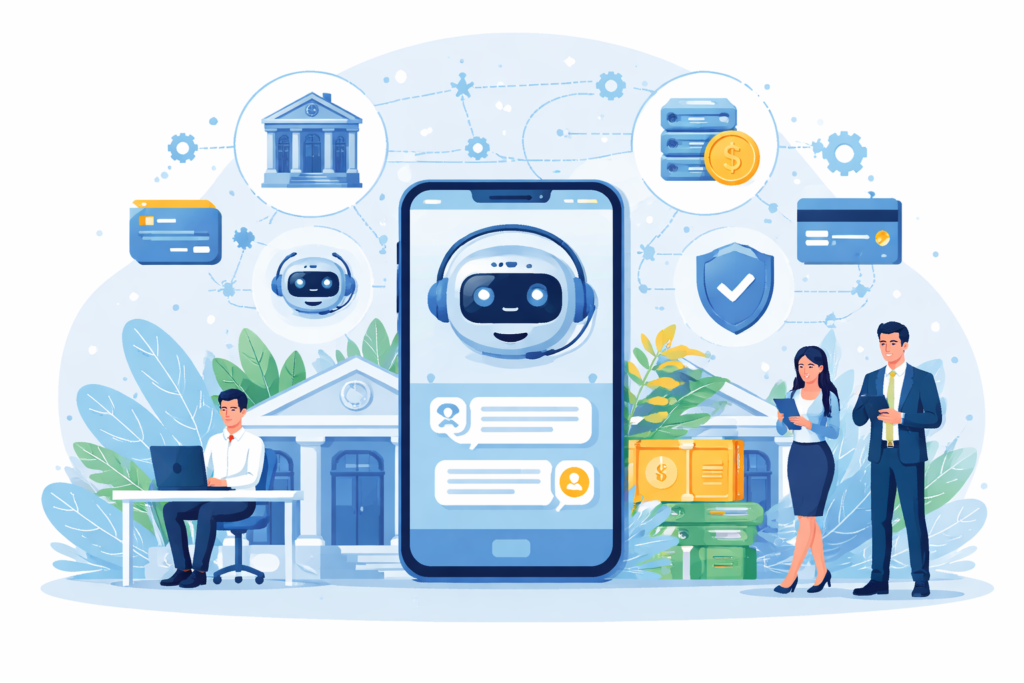
For a bank & finance chatbot to deliver real value, it must seamlessly integrate with core banking systems and digital infrastructure. These integrations allow chatbots to access real-time data, perform transactions, and provide accurate information without delays. Without proper integration, chatbots are limited to answering basic questions and cannot deliver meaningful automation.
Modern financial institutions rely on APIs (Application Programming Interfaces) to connect chatbots with systems such as CRM platforms, payment gateways, and account management tools. These integrations enable features like balance checks, fund transfers, loan status tracking, and more. For secure API development and integration best practices, refer to
Google API Design Guidelines.
Following such standards ensures reliability, scalability, and security.
Additionally, integration enables a unified customer experience across all channels. Whether a user interacts via mobile app, website, or messaging platform, the chatbot maintains context and continuity. This omnichannel capability ensures consistent service delivery and improves customer satisfaction significantly.
Omnichannel Banking and Chatbot Deployment
In today’s digital ecosystem, customers interact with banks across multiple touchpoints. A chatbot must be capable of operating seamlessly across these channels to provide a unified experience. This is known as omnichannel banking, where all customer interactions are interconnected and consistent.
Chatbots can be deployed on websites, mobile apps, social media platforms, and messaging services like WhatsApp or Facebook Messenger. This ensures customers can access banking services from their preferred platform. Consistency across channels builds trust and enhances user engagement.
Moreover, omnichannel deployment allows financial institutions to collect valuable data from multiple sources. This data can be used to improve chatbot performance, personalize interactions, and optimize service delivery. By leveraging omnichannel strategies, banks can create a more cohesive and customer-centric digital experience.
Personalization and Data-Driven Insights
One of the most powerful advantages of financial chatbots is their ability to deliver personalized experiences. By analyzing user data such as transaction history, preferences, and behavior, chatbots can tailor responses and recommendations to individual users.
Personalization goes beyond addressing users by name. It includes suggesting relevant financial products, providing spending insights, and offering timely alerts. For example, a chatbot can notify users about unusual spending patterns or recommend savings plans based on their financial habits.
Data-driven insights also help banks make informed decisions. By analyzing chatbot interactions, institutions can identify trends, customer pain points, and opportunities for improvement. This continuous feedback loop enables ongoing optimization and ensures the chatbot remains effective and relevant.
Chatbots for Lead Generation and Sales in Finance
Chatbots are not just customer support tools—they are powerful assets for lead generation and sales. By engaging users in real-time conversations, chatbots can capture leads, qualify prospects, and guide them through the sales funnel.
For instance, a chatbot can ask users about their financial goals and recommend suitable products such as loans, credit cards, or investment plans. It can also assist with application processes, reducing friction and increasing conversion rates.
Furthermore, chatbots can follow up with potential customers through automated messages and reminders. This ensures that no lead is lost due to lack of engagement. By combining automation with personalization, chatbots significantly enhance sales performance and revenue generation.
Future Trends in Bank & Finance Chatbots
The future of financial chatbots is driven by advancements in AI and emerging technologies. One key trend is the integration of voice assistants, allowing users to interact with chatbots through voice commands. This makes banking more accessible and convenient.
Another trend is the use of advanced analytics and predictive modeling. Chatbots will be able to anticipate user needs and provide proactive recommendations. This shift from reactive to proactive service will redefine customer engagement in banking.
Additionally, technologies like blockchain and biometric authentication are expected to enhance security and transparency. As these innovations evolve, chatbots will become even more sophisticated, offering smarter, faster, and more secure interactions.
How to Implement a Bank & Finance Chatbot Successfully
Implementing a financial chatbot requires careful planning and execution. The first step is to define clear objectives, such as improving customer support, increasing sales, or enhancing security. This helps determine the chatbot’s scope and functionality.
Next, choose the right technology stack and platform. This includes selecting AI frameworks, integration tools, and deployment channels. It is essential to ensure compatibility with existing systems and compliance with regulatory requirements.
Testing and optimization are critical to success. Before deployment, the chatbot should be thoroughly tested to identify and resolve issues. Continuous monitoring and updates ensure the chatbot remains effective and aligned with business goals. A well-implemented chatbot can deliver significant value and drive long-term growth.
Measuring Chatbot Performance and ROI
To maximize the benefits of a chatbot, it is essential to measure its performance and return on investment (ROI). Key performance indicators (KPIs) include response time, resolution rate, user satisfaction, and conversion rates.
Analytics tools provide insights into chatbot interactions, helping identify strengths and areas for improvement. For example, high drop-off rates may indicate issues with conversation flow or user experience.
ROI can be measured by comparing cost savings, increased revenue, and improved efficiency against the investment in chatbot development and maintenance. By continuously analyzing performance metrics, financial institutions can optimize their chatbot strategy and achieve better results over time.
Common Mistakes to Avoid with Bank & Finance Chatbots
One common mistake is over-automation. While chatbots are powerful, relying on them entirely without human support can lead to poor user experiences. Complex queries still require human intervention, and a hybrid approach works best.
Another mistake is neglecting security and compliance. Financial data is highly sensitive, and any breach can have serious consequences. Failing to implement proper security measures can damage trust and reputation.
Additionally, poor chatbot design and lack of training can result in inaccurate responses and frustration. Chatbots must be continuously updated and optimized to ensure they remain effective and relevant.
Best Practices for Bank & Finance Chatbots

To achieve optimal results, financial institutions should follow best practices when implementing chatbots. First, focus on user experience by designing intuitive and conversational interfaces. Clear and concise responses improve usability and engagement.
Second, prioritize security and compliance. Implement robust encryption, authentication, and monitoring systems to protect user data. Regular audits and updates ensure ongoing compliance with regulations.
Finally, continuously optimize the chatbot using data and feedback. Regular updates, testing, and performance analysis help maintain effectiveness and deliver long-term value.
FAQs
1. Are financial chatbots secure?
Yes, modern financial chatbots use advanced encryption, authentication, and monitoring systems to ensure data security and compliance with regulations.
2. Can chatbots handle complex financial queries?
While chatbots can handle many tasks, complex queries may require human assistance. A hybrid approach ensures the best results.
3. How do chatbots improve customer experience?
They provide instant responses, personalized interactions, and 24/7 availability, enhancing convenience and satisfaction.
4. Are chatbots expensive to implement?
Initial costs may vary, but chatbots reduce operational expenses in the long run, providing a strong ROI.
5. Can chatbots increase sales in banking?
Yes, chatbots can guide users through products, capture leads, and improve conversion rates.
6. Do chatbots require continuous updates?
Yes, regular updates and training are essential to maintain accuracy and effectiveness.
7. What platforms can chatbots be deployed on?
They can be deployed on websites, mobile apps, and messaging platforms like WhatsApp and social media.
8. How do chatbots ensure compliance?
By following regulatory guidelines, implementing security measures, and regularly updating systems.
Conclusion
Bank & Finance Chatbots are transforming the financial industry by enhancing customer experience, improving efficiency, and ensuring security. They enable financial institutions to meet modern demands while reducing costs and increasing scalability.
By leveraging advanced AI technologies, seamless integrations, and data-driven insights, businesses can unlock new opportunities for growth and innovation. Platforms like Engagerbot empower organizations to implement intelligent chatbot solutions that deliver real value and long-term success.
As the financial landscape continues to evolve, adopting chatbot technology is no longer optional—it is essential for staying competitive and meeting customer expectations.
Want to Implement This Easily?
Prompt:
You are an expert consultant. Based on the blog post titled “(Bank & Finance Chatbot)”, provide a step-by-step, practical implementation guide. Include tools, best practices, common mistakes to avoid, and advanced tips. Assume the reader wants to implement everything discussed in this article effectively.
Call to Action:
Want our help implementing this? Just reach out to us via our website contact form:
https://www.engagerbot.com/contact-us/