
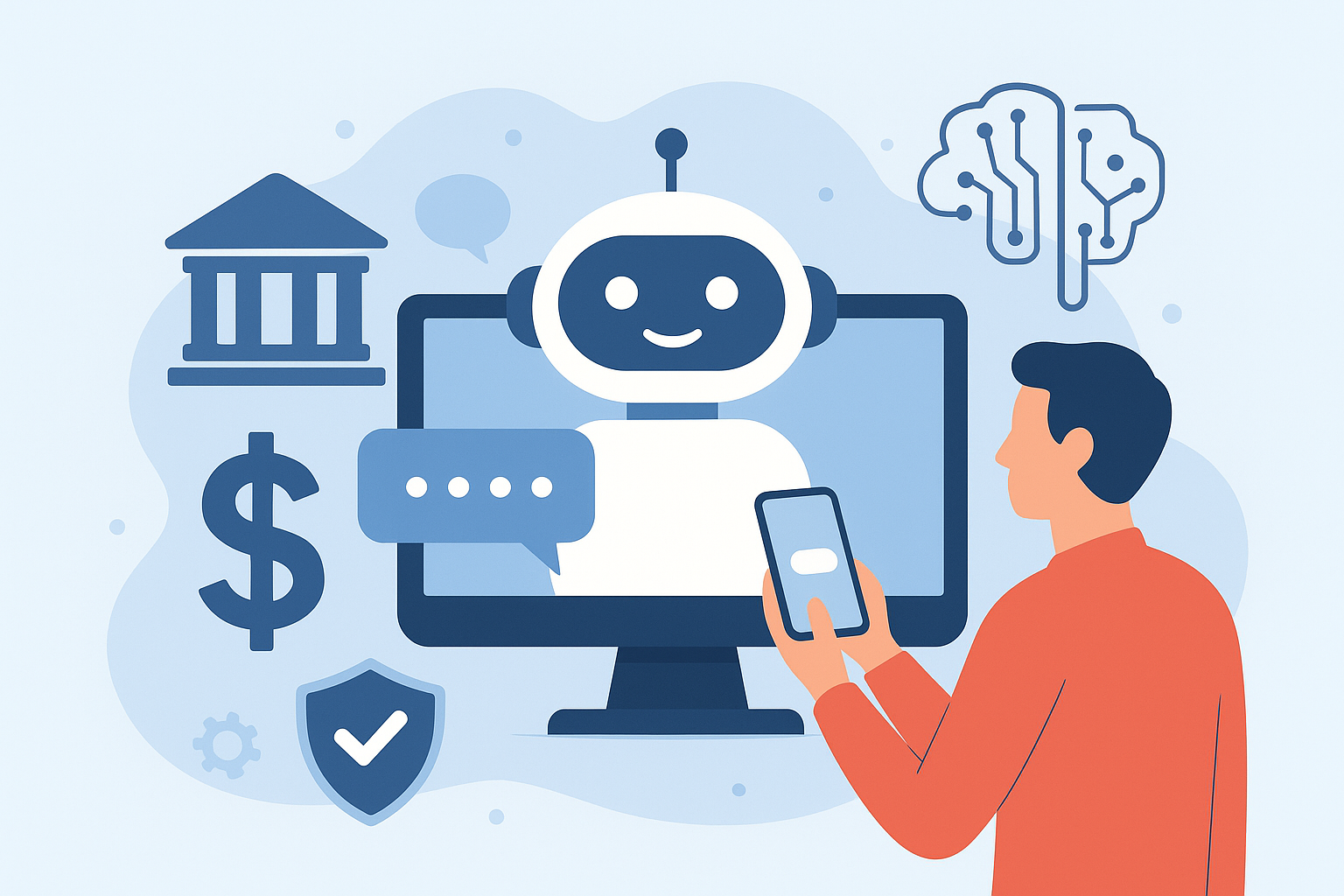
In today’s rapidly evolving digital landscape, banks and financial institutions are embracing AI-powered chatbots to deliver smarter, faster, and more secure customer experiences. This comprehensive guide explores how bank and finance chatbots are revolutionizing the industry by automating processes, personalizing customer engagement, and ensuring 24/7 financial support. Learn how modern fintech leaders are using intelligent automation to enhance trust, improve operational efficiency, and build stronger customer relationships.
Introduction
The banking and finance industry is undergoing a profound transformation, fueled by the rise of artificial intelligence (AI) and conversational automation. Traditional customer service models that relied heavily on human interaction are being replaced by smart, efficient, and AI-driven chatbots that can provide personalized financial assistance anytime, anywhere. These intelligent systems are designed to streamline workflows, minimize operational costs, and create seamless experiences for customers across all digital channels.
At EngagerBot, we understand how crucial it is for banks and financial organizations to adapt to this shift. By integrating AI chatbots into their customer engagement strategies, businesses can not only meet the rising expectations of digital-savvy consumers but also enhance security, compliance, and customer satisfaction. This blog post will explore the growing influence of bank and finance chatbots, their key benefits, challenges, and future potential in reshaping global finance.
The Evolution of Chatbots in Banking and Finance
The concept of chatbots in the banking and financial sector has evolved significantly over the last decade. What began as simple rule-based systems capable of answering basic customer queries has now matured into AI-powered virtual assistants equipped with natural language processing (NLP) and machine learning (ML) capabilities. These advanced technologies allow chatbots to understand context, detect sentiment, and respond intelligently to complex financial questions.
In the early days, banks primarily used chatbots for FAQ automation—providing account balance information, branch hours, or transaction status updates. However, as customer expectations grew and digital transformation accelerated, the role of chatbots expanded. Today’s banking chatbots can assist customers in performing secure transactions, recommending investment opportunities, managing credit cards, and even detecting fraud patterns in real-time.
Moreover, the COVID-19 pandemic accelerated the adoption of AI solutions, with major institutions like Bank of America’s Erica and Capital One’s Eno demonstrating the power of conversational banking. These chatbots handle millions of customer interactions daily, offering instant support while reducing the workload on human agents.
As financial institutions continue to embrace automation, AI-driven chatbots are no longer a luxury but a strategic necessity. They empower banks to stay competitive in a market where customers expect speed, precision, and 24/7 accessibility.
Why Chatbots Are Critical for Modern Banking Operations
In the modern banking ecosystem, customer experience is the ultimate differentiator. Clients no longer tolerate long waiting times, complex navigation menus, or delayed responses. They seek immediate, personalized, and accurate financial assistance. This is where AI chatbots play an essential role by bridging the gap between customers and institutions.
A bank and finance chatbot can handle multiple functions simultaneously—responding to queries, processing payments, initiating fund transfers, and providing personalized financial advice—all within seconds. This level of efficiency was previously impossible with traditional customer service methods.
Another key advantage is cost reduction. Deploying chatbots allows banks to automate up to 80% of routine customer interactions, reducing the need for large call center teams. This operational efficiency enables organizations to reallocate human resources toward high-value tasks such as relationship management and complex financial consulting.
Furthermore, chatbots enhance data security and compliance. With encrypted communication channels, authentication protocols, and integrated monitoring systems, chatbots ensure that sensitive financial information remains protected. They also help financial institutions maintain compliance with KYC (Know Your Customer) and AML (Anti-Money Laundering) regulations by automating identity verification processes.
In summary, the integration of chatbots into banking operations is not merely a trend—it’s a transformation. Banks leveraging these AI tools are gaining a competitive edge, improving customer trust, and redefining how financial services are delivered in the digital era.
Enhancing Customer Experience Through Conversational Banking
The essence of conversational banking lies in creating a smooth and interactive experience that mirrors a human-to-human conversation. Customers expect to communicate naturally, without having to navigate through multiple screens or menus. AI-powered chatbots deliver exactly that—providing instant responses, personalized recommendations, and an intuitive conversational flow that feels both professional and friendly.
When a customer inquires about their spending habits, for instance, the chatbot can instantly analyze their transaction history and offer data-driven insights such as “Your entertainment spending increased by 15% this month.” Such personalization builds trust and positions the bank as a proactive financial partner.
Another crucial aspect is 24/7 availability. Traditional banking hours no longer align with the lifestyle of digital consumers who expect access at any time of the day. With chatbots, customers can resolve issues, transfer funds, and get real-time financial advice even at midnight or during holidays.
Moreover, the multilingual capabilities of advanced chatbots break down communication barriers, allowing banks to engage a global customer base effortlessly. Whether it’s English, Urdu, Spanish, or Mandarin, a well-trained chatbot can seamlessly handle diverse customer queries without delays.
Ultimately, chatbots redefine customer engagement by blending convenience with intelligence. They not only solve problems but also anticipate them, creating a proactive and predictive banking environment where every interaction adds value.
AI Chatbots and Financial Inclusion
One of the most powerful impacts of AI-driven banking chatbots lies in promoting financial inclusion—bringing accessible financial services to unbanked and underbanked populations around the world. Traditional banking models often exclude individuals who lack physical access to bank branches or who face literacy and technological challenges. Chatbots are changing that reality by making banking as simple as sending a message.
Through mobile-first experiences, even users in remote areas can open accounts, apply for loans, or learn about saving options via chatbot interfaces. This democratization of financial access is especially vital in developing regions where digital banking can bridge economic gaps.
In addition, AI chatbots can communicate in local languages and simplify complex financial terminology into easy-to-understand guidance. For instance, a chatbot could explain the concept of compound interest or credit scoring in everyday language, empowering users with financial literacy.
Banks that adopt this inclusive approach not only expand their customer base but also contribute to broader social and economic development. By leveraging chatbots, they’re not just improving profits—they’re transforming lives.
The rise of AI chatbots is, therefore, not just a technological advancement—it’s a movement toward equitable financial empowerment.
Streamlining Banking Operations with AI Chatbots
The implementation of AI-powered chatbots has significantly transformed how banks manage their internal and external operations. By automating repetitive and time-consuming tasks, chatbots help institutions achieve greater efficiency and operational agility. They streamline processes such as account management, loan application tracking, transaction monitoring, and customer onboarding — all without human intervention.
One of the key benefits of using chatbots in operations is process optimization. For instance, when a customer requests a new debit card or wants to reset their online banking password, a chatbot can immediately initiate the request, verify the identity, and complete the process within minutes. This level of automation reduces manual workload and eliminates the possibility of human error, ensuring smooth service delivery.
Chatbots also play a critical role in employee support systems. Internal bots can assist banking staff by retrieving information, updating CRM records, or generating reports in real-time. This allows employees to focus on strategic decision-making rather than spending hours on routine administrative work.
Moreover, AI chatbots enhance decision-making by analyzing massive volumes of operational data. They identify inefficiencies, flag inconsistencies, and provide actionable insights that help optimize business workflows. Whether it’s monitoring real-time financial transactions or tracking compliance activities, chatbots contribute to a faster, more transparent, and data-driven operational environment.
In essence, AI chatbots are the backbone of modern digital banking operations, improving not just customer service but the entire financial ecosystem through automation, intelligence, and continuous optimization.
Personalization and Predictive Analytics in Financial Chatbots
Personalization has become the cornerstone of customer engagement in the banking sector. Clients expect financial institutions to understand their goals, preferences, and behaviors — and deliver services accordingly. AI chatbots, powered by predictive analytics and machine learning, make this possible by analyzing real-time customer data and past interactions to offer highly personalized financial recommendations.
For instance, when a user frequently inquires about investment plans, the chatbot can proactively suggest mutual funds or fixed deposit options based on their spending patterns and risk appetite. Similarly, it can provide timely reminders about bill payments, credit card due dates, or budget goals, helping users maintain better financial discipline.
The integration of AI algorithms allows these chatbots to constantly learn and evolve. Each customer interaction enhances their knowledge, enabling them to deliver increasingly relevant and accurate responses over time. This adaptive intelligence transforms traditional banking into a proactive advisory experience, where chatbots anticipate customer needs rather than merely reacting to them.
From a business perspective, personalization also increases customer loyalty. Clients are more likely to trust institutions that demonstrate an understanding of their unique circumstances. With predictive insights, banks can design personalized offers, insurance products, or savings plans, boosting both satisfaction and conversion rates.
In conclusion, personalized and predictive chatbots are reshaping customer relationships in finance by blending empathy with technology. They are redefining what it means to have a truly intelligent financial assistant — one that learns, adapts, and delivers value at every step.
Enhancing Security and Fraud Prevention with Chatbots
Security has always been a top priority in the banking sector, and AI chatbots are playing a pivotal role in strengthening digital protection measures. By integrating advanced security protocols, chatbots can detect fraudulent activity, authenticate users, and safeguard sensitive financial data in real-time.
Modern chatbots use multi-layered security mechanisms such as two-factor authentication (2FA), voice recognition, biometric verification, and encrypted messaging to ensure that customer interactions remain secure. They can also instantly flag suspicious activities — like unauthorized login attempts or irregular transaction patterns — and alert both the customer and the bank’s fraud prevention team.
One of the key strengths of AI chatbots is their ability to perform behavioral analysis. They continuously learn from user habits, device usage, and transaction histories to identify anomalies that may indicate potential fraud. For example, if a customer who usually makes small transactions in one region suddenly initiates a large transfer from another country, the chatbot can automatically pause the transaction and initiate verification procedures.
Additionally, chatbots contribute to compliance and regulatory reporting. They can monitor KYC documentation, verify user identity, and ensure that all transactions adhere to government and international banking regulations.
By combining automation with intelligence, AI chatbots not only enhance customer security but also build trust. In an age where digital threats are growing more sophisticated, these systems act as the first line of defense, ensuring that every interaction is safe, reliable, and transparent.
The Role of Chatbots in Loan and Credit Management
Loan and credit management processes are often complex and time-consuming, requiring extensive documentation, eligibility checks, and communication between customers and bank representatives. AI-powered chatbots simplify this entire process by offering an interactive, self-service experience that guides users through every stage — from inquiry to approval.
Customers can simply ask the chatbot about available loan products, interest rates, or repayment terms. The chatbot then provides tailored options based on the user’s financial profile, credit score, and income data. Through integration with backend systems, it can pre-qualify applicants and even generate personalized loan quotes instantly.
Another valuable function of chatbots is repayment management. They can send timely reminders for upcoming installments, track payment histories, and help customers reschedule payments in case of financial difficulties. This not only improves customer satisfaction but also reduces default rates.
For banks, chatbots offer enormous advantages in scalability and efficiency. Instead of relying on manual loan officers, institutions can automate thousands of customer interactions simultaneously. The chatbot’s ability to process and evaluate real-time data accelerates decision-making and minimizes human error.
Furthermore, integrating AI and credit analytics allows chatbots to evaluate risk more accurately. They can identify red flags in financial behavior, such as late payments or excessive borrowing, and alert the bank before potential losses occur.
Ultimately, loan and credit management chatbots revolutionize the lending process by making it faster, smarter, and more transparent for both customers and institutions.
Chatbots and Investment Advisory in Modern Banking
Investment advisory has traditionally required personal meetings and complex financial discussions. However, the integration of AI chatbots in banking has democratized access to investment advice by providing instant, data-driven insights to customers through conversational interfaces. These intelligent assistants can analyze financial goals, market trends, and user risk tolerance to deliver tailored recommendations in real-time.
With access to live financial data and analytical tools, chatbots can educate users on different investment vehicles such as mutual funds, ETFs, stocks, or retirement plans. They can guide novice investors by explaining terms, evaluating risk profiles, and suggesting diversified portfolios—all without human intervention. For experienced investors, chatbots offer real-time market updates and automated portfolio tracking, ensuring users never miss critical investment opportunities.
Banks benefit from these AI advisors by enhancing customer engagement and cross-selling opportunities. When chatbots recognize behavioral cues—such as frequent inquiries about savings or interest rates—they can introduce relevant financial products like wealth management plans or insurance services.
Moreover, these systems ensure compliance and transparency by logging every conversation, which can later be reviewed by financial advisors for accuracy. The integration of AI-powered investment chatbots also minimizes human bias, offering purely data-based recommendations that increase customer trust.
In essence, investment advisory chatbots are redefining financial empowerment, allowing customers to make informed decisions instantly. As they continue to evolve, chatbots are bridging the gap between technology and financial literacy, transforming banking into a more intelligent, accessible, and customer-centric industry.
Improving Customer Support Efficiency with Automation
Customer support is at the heart of every financial institution. Traditionally, banks have struggled to manage high call volumes, long response times, and rising operational costs. With the advent of AI-powered chatbots, this landscape has changed entirely, resulting in unprecedented efficiency and customer satisfaction.
Chatbots offer 24/7 automated support, handling thousands of simultaneous queries without delay. Whether customers need help resetting passwords, disputing transactions, or understanding loan terms, chatbots can deliver precise, context-aware answers instantly. This automation drastically reduces human workload, freeing up agents to focus on complex, high-value interactions.
In addition to speed, accuracy is a key strength. Unlike human agents, chatbots provide consistent responses based on verified data, ensuring that every customer receives the correct information. This reliability enhances brand credibility and builds customer confidence in the institution’s services.
The integration of AI analytics also allows banks to track and measure chatbot performance. Insights gathered from customer interactions reveal pain points, frequently asked questions, and emerging trends. Banks can then refine their services and communication strategies accordingly.
Furthermore, modern chatbots are designed to maintain a human-like conversational tone, using NLP (Natural Language Processing) to understand emotional context. When a customer expresses frustration, the chatbot can respond empathetically and, if needed, escalate the issue to a live agent.
Ultimately, AI chatbots have become indispensable tools for modern financial customer support, combining speed, precision, and empathy to deliver exceptional service experiences around the clock.
The Integration of Chatbots with Core Banking Systems
For AI chatbots to function effectively within the banking ecosystem, seamless integration with core banking systems is essential. This integration ensures that chatbots can access real-time data, execute transactions, and perform actions securely without manual intervention.
Through API (Application Programming Interface) connectivity, chatbots can interact directly with systems that handle account management, loan servicing, fund transfers, and customer verification. When a user asks for their balance or requests a mini-statement, the chatbot retrieves data instantly from the bank’s database through secure APIs.
Another critical advantage of integration is data synchronization. It ensures that all interactions across platforms—whether through a website, mobile app, or social media—are consistent and updated in real-time. Customers can start a conversation on one device and continue it seamlessly on another, maintaining a unified experience.
Moreover, core integration enhances operational efficiency and risk management. By automating data retrieval, reporting, and validation, chatbots minimize errors and accelerate processing times. They also play a role in maintaining regulatory compliance by monitoring transactions for suspicious activity and automatically flagging irregularities.
From a long-term perspective, chatbot integration with core banking infrastructure signifies a major step toward intelligent digital ecosystems. It represents a future where banks operate as dynamic, interconnected platforms, leveraging AI to deliver faster, smarter, and more secure financial services.
Chatbots for Financial Education and Awareness
A major barrier in the financial world is the lack of financial literacy among consumers. Many individuals are unaware of how to manage credit, savings, or investments effectively. This is where AI-powered chatbots emerge as transformative tools for financial education.
Chatbots can provide users with easy-to-understand explanations of complex financial topics. For example, they can teach users how to calculate interest rates, manage debt, or plan for retirement in a conversational and engaging way. By using everyday language, they eliminate the intimidation often associated with traditional financial education.
Financial institutions benefit from this approach by building stronger, more informed relationships with customers. When users understand financial concepts, they are more likely to make sound decisions, stay loyal, and trust their banking partners. Chatbots make this possible by offering interactive learning experiences through quizzes, personalized insights, and contextual advice.
Furthermore, AI-driven chatbots adapt to each user’s learning pace and knowledge level. They track engagement patterns, identify gaps in understanding, and tailor educational content accordingly. This level of personalization ensures that financial education becomes continuous, relevant, and enjoyable.
In the long term, financial education chatbots are not just improving customer engagement—they are creating a financially literate society. By empowering individuals to understand money management better, banks contribute to sustainable economic growth while enhancing their public image as responsible financial partners.
The Role of Chatbots in Regulatory Compliance and Reporting
The banking sector operates under strict regulatory frameworks designed to protect consumers, prevent fraud, and ensure financial stability. Managing these compliance requirements manually is not only time-consuming but also prone to human error. This is where AI-powered chatbots come into play, helping financial institutions achieve automated compliance monitoring and reporting with unprecedented accuracy.
By integrating with compliance management systems, chatbots can track, record, and analyze all customer interactions to ensure they meet legal and regulatory standards. They can automatically verify customer identity during onboarding using KYC (Know Your Customer) protocols and ensure that all data aligns with AML (Anti-Money Laundering) guidelines.
Another significant application is automated reporting. Chatbots can generate compliance summaries, transaction logs, and risk reports in real time. This not only accelerates audit readiness but also reduces the administrative burden on compliance officers. In case of any suspicious activity, the chatbot can instantly alert the compliance department or suspend the transaction for review.
Moreover, AI chatbots ensure that financial institutions stay up to date with changing global regulations. By continuously learning from updates and databases, they can modify processes automatically to remain compliant with evolving laws such as GDPR, PSD2, and other local financial directives.
Ultimately, chatbots serve as intelligent compliance partners, ensuring transparency, accountability, and accuracy in every customer interaction. By merging automation with governance, banks can safeguard their integrity while focusing on innovation and customer service excellence.
Multichannel Banking with Chatbot Integration
Modern consumers interact with banks through multiple digital channels—websites, mobile apps, WhatsApp, social media, and voice assistants. Managing consistent communication across all these touchpoints can be challenging. However, AI-driven chatbots make multichannel banking seamless by providing a unified, consistent, and intelligent customer experience across every platform.
Through omnichannel integration, a single chatbot can interact with customers on various channels without losing context. For example, a user might start a loan inquiry on the bank’s website, continue it on WhatsApp, and finalize the process in the mobile app—all with the same chatbot maintaining conversation history.
This level of integration ensures continuity and personalization. Customers don’t need to repeat information, and the chatbot can reference previous interactions to offer contextual support. It creates an experience similar to having a dedicated financial assistant available anywhere and anytime.
Multichannel chatbots also support voice and text interfaces, allowing users to choose their preferred mode of communication. With the rise of voice banking through platforms like Alexa or Google Assistant, chatbots are adapting to understand and respond to natural voice commands, offering even greater convenience.
For banks, multichannel chatbots reduce operational fragmentation by centralizing customer data into a single dashboard. This provides a complete 360-degree view of the customer, enabling personalized marketing, faster service resolution, and improved decision-making.
In short, multichannel chatbots are transforming the way customers experience banking, blending convenience with consistency. They bring every digital interaction under one intelligent system, ensuring that customers feel valued, understood, and supported no matter where they engage.
Chatbots and the Rise of Open Banking
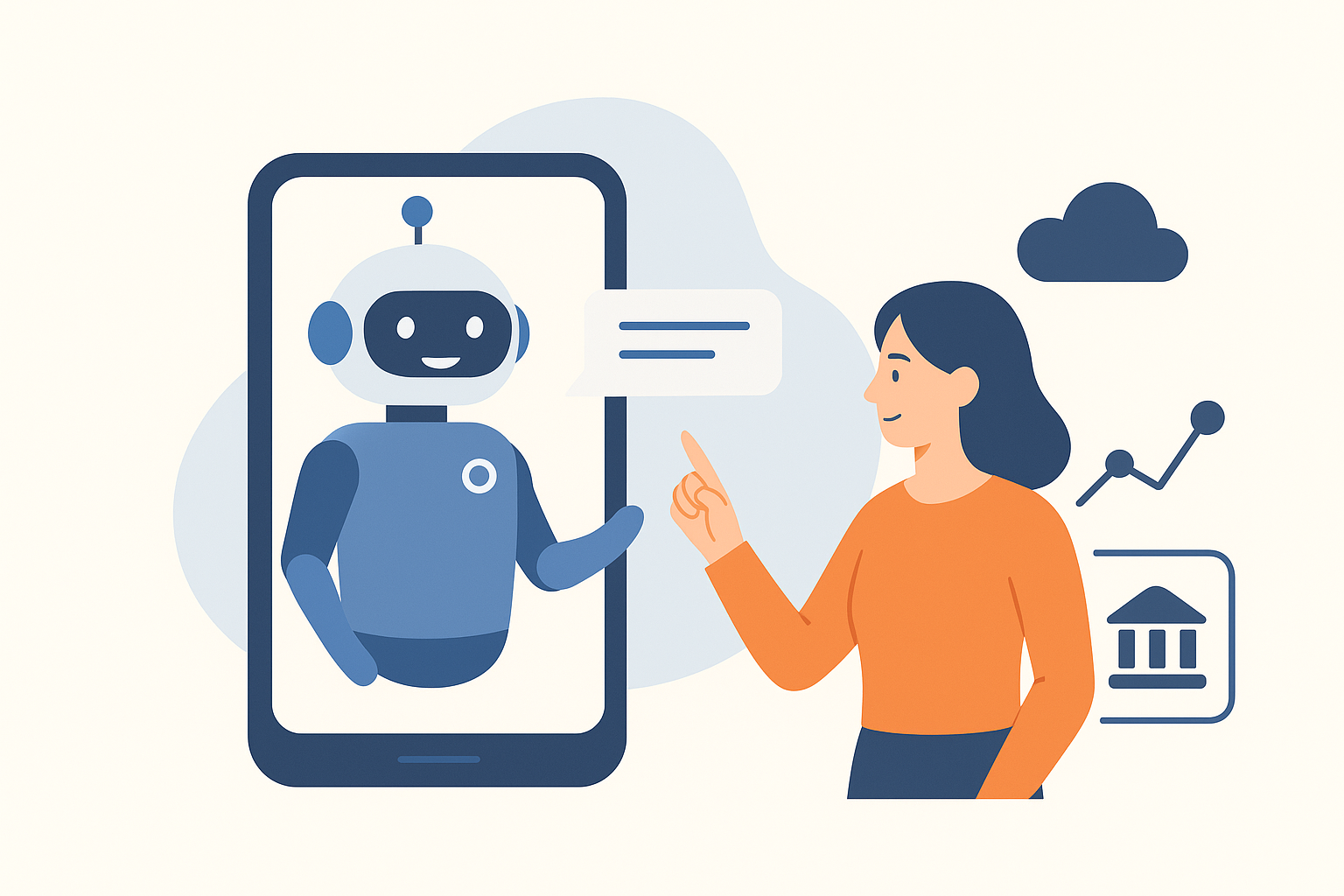
The emergence of Open Banking has reshaped the financial landscape by enabling third-party providers to access banking data securely through APIs. This innovation encourages competition, promotes transparency, and gives customers more control over their financial information. In this new environment, AI chatbots play a crucial role as intermediaries that connect users with multiple financial services effortlessly.
With Open Banking, customers can link various bank accounts, credit cards, and investment platforms within one chatbot interface. This unified view allows them to manage all their finances from a single conversation. The chatbot can analyze spending patterns across accounts, recommend savings opportunities, and even facilitate transactions between different banks — all securely and efficiently.
Security remains at the core of Open Banking, and chatbots ensure compliance through secure API communication, data encryption, and multi-factor authentication. Customers can safely share financial data with trusted third-party services like budgeting apps or loan comparison tools, knowing their information is protected.
In addition, Open Banking chatbots empower customers with data-driven insights. They can notify users when better mortgage rates or investment options become available, promoting smarter financial decisions. For banks, this creates new cross-selling opportunities and strengthens customer relationships through added value.
As Open Banking continues to expand globally, chatbots are becoming the face of financial connectivity. They simplify complex systems into intuitive conversations, making it easier for users to control their money and for banks to innovate within a secure, data-sharing ecosystem.
Chatbots and Data Analytics: Unlocking Strategic Insights
In today’s data-driven world, the value of data analytics in banking cannot be overstated. Every customer interaction, transaction, and inquiry generates valuable information that can help banks make better business decisions. AI-powered chatbots serve as an integral part of this process by collecting, analyzing, and interpreting large volumes of customer data in real-time.
Whenever a customer engages with a chatbot—whether to check account balances, inquire about loans, or make a payment—these interactions become valuable data points. Through machine learning algorithms, chatbots can detect behavioral trends, identify customer pain points, and uncover emerging market needs.
Banks can use this information to refine their marketing strategies, personalize services, and predict customer churn. For instance, if a chatbot notices repeated queries about account fees, the bank can analyze this trend to redesign pricing structures or introduce promotional offers.
Moreover, chatbots provide instant data visualization through dashboards, allowing decision-makers to monitor engagement levels, satisfaction scores, and transaction efficiency in real-time. These insights help banks stay agile and responsive to changing consumer preferences.
Another benefit lies in risk assessment. Chatbots can flag potential credit risks or irregular transaction patterns by analyzing customer financial behavior. This proactive risk detection improves financial stability and reduces losses.
Ultimately, chatbots serve as intelligent data collectors and analysts, bridging the gap between customer interaction and strategic planning. They transform raw data into actionable insights, empowering financial institutions to innovate and stay ahead in an increasingly competitive market.
The Future of Chatbots in Banking and Finance
The future of chatbots in banking looks incredibly promising as technology continues to evolve at a rapid pace. With advancements in Artificial Intelligence (AI), Natural Language Processing (NLP), and predictive analytics, chatbots are expected to become even more human-like, proactive, and emotionally intelligent.
In the near future, chatbots will not only respond to queries but also predict customer needs before they arise. They will be capable of analyzing life events, spending habits, and emotional cues to offer proactive financial advice. For example, if a chatbot detects increased spending on baby products, it might suggest opening a child savings account or insurance plan.
Moreover, the integration of voice-based AI assistants and metaverse banking environments will redefine customer engagement. Users will soon be able to interact with virtual bank representatives in immersive digital spaces, experiencing real-time financial discussions through augmented reality.
Another emerging trend is the use of blockchain technology in chatbots. By merging AI with blockchain, financial institutions can ensure enhanced transparency, data integrity, and transaction security. Smart contracts can be executed automatically via chatbots, minimizing delays and reducing human intervention.
As AI continues to mature, chatbots will evolve from support tools to strategic business assets. They will help banks create hyper-personalized financial ecosystems where every customer interaction is meaningful, secure, and deeply connected to the individual’s financial goals.
The future isn’t about replacing humans — it’s about empowering them through intelligent collaboration between people and machines.
Challenges and Ethical Considerations of Chatbots in Finance
While AI chatbots offer tremendous benefits, they also introduce challenges and ethical considerations that financial institutions must address carefully. One of the major concerns is data privacy. Since chatbots handle sensitive financial information, ensuring compliance with privacy regulations such as GDPR and CCPA is critical. Banks must adopt robust encryption protocols, limit data retention, and maintain transparency regarding data usage.
Another ethical concern is bias in AI algorithms. Chatbots trained on biased data can inadvertently make unfair recommendations or decisions, especially in areas like loan approvals or credit scoring. Continuous auditing and retraining of models are essential to ensure fairness and accuracy.
Additionally, over-reliance on automation can lead to a lack of human empathy in complex financial situations. While AI can handle logic efficiently, some customers still prefer the reassurance of human conversation for sensitive topics like debt management or financial distress. To address this, successful banks are implementing hybrid support systems — where chatbots handle general inquiries while humans step in for emotional or complex discussions.
Security vulnerabilities also remain a challenge. As hackers grow more sophisticated, cybersecurity for chatbots must continuously evolve to defend against phishing, identity theft, and fraud attempts.
In conclusion, ethical AI implementation is not just about efficiency—it’s about responsibility. Banks must ensure that their chatbot systems are transparent, unbiased, and customer-centric, balancing technological innovation with moral integrity and human values.
Conclusion
The integration of AI-powered chatbots in the banking and finance industry represents one of the most significant technological advancements of the modern era. From streamlining operations and improving customer service to driving personalization, compliance, and financial education, chatbots have become indispensable tools in digital transformation.
They not only enhance operational efficiency but also redefine how financial institutions engage with their customers — making banking faster, smarter, and more human-like. As the world moves toward open banking, data-driven ecosystems, and predictive financial services, chatbots stand at the forefront of this revolution.
At EngagerBot, we believe that the future of banking lies in intelligent automation — where chatbots act not just as service tools but as trusted digital partners. By embracing AI innovation responsibly and ethically, banks can build stronger customer relationships, ensure security, and maintain long-term trust in an ever-changing financial world.
The era of Bank & Finance Chatbots is here — and it’s transforming the global financial landscape, one conversation at a time.