
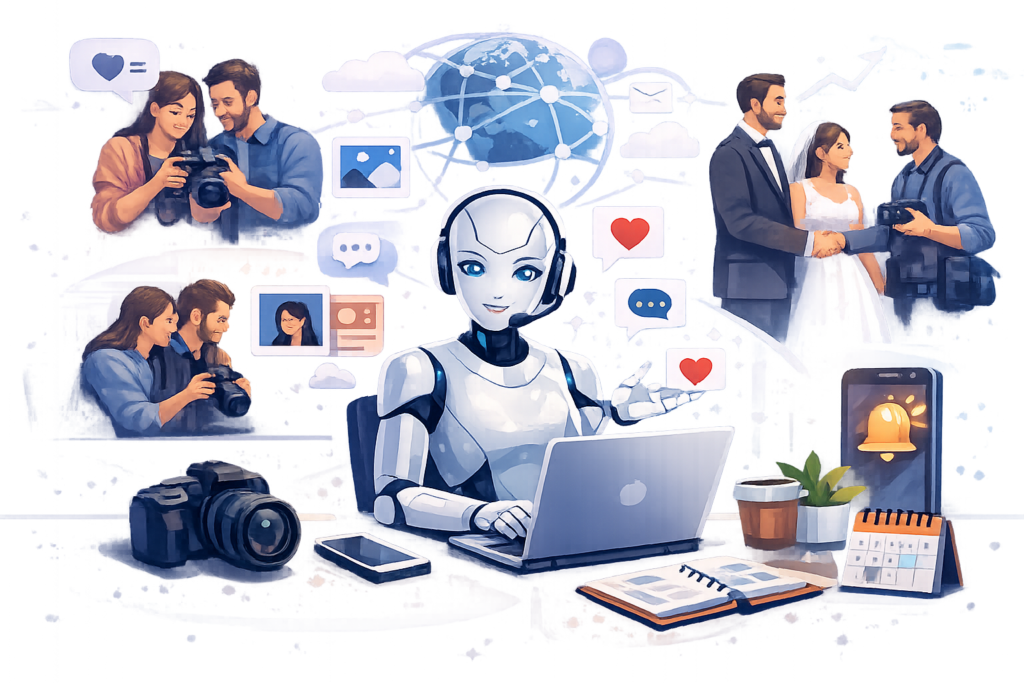
Discover how a Photography Chatbot helps photographers automate bookings, qualify leads, answer customer questions, showcase portfolios, and improve client experiences. Learn features, benefits, implementation strategies, and AI best practices to grow your photography business efficiently.
Introduction
The photography industry has evolved far beyond traditional referrals and phone calls. Modern clients expect instant responses, seamless booking experiences, personalized recommendations, and convenient communication across multiple digital channels. Whether someone is searching for a wedding photographer, commercial photography services, portrait sessions, or product photography, they often choose the business that responds first and provides the easiest customer journey.
Artificial intelligence has transformed how photography businesses interact with potential clients. Rather than relying solely on manual communication, photographers can now automate routine conversations while maintaining a professional and personalized experience. A Photography Chatbot serves as a virtual assistant capable of answering questions, collecting project details, scheduling consultations, qualifying leads, and guiding visitors toward booking photography services.
At Engagerbot, businesses are increasingly exploring AI-powered conversational solutions to improve customer engagement while reducing administrative workloads. A professionally designed chatbot helps photography businesses remain available 24/7, ensuring potential clients receive immediate assistance regardless of time zones or business hours.
According to Google Search Central, websites should prioritize helpful, people-first content and excellent user experiences. Likewise, Google Business Profile emphasizes providing accurate business information and responsive customer interactions that improve local customer engagement. A Photography Chatbot aligns with these best practices by delivering timely assistance, reducing response delays, and helping visitors quickly find the information they need.
Throughout this guide, you’ll learn how Photography Chatbots work, their key business benefits, advanced features, practical use cases, implementation strategies, and best practices that help photography businesses improve efficiency while creating memorable customer experiences.
What Is a Photography Chatbot?
A Photography Chatbot is an AI-powered virtual assistant designed specifically to assist photography businesses by automating conversations with prospective and existing clients. Instead of requiring photographers to manually respond to every inquiry, the chatbot provides instant answers, gathers essential project information, schedules appointments, recommends photography packages, and supports customers throughout their decision-making journey.
Modern photography businesses receive inquiries from multiple channels every day. Visitors often ask about pricing, availability, studio locations, editing timelines, package options, travel fees, event coverage, equipment, or portfolio examples. Responding individually to every message consumes valuable time that photographers could otherwise spend preparing shoots, editing images, or meeting clients. A Photography Chatbot automates these repetitive conversations while ensuring every visitor receives immediate, consistent, and professional assistance.
Unlike traditional live chat systems that require constant human monitoring, AI-powered chatbots understand natural language and respond intelligently based on customer intent. For example, if a visitor asks about wedding photography packages, the chatbot can instantly display package information, pricing ranges, available dates, and consultation booking options. Similarly, if someone wants family portraits or commercial photography services, the chatbot can recommend relevant services tailored to their specific needs.
Photography Chatbots also simplify lead qualification. Before scheduling consultations, they can ask meaningful questions regarding event dates, locations, photography style preferences, estimated budgets, and expected deliverables. This structured approach enables photographers to prioritize qualified leads while collecting detailed project information before the initial conversation.
Another major advantage is continuous availability. Potential clients often browse photography websites during evenings, weekends, or holidays when businesses may be closed. A chatbot remains available around the clock, preventing missed opportunities by engaging visitors immediately. Faster responses frequently improve conversion rates because clients are less likely to leave a website without receiving assistance.
Beyond lead generation, Photography Chatbots strengthen customer relationships throughout the entire client lifecycle. They send appointment reminders, provide preparation checklists before photo sessions, answer editing-related questions, deliver post-shoot updates, collect customer feedback, and encourage satisfied clients to leave reviews. This continuous engagement contributes to a more professional customer experience while reducing administrative effort.
As artificial intelligence continues advancing, Photography Chatbots are becoming valuable digital assistants rather than simple automated responders. They combine automation, personalization, and intelligent communication to support photographers in growing their businesses while delivering faster, more convenient customer experiences.
How AI Is Transforming Photography Businesses
Artificial intelligence has significantly changed how photography businesses operate. While creativity, artistic vision, and technical expertise remain irreplaceable, AI simplifies many operational tasks that traditionally consumed valuable time. From client communication and appointment scheduling to image organization and marketing automation, AI allows photographers to focus more on delivering exceptional visual experiences.
One of the biggest challenges photography businesses face is responding quickly to customer inquiries. Prospective clients often contact multiple photographers before making a decision. Businesses that provide immediate responses frequently gain a competitive advantage. AI-powered Photography Chatbots eliminate delays by responding instantly, collecting customer information, and guiding visitors through booking processes within seconds.
Automation also improves internal workflows. Rather than manually tracking appointments, sending reminder emails, confirming availability, and answering repetitive questions, AI systems perform these tasks automatically. This reduces administrative workloads while minimizing scheduling errors and missed opportunities. As a result, photographers can dedicate more time to planning creative sessions, editing photographs, and building stronger client relationships.
AI further enhances personalization by analyzing customer interactions and recommending relevant photography services. For instance, if a visitor explores maternity photography pages, the chatbot can suggest newborn photography packages or family portrait sessions. Similarly, commercial clients may receive tailored recommendations for branding photography, product photography, or corporate headshots based on their interests.
Photography marketing has also become more data-driven through AI. Businesses can identify popular services, monitor customer behavior, understand frequently asked questions, and optimize website experiences using conversational insights. These valuable analytics help photographers improve marketing strategies while refining their service offerings to better meet customer expectations.
Customer service quality benefits significantly from AI-powered communication. Visitors receive accurate information consistently regardless of time or staff availability. Common questions regarding pricing, cancellation policies, editing turnaround, copyrights, print options, and payment methods are answered immediately without requiring manual intervention.
Search engines increasingly reward websites offering positive user experiences. According to Google Search Essentials, websites should prioritize helpful content, accessibility, and user satisfaction. AI-powered customer engagement supports these objectives by improving response times, reducing user frustration, and helping visitors access relevant information efficiently.
Artificial intelligence does not replace photographers—it enhances their productivity. Human creativity remains at the center of photography, while AI manages repetitive communication and administrative tasks that previously limited business growth. As customer expectations continue evolving, integrating AI into photography businesses becomes a strategic investment that supports both operational efficiency and exceptional customer experiences.
Key Features Every Photography Chatbot Should Have
Not all chatbots are created equal. A high-performing Photography Chatbot should include intelligent features specifically designed to meet the unique needs of photography businesses and their clients. Simply answering basic questions is no longer enough. Today’s customers expect personalized assistance, seamless navigation, and quick access to relevant information that helps them make confident booking decisions.
One of the most valuable features is intelligent lead qualification. Instead of asking visitors to complete lengthy contact forms, the chatbot should naturally collect essential details such as photography type, preferred event date, venue location, estimated budget, expected number of participants, and desired photography style. This information enables photographers to prepare meaningful consultations while prioritizing high-quality leads.
Appointment scheduling is another essential capability. Integrating the chatbot with online calendars allows visitors to view available consultation times and reserve appointments instantly without exchanging multiple emails. Automated confirmations and reminder notifications further reduce no-shows while improving customer convenience.
Portfolio recommendations significantly enhance user experiences. Rather than expecting visitors to browse extensive galleries manually, the chatbot can recommend relevant portfolio examples based on customer interests. Wedding clients can immediately view wedding galleries, while corporate clients receive examples of branding photography or professional headshots. Personalized recommendations simplify decision-making while showcasing the photographer’s expertise more effectively.
Pricing guidance also improves customer engagement. Although complex quotations may still require human consultation, the chatbot can explain photography packages, optional add-ons, travel fees, editing services, print options, and payment processes. Transparent communication builds trust while reducing repetitive inquiries.
Multilingual support has become increasingly valuable for photographers serving diverse communities or international clients. AI-powered language capabilities allow businesses to communicate effectively with broader audiences while maintaining consistent service quality.
Modern Photography Chatbots should also integrate with customer relationship management (CRM) platforms, email marketing tools, payment systems, booking software, analytics dashboards, and social media channels. These integrations create connected workflows that reduce manual data entry while improving operational efficiency.
Security and privacy remain equally important. Photography businesses frequently collect personal information including names, phone numbers, email addresses, event details, and payment information. Following recommendations from OWASP for secure application development and Google Privacy best practices helps businesses protect customer data while maintaining trust.
A well-designed Photography Chatbot combines automation, personalization, intelligence, security, and convenience into a unified customer experience. Rather than functioning as a simple messaging tool, it becomes an intelligent digital assistant that supports business growth while delivering exceptional customer service.
Benefits of Using a Photography Chatbot
Photography businesses thrive on creativity, trust, and strong client relationships, but managing inquiries, appointments, and customer communication can quickly become overwhelming as demand grows. Every missed call, delayed email response, or unanswered social media message represents a potential lost opportunity. A Photography Chatbot helps eliminate these challenges by providing immediate, intelligent assistance to website visitors while allowing photographers to focus on what they do best—capturing exceptional images. Beyond simple automation, modern AI chatbots improve customer experiences, streamline business operations, and contribute directly to increased revenue.
One of the greatest advantages is 24/7 customer availability. Photography inquiries rarely occur only during business hours. Prospective clients often browse portfolios late at night, during weekends, or while planning events months in advance. Instead of waiting until the next business day, visitors receive instant responses to questions about services, pricing, availability, or booking procedures. Immediate engagement keeps potential customers interested and significantly reduces the chances of them leaving your website to contact a competitor.
A Photography Chatbot also improves lead generation and qualification. Rather than presenting visitors with a lengthy contact form, the chatbot guides them through a natural conversation, collecting essential information such as event type, preferred photography style, expected date, venue location, estimated budget, and special requirements. This allows photographers to receive organized, actionable leads instead of incomplete inquiries. Better lead qualification saves valuable time and ensures consultations focus on serious prospects who are more likely to convert into paying clients.
Another major benefit is improved booking efficiency. Scheduling photography sessions often involves multiple emails or phone calls to determine availability. A chatbot integrated with scheduling software can instantly display available dates, recommend consultation times, confirm appointments, and send automated reminders. This reduces administrative work while minimizing scheduling conflicts and missed appointments.
Customer service consistency is equally valuable. Every visitor receives accurate, professional responses regardless of when they contact the business. Frequently asked questions regarding editing timelines, payment methods, travel fees, licensing rights, image delivery, cancellation policies, and print options can all be answered automatically. Consistent communication strengthens trust and creates a more polished brand image.
Photography Chatbots also contribute to better marketing performance. By tracking visitor behavior and conversation trends, businesses gain valuable insights into customer interests, common concerns, and popular photography services. These analytics help photographers refine website content, improve advertising campaigns, optimize service offerings, and create more relevant marketing strategies. Businesses can also use chatbot interactions to build email lists, promote seasonal photography sessions, announce special offers, and encourage newsletter subscriptions.
Operational efficiency improves dramatically because repetitive administrative tasks become automated. Instead of manually answering identical questions every day, photographers can dedicate more time to editing, planning creative shoots, networking, or expanding their portfolios. Automation reduces workload without sacrificing customer satisfaction.
AI-powered chatbots also strengthen client relationships after bookings are confirmed. They can send preparation checklists before photo sessions, remind clients about appointment times, provide wardrobe recommendations, share location details, notify customers when galleries are ready, and request reviews after projects are completed. These proactive interactions create a smooth customer journey from the first inquiry through final image delivery.
According to Google Business Profile guidance, businesses that provide timely, accurate customer information improve overall customer satisfaction and local engagement. Likewise, recommendations from Google Search Central emphasize creating excellent user experiences, which fast, AI-powered customer communication helps support.
Ultimately, a Photography Chatbot becomes more than a customer service tool. It functions as a digital business assistant that enhances efficiency, increases conversions, improves customer satisfaction, and creates scalable growth opportunities without compromising the personal touch that clients expect from professional photographers.
Industries That Benefit from Photography Chatbots
Although Photography Chatbots are designed primarily for professional photographers, their benefits extend across numerous industries that rely on visual content, creative services, and customer engagement. Businesses involved in photography often receive repetitive inquiries regarding pricing, availability, project scope, timelines, and booking procedures. AI-powered conversational assistants simplify these interactions while delivering faster, more personalized customer experiences. As digital expectations continue to rise, organizations across multiple sectors are adopting chatbot technology to improve efficiency and strengthen client relationships.
The wedding photography industry is one of the largest beneficiaries. Couples planning weddings typically ask dozens of questions before selecting a photographer. They want information about packages, engagement sessions, travel availability, editing styles, delivery timelines, albums, second photographers, and payment schedules. A Photography Chatbot can answer these questions instantly while collecting event details such as wedding dates, venue locations, guest counts, and preferred photography styles. This helps photographers identify qualified leads and schedule consultations more efficiently.
Portrait photographers also gain significant advantages. Families, graduates, professionals, influencers, and individuals seeking personal portraits often have questions regarding clothing recommendations, studio locations, outdoor sessions, image retouching, and print options. Chatbots guide visitors through available packages, recommend suitable services, and assist with appointment scheduling, making the booking process faster and more convenient.
Businesses specializing in commercial and corporate photography frequently receive inquiries from marketing agencies, retailers, manufacturers, restaurants, healthcare organizations, and professional service providers. These clients often require branding photography, executive headshots, product photography, architectural photography, or advertising campaigns. A chatbot helps qualify commercial leads by collecting project specifications, deadlines, budget expectations, and desired deliverables before photographers prepare customized proposals.
The real estate industry benefits through automation of property photography bookings. Real estate agents, brokers, and property developers regularly schedule photography sessions for residential and commercial listings. A chatbot simplifies appointment requests, gathers property details, recommends available dates, and explains optional services such as drone photography, virtual tours, twilight photography, or floor plans.
Photography Chatbots are equally valuable for event photography businesses covering conferences, concerts, corporate events, festivals, sporting competitions, and private celebrations. Since event organizers often work under strict deadlines, immediate communication helps secure bookings before competitors respond.
Educational institutions offering photography courses or workshops can use chatbots to answer questions regarding enrollment, class schedules, equipment requirements, certification programs, and tuition fees. This reduces administrative workloads while improving student engagement.
Photography studios providing newborn, maternity, family, pet, fashion, or lifestyle photography also benefit from AI-powered conversations. Chatbots recommend specialized packages based on customer interests while offering personalized preparation tips before sessions.
Creative agencies that combine photography with videography, graphic design, branding, digital marketing, or content creation can use conversational AI to introduce multiple services through a single customer interaction. Cross-selling opportunities become more effective because recommendations are tailored according to each visitor’s needs.
Online marketplaces selling prints, stock photography, digital downloads, framed artwork, or photography merchandise also benefit from chatbot technology. Visitors receive immediate assistance locating products, understanding licensing terms, checking shipping information, or completing purchases.
Organizations serving international audiences particularly benefit from multilingual AI capabilities. By communicating in multiple languages, businesses improve accessibility while expanding into new markets without significantly increasing customer support resources.
According to Schema.org structured data standards and Google Search Essentials, providing organized, accessible information improves both user experience and search visibility. Photography Chatbots complement these best practices by making valuable business information easier to discover through conversational interactions.
Regardless of business size, Photography Chatbots provide scalable customer engagement that helps organizations respond faster, automate repetitive tasks, generate qualified leads, and deliver exceptional client experiences. Whether serving individual consumers, large corporations, educational institutions, or creative agencies, conversational AI is becoming an essential tool for modern photography businesses.
Photography Chatbot Use Cases
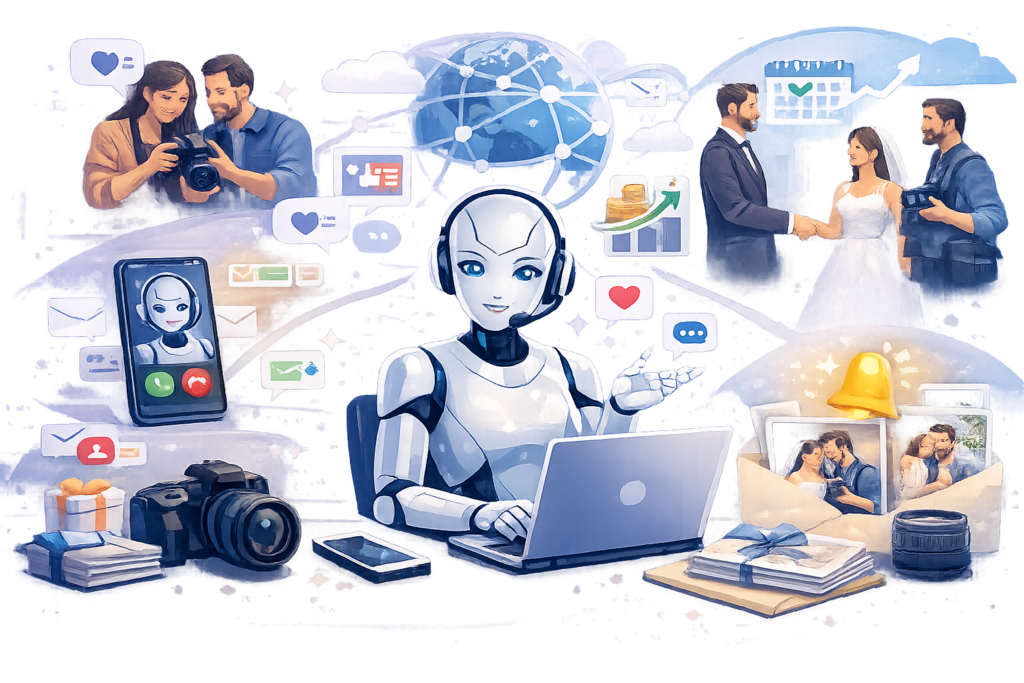
A Photography Chatbot is far more than an automated messaging tool—it becomes a virtual business assistant that supports photographers throughout the entire customer journey. From attracting new visitors to maintaining long-term client relationships, AI-powered chatbots help automate repetitive tasks while improving customer satisfaction. Whether you operate a freelance photography business, a large studio, or a commercial photography agency, implementing a chatbot creates opportunities to save time, improve response rates, and increase conversions.
One of the most common use cases is answering pre-sales inquiries. Potential clients typically ask about pricing, available photography packages, travel fees, editing turnaround times, copyrights, payment methods, and available dates. Instead of requiring staff to manually respond to every inquiry, the chatbot provides instant, consistent answers while guiding visitors toward the next step. This immediate engagement helps reduce bounce rates and keeps prospective customers interested.
Photography Chatbots are also highly effective for portfolio discovery. Many photography websites contain hundreds of images across multiple categories, making it difficult for visitors to find examples relevant to their needs. A chatbot simplifies this process by asking a few questions and recommending galleries based on customer interests. For example, couples planning weddings can immediately access wedding portfolios, while businesses seeking branding photography can view corporate projects. Personalized recommendations create a smoother browsing experience and help clients quickly evaluate a photographer’s style.
Another valuable application involves consultation scheduling. Rather than exchanging multiple emails to arrange a meeting, the chatbot can display available consultation times, collect preliminary project information, and confirm appointments automatically. Clients appreciate the convenience of booking instantly, while photographers reduce administrative work and minimize scheduling conflicts.
Photography Chatbots also improve event preparation by sending reminders, preparation guides, wardrobe suggestions, venue details, weather updates, and checklists before photo sessions. These automated communications help clients arrive better prepared, reducing delays and improving overall satisfaction. After sessions are completed, chatbots can notify customers when galleries are available, explain image download instructions, and recommend print or album options.
Marketing automation represents another powerful use case. Chatbots can promote seasonal mini sessions, holiday photography events, graduation packages, newborn photography specials, or corporate headshot campaigns based on visitor interests. Instead of presenting generic promotions to everyone, AI recommends relevant offers that align with customer preferences, increasing engagement and conversion opportunities.
Photography businesses can also use chatbots to collect valuable customer feedback after projects are completed. Automated review requests encourage satisfied clients to leave testimonials, strengthening online reputation and local search visibility. According to Google Business Profile, authentic customer reviews help businesses build credibility and improve local customer trust.
Educational photographers, workshop organizers, and photography schools benefit from chatbots that answer enrollment questions, explain course schedules, recommend learning resources, and assist prospective students with registration. Likewise, commercial photography agencies use conversational AI to gather project requirements before assigning inquiries to specialized team members.
Modern Photography Chatbots integrate seamlessly with CRM platforms, email marketing software, booking calendars, payment systems, and analytics tools, allowing businesses to create connected workflows that reduce manual effort. Rather than replacing human interaction, chatbots handle repetitive communication while allowing photographers to focus on creativity, relationship building, and delivering exceptional visual experiences.
Lead Generation and Client Qualification
Generating qualified leads is one of the most important objectives for any photography business. While attracting website visitors is valuable, converting those visitors into paying clients requires understanding their needs, budgets, timelines, and expectations. A Photography Chatbot simplifies this process by engaging visitors immediately, collecting essential information, and identifying high-quality opportunities before photographers invest additional time. Intelligent lead qualification improves efficiency while helping businesses prioritize inquiries that are most likely to become successful projects.
Traditional contact forms often discourage potential clients because they require lengthy manual input and provide no immediate interaction. A chatbot transforms lead generation into a conversational experience. Instead of asking visitors to complete multiple fields at once, it gathers information naturally through guided questions. Customers feel as though they are having a real conversation rather than filling out paperwork, increasing completion rates and improving user satisfaction.
During qualification, the chatbot can collect valuable project details including photography type, preferred session date, venue location, expected duration, estimated budget, number of participants, desired photography style, and any special requests. This structured information helps photographers understand customer expectations before scheduling consultations, making meetings more productive and personalized.
Lead scoring further enhances business efficiency. AI can automatically categorize inquiries based on urgency, project size, budget range, or service requirements. For example, a corporate client requesting annual branding photography across multiple office locations may receive higher priority than a general pricing inquiry. Intelligent prioritization ensures businesses respond strategically while maximizing revenue opportunities.
Photography Chatbots also reduce response delays, which significantly influences conversion rates. Studies consistently show that businesses responding quickly to inquiries are more likely to secure new customers. AI-powered conversations begin immediately after a visitor lands on the website, preventing potential clients from leaving before receiving assistance. Even if photographers are busy at a photoshoot or editing images, the chatbot continues engaging visitors around the clock.
Beyond websites, chatbots support lead generation across multiple communication channels, including social media messaging platforms, online advertising campaigns, and landing pages. This omnichannel approach ensures consistent communication regardless of where prospective clients first discover the business. Marketing campaigns become more effective because interested visitors receive personalized assistance immediately after clicking advertisements.
Collected lead information can automatically synchronize with CRM platforms, eliminating manual data entry while enabling personalized follow-up campaigns. Businesses can segment contacts according to photography interests, event dates, geographic locations, or service categories, allowing future email marketing campaigns to become more targeted and relevant.
Privacy remains an essential consideration during lead collection. Photography businesses should clearly explain how customer information will be used while protecting personal data through secure collection practices. Recommendations provided by Google Privacy and OWASP encourage businesses to implement secure data handling procedures that build long-term customer trust.
Ultimately, a Photography Chatbot transforms lead generation from a passive website feature into an active customer engagement strategy. Faster conversations, intelligent qualification, personalized interactions, and automated workflows allow photographers to focus their energy on qualified prospects while creating a professional experience that encourages more bookings.
Booking and Appointment Automation
Managing photography bookings manually becomes increasingly difficult as businesses grow. Coordinating availability, confirming appointments, responding to scheduling questions, sending reminders, and handling cancellations often requires significant administrative effort. A Photography Chatbot simplifies these responsibilities by automating the booking process while giving clients greater flexibility and convenience. The result is a more efficient workflow that reduces scheduling errors, improves customer satisfaction, and allows photographers to spend more time on creative work.
The booking process usually begins when a visitor expresses interest in a service. Rather than asking clients to send emails or wait for callbacks, the chatbot can immediately display available appointment slots connected to an online calendar. Customers simply choose a preferred consultation or photography session time, and the reservation is confirmed automatically. This streamlined experience eliminates unnecessary back-and-forth communication while making scheduling faster for both parties.
Automation also reduces double bookings and missed opportunities. Calendar integrations ensure that available time slots remain accurate across all scheduling platforms. Once an appointment is confirmed, the chatbot automatically updates the calendar, preventing conflicts that could otherwise damage customer trust. Businesses serving multiple photographers or studio locations especially benefit from centralized scheduling automation.
Photography sessions often require additional preparation beyond selecting a date. A chatbot can collect details about session locations, participant numbers, special requests, accessibility needs, preferred photography styles, and weather considerations. Gathering this information during booking helps photographers prepare more effectively while minimizing last-minute surprises.
Automated reminders significantly reduce appointment cancellations and no-shows. Clients receive confirmation messages immediately after booking, followed by reminder notifications several days before the session and again shortly before the appointment. These reminders may include driving directions, parking information, clothing recommendations, preparation tips, or weather-related advice. Such proactive communication improves customer confidence while ensuring sessions begin smoothly.
Payment collection can also become more efficient. Depending on business requirements, chatbots may explain deposit policies, guide customers through secure payment processes, or remind clients about outstanding balances before appointments. Clear payment communication reduces confusion while helping businesses maintain healthy cash flow.
Rescheduling and cancellations become far less stressful with conversational automation. Instead of contacting staff directly, clients can request changes through the chatbot, which checks availability and suggests alternative dates. This flexibility improves customer experiences while reducing administrative workloads.
Booking automation also generates valuable business insights. Analytics reveal peak booking periods, popular photography services, frequently requested appointment times, cancellation trends, and seasonal demand patterns. These insights support better staffing decisions, marketing strategies, and resource planning.
According to Google Search Central, providing excellent user experiences contributes to overall website quality. A fast, intuitive booking process aligns with these principles by reducing friction and helping visitors accomplish their goals efficiently.
For photography businesses aiming to grow without proportionally increasing administrative staff, booking automation represents one of the most valuable applications of AI. Clients enjoy faster service and greater convenience, while photographers benefit from organized schedules, reduced manual tasks, and more opportunities to focus on delivering exceptional photography services.
Customer Support and Frequently Asked Questions
Exceptional customer support plays a vital role in the success of every photography business. Clients often have questions before, during, and after booking a session, and timely responses can significantly influence purchasing decisions and overall satisfaction. A Photography Chatbot provides continuous support by answering common questions instantly, guiding visitors to relevant resources, and ensuring customers receive consistent assistance regardless of the time of day. Instead of replacing personal communication, AI enhances support by handling routine inquiries while allowing photographers to focus on more complex client needs.
One of the most common responsibilities of a Photography Chatbot is addressing frequently asked questions. Visitors regularly inquire about pricing structures, available packages, editing timelines, copyright ownership, travel policies, print services, payment methods, cancellation terms, and studio locations. Rather than requiring manual responses for each inquiry, the chatbot delivers accurate information immediately, reducing response times and improving customer confidence.
Support continues after bookings are confirmed. Clients often need guidance regarding wardrobe choices, session preparation, arrival times, weather considerations, or documentation requirements for commercial projects. Automated responses ensure customers receive practical information before appointments, helping sessions run smoothly while reducing unnecessary confusion.
When image editing is in progress, customers frequently ask about delivery timelines or gallery access. Instead of contacting the photographer directly, clients can interact with the chatbot to receive project updates, download instructions, album ordering information, or print recommendations. These automated communications reduce repetitive administrative work while keeping clients informed throughout the production process.
A Photography Chatbot can also intelligently recognize when human assistance is required. Complex pricing negotiations, custom commercial photography projects, legal licensing discussions, or highly specialized creative requests are automatically escalated to photographers or support staff. This balanced approach combines AI efficiency with personalized professional expertise.
AI Personalization for Better Client Experiences
One of the greatest advantages of artificial intelligence is its ability to create personalized experiences for every visitor. In the photography industry, no two clients have identical needs. A couple planning a wedding expects a very different experience than a business looking for corporate headshots or an online retailer needing product photography. A modern Photography Chatbot uses AI to understand visitor intent, recommend relevant services, and guide each customer through a journey tailored specifically to their requirements. This level of personalization improves satisfaction while increasing the likelihood of converting inquiries into confirmed bookings.
Traditional websites typically display the same information to every visitor, requiring users to search through multiple pages before finding what they need. AI-powered chatbots simplify this process by asking intelligent questions and delivering customized recommendations. For example, if a visitor mentions they are planning a wedding, the chatbot can immediately present wedding photography packages, engagement session options, portfolio galleries, pricing guidance, and available consultation dates. Similarly, if someone is interested in commercial photography, the chatbot can recommend branding photography, product photography, advertising campaigns, or corporate headshots based on their responses.
Personalization also improves communication throughout the customer journey. Instead of sending identical messages to every client, AI adapts conversations according to customer preferences, project type, location, and previous interactions. Returning visitors can receive recommendations based on earlier inquiries, while existing clients may be informed about complementary services such as anniversary sessions, newborn photography, family portraits, seasonal mini sessions, or corporate event coverage. These relevant suggestions create additional business opportunities without appearing intrusive.
Photography Chatbots also remember customer preferences, helping businesses deliver a more consistent experience. If a client previously requested outdoor portrait sessions or expressed interest in a specific editing style, future conversations can reference those preferences automatically. This continuity demonstrates professionalism while making customers feel valued and understood.
Artificial intelligence can further personalize marketing campaigns by segmenting audiences according to interests, booking history, or engagement behavior. Wedding clients might receive anniversary photography promotions, while commercial customers receive updates about branding packages or new studio capabilities. Personalized communication generally produces higher engagement than generic marketing because it reflects genuine customer interests.
Multilingual personalization expands accessibility even further. Photography businesses serving international clients or diverse communities can automatically communicate in preferred languages, making consultations more comfortable and inclusive. AI language capabilities reduce communication barriers while helping businesses reach broader audiences.
Another valuable application involves proactive customer engagement. Rather than waiting for visitors to ask questions, the chatbot can recognize browsing behavior and offer helpful assistance. For instance, if someone spends several minutes viewing maternity photography galleries, the chatbot may ask whether they would like information about available packages or consultation scheduling. This contextual engagement feels helpful rather than disruptive because it aligns with visitor intent.
According to Google Search Central, websites should prioritize user-focused experiences that help visitors accomplish their goals efficiently. Personalized AI conversations support these recommendations by reducing friction, improving navigation, and presenting relevant information at the right time.
When implemented thoughtfully, AI personalization strengthens relationships rather than replacing human interaction. The chatbot handles routine communication while photographers continue providing creative expertise, emotional understanding, and personalized consultation where it matters most. Together, automation and human expertise create an exceptional customer experience that builds trust, encourages referrals, and supports long-term business growth.
Integrating a Photography Chatbot with Your Website
Integrating a Photography Chatbot into your website is one of the most effective ways to improve customer engagement without increasing administrative workload. Rather than functioning as a simple chat widget, the chatbot becomes a central communication hub that guides visitors through every stage of their journey. From the moment someone lands on your homepage, the chatbot can welcome them, answer questions, recommend photography services, display portfolio categories, collect lead information, and schedule consultations.
Successful integration begins by identifying business goals. Some photography businesses prioritize lead generation, while others focus on appointment scheduling, customer support, or portfolio navigation. Defining these objectives helps determine conversation flows and chatbot features that deliver the greatest value.
The chatbot should integrate with your booking calendar, CRM, email marketing platform, payment gateway, and analytics tools. These integrations create automated workflows that eliminate repetitive manual tasks while improving accuracy. Visitors can book consultations, receive confirmations, complete inquiry forms, and subscribe to newsletters without leaving the conversation.
Placement also matters. Displaying the chatbot on high-value pages such as the homepage, pricing pages, portfolio galleries, wedding packages, commercial photography pages, and contact pages increases engagement. Contextual greetings based on visitor behavior can further improve interaction rates.
Performance should be monitored continuously using conversation analytics. Reviewing common questions, abandoned conversations, and conversion rates allows businesses to refine chatbot responses and improve user experiences over time.
Following recommendations from Google Search Central for user-focused website experiences ensures chatbot implementation supports both visitors and search performance.
A well-integrated Photography Chatbot becomes an extension of your business, improving customer satisfaction while allowing photographers to concentrate on creativity instead of repetitive administration.
Common Mistakes Users Make
Many photography businesses invest in chatbot technology but fail to achieve meaningful results because of avoidable implementation mistakes. Understanding these challenges helps maximize the return on investment while creating a better experience for visitors.
One common mistake is designing conversations that are overly complicated. Visitors expect quick answers rather than lengthy decision trees. Simple, natural conversations generally perform much better than complex automated scripts.
Another mistake is failing to provide human escalation. Although AI handles routine inquiries efficiently, customers occasionally require personal assistance for custom quotations, licensing discussions, destination weddings, or commercial projects. Every chatbot should provide an easy option to contact a real person.
Many businesses neglect regular updates. Pricing, packages, availability, and promotions change frequently. Outdated chatbot responses create confusion and reduce customer trust.
Ignoring mobile optimization is another frequent problem. Since many photography inquiries originate from smartphones, chatbot interfaces must function smoothly across all devices.
Some businesses also collect excessive information during initial conversations. Asking too many questions too early discourages engagement. Instead, gather only essential details before requesting additional project information later in the customer journey.
Security should never be overlooked. Customer information—including names, email addresses, phone numbers, event dates, and payment details—must be handled responsibly. Following OWASP security recommendations helps protect customer data and strengthen trust.
Finally, businesses often fail to measure chatbot performance. Tracking lead quality, booking conversions, customer satisfaction, and conversation completion rates enables continuous improvement.
Avoiding these mistakes ensures that your Photography Chatbot delivers meaningful business value while enhancing customer experiences.
Best Practices Summary
A successful Photography Chatbot combines intelligent automation with genuine customer service. The following best practices help maximize results:
- Focus on solving customer problems rather than simply automating conversations.
- Keep conversations short, natural, and easy to follow.
- Offer immediate access to pricing guidance, portfolio examples, FAQs, and booking options.
- Integrate the chatbot with CRM systems, calendars, email marketing tools, and analytics platforms.
- Regularly review chatbot conversations to identify improvement opportunities.
- Continuously update services, pricing, seasonal promotions, and business information.
- Provide clear privacy information and secure customer data.
- Always include a simple option for human assistance.
- Personalize recommendations based on visitor interests and previous interactions.
- Monitor conversion metrics and refine conversation flows using real customer feedback.
Following these practices helps photography businesses improve customer satisfaction while increasing operational efficiency and long-term growth.
Future Trends in Photography Chatbots
Artificial intelligence continues evolving rapidly, and Photography Chatbots are becoming increasingly sophisticated. Future systems will understand customer intent more accurately, provide richer personalized recommendations, and integrate seamlessly with emerging technologies.
Generative AI will enable chatbots to create highly personalized consultation summaries, photography planning guides, and customized package recommendations. Predictive analytics will identify high-value leads before consultations occur, helping photographers prioritize opportunities more effectively.
Voice-enabled chatbots will become increasingly common, allowing customers to interact naturally without typing. Integration with smart assistants may enable users to schedule photography consultations using voice commands alone.
Computer vision technology will further expand chatbot capabilities. Customers may upload inspiration images, and AI could recommend photography styles, editing techniques, or service packages based on visual analysis.
Augmented Reality (AR) and Virtual Reality (VR) experiences may also become integrated into chatbot conversations. Visitors could virtually explore studio spaces, preview album designs, or visualize photography setups before booking.
As AI technology matures, Photography Chatbots will become proactive digital assistants that support every stage of customer engagement while maintaining the human creativity that defines professional photography.
Choosing the Right Photography Chatbot
Selecting the right Photography Chatbot requires evaluating both current business needs and future growth objectives. The ideal solution should balance automation with flexibility while supporting personalized customer experiences.
Look for features such as AI-powered natural language understanding, calendar integration, CRM connectivity, multilingual support, analytics dashboards, secure data handling, and customizable conversation flows.
Scalability is equally important. Your chatbot should grow alongside your business, supporting additional services, new locations, larger customer volumes, and evolving marketing strategies without requiring complete redevelopment.
Ease of management should also be considered. Staff members should be able to update pricing, modify responses, add promotions, and review analytics without requiring extensive technical expertise.
Finally, choose a platform that emphasizes security, reliability, and ongoing support. A well-designed chatbot represents a long-term investment in customer engagement rather than simply another software tool.
Frequently Asked Questions
1. What is a Photography Chatbot?
A Photography Chatbot is an AI-powered virtual assistant that automates customer conversations, answers questions, collects leads, schedules appointments, and improves customer service.
2. Can a chatbot replace photographers?
No. A chatbot automates administrative tasks while photographers continue providing creative expertise, consultations, and personalized service.
3. Does a Photography Chatbot work 24/7?
Yes. AI-powered chatbots remain available around the clock, ensuring customers receive immediate assistance regardless of business hours.
4. Can chatbots increase bookings?
Yes. Faster responses, simplified scheduling, and personalized recommendations typically improve conversion rates and reduce lost opportunities.
5. Can the chatbot integrate with booking software?
Most modern chatbot platforms integrate with calendars, CRM systems, payment gateways, email marketing platforms, and scheduling tools.
6. Is customer data secure?
When implemented properly using industry best practices and secure infrastructure, customer information can be protected effectively.
7. Can Photography Chatbots support multiple languages?
Yes. Many AI chatbot platforms offer multilingual capabilities, allowing businesses to communicate with international clients.
8. Is a Photography Chatbot suitable for small businesses?
Absolutely. Freelancers, small studios, and large photography agencies can all benefit from automation and improved customer engagement.
Conclusion
Artificial intelligence is transforming the way photography businesses attract, engage, and support customers. A well-designed Photography Chatbot improves response times, automates repetitive tasks, qualifies leads, simplifies bookings, and delivers personalized customer experiences that modern clients expect.
At Engagerbot, AI-powered chatbot solutions help photography businesses build stronger customer relationships while reducing administrative workload. By combining automation with human creativity, photographers can focus on delivering exceptional visual experiences while AI manages routine communication efficiently.
Businesses that invest in intelligent conversational experiences today position themselves for greater efficiency, improved customer satisfaction, and sustainable long-term growth.
Want to Implement This Easily?
Prompt
You are an expert consultant. Based on the blog post titled “Photography Chatbot”, provide a step-by-step, practical implementation guide. Include tools, best practices, common mistakes to avoid, and advanced tips. Assume the reader wants to implement everything discussed in this article effectively.
Call to Action
Want our help implementing this? Just reach out to us via our website contact form: https://www.engagerbot.com/contact-us/