Discover how AI-powered property maintenance chatbots streamline maintenance requests, automate tenant communication, improve response times, reduce operational costs, and enhance property management efficiency with intelligent automation.
Introduction
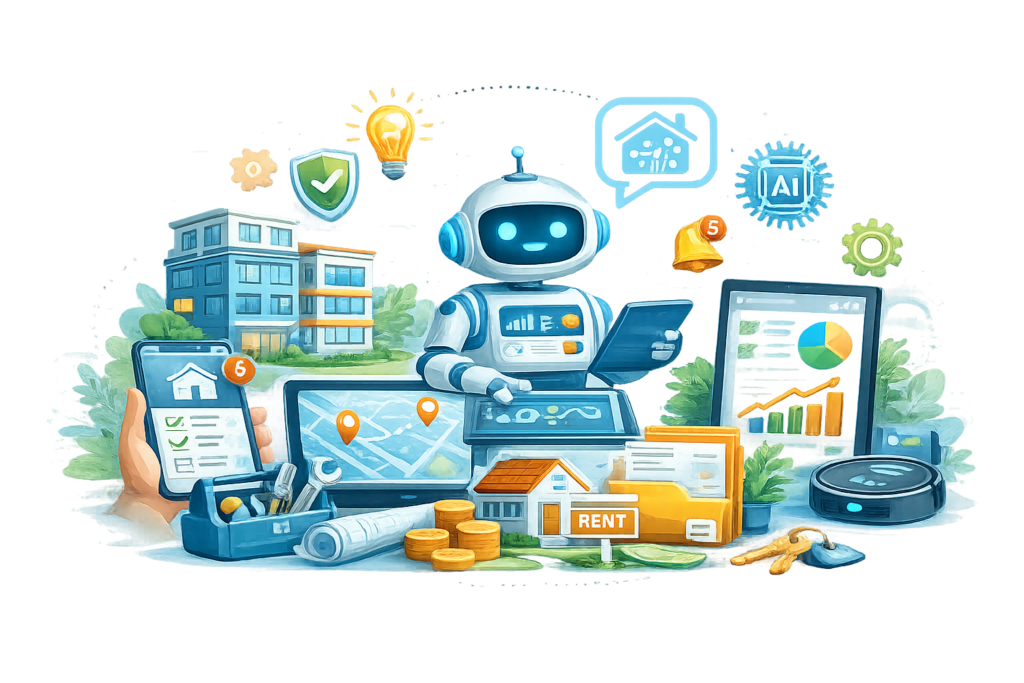
Managing residential, commercial, and mixed-use properties involves far more than collecting rent or scheduling inspections. Property managers are expected to respond quickly to maintenance requests, coordinate with contractors, keep tenants informed, manage emergencies, and maintain accurate service records. As property portfolios continue to grow, handling these responsibilities manually becomes increasingly difficult. A Property Maintenance Chatbot provides an intelligent solution by automating communication, organizing maintenance workflows, and delivering instant assistance around the clock.
At EngagerBot, businesses are embracing AI-powered chatbots to simplify property operations while improving customer satisfaction. Whether tenants need to report a leaking pipe, schedule HVAC servicing, request electrical repairs, or check the status of a maintenance ticket, an AI chatbot can respond immediately, gather essential information, and initiate the appropriate workflow without requiring staff intervention.
Modern property maintenance chatbots use artificial intelligence, natural language processing, workflow automation, and CRM integrations to transform how maintenance teams operate. They reduce administrative workloads, shorten response times, improve communication, and help property managers deliver a consistently better service experience. Combined with guidance from Google Search Central, Google Business Profile, Cloudflare, and OWASP, organizations can also maintain secure, accessible, and trustworthy digital experiences while supporting long-term operational excellence.
Why Property Maintenance Chatbots Are Transforming Modern Property Management
The property management industry has changed dramatically over the past decade. Tenants expect immediate communication, transparent updates, and fast maintenance resolutions. Traditional phone calls, paper forms, voicemail systems, and delayed email responses often create frustration and unnecessary delays. A Property Maintenance Chatbot addresses these challenges by serving as a digital assistant that remains available twenty-four hours a day, seven days a week.
Instead of waiting for office hours, tenants can instantly report maintenance issues through websites, mobile applications, social messaging platforms, or resident portals. The chatbot asks intelligent follow-up questions, identifies the urgency of the problem, collects images or videos, verifies property details, and automatically creates maintenance tickets. This structured information enables maintenance teams to begin work sooner while reducing communication errors.
Beyond simple request collection, AI-powered chatbots continuously improve operational efficiency. They automatically categorize maintenance issues, prioritize emergencies, assign jobs to appropriate technicians, notify contractors, send appointment confirmations, and keep residents informed throughout the repair process. Managers gain access to centralized reporting, historical maintenance records, response-time analytics, and recurring issue identification. These insights support smarter budgeting, preventive maintenance planning, and better decision-making. Organizations that embrace automation often experience improved tenant satisfaction, lower operational costs, higher staff productivity, and stronger long-term property performance.
How AI Powers Intelligent Property Maintenance Chatbots
Artificial Intelligence enables modern chatbots to understand natural conversations rather than relying on rigid decision trees. Advanced Natural Language Processing (NLP) allows tenants to communicate using everyday language such as “My kitchen sink is leaking,” “The air conditioner stopped working,” or “The hallway lights are flickering.” The chatbot interprets intent, extracts relevant information, and guides users through an efficient reporting process without requiring technical knowledge.
Machine learning continually improves chatbot performance by analyzing previous interactions and identifying patterns. Over time, the system recognizes recurring maintenance issues, seasonal service demands, frequently asked questions, and common tenant concerns. This enables property managers to anticipate maintenance needs, optimize staffing, and improve resource allocation before problems become widespread.
AI also supports predictive maintenance strategies. Instead of reacting only after equipment fails, chatbots integrated with IoT sensors and building management systems can monitor HVAC units, elevators, plumbing systems, generators, and electrical infrastructure. When abnormal readings appear, automated alerts trigger inspections before costly failures occur. Predictive maintenance reduces downtime, extends equipment lifespan, improves safety, and minimizes unexpected repair expenses, making AI an essential component of modern property management.
Core Features Every Property Maintenance Chatbot Should Include
An effective Property Maintenance Chatbot should offer much more than simple question-and-answer functionality. It should become a central communication hub connecting tenants, maintenance teams, contractors, and property managers through automated workflows that simplify every stage of maintenance management.
Essential capabilities include intelligent maintenance request submission, automated ticket creation, appointment scheduling, real-time repair tracking, emergency reporting, contractor coordination, image and video uploads, multilingual communication, automated reminders, resident notifications, digital documentation, payment integrations where applicable, satisfaction surveys, and knowledge base support. These features significantly reduce manual administrative work while ensuring accurate documentation and consistent communication throughout every repair cycle.
Integration capabilities are equally important. Modern chatbots should seamlessly connect with property management software, CRM platforms, maintenance management systems (CMMS), calendars, communication platforms, inventory systems, accounting software, and cloud storage. Integration eliminates duplicate data entry, improves operational visibility, and enables managers to monitor maintenance performance from a unified dashboard. As technology continues to evolve, these integrations will become increasingly valuable for organizations seeking scalable, data-driven property operations.
Benefits of Property Maintenance Chatbots for Property Managers
Property managers often spend a significant portion of their day responding to repetitive inquiries, assigning maintenance tasks, updating tenants, coordinating contractors, and managing documentation. A Property Maintenance Chatbot automates these routine responsibilities, allowing managers to focus on strategic planning, tenant relationships, property improvements, and long-term asset management.
Automation dramatically reduces response times. Instead of waiting for office staff to answer calls or emails, tenants receive immediate confirmation that their request has been received. The chatbot gathers complete information during the first interaction, minimizing follow-up conversations and preventing incomplete maintenance requests. Faster reporting leads to quicker repairs, improved tenant satisfaction, and fewer unresolved issues.
Operational efficiency also improves through automated scheduling, contractor coordination, workflow routing, and centralized reporting. Managers gain visibility into repair timelines, technician workloads, maintenance costs, recurring issues, and service performance metrics. Historical data supports informed budgeting decisions while helping identify opportunities for preventive maintenance programs. Reduced administrative overhead, improved communication accuracy, increased productivity, enhanced compliance documentation, and stronger tenant trust collectively contribute to better financial performance and more successful property management operations.
Enhancing Tenant Experiences Through AI-Powered Communication
Tenant satisfaction depends heavily on communication quality. Delayed responses, uncertain repair timelines, and inconsistent updates often lead to frustration even when repairs are completed successfully. Property Maintenance Chatbots address this challenge by providing continuous communication from the moment a maintenance issue is reported until the repair has been completed and verified.
Residents appreciate immediate responses regardless of business hours. Whether reporting an emergency plumbing leak late at night or requesting appliance maintenance during a weekend, the chatbot acknowledges the request instantly and begins collecting relevant details. Automated status updates reassure tenants that progress is being made while reducing the need for follow-up calls and emails.
Personalization further enhances the tenant experience. AI chatbots recognize returning residents, access maintenance history, remember communication preferences, and provide customized recommendations based on previous interactions. They can remind tenants about scheduled inspections, preventive maintenance appointments, seasonal safety checks, and community announcements. By combining automation with personalized communication, property managers build stronger tenant relationships, increase lease renewal rates, improve online reviews, and create more positive residential experiences.
Automating Maintenance Requests from Start to Finish
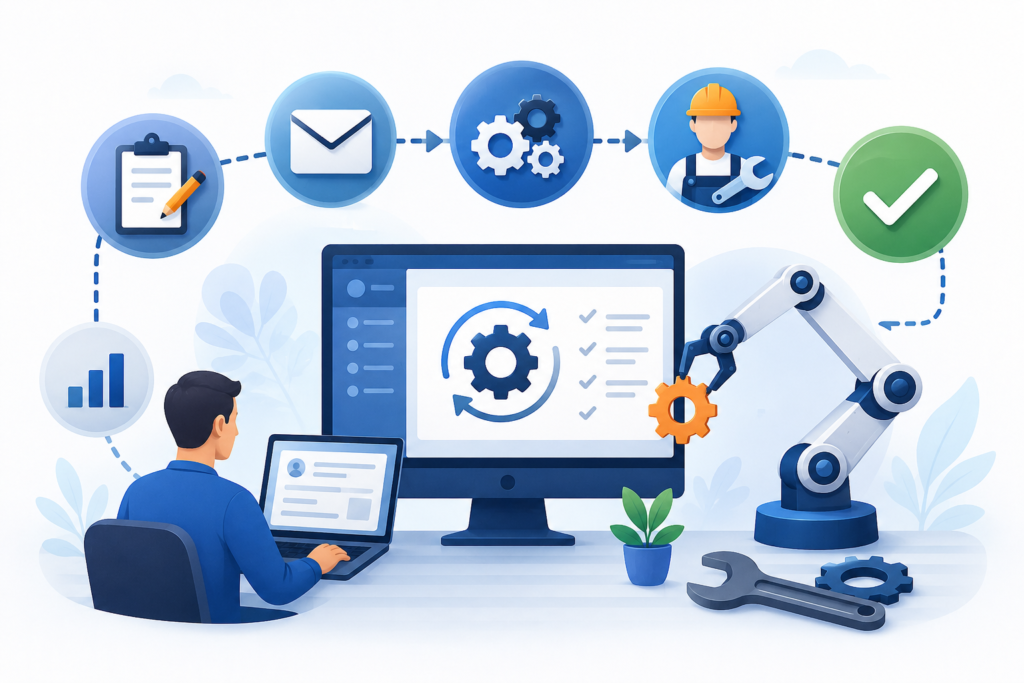
Maintenance request automation represents one of the most valuable applications of Property Maintenance Chatbots. Rather than relying on manual phone calls, paper forms, spreadsheets, or fragmented email conversations, AI creates a standardized digital workflow that improves both efficiency and accountability throughout the maintenance lifecycle.
The automation process begins when tenants report an issue. The chatbot asks targeted questions regarding location, severity, equipment involved, preferred appointment times, and supporting photos or videos. Based on predefined business rules, requests are automatically categorized according to maintenance type and urgency. Emergency issues such as gas leaks or flooding receive immediate escalation, while routine requests enter standard scheduling workflows.
Once submitted, the chatbot continues coordinating every stage of the repair process. It assigns technicians, confirms appointments, sends reminders, updates residents about technician arrival times, records completed work, requests satisfaction feedback, and archives maintenance documentation for future reference. Managers benefit from complete visibility into repair progress, response times, technician performance, recurring maintenance trends, and operational efficiency metrics. End-to-end automation not only accelerates repairs but also establishes consistent service standards that improve both tenant confidence and long-term property maintenance performance.
Using Property Maintenance Chatbots for Preventive Maintenance
Preventive maintenance is one of the most effective ways to reduce costly repairs, extend the lifespan of building assets, and improve tenant satisfaction. Instead of waiting for equipment failures, a Property Maintenance Chatbot helps property managers proactively schedule inspections, remind maintenance teams about recurring tasks, and notify tenants of upcoming service appointments. This approach minimizes downtime while ensuring buildings remain safe, efficient, and compliant with maintenance standards.
Artificial intelligence analyzes historical maintenance records and identifies recurring issues before they become major problems. For example, if HVAC systems require servicing every six months or fire safety equipment must be inspected quarterly, the chatbot automatically schedules reminders and generates maintenance tickets. When integrated with IoT devices, the chatbot can even detect unusual equipment behavior and alert maintenance staff before failures occur. Following recommendations from Google Search Central for user-focused digital experiences and OWASP Top 10 security practices also helps organizations build reliable and trustworthy digital maintenance platforms.
Preventive maintenance automation also supports long-term budgeting and operational planning. Managers gain valuable insights into repair frequency, equipment replacement cycles, contractor performance, and maintenance costs. Rather than reacting to emergencies, organizations can allocate resources strategically, reduce unexpected expenses, improve property value, and deliver a consistently better experience for tenants. The result is a maintenance operation that is more predictable, efficient, and financially sustainable.
Integrating Property Maintenance Chatbots with Property Management Software
A chatbot delivers its greatest value when it connects seamlessly with the systems property managers already use every day. Integration eliminates repetitive manual work while ensuring that maintenance requests, tenant information, service histories, and operational reports remain synchronized across every platform.
Modern Property Maintenance Chatbots integrate with Property Management Systems (PMS), Customer Relationship Management (CRM) platforms, Computerized Maintenance Management Systems (CMMS), accounting software, scheduling applications, cloud storage, email platforms, SMS gateways, and communication tools. As soon as a tenant submits a maintenance request, the chatbot automatically creates a work order, assigns the appropriate technician, updates the tenant profile, and records every interaction for future reference.
These integrations also improve reporting accuracy. Managers can monitor technician response times, maintenance completion rates, recurring property issues, contractor efficiency, maintenance expenses, and tenant satisfaction from a centralized dashboard. Security remains equally important, making it beneficial to follow guidance from Helpful Content System, Google Search Essentials, and Cloudflare Learning Center when developing secure, high-performing digital property management solutions.
Common Mistakes Businesses Make When Implementing Property Maintenance Chatbots
Although Property Maintenance Chatbots provide substantial operational advantages, implementation mistakes can reduce their effectiveness. Many organizations focus only on automation while overlooking user experience, system integration, staff training, and continuous optimization. Avoiding these mistakes significantly improves long-term success.
One common mistake is creating overly complicated conversation flows. Tenants expect simple and intuitive interactions, especially when reporting urgent maintenance issues. Asking too many unnecessary questions can frustrate users and increase abandonment rates. Another mistake is failing to integrate the chatbot with existing maintenance management software. Without integration, employees must manually transfer information between systems, reducing efficiency and increasing the likelihood of errors.
Organizations also frequently neglect chatbot maintenance after deployment. AI systems require ongoing updates, knowledge base improvements, workflow refinements, and performance monitoring to remain effective. Ignoring analytics prevents businesses from identifying conversation bottlenecks, frequently asked questions, or emerging maintenance trends. Finally, insufficient cybersecurity protections expose sensitive tenant information to unnecessary risks. Following recommendations from NIST Cybersecurity Framework and OWASP helps strengthen data protection while maintaining user trust.
Best Practices for Building a Successful Property Maintenance Chatbot
A successful Property Maintenance Chatbot combines artificial intelligence with thoughtful planning, user-centered design, secure technology, and continuous improvement. Organizations should begin by identifying their most common maintenance workflows and automating repetitive tasks that consume valuable staff time. Prioritizing high-impact use cases ensures faster returns on investment while improving both tenant and employee experiences.
Conversation design plays an essential role in chatbot success. Responses should be clear, concise, and conversational while collecting all information necessary to resolve maintenance issues efficiently. Providing options for image uploads, emergency reporting, appointment scheduling, and live agent escalation ensures users receive appropriate support regardless of request complexity. Testing conversations regularly with real users helps identify opportunities for refinement and improved usability.
Continuous optimization should become part of everyday operations. Managers should monitor chatbot analytics, tenant satisfaction scores, maintenance completion rates, response times, and conversation success metrics. Regular software updates, AI model improvements, security assessments, and workflow enhancements help maintain long-term effectiveness. Organizations that continuously improve their chatbot capabilities position themselves to deliver exceptional maintenance services while supporting sustainable business growth.
Future Trends Shaping Property Maintenance Chatbots
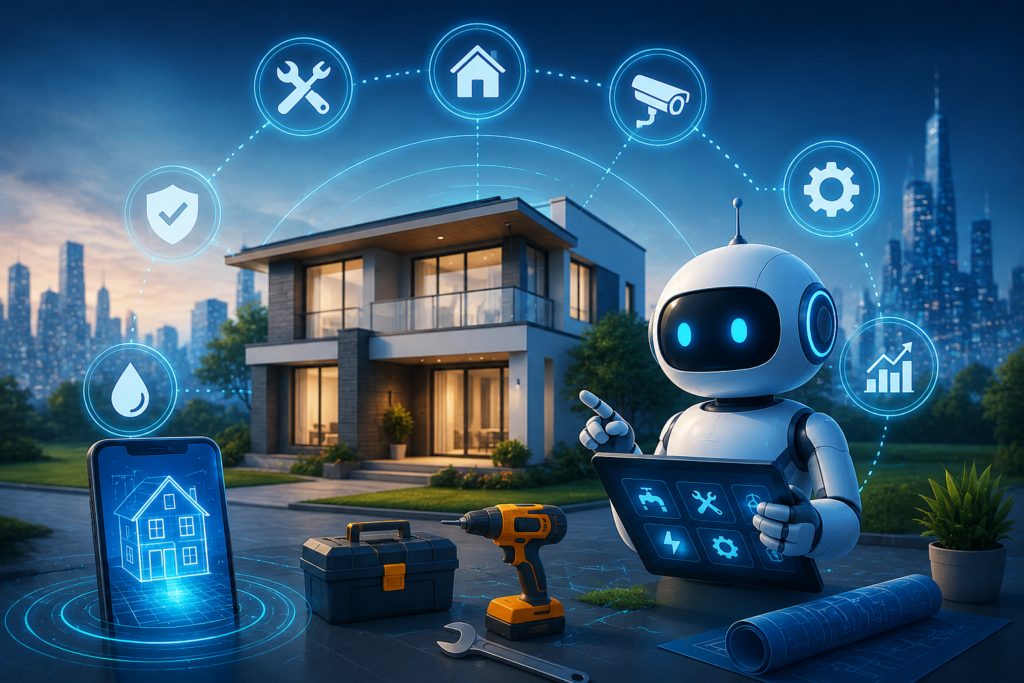
Artificial intelligence continues to evolve rapidly, bringing new opportunities for property management organizations. Future Property Maintenance Chatbots will become even more intelligent through advanced predictive analytics, voice recognition, computer vision, IoT integration, and autonomous workflow automation. These innovations will reduce manual effort while delivering increasingly personalized tenant experiences.
Predictive AI will identify equipment failures before they occur by analyzing sensor data, maintenance histories, weather conditions, and operational performance. Voice-enabled assistants will allow tenants to report maintenance issues naturally using smart speakers or mobile devices. Computer vision technology will analyze uploaded images to identify damage severity automatically and recommend appropriate repair actions. These capabilities significantly accelerate maintenance assessments while improving diagnostic accuracy.
Integration with smart buildings will further transform maintenance operations. AI systems will monitor energy usage, indoor air quality, lighting systems, elevators, plumbing infrastructure, and security equipment continuously. Automated workflows will generate maintenance requests before occupants even notice potential issues. As these technologies mature, Property Maintenance Chatbots will become indispensable digital assistants that help organizations reduce costs, improve sustainability, enhance tenant satisfaction, and optimize every aspect of property management.
Frequently Asked Questions
1. What is a Property Maintenance Chatbot?
A Property Maintenance Chatbot is an AI-powered virtual assistant that helps property managers, landlords, maintenance companies, and facility management teams automate maintenance requests, answer tenant questions, schedule repairs, assign work orders, and provide real-time updates. Instead of relying solely on phone calls or emails, tenants can communicate with the chatbot 24/7 through websites, mobile apps, or messaging platforms, resulting in faster response times and improved customer satisfaction.
2. How does a Property Maintenance Chatbot improve maintenance operations?
The chatbot streamlines the entire maintenance workflow by collecting accurate information, creating maintenance tickets automatically, assigning tasks to technicians, scheduling appointments, sending reminders, and notifying tenants when repairs are complete. This reduces administrative workload, minimizes human error, improves response times, and helps maintenance teams work more efficiently.
3. Can Property Maintenance Chatbots handle emergency maintenance requests?
Yes. Modern AI chatbots can identify emergency situations such as flooding, gas leaks, electrical hazards, broken security doors, or fire-related incidents. These requests are automatically prioritized, immediately routed to the correct maintenance personnel, and tenants receive instant confirmation that emergency procedures have been initiated.
4. Can the chatbot integrate with existing property management software?
Absolutely. Most enterprise Property Maintenance Chatbots integrate with:
- Property Management Systems (PMS)
- CRM platforms
- Maintenance Management Software (CMMS)
- Calendar applications
- Email systems
- SMS gateways
- Payment platforms
- Cloud storage
- Business intelligence dashboards
These integrations eliminate duplicate data entry while improving reporting accuracy and operational efficiency.
5. Is a Property Maintenance Chatbot secure?
Yes, provided it follows modern cybersecurity best practices. Businesses should implement encryption, secure authentication, role-based access controls, regular software updates, and vulnerability monitoring. Following guidance from OWASP Top 10, NIST Cybersecurity Framework, and Google Search Essentials helps create secure and trustworthy digital experiences.
6. Can small property management businesses benefit from AI chatbots?
Yes. AI chatbots are scalable and suitable for businesses managing a few properties or thousands of units. Smaller companies particularly benefit because chatbots reduce staffing requirements, automate repetitive administrative tasks, improve tenant communication, and allow teams to focus on higher-value activities without significantly increasing operating costs.
7. Do Property Maintenance Chatbots replace human staff?
No. Their purpose is to assist—not replace—maintenance teams and property managers. Chatbots automate repetitive tasks while allowing staff to focus on complex maintenance issues, inspections, contractor management, strategic planning, and building stronger tenant relationships. Human agents remain available whenever specialized assistance is required.
8. What is the future of AI in property maintenance?
Artificial intelligence will continue advancing through predictive maintenance, IoT integration, voice assistants, smart building automation, computer vision, and advanced analytics. Future Property Maintenance Chatbots will proactively detect equipment failures, automate maintenance scheduling, improve energy efficiency, and deliver increasingly personalized tenant experiences while helping organizations reduce operational costs.
Best Practices Summary
A successful Property Maintenance Chatbot should focus on solving real maintenance challenges rather than simply answering questions. Organizations should automate repetitive maintenance workflows, integrate with existing property management systems, prioritize cybersecurity, continuously monitor chatbot analytics, and regularly update AI knowledge bases to improve performance.
Businesses should also design simple conversational experiences that guide tenants efficiently through maintenance reporting while providing easy access to human assistance whenever needed. Regular employee training, workflow optimization, predictive maintenance strategies, and performance measurement ensure long-term success.
By combining artificial intelligence, workflow automation, predictive analytics, and secure technology, organizations can significantly improve maintenance operations, increase tenant satisfaction, reduce operational expenses, and create scalable property management processes that support future business growth.
Conclusion
A Property Maintenance Chatbot has become an essential technology for modern property management organizations seeking to improve operational efficiency, automate maintenance workflows, and deliver exceptional tenant experiences. From maintenance request automation and preventive maintenance scheduling to intelligent contractor coordination and real-time communication, AI-powered chatbots simplify every stage of the maintenance lifecycle while reducing administrative workloads and operational costs.
At EngagerBot, businesses can leverage advanced AI chatbot solutions to modernize property maintenance operations, improve tenant engagement, streamline communication, and create scalable automation strategies that support sustainable long-term growth. As artificial intelligence continues to evolve, organizations that invest in intelligent maintenance automation today will be better positioned to deliver faster service, stronger customer satisfaction, and more efficient property management in the years ahead.
Want to Implement This Easily?
Prompt
You are an expert consultant. Based on the blog post titled “Property Maintenance Chatbot”, provide a step-by-step, practical implementation guide. Include tools, best practices, common mistakes to avoid, and advanced tips. Assume the reader wants to implement everything discussed in this article effectively.
Call to Action
Want our help implementing this? Just reach out to us via our website contact form: