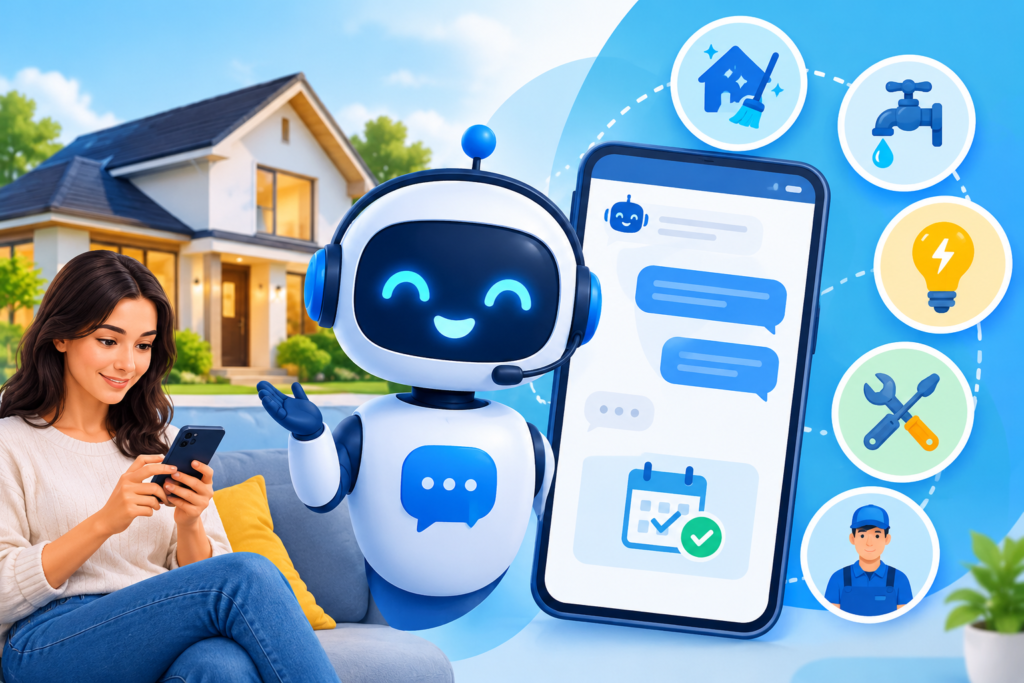
A Home Service Chatbot helps home service businesses capture leads, answer customer questions, qualify prospects, schedule appointments, provide service information, and improve customer support around the clock. This complete guide explains how home service chatbots work, their benefits, use cases, implementation strategies, common mistakes, and best practices for creating a reliable conversational customer experience.
Introduction
Home service businesses operate in an industry where speed, reliability, communication, and trust can strongly influence purchasing decisions. When a homeowner discovers a leaking pipe, a broken air conditioner, an electrical problem, a damaged roof, a pest issue, or an appliance that suddenly stops working, they usually want assistance quickly. They may not have time to browse through multiple service pages, complete a long contact form, or wait until the next business day for an answer.
A Home Service Chatbot can help remove some of that friction by giving visitors an immediate conversational channel. Instead of forcing customers to figure out which page contains the information they need, the chatbot can ask what they are looking for, identify the relevant service, collect important details, answer common questions, and guide the visitor toward an appropriate next step. For businesses using Engagerbot, the goal should not simply be to add an automated chat window to a website. The goal should be to create a useful digital assistant that supports customers throughout their journey.
A well-designed chatbot can assist with lead generation, appointment requests, service discovery, quote preparation, frequently asked questions, customer support, and follow-up communication. It can remain available when staff are busy or outside normal operating hours, allowing businesses to capture inquiries that might otherwise disappear. However, automation should never be confused with replacing professional expertise. The chatbot should recognize its limitations, provide transparent information, and transfer customers to people whenever the situation requires human judgment.
This customer-first approach also aligns with the principles described in Google Search Central, where Google emphasizes creating helpful, reliable, people-first experiences rather than producing content primarily for search manipulation. Google Search Central A similar philosophy should guide chatbot development: automation should make the customer experience easier, clearer, and more useful.
The most successful Home Service Chatbot strategy therefore combines conversational technology with accurate business information, thoughtful workflows, clear escalation paths, and continuous improvement. When these elements work together, a chatbot can become a practical digital front desk that helps customers move from an initial question toward a meaningful action.
What Is a Home Service Chatbot?
A Home Service Chatbot is a conversational software solution designed to help customers interact with businesses that provide residential, property maintenance, repair, installation, or improvement services. Depending on the company, it can support plumbers, electricians, HVAC contractors, roofers, cleaners, landscapers, pest control companies, appliance repair businesses, locksmiths, handymen, remodeling contractors, maintenance providers, and many other home service professionals.
Traditional websites generally depend on navigation. Customers are expected to find a service page, locate a phone number, complete a contact form, or search through a frequently asked questions section. A chatbot changes this model by allowing visitors to communicate directly through a conversational interface. Instead of searching for information manually, customers can explain what they need in ordinary language and receive guided assistance.
For example, a homeowner might type, “My air conditioner is running but the house is still hot.” The chatbot could identify that the visitor is probably looking for HVAC assistance and ask a few appropriate questions before presenting the next available action. It might ask whether the problem affects the entire home, whether the system is producing airflow, or whether the customer wants to request service. The chatbot should not claim to have diagnosed the equipment unless a qualified professional has actually performed a diagnosis.
This distinction is essential because home service issues can involve safety, property damage, and technical complexity. A chatbot should support communication rather than pretend to replace an inspection. When a problem involves potentially dangerous electrical work, gas, major structural damage, flooding, or another urgent condition, the conversation should prioritize safety and appropriate professional assistance.
The chatbot can also function as a digital receptionist. It can answer basic questions about operating hours, service areas, appointment procedures, service categories, maintenance plans, and general policies. It can collect information from prospective customers and route more complicated requests to the appropriate human team.
Another important feature is contextual conversation. If a customer has already explained that they need plumbing assistance, the chatbot should not repeatedly ask the same question. It should remember relevant information during the conversation and use it to make subsequent questions more efficient.
A modern Home Service Chatbot can therefore support several stages of the customer lifecycle. It can attract and qualify prospects before booking, help customers request appointments, provide information after a booking, and direct existing customers toward support.
The objective is not to make the chatbot appear artificially intelligent. The objective is to make the customer’s journey faster, clearer, and easier.
Why Home Service Businesses Need Conversational Automation
The home service industry has a particularly strong need for fast communication because many customer inquiries are connected to immediate problems. A homeowner dealing with a clogged drain, heating failure, broken appliance, pest infestation, or urgent maintenance issue may contact several providers at the same time. The business that responds quickly and clearly can have a significant advantage.
Traditional communication methods can introduce delays. A visitor may submit a contact form and wait for a response. They may call outside business hours and reach voicemail. They may search through a website and still remain uncertain about which service they actually need. Every unnecessary step can create friction.
Conversational automation provides another option. A chatbot can respond immediately to common questions and begin collecting information even when human representatives are unavailable. This does not mean that the business must provide 24-hour technician availability. Instead, the chatbot can clearly explain when the team operates, capture the inquiry, and tell the customer when they should expect a response.
This distinction between 24/7 communication and 24/7 service availability is extremely important. A trustworthy chatbot should never tell a customer that an emergency technician is available if the company does not actually offer that service.
Conversational automation can also improve lead qualification. A traditional form may ask for a name, phone number, and email address. A chatbot can gather additional information in a conversational manner. Depending on the business, this could include service type, property location, project size, urgency, preferred appointment period, property type, and a brief description of the problem.
That information can help employees understand the customer’s situation before they make contact.
Consider the difference between these two inquiries:
Inquiry A: “John — 555-1234 — plumbing.”
Inquiry B: “Sarah needs help with a leaking kitchen pipe at a residential property. The leak is small but continuous. She lives within the service area and would prefer an appointment tomorrow afternoon.”
The second inquiry gives the service team significantly more context.
However, businesses should not turn the chatbot into an unnecessarily long questionnaire. Customers should not have to answer fifteen questions before they can reach a person. The best conversational workflows collect information progressively, asking only what is relevant to the next step.
Businesses should also evaluate automation according to meaningful outcomes. A chatbot that generates hundreds of low-quality conversations may not be useful. A chatbot that generates fewer but highly qualified appointment requests may deliver much greater business value.
The purpose of conversational automation is therefore not simply to generate more conversations. It is to create better customer journeys and more useful interactions.
Key Use Cases for a Home Service Chatbot
A Home Service Chatbot can support many different areas of a home service business. One of the most valuable applications is lead capture and qualification. When visitors arrive with an intention to purchase or request assistance, the chatbot can guide them toward providing the information necessary for a useful follow-up.
For example, a roofing business might ask whether the visitor needs a repair, inspection, maintenance, or replacement. A cleaning company might ask whether the customer needs a one-time deep clean or recurring service. A landscaping business could ask about lawn maintenance, garden design, seasonal cleanup, or larger outdoor projects. These questions help customers identify the appropriate path without requiring them to understand the company’s internal service structure.
Another major use case is appointment scheduling. The chatbot can collect the information needed for a booking and, when supported by an actual scheduling integration, help customers choose appropriate appointment options. If real-time availability is not connected, the chatbot should collect the customer’s preferred time and explain that the service team will confirm availability.
Frequently asked questions are another natural use case. Customers regularly ask about service areas, operating hours, appointment procedures, payment options, warranties, maintenance plans, preparation instructions, emergency availability, and general service information. Automating these repetitive questions can reduce the workload placed on customer service staff.
A chatbot can also assist with service discovery. Customers do not always know what service category they need. Someone might say, “There is water coming from under my sink.” Instead of requiring the visitor to decide whether they need leak repair, plumbing maintenance, or another category, the chatbot can gather basic information and guide them toward the appropriate professional service.
Quote requests are another useful application. A chatbot can collect preliminary project information before the business prepares an estimate. For a cleaning company, this could involve property size and service frequency. For landscaping, it could include the type of work required and the approximate property area. For remodeling, the chatbot could collect project scope, desired timeline, property location, and other relevant information.
However, the chatbot must distinguish between collecting information for a quote and providing a professional quotation. Many home service jobs require inspection or detailed assessment before a reliable price can be established.
Customer support can also be improved through conversational automation. Existing customers may need information about appointment preparation, service procedures, contact options, maintenance recommendations, or what to expect after submitting a request.
Finally, chatbots can support follow-up workflows. Once a customer has submitted an inquiry, the system can provide confirmation, explain the next step, or route the customer to the correct department.
Together, these use cases transform a chatbot from a simple question-answering tool into a broader customer communication platform.
How a Home Service Chatbot Improves Lead Generation
Lead generation is one of the strongest reasons businesses implement conversational technology. Website traffic alone does not guarantee revenue. A visitor must be able to move smoothly from interest to action.
A chatbot can make this transition more natural. Instead of forcing visitors to locate a contact form, the chatbot can provide a simple conversational starting point. It might ask whether the visitor needs help choosing a service, requesting an estimate, scheduling an appointment, or contacting the business.
Once the visitor starts a conversation, the chatbot can gradually qualify the opportunity. It can ask questions relevant to the selected service instead of presenting the same generic form to everyone.
For example, a customer seeking HVAC assistance may be asked whether they need installation, repair, maintenance, or replacement. A customer looking for cleaning assistance may be asked about property size, service frequency, and preferred schedule.
This is called progressive qualification, and it can reduce the amount of information customers must provide at one time.
A conversational lead workflow could look like this:
Customer: “I need someone to fix a leaking bathroom pipe.”
Chatbot: “I can help you get started. Is the leak causing significant water flow or property damage?”
Customer: “No, but it keeps dripping.”
Chatbot: “Thanks. What area do you need service in?”
Customer: “North side.”
Chatbot: “Thanks. I can collect your contact details and preferred appointment time so the service team can follow up.”
The conversation feels more natural than a long form because each question has a clear purpose.
A chatbot can also capture leads outside normal business hours. A customer who visits a website at 10:00 p.m. may not want to wait until morning to submit an inquiry. If the chatbot can capture the request and clearly explain when the business will respond, the opportunity remains available.
However, businesses should be careful not to measure success only by lead quantity. A large number of poorly qualified inquiries can overwhelm staff. Instead, businesses should monitor metrics such as qualified lead rate, appointment requests, completed bookings, lead-to-customer conversion, and customer satisfaction.
Another benefit is improved information quality. A representative receiving a structured inquiry can immediately understand what the customer wants rather than beginning the conversation with basic discovery questions.
This can shorten response time and improve the professionalism of the interaction.
The best lead-generation chatbot therefore does not aggressively push every visitor toward a form. It identifies intent, provides useful assistance, and creates a natural path toward conversion.
Creating a Better Customer Experience With Conversational Design
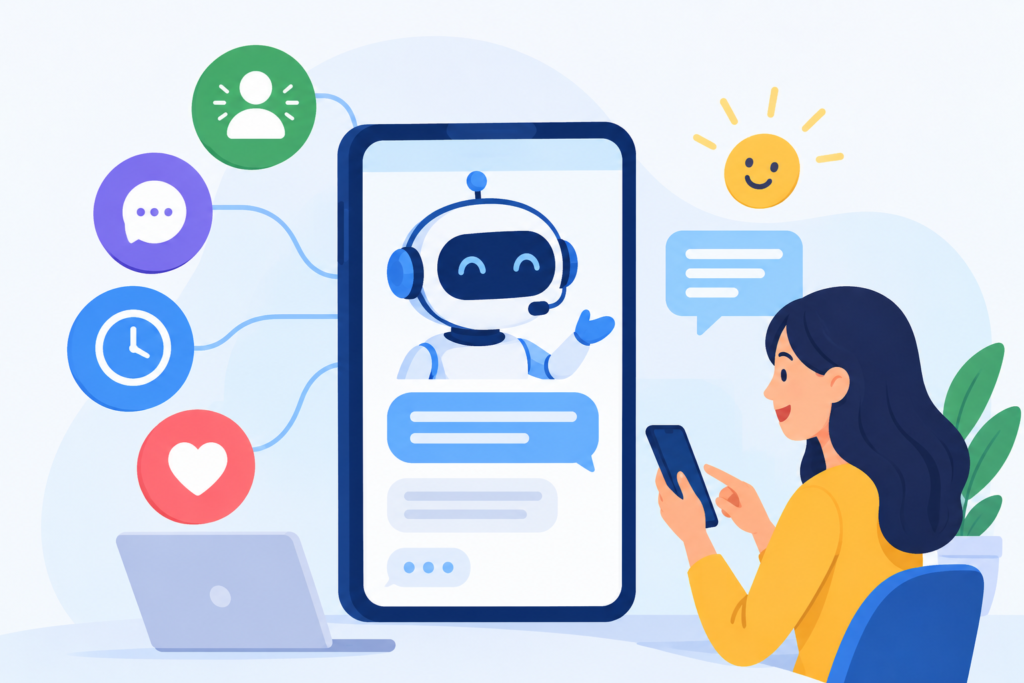
A successful chatbot should feel simple. Customers should not need to understand chatbot technology to use it effectively. They should be able to explain what they need and receive a clear next step.
Conversational design begins with identifying the most common customer intents. A home service customer may want to book an appointment, request a quote, determine which service they need, ask a question, check whether the company serves their area, or speak with a representative.
These options can be presented clearly:
- Book a Service
- Request a Quote
- Find the Right Service
- Ask a Question
- Speak With Someone
Providing a small number of obvious choices can help visitors understand what the chatbot can do.
Language should also be natural and direct. Instead of saying:
“Please select the applicable service classification from the available options.”
A better message would be:
“What do you need help with?”
The second version is shorter, clearer, and more conversational.
Good chatbot design also avoids unnecessary repetition. If a customer has already identified the service category, the system should retain that information throughout the conversation.
Error handling is equally important. Customers may type incomplete information or describe their problem using unexpected terminology. The chatbot should respond helpfully rather than displaying technical error messages.
For example:
“I’m not sure I understood that. Are you looking for a repair, installation, maintenance, or something else?”
This keeps the conversation moving.
The chatbot should also provide a clear human escalation option. Not every question can be answered effectively through automation. Some customers will have complex situations, existing complaints, unusual project requirements, or questions that require professional judgment.
Giving customers access to human support can actually strengthen trust because it demonstrates that the business understands the limits of automation.
The chatbot should also preserve context. If the customer says they need a plumbing appointment and later provides their preferred day, the system should not ask them to repeat their original request.
Mobile usability is another important consideration. Many home service searches happen when customers are away from a desktop computer. Chatbot messages, buttons, forms, and input fields should therefore be easy to use on smaller screens.
A good conversational experience ultimately depends on one question:
Does the chatbot help the customer make meaningful progress?
If the answer is yes, the technology is serving its purpose.
Integrating Scheduling, Quotes, and Service Requests
Scheduling is one of the most practical applications for a Home Service Chatbot because many website visitors arrive with a specific intention: they want to arrange service.
A complicated booking experience can create unnecessary abandonment. Customers may have to navigate several pages, find a booking system, create an account, select a category, and enter the same information repeatedly.
A conversational process can simplify the journey by asking questions in logical order.
For example:
Step 1: What service do you need?
Step 2: Where is the property located?
Step 3: What is the general issue or project?
Step 4: When would you prefer service?
Step 5: How should the team contact you?
This sequence gives the customer a clear path.
If the chatbot is connected to a scheduling system with genuine real-time availability, it may be possible to show available appointment options. But the chatbot must never invent availability.
If real-time scheduling is unavailable, it should say something such as:
“What day and time would you prefer? Our team will confirm the available appointment.”
That small distinction protects trust.
Quote requests should follow the same principle. The chatbot can gather information that helps the team prepare an estimate, but it should not fabricate an exact price when the job requires inspection.
For example, a cleaning company might be able to provide pricing based on a standardized set of variables. A roofing company, however, may need to inspect roof condition, materials, accessibility, dimensions, and damage before giving a reliable estimate.
The chatbot can explain this difference clearly.
Businesses can also use conversational forms to collect information before an estimator or technician makes contact. This may reduce unnecessary back-and-forth communication and allow staff to begin with a better understanding of the project.
Relevant information could include:
- Service category
- Property type
- Location
- Project description
- Approximate size
- Preferred timeline
- Existing customer status
- Preferred contact method
The information requested should always have a purpose.
After the customer submits a request, the chatbot should explain what happens next. For example, it can confirm that the inquiry was received, explain expected response timing, and identify the appropriate communication channel.
That final confirmation can make a significant difference because customers want reassurance that their request did not disappear into an automated system.
Personalizing Home Service Conversations Without Losing Trust
Personalization can make chatbot interactions significantly more relevant when it is based on information the customer has intentionally provided.
A visitor asking about lawn maintenance should receive a different conversation flow from someone asking about electrical repairs. The chatbot can adapt its questions based on the selected service.
For example, a lawn care customer might be asked whether they need regular maintenance, seasonal cleanup, landscaping, or another service. A plumbing customer might be asked whether the issue concerns a drain, fixture, water heater, leak, or another problem.
This type of service-based personalization can reduce unnecessary questions while helping the customer reach the appropriate outcome more quickly.
Personalization can also use information gathered earlier in the same conversation. If a customer has already identified their location and service type, the chatbot should use that context rather than requesting the same information again.
However, personalization should not become intrusive. Customers should understand why information is being requested.
If the chatbot asks for a phone number because a technician needs to confirm an appointment, it can explain that purpose directly.
Businesses should also avoid false personalization. The chatbot should never imply that a human representative reviewed the customer’s request when nobody actually did. It should not claim that a technician is on the way unless the business has confirmed that information.
Transparency is part of customer trust.
Privacy also matters. A chatbot should collect only information that is genuinely necessary for its intended purpose. Businesses should establish clear rules for what information can be collected, where it is stored, who can access it, and how long it should be retained.
When a chatbot handles account-related or sensitive information, appropriate security controls become even more important. OWASP provides widely used security guidance covering authentication, secure communication, privacy, and other application security concerns. OWASP Authentication Cheat Sheet
For communication involving sensitive information, secure transport should also be considered. OWASP’s guidance emphasizes protecting credentials and sensitive information during transmission. OWASP Web Service Security Cheat Sheet
The goal of personalization should therefore be simple: make the conversation more relevant without making the customer feel watched or pressured.
Building Trust and Safety Into a Home Service Chatbot
Trust is particularly important for home service companies because customers are often allowing professionals into their homes or giving them access to valuable property.
A chatbot contributes to trust when it communicates accurate information, explains limitations, and avoids making unsupported promises.
The first step is to establish a reliable knowledge base. Service descriptions, operating hours, service areas, appointment procedures, policies, and other chatbot information should come from verified business sources.
The information should also be reviewed regularly. Businesses change their hours, expand service areas, modify policies, introduce new services, and update scheduling processes. An outdated chatbot can provide incorrect information even if the original implementation was excellent.
Safety requires additional attention.
A customer might tell the chatbot:
- “I smell gas.”
- “There are sparks coming from the outlet.”
- “Water is flooding the basement.”
- “Part of my ceiling has collapsed.”
- “There is a major electrical problem.”
These situations should not be treated like ordinary service inquiries.
The chatbot should use predefined escalation logic for potentially dangerous situations. It should avoid giving risky instructions and should direct customers toward qualified professionals or appropriate emergency resources when necessary.
The chatbot should also avoid pretending to diagnose complex technical problems. It can collect information and help route the request, but it should not present uncertain conclusions as professional diagnoses.
Businesses should establish clear boundaries for automated responses.
A useful governance checklist includes:
- Review chatbot answers regularly.
- Remove outdated service information.
- Verify operating hours.
- Test appointment workflows.
- Review emergency scenarios.
- Check human escalation paths.
- Monitor unanswered questions.
- Review customer feedback.
- Audit information collection.
- Test integrations after system changes.
This ongoing review is important because chatbot implementation is not a one-time project. It becomes part of the customer communication infrastructure.
Businesses should also avoid building chatbot content purely around search keywords. Google’s Google Spam Policies specifically address scaled content abuse and explain that producing large volumes of low-value content primarily to manipulate rankings can violate spam policies. Google Spam Policies
The same principle is useful when designing automated conversations: quality should matter more than quantity.
A trustworthy chatbot should provide fewer answers that are accurate, relevant, and useful, rather than producing endless automated responses that sound impressive but do not solve the customer’s problem.
Advanced Integrations That Make a Home Service Chatbot More Useful
The real value of a Home Service Chatbot becomes more apparent when it connects with the systems a business already uses. A standalone chatbot can answer questions and collect basic information, but integrations can turn it into a practical operational tool that connects customer conversations with scheduling, customer relationship management, email, analytics, support, and internal workflows.
A useful integration strategy begins with the customer journey rather than the technology. Businesses should first identify what happens after a visitor starts a conversation. If the visitor wants an appointment, where does that request go? If they request a quote, who receives it? If they need human assistance, how is the conversation transferred? If they are an existing customer, how does the team identify the relevant account or service request? Answering these questions before selecting integrations helps prevent unnecessary complexity.
A CRM integration can be particularly valuable for lead management. Instead of leaving customer information inside a chatbot dashboard, qualified leads can be transferred into the company’s existing sales workflow. The record might include the customer’s name, contact details, requested service, location, project description, preferred appointment period, and conversation context. This gives employees useful information before they follow up.
Scheduling integration is another important capability. A business that already uses online appointment software may be able to connect the chatbot to its scheduling workflow. Customers can then move from conversation to appointment with fewer steps. However, businesses should carefully test synchronization, availability rules, cancellation policies, time zones, and confirmation messages before making the workflow live.
Email and notification integrations can also improve response speed. When a high-intent lead completes a chatbot flow, the appropriate team can receive an alert. Internal notifications can include the information required to act without forcing staff to review the entire conversation immediately.
Analytics integration provides another layer of insight. Businesses can track where customers enter the conversation, where they abandon it, which questions they ask most frequently, and which pathways generate appointments or leads.
These integrations should be introduced gradually. A common implementation mistake is attempting to connect every system at once. A better approach is to begin with the most valuable workflow, test it, measure the result, and expand from there.
The objective is not to build the most complicated chatbot possible. It is to create an interconnected system that makes customer communication and business operations more efficient.
Using AI and Automation to Improve Service Qualification
Artificial intelligence can make home service chatbots more flexible because customers rarely describe their needs using standardized terminology. One homeowner may write, “My AC is blowing warm air,” while another may say, “The cooling stopped working upstairs.” Both messages may represent a similar service intent even though the wording is different.
An AI-enabled chatbot can interpret these variations and identify the likely conversation path. This can make the experience more natural than forcing customers to select from a long list of predefined categories.
However, AI should be used with appropriate boundaries. The system should not automatically assume that an uncertain statement represents a specific technical problem. It should use conversational questions to clarify intent when necessary.
For example:
Customer: “My heater is making a strange noise.”
Rather than responding with a technical diagnosis, the chatbot might ask:
Chatbot: “I can help you get the right service started. Is the heater still producing heat, or has it stopped working?”
This approach uses AI to understand the conversation while keeping the outcome grounded in practical service routing.
AI can also help identify lead intent. A visitor asking, “How much does regular lawn maintenance cost?” may be researching, while someone saying, “I need lawn service next week” may have stronger purchase intent. The chatbot can respond differently based on the customer’s stage.
Another opportunity is dynamic questioning. If a customer provides enough information in one message, the chatbot should not ask them to repeat it through separate fields.
For instance:
“I need a deep clean for a three-bedroom house next Saturday.”
This single message already provides several useful details. The system can acknowledge those details and ask only for the missing information required to proceed.
AI can also assist internal teams by summarizing conversations. Instead of a technician reading a long exchange, the system could present a concise summary containing the service category, customer request, location, urgency, and appointment preference.
But businesses should carefully review how AI handles customer information. Access controls, data minimization, secure storage, and appropriate retention policies should be part of the implementation plan.
Businesses should also establish rules for when the AI is allowed to answer independently and when it must escalate.
A practical framework might classify conversations into three levels:
Level 1 — Routine: FAQs, service areas, operating hours, general process information.
Level 2 — Qualified inquiry: Quote requests, appointment requests, service selection, project details.
Level 3 — Sensitive or complex: Safety concerns, complaints, unusual technical issues, disputes, or situations requiring professional judgment.
The chatbot can automate Level 1 heavily, support Level 2 with structured workflows, and route Level 3 to an appropriate human.
This creates a balanced model in which AI increases efficiency without pretending that every customer problem can be solved automatically.
Connecting the Chatbot With Your Website and Customer Journey
A chatbot should not feel disconnected from the rest of a home service website. Its design, language, service categories, calls to action, and information should support the broader customer journey.
The first step is understanding where customers enter the website. Some may arrive on a homepage, while others may land directly on a service page from search results, advertising, social media, or referrals. Their intent can differ depending on the page they visit.
A visitor on a water heater repair page probably does not need a chatbot greeting that focuses primarily on landscaping or general home improvement. The conversation should reflect the surrounding context when appropriate.
Contextual design can therefore improve relevance. A service-specific page can encourage the chatbot to help with that particular category. For example:
“Need help with water heater repair? I can help you request service or answer common questions.”
This is more useful than a generic message.
The chatbot should also complement—not replace—important website information. Businesses should continue maintaining clear service pages, contact information, location information, policies, and other essential content. The chatbot is an additional interaction layer.
This matters for accessibility and usability. Not every visitor will use a chatbot. Some customers prefer reading information, calling directly, or completing a traditional form.
A strong website therefore provides multiple ways to accomplish important tasks.
The chatbot can then serve as an additional path for visitors who prefer conversational assistance.
Calls to action should also be consistent. If the website says “Request an Estimate,” the chatbot should avoid switching between several unrelated terms such as “Get Pricing,” “Start a Quote,” and “Estimate Request” unless there is a meaningful distinction.
Consistency reduces confusion.
The chatbot should also recognize when a customer has already completed an action. If someone has just submitted a quote request, immediately pushing them toward another quote form creates unnecessary friction.
Analytics can help identify where the chatbot provides the most value. Businesses should examine whether customers arriving from specific service pages engage differently from visitors on the homepage.
Over time, these insights can inform broader website improvements.
A well-integrated chatbot therefore becomes part of the website’s overall information architecture and conversion journey rather than an isolated widget.
Improving Home Service Customer Support After the Booking
Customer communication should not stop when an appointment is scheduled. In many home service businesses, customers have questions before the technician arrives, during the service process, and after the work is completed.
A chatbot can support several of these interactions.
Before an appointment, customers may want to know whether someone needs to be present, whether they should move furniture, whether pets should be secured, whether access to equipment is required, or whether specific preparation is recommended.
The chatbot can provide approved preparation instructions based on the service category.
For example, a cleaning appointment may have different preparation requirements from HVAC maintenance. A pest control visit may require customers to follow specific instructions provided by the professional service provider.
The chatbot can also explain general appointment expectations. If the business provides an arrival window rather than a precise time, the chatbot should communicate that accurately.
After the appointment, customers may need information about maintenance, warranty procedures, invoices, payment options, or follow-up support. These workflows can also be routed through conversational assistance.
Existing customers can benefit from self-service options when the questions are straightforward.
For example:
“How can I contact the team about my recent appointment?”
The chatbot can provide the appropriate support channel rather than requiring the customer to search the entire website.
However, customer complaints require special consideration. A customer who is dissatisfied with completed work should have an easy route to a human representative. The chatbot should acknowledge the concern, collect basic information if appropriate, and facilitate escalation rather than attempting to argue with the customer or automatically defend the business.
This is an important example of where automation should support empathy rather than replace it.
The chatbot can also help identify recurring support issues. If customers repeatedly ask about the same post-service problem, the business may need to improve its instructions, website content, technician communication, or service process.
In this way, chatbot conversations become a source of operational insight.
The long-term goal is to create a continuous communication journey:
Discover → Ask → Qualify → Book → Prepare → Receive Service → Follow Up
When automation supports each appropriate stage, customers receive a more consistent experience while employees spend less time answering repetitive questions.
Common Mistakes When Implementing a Home Service Chatbot
One of the most common mistakes is trying to automate everything. Businesses sometimes assume that a chatbot should handle every possible question, transaction, complaint, and technical issue. This creates complicated conversation flows that are difficult to maintain and frustrating for customers.
A better approach is to automate high-volume, predictable tasks first. Frequently asked questions, service discovery, lead capture, appointment requests, and basic routing are usually strong starting points.
Another mistake is creating overly long conversations. Customers should not have to answer a dozen questions before they can request help. Every question should have a clear business or customer purpose.
A third problem is providing outdated information. If the chatbot says that a business operates until 8 p.m. when it actually closes at 6 p.m., the automation damages trust instead of improving it.
Businesses should establish a review process to keep chatbot information current.
Another frequent mistake is inventing prices or appointment availability. If the chatbot does not have access to confirmed pricing or scheduling data, it should not make precise claims.
Similarly, businesses should avoid allowing AI to make technical diagnoses that require professional inspection.
Poor escalation is another serious issue. A customer should never become trapped in an automated loop because the chatbot cannot answer their question. A visible human support option should be available when appropriate.
Businesses also sometimes collect too much information. Asking for unnecessary personal information can create friction and raise privacy concerns.
Another mistake is ignoring mobile users. A chatbot that looks excellent on desktop but requires awkward scrolling or tiny buttons on a phone can lose valuable prospects.
Some businesses also focus on vanity metrics. High conversation volume may look impressive, but the more important question is whether conversations lead to qualified inquiries, bookings, customer satisfaction, and reduced workload.
Finally, businesses sometimes launch a chatbot and never review it again.
That is a mistake because customer questions evolve. New services are introduced, policies change, seasonal demand shifts, and new questions appear.
A reliable chatbot should therefore be treated as an ongoing business optimization project rather than a one-time installation.
Best Practices Summary for a High-Performing Home Service Chatbot
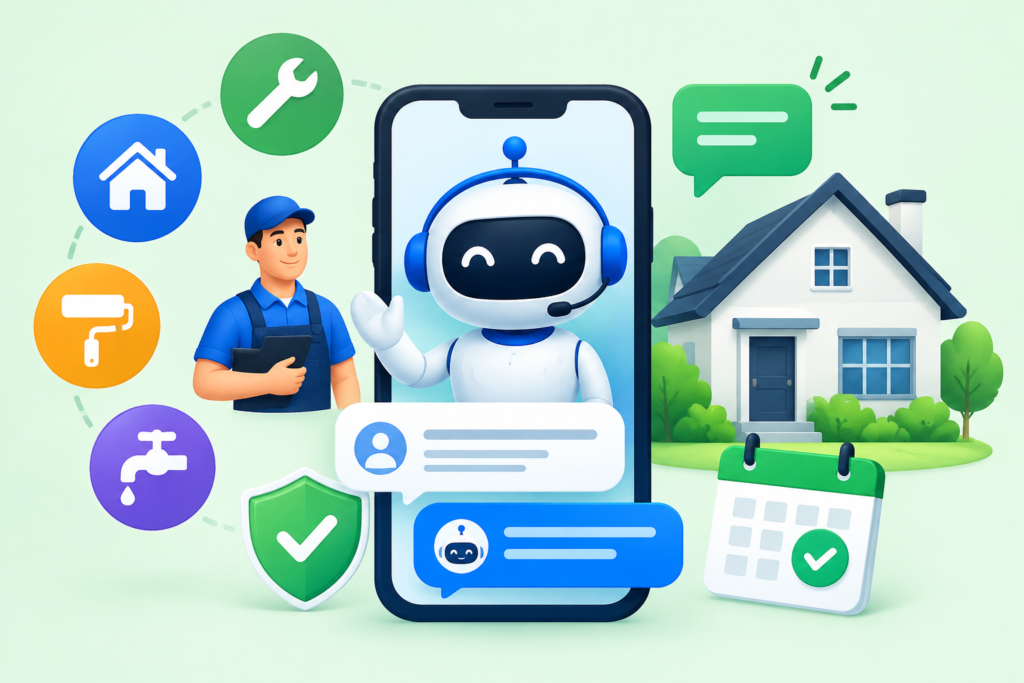
A high-performing Home Service Chatbot begins with a clear purpose. Businesses should identify exactly what the chatbot is expected to accomplish. The goal might be increasing qualified leads, simplifying appointment requests, reducing repetitive customer service questions, improving after-hours inquiry capture, or helping visitors identify the right service.
Once the objective is established, the conversation should be designed around customer intent.
Keep the initial options simple. Use clear language. Ask relevant questions. Avoid unnecessary fields. Preserve conversation context. Provide useful responses quickly.
Businesses should also create a reliable knowledge base. The chatbot should use approved information about services, locations, policies, operating hours, appointment procedures, and other frequently requested details.
Human escalation should be built into the design from the beginning.
Customers should have a clear route to human assistance when the chatbot encounters uncertainty, technical complexity, complaints, sensitive information, or safety-related concerns.
Businesses should also test the chatbot before launch.
Testing should cover:
- Desktop and mobile experiences
- Different service categories
- Unexpected customer questions
- Misspelled words
- Incomplete answers
- Human escalation
- Booking workflows
- Lead notifications
- Confirmation messages
- Out-of-hours conversations
- Error handling
- Privacy and security controls
After launch, analytics should guide improvements.
Review where users abandon conversations. Identify frequently unanswered questions. Compare qualified leads with total conversations. Monitor booking completion. Ask customers whether the chatbot was helpful.
The chatbot should also be reviewed whenever the business changes its services, policies, operating hours, pricing structure, service areas, or scheduling systems.
From a broader digital strategy perspective, businesses should continue creating useful website content rather than expecting the chatbot to solve every information need. Google Search Essentials provides guidance for creating search-friendly websites while maintaining a focus on useful content and sound technical practices. Google Search Essentials
Security should also be part of the implementation process. Organizations handling customer information should review appropriate application security practices and access controls. OWASP Top 10 provides a widely recognized overview of important web application security risks.
The strongest overall strategy can be summarized in five principles:
Useful conversations.
Accurate information.
Simple workflows.
Clear human escalation.
Continuous improvement.
Following these principles gives a Home Service Chatbot a stronger foundation for long-term performance.
Frequently Asked Questions
What is a Home Service Chatbot?
A Home Service Chatbot is an automated conversational system designed to help customers interact with home service businesses. It can answer frequently asked questions, identify service needs, collect lead information, assist with appointment requests, support quote inquiries, and route customers toward human assistance when necessary.
The chatbot can be used by many types of companies, including plumbing businesses, HVAC contractors, electricians, cleaning companies, roofers, landscapers, pest control providers, appliance repair companies, and general home maintenance businesses.
Its value comes from reducing friction between the customer’s initial question and the next useful action.
Can a Home Service Chatbot generate leads?
Yes. A chatbot can generate and qualify leads by asking visitors relevant questions and collecting information such as their name, contact details, service requirements, location, project description, and preferred appointment period.
The most effective approach is progressive qualification. Instead of presenting a long form immediately, the chatbot gathers information conversationally and only asks questions that are relevant to the customer’s request.
Businesses should measure qualified leads rather than focusing solely on total conversations.
Can a chatbot schedule home service appointments?
Yes, when the chatbot is connected to an appropriate scheduling system. Depending on the integration, customers may be able to select available appointment options directly.
If the chatbot does not have access to real-time scheduling information, it should collect the customer’s preferred date and time and clearly explain that the service team must confirm availability.
A chatbot should never claim that an appointment is confirmed unless the business’s scheduling process has actually confirmed it.
Can a Home Service Chatbot provide quotes?
A chatbot can collect information needed to prepare a quote and may provide pricing information when the business has a reliable standardized pricing model.
However, many home service jobs require inspection before an accurate quotation can be produced. In those cases, the chatbot should explain that the final price depends on factors that may need professional assessment.
The chatbot should never create an artificial precise price simply to satisfy the customer.
Should the chatbot replace human customer service?
No. The best implementation uses automation to handle predictable interactions while allowing human employees to handle complex, sensitive, technical, or high-value situations.
Human escalation is particularly important for complaints, unusual project requirements, safety concerns, disputes, and situations requiring professional judgment.
Automation should make employees more efficient rather than remove the human element from customer service entirely.
Is a Home Service Chatbot available 24/7?
A chatbot can generally provide automated communication around the clock, but that does not mean the business provides 24/7 technician availability.
The chatbot should clearly distinguish between automated assistance and actual service availability. Outside business hours, it can answer common questions, capture inquiries, and explain when the team will respond.
If the company offers emergency service, the chatbot should provide only verified emergency procedures.
How much information should a chatbot collect?
The chatbot should collect only the information necessary for the specific customer journey.
For a simple FAQ, no personal information may be needed. For an appointment request, the business may need contact information, service type, location, and preferred scheduling details.
Reducing unnecessary questions generally creates a smoother customer experience.
How can businesses measure chatbot success?
Useful metrics include qualified lead rate, appointment requests, booking completion, quote requests, customer satisfaction, conversation completion, human escalation rate, unanswered questions, and lead-to-customer conversion.
The most valuable metric depends on the business objective.
A chatbot designed primarily for appointment generation should be judged differently from one designed primarily to reduce customer support workload.
Conclusion
A Home Service Chatbot can become a valuable part of a modern home service business when it is designed around real customer needs rather than automation for its own sake. It can help visitors understand available services, capture qualified leads, answer recurring questions, support quote requests, simplify appointment workflows, and provide assistance outside normal operating hours.
The strongest implementations combine automation with human judgment. The chatbot handles predictable conversations efficiently while recognizing when a customer needs a professional, technician, estimator, manager, or support representative.
Successful implementation also depends on accuracy. Business information must remain current. Pricing should be represented honestly. Appointment availability should be based on confirmed data. Safety-related situations should receive appropriate escalation. Customer information should be handled responsibly.
Businesses should also remember that chatbot performance improves over time. Analytics, customer feedback, unanswered questions, abandoned conversations, and conversion data can reveal opportunities for improvement.
A chatbot should therefore be viewed as an evolving customer experience system rather than a one-time website feature.
For businesses looking to create a more responsive digital customer journey, Engagerbot can be part of that strategy by helping transform ordinary website interactions into structured, conversational experiences.
The central principle is simple: use automation to remove friction, not to create distance between the customer and the business.
When customers can quickly explain what they need, receive useful information, request assistance, and reach a real person when necessary, the business creates a stronger foundation for trust, engagement, and long-term customer relationships.
Want to Implement This Easily?
AI Implementation Prompt:
You are an expert consultant. Based on the blog post titled “(Home Service Chatbot)”, provide a step-by-step, practical implementation guide. Include tools, best practices, common mistakes to avoid, and advanced tips. Assume the reader wants to implement everything discussed in this article effectively.
Call to Action:
Want our help implementing this? Just reach out to us via our website contact form: Contact Us