Discover how a Property Maintenance Chatbot can automate maintenance requests, improve tenant communication, organize service workflows, support property managers, and create a more efficient property maintenance experience.
Introduction
Property maintenance involves much more than repairing a damaged fixture or sending a contractor to a property. Property managers, landlords, housing teams, facility coordinators, and maintenance professionals must continuously handle tenant questions, maintenance requests, appointment coordination, repair updates, contractor communication, access arrangements, follow-ups, and documentation. When these responsibilities are managed manually through telephone calls, emails, spreadsheets, and disconnected messaging platforms, even an experienced team can spend a substantial amount of time handling repetitive communication. A Property Maintenance Chatbot provides a practical way to organize and automate many of these interactions while keeping human professionals responsible for decisions that genuinely require expertise and judgment.
A modern property maintenance chatbot can become the first point of contact for routine property-related questions and service requests. A tenant can describe a problem in ordinary language, and the chatbot can ask appropriate follow-up questions to collect the information needed by the maintenance team. For example, instead of receiving a message that simply says, “There is water under the sink,” the chatbot can gather information about the affected room, the nature of the leak, whether water is actively flowing, whether surrounding areas are affected, and whether the tenant requires assistance with access arrangements. This creates a more structured request before it reaches the people responsible for resolving it.
The objective should not be to automate every aspect of property management. Effective property maintenance automation should remove repetitive administrative work while making it easier for people to receive appropriate assistance. The chatbot should recognize its limitations, avoid inventing information, provide clear escalation routes, and follow approved organizational procedures. This approach is consistent with Google’s guidance on Creating Helpful, Reliable, People-First Content, which emphasizes useful content created primarily for people rather than content designed mainly to manipulate search rankings.
The same principle applies to the technical quality of the website hosting the chatbot. A useful maintenance resource should be accessible, understandable, secure, and easy to navigate. Google’s Search Essentials provide guidance covering technical requirements, spam policies, and key best practices. Property management companies should therefore consider the chatbot as part of a broader digital experience rather than treating it as an isolated conversational feature.
What Is a Property Maintenance Chatbot?
A Property Maintenance Chatbot is an AI-powered conversational assistant designed to help tenants, residents, landlords, property managers, housing teams, and maintenance departments communicate about property-related maintenance requirements. It can operate on a property management website, tenant portal, resident application, or another approved communication channel. Its role can range from answering frequently asked questions and collecting service requests to helping users understand maintenance procedures, checking verified request information, and directing complex cases to the appropriate human team.
Traditional maintenance communication frequently begins with incomplete information. A resident might send an email stating that a heating system is not working, but the message may not contain the property reference, location of the equipment, symptoms, urgency, access information, or other details required to process the request. The property manager then has to send several follow-up messages before the request can be passed to the appropriate person. A chatbot can make this process conversational. Rather than forcing the resident to complete a long technical form, it can ask one relevant question at a time and adapt the next question according to the user’s response.
For example, if someone reports a leaking bathroom fixture, the chatbot could ask whether the leak is currently active, where the water is appearing, whether the issue is affecting electrical equipment, and whether the resident has already reported it. These questions do not require the chatbot to diagnose the plumbing problem. Instead, they help create a more useful maintenance record. The resulting information can then be forwarded into an approved ticketing or property management workflow.
The distinction between communication assistance and professional maintenance diagnosis is important. A chatbot should not pretend to be a qualified engineer, electrician, plumber, gas technician, building inspector, or emergency responder. It should provide information within its approved scope and direct users to qualified professionals when physical inspection or specialist knowledge is required.
A well-designed chatbot can therefore serve as a communication layer between tenants and maintenance operations. It can make reporting easier, organize information, reduce repetitive questions, provide approved information, and help staff receive clearer service requests.
For property owners and managers, the long-term value comes from creating a more consistent process. Instead of allowing maintenance information to arrive through several disconnected channels, organizations can establish a clear digital pathway for routine requests. This can improve information quality while giving property teams more visibility into recurring maintenance needs.
Why Property Management Teams Need Maintenance Automation
Property management teams regularly deal with high volumes of repetitive communication. Tenants may ask when a repair will occur, whether a maintenance request has been received, how to report an issue, whether a technician has been assigned, what information is required, or who should be contacted for a particular problem. Each question may be straightforward individually, but hundreds of similar interactions can create a significant administrative workload. Property maintenance automation can reduce this burden by allowing software to handle predictable communication while employees focus on operational decisions.
One of the clearest opportunities is automated maintenance request intake. Instead of receiving unstructured emails or messages, a chatbot can guide users through a standardized reporting process. It can request information such as the property reference, affected room, issue category, description of symptoms, urgency indicators, preferred access times, and supporting details where appropriate. The exact information should reflect the organization’s own maintenance process rather than being selected arbitrarily by an AI model.
Automation can also improve communication after a request has been submitted. Tenants often contact property managers not because they have a new problem but because they want confirmation that an existing request is being handled. If the chatbot is connected to a reliable maintenance system, it may be able to communicate verified information about request status, reference numbers, assigned teams, or confirmed appointment information. This can reduce repetitive status-checking messages and allow property managers to spend more time on work that requires human attention.
Another advantage is consistency. Human employees may provide different responses depending on workload, experience, available information, or communication style. A properly configured chatbot can use approved response content and organizational procedures to deliver a more consistent initial experience. This does not mean that every situation should receive an automated answer. Instead, predictable requests can follow standardized paths while exceptions are routed to people.
Automation can also create useful operational information. If maintenance requests are consistently categorized, property managers can identify recurring problems across buildings or individual units. A pattern of repeated heating failures, plumbing problems, appliance issues, or access difficulties may reveal an operational problem that would be harder to identify when information is scattered across emails and phone conversations.
The strongest approach is therefore not to replace property professionals with automation. Instead, it is to combine automation with human expertise. The chatbot handles repetitive communication, information collection, and predictable support while property professionals remain responsible for complex cases, complaints, safety decisions, contractor management, exceptions, and other matters requiring judgment.
This creates a more sustainable workflow because staff time is directed toward the activities where their expertise has the greatest practical value.
How a Property Maintenance Chatbot Improves Tenant Communication
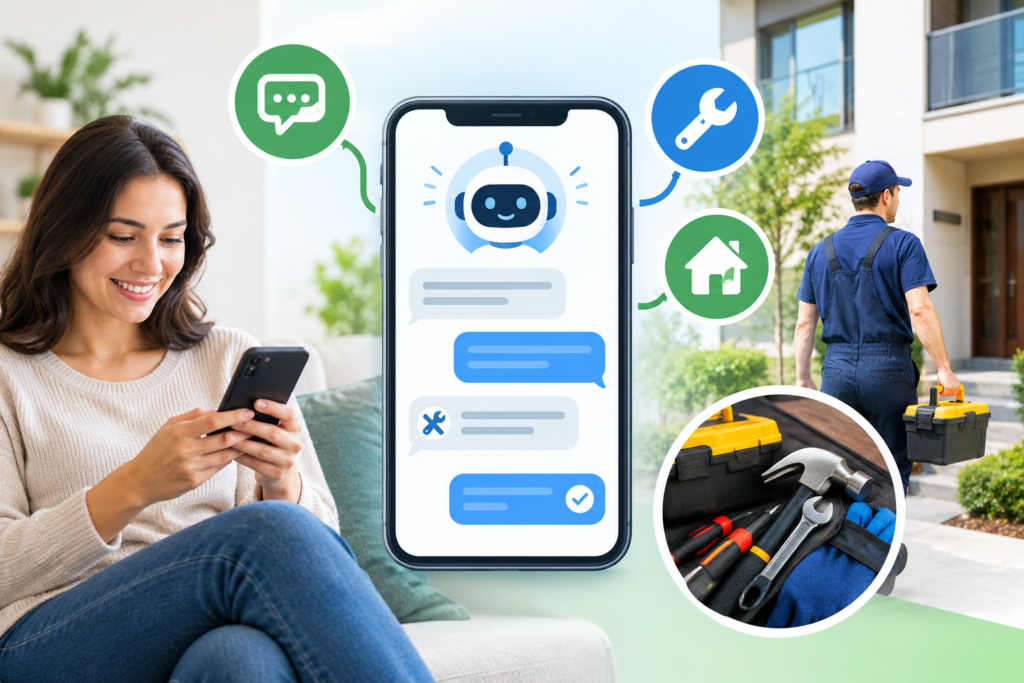
Tenant communication is one of the most valuable areas for a tenant maintenance chatbot because maintenance problems can create uncertainty for residents. When a heating system stops working, a pipe begins leaking, an appliance fails, or a door becomes difficult to secure, the tenant generally wants two things: clear guidance about what to do and confidence that the issue has been reported correctly. A chatbot can provide an immediate starting point without requiring the resident to wait for office hours or search through previous correspondence.
The conversation should begin with simple, human-friendly language. Tenants should be able to describe problems naturally rather than being forced to understand technical categories. Natural-language processing can help identify the general subject of the request and guide the conversation toward the information the maintenance team needs. If a resident writes, “There is water coming from the ceiling,” the chatbot can recognize that this may involve a water-related maintenance issue and ask relevant questions without claiming to know the precise cause.
The chatbot can also make follow-up communication more convenient. After submitting a request, a tenant may want to know whether it has been received or whether further information is required. If the chatbot has access to verified data, it can communicate the available status. If it does not have access to current information, it should not guess. Instead, it should explain the limitation and provide the appropriate route to obtain an accurate answer.
This transparency is essential for building trust. A chatbot that gives confident but inaccurate information can create more frustration than a system that clearly states what it cannot verify. The goal should be reliable assistance, not the appearance of unlimited intelligence.
The interface also needs to work well across common devices. Many tenants may report maintenance problems from a mobile phone rather than a desktop computer. The conversation should therefore remain readable, responsive, and straightforward on smaller screens. Important instructions should not be buried beneath unnecessary text or complicated interface elements.
Accessibility should be considered as part of the overall design. The chatbot should complement the accessibility standards of the surrounding website and provide alternatives when conversational interaction is unsuitable for a particular user.
A strong tenant communication workflow should also provide an obvious route to human assistance. Users should never feel trapped in an automated conversation. If the chatbot cannot understand the request after reasonable attempts, encounters a sensitive situation, receives a complaint, or reaches the boundary of its approved knowledge, the user should be given an appropriate escalation path.
The result is a communication experience that combines speed with accountability. Automation provides immediate assistance for routine needs while human support remains available for situations that require professional judgment.
Key Features of an AI Property Maintenance Chatbot
An AI property management chatbot can support many maintenance workflows, but its features should be selected according to genuine operational requirements. Adding features simply because they are technically possible can make a chatbot confusing and difficult to maintain. A more effective approach is to identify the most frequent tenant problems and build conversational workflows around those needs.
The first major feature is structured maintenance request collection. The chatbot should understand the initial user message, identify what information is missing, and ask relevant questions. For example, a request about a broken appliance may require the appliance type, location, description of the problem, and whether the appliance has stopped working completely. A plumbing issue may require different questions. Conditional conversation flows allow the chatbot to collect appropriate information without forcing every user through the same questionnaire.
The second important feature is maintenance issue categorization. Requests can be organized into categories such as plumbing, heating, cooling, electrical, appliances, structural concerns, access problems, common-area maintenance, cleaning-related concerns, or general property support. Categorization helps the responsible team determine where a request belongs and can make reporting and analysis more consistent.
Appointment coordination is another useful capability. When integrated with an appropriate scheduling system, the chatbot may collect preferred availability or communicate confirmed appointment information. However, it should only display information that the underlying scheduling system can verify. A chatbot should never invent a technician’s availability or claim that an appointment has been confirmed when no such confirmation exists.
A fourth feature is maintenance status support. Residents often want to know whether their request has been received, whether someone has been assigned, or whether additional information is required. A properly integrated chatbot can communicate verified information and reduce repetitive status queries.
Knowledge-base support can also be valuable. Property organizations often have information about maintenance responsibilities, reporting procedures, access arrangements, emergency contacts, building rules, and common questions. A chatbot can make this information easier to discover through natural conversation.
Finally, human escalation should be considered a core feature. The chatbot should recognize when a request is outside its permitted scope and provide a clear next step. Complex complaints, legal questions, sensitive personal circumstances, potential emergencies, and technical matters requiring physical inspection should not be forced into an automated workflow.
A successful feature set is therefore not the one with the greatest number of capabilities. It is the one that makes routine maintenance communication simpler while maintaining accurate boundaries.
Automating Maintenance Requests From First Message to Work Order
One of the strongest applications of a Property Maintenance Chatbot is automating the journey from a tenant’s initial message to a properly structured maintenance request. Without automation, a request may begin through email, telephone, text messaging, a website form, or an informal message and then require an employee to manually transfer information into a separate maintenance platform. Every manual transfer introduces opportunities for missing details, duplicate records, or communication delays.
A chatbot can establish a standardized intake workflow. The first stage is understanding the general issue. If a tenant writes, “The kitchen sink is leaking,” the chatbot can acknowledge the report and ask only the questions necessary to create a useful request. It may need to know which property is affected, whether the leak is currently active, where the water is appearing, whether surrounding areas have been damaged, and whether the resident needs to arrange access for a technician.
Once the information has been collected, the chatbot can send it to the appropriate maintenance workflow. A structured request might contain the property reference, unit information, affected location, issue category, user description, urgency information, timestamp, and access preferences. This is significantly more useful to a maintenance coordinator than an isolated message with limited context.
The chatbot can also assist with work-order preparation. It does not necessarily need to generate technical repair instructions. Its responsibility can be to ensure that the work-order record contains the information required for a qualified person to determine the next action.
This distinction protects the quality of the workflow. The chatbot gathers and organizes information, while qualified professionals make technical decisions where appropriate.
After a request is submitted, the chatbot can remain part of the communication process. It can confirm that the request was received, provide a reference number when available, explain what happens next, request additional information if the maintenance team needs it, and communicate verified updates.
Integration is particularly important at this stage. If the chatbot collects information but employees must manually copy every detail into another system, some of the efficiency benefits disappear. Organizations should therefore evaluate how the chatbot will communicate with existing property management platforms, maintenance ticketing systems, calendars, communication services, and databases.
The workflow should also include failure handling. If a system integration becomes unavailable, the chatbot should not silently discard the tenant’s request. It should provide an appropriate fallback and make the user aware of what has happened.
The ultimate goal is a maintenance process in which information moves smoothly from conversation to structured request to human action.
Handling Emergency and High-Priority Maintenance Requests
Emergency maintenance requires especially careful chatbot design because automated communication must never create a false sense of safety. A property maintenance chatbot can help recognize potentially urgent situations and direct users toward the appropriate procedure, but it should not replace emergency services, qualified professionals, or an organization’s formal emergency response process.
The chatbot should have clearly defined rules for identifying potentially urgent scenarios. These may include significant water leaks, suspected electrical hazards, fire-related situations, gas concerns, serious structural problems, security-related property issues, or other conditions identified by the responsible organization. The exact criteria should come from documented procedures rather than allowing the AI system to make unrestricted safety decisions.
When a potentially dangerous situation is identified, the conversation should become simple and action-oriented. The chatbot should not force the user through a lengthy questionnaire when immediate action may be necessary. Depending on the organization’s policies and the circumstances, the user may need to contact emergency services, a building emergency contact, a utility provider, or a designated emergency maintenance number.
For non-emergency but high-priority maintenance, the chatbot can collect the information required for expedited review. For example, a heating problem during severe weather may be handled differently from a cosmetic issue. The chatbot can gather the facts needed by the organization’s established priority system without independently deciding that a situation is medically, legally, or physically safe.
One of the most important principles is avoiding false reassurance. The chatbot should never tell a user that a potentially dangerous situation is safe simply because the description resembles a common maintenance issue. Physical conditions often cannot be evaluated reliably through text alone.
The chatbot should also avoid presenting itself as a professional emergency responder. Its role is to communicate approved procedures and facilitate the correct escalation.
Testing is essential before deployment. Property teams should create realistic emergency scenarios and verify how the chatbot behaves when users provide incomplete, ambiguous, emotional, or unusual descriptions. Tests should also confirm that human escalation remains accessible.
Emergency workflows should be reviewed periodically because organizational contacts and procedures can change. Outdated emergency information can be more harmful than having no automated information at all.
The guiding principle should always be automation with clearly defined safety boundaries. The chatbot can make communication faster, but responsibility for emergency decisions must remain with the appropriate people and services.
Integrating a Property Maintenance Chatbot With Existing Systems
A chatbot becomes significantly more useful when it works with the systems a property management organization already uses. Without integration, the chatbot may simply create another communication channel that employees need to monitor. With appropriate integration, it can become part of the organization’s wider property maintenance management workflow.
The first integration to consider is the property management or maintenance platform. If the organization already uses software for tenant records, work orders, maintenance tickets, property information, or contractor coordination, the chatbot should ideally transfer structured request information into that environment. This reduces duplicate data entry and allows maintenance staff to continue using familiar operational tools.
Scheduling systems can provide another important integration. If maintenance visits require appointments, the chatbot can collect preferred times or display verified availability when the connected scheduling system supports it. The underlying principle is simple: the chatbot should only communicate information that the connected system can verify.
Communication tools can extend the workflow further. Depending on the organization’s setup, confirmed notifications may be delivered through email, SMS, a resident portal, or another approved channel. The chatbot can serve as the conversational interface while existing systems remain responsible for storing operational records.
Property databases may also be required. The chatbot might need to identify a building, unit, service category, or account. Such information should only be accessible when appropriate authorization is present. Authentication and authorization should therefore be included in the system architecture from the beginning.
Analytics can provide another layer of value. Property teams can examine the categories of maintenance requests, common tenant questions, unsuccessful conversations, escalation frequency, and repeated problems. These insights can reveal where the chatbot needs improvement and where property operations may have recurring issues.
Integration planning should happen before development. Teams should document which systems are involved, what information is transferred, who can access it, how authentication works, what happens when an integration fails, and which system acts as the source of truth for each piece of information.
Security should also be treated as an architectural concern rather than an afterthought. A maintenance chatbot may interact with property information and tenant-related data, so access controls, secure connections, appropriate retention practices, and careful data handling are essential.
For the public website, organizations should also follow Google’s Search Essentials rather than relying on shortcuts intended to manipulate visibility. The chatbot should support the site’s usefulness rather than interfere with important information or navigation.
The objective of integration is not to create a complicated technology stack. It is to connect the chatbot to the systems that already support the organization’s real work.
Designing a Trustworthy Property Maintenance Chatbot Experience
The effectiveness of a Property Maintenance Chatbot depends heavily on trust. Tenants need to know what the system can do, what information it requires, whether their request has actually been submitted, and when a human will become involved. A chatbot that sounds highly confident but provides inaccurate information can damage trust quickly.
The first principle is transparency. The system should clearly identify itself as an automated assistant. It should never pretend to be a human employee or claim that an action has been completed when it has not. If a maintenance request has been successfully created, the chatbot can confirm that action. If it has only collected information for review, it should say exactly that.
The second principle is controlled knowledge. The chatbot should rely on approved information relevant to the organization’s services and procedures. This may include maintenance reporting instructions, contact information, property policies, appointment preparation guidance, and frequently asked questions. The information should be reviewed regularly because procedures, contractors, contacts, and responsibilities can change.
The third principle is graceful escalation. Users should always have an appropriate way to reach human support when the chatbot cannot resolve their situation. Escalation is especially important for complaints, sensitive circumstances, disputes, complex technical questions, and matters outside the chatbot’s approved knowledge.
The fourth principle is data minimization. The chatbot should collect information because it is necessary for a legitimate workflow rather than simply because the technology makes additional data collection possible. Organizations should establish what information is needed, who can access it, how long it is retained, and how it is protected.
The fifth principle is continuous improvement. A chatbot should not be treated as a one-time software installation. Property teams should regularly review conversations, unanswered questions, incorrect classifications, failed integrations, escalation patterns, and tenant feedback. These findings can be used to improve the knowledge base and conversation flows.
The surrounding website should also provide a good overall page experience. Google’s page experience guidance recommends considering factors such as Core Web Vitals, secure delivery, mobile presentation, intrusive interstitials, and the overall usability of the page.
Trust therefore comes from several components working together: accurate information, transparent automation, sensible data handling, reliable integrations, clear escalation, and a usable interface.
The most trustworthy chatbot is not the one that claims to know everything. It is the one that communicates what it knows accurately, recognizes what it does not know, and connects the user with the right human process when necessary.
How a Property Maintenance Chatbot Supports Property Managers and Landlords
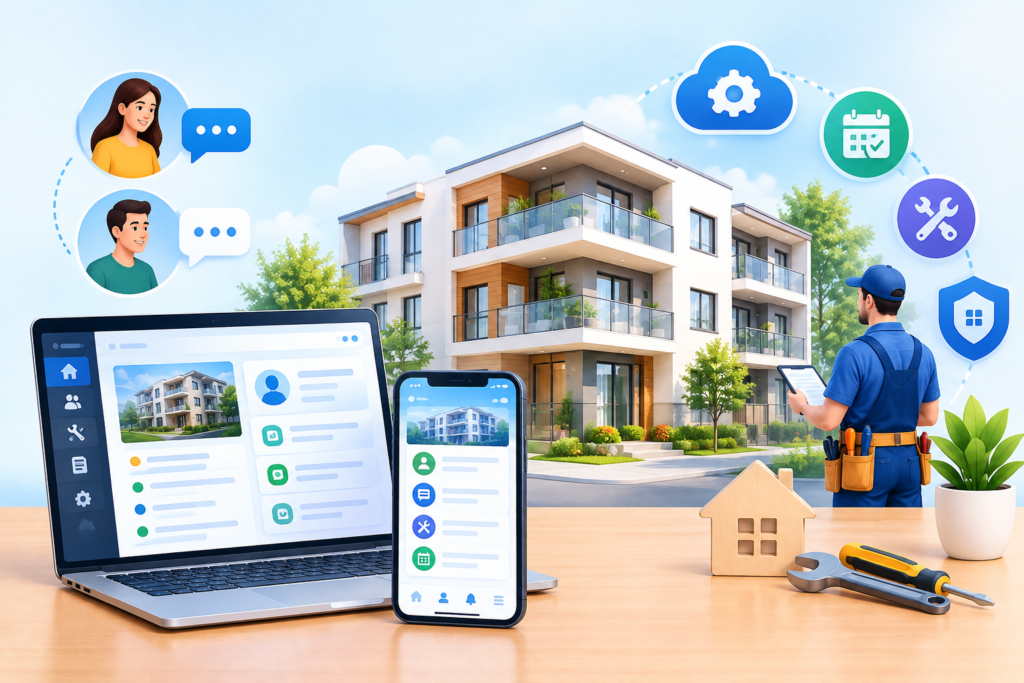
A property maintenance chatbot can become a practical operational layer between tenants, property managers, landlords, maintenance teams, and external contractors. Instead of requiring every maintenance conversation to begin with a phone call, email, or manually completed form, the chatbot can provide a consistent first point of contact. It can ask structured questions about the property, room, equipment, issue type, urgency, symptoms, and preferred access arrangements. This creates a clearer maintenance request before a human team member needs to review it. For property managers handling multiple buildings or large portfolios, this structured intake can reduce repetitive communication and make it easier to identify which requests need immediate attention. The chatbot does not have to replace property professionals; its primary value is helping them spend less time collecting routine information and more time making decisions, coordinating work, and managing exceptions.
For landlords and property owners, a conversational maintenance system can also improve visibility into recurring problems. A chatbot can capture consistent information across requests, making it easier to identify patterns such as repeated plumbing problems, heating complaints, appliance failures, or maintenance issues associated with particular units. When the information is connected to a suitable property management or work-order system, managers can use historical records to understand whether a repair is isolated or part of a broader operational problem. This can support more organized maintenance planning and help teams distinguish reactive repairs from opportunities for preventive maintenance. The chatbot can also provide status updates, explain what happens after a request is submitted, and remind tenants about information that may be required before a technician is dispatched.
Another important benefit is communication consistency. Property maintenance often involves people with different levels of technical knowledge, different schedules, and different expectations. A chatbot can use straightforward language to explain what information is needed without requiring the tenant to understand internal maintenance terminology. It can also provide clear boundaries: for example, it can explain that an emergency should follow the property’s designated emergency procedure rather than waiting for a standard chatbot workflow. This type of communication design supports trust because tenants receive predictable guidance while property teams retain control over decisions that require professional judgment. A well-designed system should therefore function as a communication and workflow assistant, not as an unrestricted replacement for maintenance professionals.
Using AI to Improve Preventive Maintenance and Property Operations
Preventive maintenance becomes more effective when property teams have reliable information about assets, previous repairs, recurring complaints, and operational patterns. A property maintenance chatbot can contribute to this process by collecting structured information from everyday conversations. For example, if residents repeatedly report that a particular fixture is becoming difficult to operate, a manager may discover an emerging maintenance issue before it develops into a larger failure. The chatbot itself does not necessarily determine the technical cause. Instead, it creates a consistent channel through which observations can be captured and routed to the appropriate team. Over time, these records can contribute to a more informed maintenance strategy.
AI can also support maintenance triage by identifying recurring categories within incoming requests. A property team might receive messages about leaking taps, blocked drains, broken lights, heating concerns, damaged doors, appliance problems, or common-area defects. When the chatbot classifies these requests according to predefined categories, managers can review the workload more efficiently. Historical data can then help identify recurring asset categories or locations that require additional attention. This approach is particularly useful when combined with established inspection schedules and maintenance records. The objective is not simply to automate conversations; it is to turn routine communication into structured operational information that can support better planning.
Preventive maintenance should nevertheless remain governed by appropriate policies, technical specifications, warranties, manufacturer instructions, and qualified professionals. A chatbot should not invent maintenance intervals, diagnose complex equipment, or instruct users to perform hazardous work simply because an AI model can generate an answer. Instead, organizations should establish approved knowledge sources and escalation rules. Where technical guidance is necessary, the system can direct the user toward verified instructions or an appropriate professional. This principle reflects the broader goal of creating helpful, reliable, people-first digital experiences rather than generating confident-sounding answers without sufficient evidence. Property teams should treat AI-generated assistance as part of a controlled workflow, with human oversight available whenever the issue requires expertise, physical inspection, or a safety decision.
Best Practices for Property Maintenance Chatbot Implementation
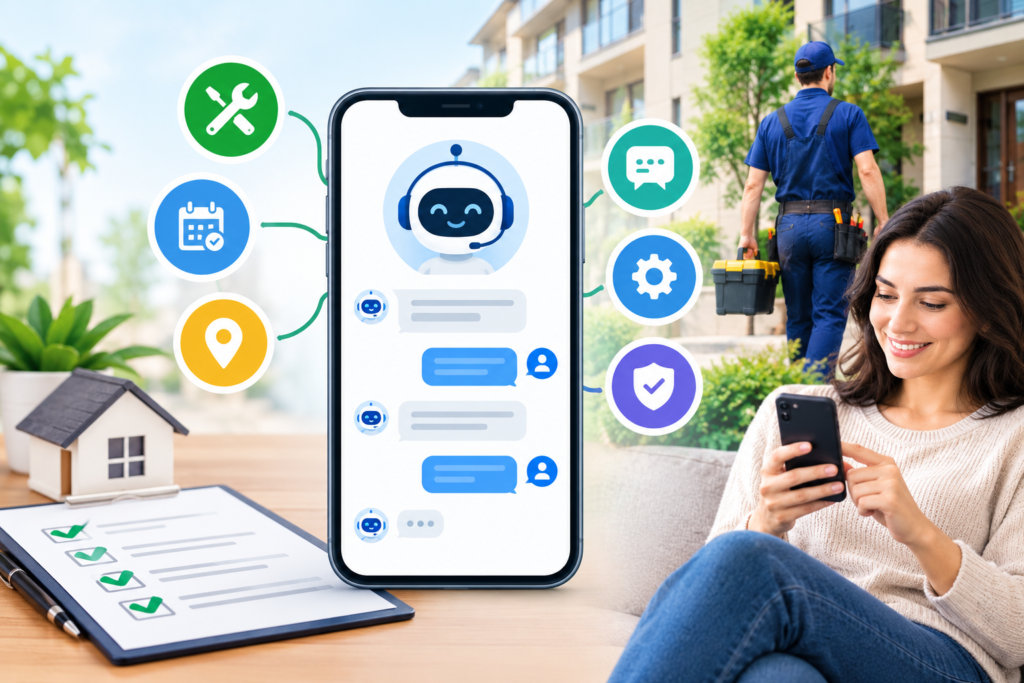
A successful property maintenance chatbot begins with clearly defined use cases. Before selecting technology or designing conversation flows, property teams should identify the problems they actually want to solve. These may include maintenance request intake, tenant FAQs, request-status updates, contractor coordination, appointment communication, basic troubleshooting, or emergency routing. Each use case should have a defined outcome. For example, a maintenance request conversation might need to end with a structured work order, while a simple status question might only require retrieving an existing update. Defining these outcomes prevents the chatbot from becoming an unnecessarily complicated general-purpose assistant.
The knowledge base should also be carefully maintained. Property information can change as buildings, contractors, access procedures, operating hours, contact details, appliances, and policies change. An outdated answer can be worse than no answer because users may rely on it when deciding what to do next. Property organizations should therefore establish ownership for chatbot content, review important information periodically, and create a process for updating answers after policy or operational changes. Responses should be written in plain language, with important limitations made clear. Where the chatbot cannot safely or reliably answer a question, the correct behavior should be escalation rather than speculation.
Testing is another essential part of implementation. Teams should test normal maintenance requests, incomplete requests, duplicate reports, unclear descriptions, urgent situations, unusual wording, unavailable services, and requests outside the chatbot’s intended scope. They should also test how the system behaves when a tenant provides contradictory information or changes their answer midway through a conversation. Accessibility and mobile usability deserve attention because maintenance requests may be submitted from phones, sometimes under inconvenient circumstances. Organizations should evaluate the entire experience rather than judging the chatbot only by how natural its individual messages sound. The practical measure is whether users can reach an appropriate outcome efficiently, accurately, and safely.
Measuring Chatbot Performance and Maintenance ROI
A property maintenance chatbot should be measured against operational outcomes rather than vanity metrics. The number of conversations alone does not show whether the system is useful. Property teams should examine metrics such as completed maintenance requests, request completion rates, escalation rates, average time to collect required information, duplicate-request frequency, abandoned conversations, tenant satisfaction, and the proportion of conversations successfully routed to the correct workflow. These measurements can reveal whether automation is actually reducing administrative friction. For example, a high conversation volume combined with a high escalation rate might indicate that the chatbot is being used frequently but has insufficient capabilities or an unclear scope.
Response quality should also be evaluated. Property managers can review samples of conversations to determine whether the chatbot collected the right information, provided accurate instructions, avoided unnecessary questions, and escalated appropriately. If the organization uses a connected maintenance platform, it can compare chatbot-created work orders with manually created requests to identify differences in completeness or categorization. The purpose of this review is continuous improvement. A chatbot should not be treated as a one-time software installation that remains unchanged indefinitely. Property operations evolve, and the conversational system should evolve with them.
Return on investment can be considered through a combination of time savings, operational efficiency, service quality, and customer experience. If staff previously spent substantial time answering repetitive maintenance-status questions, automated status communication may reduce that workload. If technicians frequently received incomplete work orders, structured intake may reduce follow-up communication. If tenants frequently submitted requests through inconsistent channels, a centralized conversational workflow may improve data quality. However, organizations should account for implementation, integration, maintenance, monitoring, and training costs when evaluating the overall business case. A realistic ROI model should compare the total operating cost of the chatbot with measurable improvements rather than assuming that automation automatically produces savings.
Common Mistakes When Implementing a Property Maintenance Chatbot
One common mistake is trying to make the chatbot responsible for everything. A property maintenance chatbot does not need to become a universal property manager. When too many unrelated functions are combined into one experience, conversations can become confusing and difficult to maintain. A better approach is to establish clear boundaries around the chatbot’s responsibilities. Maintenance intake, request updates, routine FAQs, and straightforward routing may be appropriate functions, while legal disputes, complex technical diagnosis, sensitive tenant matters, and high-risk emergencies may require direct human involvement. Clear scope helps both users and internal teams understand what the system is designed to do.
Another mistake is treating AI-generated responses as automatically trustworthy. A conversational system can produce an answer that sounds professional even when the underlying information is incomplete or outdated. This is particularly important in property maintenance because incorrect guidance can create financial, operational, or safety consequences. Organizations should use approved information sources, controlled workflows, escalation paths, and human review for higher-risk situations. They should also monitor the system after launch and investigate reports of incorrect responses. The goal is not to make the chatbot appear intelligent at all costs; the goal is to make it reliably useful within a defined operational environment.
A third mistake is ignoring the tenant experience after the initial request. A chatbot that successfully collects a maintenance issue but provides no meaningful follow-up may still leave users frustrated. Tenants often want to know whether their request was received, whether someone has been assigned, whether an appointment is scheduled, and whether additional information is required. Where system integrations permit it, the chatbot should support appropriate status communication. Organizations should also avoid forcing users through unnecessarily long conversations. Asking only the questions needed for the next operational step can create a smoother experience while still giving maintenance teams sufficient information.
Best Practices Summary
The strongest property maintenance chatbot implementations combine automation with clear operational governance. The first principle is to define the chatbot’s role before building its conversation flows. Teams should identify the maintenance scenarios that occur frequently, determine which can be safely automated, and establish explicit escalation rules for situations that require professional intervention. This creates a practical boundary between automated assistance and human responsibility. The chatbot should support the maintenance operation rather than becoming a disconnected technology layer.
The second principle is to prioritize structured information and reliable knowledge. A useful maintenance chatbot should collect information that genuinely helps the next step of the workflow, such as the property or unit, issue category, location, symptoms, urgency, relevant asset, and access information where appropriate. Its knowledge base should be maintained as operational policies change. Organizations should also review conversation data to identify gaps, recurring misunderstandings, and opportunities for better routing. This makes the chatbot a source of useful operational signals rather than simply another communication channel.
The third principle is continuous improvement. Teams should monitor performance, review conversations, test important scenarios, and update workflows as real-world requirements change. Security, privacy, accessibility, integrations, and user experience should be considered throughout the lifecycle. The published Google Search Essentials provide a useful reference for organizations that also want their public-facing digital content to follow Google’s fundamental technical and spam-policy guidance. Similarly, Google’s page experience guidance can help teams consider aspects of user experience when evaluating public web experiences. These resources should inform broader digital practices rather than being treated as a substitute for property-specific operational requirements.
FAQs
What is a property maintenance chatbot?
A property maintenance chatbot is a conversational software system designed to help tenants, residents, property managers, landlords, or maintenance teams handle routine maintenance communication. Depending on its configuration, it can collect maintenance requests, ask follow-up questions, provide approved information, categorize issues, route requests, communicate status updates, and connect users with the appropriate team. The exact capabilities depend on the organization’s workflow and integrations.
The most useful systems are designed around clearly defined operational outcomes. Instead of attempting to answer every possible property-related question, the chatbot should focus on tasks that can be handled reliably. For example, it may guide a tenant through reporting a leaking fixture, collect information about a broken appliance, or explain how to check the status of an existing request. Issues requiring physical inspection, professional diagnosis, emergency response, or policy judgment should have appropriate escalation routes.
Can a property maintenance chatbot replace a maintenance team?
No. A chatbot can automate communication and administrative steps, but it does not replace the physical work, technical expertise, inspections, repairs, or decision-making performed by qualified maintenance professionals. Its primary role is to make information collection and communication more efficient.
A well-designed system should make human involvement easier rather than attempt to eliminate it. For example, a chatbot can gather the details needed for a work order before the request reaches a technician. This may reduce unnecessary follow-up questions and allow staff to focus on tasks that require judgment and practical expertise.
Can a chatbot handle emergency maintenance requests?
A chatbot can help identify certain emergency indicators and direct users toward the appropriate emergency procedure, but emergency handling should be designed conservatively. The system should not create a false impression that a chatbot is an emergency response service.
Property organizations should define their emergency categories, approved instructions, escalation contacts, and operating procedures in advance. If a situation presents an immediate threat to people or property, the chatbot should direct the user toward the appropriate emergency service or designated emergency contact according to the organization’s established policy rather than delaying action while collecting unnecessary information.
How does a maintenance chatbot integrate with property management software?
Integration can allow the chatbot to exchange information with systems used for tenant records, work orders, maintenance scheduling, property information, or request tracking. For example, a completed chatbot conversation might create a structured maintenance request in an existing platform. A connected system could also allow the chatbot to provide an approved status update when a tenant asks about an existing request.
The exact integration method depends on the software involved. Organizations should define which information can be accessed, which actions the chatbot is permitted to perform, how authentication works, and what happens when an integration fails. Integration should be designed around least-necessary access and clear operational controls rather than granting broad system permissions simply for convenience.
What information should a maintenance chatbot collect?
The information required depends on the property organization’s workflow. Common information can include the property or unit, general issue category, location of the problem, description of symptoms, urgency indicators, affected equipment or area, and information needed to arrange access. The chatbot should avoid collecting unnecessary information simply because the technology makes it possible.
The best intake process asks questions progressively. A tenant should not have to complete a lengthy questionnaire when a few details are enough to route the request. The system can ask additional questions only when they are relevant to the next decision. This creates a balance between operational completeness and user convenience.
How can property managers measure chatbot success?
Property managers can measure success using operational and user-experience metrics. Useful indicators include maintenance request completion rates, incomplete submissions, escalation rates, average information-collection time, duplicate requests, abandoned conversations, tenant satisfaction, and the percentage of requests routed to the correct workflow.
Conversation reviews are equally important. Quantitative metrics may show that a chatbot is receiving many requests, but qualitative review can reveal whether users are confused, whether the system asks unnecessary questions, or whether certain maintenance categories consistently require human intervention. Combining both types of evaluation creates a more realistic picture of performance.
Is AI suitable for every type of property maintenance question?
No. AI is most appropriate when the task has clear information boundaries and reliable source material. Routine questions, structured intake, status communication, and basic routing can often be suitable use cases. Complex technical diagnosis, hazardous situations, disputes, sensitive personal matters, and decisions requiring professional inspection may require human involvement.
Organizations should establish escalation rules before deployment. When the chatbot lacks sufficient information or confidence within the organization’s approved workflow, it should be able to say that human assistance is required. Responsible limitation is an important part of a trustworthy conversational system.
How can a property maintenance chatbot improve tenant satisfaction?
A chatbot can improve the experience by making it easier to report problems, reducing unnecessary back-and-forth communication, providing consistent information, and making request status easier to understand. Convenience is particularly valuable when tenants need to report routine issues outside traditional office hours.
However, the chatbot is only one part of the service experience. If a request is submitted quickly but remains unresolved without communication, automation has not solved the underlying problem. Tenant satisfaction depends on the complete maintenance journey, including request handling, technician response, repair quality, updates, and resolution.
How should organizations protect information handled by a maintenance chatbot?
Organizations should determine what information the chatbot actually needs and avoid collecting unnecessary personal or operational data. Access to connected systems should be controlled according to defined permissions, and organizations should review how information is stored, transmitted, retained, and accessed.
Security should be treated as part of the system design rather than an afterthought. Property organizations should also consider authentication, access controls, vendor responsibilities, incident procedures, and applicable privacy obligations. The appropriate controls will depend on the organization, jurisdiction, systems involved, and types of information being processed.
How long does it take to implement a property maintenance chatbot?
Implementation time varies significantly depending on the chatbot’s scope, knowledge base, integrations, approval process, testing requirements, and existing technology environment. A focused chatbot handling a small number of well-defined workflows can be simpler to implement than a system integrated with multiple property management platforms.
A practical implementation normally begins with discovery and workflow mapping, followed by conversation design, knowledge preparation, integration, testing, controlled deployment, and ongoing optimization. Starting with a clearly defined use case can help organizations learn from real usage before expanding the chatbot into additional property operations.
What makes a property maintenance chatbot trustworthy?
Trust comes from predictable behavior, accurate information, transparent limitations, appropriate escalation, secure handling of information, and consistent communication. Users should understand what the chatbot can do and what happens after they submit a request.
Trust also depends on operational reliability. A chatbot should not promise actions that the connected systems cannot actually perform. If it says that a request has been submitted, the organization should have a reliable process confirming that outcome. If an answer requires human review, the chatbot should communicate that clearly rather than creating false certainty.
Conclusion
A property maintenance chatbot can help modern property operations become more organized, responsive, and consistent by improving the way maintenance information moves between tenants, managers, landlords, contractors, and internal teams. Its greatest value comes from solving specific communication and workflow problems rather than attempting to replace the people responsible for property decisions and physical maintenance. When requests are collected in a structured way, routine questions can be automated, and important issues can be routed appropriately, property teams can gain a clearer view of their maintenance workload.
The most effective implementation combines conversational AI with reliable information, thoughtful workflow design, appropriate integrations, human escalation, and continuous monitoring. Property organizations should begin with clearly defined use cases, establish boundaries around what the chatbot can and cannot handle, and test the complete tenant journey before expanding the system. Performance should be measured through meaningful operational outcomes rather than conversation volume alone.
For organizations exploring this approach, the objective should be practical: create a maintenance communication experience that is easier for tenants to use and more useful for the people responsible for resolving issues. When technology is introduced with clear responsibilities and ongoing oversight, a property maintenance chatbot can become a valuable part of a broader property operations strategy.
Want to Implement This Easily?
Implementation Prompt:
“You are an expert consultant. Based on the blog post titled “Property Maintenance Chatbot”, provide a step-by-step, practical implementation guide. Include tools, best practices, common mistakes to avoid, and advanced tips. Assume the reader wants to implement everything discussed in this article effectively.”
CTA:
Want our help implementing this? Just reach out to us via our website contact form.