
Discover how a healthcare chatbot improves patient engagement, automates appointment scheduling, streamlines healthcare communication, and supports better digital patient experiences through AI-powered automation.
Introduction
Healthcare is experiencing a major digital transformation. Patients increasingly expect convenient access to medical information, faster appointment scheduling, responsive communication, and personalised support throughout their healthcare journey. At the same time, hospitals, clinics, medical practices, and other healthcare organisations face growing administrative workloads, increasing patient expectations, and pressure to deliver efficient services without compromising the quality of care. Traditional communication methods, including telephone calls, emails, and manual appointment management, cannot always provide the speed and availability that modern patients expect. This is where a healthcare chatbot becomes a valuable digital solution.
A healthcare chatbot is an automated conversational system that allows patients to communicate with healthcare organisations through websites, mobile applications, messaging platforms, and other digital channels. Depending on its design, it can answer frequently asked questions, guide patients through appointment booking, provide clinic information, send reminders, collect preliminary information, and direct enquiries to the appropriate department. Advanced AI-powered healthcare chatbots can use natural language processing (NLP), natural language understanding (NLU), and carefully managed knowledge sources to understand patient questions and provide relevant responses. However, a chatbot must have clearly defined boundaries. It should support healthcare communication and administrative processes rather than independently replace qualified medical professionals or make unsupported clinical decisions.
For healthcare organisations exploring conversational automation, Engagerbot provides an opportunity to consider how chatbot technology can improve digital communication and customer interactions. The most effective healthcare chatbot strategy combines accessible design, reliable information, appropriate automation, strong privacy controls, and human support when needed. This guide explores how healthcare chatbots work, their advantages, practical applications, essential features, implementation considerations, and the safeguards required for responsible deployment. Whether an organisation operates a small medical clinic, a specialist practice, a hospital, or a broader healthcare network, understanding these elements can help it make informed decisions about conversational technology.
What Is a Healthcare Chatbot?
A healthcare chatbot is a conversational software application designed to communicate with patients, healthcare professionals, and visitors through automated messages. It can be integrated into a medical website, patient portal, mobile application, or supported messaging channel. Its primary purpose is to make healthcare communication more accessible by handling suitable enquiries and guiding users towards relevant information or services. For example, a patient visiting a clinic website might ask about opening hours, available specialists, appointment procedures, insurance information, or required documents. Instead of searching through several website pages or waiting for a receptionist, the patient can interact with a chatbot that provides approved information through a simple conversation. This creates a more direct communication experience while reducing repetitive administrative enquiries.
Healthcare chatbots can operate through different technologies. Rule-based chatbots follow predefined conversation paths, buttons, and decision trees. They are particularly useful for structured tasks such as selecting a department, requesting an appointment, or finding a clinic location. AI-powered chatbots use language-processing capabilities to interpret different ways of expressing a question and identify the user’s likely intention. For instance, questions such as “Can I see a doctor tomorrow?”, “I need to book a consultation”, and “Are there any available appointments for tomorrow?” may communicate the same basic intent. A well-designed system can recognise these variations and guide the user through an appropriate booking process. Some solutions also combine predefined workflows with AI, allowing predictable tasks to remain controlled while natural-language conversations provide greater flexibility.
It is important to understand that a healthcare chatbot is not automatically a medical diagnostic system. An administrative chatbot can provide information about services, collect appointment preferences, and explain how to contact a healthcare professional. A more advanced clinical support application may fall under additional regulatory and safety requirements depending on its intended purpose, functionality, and jurisdiction. Organisations should therefore distinguish between patient engagement automation, general health education, clinical decision support, and medical-device functionality. This distinction influences the information the chatbot can provide, the level of professional oversight required, and the safeguards that must be implemented. The World Health Organization’s guidance on artificial intelligence for health emphasises the importance of human rights, accountability, transparency, and ethical governance when developing and deploying AI technologies in healthcare. A responsible healthcare chatbot should follow the same principles by making its capabilities clear, avoiding misleading claims, and ensuring patients can reach qualified staff when necessary.
How Does an AI Healthcare Chatbot Work?
An AI healthcare chatbot works by receiving a patient’s message, interpreting its meaning, identifying the relevant task, and generating or selecting an appropriate response. When someone enters a question into a website chat window, the system first processes the text and examines the words, phrases, and conversational context. Natural language processing helps the chatbot interpret human language, while natural language understanding can identify the user’s intent and relevant details. For example, if a visitor writes, “I want to arrange a consultation with a dermatologist next week,” the system may identify the intent as appointment scheduling and extract the requested specialist and approximate timeframe. It can then ask follow-up questions, such as the patient’s preferred location or available day, before directing the user towards an approved booking process. The exact capabilities depend on the chatbot’s technology, integrations, and configured workflows.
After identifying the user’s intention, the chatbot follows an appropriate response process. A rule-based workflow may display predefined options, while an AI-enabled system may retrieve information from an approved knowledge base or use a controlled language model to formulate a response. For example, a question about clinic opening hours should be answered using verified operational information rather than an unsupported assumption. If the chatbot connects to an appointment management system, it may check available booking options through an authorised integration. If no suitable appointment is available, it can explain the next steps or provide a human contact option. This process requires reliable information sources, clearly defined permissions, appropriate error handling, and regular testing. An AI model should not be allowed to invent doctor availability, medical instructions, prices, or healthcare policies.
A complete healthcare chatbot workflow also includes conversation management, security controls, escalation procedures, and performance monitoring. Conversation management allows the system to maintain context during an interaction, while carefully configured data controls determine what information can be collected, processed, stored, or transferred. When a request becomes too complex, sensitive, or clinically significant, the chatbot should stop attempting to resolve it independently and direct the patient towards an appropriate human professional. For example, a patient describing severe or potentially life-threatening symptoms should receive an approved emergency instruction rather than a routine appointment suggestion. Healthcare organisations should also test chatbot responses against realistic patient scenarios, including ambiguous questions, spelling errors, incomplete information, and unexpected requests. This helps identify situations where the system may misunderstand a patient or provide an unsuitable response. Ultimately, the technology should support a controlled communication process in which automation improves accessibility without removing professional judgement and accountability.
Key Benefits of Healthcare Chatbots for Hospitals, Clinics, and Patients
One of the most important benefits of healthcare chatbots is improved communication accessibility. Patients may need assistance outside normal reception hours, during busy periods, or when telephone support is difficult to access. A chatbot can provide approved information around the clock, allowing visitors to explore available services, understand appointment procedures, locate facilities, and find answers to common administrative questions. This does not mean that every enquiry can be resolved immediately or that medical professionals are available 24 hours a day. Instead, the chatbot can maintain access to routine information and explain when human assistance will be available. For healthcare organisations, this creates an additional communication channel that can reduce repetitive enquiries and help administrative teams concentrate on tasks that require personal attention.
Another major advantage is the potential improvement in appointment management and administrative efficiency. Reception teams frequently handle similar requests involving appointment availability, cancellations, rescheduling, consultation types, and preparation instructions. A chatbot can guide patients through these processes using structured questions and approved booking integrations. For example, it may collect a preferred appointment date, identify the relevant department, and direct the patient to a secure scheduling system. Automated reminders and confirmation messages can also help patients remember scheduled visits, subject to appropriate consent and communication preferences. When administrative information is collected consistently, staff may spend less time repeating routine questions and more time supporting complex patient needs. However, organisations should measure actual improvements rather than assume that automation will automatically reduce costs or eliminate administrative work.
Healthcare chatbots can also contribute to a more consistent and organised patient experience. Patients often need information at different stages, from their first enquiry to post-appointment follow-up. A well-designed chatbot can provide clear directions, explain administrative requirements, and guide users towards the correct department. It may also support accessibility by presenting information in a simple conversational format and offering clear navigation for people who find traditional websites difficult to use. For healthcare providers, structured interactions can help identify common enquiry patterns, frequently requested services, and areas where website information needs improvement. Nevertheless, convenience must never take priority over privacy, accessibility, or clinical safety. Organisations should evaluate whether the chatbot works for people with different digital abilities, language needs, disabilities, and levels of technical confidence. The objective is not simply to automate more conversations; it is to make appropriate healthcare communication easier, more dependable, and more manageable for both patients and staff.
Top Healthcare Chatbot Use Cases in the Medical Industry
Appointment scheduling is one of the most practical applications of healthcare chatbot technology. Patients frequently visit medical websites because they want to arrange a consultation, find a specialist, or understand how to book a particular service. A chatbot can guide them through a structured process by asking which department they need, what type of appointment they require, and which dates are convenient. When connected to an authorised scheduling platform, it may help display available appointment options or direct the patient to a secure booking page. It can also explain cancellation procedures and provide confirmation details. For example, a dental clinic could use a chatbot to guide visitors towards routine examinations, specialist consultations, or follow-up appointments. The organisation should ensure that booking information is accurate, appointment changes are properly recorded, and patients receive clear confirmation before assuming that a booking has been completed.
Another useful application is answering frequently asked questions about healthcare facilities and their administrative procedures. Patients may ask about consultation fees, available departments, laboratory hours, visiting policies, accepted payment methods, parking facilities, or documents required before an appointment. A chatbot can provide approved responses to these questions and direct visitors to the relevant department when an enquiry requires additional attention. It can also help patients understand general preparation instructions supplied by the healthcare organisation. For example, a clinic might publish verified information explaining how patients should prepare for a scheduled laboratory appointment. The chatbot should reproduce the approved instructions accurately and avoid creating its own medical recommendations. Where information depends on an individual patient’s condition, medication, or treatment plan, the system should direct the person to the relevant healthcare professional.
Healthcare chatbots can also support patient onboarding, follow-up communication, and general health education. During onboarding, a chatbot may explain how to register, where to access patient forms, and how to prepare administrative documents. After an appointment, it might direct patients towards approved discharge information or provide a route for contacting the care team. Some organisations may use chatbot workflows for routine reminders, preventive health information, vaccination programme enquiries, and wellness education. These applications should be designed with appropriate consent, clinical review, and data protection controls. A chatbot must not interpret a patient’s symptoms as a confirmed diagnosis or recommend changes to prescribed medication without an appropriate clinical framework. Other valuable applications include directing visitors to emergency contact information, supporting telehealth navigation, explaining insurance administration, and helping patients find the correct specialist. Each use case should have a defined purpose, a responsible owner, approved information, and an escalation route so that patients receive appropriate assistance rather than an automated answer at any cost.
How Healthcare Chatbots Improve the Patient Journey
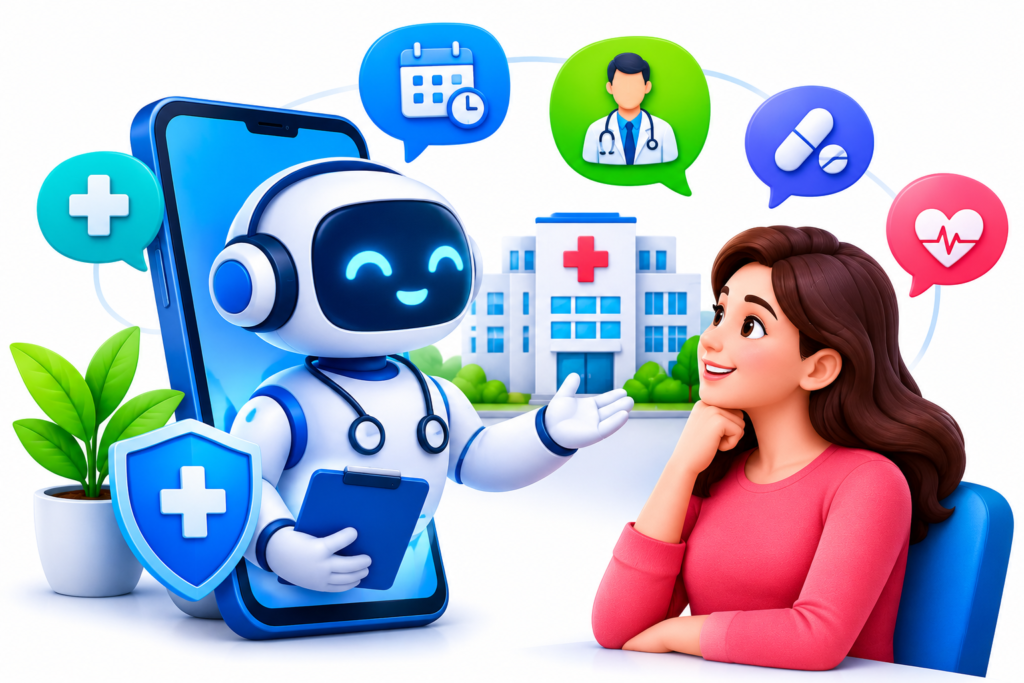
The patient journey begins before a person enters a healthcare facility. Someone experiencing a health concern may first search online for a clinic, specialist, treatment category, or appointment procedure. During this early stage, a healthcare chatbot can help visitors understand the services offered, identify relevant departments, and locate the correct contact channel. Instead of navigating multiple website pages, a visitor can ask a straightforward question and receive information from an approved source. The chatbot might explain which specialists are available, whether a facility offers a particular type of consultation, and how to request an appointment. It can also clarify that the information provided is general and that individual medical advice must come from a qualified professional. This early guidance can make the first interaction less confusing and help patients take an appropriate next step.
During the appointment and treatment stages, conversational automation can assist with administrative communication. Patients may need to confirm appointment details, understand registration procedures, locate a department, or learn which documents they should bring. A chatbot connected to approved operational systems can provide relevant instructions and direct users towards secure forms or patient portals. It may also support appointment reminders and provide information about rescheduling when plans change. Following a consultation, the system can direct patients towards approved follow-up resources, explain how to contact the clinic, or help them locate administrative information about their next visit. These interactions should not expose confidential medical records through an unsecured chat or assume that every patient has consented to receive automated messages. Any connection to patient-specific information requires suitable authentication, access controls, and privacy safeguards.
The post-appointment stage is equally important because patients may have additional administrative questions after leaving a clinic or hospital. They might need help finding a follow-up appointment, understanding where to access a document, or contacting the department responsible for their care. A healthcare chatbot can provide a consistent route to the right support channel, reducing the effort required to find contact details. It may also collect non-clinical feedback about appointment scheduling, website usability, or communication quality. Healthcare organisations can analyse this information to identify recurring problems and improve their processes. However, patient feedback should be handled confidentially, and complaints involving clinical outcomes or potential harm must be directed to the appropriate human team. The best patient journey is not one in which every interaction is automated. It is one in which patients can move smoothly between digital assistance and professional care without losing access to personal support when it matters.
Essential Features of an Effective Healthcare Chatbot
A successful healthcare chatbot requires more than a chat window and automated responses. Its features should reflect the actual communication needs of patients and the operational requirements of the organisation. One essential capability is reliable natural language understanding, which allows the system to recognise different ways of asking similar questions. Patients do not always use formal medical terminology, and they may write incomplete sentences or make spelling mistakes. The chatbot should therefore be able to interpret common conversational variations without making unsafe assumptions. Another important feature is a structured conversation workflow. Appointment requests, department selection, location enquiries, and administrative questions should follow clear processes that reduce confusion. The interface should also allow patients to restart a conversation, correct information, return to earlier options, and request human assistance without unnecessary difficulty.
Secure integration and information management are equally important. Depending on the organisation’s requirements, a chatbot may need to connect with appointment scheduling software, a customer relationship management platform, a patient portal, or an electronic health record system. These integrations should use authorised interfaces and carefully defined permissions. The chatbot should access only the information required for its intended task, and sensitive patient records should not be exposed through an ordinary public conversation. Authentication should be applied whenever a workflow involves confidential or patient-specific information. Other useful features include appointment confirmations, reminder management, multilingual content where properly supported, accessibility-friendly navigation, and clear explanations of the chatbot’s limitations. Organisations should also maintain a controlled knowledge base so that responses about opening hours, departments, procedures, and administrative policies remain accurate when operational information changes.
Human escalation, monitoring, and transparent communication are essential features rather than optional additions. A chatbot should recognise when it cannot answer a question confidently or when the subject requires professional judgement. It should then explain how the patient can contact an appropriate staff member. For urgent situations, the organisation must configure safe and clinically reviewed emergency guidance rather than rely on a generic message. Monitoring tools should help administrators review failed conversations, identify repeated misunderstandings, measure completion rates, and detect outdated information. Access to conversation logs must be restricted and handled in accordance with applicable privacy requirements. A healthcare chatbot should also clearly identify itself as an automated system instead of pretending to be a doctor, nurse, or human receptionist. These features create a more dependable digital experience because patients can understand what the system can do, what it cannot do, and how to obtain assistance when automation is not appropriate.
Different Types of Healthcare Chatbots and Their Applications
Healthcare chatbots can be categorised according to how they operate and what responsibilities they are designed to perform. Rule-based chatbots are among the simplest options. They use predefined questions, buttons, menus, and decision trees to guide visitors through structured conversations. A patient might select a department, choose an appointment category, and follow a series of instructions to reach the appropriate booking page. These systems are useful when enquiries have predictable answers and the organisation wants tight control over the conversation. Because responses are predefined, they can be easier to review and maintain than more flexible AI systems. However, they may struggle when patients ask unexpected questions or express their requests in ways that do not match the available options. A good rule-based chatbot should therefore include clear navigation, sensible fallback responses, and an easy route to human support.
AI-powered healthcare chatbots provide greater flexibility by interpreting natural-language questions and identifying user intent. They may use machine learning, NLP, NLU, and retrieval-based techniques to understand messages and locate relevant information. For example, a patient might ask about the difference between two appointment categories without using the exact terminology displayed on the website. An AI-powered system may recognise the question and retrieve an approved explanation from its knowledge base. Some chatbots also use generative AI to formulate responses in conversational language. This can make interactions more natural, but it introduces additional risks, including inaccurate statements, fabricated information, and responses that sound confident despite being incorrect. Healthcare organisations should use approved sources, response constraints, clinical review where necessary, and testing procedures to reduce these risks. Generative AI should never be treated as automatically reliable simply because it produces fluent language.
Other chatbot categories include appointment assistants, patient engagement chatbots, healthcare information assistants, telehealth navigation bots, and clinical support applications. Appointment assistants concentrate on scheduling, cancellations, and confirmations. Patient engagement systems may support reminders, administrative follow-up, and access to approved educational resources. Healthcare information assistants provide general details about facilities, departments, and procedures. Telehealth chatbots can help patients understand how to access virtual consultations and resolve basic technical or administrative questions. Clinical support applications are different because their functionality may influence medical decisions or patient management. Such systems require careful evaluation of intended use, evidence, oversight, and applicable regulatory obligations. Organisations should select a chatbot category based on a clearly defined operational problem rather than choosing the most advanced technology available. In many cases, a carefully designed rule-based or hybrid chatbot is a more appropriate starting point than a fully generative medical assistant.
Healthcare Chatbot Integration with Existing Medical Systems
A healthcare chatbot becomes more valuable when it works alongside the systems a healthcare organisation already uses. Hospitals, clinics, and medical practices often depend on multiple digital platforms to manage appointments, patient registrations, billing enquiries, communication, and medical administration. Without integration, a chatbot may only provide general information and redirect patients to external systems to complete basic tasks. By connecting the chatbot to suitable platforms through secure application programming interfaces (APIs), organisations can create more connected digital workflows. For example, a chatbot could guide a patient through an appointment request, transfer the required information to an authorised scheduling application, and provide confirmation after the booking system successfully processes the request. This reduces unnecessary manual steps and helps maintain consistency between patient communication and internal operations.
Several integrations can support different healthcare chatbot functions. Appointment management software can provide access to authorised scheduling workflows, while customer relationship management (CRM) platforms can help manage non-clinical enquiries and communication preferences. Patient portals may provide authenticated access to certain patient-specific functions, subject to suitable permissions. Electronic health record (EHR) systems require additional caution because they contain sensitive clinical information. Organisations should not allow a general website chatbot to retrieve or display confidential medical records without proper authentication, authorisation, and security controls. Healthcare interoperability standards such as HL7 FHIR can support structured exchange of healthcare information between compatible systems. However, using a standard does not automatically guarantee secure integration. Each connection must be designed, tested, and governed according to the organisation’s technical and regulatory requirements.
Integration planning should begin with a clear understanding of the data each system needs to exchange. Organisations should identify which information is collected, where it is stored, who can access it, how long it is retained, and whether it is transmitted to an external provider. Technical teams should also define authentication procedures, API permissions, error handling, audit logging, and recovery processes. If an appointment system becomes unavailable, the chatbot should not falsely confirm a booking. Instead, it should explain that the request could not be completed and provide an alternative contact method. Similarly, if a patient cannot be authenticated, the chatbot should not reveal private information. Testing should cover successful transactions, failed requests, duplicate submissions, expired sessions, and unexpected system responses. The objective is to build a connected healthcare communication environment in which each integration performs a clearly defined task without introducing unnecessary privacy or operational risks.
Healthcare Chatbot Privacy, Security, and Data Protection
Privacy and security are fundamental requirements when introducing chatbot technology into healthcare. Patients may discuss appointments, medical concerns, personal details, and other sensitive subjects during digital conversations. Even when a chatbot is intended only for administrative support, users may voluntarily enter confidential information into the conversation. Healthcare organisations must therefore determine what information the chatbot actually needs and avoid collecting unnecessary personal or medical details. A public-facing appointment assistant, for example, may only require a preferred date, department, and contact method. It should not request an entire medical history simply to answer a question about clinic opening hours. Clear privacy notices should explain the purpose of data collection, how information is processed, whether third-party providers are involved, and how patients can obtain further information about their data rights.
Security controls should cover the entire chatbot environment, including the website interface, hosting infrastructure, integrations, administrative accounts, and data storage systems. Appropriate safeguards may include encryption in transit and at rest, role-based access control, multifactor authentication for administrators, secure API authentication, monitoring, vulnerability management, and documented incident response procedures. Organisations should also assess chatbot vendors and any external AI providers before sharing patient information. Contracts, data-processing arrangements, retention policies, and access restrictions should be reviewed by the appropriate legal, privacy, and security teams. For organisations subject to United States healthcare privacy requirements, the HIPAA Security Rule establishes requirements for protecting electronic protected health information. Its applicability depends on the organisation’s role and circumstances. Healthcare providers operating in other countries must evaluate the privacy and security laws applicable to their own locations and patient populations.
A formal risk assessment should take place before the chatbot begins processing sensitive information. This assessment should identify potential threats, system vulnerabilities, third-party dependencies, inappropriate access risks, and possible consequences of a data breach. The HHS risk analysis guidance provides useful information for organisations evaluating risks to electronic protected health information under the HIPAA Security Rule. Healthcare teams should also consider the possibility of AI-specific threats, such as prompt injection, unauthorised disclosure through generated responses, manipulated knowledge sources, and incorrect use of connected tools. Administrative access should be limited, conversation records should be protected, and sensitive information should not be included in analytics reports without an appropriate justification. Regular security reviews, staff training, incident simulations, and vendor assessments help maintain protection as technology changes. Security is not a one-time installation task; it is an ongoing responsibility throughout the chatbot’s operational life.
Role of Artificial Intelligence, NLP, and Machine Learning in Healthcare Chatbots
Artificial intelligence gives healthcare chatbots the ability to process more flexible conversations than traditional menu-based systems. Natural language processing helps software analyse written language, while natural language understanding focuses on recognising meaning, user intent, and relevant information within a message. Machine learning techniques can help systems identify language patterns and improve selected tasks through appropriately governed training and evaluation processes. These technologies allow a patient to ask questions in ordinary language instead of following a rigid set of buttons. For example, a person might write, “Where can I get my blood test done?” rather than selecting a specific laboratory option. A language-enabled chatbot may recognise that the user is asking about laboratory facilities and retrieve the relevant location information from an approved source. This makes digital communication more flexible, particularly for users who are unfamiliar with medical terminology or website navigation.
Generative AI introduces another capability by producing conversational responses based on instructions, available context, and connected information sources. When appropriately configured, it can summarise approved administrative information, explain service procedures, and help patients navigate complex website content. Retrieval-augmented generation (RAG) can be used to retrieve relevant passages from a controlled knowledge base before generating a response. This approach may help keep answers connected to approved information, but it does not eliminate the possibility of errors. The chatbot may retrieve an outdated document, misunderstand a question, or generate an inaccurate explanation. Therefore, healthcare organisations should establish source approval processes, content version controls, response restrictions, and human review for sensitive topics. It is particularly important to prevent a general-purpose AI model from presenting unverified clinical suggestions as personalised medical advice.
AI governance should be part of the chatbot development process rather than an activity added after launch. Organisations need to assess the system’s intended purpose, performance limitations, possible biases, security exposure, and impact on different patient groups. The NIST AI Risk Management Framework offers a structured approach to identifying, assessing, and managing risks associated with AI systems. The WHO guidance on AI ethics and governance for health also highlights the importance of human rights, accountability, transparency, and responsible oversight in healthcare AI. These principles are especially relevant when a chatbot interacts with people who may be anxious, vulnerable, or seeking urgent assistance. AI should be used to improve communication and operational efficiency while preserving human responsibility for clinical decisions. A reliable healthcare chatbot does not need to answer every possible question. It needs to recognise what it can safely handle, explain its limitations, and transfer complex matters to qualified professionals.
Healthcare Chatbot Implementation: A Step-by-Step Strategy
Successful implementation begins with identifying a specific communication or administrative problem. Healthcare organisations should avoid purchasing chatbot technology simply because AI is becoming popular. Instead, they should examine the enquiries their staff receive, the tasks that consume administrative time, and the points where patients experience difficulty. A clinic might discover that its reception team spends a significant amount of time answering questions about opening hours, specialist availability, appointment procedures, and directions. These findings could support a chatbot focused on administrative information and appointment navigation. A hospital may have different priorities, such as directing visitors to departments or explaining registration procedures. The organisation should document its objectives, intended users, required capabilities, and success measures before choosing a platform. This ensures that the selected solution addresses an actual operational need rather than introducing unnecessary complexity.
The next stage involves selecting the chatbot technology and preparing its content. Organisations should compare platforms based on integration capabilities, security controls, accessibility, administration features, scalability, vendor support, and total operating costs. The chatbot’s knowledge base should contain verified information about departments, services, locations, opening hours, booking procedures, and approved patient instructions. Each information category should have a responsible owner and review schedule. Conversation flows should be designed around realistic user tasks, with clear questions and straightforward options. The organisation should also define escalation conditions for situations involving medical concerns, urgent symptoms, complaints, uncertainty, or requests for confidential information. Where the chatbot connects to external systems, technical teams should test the integration in a controlled environment before allowing real patient transactions. Privacy, security, clinical, legal, and operational stakeholders should participate in the approval process according to the system’s intended use.
A pilot launch is generally a sensible way to evaluate the chatbot before wider deployment. The organisation can initially introduce a limited set of administrative functions to a controlled user group or selected website section. During this stage, staff should review conversation quality, failed requests, incorrect answers, accessibility problems, and patient feedback. Testing should include ordinary questions as well as unusual and potentially unsafe scenarios. For example, the team should check how the chatbot responds when someone asks for a diagnosis, reports severe symptoms, requests another person’s medical information, or attempts to make the system ignore its safety instructions. Once the system meets defined acceptance criteria, the organisation can gradually expand its functions. Training should be provided to reception teams, administrators, and relevant healthcare professionals so that everyone understands the chatbot’s capabilities and escalation procedures. After launch, performance should be reviewed regularly, content should be updated, and identified risks should be addressed through a documented improvement process.
Healthcare Chatbot Accessibility and Multilingual Patient Communication
Accessibility is an essential consideration because healthcare websites serve people with different physical abilities, communication preferences, ages, and levels of digital confidence. A chatbot that works well for one group may create barriers for another if it relies on small text, complicated navigation, colour-only instructions, or interactions that cannot be operated using a keyboard. Patients with visual impairments may depend on screen readers, while users with motor disabilities may require larger controls and sufficient time to complete a conversation. The chatbot should use readable typography, clear labels, logical focus order, descriptive error messages, and a consistent interface. It should also avoid excessive animation or unnecessary conversational steps. Healthcare organisations can use the W3C Web Content Accessibility Guidelines as a technical reference when evaluating the accessibility of their digital experiences.
Multilingual communication can also improve the usefulness of healthcare chatbots, particularly in communities where patients speak different languages. A multilingual chatbot may allow users to select their preferred language and receive administrative information in a format they understand. However, translating healthcare content requires more care than converting ordinary website text. Medical terminology, medication instructions, appointment preparation information, and emergency messages must retain their intended meaning. Poor translations can create misunderstandings, especially when the subject involves patient safety. Organisations should use qualified language reviewers for important healthcare content and test translated conversations with appropriate speakers. The system should clearly explain which languages it supports and should provide a human assistance option when it cannot understand a request confidently. Automatic translation should not be treated as a substitute for professional interpretation when accurate communication is essential to clinical care.
Accessibility and multilingual support should be tested using realistic patient scenarios rather than evaluated only through technical checklists. Healthcare organisations can invite users with different accessibility needs to test the chatbot and provide feedback about navigation, readability, language selection, and response clarity. They should also consider patients who have limited internet access, older devices, or difficulty using digital services. A telephone contact option and access to human staff should remain available for people who cannot or do not wish to use a chatbot. The system should not make essential healthcare information available exclusively through an automated interface. A genuinely inclusive chatbot offers an additional communication channel without excluding people who need another form of assistance. By combining accessible interface design, professionally reviewed language support, and clear human alternatives, healthcare organisations can make digital communication more usable across a wider patient population.
How to Measure Healthcare Chatbot Performance and Patient Engagement
Healthcare chatbot performance should be measured using a combination of operational, technical, and patient-experience indicators. One useful metric is conversation completion rate, which measures how often users successfully finish a defined task, such as locating a department or reaching an appointment booking process. Another is the escalation rate, which shows how frequently conversations are transferred to human staff. A high escalation rate is not necessarily a failure because some enquiries appropriately require professional assistance. Similarly, a low escalation rate does not automatically indicate success if the chatbot is incorrectly handling requests that should be reviewed by a human. Organisations should therefore interpret metrics according to the chatbot’s intended purpose and safety requirements. Other useful indicators include response latency, system availability, unresolved enquiry rate, repeated question frequency, booking workflow completion, and the percentage of conversations in which users abandon the process.
Patient experience should be evaluated alongside operational performance. Healthcare organisations can collect feedback through optional surveys, structured comments, or follow-up questions that do not request unnecessary sensitive information. Feedback may reveal whether the chatbot is easy to understand, whether its answers are useful, and whether patients can reach human assistance when required. Website analytics may also help identify which pages or service categories generate the greatest demand for chatbot support. However, analytics should be configured to avoid exposing confidential patient information. Conversation logs should be reviewed only by authorised personnel, and reporting should use appropriately minimised or aggregated information wherever possible. Organisations should also monitor whether the chatbot performs differently across languages, devices, accessibility settings, and user groups. This helps identify problems that may not be visible through overall averages.
A continuous improvement process turns performance data into practical changes. If patients repeatedly abandon an appointment workflow at the same stage, the organisation should investigate whether the questions are confusing, the booking integration is unreliable, or the required information is difficult to provide. If the chatbot frequently fails to recognise a particular question, the knowledge base or intent configuration may need improvement. If incorrect information is discovered, the organisation should assess the potential impact, correct the source, review affected conversations where appropriate, and document the corrective action. Technical teams should also monitor integration failures, security alerts, and unexpected changes in AI responses. Performance reviews should involve the people responsible for administration, technology, privacy, and clinical oversight as appropriate. The aim is to measure whether the chatbot improves a genuine part of the patient experience while maintaining reliable communication, appropriate human involvement, and responsible handling of information.
Future Trends in Healthcare Chatbot Technology

Healthcare chatbot technology is likely to become more closely connected with broader digital health environments. Improvements in language models, conversational interfaces, interoperability, and workflow automation may allow patients to navigate healthcare services through more natural interactions. Future systems may support richer conversations across websites, patient portals, and mobile applications while maintaining consistent information between channels. Voice-enabled assistants may also offer additional communication options for people who find typing difficult or prefer spoken interactions. However, voice technology introduces its own privacy and accuracy considerations, particularly when conversations take place in shared environments. Healthcare organisations will need to ensure that voice-based systems protect confidential information and provide alternatives for users who cannot or do not wish to use speech recognition.
Another developing area is the use of connected digital health information and remote monitoring workflows. Depending on the organisation’s systems and approved clinical processes, conversational assistants may help patients navigate wearable-device applications, understand how to submit information, or locate instructions for virtual consultations. They may also provide administrative support for remote patient engagement programmes. These functions should not be confused with independently interpreting medical measurements or deciding whether treatment is required. If a system processes information in a way that influences clinical decisions, the organisation must assess its intended purpose and applicable regulatory requirements. The FDA Clinical Decision Support Software guidance provides important information for understanding how certain software functions may be treated under United States medical-device regulations. The regulatory position depends on the actual functionality, intended use, and applicable legal criteria.
Future development will also place greater emphasis on trustworthy AI, interoperability, privacy-preserving technology, and human oversight. Healthcare providers may increasingly expect chatbot vendors to demonstrate how their systems manage inaccurate responses, protect sensitive data, document system changes, and evaluate performance across different patient populations. Organisations should avoid assuming that newer technology is automatically safer or more effective. A sophisticated conversational model may still misunderstand a question, provide an outdated answer, or fail to recognise an urgent situation. Technology selection should therefore be based on evidence, controlled testing, security assessment, and practical suitability. Healthcare organisations that establish strong governance now will be better prepared to evaluate future capabilities responsibly. The long-term value of healthcare chatbots will depend less on how human-like their conversations appear and more on whether they improve access, reduce unnecessary administrative friction, and support safe, accountable healthcare communication.
Building a Reliable Healthcare Chatbot: Implementation, Common Mistakes, and Best Practices
A reliable healthcare chatbot should be built around a clearly defined service purpose, approved information, secure technical architecture, and appropriate human oversight. Organisations should begin with a manageable set of tasks, such as answering routine administrative questions, explaining appointment procedures, and directing visitors to the correct department. These functions can provide practical value without requiring the chatbot to interpret medical conditions or make treatment recommendations. Once the initial workflow has been tested, additional capabilities can be introduced based on patient needs and organisational readiness. Every new function should have a documented owner, an approved information source, defined access permissions, and a clear process for handling failures. This approach makes it easier to understand what the chatbot is responsible for and prevents uncontrolled expansion into sensitive activities that have not been properly assessed.
The organisation should also establish a governance structure that brings together technology administrators, healthcare operations, privacy specialists, security teams, and qualified clinical reviewers where necessary. This group should determine how content is approved, how frequently information is reviewed, which conversations require escalation, and how incidents are investigated. AI-generated responses should be evaluated for factual accuracy, clarity, consistency, and safety. Changes to connected systems should be tested before deployment, and vendor updates should be assessed for possible effects on existing workflows. A chatbot should never be considered a replacement for emergency services, qualified medical professionals, or the organisation’s established patient complaint and safeguarding procedures. Clear disclosures should explain that the user is interacting with an automated system, and patients should be able to reach a person when their needs cannot be addressed safely through automation.
Long-term success depends on maintaining the chatbot after launch rather than treating implementation as a one-time project. Healthcare information changes, staff responsibilities evolve, appointment systems are updated, and security threats develop over time. The organisation should therefore maintain an improvement schedule covering content reviews, access audits, security assessments, integration testing, accessibility checks, and conversation-quality evaluations. It should also review whether the chatbot continues to meet its original objectives and whether its operation creates unexpected problems for patients or staff. The most effective approach is to expand automation gradually, use performance evidence to guide improvements, and preserve human support for complex or sensitive enquiries. When these principles are followed, healthcare chatbot technology can become a useful part of a broader digital patient experience rather than an isolated automation feature.
Common Mistakes to Avoid When Implementing a Healthcare Chatbot
Healthcare chatbot projects can fail when organisations focus on automation without first understanding patient needs and operational responsibilities. One common mistake is attempting to automate every healthcare interaction. Patients may ask questions involving symptoms, treatment decisions, medication changes, or emergencies. These subjects cannot safely be handled by a general administrative chatbot without an appropriately designed and authorised clinical framework. Another mistake is allowing AI to generate answers from unverified internet content or outdated internal documents. A chatbot that provides incorrect opening hours, appointment instructions, or healthcare information can create confusion and undermine patient confidence. Organisations should use controlled knowledge sources and establish a review process that keeps important information accurate.
A further mistake is collecting more personal information than the chatbot requires. Asking for confidential medical details during a routine administrative conversation increases privacy exposure and may create unnecessary security responsibilities. Organisations should minimise data collection, explain why information is required, and apply suitable controls to any sensitive information that must be processed. Ignoring human escalation is another serious problem. Patients should not be trapped in repetitive automated responses when they need assistance from a receptionist, clinician, or other qualified member of staff. Poor integration can also create operational difficulties. For example, a chatbot that displays appointment availability without reliably updating the scheduling system may produce duplicate requests or incorrect confirmations. All connected workflows should be tested with realistic scenarios before launch.
Other avoidable mistakes include neglecting accessibility, failing to review multilingual content, overlooking vendor security, and measuring success only through the number of conversations handled. A chatbot may attract many interactions while still frustrating patients or failing to complete useful tasks. Organisations should evaluate completion rates, user feedback, failed conversations, escalation quality, and technical reliability together. They should also avoid launching a system without training the employees responsible for monitoring it. Staff need to know how the chatbot works, when to intervene, and how to report problems. Finally, organisations should not assume that a chatbot is compliant merely because a vendor advertises a particular security feature or certification. Privacy and regulatory obligations depend on the actual system, data flows, contractual arrangements, and applicable laws. Independent assessment and ongoing governance are essential.
Frequently Asked Questions
1. What is the main purpose of a healthcare chatbot?
The main purpose of a healthcare chatbot is to make communication between healthcare organisations and patients more accessible and efficient. It can answer routine questions, explain administrative procedures, guide patients towards appointments, provide clinic information, and direct enquiries to appropriate departments. Depending on its configuration, it may also support reminders, registration guidance, and access to approved educational information. Its role should be clearly defined so that patients understand which tasks it can handle and when they need assistance from a qualified professional. A general healthcare chatbot should not be presented as a replacement for medical consultations, diagnosis, or emergency services.
2. Can a healthcare chatbot book medical appointments automatically?
Yes, a healthcare chatbot can support appointment booking when it is connected to an authorised scheduling platform and configured with the necessary workflows. It may collect a patient’s preferred department, appointment category, date, and other required details before presenting suitable booking options. The system can also help with appointment confirmations, cancellations, and rescheduling if the connected platform supports those functions. However, the chatbot should only confirm an appointment after the scheduling system successfully processes the transaction. If the integration fails or availability changes, the chatbot must communicate the problem clearly rather than displaying an unverified booking confirmation.
3. Are healthcare chatbots safe for patients to use?
Healthcare chatbot safety depends on its intended purpose, design, information sources, security controls, and level of human oversight. A chatbot that provides approved clinic information and supports routine administration has different risks from an application that provides clinical recommendations. Organisations should test responses, restrict unsupported medical advice, protect sensitive information, and create clear escalation procedures. Patients should also understand that a general chatbot cannot replace an examination or professional medical assessment. For urgent or potentially life-threatening situations, the system should provide appropriate emergency guidance based on approved local procedures rather than attempting to manage the situation through an ordinary conversation.
4. How do healthcare chatbots protect patient information?
Healthcare chatbots can protect information through data minimisation, encryption, secure authentication, access controls, appropriate hosting, monitoring, and carefully managed integrations. Organisations should identify which information is collected and why it is needed. Sensitive information should only be processed when there is an appropriate legal basis and suitable technical and organisational protection. Healthcare providers should also assess third-party vendors, review data-processing agreements, define retention periods, and establish incident response procedures. The exact legal requirements depend on the organisation’s location, role, and the types of information being processed. Security should be reviewed regularly rather than assumed to be guaranteed by the chatbot provider.
5. What is the difference between a rule-based and an AI-powered healthcare chatbot?
A rule-based chatbot follows predefined conversation paths, buttons, and decision trees. It is useful for predictable tasks such as selecting a department, finding clinic hours, or requesting an appointment. An AI-powered chatbot can interpret more flexible natural-language questions and recognise different ways of expressing the same intention. Some AI systems can also retrieve information from approved knowledge sources and generate conversational responses. Rule-based systems generally provide greater predictability, while AI-powered systems offer more flexible interactions but require additional evaluation and governance. A hybrid approach can combine the control of predefined workflows with the conversational flexibility of AI.
6. Can healthcare chatbots provide medical diagnoses or treatment recommendations?
A general administrative healthcare chatbot should not independently diagnose medical conditions or recommend treatment. Clinical functionality requires a separate assessment of the system’s intended purpose, evidence, risks, professional oversight, and applicable regulatory requirements. Some software functions may fall under medical-device or clinical decision support regulations, depending on how they operate and how their outputs are used. Healthcare organisations should obtain appropriate clinical and regulatory review before introducing such functionality. For ordinary patient communication, the safer approach is to provide approved general information and direct personal medical questions to qualified healthcare professionals.
7. How much does it cost to implement a healthcare chatbot?
The cost depends on the chatbot platform, the number of required workflows, integration complexity, AI capabilities, security requirements, hosting arrangements, support, and ongoing maintenance. A basic website chatbot that answers approved administrative questions will generally require less development than a system connected to appointment management, patient portals, or clinical software. Organisations should consider the total cost of ownership rather than looking only at the initial subscription or development fee. This includes implementation, staff training, vendor assessment, content maintenance, testing, security reviews, and future upgrades. Comparing solutions against clearly defined operational requirements helps organisations avoid paying for unnecessary functionality.
8. How can a healthcare organisation measure whether its chatbot is successful?
Success should be evaluated through a combination of operational performance, patient experience, reliability, and safety indicators. Useful measurements include completed appointment workflows, successful information requests, unresolved conversations, response times, system availability, and the quality of human escalations. Patient feedback can help identify confusing questions, accessibility barriers, and information that needs improvement. Healthcare organisations should also monitor privacy incidents, incorrect responses, integration failures, and performance across different languages and user groups. A successful chatbot is not simply one that handles a large number of conversations. It is one that helps patients complete appropriate tasks while maintaining accurate information, security, and access to human assistance.
Best Practices Summary for Healthcare Chatbot Implementation
Healthcare organisations should follow a structured set of practices to maintain chatbot reliability, usability, and accountability. The following principles provide a practical foundation for development, deployment, and ongoing improvement.
- Define a clear purpose: Begin with specific administrative or communication challenges rather than attempting to automate every healthcare interaction.
- Use approved information: Maintain a verified knowledge base containing current clinic information, appointment procedures, and authorised patient resources.
- Protect patient privacy: Collect only necessary information and apply appropriate security, access, retention, and data-processing controls.
- Establish human escalation: Make it easy for patients to reach qualified staff when a question is complex, sensitive, urgent, or outside the chatbot’s capabilities.
- Integrate carefully: Connect scheduling and other systems through authorised APIs, appropriate authentication, and thoroughly tested workflows.
- Evaluate AI responses: Check accuracy, relevance, safety, and consistency before allowing AI-generated responses to reach patients.
- Prioritise accessibility: Design interfaces that support keyboard navigation, readable content, assistive technologies, and different user needs.
- Review multilingual content: Use appropriate language review for important healthcare instructions and provide alternative communication channels.
- Monitor performance: Track completed tasks, unresolved questions, escalation quality, system reliability, and patient feedback.
- Train employees: Ensure staff understand the chatbot’s responsibilities, limitations, and procedures for handling escalated enquiries.
- Maintain regular reviews: Update content, reassess risks, test integrations, and evaluate the system whenever important changes occur.
- Expand gradually: Introduce new functionality only after the organisation has evaluated its risks, operational value, and readiness.
Want to Implement This Easily?
Prompt Text:
You are an expert consultant. Based on the blog post titled “(Healthcare Chatbot)”, provide a step-by-step, practical implementation guide. Include tools, best practices, common mistakes to avoid, and advanced tips. Assume the reader wants to implement everything discussed in this article effectively.
Call to Action:
Want our help implementing this? Just reach out to us via our website contact form.