
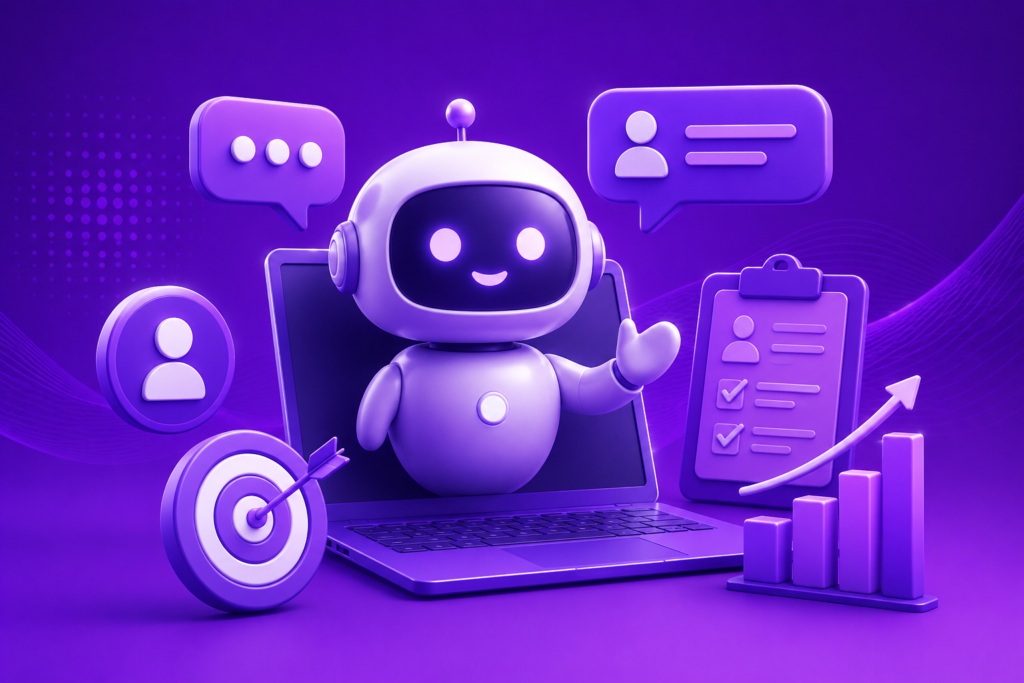
An Agency Chatbot helps agencies automate client conversations, qualify leads, answer questions, schedule consultations, and improve customer engagement while maintaining a professional and personalized experience.
Introduction
Running an agency means managing far more than delivering excellent work. Agencies constantly communicate with prospects, answer service questions, qualify new opportunities, schedule discovery calls, follow up with potential clients, and support existing customers. As the number of conversations increases, maintaining fast and consistent communication can become difficult. A potential client may visit a website after business hours, ask an important question, or show interest in a particular offering, yet receive no immediate response. Even a short delay can create friction during a competitive buying process.
This is where an Agency Chatbot can become a practical part of a modern agency’s communication strategy. Instead of forcing prospects to wait for a team member to become available, a chatbot can provide immediate answers, collect useful information, identify the visitor’s needs, and guide qualified prospects toward the next appropriate step. It can support conversations across areas such as digital marketing, web development, branding, advertising, consulting, creative work, recruitment, public relations, and other professional agency models. The objective is not simply to automate conversations. The objective is to make the overall client journey more responsive, organized, and useful.
For agencies considering this technology, implementation should begin with the customer journey rather than the technology itself. Google’s guidance emphasizes creating original, useful, people-first content and evaluating content through the concepts of experience, expertise, authoritativeness, and trustworthiness. The same principle applies to conversational automation: an effective chatbot should solve genuine customer problems, communicate clearly, avoid misleading claims, protect sensitive information, and provide a straightforward path to human assistance when automation reaches its limits. Engagerbot can be considered as part of that broader strategy when an agency wants to make client conversations more accessible and scalable.
What Is an Agency Chatbot?
An Agency Chatbot is an AI-powered or rule-based conversational system designed to help agencies communicate with website visitors, prospects, clients, and other audiences through automated conversations. Depending on how it is configured, the chatbot can answer frequently asked questions, explain agency offerings, identify visitor requirements, collect contact information, qualify leads, recommend appropriate next steps, schedule meetings, and transfer conversations to a human representative. Instead of treating every website visitor as an identical prospect, a well-designed chatbot can use conversational questions to understand what each visitor is trying to accomplish.
The difference between a basic website chat widget and a strategically designed agency chatbot is significant. A basic widget may simply allow visitors to send a message to a team. An agency-focused chatbot can actively guide the conversation. For example, it might ask whether a visitor needs SEO, paid advertising, website development, branding, content creation, or another capability. It can then ask relevant follow-up questions such as project objectives, approximate requirements, timeline, business type, or preferred consultation method. This creates structured information that can make subsequent sales conversations more productive.
A chatbot should not be viewed as a replacement for agency professionals. High-value agency relationships often depend on strategy, creativity, judgment, trust, and communication that require human involvement. Instead, automation should handle repetitive and predictable parts of the journey while allowing specialists to concentrate on complex decisions and qualified opportunities. This distinction is important because the strongest implementation is usually a human-plus-automation model. The chatbot handles initial engagement and routine information gathering, while the agency team remains responsible for strategic recommendations, sensitive discussions, proposals, negotiations, and relationship management.
Why Agencies Are Adopting AI-Powered Chatbots
One of the biggest reasons agencies explore AI-powered chatbots is the growing expectation for immediate communication. Prospects rarely interact with a business according to the agency’s internal schedule. Someone may discover an agency during the evening, research competitors early in the morning, or visit a website while working in another time zone. If the only available communication option is a form that may receive a response the next business day, the prospect may continue searching elsewhere. A chatbot can provide an immediate first response and keep the conversation moving even when the agency’s team is unavailable.
Another important advantage is consistency. Agency teams can unintentionally provide different answers to similar questions depending on who responds, how busy the employee is, or how much context they have. A properly maintained chatbot can use an approved knowledge base and predefined conversation logic to provide consistent information about offerings, processes, working arrangements, consultation steps, and other frequently requested details. This does not mean every response should sound robotic. Modern conversational systems can be designed around a clear brand voice while still maintaining boundaries around what the system can confidently answer.
AI automation can also improve operational efficiency by reducing repetitive workload. Consider an agency receiving dozens of inquiries each week that repeatedly ask about pricing ranges, project timelines, availability, onboarding, deliverables, or consultation processes. Employees may spend considerable time answering these questions before discovering whether a prospect is actually suitable. A chatbot can address routine questions first and collect qualification information before involving the sales team. This can help agencies spend more human time on conversations that require expertise. The benefit is therefore not simply “saving time”; it is improving how limited team capacity is allocated across the sales and client lifecycle.
How an Agency Chatbot Improves Lead Generation
Lead generation is one of the most valuable applications of an agency chatbot because the system can engage visitors at the moment they demonstrate interest. Traditional lead forms often require visitors to decide what information to provide before submitting their details. A conversational interface can make this process more interactive. Instead of presenting a long form with multiple fields, the chatbot can ask one question at a time and adapt subsequent questions according to the visitor’s answers. This can create a more natural path from initial interest to qualified inquiry.
For example, imagine a visitor arrives looking for an SEO campaign. The chatbot could first ask what the visitor wants to improve, such as organic traffic, rankings, local visibility, content performance, or technical SEO. It could then ask about the website’s current situation, business model, project timeline, and preferred consultation method. These responses provide more useful context than a generic “Contact Us” submission. When the conversation reaches the human team, the agency may already understand the visitor’s primary challenge and can prepare a more relevant response.
Lead qualification is particularly important for agencies because not every inquiry represents the same commercial opportunity. A chatbot can help distinguish between general information requests and visitors who are actively considering a project. It can collect qualification signals such as service interest, project scope, timeframe, business size, location, existing technology, or budget information when appropriate. However, agencies should avoid making the qualification process unnecessarily intrusive. Asking for too much information too early can discourage legitimate prospects. A better approach is to collect only the information necessary for the next step and explain why certain information is being requested.
Key Features Every Agency Chatbot Should Have
A strong Agency Chatbot should begin with a clearly defined purpose. The most useful systems typically combine several capabilities rather than attempting to automate every possible customer interaction. At a minimum, the chatbot should understand common visitor intents, answer frequently asked questions, capture qualified leads, and provide a clear route to human assistance. If the system is connected to calendars, CRM platforms, help desks, or other business tools, it may also support appointment scheduling, lead routing, and structured data collection.
Another important feature is contextual conversation. Visitors should not have to repeat information unnecessarily. If someone has already explained that they need a website redesign, the chatbot should use that information when asking subsequent questions. Context can make the experience feel significantly more useful and reduce conversational friction. Agencies should also consider fallback behavior. When the chatbot does not understand a question or lacks reliable information, it should communicate that limitation rather than inventing an answer. A transparent fallback such as offering human assistance is much safer than providing confident but inaccurate information.
Integration capability is equally important. A chatbot that collects valuable lead information but leaves employees manually copying data into other systems can create a new operational problem. Where appropriate, agencies can connect conversational data with CRM systems, calendars, email workflows, analytics platforms, ticketing tools, or internal notification systems. The exact integrations depend on the agency’s workflow, but the principle remains consistent: automation should reduce friction across the complete process, not simply automate the first conversation. Security and access controls should also be considered whenever chatbot conversations interact with business systems or sensitive information. The current OWASP Top 10 identifies risks such as broken access control, security misconfiguration, software supply chain failures, injection, and authentication failures among major web application security concerns.
Using an Agency Chatbot for Client Qualification
Not every website visitor is ready to purchase, and not every prospect requires the same conversation. Client qualification allows an agency to understand whether a visitor’s needs align with its capabilities before assigning significant human resources to the opportunity. A chatbot can perform this initial qualification through a short sequence of targeted questions. The goal should not be to interrogate visitors or create unnecessary barriers. Instead, qualification should feel like a helpful discovery conversation that moves the visitor closer to an appropriate solution.
A useful qualification workflow can begin with the visitor’s objective. Instead of immediately asking for contact information, the chatbot might ask what the visitor is trying to achieve. Depending on the response, it can identify a relevant service category and ask one or two additional questions. A website-development prospect might be asked whether they need a new website, redesign, migration, or ongoing improvements. A marketing prospect might be asked whether the main priority is traffic, leads, conversions, brand awareness, or another outcome. This approach allows the chatbot to personalize the conversation while gathering information the sales team can actually use.
Qualification should also include clear boundaries. A chatbot should not promise that an agency can deliver something unless that capability is genuinely available. It should not make unsupported claims about guaranteed rankings, guaranteed revenue, guaranteed lead volume, or guaranteed project outcomes. This is especially important for trust. Google’s people-first guidance encourages creators to focus on useful, reliable information rather than content designed primarily to manipulate search visibility. The same mindset should guide automated conversations. Honest qualification creates better expectations and gives human representatives a stronger foundation for the next stage of the sales process.
Personalizing Agency Chatbot Conversations
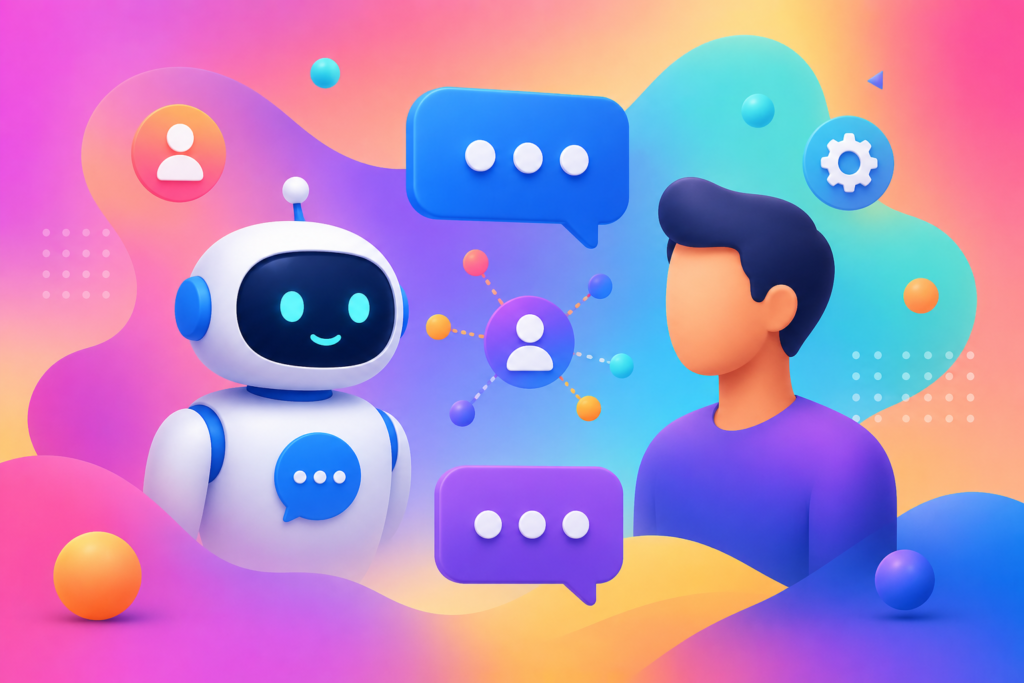
Personalization is one of the most important factors separating a useful chatbot from a frustrating one. Visitors expect a conversation to reflect what they have already told the system. If a prospect explains that they operate an e-commerce company and need help increasing organic traffic, the chatbot should not immediately respond with a generic list of every service the agency offers. Instead, it should acknowledge the stated objective and guide the visitor toward relevant information. Even simple contextual personalization can make an automated interaction feel significantly more considerate.
Effective personalization does not necessarily require collecting large amounts of personal data. In many cases, the most useful information comes directly from the current conversation. The chatbot can remember the visitor’s selected service, stated objective, project stage, preferred contact method, or timeline during the session. Agencies can then use those details to determine what information should appear next. For returning users, additional personalization may be possible depending on the technology and privacy framework being used, but this should always be handled responsibly. Visitors should not feel that the system knows more about them than they reasonably expect.
The agency’s communication style should also be reflected in the chatbot. A professional consultancy may require a more formal tone, while a creative agency may prefer a conversational and energetic style. However, personality should never interfere with clarity. The chatbot should use understandable language, avoid excessive jargon, acknowledge uncertainty when appropriate, and make human escalation easy. Personalization is most effective when it supports the visitor’s goal rather than becoming a gimmick. The best chatbot conversation is not the one that appears most intelligent; it is the one that helps the visitor accomplish something with the least unnecessary friction.
Designing an Agency Chatbot Customer Journey
Before building chatbot conversations, agencies should map the customer journey they want the system to support. A useful journey might begin when a visitor lands on a service page, continue through an initial question, identify the visitor’s objective, provide relevant information, qualify the opportunity, and end with a suitable action such as booking a consultation or contacting the team. Mapping this journey prevents the common mistake of building disconnected chatbot responses without understanding how each conversation contributes to the larger customer experience.
A practical customer journey can be divided into several stages: engagement, discovery, qualification, recommendation, and conversion. During engagement, the chatbot welcomes the visitor without overwhelming them. During discovery, it identifies what the visitor needs. Qualification determines whether additional information is useful before involving the team. Recommendation provides the most relevant next step. Conversion then moves the visitor toward an action, such as scheduling a meeting, submitting project information, requesting a proposal, or starting a human conversation. Not every visitor needs to complete every stage, so the chatbot should allow people to move backward, ask questions, or request human assistance.
Agencies should also plan what happens after conversion. A chatbot should not be treated as successful merely because it collects an email address. The lead needs to reach the correct person or workflow, and the information gathered should remain useful. For example, a qualified web-development lead could be routed to a business development representative with the visitor’s stated requirements attached to the inquiry. This reduces repetitive questioning and creates continuity between automated and human communication. When agencies design the chatbot around the complete journey rather than the chat window itself, automation becomes part of the business process instead of an isolated website feature.
Powerful Use Cases of an Agency Chatbot
An Agency Chatbot can support much more than basic website questions. One of its strongest applications is helping agencies capture and manage opportunities throughout the customer journey. A visitor may arrive on a service page with a specific requirement, compare several providers, or simply want to understand whether the agency can solve a particular problem. Instead of making that visitor search through multiple pages, the chatbot can identify the intent and guide them toward relevant information. For example, a digital marketing agency could use conversational questions to determine whether someone needs SEO, paid advertising, social media strategy, content marketing, conversion optimization, or technical assistance. A creative agency could similarly guide visitors toward branding, graphic design, video production, web design, or campaign development. This makes the chatbot a practical navigation layer as well as a communication tool.
Another valuable use case is consultation booking. Many agencies depend on discovery calls to understand requirements before preparing a proposal. A chatbot can explain the purpose of a consultation, collect basic project information, and direct qualified visitors toward an available scheduling process. It can also answer common questions before the meeting, such as what information the prospect should prepare, what topics will be discussed, or what happens after the consultation. This can make appointments more productive because the agency team receives context before the conversation begins. The chatbot can also support existing clients by helping them find resources, understand project processes, locate relevant documentation, or request assistance from the correct department.
Chatbots can also contribute to after-hours engagement and international communication. Agencies serving clients across different countries may receive inquiries outside their team’s working hours. A conversational assistant can acknowledge the visitor, answer approved questions, collect project information, and create a clear expectation for human follow-up. This does not mean pretending that employees are available when they are not. Transparency should remain part of the experience. The chatbot can explain when a human representative will respond and provide alternative resources when appropriate. By combining immediate engagement with responsible escalation, agencies can create a customer journey that remains useful without sacrificing trust or accuracy.
Agency Chatbot Integration With CRM and Business Workflows
The real value of an Agency Chatbot increases when conversational information can move into the systems the agency already uses. A chatbot that collects a qualified lead but leaves employees manually transferring every detail into a CRM can create unnecessary administrative work. Integration can allow relevant information to flow into the appropriate workflow automatically. Depending on the agency’s technology stack, captured information may include the visitor’s name, contact details, service interest, project objective, timeline, qualification responses, and conversation context. The exact data collected should always be limited to what is genuinely useful for the next stage.
CRM integration can also improve lead routing. Not every inquiry should reach the same employee. An agency might have separate teams for SEO, advertising, web development, design, consulting, or customer support. A chatbot can identify the relevant category and route the conversation accordingly. This reduces the chance of leads being sent to the wrong department and allows specialists to receive opportunities that match their expertise. The same concept can apply to geography, account type, project size, or urgency when those factors are relevant to the agency’s internal process. A well-designed workflow therefore turns chatbot information into operational intelligence rather than simply storing conversation transcripts.
Agencies should also consider integration with calendars, email systems, project-management platforms, ticketing tools, analytics systems, and internal notifications. However, more integrations do not automatically mean a better implementation. Each connection introduces additional dependencies, permissions, maintenance requirements, and potential failure points. The agency should first identify the workflow that needs improvement and then determine which integration actually supports that objective. Data quality is equally important. If the chatbot sends incomplete or inaccurate information to a CRM, automation can make the problem happen faster rather than solving it. Clear field definitions, validation rules, monitoring, and regular workflow reviews should therefore be part of the implementation.
Security, Privacy, and Trust in Agency Chatbots
Security should be considered before an agency chatbot begins collecting or processing meaningful customer information. Conversations can contain names, email addresses, business details, project requirements, account information, or other data that should not be exposed unnecessarily. Agencies should determine what information the chatbot genuinely needs and avoid collecting sensitive data simply because the technology makes it possible. Access to chatbot records should also be limited to appropriate team members. The principle of least privilege is useful here because employees and connected systems should receive only the access necessary to perform their responsibilities.
Agencies should also evaluate the security of integrations, authentication processes, APIs, data storage, and third-party platforms. The NIST Cybersecurity Framework provides a widely used structure for helping organizations manage cybersecurity risk through functions including Govern, Identify, Protect, Detect, Respond, and Recover. (nist.gov) Agencies can apply the same thinking to chatbot deployments by identifying what information is processed, determining potential risks, implementing protective controls, monitoring activity, and establishing a response process for incidents. Security should be treated as an ongoing operational responsibility rather than a one-time configuration task.
There is also a distinction between chatbot security and general website security. A chatbot may become an additional application layer that receives user input and interacts with other systems. Input validation, authentication, authorization, rate limiting, logging, and secure API design should therefore be considered carefully. The OWASP Top 10 is a useful reference for understanding common web application security risks, while the organization’s work on OWASP Top 10 for LLM Applications provides additional context for risks associated with large language model applications. (owasp.org) Agencies should also think about abuse scenarios, including automated spam, prompt manipulation, excessive requests, unauthorized data access, and attempts to make the chatbot reveal internal information. Strong security is not about making the chatbot complicated; it is about creating sensible controls around what it can access and what it is allowed to do.
How to Implement an Agency Chatbot Successfully
A successful implementation should begin with business objectives rather than selecting a chatbot tool immediately. The agency should identify the specific problem it wants to solve. Perhaps the sales team receives too many repetitive inquiries, prospects abandon lengthy forms, support employees answer the same questions repeatedly, or qualified leads are not being followed up quickly enough. Each problem requires a slightly different conversational design. Defining the objective first makes it easier to determine what the chatbot should do, what it should not do, and how success will be measured.
The next step is to build a reliable knowledge base. This should contain information the chatbot is authorized to communicate, such as agency offerings, frequently asked questions, business processes, consultation information, service descriptions, and approved responses. Content should be reviewed for accuracy before being connected to the chatbot. If the agency changes its pricing model, service packages, business hours, policies, or onboarding process, the chatbot’s information should be updated as well. Outdated knowledge can damage trust quickly because visitors generally assume that information provided by a business representative is current. Agencies should therefore establish ownership for chatbot content and define who is responsible for reviewing it.
Testing should then occur across realistic scenarios rather than only successful conversations. Teams should test ambiguous questions, incomplete answers, unexpected requests, incorrect assumptions, repeated questions, attempts to access restricted information, and requests that require human expertise. The chatbot should have clear fallback behavior whenever it cannot provide a reliable answer. Agencies should also measure meaningful business outcomes. Useful metrics may include qualified conversations, consultation bookings, lead completion rate, handoff rate, response time, unresolved intent rate, and conversion from chatbot-assisted leads. Google recommends creating helpful, reliable, people-first experiences rather than optimizing content around arbitrary search-engine targets. (developers.google.com) That same principle applies here: optimize the chatbot around customer and business outcomes, not vanity metrics.
Common Mistakes When Implementing an Agency Chatbot
One of the most common mistakes is trying to automate everything from the beginning. Agencies sometimes assume that an advanced AI system should answer every question, qualify every prospect, schedule every meeting, provide every recommendation, and handle every support issue without human involvement. This approach can create unnecessary complexity and increase the consequences of incorrect answers. A better strategy is to start with a defined set of high-value use cases. Once the system performs reliably, additional capabilities can be introduced gradually. Automation should remove friction rather than create a new layer of frustration.
Another mistake is designing conversations around the agency’s internal structure instead of the visitor’s needs. Visitors generally do not care which department owns a particular service. They care about solving a problem. A chatbot that immediately presents a long list of departments, technical terms, and internal categories can make the experience confusing. The conversation should begin with understandable questions about what the visitor wants to accomplish. The system can then determine the appropriate internal route behind the scenes. This is particularly important for agencies offering multiple disciplines because prospects may not know the exact terminology used by the agency.
A third mistake is failing to establish human escalation. Even sophisticated AI systems have limitations. A prospect may have a complex contractual question, request a customized proposal, challenge an answer, or ask for advice that requires professional judgment. The chatbot should make it easy to move to a human rather than repeatedly attempting to answer something outside its scope. Agencies should also avoid excessive data collection, unclear privacy communication, unsupported promises, and untested integrations. Another frequent problem is failing to review conversations after launch. Real visitors will ask questions that the implementation team never anticipated. Those conversations provide valuable evidence for improving the knowledge base, intent detection, fallback responses, and overall customer journey.
Best Practices Summary for Agency Chatbot Success
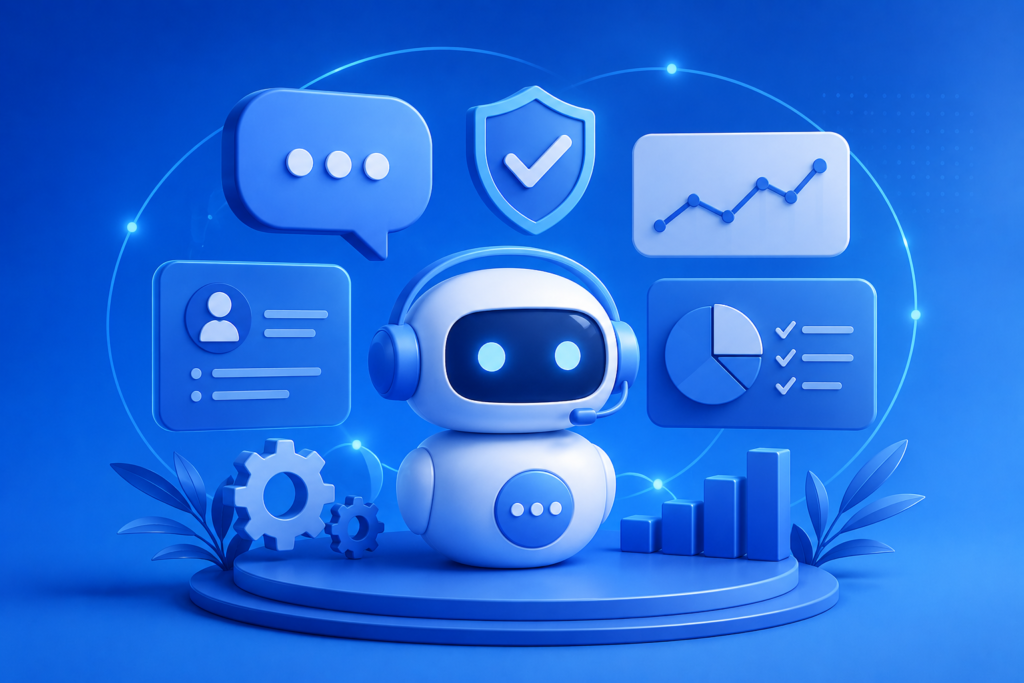
The first best practice is to design around real customer intent. Start by identifying the questions prospects actually ask, the obstacles they encounter, and the stages where conversations commonly slow down. Use those insights to create chatbot journeys that provide practical assistance. Avoid adding features merely because they are available. Every automated action should have a clear reason. A chatbot that answers ten important questions exceptionally well can create more value than one that claims to support hundreds of vague scenarios.
The second best practice is to combine automation with human expertise. The chatbot should handle repetitive information, initial qualification, simple navigation, appointment assistance, and other predictable interactions. Human specialists should remain available for strategic discussions, complex requirements, sensitive situations, negotiations, custom recommendations, and exceptions. This model also creates a useful feedback loop. Human representatives can identify where prospects became confused or where the chatbot failed to understand an intent. Those observations can then be used to improve the conversational experience.
The third best practice is continuous optimization. Launching a chatbot should not be considered the final step. Agencies should periodically review conversation analytics, unanswered questions, abandoned conversations, handoff reasons, booking activity, and lead quality. They should update knowledge whenever services or policies change and test important workflows after major website or integration updates. Agencies should also maintain strong security controls and monitor suspicious automated activity. For organizations using Cloudflare, its Bot Management documentation explains approaches for identifying and managing automated traffic using detection signals, rules, and analytics. (developers.cloudflare.com) Finally, agencies should keep the experience honest, accessible, and easy to understand. Google’s Search Essentials emphasizes helpful content, clear language, and people-first experiences rather than tactics designed primarily to manipulate rankings. (developers.google.com)
Frequently Asked Questions
What is an Agency Chatbot used for?
An Agency Chatbot is primarily used to automate and improve conversations with website visitors, prospects, and clients. Common applications include answering frequently asked questions, explaining services, collecting leads, qualifying prospects, scheduling consultations, directing inquiries to the appropriate team, and providing basic customer support. The exact functionality depends on the agency’s goals and technology environment.
Can an Agency Chatbot generate qualified leads?
Yes. A chatbot can ask visitors targeted questions about their needs, project requirements, timeline, service interest, and other relevant qualification criteria. It can then collect contact information and route qualified opportunities to the appropriate team. However, lead quality depends heavily on the questions being asked and how the qualification workflow is designed. More questions do not necessarily mean better leads.
Can an Agency Chatbot schedule meetings?
Yes. When connected to an appropriate scheduling system, a chatbot can guide prospects toward available consultation times. It can collect basic project information before the booking and explain what the prospect should expect from the meeting. This can reduce administrative communication and help agency representatives prepare before the call.
Can a chatbot replace an agency’s sales team?
A chatbot can automate parts of the sales process, but it should not be treated as a complete replacement for experienced sales professionals. Human involvement remains valuable for discovery, strategic recommendations, negotiations, customized proposals, objections, and high-value relationship building. The strongest approach is usually to use automation for repetitive early-stage tasks and human expertise for conversations requiring judgment.
How can agencies prevent incorrect chatbot answers?
Agencies should create an approved knowledge base, limit the chatbot’s scope, test realistic scenarios, monitor conversations, and establish clear fallback behavior. The chatbot should never be encouraged to invent information when it lacks a reliable answer. Regular reviews are important because agency services, policies, processes, and availability can change over time.
Is chatbot security important for agencies?
Yes. Agencies may process business information and personal contact details through conversations and integrations. Access controls, secure authentication, appropriate data retention, input validation, monitoring, and secure integrations should therefore be considered during implementation. Agencies should also determine which information the chatbot is allowed to access and which actions it is authorized to perform.
How long does it take to implement an Agency Chatbot?
Implementation time varies considerably depending on the chatbot’s complexity, integrations, knowledge base, customization requirements, and testing process. A basic FAQ and lead-capture chatbot can be relatively straightforward, while a system connected to CRM platforms, calendars, support tools, and advanced business workflows requires more planning and testing. The best starting point is usually a focused initial deployment followed by controlled expansion.
How should an agency measure chatbot success?
Agencies should measure outcomes that relate directly to their business objectives. Useful metrics can include qualified leads, consultation bookings, completed conversations, lead-to-opportunity conversion, human handoff rate, response time, unresolved questions, and customer feedback. A high conversation count alone does not prove that the chatbot is successful. The more useful question is whether the chatbot helps visitors and contributes to measurable business outcomes.
Conclusion
An Agency Chatbot can become a valuable part of a modern agency’s customer acquisition and communication strategy when it is designed around genuine customer needs. It can help agencies respond faster, answer repetitive questions, qualify opportunities, schedule consultations, route inquiries, and support customers without requiring employees to manually handle every initial interaction. The strongest implementations do not attempt to remove humans from the customer journey. Instead, they use automation to make human expertise more available where it matters most.
Successful implementation requires more than installing a chat widget. Agencies need a clear purpose, reliable information, thoughtful conversation design, appropriate integrations, strong security controls, human escalation, and ongoing optimization. They should also monitor real conversations after launch because actual visitor behavior will reveal opportunities that cannot always be predicted during initial development. By treating the chatbot as part of a broader business workflow rather than an isolated technology feature, agencies can create a more consistent and useful experience for both prospects and existing clients.
For agencies ready to move from experimentation to practical implementation, Engagerbot can be part of a strategy focused on making automated conversations more useful, responsive, and conversion-oriented. The long-term objective should remain simple: help people find answers, understand their options, and reach the right human or next step without unnecessary friction. When technology is implemented with transparency, expertise, security, and a people-first mindset, conversational automation can support sustainable agency growth rather than becoming another disconnected digital feature.
Want to Implement This Easily?
Prompt Text:
You are an expert consultant. Based on the blog post titled “Agency Chatbot”, provide a step-by-step, practical implementation guide. Include tools, best practices, common mistakes to avoid, and advanced tips. Assume the reader wants to implement everything discussed in this article effectively.
Call to Action: Want our help implementing this? Just reach out to us via our website contact form.