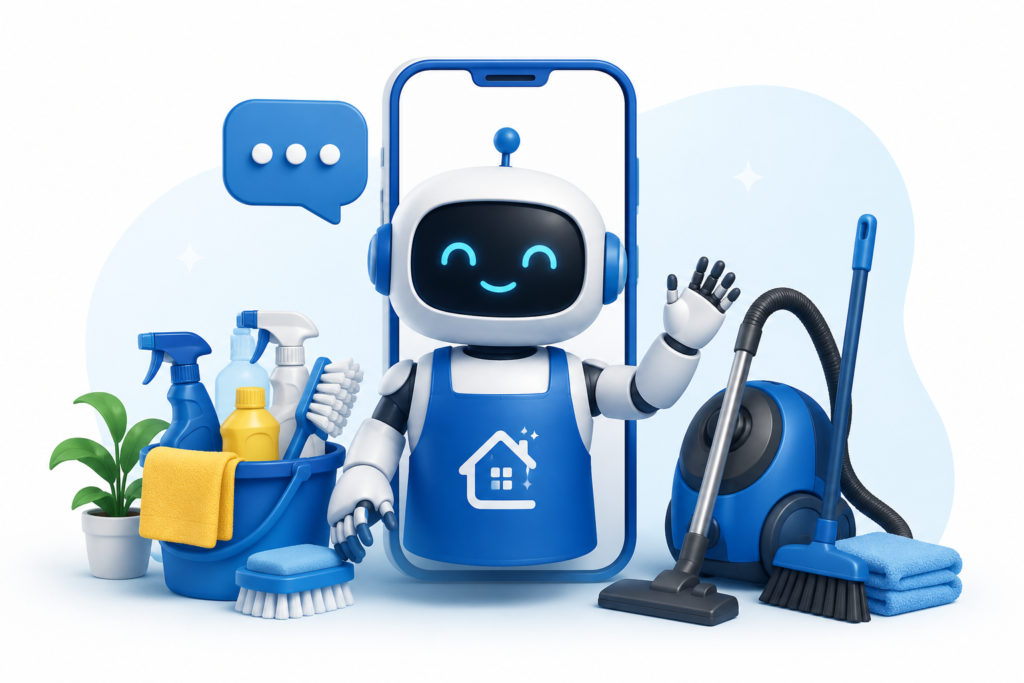
Discover how a Cleaning Services Chatbot helps cleaning companies automate bookings, improve customer support, generate more leads, reduce operational costs, and deliver exceptional customer experiences through AI-powered automation.
Introduction
The cleaning industry has become increasingly competitive as customers expect faster responses, instant quotations, convenient booking experiences, and personalized communication. Whether residential cleaning providers, commercial janitorial companies, carpet cleaning specialists, or deep-cleaning service providers, businesses must meet rising customer expectations while maintaining operational efficiency.
This is where a Cleaning Services Chatbot becomes a powerful business asset. Modern AI-powered chatbots can automate customer interactions, schedule appointments, answer frequently asked questions, generate leads, provide service estimates, and streamline communication across multiple channels. Instead of relying solely on human agents, businesses can provide instant support 24/7 while improving customer satisfaction and increasing conversion rates.
At EngagerBot, businesses are increasingly adopting intelligent chatbot technology to automate customer engagement and simplify service management. A well-designed cleaning services chatbot not only improves operational efficiency but also creates a smoother customer journey from inquiry to service completion. This comprehensive guide explores everything businesses need to know about cleaning service chatbots, including benefits, features, implementation strategies, best practices, and future opportunities.
Understanding What a Cleaning Services Chatbot Is
A Cleaning Services Chatbot is an AI-powered virtual assistant designed specifically to support cleaning companies in managing customer interactions and service requests. These chatbots can be deployed on websites, mobile applications, social media platforms, and messaging channels to provide real-time assistance to potential and existing customers.
Unlike traditional contact forms that require customers to wait for a response, chatbots provide immediate engagement. When a customer visits a cleaning company’s website, the chatbot can greet them, ask relevant questions, gather information about cleaning requirements, and guide them through the booking process. This immediate interaction significantly increases lead conversion opportunities.
Modern chatbots use artificial intelligence, natural language processing, and machine learning capabilities to understand customer inquiries and deliver relevant responses. Whether someone wants to schedule a deep cleaning service, inquire about pricing, request recurring cleaning plans, or ask about availability, the chatbot can provide accurate information instantly while collecting valuable customer data for future business use.
Why Cleaning Businesses Need Chatbot Technology
The cleaning industry operates in an environment where speed and convenience heavily influence customer decisions. Many potential clients contact multiple cleaning companies simultaneously and often choose the first provider that responds professionally and promptly.
A chatbot ensures that no inquiry goes unanswered. Instead of losing leads during evenings, weekends, or holidays, businesses can maintain continuous communication with customers around the clock. This significantly improves customer acquisition opportunities and reduces lost revenue caused by delayed responses.
Cleaning companies also face challenges related to staffing and administrative workloads. Employees often spend valuable time answering repetitive questions regarding pricing, service areas, booking procedures, cancellation policies, and cleaning packages. A chatbot automates these routine conversations, allowing staff to focus on delivering quality cleaning services and managing business operations more effectively.
Additionally, customers increasingly prefer self-service experiences. According to Creating Helpful, Reliable, People-First Content principles, businesses should prioritize user experience and accessibility. Chatbots support this objective by offering immediate assistance whenever customers need it.
Key Benefits of a Cleaning Services Chatbot
One of the most significant advantages of chatbot implementation is improved customer responsiveness. Instant engagement helps build trust while increasing the likelihood of converting website visitors into paying customers.
Another major benefit involves operational efficiency. Administrative tasks such as appointment scheduling, service inquiries, booking confirmations, and follow-up communications can be automated. This reduces manual workload and minimizes the risk of human errors.
Chatbots also improve lead generation capabilities. By asking strategic questions, they can qualify prospects based on property size, cleaning frequency, service requirements, location, and budget. This information allows cleaning businesses to prioritize high-quality leads and optimize sales efforts.
Furthermore, chatbot technology enhances customer satisfaction through personalized interactions. Customers receive quick answers, convenient scheduling options, and proactive updates regarding upcoming appointments. These improvements contribute to stronger customer loyalty and increased retention rates.
How Chatbots Transform Cleaning Service Bookings
Booking management is often one of the most time-consuming aspects of running a cleaning business. Coordinating schedules, collecting customer information, and confirming appointments can require significant administrative effort.
A cleaning services chatbot simplifies this process by guiding customers through a structured booking workflow. The chatbot can ask for essential information such as service type, property size, preferred date, preferred time, and contact details. Once collected, this information can be automatically entered into scheduling systems.
Automation reduces scheduling conflicts while ensuring consistency throughout the booking process. Customers can secure appointments without waiting for office staff availability, resulting in higher booking completion rates and improved customer convenience.
Integration with calendars and customer relationship management systems further enhances operational efficiency. Automated reminders, confirmations, and follow-up messages help reduce no-shows and improve overall scheduling accuracy.
Essential Features Every Cleaning Services Chatbot Should Include
A successful cleaning services chatbot requires more than basic messaging functionality. Businesses should focus on implementing features that directly support customer needs and business objectives.
One important feature is intelligent appointment scheduling. Customers should be able to check availability, select preferred times, and receive immediate booking confirmations without requiring manual intervention.
Another critical capability involves automated quote generation. By gathering information about property size, service requirements, and cleaning frequency, the chatbot can provide preliminary pricing estimates. This helps customers make informed decisions more quickly.
Multi-channel communication is equally valuable. Customers may interact through websites, social media platforms, or messaging applications. A chatbot should deliver consistent experiences across all communication channels to ensure seamless customer engagement.
Additionally, analytics and reporting capabilities provide valuable insights into customer behavior, lead generation performance, and conversation effectiveness. These metrics help businesses continuously improve chatbot performance and customer experiences.
Using AI for Personalized Customer Experiences

Artificial intelligence allows cleaning service chatbots to deliver highly personalized customer interactions. Rather than providing generic responses, AI-driven systems can tailor conversations based on customer history, preferences, and previous bookings.
For example, recurring customers may receive recommendations for additional services such as carpet cleaning, window cleaning, upholstery cleaning, or seasonal deep-cleaning packages. These personalized suggestions create opportunities for upselling and cross-selling.
AI can also analyze customer behavior patterns to identify potential needs before customers explicitly express them. If a customer typically schedules cleaning services every two weeks, the chatbot can proactively suggest the next appointment at the appropriate time.
Personalization improves customer satisfaction because clients feel understood and valued. It also contributes to increased revenue by encouraging repeat business and expanding service utilization.
Lead Generation and Qualification Through Chatbots
Lead generation remains a critical priority for cleaning businesses seeking sustainable growth. Traditional contact forms often produce incomplete information and low conversion rates. Chatbots offer a more engaging alternative.
Instead of presenting static forms, chatbots conduct interactive conversations that encourage users to share relevant details naturally. Through guided questioning, businesses can gather information about property types, cleaning needs, preferred schedules, locations, and budgets.
This information enables automatic lead qualification. High-value prospects can be routed directly to sales representatives, while routine inquiries can continue through automated workflows. This ensures efficient allocation of business resources.
Additionally, chatbot-generated data helps businesses better understand market demand, customer preferences, and service trends. These insights support strategic planning and marketing optimization efforts.
Enhancing Customer Support with Automated Assistance
Customer support plays a vital role in maintaining client satisfaction and building long-term relationships. Cleaning service customers often have questions regarding service scope, pricing, scheduling, cancellation policies, and cleaning procedures.
A chatbot provides immediate answers to these common inquiries without requiring human intervention. Customers receive assistance at any time of day, reducing frustration and improving overall service experiences.
Automated support also ensures consistency. Every customer receives accurate and standardized information regardless of when they contact the business. This helps maintain professional communication standards across all customer interactions.
When more complex situations arise, the chatbot can seamlessly transfer conversations to human representatives. This hybrid support model combines automation efficiency with personalized human expertise, creating an optimal customer experience.
Integrating Cleaning Service Chatbots with Business Systems
A cleaning services chatbot becomes significantly more valuable when integrated with the tools and platforms that businesses already use daily. Instead of functioning as a standalone communication tool, the chatbot can become the central hub that connects customer interactions, scheduling systems, invoicing platforms, marketing software, and customer relationship management systems.
When integrated with CRM software, every customer interaction is automatically recorded and organized. This allows cleaning companies to maintain detailed customer histories, track communication preferences, and monitor booking patterns. Customer information collected during chatbot conversations can be instantly stored, eliminating manual data entry and reducing administrative errors. Businesses can then use this data to create more targeted marketing campaigns and personalized customer experiences.
Integration also improves workflow efficiency. Appointment requests can automatically sync with calendars, invoices can be generated immediately after service completion, and follow-up messages can be triggered based on customer actions. This level of automation creates a seamless operational environment where information flows efficiently between systems. As businesses grow, these integrations become increasingly important for maintaining high service standards while managing larger customer volumes.
Improving Customer Retention Through Automated Engagement
Acquiring new customers is important, but long-term profitability often depends on retaining existing clients. A cleaning services chatbot can play a major role in strengthening customer relationships and encouraging repeat business through ongoing engagement.
One effective strategy involves automated follow-up communication. After a cleaning appointment is completed, the chatbot can send satisfaction surveys, request feedback, and ask customers to rate their experience. This immediate interaction demonstrates commitment to customer satisfaction while providing valuable insights into service quality. Businesses can identify improvement opportunities and address concerns before they become larger issues.
Chatbots can also help maintain customer engagement through reminders and personalized recommendations. For example, a customer who schedules quarterly deep cleaning services may receive proactive reminders when their next appointment is approaching. Similarly, customers who regularly book standard cleaning services may receive recommendations for complementary offerings such as carpet cleaning, window cleaning, or upholstery care.
Consistent communication helps keep the business top-of-mind while creating a sense of personalized service. Customers appreciate businesses that anticipate their needs and provide convenient solutions. As a result, chatbot-driven engagement can significantly increase customer retention rates, repeat bookings, and lifetime customer value.
The Role of Chatbots in Marketing Cleaning Services
Marketing success depends on reaching potential customers at the right moment with relevant information. Cleaning services chatbots provide unique opportunities to support marketing initiatives by engaging visitors, capturing leads, and guiding prospects through the decision-making process.
Website visitors often leave without taking action because they cannot quickly find the information they need. A chatbot addresses this issue by proactively initiating conversations and offering assistance. Whether visitors are looking for pricing details, service descriptions, or booking information, the chatbot can provide immediate support that encourages further engagement.
Chatbots also enhance lead capture efforts. Instead of relying solely on static forms, businesses can collect information through conversational interactions. This approach typically generates higher completion rates because customers find conversations more engaging than traditional forms. Every interaction becomes an opportunity to gather valuable customer data and nurture potential leads.
Additionally, chatbot data can improve marketing strategies by revealing common customer questions, preferences, and concerns. These insights help businesses create more relevant content, optimize advertising campaigns, and refine messaging. The result is a more effective marketing ecosystem that attracts qualified leads and improves conversion rates.
Security and Privacy Considerations for Cleaning Service Chatbots
As chatbots collect customer information, businesses must prioritize data security and privacy. Customers trust cleaning companies with personal details such as addresses, phone numbers, email addresses, and service preferences. Protecting this information is essential for maintaining credibility and trust.
Businesses should follow established data protection practices when implementing chatbot solutions. Secure data storage, encrypted communications, and access controls help reduce the risk of unauthorized access. Companies should also establish clear privacy policies explaining how customer information is collected, stored, and used.
Following recognized security standards is critical for long-term success. Resources such as Google’s SEO Starter Guide emphasize the importance of creating trustworthy digital experiences. While primarily focused on search performance, trustworthiness also extends to data protection and user confidence.
Transparency is equally important. Customers should understand when they are interacting with a chatbot and have easy access to human support when needed. Clear communication regarding privacy practices helps build confidence while ensuring compliance with applicable regulations and industry standards.
Measuring the Success of a Cleaning Services Chatbot
Implementing a chatbot is only the first step. Businesses must continuously evaluate performance to ensure the technology delivers measurable value. Success metrics provide insight into effectiveness and help identify opportunities for improvement.
One important metric is lead conversion rate. Businesses should track how many chatbot interactions result in inquiries, appointments, or completed bookings. Comparing these figures before and after implementation can reveal the chatbot’s impact on customer acquisition efforts. Increased conversions often indicate improved customer engagement and more efficient communication.
Customer satisfaction metrics are equally valuable. Survey responses, chatbot ratings, and feedback scores provide direct insight into user experiences. High satisfaction levels suggest that the chatbot is meeting customer expectations and delivering meaningful assistance. Negative feedback can highlight areas requiring refinement or additional training.
Operational metrics such as response times, appointment scheduling efficiency, and administrative workload reduction also help measure success. A well-performing chatbot should reduce manual tasks, improve responsiveness, and contribute to overall business efficiency. Regular performance reviews ensure the chatbot continues supporting business goals as customer expectations evolve.
Future Trends in Cleaning Services Chatbot Technology
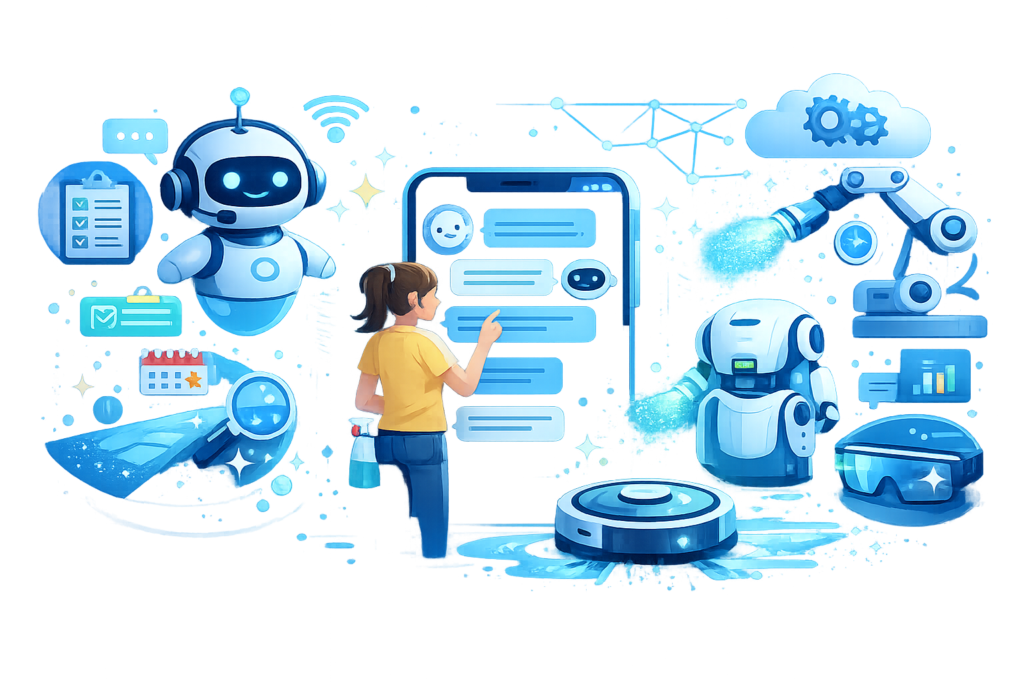
Chatbot technology continues to evolve rapidly, creating new opportunities for cleaning businesses. Artificial intelligence advancements are making virtual assistants more intelligent, conversational, and capable of handling increasingly complex customer interactions.
One emerging trend involves predictive customer engagement. Future chatbots may analyze customer behavior patterns to anticipate service needs before customers initiate contact. For example, the system could recommend seasonal cleaning services, suggest recurring schedules, or identify opportunities for preventive maintenance based on historical data.
Voice-enabled chatbot experiences are also becoming more common. Customers may soon interact with cleaning service providers through voice assistants, smart speakers, and mobile voice applications. This additional communication channel offers greater convenience while expanding accessibility for diverse customer groups.
Another significant development involves deeper personalization capabilities. Advanced AI models can analyze customer preferences, service histories, and behavioral trends to create highly customized experiences. Businesses that adopt these innovations early may gain a competitive advantage through superior customer service and operational efficiency.
Common Mistakes Businesses Make When Implementing Cleaning Service Chatbots
Many businesses invest in chatbot technology but fail to achieve expected results because of avoidable implementation mistakes. Understanding these challenges can help organizations maximize the value of their chatbot investments.
One common mistake is attempting to automate every customer interaction. While automation offers significant benefits, some situations still require human expertise and empathy. Businesses should design chatbot workflows that include smooth transitions to human agents whenever necessary. Customers should never feel trapped in an automated system that cannot address their concerns.
Another frequent error involves providing insufficient chatbot training. Chatbots rely on accurate data and well-designed conversation flows to perform effectively. If businesses fail to update responses, expand knowledge bases, or monitor performance, the chatbot may provide inaccurate information or create frustrating experiences for users.
Some companies also focus exclusively on technology while neglecting customer experience. The most successful chatbot implementations prioritize user needs, simplicity, and convenience. Businesses should continuously evaluate interactions from the customer’s perspective and refine workflows to ensure conversations remain intuitive, helpful, and efficient.
Best Practices for Maximizing Cleaning Services Chatbot Performance
Achieving long-term success with chatbot technology requires a strategic approach focused on customer value and continuous improvement. Businesses that follow best practices are more likely to realize significant returns on their chatbot investments.
First, organizations should clearly define chatbot objectives before implementation. Whether the primary goal is lead generation, appointment scheduling, customer support, or operational efficiency, establishing measurable objectives provides direction for chatbot design and optimization efforts. Clear goals also simplify performance evaluation and decision-making.
Second, businesses should regularly review chatbot conversations to identify trends, recurring questions, and customer frustrations. Continuous monitoring enables organizations to improve response quality, expand knowledge bases, and refine workflows. Customer expectations change over time, and chatbots must evolve accordingly to remain effective.
Finally, maintaining a balance between automation and human interaction is essential. While chatbots excel at handling repetitive tasks, human representatives remain valuable for complex situations and relationship-building activities. Combining automated efficiency with human expertise creates a customer experience that supports both satisfaction and business growth.
Frequently Asked Questions
1. What is a Cleaning Services Chatbot?
A Cleaning Services Chatbot is an AI-powered virtual assistant designed to automate customer interactions, answer questions, schedule appointments, generate leads, and support cleaning business operations through conversational communication.
2. Can a chatbot handle appointment bookings automatically?
Yes. Modern chatbots can collect customer information, display available time slots, confirm appointments, send reminders, and integrate with scheduling software to automate the booking process.
3. How does a chatbot improve customer service?
Chatbots provide instant responses, 24/7 availability, consistent information delivery, and quick access to support. This reduces wait times and improves overall customer satisfaction.
4. Is chatbot technology suitable for small cleaning businesses?
Absolutely. Small businesses often benefit significantly because chatbots reduce administrative workloads, improve lead management, and allow limited staff resources to focus on service delivery.
5. Can chatbots generate cleaning service quotes?
Yes. By gathering information such as property size, service type, and cleaning frequency, chatbots can provide preliminary estimates and guide customers toward booking services.
6. Are cleaning service chatbots secure?
When implemented properly, chatbots can securely collect and process customer information using encrypted communication channels and established data protection practices.
7. Can chatbots help increase repeat business?
Yes. Automated follow-ups, appointment reminders, personalized recommendations, and proactive customer engagement can encourage repeat bookings and strengthen customer loyalty.
8. How long does chatbot implementation take?
Implementation timelines vary depending on business requirements, integrations, and customization needs. Basic deployments may take days, while advanced enterprise implementations can require several weeks.
Conclusion
The cleaning industry is experiencing rapid digital transformation, and chatbot technology has emerged as one of the most effective tools for improving customer engagement, streamlining operations, and supporting business growth. From lead generation and appointment scheduling to customer support and retention, a Cleaning Services Chatbot delivers measurable benefits across virtually every stage of the customer journey.
Businesses that embrace intelligent automation can respond faster, operate more efficiently, and create superior customer experiences while reducing administrative burdens. As artificial intelligence continues to advance, chatbot capabilities will become even more powerful, enabling cleaning companies to deliver increasingly personalized and proactive services.
At EngagerBot, organizations can leverage advanced chatbot solutions to modernize customer communication, automate routine processes, and position themselves for sustainable long-term success in an increasingly competitive marketplace.
Best Practices Summary
- Define clear chatbot goals before implementation.
- Automate repetitive customer interactions.
- Maintain easy access to human support.
- Integrate chatbots with CRM and scheduling systems.
- Monitor chatbot performance regularly.
- Continuously update conversation flows and knowledge bases.
- Use customer feedback to improve chatbot effectiveness.
- Prioritize security, privacy, and transparency.
- Personalize customer experiences whenever possible.
- Measure results using conversion, retention, and satisfaction metrics.
Want to Implement This Easily?
Prompt Text:
You are an expert consultant. Based on the blog post titled “Cleaning Services Chatbot”, provide a step-by-step, practical implementation guide. Include tools, best practices, common mistakes to avoid, and advanced tips. Assume the reader wants to implement everything discussed in this article effectively.
Call to Action:
Want our help implementing this? Just reach out to us via our website contact form: