
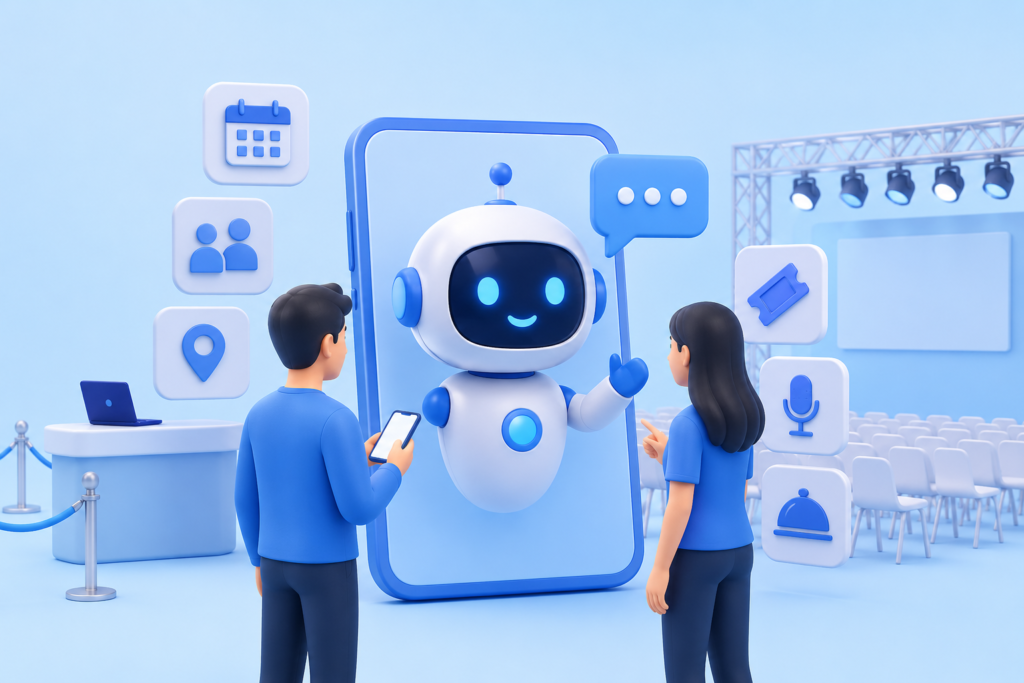
Learn how an Events & Conferences Chatbot improves attendee engagement, automates event registration, streamlines communication, enhances networking opportunities, and delivers exceptional event experiences through AI-powered automation.
Introduction
The events and conferences industry has undergone a significant transformation over the past decade. Modern attendees expect instant access to information, personalized experiences, seamless registration processes, and real-time support throughout their event journey. Traditional event management methods often struggle to meet these growing expectations, especially when handling thousands of participants simultaneously.
An Events & Conferences Chatbot offers a powerful solution by automating attendee interactions, providing instant responses, and delivering personalized assistance before, during, and after events. These AI-powered virtual assistants help organizers streamline operations while ensuring attendees receive timely and accurate information whenever they need it.
For organizations seeking innovative ways to improve event experiences, EngagerBot provides intelligent chatbot solutions that enhance attendee satisfaction, reduce operational workloads, and increase event success rates. This comprehensive guide explores everything event professionals need to know about leveraging AI chatbots for conferences, trade shows, exhibitions, webinars, corporate events, and hybrid experiences.
What Is an Events & Conferences Chatbot?
An Events & Conferences Chatbot is an AI-powered conversational assistant specifically designed to support event organizers, attendees, sponsors, exhibitors, and speakers throughout the event lifecycle. These chatbots interact with users through websites, mobile applications, messaging platforms, and event portals.
Unlike traditional customer service systems that rely heavily on human intervention, event chatbots can answer attendee questions instantly, automate registrations, provide schedule updates, recommend sessions, facilitate networking, and deliver personalized event experiences. They function as digital event assistants that remain available twenty-four hours a day.
Modern event chatbots utilize Natural Language Processing (NLP), machine learning, and conversational AI technologies to understand attendee intent and respond appropriately. Rather than forcing users to navigate complicated menus, attendees can simply ask questions in natural language and receive relevant answers immediately.
As conferences become larger and more complex, event organizers increasingly rely on chatbot technology to improve efficiency, reduce support costs, and create memorable attendee experiences. These solutions are now considered essential components of modern event technology ecosystems.
Why AI Is Transforming the Events Industry
Artificial Intelligence is reshaping the events industry by enabling smarter interactions, deeper personalization, and greater operational efficiency. Event organizers face growing pressure to deliver exceptional experiences while managing budgets, staffing limitations, and logistical complexity.
AI-powered chatbots help address these challenges by automating repetitive tasks and enhancing attendee engagement. Instead of dedicating staff to answering thousands of similar questions, organizations can deploy intelligent virtual assistants capable of handling inquiries instantly and accurately.
One major advantage of AI is its ability to process large amounts of attendee data. By analyzing registration information, browsing behavior, session preferences, and interaction history, chatbots can provide personalized recommendations tailored to individual attendees.
Additionally, AI helps organizations scale support operations without significantly increasing costs. Whether an event attracts 500 attendees or 50,000 participants, an AI chatbot can manage thousands of simultaneous conversations efficiently. This scalability makes AI particularly valuable for conferences, exhibitions, trade shows, virtual events, and hybrid experiences.
The Growing Demand for Event Automation
Event management involves numerous administrative tasks that can consume significant time and resources. Registration processing, attendee communications, session scheduling, ticket verification, and support requests all require continuous attention.
Automation has become increasingly important as organizations seek ways to improve efficiency while maintaining high service standards. Event chatbots serve as central automation tools that streamline multiple processes simultaneously.
Before an event begins, chatbots can guide prospective attendees through registration, answer pricing questions, explain ticket options, and provide event details. During the event, they assist with navigation, schedule updates, speaker information, and technical support. After the event concludes, they facilitate feedback collection, survey distribution, and post-event engagement.
By automating these interactions, organizations reduce operational burdens while ensuring attendees receive immediate assistance. This not only improves user experiences but also allows event staff to focus on strategic activities rather than repetitive administrative tasks.
Automation is no longer a competitive advantage alone—it is becoming a necessity for organizations that want to deliver modern event experiences efficiently and effectively.
Key Benefits of Events & Conferences Chatbots
Implementing an event chatbot offers numerous benefits for both organizers and attendees. These advantages extend across the entire event lifecycle and contribute directly to improved event outcomes.
One significant benefit is improved attendee satisfaction. Instant responses eliminate long wait times and ensure participants receive accurate information whenever needed. Whether attendees need registration assistance or venue directions, chatbots provide immediate support.
Another advantage is operational efficiency. Chatbots automate repetitive inquiries, reducing the workload placed on customer support teams. This enables staff members to concentrate on complex issues requiring human expertise.
Event chatbots also improve engagement by delivering personalized recommendations and proactive communications. Attendees receive relevant session suggestions, networking opportunities, and event updates tailored to their interests. These personalized experiences increase participation and overall event value.
Furthermore, chatbots generate valuable analytics that help organizers understand attendee behavior, identify common concerns, and optimize future events. This combination of automation, personalization, and data insights makes event chatbots powerful tools for modern event management.
Streamlining Event Registration and Ticketing
Registration represents one of the most critical stages of the attendee journey. Complicated registration processes often lead to abandonment, lost revenue, and frustrated participants. Event chatbots simplify registration by guiding users through each step conversationally.
Instead of navigating multiple webpages, attendees can ask questions directly and receive immediate guidance. The chatbot can explain ticket types, pricing structures, discount eligibility, group registration options, and refund policies.
Chatbots can also automate registration confirmations, ticket delivery, invoice requests, and attendee profile updates. These automated workflows reduce administrative workloads while ensuring participants receive accurate information promptly.
For large conferences handling thousands of registrations, chatbot automation significantly improves efficiency and reduces support inquiries. Attendees benefit from a smoother registration experience, while organizers gain operational advantages and increased conversion rates.
A streamlined registration process creates a positive first impression and sets the foundation for a successful event experience.
Enhancing Attendee Engagement Before Events
Attendee engagement should begin long before the event officially starts. Pre-event engagement builds excitement, increases participation, and helps attendees prepare effectively.
Event chatbots play a crucial role in maintaining communication during this phase. They can share event updates, introduce speakers, recommend sessions, provide logistical information, and answer attendee questions instantly.
Personalized engagement strategies are particularly effective. By understanding attendee interests and goals, chatbots can suggest relevant sessions, workshops, networking opportunities, and exhibitors. These recommendations help participants plan their schedules more effectively.
Pre-event chatbots can also conduct surveys to gather attendee preferences and expectations. This information enables organizers to improve event planning while providing attendees with more personalized experiences.
Consistent engagement before an event increases anticipation, improves attendance rates, and creates stronger connections between participants and organizers.
Delivering Real-Time Support During Conferences
During live events, attendees frequently require assistance navigating schedules, locating sessions, accessing resources, and resolving technical issues. Providing timely support at scale can be challenging for event teams.
Event chatbots address this challenge by offering real-time assistance around the clock. Attendees can ask questions and receive immediate answers without waiting in lines or searching through lengthy documents.
Common support requests include session locations, schedule changes, speaker information, venue directions, Wi-Fi credentials, transportation details, and emergency contacts. Chatbots handle these inquiries efficiently while ensuring consistency and accuracy.
Real-time notifications further enhance attendee experiences. Organizers can use chatbots to communicate room changes, schedule updates, important announcements, and emergency information instantly.
By providing continuous support throughout the event, chatbots improve attendee satisfaction while reducing pressure on support staff and information desks.
Personalized Session Recommendations
Large conferences often feature dozens or even hundreds of sessions, making it difficult for attendees to identify the most relevant content. Personalized recommendations help solve this challenge.
AI-powered event chatbots analyze attendee interests, professional backgrounds, registration information, and interaction history to suggest sessions aligned with individual goals. These recommendations improve content discovery and maximize attendee value.
For example, a marketing professional may receive recommendations for digital marketing workshops, customer engagement panels, and networking sessions with industry leaders. A technology executive might receive suggestions focused on artificial intelligence, cybersecurity, and innovation strategies.
Personalized recommendations encourage greater participation and increase session attendance rates. They also help attendees create more meaningful event experiences by focusing on content that aligns with their interests and objectives.
As AI capabilities continue to advance, personalization is becoming one of the most valuable features offered by modern event chatbots.
Facilitating Networking Opportunities
Networking remains one of the primary reasons professionals attend conferences and industry events. However, identifying valuable connections within large attendee populations can be difficult.
Event chatbots simplify networking by helping attendees discover relevant contacts, schedule meetings, and identify networking opportunities. Using attendee profiles and interests, chatbots can recommend connections likely to provide mutual value.
Networking support may include attendee matching, meeting scheduling, exhibitor recommendations, discussion group suggestions, and networking event reminders. These features encourage meaningful interactions and improve attendee satisfaction.
For sponsors and exhibitors, enhanced networking capabilities create opportunities to connect with qualified prospects more effectively. Attendees benefit from more productive conversations and stronger professional relationships.
The ability to facilitate strategic networking transforms chatbots from simple support tools into valuable engagement platforms that contribute directly to event success.
Supporting Hybrid and Virtual Events
The rise of hybrid and virtual events has created new opportunities and challenges for event organizers. Unlike traditional in-person events, hybrid conferences must provide seamless experiences for both physical attendees and remote participants. Managing communication, technical support, and engagement across multiple channels can quickly become complex.
An Events & Conferences Chatbot helps bridge this gap by serving as a centralized communication hub. Virtual attendees can receive assistance with login credentials, session links, streaming issues, agenda access, and technical troubleshooting. Meanwhile, in-person attendees can use the same chatbot for venue navigation, schedule updates, and networking support.
One of the most significant advantages of chatbot technology in hybrid environments is consistency. Regardless of location, every attendee receives the same accurate information and support experience. This consistency strengthens brand perception and improves overall event satisfaction.
As hybrid events continue to grow in popularity, AI-powered chatbots are becoming essential tools for delivering unified and engaging attendee experiences across physical and digital environments.
Improving Sponsor and Exhibitor Success
Sponsors and exhibitors invest significant resources into conferences and trade shows with the goal of generating leads, increasing brand awareness, and building relationships. Event chatbots can help maximize these investments by improving attendee interactions and facilitating lead generation.
Chatbots can guide attendees to relevant exhibitor booths, provide product information, answer frequently asked questions, and schedule demonstrations or consultations. This ensures exhibitors remain accessible even when booth staff are occupied with other visitors.
For sponsors, chatbots can promote sponsored sessions, highlight special offers, and encourage participation in sponsored activities. Personalized recommendations help ensure promotional content reaches attendees who are most likely to be interested.
Additionally, chatbot interactions generate valuable data that sponsors and exhibitors can use to evaluate performance. Insights into attendee interests, engagement levels, and inquiry patterns help organizations refine future event strategies and improve return on investment.
By enhancing visibility and facilitating meaningful interactions, event chatbots contribute directly to sponsor and exhibitor success.
Leveraging Analytics and Event Intelligence
Modern event management relies heavily on data-driven decision-making. Understanding attendee behavior, preferences, and engagement patterns enables organizers to optimize experiences and improve future events.
Event chatbots serve as valuable sources of event intelligence. Every conversation generates data that can reveal attendee interests, common questions, content preferences, and operational challenges. These insights provide organizers with a deeper understanding of participant needs.
Analytics can track metrics such as conversation volume, response accuracy, attendee satisfaction, registration conversions, session interest levels, and support resolution rates. Monitoring these indicators helps organizations evaluate chatbot effectiveness and identify opportunities for improvement.
Advanced analytics capabilities can also uncover emerging trends. For example, increased inquiries about specific topics may indicate growing attendee interest, helping organizers plan future content more effectively.
When combined with broader event analytics platforms, chatbot-generated insights become powerful tools for enhancing event strategy, attendee engagement, and overall business outcomes.
Integrating Chatbots with Event Technology Platforms
A chatbot becomes significantly more valuable when integrated with existing event technology systems. Integration allows the chatbot to access real-time information, automate workflows, and deliver personalized experiences.
Common integrations include event registration platforms, customer relationship management systems, marketing automation software, payment gateways, event mobile applications, attendee databases, and customer support tools.
For example, when an attendee asks about their registration status, the chatbot can retrieve information directly from the registration platform. If a participant expresses interest in a sponsor’s solution, the chatbot can automatically create a lead record within the CRM system.
Integration also supports personalized communication. By accessing attendee profiles and behavioral data, chatbots can deliver relevant session recommendations, reminders, and networking opportunities.
Organizations should prioritize secure integrations, reliable data synchronization, and thorough testing to ensure seamless performance. Effective integration transforms the chatbot into a core component of the event technology ecosystem.
Security, Privacy, and Data Protection
Attendees trust event organizers with valuable personal information, including names, contact details, payment information, and professional data. Protecting this information is critical for maintaining trust and meeting compliance requirements.
Event chatbots must follow strong security practices throughout deployment and operation. Data should be encrypted both during transmission and while stored. Access controls should restrict information to authorized personnel only, and regular security audits should be conducted to identify vulnerabilities.
Privacy transparency is equally important. Attendees should understand what data is collected, why it is collected, and how it will be used. Clear privacy policies help build confidence while supporting regulatory compliance.
Organizations should also establish procedures for data retention, deletion, incident response, and backup management. These measures reduce risk and ensure responsible handling of attendee information.
A strong commitment to security and privacy strengthens attendee trust and supports long-term success with chatbot technology.
Creating a Successful Event Chatbot Strategy
Successful chatbot implementation requires more than selecting technology. Organizations must develop a clear strategy that aligns chatbot capabilities with event objectives and attendee needs.
The first step is identifying specific goals. These may include reducing support workload, increasing registrations, improving attendee engagement, enhancing networking, or generating sponsor leads. Clear objectives help guide implementation decisions and performance measurement.
Next, organizers should map attendee journeys to understand key interaction points. Identifying common questions and challenges allows teams to prioritize chatbot features that provide the greatest value.
Developing a comprehensive knowledge base is equally important. The chatbot should have access to accurate information regarding schedules, speakers, venues, registration policies, sponsors, exhibitors, and technical support resources.
Continuous optimization is essential for long-term success. Organizations should monitor analytics, gather attendee feedback, update content regularly, and refine workflows based on performance insights.
A thoughtful strategy ensures chatbot technology delivers meaningful business results while enhancing attendee experiences.
Common Mistakes to Avoid
Despite the benefits of event chatbots, many organizations encounter challenges due to avoidable implementation mistakes. Understanding these common issues helps ensure a smoother deployment process.
One frequent mistake is launching a chatbot without sufficient planning. Organizations sometimes focus on technology features rather than attendee needs, resulting in poor user experiences and limited adoption.
Another issue is maintaining incomplete or outdated information. If attendees receive inaccurate responses regarding schedules, registration policies, or event logistics, trust can quickly deteriorate.
Some organizations attempt to automate every interaction immediately. While automation offers significant benefits, certain situations still require human assistance. Effective escalation paths should always be available when complex issues arise.
Additional mistakes include inadequate testing, poor integration planning, lack of performance monitoring, inconsistent messaging, and failure to collect user feedback. Addressing these challenges early increases chatbot effectiveness and attendee satisfaction.
Avoiding these common pitfalls helps organizations maximize the value of their chatbot investments.
Future Trends in Events & Conference Chatbots
The future of event chatbot technology is exceptionally promising. Advances in artificial intelligence, machine learning, and conversational experiences continue to expand chatbot capabilities.
One emerging trend is predictive engagement. Rather than waiting for attendees to ask questions, future chatbots will proactively anticipate needs based on behavior and context. This creates more personalized and responsive experiences.
Voice-enabled interactions are also expected to become more common. Attendees may use voice assistants through smartphones, event kiosks, or wearable devices to access information quickly and conveniently.
Enhanced personalization will continue to evolve as AI systems gain deeper understanding of attendee preferences and objectives. Future chatbots may provide highly customized agendas, networking recommendations, and content suggestions in real time.
Generative AI technologies are expected to further improve conversational quality, enabling more natural interactions and richer attendee support experiences. These innovations will continue transforming chatbots into intelligent event companions rather than simple support tools.
Best Practices Summary
To maximize success with an Events & Conferences Chatbot, organizations should follow these best practices:
- Define clear objectives before implementation.
- Focus on attendee needs and user experience.
- Develop a comprehensive and accurate knowledge base.
- Integrate the chatbot with existing event systems.
- Offer personalized recommendations whenever possible.
- Maintain strong security and privacy standards.
- Provide clear escalation paths to human support.
- Monitor analytics continuously and optimize performance.
- Gather attendee feedback regularly.
- Update chatbot content before, during, and after events.
Organizations that follow these principles are more likely to achieve higher engagement, improved operational efficiency, and stronger event outcomes.
Frequently Asked Questions
1. What is an Events & Conferences Chatbot?
An Events & Conferences Chatbot is an AI-powered virtual assistant that helps attendees, exhibitors, sponsors, and organizers by automating communication, answering questions, managing registrations, and providing event-related support.
2. How can a chatbot improve attendee engagement?
Chatbots improve engagement through personalized recommendations, instant support, networking assistance, proactive notifications, and interactive event experiences that keep attendees informed and involved.
3. Can event chatbots handle registration processes?
Yes. Event chatbots can guide attendees through registration, explain ticket options, answer payment questions, send confirmations, and provide post-registration assistance.
4. Are chatbots useful for virtual events?
Absolutely. Virtual event chatbots help attendees access sessions, troubleshoot technical issues, locate resources, receive schedule updates, and participate in networking opportunities.
5. Can chatbots integrate with event management platforms?
Yes. Modern chatbots can integrate with registration systems, CRM platforms, marketing automation tools, mobile apps, payment systems, and customer support software.
6. How do chatbots help sponsors and exhibitors?
Chatbots promote exhibitor booths, answer product questions, capture leads, schedule meetings, recommend relevant exhibitors, and facilitate attendee interactions.
7. Are event chatbots secure?
When implemented properly, event chatbots use encryption, access controls, secure integrations, and privacy policies to protect attendee information and maintain compliance requirements.
8. How can organizations measure chatbot success?
Success can be measured using metrics such as attendee satisfaction, conversation volume, response accuracy, support resolution rates, engagement levels, registration conversions, and lead generation performance.
Conclusion
As attendee expectations continue to evolve, event organizers must embrace technologies that enhance experiences while improving operational efficiency. AI-powered Events & Conferences Chatbots provide a powerful solution by automating support, personalizing interactions, streamlining registration, facilitating networking, and delivering valuable event intelligence.
Organizations that implement chatbot technology effectively can improve attendee satisfaction, reduce support workloads, increase engagement, and generate stronger event outcomes. From small business conferences to large international exhibitions, chatbots are becoming essential components of modern event strategies.
For organizations looking to transform event experiences through intelligent automation, EngagerBot offers innovative chatbot solutions designed to support every stage of the event lifecycle. By combining AI capabilities with strategic implementation, organizations can create more engaging, efficient, and successful events.
Want to Implement This Easily?
Prompt Text:
You are an expert consultant. Based on the blog post titled “Events & Conferences Chatbot: The Complete Guide to AI-Powered Event Engagement, Registration, and Conference Automation”, provide a step-by-step, practical implementation guide. Include tools, best practices, common mistakes to avoid, and advanced tips. Assume the reader wants to implement everything discussed in this article effectively.
Call to Action:
Want our help implementing this? Just reach out to us via our website contact form: