
The travel and tourism industry has undergone massive digital transformation in recent years, with automation and artificial intelligence shaping the way customers search, book, and experience travel. One of the most exciting innovations in this sector is the rise of booking and travel chatbots. These AI-driven tools simplify communication, automate reservations, and deliver instant assistance, helping travel businesses stand out in a competitive market. This article explores in depth how booking and travel chatbots are revolutionizing the customer journey, enhancing convenience, and unlocking new possibilities for businesses and travelers alike.
Introduction to Booking & Travel Chatbots
The world of travel has always been centered around convenience, trust, and personalized experiences. In today’s fast-paced digital era, travelers expect instant answers, quick booking options, and seamless assistance at every stage of their journey. This is where booking and travel chatbots come into play. These AI-powered conversational tools provide round-the-clock support to customers, handling queries related to flights, hotels, car rentals, itineraries, and even last-minute cancellations. By integrating with booking systems, payment gateways, and travel databases, chatbots act as digital travel agents, offering instant responses and accurate information.
For businesses in the travel and hospitality sector, the adoption of chatbots is not just a luxury but a necessity to meet rising consumer expectations. Whether it’s an airline responding to seat availability, a hotel managing room bookings, or a travel agency curating personalized itineraries, chatbots ensure smoother operations and higher customer satisfaction.
At Engagerbot, we understand how these innovations redefine customer interaction in the booking and travel ecosystem. As the travel industry continues to expand globally, the role of chatbots will become even more critical in offering seamless, cost-effective, and memorable experiences for travelers.
The Evolution of Travel Technology
The travel industry has been deeply influenced by technological innovations throughout history, each wave shaping the way people plan and experience their journeys. In the early days, travel was coordinated primarily through physical agencies, where customers would walk in, speak with an agent, and finalize their itineraries. These agencies relied on manual processes, paper-based bookings, and phone communication. The arrival of the internet in the 1990s completely transformed the industry, introducing online booking systems, digital flight reservations, and websites that allowed travelers to search and compare options on their own. This was the foundation of e-commerce in travel, where giants like Expedia, Booking.com, and TripAdvisor rose to prominence.
The next wave came with mobile technology, where smartphones and apps made travel more convenient. Travelers no longer needed desktop computers; instead, they could search for hotels, book tickets, and manage itineraries on their phones while on the move. The emergence of GPS added location-based services that enhanced tourism experiences by providing maps, directions, and recommendations. Social media platforms also began influencing travel decisions by allowing people to share reviews, photos, and destination tips instantly.
The introduction of artificial intelligence and machine learning has added yet another powerful layer of transformation. AI-driven algorithms began predicting customer preferences, while data analytics offered insights into travel behavior. This is the era where chatbots entered the scene, bridging the gap between human-like interaction and automated assistance. Unlike static websites, chatbots offer real-time conversations, personalized support, and 24/7 availability, making them indispensable in modern travel.
As customer expectations grow, the evolution of travel technology shows a clear pattern: each advancement brings greater speed, more personalization, and better accessibility. Booking and travel chatbots represent the current pinnacle of this journey, offering instant communication and seamless services across multiple platforms. In many ways, they are the natural progression of the industry’s long pursuit of convenience and efficiency, and their role will only expand in the years ahead.
What Are Booking & Travel Chatbots?
Booking and travel chatbots are AI-powered virtual assistants designed to simplify and enhance the travel booking experience. Unlike traditional customer service systems that rely on human agents, chatbots leverage artificial intelligence and natural language processing (NLP) to engage with users in real-time, answering questions, providing recommendations, and executing tasks such as booking flights, hotels, or rental cars. Their purpose is to simulate human-like conversations while offering instant solutions that align with the traveler’s needs.
For instance, a traveler may want to know the cheapest flight from New York to Paris within a specific timeframe. Instead of browsing multiple websites, they can simply type their request into a chatbot integrated on a travel platform. The chatbot quickly scans available options, applies filters based on budget or preferences, and presents results instantly. Similarly, for hotel bookings, chatbots can recommend accommodations based on amenities, reviews, or proximity to local attractions.
What makes travel chatbots especially valuable is their versatility. They are not limited to one function but can integrate multiple features such as language translation, payment processing, itinerary planning, and even travel alerts for weather or delays. They are also available across diverse platforms including websites, messaging apps like WhatsApp and Facebook Messenger, and even voice assistants such as Alexa and Google Assistant.
The primary advantage of chatbots lies in their ability to handle thousands of queries simultaneously, eliminating wait times and reducing dependency on human agents. They are also cost-efficient, helping travel businesses cut down on staffing expenses while still offering excellent customer service. Moreover, the data collected through chatbot interactions can provide valuable insights into traveler behavior, preferences, and pain points, enabling businesses to refine their services further.
In short, booking and travel chatbots are more than just digital assistants; they are dynamic tools that redefine how travelers interact with businesses, bringing convenience, personalization, and efficiency to every stage of the customer journey.
Why the Travel Industry Needs Chatbots Today
The travel industry is one of the most competitive and fast-moving sectors in the global economy. Customers are spoiled for choice, with countless options for flights, accommodations, and tours available at their fingertips. In such a crowded marketplace, businesses must provide not just services but experiences that stand out. This is where chatbots play a crucial role, offering solutions that meet both customer expectations and business demands.
First and foremost, modern travelers expect speed. In an era where instant gratification drives decision-making, waiting on hold for a customer service agent or scrolling endlessly through search results is no longer acceptable. Chatbots deliver real-time answers, whether it’s about flight timings, hotel availability, or baggage policies. This instant support creates a seamless experience that customers appreciate.
Secondly, personalization has become the hallmark of modern travel. A one-size-fits-all approach is no longer effective, as travelers seek experiences tailored to their preferences. Chatbots can access historical data, learn from interactions, and recommend services aligned with user behavior. For example, a chatbot can suggest beach resorts to someone who often books tropical vacations, or remind a business traveler about loyalty rewards when booking flights.
Operational efficiency is another strong reason the travel industry needs chatbots. Managing customer inquiries, reservations, cancellations, and itinerary changes requires significant manpower. Chatbots reduce the workload by handling repetitive tasks, freeing up human agents to focus on complex or high-value interactions. This not only reduces costs but also improves overall customer satisfaction.
Additionally, the COVID-19 pandemic highlighted the importance of remote assistance and digital solutions. With travel restrictions, sudden cancellations, and health regulations, travelers needed accurate information more than ever. Chatbots emerged as reliable tools for providing real-time updates, health advisories, and flexible booking options, reinforcing their necessity in uncertain times.
In today’s competitive environment, chatbots are not just convenient add-ons but essential assets. They empower travel businesses to stay relevant, scale customer service, and deliver experiences that resonate with modern travelers. Without them, companies risk falling behind in an industry where speed, personalization, and reliability define success.
The Role of Artificial Intelligence in Travel Assistance
Artificial Intelligence (AI) has become the backbone of modern travel assistance, powering the technologies that make journeys easier, faster, and more personalized. At the core of booking and travel chatbots lies AI, specifically natural language processing (NLP) and machine learning algorithms that allow these tools to understand human language, respond intelligently, and improve continuously over time. Without AI, chatbots would simply be static question-and-answer bots, but with it, they evolve into dynamic assistants capable of learning from past conversations, predicting needs, and offering meaningful recommendations.
One of the most significant roles AI plays in travel is enhancing personalization. Traditional booking platforms present generic options, leaving travelers to filter results manually. AI, however, analyzes customer preferences, past bookings, and even browsing behavior to tailor suggestions that feel uniquely relevant. For instance, if a traveler frequently chooses boutique hotels in European cities, an AI-driven chatbot can prioritize similar accommodations in new destinations. This level of customization not only improves user satisfaction but also increases booking conversions for businesses.
AI also makes travel assistance smarter by integrating predictive analytics. Airlines and hotels can use AI models to forecast demand, adjust pricing dynamically, and recommend the best times to book. Travelers benefit from more transparent pricing, while businesses optimize their revenue streams. Additionally, AI can anticipate issues like delays, weather disruptions, or overbookings, proactively alerting customers and suggesting alternatives before problems escalate.
Another key role of AI in travel assistance is providing multilingual support. Travelers from around the world may speak different languages, and AI-powered translation enables chatbots to bridge this gap. By automatically detecting and translating queries, chatbots allow companies to serve a global audience without language barriers.
Security is another area where AI enhances travel assistance. Chatbots equipped with AI can detect unusual patterns in payment behavior, reducing fraud risks and ensuring safe transactions. Furthermore, AI ensures that sensitive customer data is processed with high levels of accuracy and confidentiality.
In summary, AI in travel assistance is about far more than automating responses. It’s about creating smarter, more predictive, and more secure experiences that align with the evolving needs of modern travelers. Chatbots infused with AI are not just customer service tools; they’re strategic assets that redefine how businesses engage with their audiences.
Customer Expectations in the Digital Travel Era
Travelers today live in a world where convenience and speed are not luxuries but necessities. With instant access to information, ride-hailing apps, same-day deliveries, and personalized shopping experiences, customers naturally expect the same level of efficiency when it comes to booking travel. This shift in behavior has fundamentally redefined customer expectations in the digital travel era, making it crucial for travel businesses to adapt or risk becoming irrelevant.
One of the most dominant expectations is instant information. Modern travelers don’t want to wait in long phone queues to confirm a flight schedule or check hotel availability. They want real-time answers that allow them to make decisions quickly. Chatbots meet this expectation perfectly by providing immediate responses around the clock, eliminating delays that often frustrate customers.
Another critical expectation is personalized experiences. Travelers are no longer satisfied with generic recommendations. They expect suggestions tailored to their interests, budgets, and travel habits. For example, a backpacker might want recommendations for affordable hostels and adventure tours, while a luxury traveler might look for five-star resorts and private transfers. Chatbots powered by AI can analyze past behaviors and deliver these personalized insights effortlessly.
Customers also expect seamless transactions. From searching and comparing prices to making secure payments, the entire process must be smooth and intuitive. Any friction, such as complicated checkout processes or unclear payment options, risks losing customers. Chatbots simplify this by integrating payment gateways, offering secure methods of payment, and guiding users through each step of the process.
Another expectation is availability across platforms. Travelers want to interact with businesses where they feel comfortable, whether it’s on WhatsApp, Facebook Messenger, a mobile app, or a website. Businesses must therefore ensure that chatbots are omnichannel, providing consistent experiences no matter the platform.
Finally, travelers expect proactive communication. Instead of merely responding to queries, they want businesses to notify them of important updates such as gate changes, check-in reminders, or itinerary adjustments. Proactive chatbots fulfill this role by keeping customers informed every step of the way.
In short, customer expectations in today’s travel landscape are shaped by the demand for instant answers, personalization, seamless transactions, accessibility, and proactive communication. Meeting these expectations is no longer optional but essential, and chatbots stand as the perfect tool to deliver on all these fronts.
How Booking Chatbots Simplify Flight Reservations
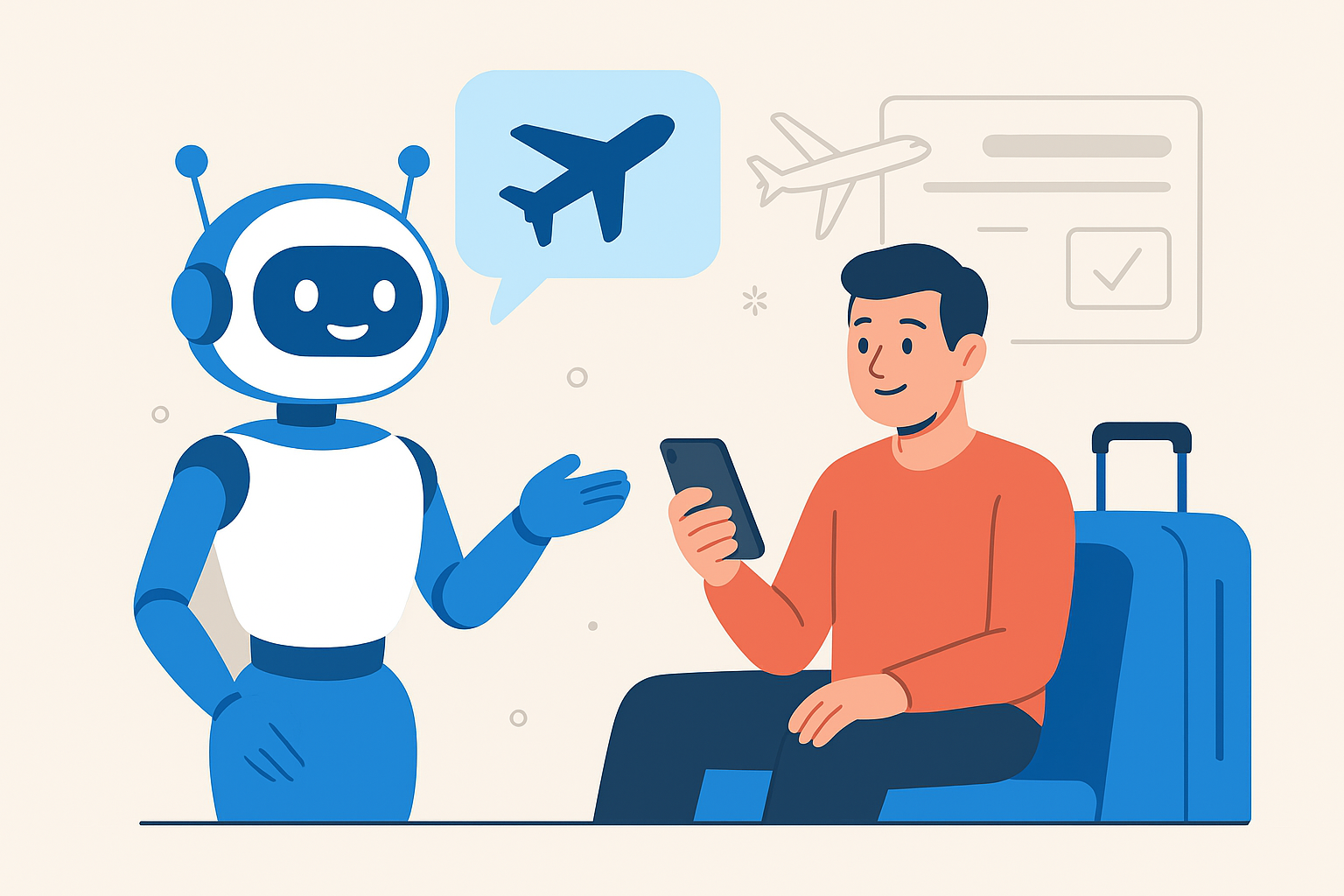
Booking a flight is one of the most common yet often stressful tasks for travelers. With endless airline options, fluctuating ticket prices, and multiple travel classes to consider, the process can quickly overwhelm customers. Booking chatbots step in to eliminate this complexity, offering a streamlined, user-friendly experience that makes flight reservations faster and easier than ever before.
The first way chatbots simplify flight bookings is through instant search and comparison. A traveler can simply type, “Find me the cheapest flight from London to Dubai next week,” and the chatbot instantly scans through airline databases, presenting results in seconds. This eliminates the need to browse multiple websites, compare manually, or waste time sifting through irrelevant results.
Chatbots also excel in filtering options. They can narrow down results based on seat preferences, flight duration, layovers, baggage policies, or even preferred airlines. This kind of personalization makes decision-making faster while ensuring travelers get the most suitable option. For frequent flyers, chatbots can even highlight loyalty program benefits or upgrades available with certain bookings.
Another major benefit is real-time updates. Once a booking is made, chatbots can provide live notifications on ticket confirmation, check-in status, boarding gates, and potential delays. This proactive communication ensures travelers are always informed, reducing anxiety and enhancing the overall travel experience.
Payment is another area where booking chatbots simplify the process. Instead of redirecting users to multiple web pages, chatbots integrate payment gateways directly into the conversation. A traveler can complete the entire process—search, select, and pay—within a single chat window. This reduces friction and makes the booking journey far more convenient.
Furthermore, chatbots can handle last-minute changes. If a traveler needs to cancel, reschedule, or request special accommodations like extra baggage or meal preferences, chatbots can guide them through the process quickly. This flexibility adds immense value, especially in scenarios where time is critical.
Ultimately, booking chatbots turn what used to be a complex, time-consuming task into a seamless, intuitive, and stress-free process. By combining speed, personalization, and real-time assistance, they are redefining how customers book flights in the digital age.
Hotel Reservations Made Easy with Chatbots
Hotel reservations have traditionally been one of the most time-consuming aspects of travel planning. Travelers often spend hours comparing prices, checking availability, reading reviews, and ensuring that amenities match their expectations. Booking chatbots simplify this entire process by acting as intelligent digital concierges, offering personalized recommendations and streamlining reservations in real-time.
One of the key advantages chatbots bring to hotel booking is speed. Instead of browsing through dozens of websites and filtering results manually, travelers can simply ask a chatbot for a recommendation. For example, a user might type, “Find me a 4-star hotel in Rome with free Wi-Fi and breakfast included.” Within seconds, the chatbot scans available listings and returns options that match the request. This quick turnaround not only saves time but also provides an effortless booking experience.
Another strength of chatbots is their ability to personalize recommendations. If a traveler frequently books beachfront resorts, the chatbot can highlight similar properties in future destinations. Likewise, for business travelers, chatbots can prioritize hotels near conference centers or with business-friendly amenities such as meeting rooms and high-speed internet. This personalization ensures that customers feel understood and valued, increasing loyalty to the platform or brand.
Chatbots also provide transparent and updated information. Hotel availability can change rapidly, especially during peak travel seasons. By connecting directly with hotel booking systems, chatbots offer real-time updates on room availability, pricing changes, and even promotional offers. This ensures customers always have access to the most accurate data, reducing the frustration of discovering unavailable rooms after making a choice.
In addition to bookings, chatbots enhance the overall guest experience. They can help guests request early check-ins, arrange airport transfers, or ask about hotel facilities like gyms or spas—all before even arriving at the property. Post-booking, they can send reminders about reservation details, cancellation policies, or loyalty points.
Finally, hotel chatbots reduce friction in payments. With integrated payment options, users can confirm their bookings within the chat window itself, removing the need to navigate to multiple platforms. This smooth transaction process enhances trust and convenience.
In essence, hotel booking chatbots transform what used to be a lengthy, overwhelming process into a fast, intuitive, and personalized interaction, ensuring travelers secure accommodations that align perfectly with their needs.
Personalized Itinerary Planning with AI Chatbots
Traveling is no longer about simply booking a flight and hotel; modern travelers seek complete experiences that align with their interests, preferences, and budgets. Personalized itinerary planning has become a cornerstone of travel, and AI-powered chatbots are at the forefront of making this possible. By combining user data, destination information, and intelligent recommendations, chatbots act as virtual travel planners, creating customized itineraries that enhance every journey.
One of the greatest benefits of AI chatbots in itinerary planning is understanding traveler intent. Through natural language processing, chatbots can interpret user preferences such as “I want a cultural trip to Japan with a mix of city life and countryside experiences.” Based on this input, the chatbot can design a day-by-day plan including city tours, visits to temples, train journeys, and countryside stays. This creates a curated experience without requiring the traveler to research extensively.
Chatbots also leverage real-time data to make itineraries dynamic. If a museum is closed on certain days, or if the weather forecast predicts rain, the chatbot can adjust the plan to include indoor activities instead. This level of adaptability ensures that travelers enjoy a hassle-free experience where unforeseen changes don’t disrupt their enjoyment.
Integration with booking systems allows chatbots to not only recommend activities but also secure reservations. Whether it’s booking a city walking tour, securing tickets to a concert, or reserving a table at a popular restaurant, chatbots handle these tasks seamlessly. This eliminates the stress of coordinating multiple bookings across different platforms.
Moreover, itinerary chatbots provide budget management. By analyzing spending preferences, they can suggest activities and accommodations that fit within a traveler’s financial limits, ensuring experiences remain both enjoyable and affordable. For example, a budget-conscious traveler may receive recommendations for free city walking tours alongside affordable eateries, while a luxury traveler might be directed to private yacht tours or five-star dining experiences.
Finally, AI-powered itinerary chatbots foster engagement during travel. They can provide live navigation, suggest nearby attractions, or alert users about traffic delays. Travelers essentially carry a digital guide in their pocket, making exploration effortless and personalized.
In short, itinerary planning chatbots redefine how people approach travel, shifting from generic plans to highly curated journeys that reflect individual preferences. They create travel experiences that feel unique, enjoyable, and stress-free.
Multilingual Support for Global Travelers
Travel is a global activity, and language barriers have always been one of the most significant challenges faced by travelers. Whether it’s booking a hotel in Paris, navigating public transport in Tokyo, or asking for recommendations in Madrid, language differences can cause confusion and frustration. Multilingual chatbot support is one of the most impactful solutions to this challenge, ensuring that travelers receive assistance in their preferred language, no matter where they are in the world.
Chatbots powered by artificial intelligence and natural language processing can detect and respond in multiple languages. This means that a traveler from Brazil can interact in Portuguese, while another from China can communicate in Mandarin—all with the same chatbot system. By providing responses in a user’s native language, businesses create smoother, more comfortable interactions, removing one of the biggest barriers to international travel.
The benefit of multilingual support extends to real-time translations. For example, if a traveler asks a hotel chatbot about “early check-in” in Spanish, the chatbot can translate the request into English for the hotel staff while still responding to the traveler in Spanish. This not only improves communication but also ensures that businesses cater to global customers without needing to hire multilingual staff for every language.
Multilingual chatbots also enhance trust and inclusivity. When travelers see that they can communicate in their own language, they feel valued and respected. This increases brand loyalty and encourages repeat bookings. Moreover, it positions travel businesses as globally competitive players capable of serving diverse audiences.
Additionally, multilingual capabilities improve accessibility for non-native speakers who may struggle with foreign languages when booking flights, hotels, or activities online. Instead of abandoning the booking process due to confusion, these travelers can complete their reservations smoothly with the help of a chatbot.
From a business perspective, multilingual chatbots open the door to international expansion. Companies can reach customers in new markets without heavy investment in localized staff, making global outreach more cost-effective.
In conclusion, multilingual chatbot support is not merely a convenience but a strategic advantage. It empowers travelers by removing language barriers and empowers businesses by expanding their reach. In a world where travel is inherently global, multilingual chatbots are essential tools for delivering inclusive, accessible, and seamless customer experiences.
24/7 Travel Assistance and Customer Service
One of the greatest challenges in the travel industry is the fact that customer needs don’t follow business hours. A traveler might be booking a last-minute flight at midnight, dealing with a flight cancellation early in the morning, or needing urgent hotel information while in transit. Traditional customer service, limited by time zones and staffing, often struggles to meet this demand. This is where chatbots excel, providing 24/7 travel assistance that ensures customers always have access to reliable support, regardless of time or location.
Unlike human agents, chatbots don’t require breaks, shifts, or holidays. They are available around the clock to handle inquiries ranging from simple questions to complex bookings. This uninterrupted availability reduces the frustration of waiting for office hours or dealing with unresponsive hotlines. Travelers can feel confident knowing that help is just a message away, whether they’re in their home country or on the other side of the globe.
The importance of 24/7 support extends beyond convenience—it also builds trust. When customers know that assistance is always available, they feel more secure in choosing a travel provider. This trust translates into repeat bookings and stronger brand loyalty. For instance, an airline chatbot that provides real-time flight updates at 2 a.m. or a hotel chatbot that confirms a late-night check-in creates memorable experiences that strengthen the customer-business relationship.
Additionally, round-the-clock availability helps businesses manage high volumes of inquiries without overwhelming human staff. Chatbots can handle thousands of simultaneous conversations, addressing routine questions like baggage allowances, cancellation policies, or room amenities instantly. This frees up human agents to focus on complex issues that require personal attention, ensuring both efficiency and quality service.
Moreover, 24/7 availability supports global customers in different time zones. A traveler in Asia booking a European holiday doesn’t have to wait for European office hours to begin. Instead, the chatbot responds immediately, offering guidance, making reservations, and providing reassurance.
In short, chatbots offering 24/7 travel assistance are not simply tools of convenience but critical assets in delivering superior customer service. They bridge the gap between customer expectations and business capabilities, ensuring that no traveler ever feels stranded without support.
Payment Integration and Secure Transactions
In today’s digital-first travel industry, secure and seamless payments are essential to completing the customer journey. From booking flights to reserving hotels or purchasing tour packages, customers expect payment processes to be simple, safe, and integrated directly into their interactions. Booking and travel chatbots have revolutionized this aspect by offering built-in payment integration that allows customers to complete transactions within the chat interface itself.
The first advantage of chatbot payment integration is convenience. Instead of being redirected to multiple pages or third-party portals, users can book and pay within a single chat session. This reduces friction and makes the overall booking journey faster and more intuitive. For example, a traveler can ask a chatbot to find a flight, select an option, and pay securely—all without leaving the conversation.
Security is another critical factor. Travelers share sensitive information such as credit card numbers, banking details, or digital wallet credentials during transactions. Chatbots integrated with secure payment gateways ensure that this information is encrypted and protected. Many chatbots also support two-factor authentication (2FA), adding an extra layer of security to prevent fraud and unauthorized access.
Another major benefit is the ability to support multiple payment methods. Global travelers prefer different payment solutions, from credit cards and PayPal to Apple Pay, Google Pay, or even local e-wallets. Chatbots can be programmed to accept a wide variety of methods, making them accessible to customers worldwide.
Additionally, chatbots can offer transaction confirmations and receipts instantly, eliminating the uncertainty of waiting for email confirmations. They can also track customer payments, manage refunds, and provide updates on loyalty points or discounts applied.
For businesses, integrated payments through chatbots reduce drop-offs during the checkout process. A simplified, secure system keeps users engaged, increases conversions, and minimizes abandoned bookings.
In conclusion, payment integration in travel chatbots creates a smooth, secure, and trustworthy booking experience. By combining ease of use with advanced security features, chatbots ensure that financial transactions are handled with the same level of care and efficiency as the booking process itself, making them indispensable tools in modern travel commerce.
Chatbots for Travel Agencies and Tour Operators
Travel agencies and tour operators face increasing pressure to remain competitive in a digital marketplace where customers can often book directly with airlines or hotels. To stay relevant, they must provide added value through personalized services, curated experiences, and exceptional customer support. Chatbots have emerged as powerful tools that enable agencies and tour operators to meet these demands, offering automation and personalization at scale.
For travel agencies, chatbots serve as virtual agents, answering queries about destinations, flights, packages, and travel policies instantly. Instead of customers waiting for human representatives, chatbots provide immediate responses, improving satisfaction and engagement. By handling routine questions, chatbots free up human agents to focus on complex, high-value requests such as customizing luxury trips or managing large group bookings.
Tour operators particularly benefit from chatbots in promoting and booking tours. A traveler interested in adventure activities in Thailand, for example, can chat with a bot that suggests jungle treks, scuba diving, or cultural tours. The chatbot can then handle reservations, confirm availability, and process payments directly, making the experience seamless for the customer.
Chatbots also improve operational efficiency. They can handle cancellations, reschedules, and refunds, reducing the workload on staff and ensuring faster resolution of issues. In addition, they can provide proactive communication, such as sending reminders about tour schedules, pickup times, or required documents. This helps reduce no-shows and ensures smoother operations for agencies and tour operators.
Another key advantage is lead generation. By engaging website visitors in real-time, chatbots can capture potential customer details, answer preliminary questions, and guide them toward booking. This makes them valuable tools for converting interest into sales, particularly in competitive markets.
From a customer perspective, chatbots enhance the travel experience by offering personalized recommendations. They can suggest tours based on a traveler’s preferences, past choices, or even trending activities in the destination. This level of customization sets agencies and operators apart from generic booking platforms.
In summary, chatbots empower travel agencies and tour operators to remain competitive, efficient, and customer-centric in a rapidly evolving digital landscape. They combine the advantages of automation with the personal touch of tailored recommendations, making them essential tools for the future of travel businesses.
Enhancing Travel Agencies with AI-Powered Booking Chatbots
Travel agencies around the globe are embracing AI-powered booking chatbots to deliver fast, personalized, and highly reliable services. These smart systems are capable of analyzing traveler preferences, browsing patterns, and even previous booking histories to offer tailored recommendations that enhance customer satisfaction. For example, when a traveler asks about holiday packages in Europe, the chatbot can instantly provide a list of curated options, complete with pricing, accommodation details, and local experiences. This not only saves time but also eliminates the frustration of manual searching through countless websites. Furthermore, agencies benefit from reduced human workload as chatbots handle repetitive queries such as booking confirmations, payment updates, or itinerary changes. AI-driven automation ensures that users receive 24/7 assistance, which is particularly crucial for international travel where time zones differ. Over time, these bots become smarter, learning from interactions to provide increasingly accurate results. For travel agencies, this level of intelligent engagement helps them stand out in a crowded market and strengthens brand loyalty by creating memorable digital experiences that customers can trust.
Overcoming Challenges in Booking & Travel Chatbots
While booking and travel chatbots bring significant benefits, businesses must also address several challenges to ensure their long-term effectiveness. One of the primary issues is language barriers, as travelers often come from diverse backgrounds and may require communication in multiple languages. Without proper multilingual support, users may feel disconnected, leading to lower satisfaction. Another challenge lies in building trust with sensitive information such as payment details, passport numbers, or travel documents, where strong cybersecurity protocols must be in place. Connectivity issues in certain regions can also reduce chatbot efficiency, as travelers in remote areas may not always have reliable internet access. Additionally, balancing automation with a human touch is critical. While bots can solve quick problems, more complex situations like visa complications, missed flights, or emergency cancellations may still require human intervention. Overcoming these challenges requires continuous updates, machine learning improvements, and strong collaboration between human agents and AI systems. By addressing these obstacles, booking and travel chatbots can evolve into fully reliable companions for modern travelers.
Future Trends in Booking & Travel Chatbot Technology
The future of booking and travel chatbot technology looks incredibly promising as advancements in artificial intelligence, machine learning, and natural language processing continue to accelerate. One major trend is the integration of voice-based AI assistants, enabling users to book hotels, flights, or tours through simple voice commands, enhancing convenience for travelers on the go. Another trend involves the use of predictive analytics, where chatbots can anticipate traveler needs based on past behavior and seasonal patterns. For example, a chatbot could suggest beach resorts in summer or ski trips in winter before the customer even makes a request. Virtual reality (VR) and augmented reality (AR) are also being integrated, allowing users to preview hotel rooms, attractions, or cruise experiences directly within chatbot interfaces. Furthermore, blockchain technology is expected to improve transaction security, ensuring safe payments and transparent booking processes. As personalization becomes more advanced, future booking chatbots will provide not only travel solutions but also lifestyle recommendations, turning them into digital travel companions that make every journey smarter and more enjoyable.
Role of Personalization in Travel Chatbot Experiences

Personalization has become the cornerstone of effective travel chatbot experiences, and it plays a vital role in building customer trust and engagement. When a traveler interacts with a chatbot, they expect responses that are not only accurate but also relevant to their preferences. For example, if a user frequently books business-class flights to New York, the chatbot should proactively suggest premium flight deals or business-friendly hotels in the city. Similarly, families searching for vacation packages should receive recommendations for child-friendly destinations, complete with activities and accommodation suited to their needs. Personalization is achieved through advanced algorithms that process user data, previous bookings, and even browsing habits. By offering customized itineraries, special discounts, or destination-specific travel guides, chatbots create a sense of exclusivity for customers. This level of attention strengthens emotional connections between travelers and travel brands, making them more likely to return. Ultimately, personalization transforms chatbots from simple digital tools into trusted travel advisors capable of guiding users at every step of their journey.
The Connection Between Chatbots and Sustainable Travel
As global awareness about environmental issues grows, the travel industry is under increasing pressure to promote sustainable travel practices. Booking and travel chatbots are stepping into this space by encouraging eco-friendly travel choices and offering green alternatives. For instance, chatbots can recommend hotels with sustainability certifications, airlines with carbon offset programs, or local experiences that support community-based tourism. They can also guide travelers to reduce their carbon footprint by suggesting train journeys over short-haul flights or highlighting carpooling services for local commutes. By integrating sustainability filters, these bots make it easier for conscious travelers to align their trips with environmental values. Additionally, chatbots can educate users about responsible tourism by providing tips on waste reduction, cultural respect, and wildlife preservation. The automation of eco-conscious options helps normalize sustainable decision-making in travel planning, ultimately shaping a greener future for the tourism industry. In this way, booking and travel chatbots not only enhance user experience but also play a key role in advancing global sustainability goals.
Building Trust and Loyalty Through Booking & Travel Chatbots
Trust and loyalty are the foundation of any successful relationship between travel companies and their customers, and chatbots are proving to be powerful tools in strengthening both. When users consistently receive accurate, reliable, and timely responses, they naturally begin to trust the system. Features like instant updates on flight delays, real-time weather forecasts, and secure payment gateways contribute to building confidence in chatbot services. Loyalty grows further when chatbots provide personalized offers, reward points, or exclusive deals tailored to repeat customers. By remembering preferences, saving past itineraries, and offering convenient rebooking options, chatbots create a seamless travel experience that feels uniquely catered to each individual. Importantly, chatbots foster loyalty by maintaining open lines of communication at all times, ensuring that travelers never feel abandoned during their journey. The combination of trust and loyalty not only improves customer satisfaction but also increases repeat bookings, positive reviews, and brand advocacy in the highly competitive travel industry.
Conclusion
In today’s fast-moving digital era, booking and travel chatbots have transformed the way people plan and experience journeys. From offering personalized recommendations and handling bookings to promoting sustainable choices and strengthening customer trust, these intelligent systems are reshaping modern travel. Although challenges such as language barriers, security concerns, and the need for human support remain, ongoing technological innovation continues to bridge these gaps. Businesses that adopt and refine chatbot solutions position themselves ahead in the competitive travel market by delivering superior, customer-focused experiences. For travelers, these chatbots provide the convenience of instant assistance and the confidence of secure transactions, making every trip smoother and more enjoyable. At the heart of this transformation is the ability of chatbots to adapt, learn, and personalize, ensuring that travel remains not just a necessity but an inspiring and fulfilling experience. As we look ahead, the integration of advanced AI, predictive analytics, and sustainable travel initiatives will only deepen their impact. With platforms like Engagerbot, the journey of exploring the world becomes smarter, easier, and more connected than ever before.