
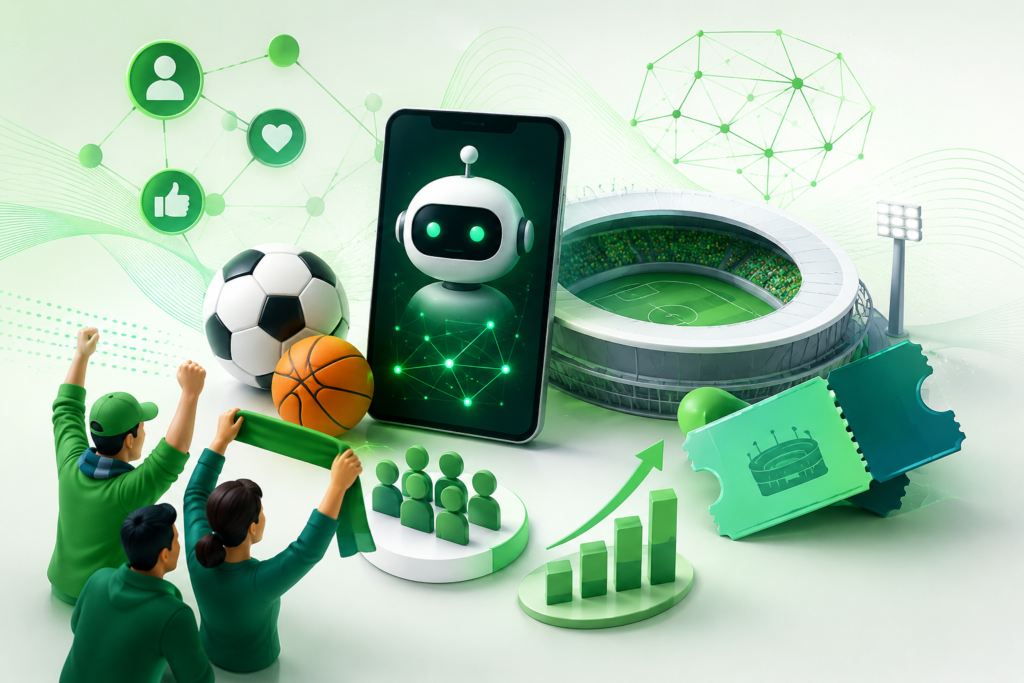
Discover how a Sport Chatbot helps sports clubs, leagues, teams, stadiums, and fitness organizations improve fan engagement, automate customer support, increase ticket sales, deliver live match updates, and create personalized experiences with AI-powered conversations.
Introduction
The sports industry has evolved far beyond the traditional stadium experience. Fans now expect instant updates, personalized recommendations, seamless ticket booking, real-time match information, merchandise suggestions, and immediate support across websites, mobile apps, and social media platforms. Organizations that fail to meet these expectations risk losing fan engagement and valuable business opportunities.
A Sport Chatbot is transforming the way sports organizations communicate with supporters by providing intelligent, automated, and personalized assistance around the clock. Whether answering questions about fixtures, helping fans purchase tickets, recommending merchandise, sharing live scores, or collecting valuable customer feedback, AI-powered chatbots create faster, smarter, and more engaging digital experiences.
At EngagerBot, we understand that modern sports organizations need scalable communication solutions capable of serving thousands—or even millions—of supporters simultaneously. AI-powered conversational technology enables clubs, leagues, stadiums, sports academies, and event organizers to enhance customer satisfaction while reducing operational costs and improving efficiency.
What Is a Sport Chatbot?
A Sport Chatbot is an artificial intelligence-powered virtual assistant specifically designed for sports organizations to automate conversations with fans, customers, athletes, sponsors, and event attendees. It communicates through websites, mobile applications, messaging platforms, and social media channels to answer questions, provide recommendations, and complete actions without requiring constant human involvement.
Unlike traditional customer support systems that rely heavily on manual responses, modern AI chatbots understand natural language, recognize user intent, remember previous interactions, and provide personalized recommendations. Whether a supporter wants today’s match schedule, stadium directions, player statistics, season ticket information, or merchandise recommendations, the chatbot delivers accurate information within seconds.
Sports organizations face communication challenges throughout the year, especially during major tournaments and championship events. Customer inquiries can increase dramatically before, during, and after games. Instead of overwhelming customer support teams, intelligent chatbots efficiently manage thousands of simultaneous conversations while maintaining consistent service quality.
Another important advantage is availability. Fans live across different countries and time zones, making 24/7 customer support increasingly important. AI-powered assistants ensure supporters receive immediate assistance regardless of when they ask questions. This continuous accessibility strengthens brand loyalty while improving the overall digital experience.
Modern Sport Chatbots can also integrate with ticketing platforms, CRM software, payment gateways, membership databases, event management systems, analytics tools, and marketing automation platforms. These integrations create a unified ecosystem where users enjoy seamless interactions while organizations gain valuable customer insights that support better business decisions.
Why Sport Chatbots Are Becoming Essential for Modern Sports Organizations
Digital transformation has significantly changed how fans interact with their favorite teams. Today’s supporters expect fast, personalized, and interactive experiences that extend well beyond match day. AI chatbots have become one of the most valuable technologies helping organizations meet these expectations while improving operational efficiency.
One of the primary reasons organizations adopt chatbots is the growing volume of customer interactions. Fans ask about ticket availability, upcoming fixtures, player information, membership benefits, stadium facilities, travel guidance, broadcasting schedules, refunds, and merchandise. Handling these inquiries manually requires large customer support teams, which can be expensive and difficult to scale during peak demand.
AI chatbots provide immediate responses while maintaining consistent accuracy. Instead of waiting for email replies or telephone support, supporters receive instant answers at any time of day. Faster response times contribute to greater customer satisfaction and stronger fan relationships.
Sports organizations also benefit from significant operational improvements. Automated conversations reduce repetitive workloads, allowing customer service teams to focus on complex issues requiring human expertise. This balance between automation and human support improves productivity while lowering service costs.
Another important benefit is personalization. AI chatbots analyze previous interactions, purchasing history, favorite teams, preferred sports, event attendance, and browsing behavior to recommend relevant products and experiences. Personalized conversations increase engagement, encourage repeat purchases, and strengthen long-term customer loyalty.
As sports organizations continue expanding their digital ecosystems, conversational AI has become a strategic investment that supports fan engagement, revenue generation, operational efficiency, and business growth.
Key Features of an AI-Powered Sport Chatbot
Modern Sport Chatbots combine artificial intelligence, machine learning, automation, and data integration to deliver intelligent conversations tailored to sports audiences. Their capabilities extend far beyond answering frequently asked questions, making them valuable assets for organizations seeking to improve customer experiences.
One of the most valuable features is real-time information delivery. Chatbots can instantly provide match schedules, live scores, league standings, player statistics, weather updates, stadium information, and event announcements. Fans no longer need to search multiple websites because essential information is available through a single conversational interface.
Ticketing assistance is another critical capability. AI assistants help supporters discover available seats, compare ticket categories, explain pricing, complete purchases, process upgrades, and provide digital ticket access. During high-demand events, automation significantly reduces customer frustration while improving conversion rates.
Personalized recommendations represent another major strength. By analyzing customer behavior, AI systems suggest upcoming matches, exclusive membership packages, merchandise, premium seating, hospitality experiences, and promotional offers based on individual interests.
Multilingual communication expands accessibility for international audiences. Global sporting events attract fans from diverse regions, making language support increasingly valuable. AI-powered systems can communicate naturally across multiple languages while maintaining consistent service quality.
Additional advanced features include appointment scheduling, loyalty program management, sponsorship promotions, donation collection, event registration, surveys, feedback collection, push notifications, live chat escalation, CRM synchronization, payment integration, and advanced analytics dashboards.
These capabilities transform chatbots into comprehensive digital assistants supporting virtually every stage of the customer journey.
Benefits of Sport Chatbots for Fans
Fans are the foundation of every successful sports organization. Delivering exceptional digital experiences strengthens emotional connections, encourages repeat engagement, and increases long-term loyalty. AI-powered chatbots help organizations achieve these objectives by simplifying interactions and providing immediate assistance whenever supporters need it.
Convenience represents one of the biggest advantages. Rather than navigating multiple pages or waiting for customer service representatives, fans simply ask questions in natural language. Whether searching for parking information, stadium policies, kickoff times, broadcasting details, or player updates, answers arrive within seconds.
Personalization also enhances fan experiences. AI systems remember favorite teams, preferred competitions, previous purchases, and browsing history to recommend relevant events and products. This customized approach makes interactions feel more meaningful while increasing user satisfaction.
Live event engagement becomes significantly more interactive with conversational AI. During matches, chatbots can provide real-time commentary, statistics, player performance updates, injury reports, substitution notifications, and post-match summaries. Fans remain connected regardless of their location.
Travel assistance further improves event experiences. Chatbots guide supporters to stadium entrances, recommend transportation options, identify nearby parking facilities, explain accessibility services, and answer venue-related questions before match day.
Another valuable benefit is continuous availability. Sports events occur across different time zones, and supporters often seek information outside traditional business hours. AI chatbots provide reliable assistance 24 hours a day, ensuring fans receive immediate responses whenever they interact with the organization.
By reducing friction throughout the customer journey, Sport Chatbots create memorable digital experiences that encourage stronger relationships between supporters and their favorite organizations.
How Sport Chatbots Improve Ticket Sales and Event Management
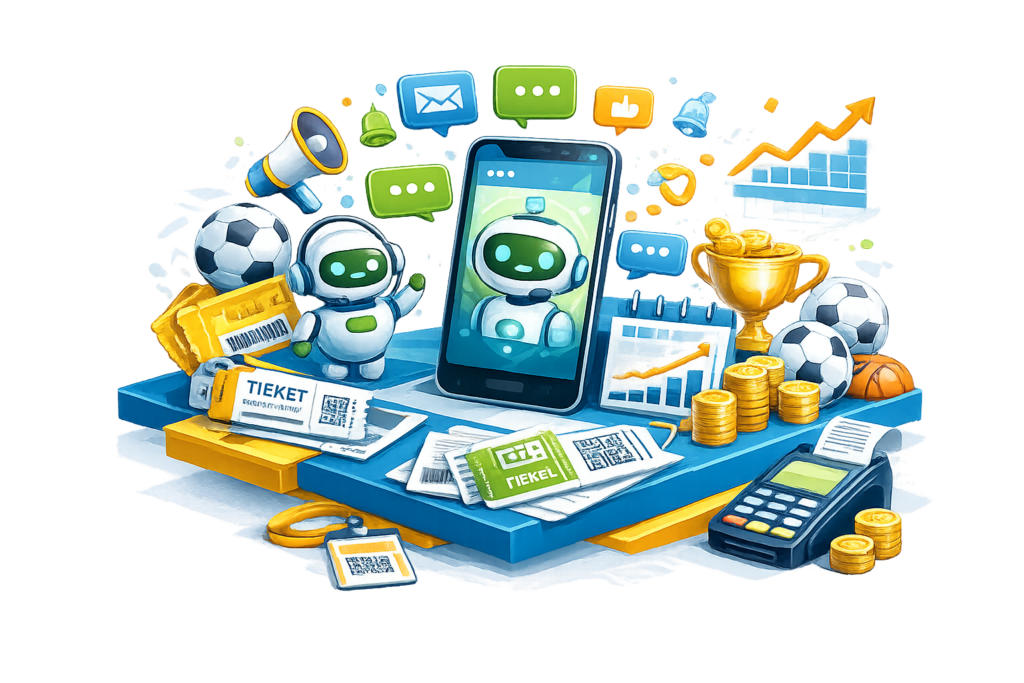
Ticket sales remain one of the most important revenue streams for sports organizations. However, purchasing tickets can sometimes become complicated due to seating availability, pricing structures, promotions, membership benefits, and event logistics. AI chatbots simplify this entire process through intelligent automation.
Instead of requiring supporters to navigate lengthy booking systems, chatbots guide users step by step. They recommend suitable matches, compare seating options, explain pricing differences, answer policy questions, and assist with secure purchases directly within the conversation. This streamlined experience reduces abandoned bookings while increasing completed transactions.
AI-powered assistants also manage promotional campaigns more effectively. Organizations can automatically notify supporters about early bird offers, VIP experiences, family packages, discounted memberships, seasonal promotions, and exclusive fan events. Personalized messaging increases conversion rates because recommendations align with individual interests.
Event management extends beyond ticket purchases. Before match day, chatbots send reminders, parking information, transportation guidance, stadium maps, weather updates, security policies, and entry instructions. These proactive communications reduce confusion while improving operational efficiency.
During live events, chatbots provide venue assistance, concession information, restroom locations, emergency guidance, accessibility support, and customer service. After events conclude, organizations can automatically collect feedback through conversational surveys, helping identify opportunities for continuous improvement.
For major tournaments involving thousands of attendees, conversational AI significantly reduces pressure on customer support teams while enhancing attendee satisfaction throughout the entire event lifecycle.
Sport Chatbots for Merchandise Sales and Fan Loyalty
Sports merchandise represents far more than apparel or accessories—it reflects emotional connections between supporters and their favorite teams. Jerseys, scarves, caps, collectibles, training equipment, and limited-edition products allow fans to express loyalty while generating valuable revenue for organizations. AI-powered Sport Chatbots enhance merchandise sales by creating highly personalized shopping experiences that guide supporters from product discovery to purchase.
Rather than expecting customers to browse extensive online catalogs, a chatbot can recommend products based on favorite teams, players, recent purchases, seasonal events, or upcoming competitions. For example, if a supporter regularly purchases team apparel before championship matches, the chatbot can proactively suggest newly released jerseys, commemorative collections, or exclusive fan bundles. These personalized recommendations increase average order values while improving customer satisfaction.
Conversational commerce also simplifies the purchasing process. Fans can ask about product sizes, availability, shipping options, return policies, payment methods, and promotional discounts without leaving the chat interface. By reducing unnecessary navigation and answering questions instantly, AI chatbots minimize purchase hesitation and help improve conversion rates. Integration with secure payment systems further enables smooth and convenient transactions.
Sport Chatbots also strengthen loyalty programs by automating membership enrollment, tracking reward points, notifying supporters about exclusive offers, and promoting VIP experiences. Organizations can reward frequent attendees with personalized incentives such as discounted tickets, early merchandise access, premium seating opportunities, or invitations to fan events. This continuous engagement encourages repeat purchases while reinforcing long-term relationships with supporters. Intelligent loyalty management ultimately transforms occasional customers into passionate brand advocates who contribute to sustained business growth.
Using Sport Chatbots for Live Match Updates and Real-Time Engagement
Modern sports fans expect instant access to information, whether they are watching from home, attending the stadium, or following events while traveling. AI-powered Sport Chatbots provide an interactive channel that keeps supporters informed throughout every stage of a sporting event. Instead of refreshing multiple websites or social media feeds, fans receive personalized updates directly within their conversations.
Real-time notifications include kickoff reminders, live scores, goal alerts, substitutions, player statistics, injury reports, possession percentages, match highlights, league standings, and post-match summaries. Because updates are tailored to individual preferences, supporters receive only the information that matters most to them. This personalized approach significantly improves user engagement and encourages fans to interact with the chatbot throughout the season rather than only during major events.
Beyond delivering information, conversational AI creates interactive experiences that increase participation. Fans can answer match prediction polls, vote for player of the match, participate in quizzes, receive trivia questions, and unlock exclusive digital content based on their engagement. These gamified interactions transform passive spectators into active participants, strengthening emotional connections with teams and competitions.
After the final whistle, chatbots continue supporting engagement by sharing interviews, highlight videos, fixture announcements, merchandise recommendations, ticket offers, and fan surveys. Organizations gain valuable behavioral insights while supporters enjoy a seamless digital experience that extends well beyond match day. This ongoing communication helps maintain enthusiasm between fixtures and contributes to stronger long-term fan loyalty.
How Sport Chatbots Support Sports Clubs, Teams, and Leagues
Sports organizations manage thousands of interactions every day with supporters, athletes, coaches, sponsors, media representatives, volunteers, and community members. Responding to every inquiry manually is both time-consuming and expensive, particularly during busy seasons, tournament periods, or championship events. A Sport Chatbot provides a scalable solution by automating repetitive communication while ensuring every user receives fast, consistent, and personalized assistance.
One of the greatest advantages for clubs and professional teams is centralized communication. Instead of directing supporters to different departments for ticketing, memberships, merchandise, schedules, or stadium information, the chatbot acts as a single digital assistant capable of handling all these requests in one conversation. Fans can ask about training sessions, fixture updates, academy registrations, player appearances, community programs, or hospitality packages without navigating multiple webpages. Integrating chatbot technology with CRM platforms allows organizations to personalize responses based on previous interactions, membership status, or purchasing history, creating a more engaging and efficient customer experience.
Operational efficiency also improves significantly. Administrative staff spend less time answering repetitive questions and more time focusing on strategic initiatives such as sponsorship development, fan engagement campaigns, and event planning. During major competitions, AI-powered chatbots can manage thousands of simultaneous conversations without compromising response quality. This scalability ensures organizations maintain exceptional customer service even during periods of peak demand.
Leagues and governing bodies can use conversational AI to distribute official announcements, explain competition rules, provide disciplinary updates, and educate participants about registration procedures. Coaches and athletes benefit from streamlined communication regarding training schedules, facility bookings, and event logistics. Sponsors can also leverage chatbot interactions to promote campaigns, contests, and branded experiences, creating additional commercial opportunities.
Organizations seeking to improve their digital visibility should also follow guidance from Google Search Central, ensuring chatbot-generated content complements high-quality website experiences rather than replacing them. Structured information using Schema.org can further improve content organization and discoverability across search engines. Together, these strategies create a connected ecosystem that enhances fan satisfaction while supporting sustainable organizational growth.
AI and Machine Learning Behind Modern Sport Chatbots
Artificial intelligence has transformed chatbots from simple scripted programs into intelligent virtual assistants capable of understanding context, recognizing intent, and delivering highly personalized conversations. Modern Sport Chatbots rely on several advanced technologies working together to provide seamless digital experiences that continuously improve over time.
At the core of every intelligent chatbot is Natural Language Processing (NLP), which enables the system to interpret how people naturally communicate rather than relying solely on predefined keywords. Fans can ask questions using different wording, abbreviations, or conversational language, and the chatbot still understands the intended meaning. For example, users might ask, “When does the match start?”, “What time is kickoff?”, or “Is today’s game at 7 PM?” Although phrased differently, the AI recognizes these requests as the same intent and provides accurate answers. Machine learning further enhances this capability by analyzing previous interactions and refining future responses based on real user behavior.
Predictive analytics adds another layer of intelligence by anticipating supporter needs before they explicitly ask. If a fan frequently purchases tickets for weekend home matches, the chatbot can proactively recommend upcoming fixtures, VIP packages, or family promotions. Similarly, merchandise recommendations become more relevant by considering favorite teams, player preferences, and purchasing history. These personalized interactions increase customer engagement while encouraging additional sales opportunities.
Modern conversational AI also integrates with external systems such as ticketing platforms, CRM databases, payment gateways, inventory management software, marketing automation tools, and live sports data providers. This integration enables the chatbot to retrieve real-time information instantly while maintaining a consistent user experience across multiple channels. Organizations can also leverage Google AI resources to understand emerging artificial intelligence innovations and best practices.
Accessibility remains another critical consideration. Following recommendations from the W3C Web Accessibility Initiative (WAI) ensures chatbot experiences remain inclusive for individuals with diverse accessibility needs. By combining AI, machine learning, accessibility standards, and continuous optimization, Sport Chatbots become increasingly valuable digital assistants capable of supporting organizations as fan expectations continue to evolve.
Integrating Sport Chatbots with Websites, Mobile Apps, and Social Media
Today’s supporters interact with sports organizations through multiple digital channels rather than relying on a single website. Some prefer mobile applications for live updates, others communicate through social media messaging platforms, while many visit official websites for ticket purchases, fixtures, or merchandise. A modern Sport Chatbot creates a unified communication experience by connecting all these channels into one intelligent conversational ecosystem.
Website integration is often the first implementation step because it provides immediate assistance to visitors browsing schedules, memberships, stadium information, or online stores. Instead of searching through numerous menus, users simply ask questions in natural language and receive personalized responses within seconds. This reduces website abandonment while increasing engagement and conversion rates. Chatbots can also proactively greet visitors, recommend relevant content, or guide them toward completing important actions such as purchasing tickets or registering for newsletters.
Mobile applications extend chatbot capabilities beyond traditional web browsing. Push notifications can remind supporters about upcoming matches, ticket availability, merchandise launches, or exclusive member promotions. Because smartphones remain accessible throughout the day, organizations maintain continuous communication with their audience regardless of location. Personalized alerts based on supporter preferences further enhance engagement while preventing information overload.
Social media platforms have become essential communication channels for sports organizations. Integrating AI chatbots with messaging services allows fans to receive instant responses without leaving their preferred platform. Whether requesting match updates, confirming event details, or exploring merchandise offers, supporters enjoy consistent experiences across every digital touchpoint. Integration with customer relationship management systems ensures conversations remain synchronized regardless of where interactions begin.
Organizations should also measure chatbot performance using Google Analytics to understand user behavior, conversation flows, and conversion performance. Website speed remains equally important, and regular testing through Google PageSpeed Insights helps ensure chatbot integrations do not negatively impact user experience. Together, these technologies create a connected digital environment that supports stronger fan relationships and sustainable business growth.
Sport Chatbots for Youth Sports, Academies, and Community Programs
Sport Chatbots are not limited to professional leagues or major sporting organizations. Youth academies, amateur clubs, schools, universities, recreational leagues, and community sports programs can also benefit significantly from conversational AI. These organizations often operate with limited administrative resources while managing large volumes of inquiries from parents, athletes, volunteers, and local supporters. Automation enables them to deliver professional communication without increasing staffing requirements.
Parents frequently ask questions about registration deadlines, age eligibility, training schedules, coaching qualifications, fees, equipment requirements, and tournament participation. Instead of relying on email exchanges or phone calls, a chatbot provides immediate answers at any time of day. Registration becomes more convenient as families receive guidance through application processes, payment instructions, and required documentation. Automated reminders also reduce missed deadlines and improve participation rates.
Youth athletes benefit from personalized communication regarding practice sessions, match schedules, facility changes, weather updates, and educational resources. Coaches can distribute announcements more efficiently while reducing repetitive administrative tasks. Volunteers and event organizers also gain access to essential information about responsibilities, schedules, and logistics through simple conversational interactions.
Community engagement extends beyond operational efficiency. Chatbots can promote local tournaments, fundraising initiatives, sponsorship opportunities, coaching clinics, and wellness programs while collecting valuable feedback from participants. This continuous interaction strengthens relationships between organizations and their communities, encouraging long-term involvement and support.
As digital expectations continue to evolve, conversational AI provides smaller organizations with technology previously available only to larger enterprises. By combining intelligent automation with personalized communication, youth sports programs can improve participant experiences, streamline administration, and build stronger community connections while maintaining affordability and operational simplicity.
Future Trends Shaping Sport Chatbots
The future of Sport Chatbots is being driven by rapid advancements in artificial intelligence, predictive analytics, voice technology, and immersive digital experiences. As fan expectations continue to evolve, sports organizations will increasingly rely on intelligent conversational platforms to deliver highly personalized interactions before, during, and after every event. Rather than serving as simple support tools, next-generation chatbots will become digital companions that understand supporter preferences, anticipate needs, and create engaging experiences across every touchpoint.
One of the most significant developments is hyper-personalization powered by machine learning. Future chatbots will analyze supporter behavior, favorite teams, purchasing history, attendance patterns, and interaction history to recommend matches, merchandise, memberships, hospitality packages, and exclusive promotions tailored to individual interests. Predictive AI will proactively notify fans about ticket availability, schedule changes, limited-edition merchandise, and loyalty rewards before they even search for them. These intelligent recommendations improve customer satisfaction while increasing conversion rates and long-term engagement.
Voice-enabled experiences are also becoming increasingly important. As smart speakers, wearable devices, and voice assistants continue to grow in popularity, supporters will expect hands-free access to live scores, player statistics, fixture updates, and event information. AI-powered voice conversations will make accessing sports information faster and more convenient across homes, vehicles, and mobile devices.
Generative AI will further transform fan engagement by creating personalized match summaries, multilingual content, customized newsletters, and interactive conversations based on real-time sporting events. Integration with augmented reality (AR) and virtual reality (VR) technologies will allow supporters to receive live chatbot guidance while exploring digital stadium tours, virtual fan zones, and immersive match-day experiences.
Organizations should continue monitoring emerging AI developments through Google AI while ensuring their digital experiences align with recommendations from Google Search Central. Combining innovation with user-focused design will help sports organizations remain competitive as conversational AI continues to evolve.
Common Mistakes When Implementing a Sport Chatbot
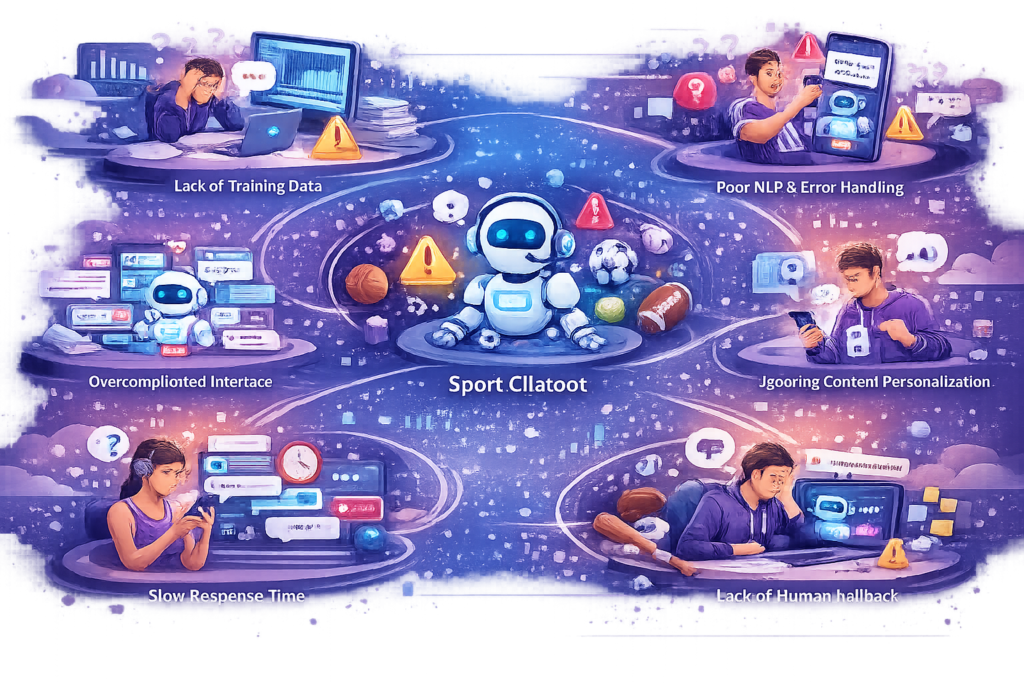
Although Sport Chatbots offer tremendous benefits, many organizations fail to achieve their desired results because of poor planning, inadequate training data, or unrealistic expectations. Understanding these common mistakes helps organizations build chatbot experiences that genuinely improve customer satisfaction and operational performance.
One of the most common mistakes is attempting to automate every conversation without providing an option to connect with a human representative. While AI is highly effective for routine questions, certain situations—such as payment disputes, accessibility requests, sponsorship negotiations, or complex customer complaints—require human judgment. A successful chatbot should seamlessly transfer conversations whenever additional expertise is needed.
Another frequent mistake is launching a chatbot with limited knowledge. If supporters ask questions about fixtures, ticket policies, memberships, or merchandise and receive inaccurate or incomplete answers, trust quickly declines. Organizations should continuously update chatbot content using official schedules, verified databases, and current organizational information to maintain reliability.
Ignoring personalization is another missed opportunity. Generic conversations that treat every supporter the same fail to create memorable experiences. By integrating customer relationship management systems, organizations can personalize recommendations based on favorite teams, attendance history, purchasing behavior, and loyalty status. Personalized engagement encourages repeat interactions while strengthening fan relationships.
Many organizations also overlook analytics and performance measurement. Without monitoring conversation success rates, response accuracy, conversion performance, and customer satisfaction, continuous improvement becomes impossible. Platforms such as Google Analytics provide valuable insights into user behavior and engagement trends.
Finally, failing to optimize chatbot performance for mobile devices, accessibility, and website speed can negatively affect user experience. Regular testing with Google PageSpeed Insights and following the W3C Web Accessibility Initiative (WAI) recommendations help ensure chatbot experiences remain fast, inclusive, and user-friendly.
Best Practices Summary
Implementing a successful Sport Chatbot requires more than simply adding conversational software to a website. Organizations should begin by clearly defining their objectives, identifying target audiences, and understanding the most common customer interactions. Whether the goal is increasing ticket sales, improving fan engagement, automating customer support, or promoting merchandise, every chatbot conversation should contribute toward measurable business outcomes.
Maintain accurate and regularly updated information by integrating official schedules, ticketing systems, CRM platforms, inventory management software, and live sports data providers. Continuous content updates ensure supporters receive reliable answers while reducing frustration caused by outdated information.
Prioritize personalization whenever possible. Intelligent recommendations based on supporter preferences, purchase history, membership status, and favorite teams significantly improve engagement and encourage repeat interactions. Combining automation with human support creates the best customer experience by allowing complex inquiries to be escalated efficiently.
Measure chatbot performance regularly using conversation analytics, customer satisfaction surveys, conversion tracking, and behavioral insights. Continuous optimization helps organizations identify weaknesses, improve response quality, and expand chatbot capabilities over time.
Finally, ensure every chatbot experience follows accessibility standards, protects customer privacy, maintains fast website performance, and supports multiple communication channels. A well-designed Sport Chatbot should deliver consistent, trustworthy, and engaging experiences that strengthen relationships with supporters while contributing to long-term organizational growth.
Frequently Asked Questions
1. What is a Sport Chatbot?
A Sport Chatbot is an AI-powered virtual assistant that helps sports organizations automate customer support, provide live updates, answer fan questions, manage ticket sales, recommend merchandise, and improve digital engagement across websites, mobile applications, and messaging platforms.
2. Can a Sport Chatbot provide live match updates?
Yes. Modern chatbots can integrate with official sports data providers to deliver real-time scores, fixtures, player statistics, league standings, substitutions, and match notifications directly within conversations.
3. How does a Sport Chatbot improve ticket sales?
Chatbots simplify ticket discovery, compare seating options, answer pricing questions, guide supporters through secure purchases, promote special offers, and send reminders about upcoming events, reducing abandoned bookings and increasing conversions.
4. Are Sport Chatbots suitable for small sports clubs?
Absolutely. Community clubs, youth academies, amateur leagues, schools, and recreational organizations can use chatbots to automate registrations, answer frequently asked questions, communicate schedules, and improve administrative efficiency without requiring large support teams.
5. Can Sport Chatbots integrate with existing software?
Yes. Most modern chatbot platforms integrate with CRM systems, payment gateways, ticketing software, marketing automation platforms, inventory systems, analytics tools, and social media channels, creating a unified digital experience.
6. Are AI-powered Sport Chatbots available 24/7?
Yes. One of their biggest advantages is continuous availability. Supporters receive immediate assistance at any time, regardless of time zones or business hours.
7. How secure are Sport Chatbots?
Security depends on implementation. Organizations should follow industry best practices, protect customer information, use secure integrations, and comply with relevant privacy regulations when collecting and processing user data.
8. What industries can benefit from Sport Chatbots besides professional teams?
Youth sports organizations, fitness centers, universities, schools, sports academies, recreational leagues, tournament organizers, event management companies, and community sports associations can all benefit from conversational AI.
Conclusion
Modern sports organizations must deliver fast, personalized, and engaging digital experiences to meet the expectations of today’s supporters. AI-powered Sport Chatbots provide an effective solution by automating customer support, improving ticket sales, enhancing fan engagement, streamlining event management, and delivering real-time information across multiple communication channels. As artificial intelligence continues to evolve, conversational technology will play an increasingly important role in shaping how fans connect with their favorite teams and sporting events.
At EngagerBot, we believe that intelligent chatbot solutions enable sports organizations to build stronger relationships with supporters while improving operational efficiency and creating sustainable business growth. By combining personalization, automation, and continuous optimization, organizations can deliver exceptional experiences that keep fans engaged throughout every season.
Want to Implement This Easily?
Prompt
You are an expert consultant. Based on the blog post titled “Sport Chatbot”, provide a step-by-step, practical implementation guide. Include tools, best practices, common mistakes to avoid, and advanced tips. Assume the reader wants to implement everything discussed in this article effectively.
Call to Action
Want our help implementing this? Just reach out to us via our website contact form: https://www.engagerbot.com/contact-us/