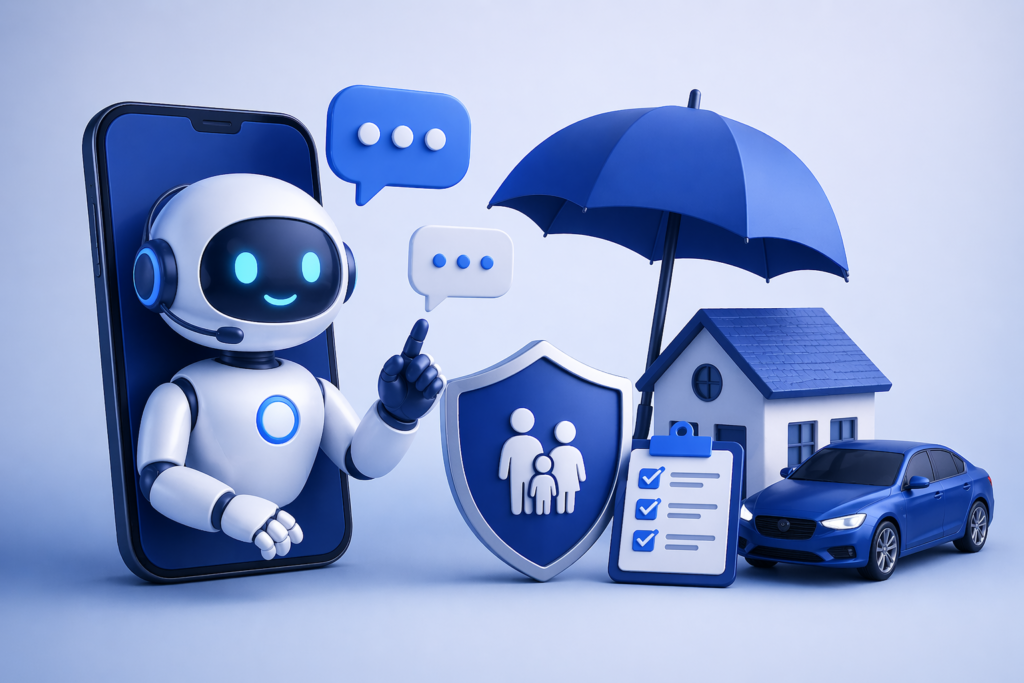
Insurance Chatbot solutions: Discover how AI-powered insurance chatbots improve customer experience, automate claims, boost conversions, and transform digital insurance services.
Introduction: Transforming Insurance with AI-Powered Chatbots
The insurance industry is undergoing a massive digital transformation, driven by evolving customer expectations and rapid advancements in artificial intelligence. One of the most impactful innovations leading this change is the insurance chatbot. These intelligent virtual assistants are redefining how insurance companies interact with customers—offering instant responses, personalized guidance, and seamless service around the clock.
At its core, an insurance chatbot leverages natural language processing (NLP), machine learning, and automation to simulate human-like conversations. Whether it’s answering policy questions, assisting with claims, or recommending products, chatbots deliver faster, more efficient experiences than traditional channels. Customers today expect real-time support, and chatbots are uniquely positioned to meet that demand without increasing operational costs.
Businesses like Engagerbot are helping insurance providers implement advanced chatbot solutions that enhance engagement, reduce friction, and improve conversion rates. As competition intensifies, adopting AI-powered chatbots is no longer optional—it’s essential for staying relevant and competitive in a digital-first marketplace.
What is an Insurance Chatbot and How Does It Work?
An insurance chatbot is a software application powered by artificial intelligence that interacts with users through text or voice interfaces. Unlike traditional customer support systems, chatbots are capable of understanding user intent, processing complex queries, and delivering accurate responses in real time. These bots are integrated into websites, mobile apps, and messaging platforms, making them easily accessible to customers at any time.
The working mechanism of an insurance chatbot involves several key technologies. Natural Language Processing (NLP) enables the bot to understand human language, while machine learning algorithms allow it to improve over time based on interactions. Additionally, backend integrations with CRM systems, policy databases, and claims management platforms ensure that chatbots provide personalized and context-aware responses. This combination of technologies makes chatbots highly efficient and scalable.
What sets insurance chatbots apart is their ability to handle industry-specific tasks such as policy comparisons, premium calculations, and claims tracking. Instead of navigating complex websites or waiting on hold, customers can simply ask questions and receive instant answers. This not only improves user satisfaction but also reduces the workload on human agents, allowing them to focus on more complex issues.
Why Insurance Companies Are Rapidly Adopting Chatbots
The adoption of insurance chatbots has accelerated significantly in recent years, driven by the need for efficiency, cost reduction, and enhanced customer experience. Insurance companies are under constant pressure to deliver faster services while managing increasing volumes of customer interactions. Chatbots provide a scalable solution that meets these demands without compromising quality.
One of the primary reasons for adoption is cost efficiency. Traditional customer support systems require large teams, training, and infrastructure. Chatbots, on the other hand, can handle thousands of conversations simultaneously with minimal operational costs. This leads to significant savings while maintaining high service standards. Additionally, chatbots reduce response times from hours to seconds, improving overall customer satisfaction.
Another key factor is the shift toward digital-first customer behavior. Modern consumers prefer self-service options and instant communication channels. According to Google’s official digital transformation insights, businesses that adopt AI-driven customer engagement tools see higher retention and engagement rates. Insurance companies that fail to adapt risk losing customers to more tech-savvy competitors.
Key Benefits of Insurance Chatbots for Businesses
Insurance chatbots offer a wide range of benefits that go beyond basic automation. One of the most significant advantages is improved customer engagement. By providing instant responses and personalized interactions, chatbots create a seamless user experience that keeps customers engaged and satisfied. This leads to higher retention rates and increased brand loyalty.
Another major benefit is operational efficiency. Chatbots automate repetitive tasks such as answering FAQs, collecting customer information, and processing basic requests. This reduces the workload on human agents, allowing them to focus on complex and high-value interactions. As a result, insurance companies can optimize their resources and improve overall productivity.
Chatbots also contribute to increased sales and lead generation. By guiding users through the decision-making process, recommending suitable policies, and answering objections in real time, chatbots act as virtual sales assistants. They help convert website visitors into customers, boosting revenue and improving return on investment. This combination of efficiency, engagement, and revenue growth makes chatbots a powerful tool for insurance businesses.
Enhancing Customer Experience Through AI Chatbots
Customer experience is a critical differentiator in the insurance industry, and chatbots play a vital role in enhancing it. Today’s customers expect quick, accurate, and personalized interactions. Insurance chatbots meet these expectations by providing 24/7 support and delivering consistent, high-quality responses across all channels.
One of the key ways chatbots improve customer experience is through personalization. By analyzing user data and interaction history, chatbots can tailor responses to individual needs. For example, a returning customer can receive policy recommendations based on their previous inquiries or existing coverage. This level of personalization creates a more engaging and relevant experience.
Moreover, chatbots eliminate common pain points such as long wait times and complex navigation. Customers can get answers instantly without having to browse through multiple pages or wait for an agent. This not only saves time but also reduces frustration. According to Google’s page experience guidelines, faster and smoother interactions significantly improve user satisfaction and engagement.
Use Cases of Insurance Chatbots Across the Customer Journey
Insurance chatbots are versatile tools that can be used at every stage of the customer journey. From initial awareness to post-purchase support, chatbots provide valuable assistance that enhances the overall experience. Understanding these use cases helps businesses maximize the potential of chatbot technology.
During the awareness stage, chatbots act as informative guides, answering basic questions and providing educational content about insurance products. They help potential customers understand different policies, coverage options, and benefits. This builds trust and encourages users to explore further.
In the consideration and purchase stages, chatbots assist with policy comparisons, premium calculations, and application processes. They guide users step by step, ensuring a smooth and hassle-free experience. After the purchase, chatbots continue to provide support by handling claims, sending reminders, and answering queries. This end-to-end support ensures a consistent and positive customer journey.
How Insurance Chatbots Improve Lead Generation and Conversions
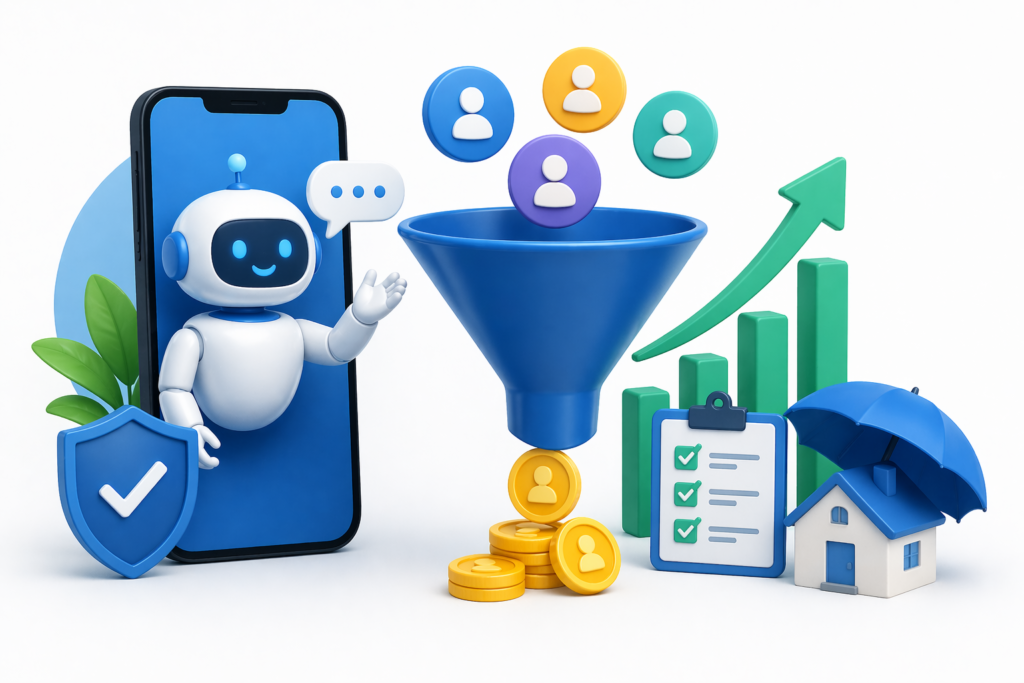
Lead generation is a crucial aspect of any insurance business, and chatbots have proven to be highly effective in this area. By engaging visitors in real time, chatbots capture user interest and convert it into actionable leads. Unlike static forms, chatbots provide interactive and personalized experiences that encourage users to share information.
One of the key strategies used by chatbots is conversational lead capture. Instead of asking users to fill out lengthy forms, chatbots collect information through natural conversations. This approach feels less intrusive and more engaging, resulting in higher completion rates. Additionally, chatbots can qualify leads by asking relevant questions and identifying high-intent prospects.
Chatbots also play a significant role in improving conversion rates. By addressing user concerns, providing instant answers, and guiding them through the decision-making process, chatbots reduce friction and increase the likelihood of conversions. Businesses that leverage chatbot technology effectively can achieve higher ROI and better marketing outcomes.
Automation of Claims Processing Using Chatbots
Claims processing is one of the most critical and time-sensitive aspects of the insurance industry. Traditionally, this process involves multiple steps, manual verification, and long waiting periods. Insurance chatbots are transforming this process by introducing automation and efficiency.
Chatbots streamline claims processing by guiding users through the entire process. They collect necessary information, verify details, and even assist with document uploads. This reduces the need for manual intervention and speeds up the overall process. Customers can track the status of their claims in real time, providing transparency and peace of mind.
Additionally, chatbots reduce errors and improve accuracy. By standardizing the data collection process, they ensure that all required information is captured correctly. This minimizes delays and improves the overall efficiency of claims management. According to Google Cloud AI solutions, automation powered by AI significantly enhances operational efficiency and reduces processing time.
Advanced AI Capabilities Powering Modern Insurance Chatbots
Modern insurance chatbots are no longer limited to scripted responses—they are powered by advanced artificial intelligence capabilities that enable them to deliver highly intelligent and dynamic interactions. Technologies such as natural language understanding (NLU), predictive analytics, and deep learning are transforming chatbots into sophisticated digital assistants capable of handling complex insurance scenarios.
One of the most impactful advancements is contextual understanding. Unlike earlier bots that relied on keyword matching, today’s chatbots can understand user intent, sentiment, and context. This allows them to engage in meaningful, multi-turn conversations. For example, a customer asking about “coverage for accidents” can receive tailored recommendations based on their profile, location, and past interactions. This level of intelligence significantly improves the quality of engagement.
Another critical capability is predictive analytics. By analyzing historical data and user behavior, chatbots can anticipate customer needs and proactively offer solutions. For instance, they can remind customers about policy renewals or suggest additional coverage options. According to Google AI principles, responsible AI development focuses on fairness, accuracy, and user-centric design—key elements that modern insurance chatbots incorporate to deliver trustworthy and efficient experiences.
Integration with CRM, APIs, and Insurance Platforms
For insurance chatbots to deliver maximum value, seamless integration with existing systems is essential. These integrations enable chatbots to access real-time data, provide personalized responses, and automate complex workflows. Without proper integration, chatbots would be limited in their capabilities and unable to deliver meaningful results.
One of the most important integrations is with Customer Relationship Management (CRM) systems. By connecting to CRM platforms, chatbots can retrieve customer data such as policy details, interaction history, and preferences. This allows them to deliver personalized experiences that align with individual customer needs. Additionally, integration with APIs enables chatbots to communicate with various backend systems, including billing, underwriting, and claims management platforms.
These integrations also support automation across different processes. For example, when a customer initiates a claim, the chatbot can collect information, validate it, and submit it directly to the claims system. This reduces manual effort and speeds up processing time. According to Google API design guidelines, well-structured APIs are crucial for building scalable and efficient digital solutions.
Security, Compliance, and Data Privacy in Insurance Chatbots
Security and compliance are critical considerations when implementing insurance chatbots. Given the sensitive nature of insurance data, including personal and financial information, it is essential to ensure that chatbots adhere to strict security standards and regulatory requirements. Failure to do so can result in data breaches, legal issues, and loss of customer trust.
One of the key aspects of security is data encryption. Chatbots must use secure communication protocols to protect data during transmission and storage. Additionally, authentication mechanisms such as multi-factor authentication (MFA) should be implemented to prevent unauthorized access. These measures ensure that customer data remains safe and secure at all times.
Compliance with industry regulations is equally important. Insurance companies must adhere to data protection laws and standards such as GDPR and other regional regulations. Following Google security best practices can help organizations build secure and compliant chatbot solutions. By prioritizing security and compliance, businesses can build trust and ensure long-term success.
Personalization and Customer Data Utilization
Personalization is at the heart of successful insurance chatbot strategies. Customers expect tailored experiences that address their specific needs and preferences. By leveraging customer data effectively, chatbots can deliver highly personalized interactions that enhance engagement and satisfaction.
Chatbots utilize data from various sources, including CRM systems, browsing behavior, and past interactions, to create detailed customer profiles. These profiles enable chatbots to provide relevant recommendations, such as suggesting policies based on a user’s lifestyle or financial goals. This level of personalization not only improves the user experience but also increases the likelihood of conversions.
However, it is essential to use customer data responsibly and transparently. Businesses must ensure that data collection and usage comply with privacy regulations and ethical standards. According to Google privacy guidelines, transparency and user consent are key principles for building trust. By balancing personalization with privacy, insurance companies can create meaningful and trustworthy interactions.
Omnichannel Support and Cross-Platform Deployment
In today’s digital landscape, customers interact with brands across multiple channels, including websites, mobile apps, and messaging platforms. Insurance chatbots must be capable of delivering consistent experiences across all these touchpoints. This is where omnichannel support becomes essential.
Omnichannel chatbots ensure that customers can start a conversation on one platform and continue it on another without losing context. For example, a user might begin a query on a website and later continue it via a messaging app. This seamless experience enhances convenience and improves customer satisfaction. It also ensures that businesses can engage with customers wherever they are.
Cross-platform deployment also increases the reach and effectiveness of chatbots. By integrating with popular messaging platforms and mobile apps, insurance companies can connect with a broader audience. According to Google mobile-first indexing guidelines, optimizing for mobile experiences is crucial for digital success. Chatbots play a vital role in delivering mobile-friendly interactions.
Common Mistakes to Avoid When Implementing Insurance Chatbots
While insurance chatbots offer numerous benefits, improper implementation can lead to poor performance and negative user experiences. Understanding common mistakes can help businesses avoid pitfalls and maximize the effectiveness of their chatbot solutions.
One common mistake is over-reliance on automation without human fallback. While chatbots can handle many tasks, there are situations where human intervention is necessary. Failing to provide an option to connect with a human agent can frustrate users and lead to dissatisfaction. A hybrid approach that combines automation with human support is essential.
Another mistake is poor training and lack of data optimization. Chatbots rely on data to understand and respond to user queries. Inadequate training can result in inaccurate responses and misunderstandings. Businesses must continuously train and update their chatbots to improve performance. Additionally, ignoring user feedback can hinder improvement.
Lastly, many companies fail to define clear objectives and metrics. Without measurable goals, it becomes difficult to evaluate the success of a chatbot implementation. Businesses should establish key performance indicators (KPIs) such as response time, conversion rate, and customer satisfaction. Following Google analytics best practices can help track and optimize performance effectively.
Best Practices for Building High-Performing Insurance Chatbots
To build a successful insurance chatbot, businesses must follow best practices that ensure efficiency, usability, and scalability. These practices are essential for delivering high-quality user experiences and achieving desired outcomes.
First, focus on user-centric design. The chatbot interface should be intuitive, easy to navigate, and aligned with user needs. Clear prompts, structured conversations, and quick response times are key elements of a good user experience. Additionally, incorporating feedback mechanisms allows users to provide input and helps improve the chatbot over time.
Second, invest in continuous optimization. Chatbots are not a one-time implementation—they require ongoing updates and improvements. Regularly analyzing performance data, identifying gaps, and making necessary adjustments ensures that the chatbot remains effective. This includes updating content, improving NLP models, and expanding capabilities.
Finally, ensure scalability and flexibility. As business needs evolve, chatbots must be able to adapt and grow. This includes integrating new features, supporting additional channels, and handling increased volumes of interactions. Following Google scalable systems guidelines can help build robust and future-ready solutions.
The Future of Insurance Chatbots and AI in the Industry
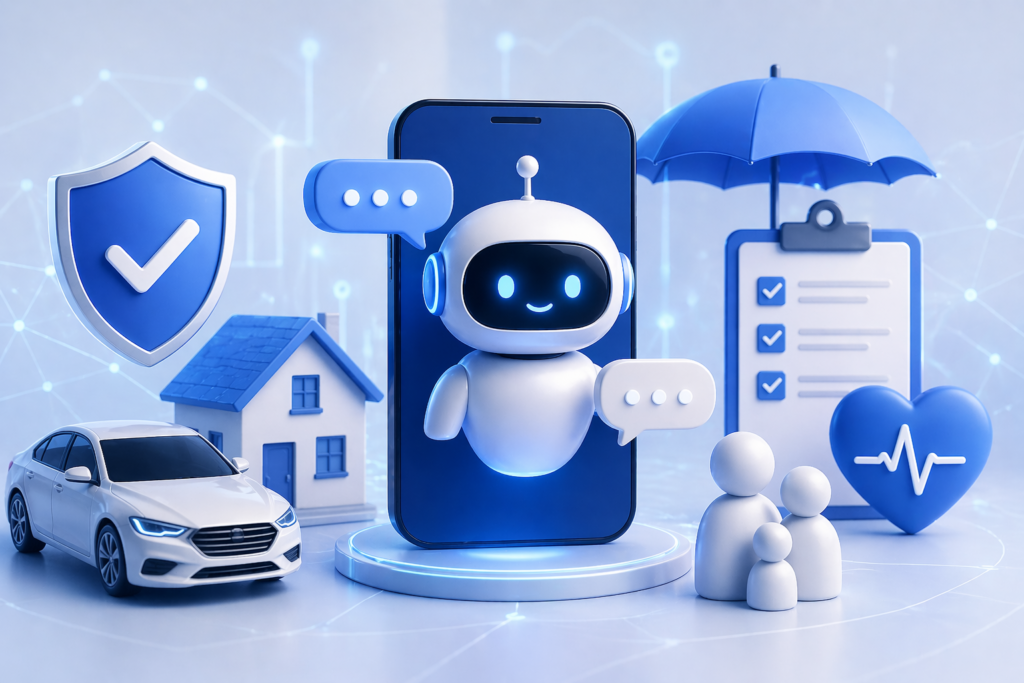
The future of insurance chatbots is incredibly promising, with advancements in AI continuing to drive innovation. As technology evolves, chatbots will become even more intelligent, capable, and integrated into the broader insurance ecosystem. This will lead to more efficient operations and enhanced customer experiences.
One of the key trends shaping the future is the integration of voice assistants and conversational AI. Customers will be able to interact with chatbots using natural speech, making interactions more intuitive and accessible. Additionally, advancements in AI will enable chatbots to handle more complex tasks, such as underwriting and risk assessment.
Another important trend is the use of AI for predictive and proactive engagement. Chatbots will not only respond to queries but also anticipate customer needs and provide solutions before issues arise. According to Google future of AI insights, AI will play a central role in shaping the future of digital interactions. Insurance companies that embrace these advancements will be well-positioned for success.
FAQs
1. What is an insurance chatbot?
An insurance chatbot is an AI-powered virtual assistant that helps customers with queries, policy management, claims processing, and more through automated conversations.
2. How do insurance chatbots improve customer service?
They provide instant responses, 24/7 availability, and personalized interactions, reducing wait times and improving satisfaction.
3. Are insurance chatbots secure?
Yes, when implemented correctly with encryption, authentication, and compliance measures, they are highly secure.
4. Can chatbots handle insurance claims?
Yes, chatbots can automate claim initiation, document collection, and status tracking.
5. Do chatbots replace human agents?
No, they complement human agents by handling repetitive tasks while agents focus on complex issues.
6. How do chatbots generate leads?
They engage users in real time, collect information conversationally, and qualify leads effectively.
7. What platforms can chatbots be deployed on?
Websites, mobile apps, messaging platforms, and social media channels.
8. Are chatbots expensive to implement?
Costs vary, but they often reduce long-term operational expenses significantly.
Best Practices Summary
- Focus on user experience and simplicity
- Ensure strong data security and compliance
- Continuously train and optimize chatbot performance
- Integrate with CRM and backend systems
- Use data-driven insights for personalization
- Provide human support fallback options
- Monitor performance using analytics and KPIs
Conclusion: Driving Growth with Intelligent Insurance Chatbots
Insurance chatbots are revolutionizing the way companies interact with customers, streamline operations, and drive growth. By leveraging advanced AI technologies, businesses can deliver faster, more personalized, and more efficient services. From lead generation to claims processing, chatbots offer a wide range of benefits that make them an essential tool for modern insurance providers.
Engagerbot empowers insurance companies to implement cutting-edge chatbot solutions that enhance engagement, improve efficiency, and boost conversions. As the industry continues to evolve, adopting AI-powered chatbots will be key to staying competitive and meeting the demands of today’s digital-first customers.
Want to Implement This Easily?
Prompt Text:
You are an expert consultant. Based on the blog post titled “(Insurance Chatbot)”, provide a step-by-step, practical implementation guide. Include tools, best practices, common mistakes to avoid, and advanced tips. Assume the reader wants to implement everything discussed in this article effectively.
Call to Action:
Want our help implementing this? Just reach out to us via our website contact form: https://www.engagerbot.com/contact-us/